Length Temperature
Volume Time
Weight
Author : Mr Lam
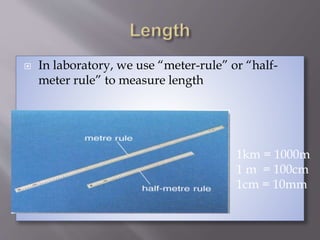
 In laboratory, we use “meter-rule” or “half-
meter rule” to measure length
1km = 1000m
1 m = 100cm
1cm = 10mm
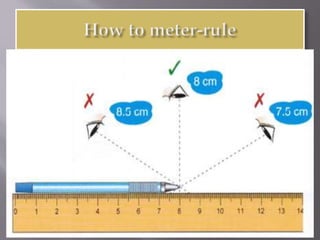
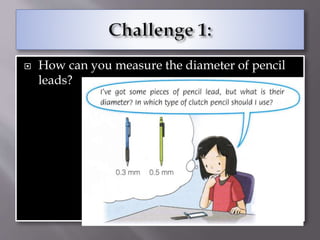
 How can you measure the diameter of pencil
leads?
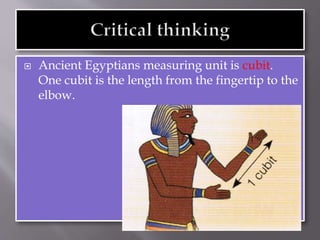
 Ancient Egyptians measuring unit is cubit.
One cubit is the length from the fingertip to the
elbow.
 What are the advantages and disadvantages of
the Egyptians measurement system?
 If you are living in ancient Egypt, what would
you suggest to improve the measurement
system?
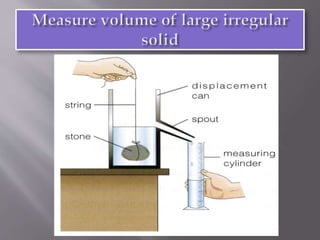
 Volume is a measure of the space an object
occupied.
 Volume is measured by cubic meters 𝑚3
 For smaller volume, we use cubic centermeters
𝑐𝑚3
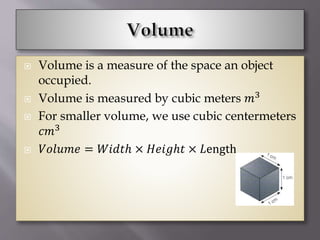
 𝑉𝑜𝑙𝑢𝑚𝑒 = 𝑊𝑖𝑑𝑡ℎ × 𝐻𝑒𝑖𝑔ℎ𝑡 × 𝐿ength
 For liquid, we use “Litre” (L) or “millilitre”
(mL) as units to measure the volume
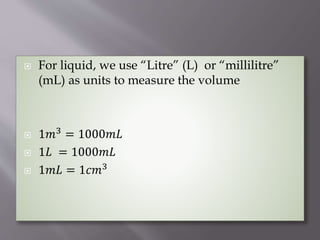
 1𝑚3 = 1000𝑚𝐿
 1𝐿 = 1000𝑚𝐿
 1𝑚𝐿 = 1𝑐𝑚3
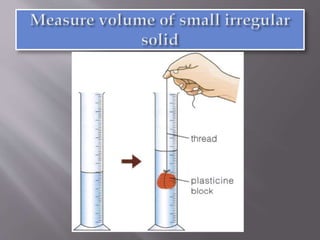
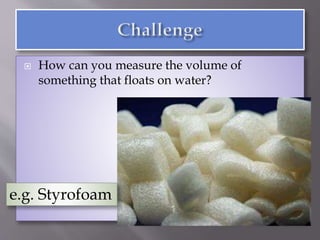
 How can you measure the volume of
something that floats on water?
e.g. Styrofoam
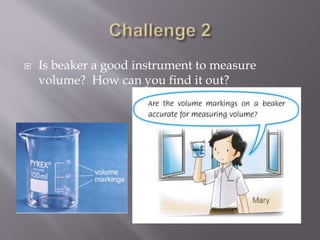
 Is beaker a good instrument to measure
volume? How can you find it out?
 Mass is a measure of the amount of substances
 The bigger the mass, the more difficult to move the
object (inertia)
 The mass of an object always the same no matter
which part of the universe the object is.
 The unit of mass is kilogram (kg) or gram (g)
 Weight is a measure of how much gravitational
pull from the centre of the Earth.
 Weight of an object on the Earth is different it is on
the Moon.
 The unit of the weight is Newton (N)
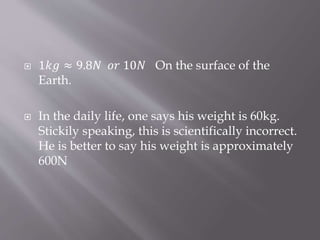
 1𝑘𝑔 ≈ 9.8𝑁 𝑜𝑟 10𝑁 On the surface of the
Earth.
 In the daily life, one says his weight is 60kg.
Stickily speaking, this is scientifically incorrect.
He is better to say his weight is approximately
600N
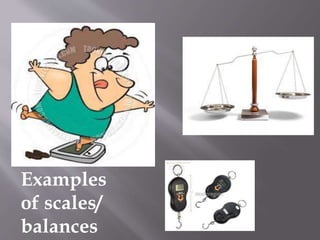
Examples
of scales/
balances
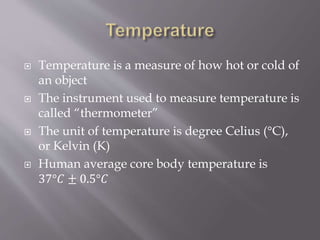
 Temperature is a measure of how hot or cold of
an object
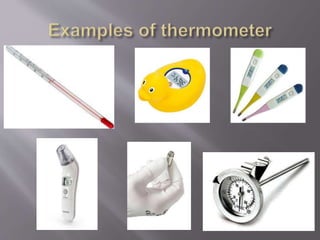
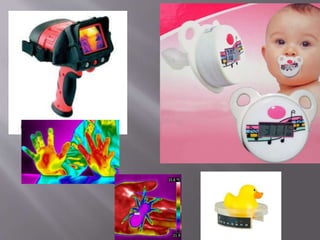
 The instrument used to measure temperature is
called “thermometer”
 The unit of temperature is degree Celius (°C),
or Kelvin (K)
 Human average core body temperature is
37°𝐶 ± 0.5°𝐶
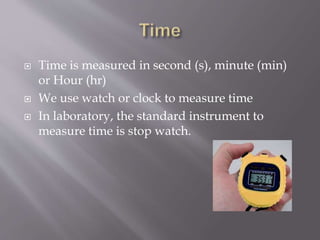
 Time is measured in second (s), minute (min)
or Hour (hr)
 We use watch or clock to measure time
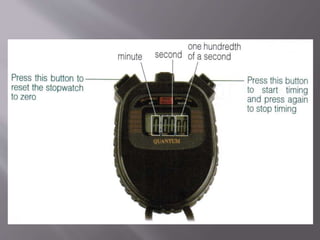
 In laboratory, the standard instrument to
measure time is stop watch.
Measurement of length, volume, weight, temperature, time in laboratory, secondary, year 7

Measurement of length, volume, weight, temperature, time in laboratory, secondary, year 7

  • 1.
  • 2.
     In laboratory,we use “meter-rule” or “half- meter rule” to measure length 1km = 1000m 1 m = 100cm 1cm = 10mm
  • 4.
     How canyou measure the diameter of pencil leads?
  • 6.
     Ancient Egyptiansmeasuring unit is cubit. One cubit is the length from the fingertip to the elbow.
  • 7.
     What arethe advantages and disadvantages of the Egyptians measurement system?  If you are living in ancient Egypt, what would you suggest to improve the measurement system?
  • 8.
     Volume isa measure of the space an object occupied.  Volume is measured by cubic meters 𝑚3  For smaller volume, we use cubic centermeters 𝑐𝑚3  𝑉𝑜𝑙𝑢𝑚𝑒 = 𝑊𝑖𝑑𝑡ℎ × 𝐻𝑒𝑖𝑔ℎ𝑡 × 𝐿ength
  • 9.
     For liquid,we use “Litre” (L) or “millilitre” (mL) as units to measure the volume  1𝑚3 = 1000𝑚𝐿  1𝐿 = 1000𝑚𝐿  1𝑚𝐿 = 1𝑐𝑚3
  • 13.
     How canyou measure the volume of something that floats on water? e.g. Styrofoam
  • 14.
     Is beakera good instrument to measure volume? How can you find it out?
  • 15.
     Mass isa measure of the amount of substances  The bigger the mass, the more difficult to move the object (inertia)  The mass of an object always the same no matter which part of the universe the object is.  The unit of mass is kilogram (kg) or gram (g)  Weight is a measure of how much gravitational pull from the centre of the Earth.  Weight of an object on the Earth is different it is on the Moon.  The unit of the weight is Newton (N)
  • 16.
     1𝑘𝑔 ≈9.8𝑁 𝑜𝑟 10𝑁 On the surface of the Earth.  In the daily life, one says his weight is 60kg. Stickily speaking, this is scientifically incorrect. He is better to say his weight is approximately 600N
  • 17.
  • 19.
     Temperature isa measure of how hot or cold of an object  The instrument used to measure temperature is called “thermometer”  The unit of temperature is degree Celius (°C), or Kelvin (K)  Human average core body temperature is 37°𝐶 ± 0.5°𝐶
  • 22.
     Time ismeasured in second (s), minute (min) or Hour (hr)  We use watch or clock to measure time  In laboratory, the standard instrument to measure time is stop watch.