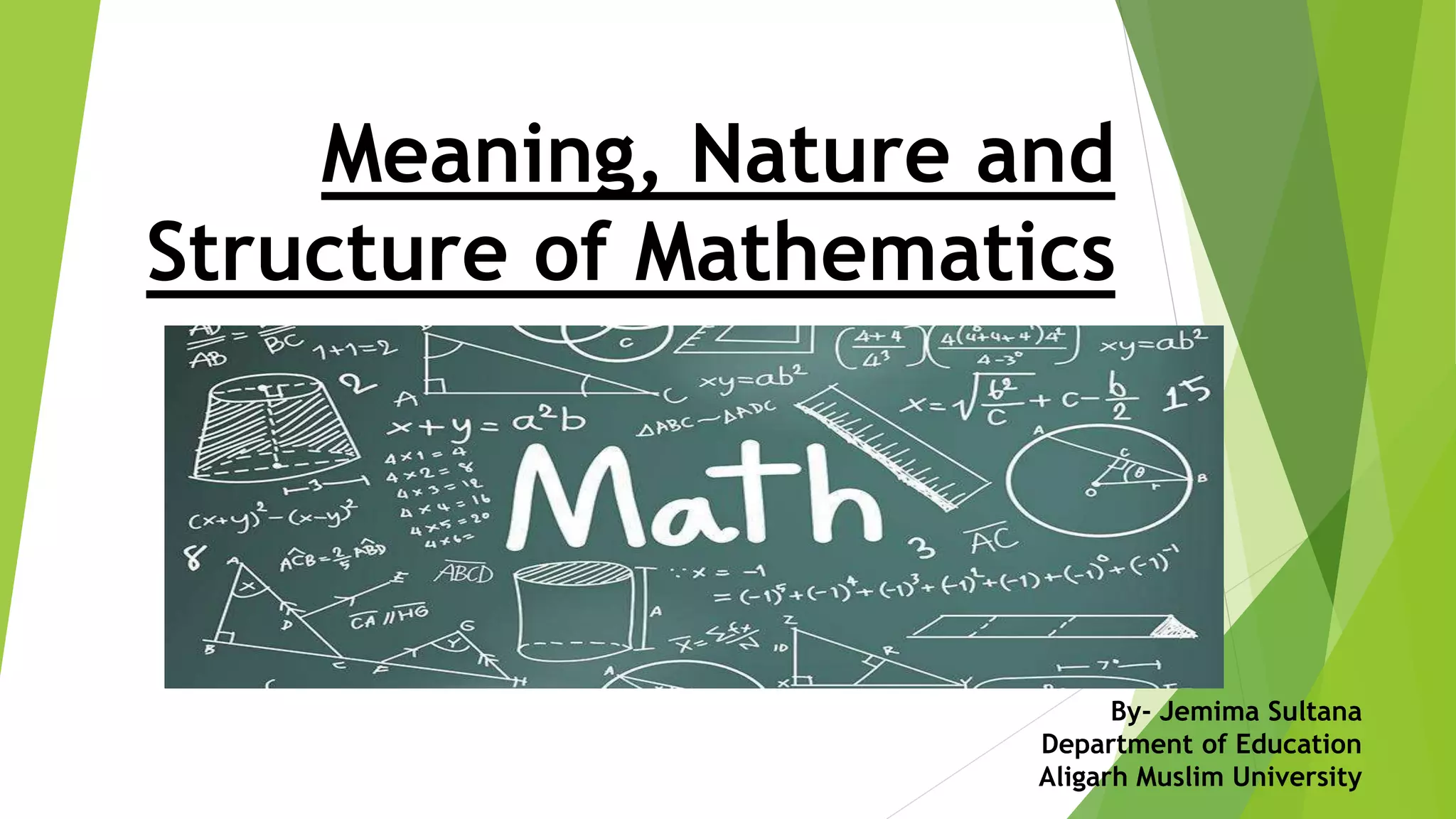
Meaning, Nature and
Structure of Mathematics
By- Jemima Sultana
Department of Education
Aligarh Muslim University
Introduction:
Mathematics plays an important role in accelerating the
social,economial and technological growth of a nation. It is more
so in India, as nation is rapidly moving towards globalisation in
all aspects. The world of today which leans more and more
heavily on science and technology demands more and more
mathematical knowledge on the part of its people. So it is
necessary to prepare the child with strong base of mathematical
knowledge to face the challenges of modern technological
society.
Etymology:
The term mathematics is derived from two Greek words :
Manthaein means learning
techne means ‘an art or technique’
Mathematics means the art of learning related to disciplines or
facilities
What is mathematics?
The dictionary meaning of mathematics is that- “it is the science of number
or space” or “the science of measurement quantity and magnitude.”
According to new English dictionary:
“Mathematics is a strict sense is the abstract science which investigates
deductively the conclusions implicit in the elementary conception of special
and numerical relations.”
In Hindi we call mathematics as ganitha which means the science of
calculations
Hence we can conclude that mathematics is a systematized, organised and
exact branch of science. Also mathematics is the science of quantity,
measurement and special relations.
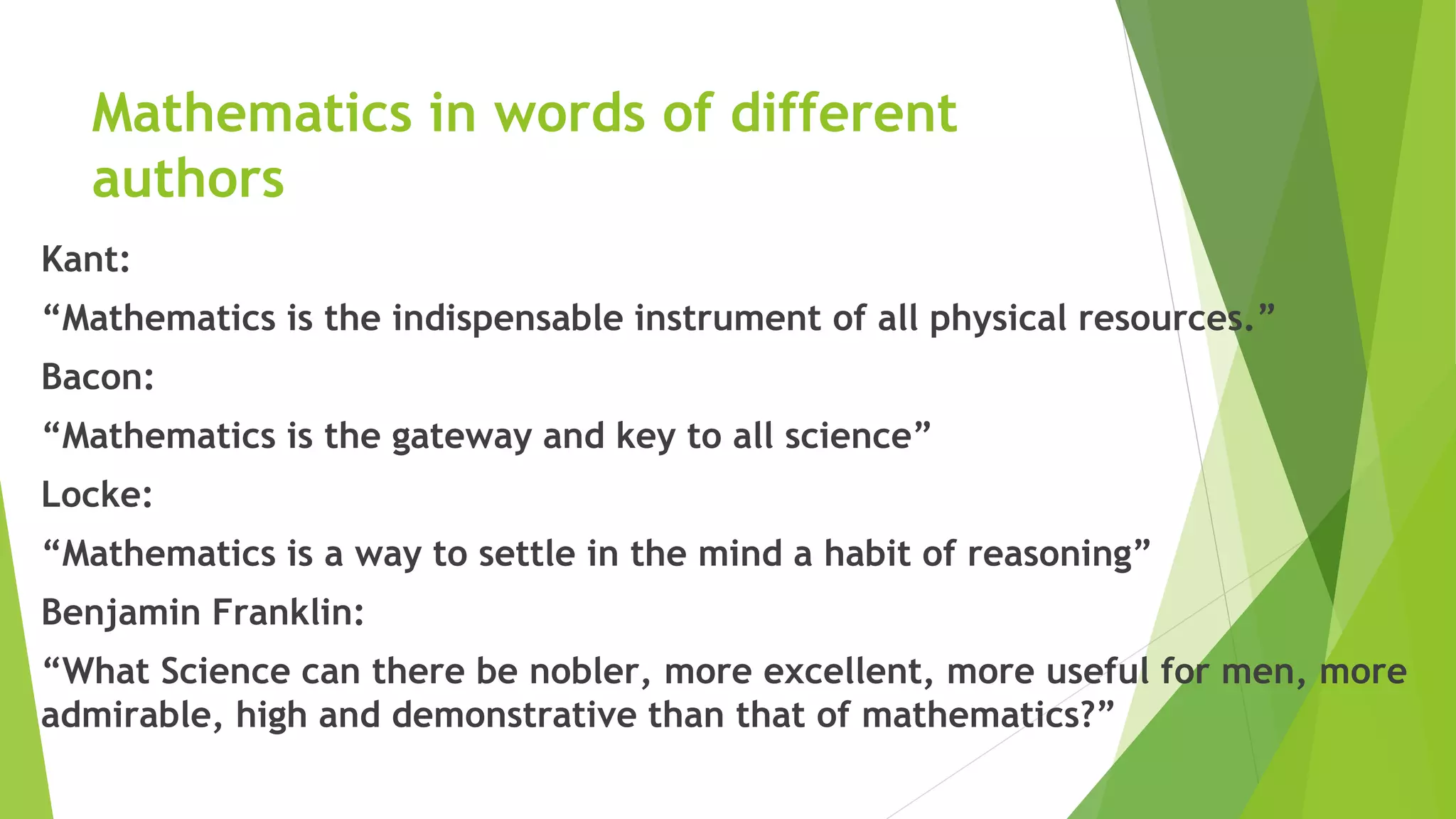
Mathematics in words of different
authors
Kant:
“Mathematics is the indispensable instrument of all physical resources.”
Bacon:
“Mathematics is the gateway and key to all science”
Locke:
“Mathematics is a way to settle in the mind a habit of reasoning”
Benjamin Franklin:
“What Science can there be nobler, more excellent, more useful for men, more
admirable, high and demonstrative than that of mathematics?”
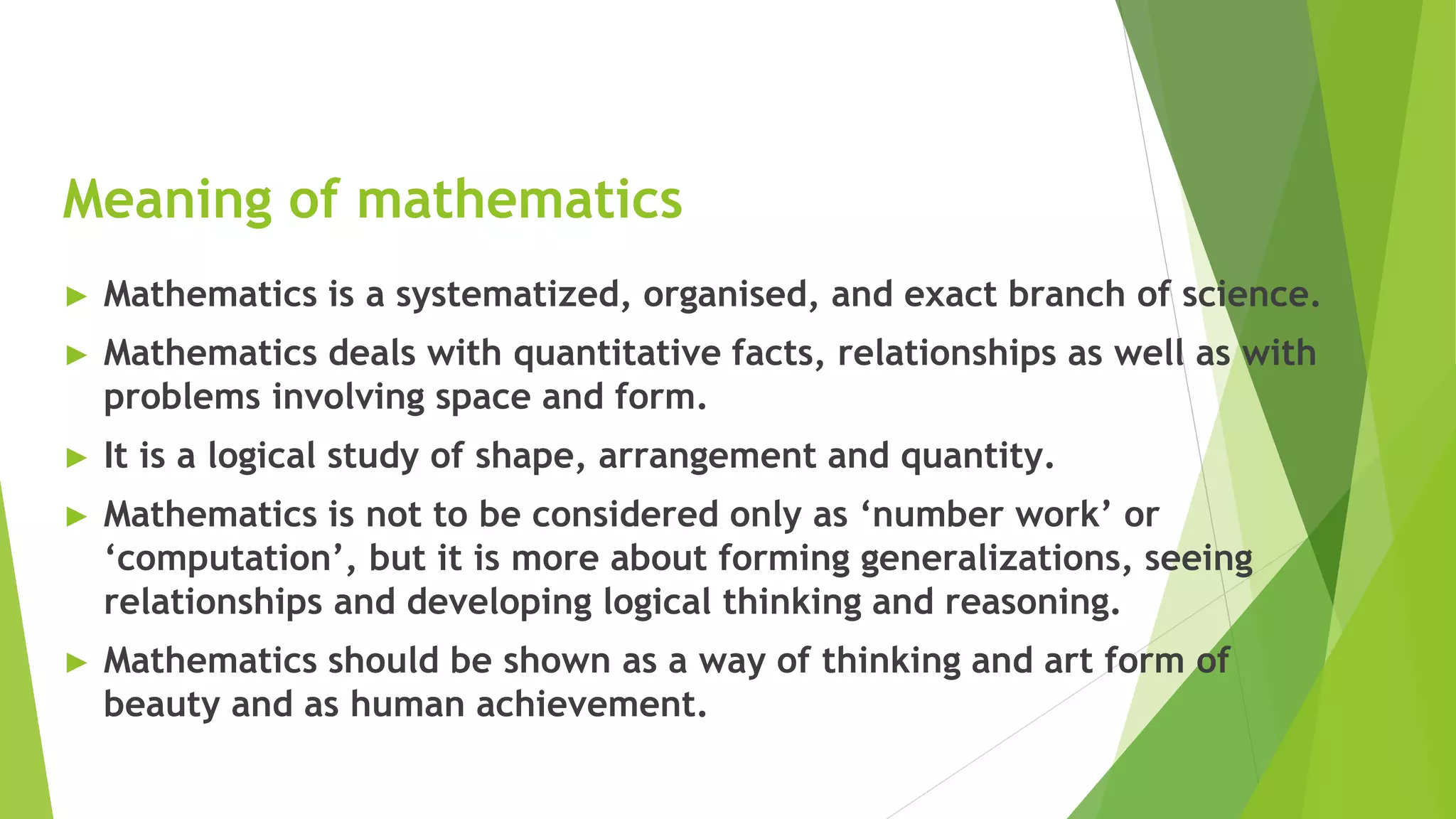
Meaning of mathematics
► Mathematics is a systematized, organised, and exact branch of science.
► Mathematics deals with quantitative facts, relationships as well as with
problems involving space and form.
► It is a logical study of shape, arrangement and quantity.
► Mathematics is not to be considered only as ‘number work’ or
‘computation’, but it is more about forming generalizations, seeing
relationships and developing logical thinking and reasoning.
► Mathematics should be shown as a way of thinking and art form of
beauty and as human achievement.
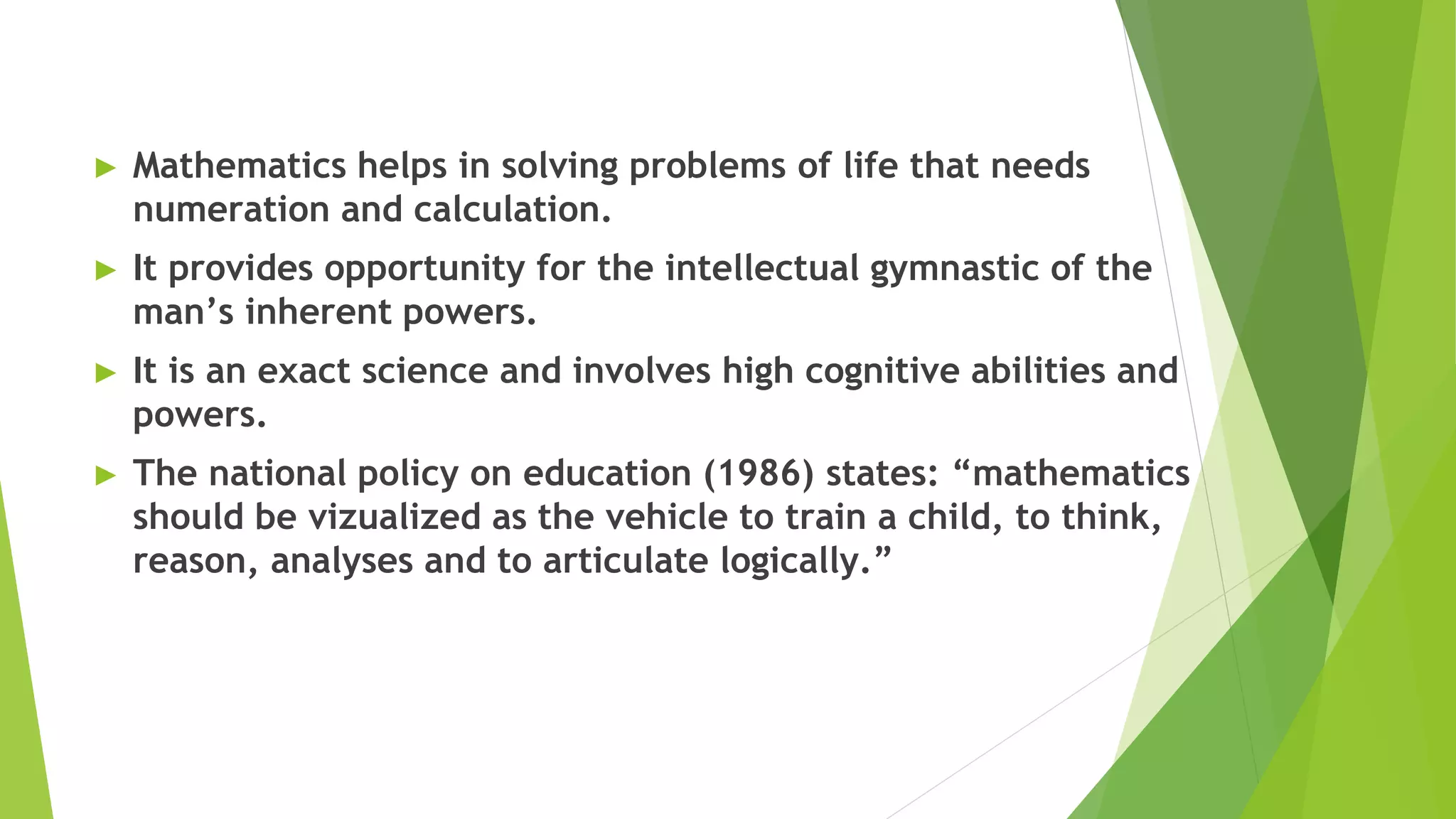
► Mathematics helps in solving problems of life that needs
numeration and calculation.
► It provides opportunity for the intellectual gymnastic of the
man’s inherent powers.
► It is an exact science and involves high cognitive abilities and
powers.
► The national policy on education (1986) states: “mathematics
should be vizualized as the vehicle to train a child, to think,
reason, analyses and to articulate logically.”
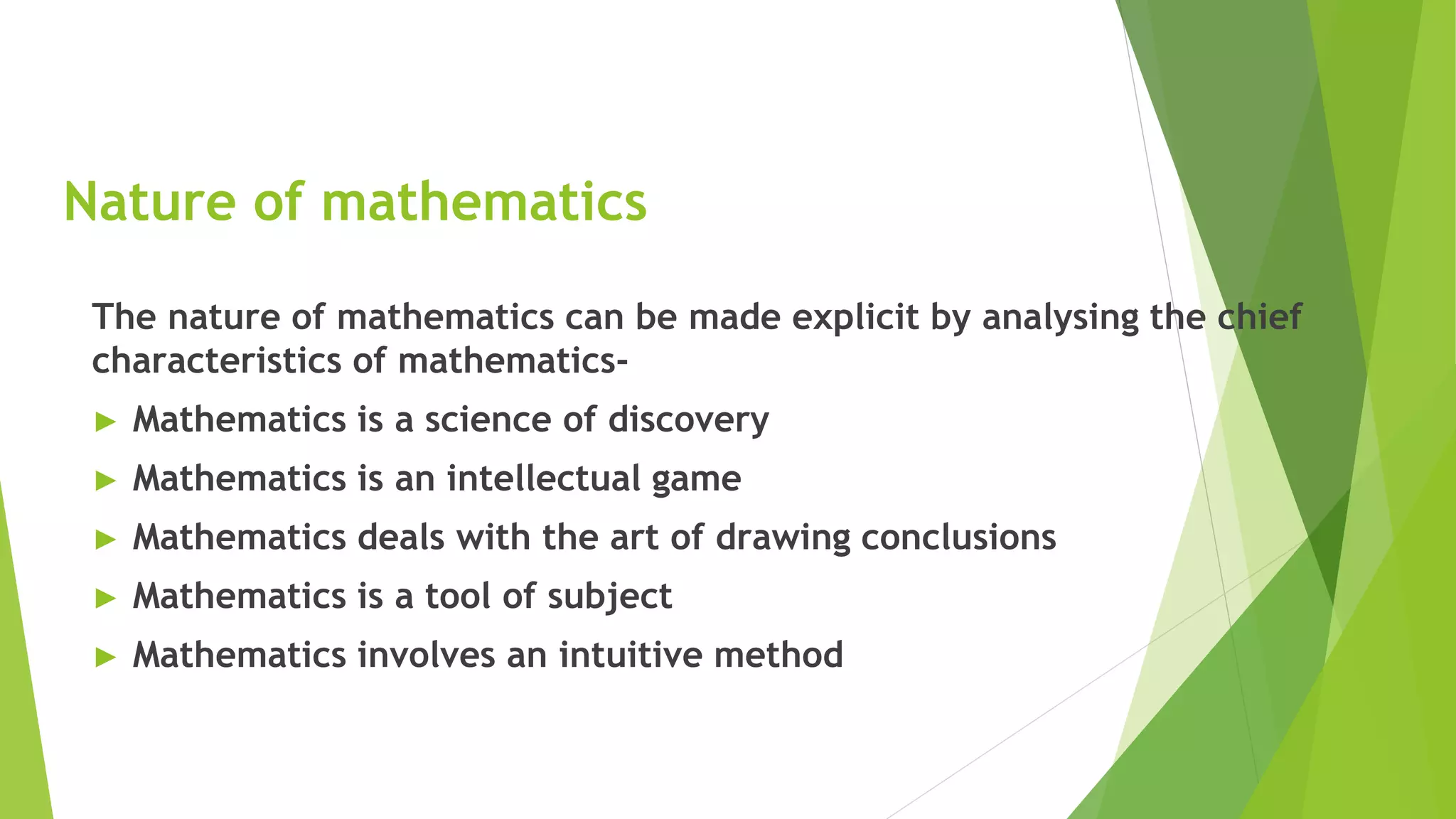
Nature of mathematics
The nature of mathematics can be made explicit by analysing the chief
characteristics of mathematics-
► Mathematics is a science of discovery
► Mathematics is an intellectual game
► Mathematics deals with the art of drawing conclusions
► Mathematics is a tool of subject
► Mathematics involves an intuitive method
Nature of Mathematics:
► Mathematics is the science of precision and accuracy
Mathematics is the subject of logical sequence
Mathematics requires the application of rules and
concept to new situations
Mathematics is an abstract science
► Mathematics is study of structures
► Mathematics is a science of logical reasoning
Structures of Mathematics
► Terminology
► Symbols or Notations
► Algorithm
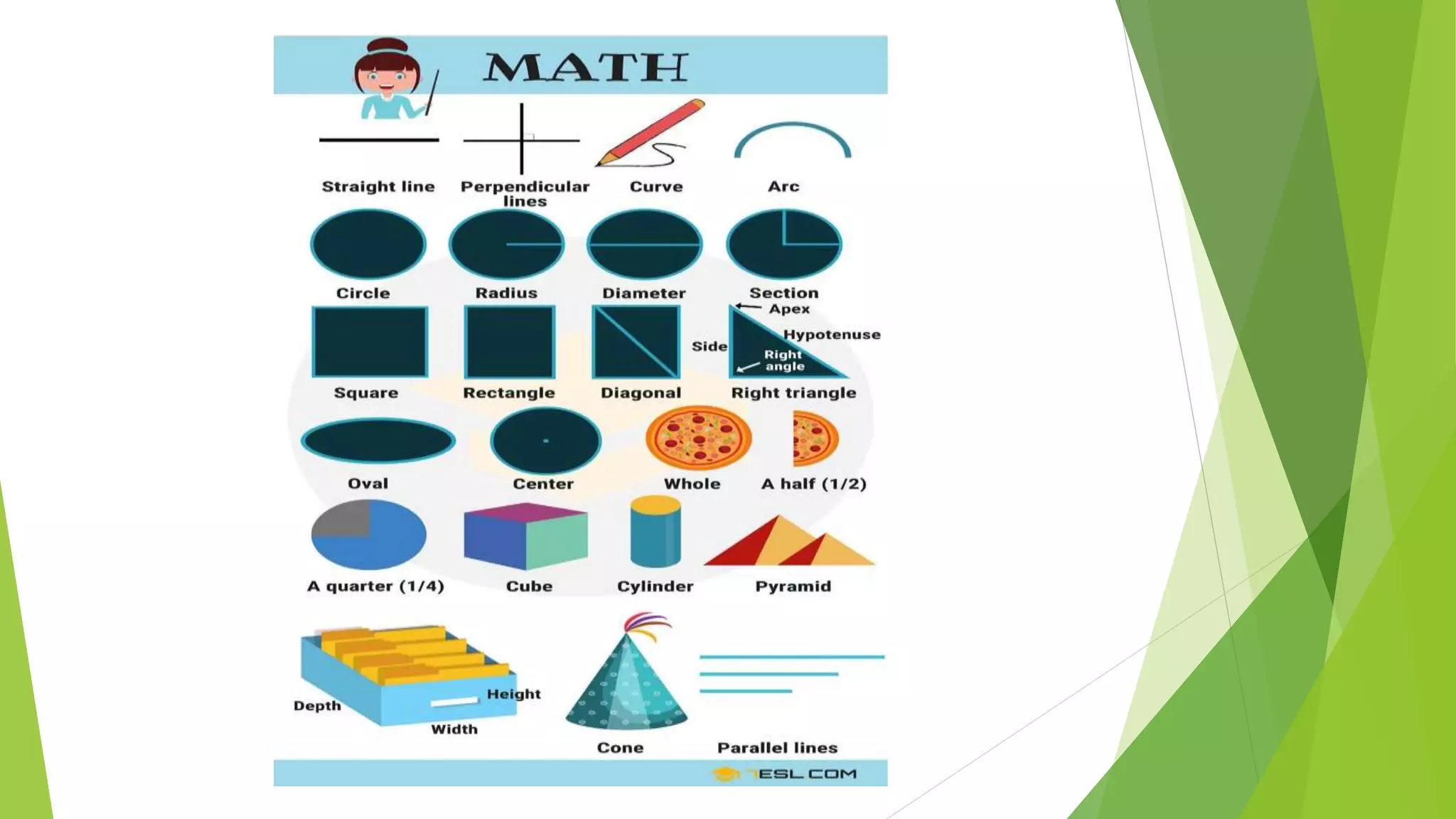
Terminology:
► The study of mathematics teaches various new
definitions
► In order to provide identification to new definitions
and concepts they are given special names or terms.
► This forms terminology in mathematics
Various terms:
1. Angle
2. Area
3. Circumference of circle
4. Complementary angles
5. Composite nembers
6. Cube
7. Cuboid
8. Even numbers
9. Fraction
10. Hypotenuse
Use of Mathematical Terminology is
indispensable as-
► Various definitions are interrelated
► Use of mathematical terms helps to express
mathematical ideas precisely
► Use of common terms all over the world helps for the
development of subject
► Terms of mathematics mostly express their meaning
itself.
Notations or Symbols in Mathematics
► Mathematical notation is a system of symbolic representation of
mathematical objects and ideas.
► Mathematical notations are used in mathematics, physical
science, engineering, economics and various other branches.
► Use of symbols helps to express Mathematical statements in
precise manner
► Most of the symbols are accepted universally.
► Like % for percentage, = for equal
► Some notations are not permanently fixed. Like constant number
Kinds of symbols:
► Simple symbolic representation. Like, 0,1,2....
► Function symbols. Like, Sin, log
► Operational symbols. Like, +, -, x
► Conceptual symbols. Lik, lim, dy/dx, equations and
variables
Examples:
► + for addition
► - for substraction
► × for mmultiplication
► ÷ for division
► % for percentage
► . For decimal
► = for equal to
► II for parallel lines
► ° for degree
Algorithm in Mathematics:
► An Algorithm is precise, step by step method or set of rules
for solving problems of a particular type.
► These are algorithms of many types in various fields of
mathematics
► The most familiar algorithm is the elementary school
procedures of adding, subtracting, multiplication, division
► But there are so many other algorithms in Mathematics
Kinds of Algorithms:
► Standard Algorithms
► Invented Algorithms
► Alternative Algorithms
► Algorithmic thinking
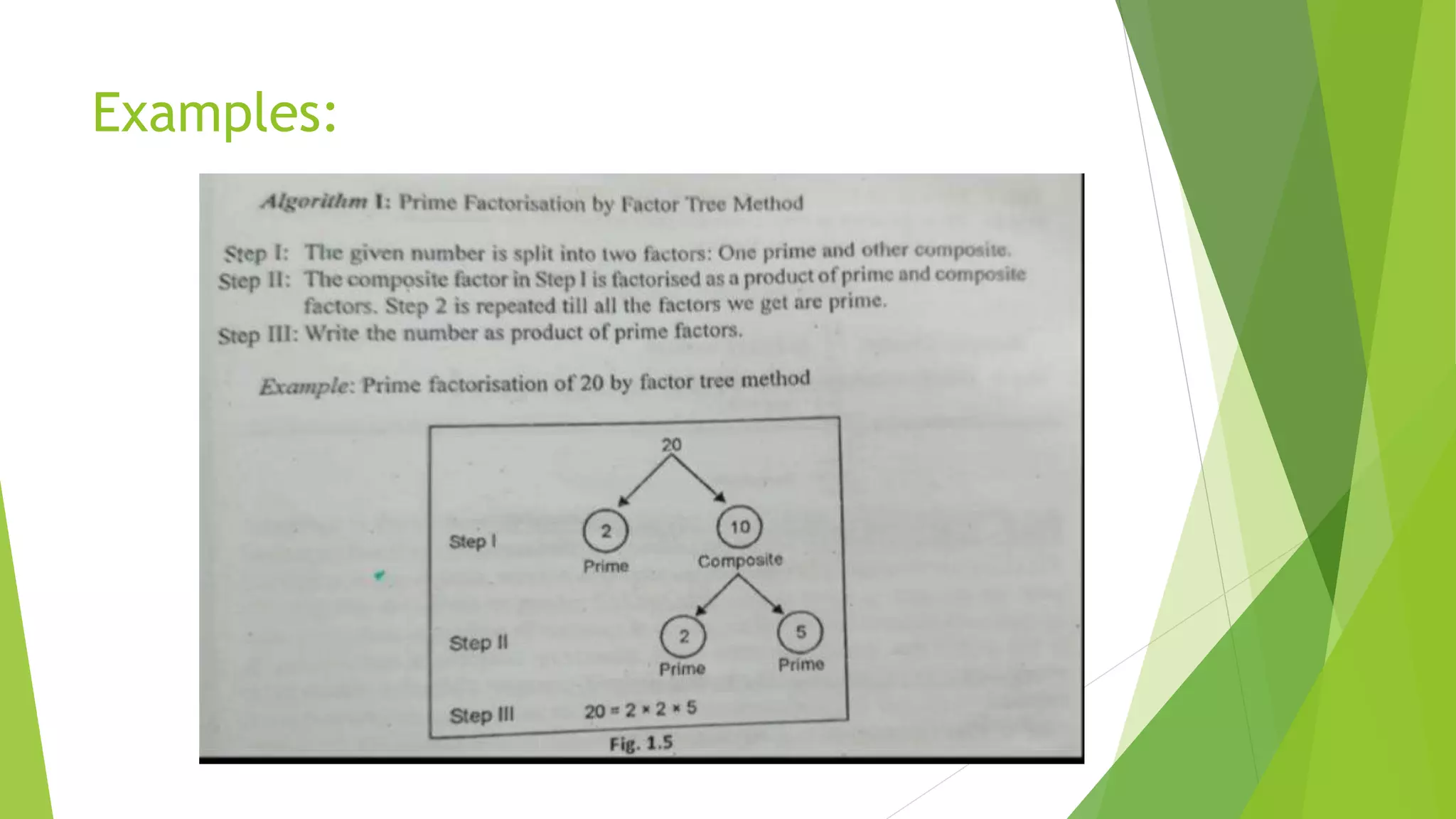
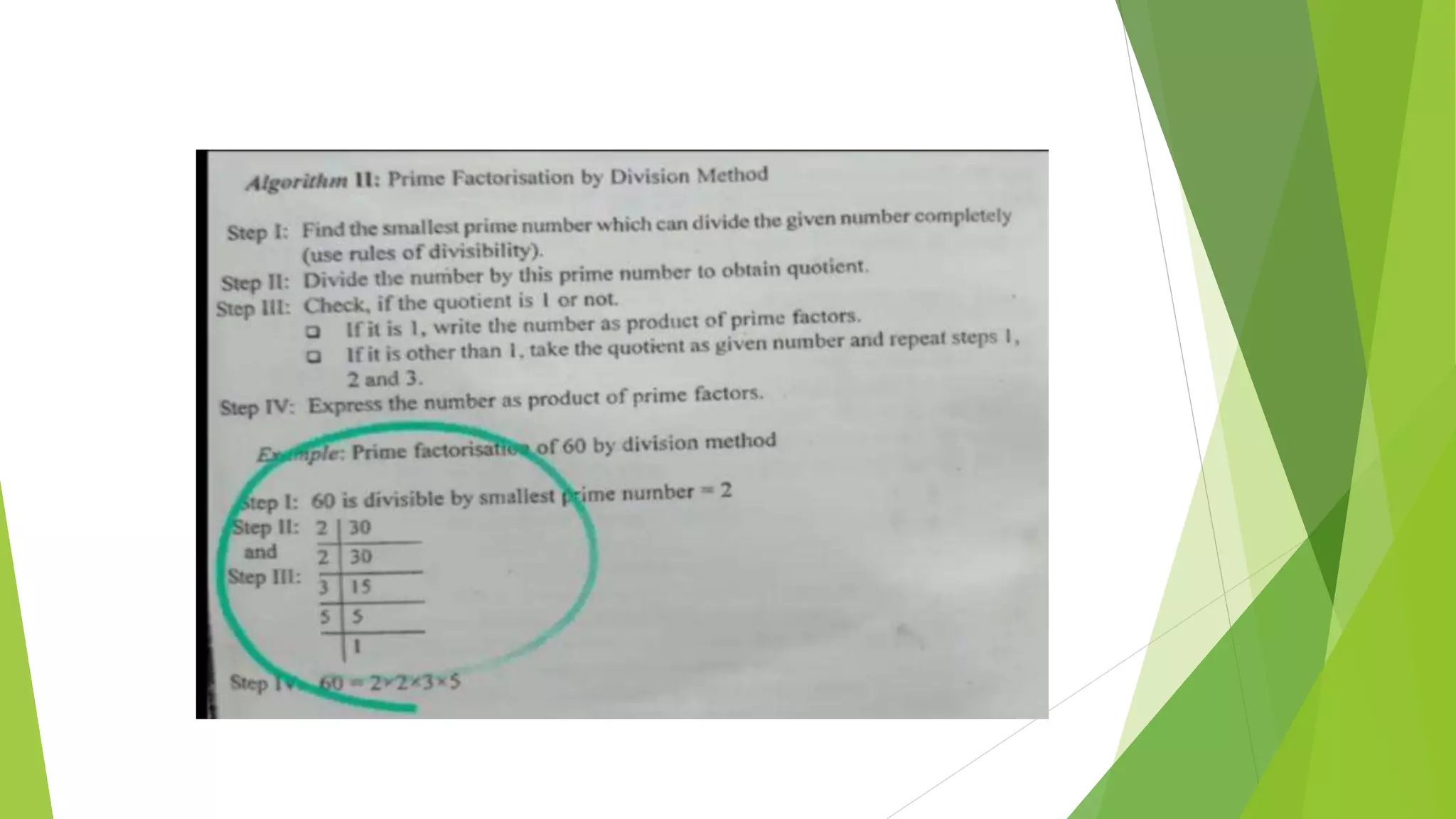
Examples:
Some suggestions:
► Make the introduction attractive to arouse interest of
students question mathematics
► Do some question answer method
► Follow deductive method
► After getting answers from students try to motivate them
for further reinforcement
► Avoid lecture method and rote memorization
► Make mathematics class enjoyable
Give students assignments, some mathematical activities in
cooperative method
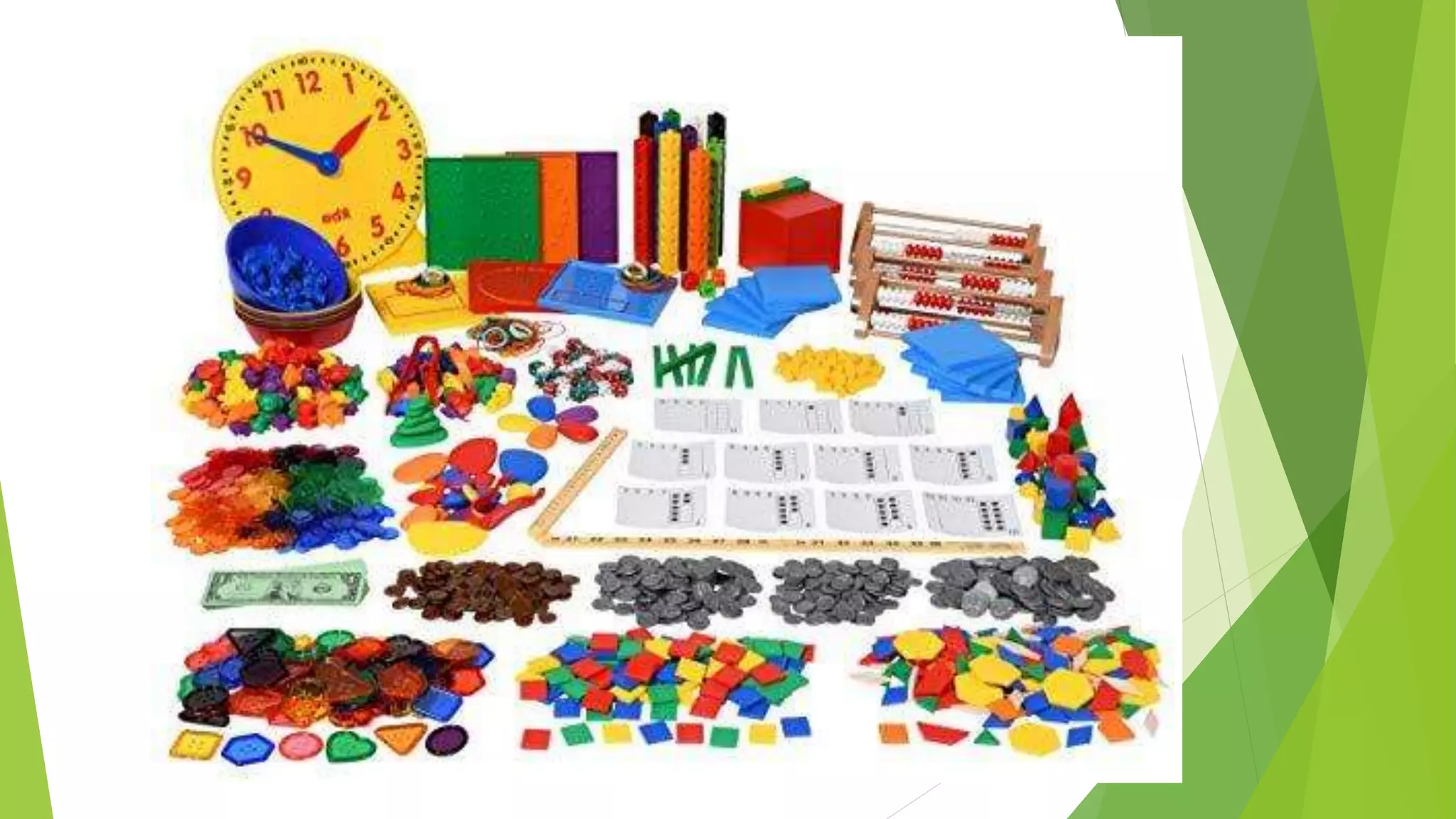
Try to use models or teaching learning materials for better
explanation
► Follow Blooms Taxonomy in whole teaching learning process
► Give real and their environment related examples with whom
they are familiar
Thank You

Meaning, Nature and Structure of Mathematics- Mathematics pedagogy

  • 1.
    Meaning, Nature and Structureof Mathematics By- Jemima Sultana Department of Education Aligarh Muslim University
  • 2.
    Introduction: Mathematics plays animportant role in accelerating the social,economial and technological growth of a nation. It is more so in India, as nation is rapidly moving towards globalisation in all aspects. The world of today which leans more and more heavily on science and technology demands more and more mathematical knowledge on the part of its people. So it is necessary to prepare the child with strong base of mathematical knowledge to face the challenges of modern technological society.
  • 3.
    Etymology: The term mathematicsis derived from two Greek words : Manthaein means learning techne means ‘an art or technique’ Mathematics means the art of learning related to disciplines or facilities
  • 4.
    What is mathematics? Thedictionary meaning of mathematics is that- “it is the science of number or space” or “the science of measurement quantity and magnitude.” According to new English dictionary: “Mathematics is a strict sense is the abstract science which investigates deductively the conclusions implicit in the elementary conception of special and numerical relations.” In Hindi we call mathematics as ganitha which means the science of calculations Hence we can conclude that mathematics is a systematized, organised and exact branch of science. Also mathematics is the science of quantity, measurement and special relations.
  • 5.
    Mathematics in wordsof different authors Kant: “Mathematics is the indispensable instrument of all physical resources.” Bacon: “Mathematics is the gateway and key to all science” Locke: “Mathematics is a way to settle in the mind a habit of reasoning” Benjamin Franklin: “What Science can there be nobler, more excellent, more useful for men, more admirable, high and demonstrative than that of mathematics?”
  • 6.
    Meaning of mathematics ►Mathematics is a systematized, organised, and exact branch of science. ► Mathematics deals with quantitative facts, relationships as well as with problems involving space and form. ► It is a logical study of shape, arrangement and quantity. ► Mathematics is not to be considered only as ‘number work’ or ‘computation’, but it is more about forming generalizations, seeing relationships and developing logical thinking and reasoning. ► Mathematics should be shown as a way of thinking and art form of beauty and as human achievement.
  • 7.
    ► Mathematics helpsin solving problems of life that needs numeration and calculation. ► It provides opportunity for the intellectual gymnastic of the man’s inherent powers. ► It is an exact science and involves high cognitive abilities and powers. ► The national policy on education (1986) states: “mathematics should be vizualized as the vehicle to train a child, to think, reason, analyses and to articulate logically.”
  • 8.
    Nature of mathematics Thenature of mathematics can be made explicit by analysing the chief characteristics of mathematics- ► Mathematics is a science of discovery ► Mathematics is an intellectual game ► Mathematics deals with the art of drawing conclusions ► Mathematics is a tool of subject ► Mathematics involves an intuitive method
  • 9.
    Nature of Mathematics: ►Mathematics is the science of precision and accuracy Mathematics is the subject of logical sequence Mathematics requires the application of rules and concept to new situations Mathematics is an abstract science ► Mathematics is study of structures ► Mathematics is a science of logical reasoning
  • 10.
    Structures of Mathematics ►Terminology ► Symbols or Notations ► Algorithm
  • 11.
    Terminology: ► The studyof mathematics teaches various new definitions ► In order to provide identification to new definitions and concepts they are given special names or terms. ► This forms terminology in mathematics Various terms: 1. Angle 2. Area 3. Circumference of circle 4. Complementary angles 5. Composite nembers 6. Cube 7. Cuboid 8. Even numbers 9. Fraction 10. Hypotenuse
  • 13.
    Use of MathematicalTerminology is indispensable as- ► Various definitions are interrelated ► Use of mathematical terms helps to express mathematical ideas precisely ► Use of common terms all over the world helps for the development of subject ► Terms of mathematics mostly express their meaning itself.
  • 14.
    Notations or Symbolsin Mathematics ► Mathematical notation is a system of symbolic representation of mathematical objects and ideas. ► Mathematical notations are used in mathematics, physical science, engineering, economics and various other branches. ► Use of symbols helps to express Mathematical statements in precise manner ► Most of the symbols are accepted universally. ► Like % for percentage, = for equal ► Some notations are not permanently fixed. Like constant number
  • 15.
    Kinds of symbols: ►Simple symbolic representation. Like, 0,1,2.... ► Function symbols. Like, Sin, log ► Operational symbols. Like, +, -, x ► Conceptual symbols. Lik, lim, dy/dx, equations and variables
  • 16.
    Examples: ► + foraddition ► - for substraction ► × for mmultiplication ► ÷ for division ► % for percentage ► . For decimal ► = for equal to ► II for parallel lines ► ° for degree
  • 17.
    Algorithm in Mathematics: ►An Algorithm is precise, step by step method or set of rules for solving problems of a particular type. ► These are algorithms of many types in various fields of mathematics ► The most familiar algorithm is the elementary school procedures of adding, subtracting, multiplication, division ► But there are so many other algorithms in Mathematics
  • 18.
    Kinds of Algorithms: ►Standard Algorithms ► Invented Algorithms ► Alternative Algorithms ► Algorithmic thinking
  • 19.
  • 21.
    Some suggestions: ► Makethe introduction attractive to arouse interest of students question mathematics ► Do some question answer method ► Follow deductive method ► After getting answers from students try to motivate them for further reinforcement ► Avoid lecture method and rote memorization
  • 22.
    ► Make mathematicsclass enjoyable Give students assignments, some mathematical activities in cooperative method Try to use models or teaching learning materials for better explanation ► Follow Blooms Taxonomy in whole teaching learning process ► Give real and their environment related examples with whom they are familiar
  • 24.