Role of ICT in the digital economy and as a catalyst
for the support and growth of the SMMEs
10th March 2016
Key ICT and Digital Society Trends
2
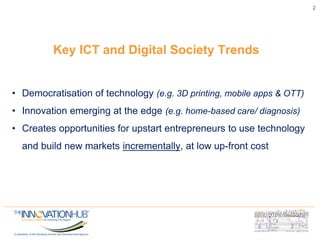
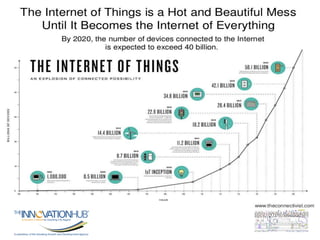
• Democratisation of technology (e.g. 3D printing, mobile apps & OTT)
• Innovation emerging at the edge (e.g. home-based care/ diagnosis)
• Creates opportunities for upstart entrepreneurs to use technology
and build new markets incrementally, at low up-front cost
Digital Business and Technologies
3
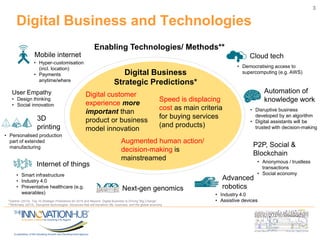
Digital customer
experience more
important than
product or business
model innovation
Speed is displacing
cost as main criteria
for buying services
(and products)
Augmented human action/
decision-making is
mainstreamed
Digital Business
Strategic Predictions*
*Gartner (2014). Top 10 Strategic Predictions for 2015 and Beyond: Digital Business Is Driving 'Big Change'.
**McKinsey (2013). Disruptive technologies: Advances that will transform life, business, and the global economy
• Disruptive business
developed by an algorithm
• Digital assistants will be
trusted with decision-making
Cloud tech
3D
printing
Next-gen genomics
Internet of things
Automation of
knowledge work
Mobile internet
Enabling Technologies/ Methods**
• Smart infrastructure
• Industry 4.0
• Preventative healthcare (e.g.
wearables)
• Hyper-customisation
(incl. location)
• Payments
anytime/where
• Personalised production
part of extended
manufacturing
Advanced
robotics
P2P, Social &
Blockchain
User Empathy
• Design thinking
• Social innovation
• Anonymous / trustless
transactions
• Social economy
• Industry 4.0
• Assistive devices
• Democratising access to
supercomputing (e.g. AWS)
4
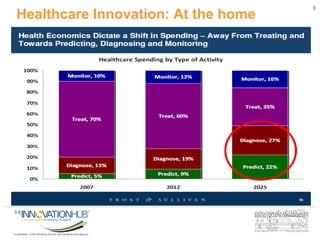
Healthcare Innovation: At the home
5
6
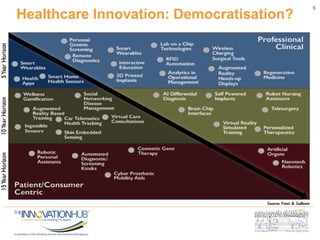
Healthcare Innovation: Democratisation?
7
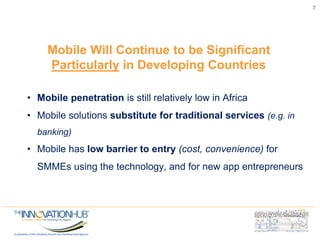
Mobile Will Continue to be Significant
Particularly in Developing Countries
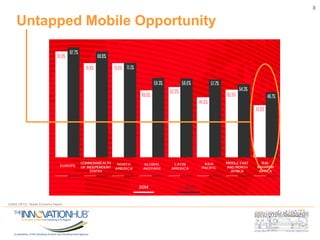
• Mobile penetration is still relatively low in Africa
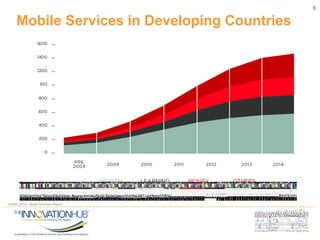
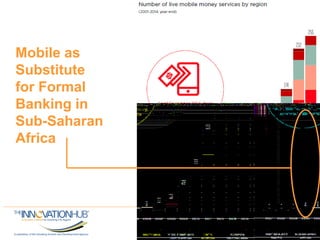
• Mobile solutions substitute for traditional services (e.g. in
banking)
• Mobile has low barrier to entry (cost, convenience) for
SMMEs using the technology, and for new app entrepreneurs
Untapped Mobile Opportunity
8
GSMA (2015). Mobile Economy Report
Mobile Services in Developing Countries
9
GSMA (2015). Mobile Economy Report
Mobile as
Substitute
for Formal
Banking in
Sub-Saharan
Africa
10
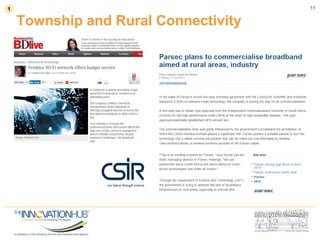
Township and Rural Connectivity
111
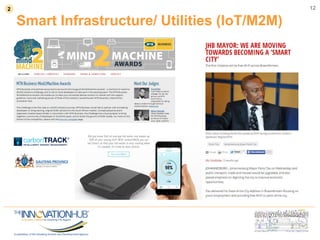
Smart Infrastructure/ Utilities (IoT/M2M)
122
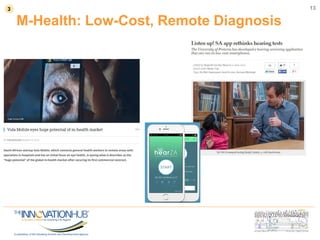
M-Health: Low-Cost, Remote Diagnosis
133
14
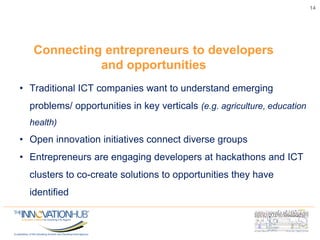
Connecting entrepreneurs to developers
and opportunities
• Traditional ICT companies want to understand emerging
problems/ opportunities in key verticals (e.g. agriculture, education
health)
• Open innovation initiatives connect diverse groups
• Entrepreneurs are engaging developers at hackathons and ICT
clusters to co-create solutions to opportunities they have
identified
15
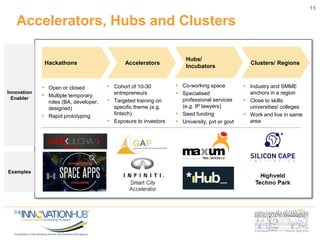
Hackathons Accelerators
Hubs/
Incubators
▪ Open or closed
▪ Multiple temporary
roles (BA, developer,
designed)
▪ Rapid prototyping
Innovation
Enabler
Examples
Clusters/ Regions
▪ Cohort of 10-30
entrepreneurs
▪ Targeted training on
specific theme (e.g.
fintech)
▪ Exposure to investors
▪ Co-working space
▪ Specialised
professional services
(e.g. IP lawyers)
▪ Seed funding
▪ University, pvt or govt
▪ Industry and SMME
anchors in a region
▪ Close to skills:
universities/ colleges
▪ Work and live in same
area
Accelerators, Hubs and Clusters
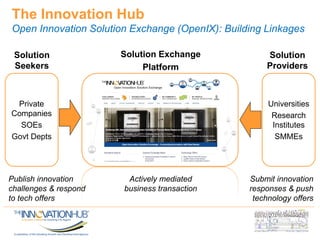
Solution Exchange
Platform
Private
Companies
SOEs
Govt Depts
Universities
Research
Institutes
SMMEs
Publish innovation
challenges & respond
to tech offers
Submit innovation
responses & push
technology offers
Actively mediated
business transaction
Solution
Seekers
Solution
Providers
The Innovation Hub
Open Innovation Solution Exchange (OpenIX): Building Linkages
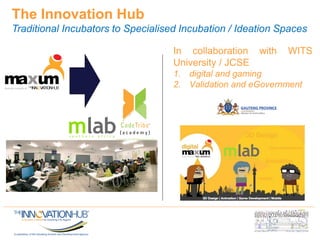
The Innovation Hub
Traditional Incubators to Specialised Incubation / Ideation Spaces
In collaboration with WITS
University / JCSE
1. digital and gaming
2. Validation and eGovernment
18
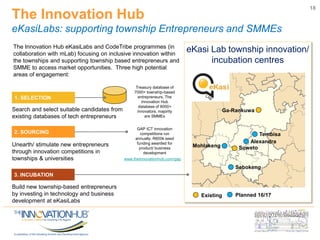
Soweto
Ga-Rankuwa
Tembisa
Sebokeng
Mohlakeng
Existing Planned 16/17
eKasi Lab township innovation/
incubation centres
The Innovation Hub eKasiLabs and CodeTribe programmes (in
collaboration with mLab) focusing on inclusive innovation within
the townships and supporting township based entrepreneurs and
SMME to access market opportunities. Three high potential
areas of engagement:
1. SELECTION
Build new township-based entrepreneurs
by investing in technology and business
development at eKasiLabs
3. INCUBATION
Treasury database of
7000+ township-based
entrepreneurs. The
Innovation Hub
database of 8000+
innovators, majority
are SMMEs
Unearth/ stimulate new entrepreneurs
through innovation competitions in
townships & universities
Search and select suitable candidates from
existing databases of tech entrepreneurs
2. SOURCING
GAP ICT innovation
competitions run
annually. R600k seed
funding awarded for
product/ business
development
Alexandra
www.theinnovationhub.com/gap
The Innovation Hub
eKasiLabs: supporting township Entrepreneurs and SMMEs
Thank You
19

McLean Sibanda

  • 1.
    Role of ICTin the digital economy and as a catalyst for the support and growth of the SMMEs 10th March 2016
  • 2.
    Key ICT andDigital Society Trends 2 • Democratisation of technology (e.g. 3D printing, mobile apps & OTT) • Innovation emerging at the edge (e.g. home-based care/ diagnosis) • Creates opportunities for upstart entrepreneurs to use technology and build new markets incrementally, at low up-front cost
  • 3.
    Digital Business andTechnologies 3 Digital customer experience more important than product or business model innovation Speed is displacing cost as main criteria for buying services (and products) Augmented human action/ decision-making is mainstreamed Digital Business Strategic Predictions* *Gartner (2014). Top 10 Strategic Predictions for 2015 and Beyond: Digital Business Is Driving 'Big Change'. **McKinsey (2013). Disruptive technologies: Advances that will transform life, business, and the global economy • Disruptive business developed by an algorithm • Digital assistants will be trusted with decision-making Cloud tech 3D printing Next-gen genomics Internet of things Automation of knowledge work Mobile internet Enabling Technologies/ Methods** • Smart infrastructure • Industry 4.0 • Preventative healthcare (e.g. wearables) • Hyper-customisation (incl. location) • Payments anytime/where • Personalised production part of extended manufacturing Advanced robotics P2P, Social & Blockchain User Empathy • Design thinking • Social innovation • Anonymous / trustless transactions • Social economy • Industry 4.0 • Assistive devices • Democratising access to supercomputing (e.g. AWS)
  • 4.
  • 5.
  • 6.
  • 7.
    7 Mobile Will Continueto be Significant Particularly in Developing Countries • Mobile penetration is still relatively low in Africa • Mobile solutions substitute for traditional services (e.g. in banking) • Mobile has low barrier to entry (cost, convenience) for SMMEs using the technology, and for new app entrepreneurs
  • 8.
    Untapped Mobile Opportunity 8 GSMA(2015). Mobile Economy Report
  • 9.
    Mobile Services inDeveloping Countries 9 GSMA (2015). Mobile Economy Report
  • 10.
  • 11.
    Township and RuralConnectivity 111
  • 12.
  • 13.
  • 14.
    14 Connecting entrepreneurs todevelopers and opportunities • Traditional ICT companies want to understand emerging problems/ opportunities in key verticals (e.g. agriculture, education health) • Open innovation initiatives connect diverse groups • Entrepreneurs are engaging developers at hackathons and ICT clusters to co-create solutions to opportunities they have identified
  • 15.
    15 Hackathons Accelerators Hubs/ Incubators ▪ Openor closed ▪ Multiple temporary roles (BA, developer, designed) ▪ Rapid prototyping Innovation Enabler Examples Clusters/ Regions ▪ Cohort of 10-30 entrepreneurs ▪ Targeted training on specific theme (e.g. fintech) ▪ Exposure to investors ▪ Co-working space ▪ Specialised professional services (e.g. IP lawyers) ▪ Seed funding ▪ University, pvt or govt ▪ Industry and SMME anchors in a region ▪ Close to skills: universities/ colleges ▪ Work and live in same area Accelerators, Hubs and Clusters
  • 16.
    Solution Exchange Platform Private Companies SOEs Govt Depts Universities Research Institutes SMMEs Publishinnovation challenges & respond to tech offers Submit innovation responses & push technology offers Actively mediated business transaction Solution Seekers Solution Providers The Innovation Hub Open Innovation Solution Exchange (OpenIX): Building Linkages
  • 17.
    The Innovation Hub TraditionalIncubators to Specialised Incubation / Ideation Spaces In collaboration with WITS University / JCSE 1. digital and gaming 2. Validation and eGovernment
  • 18.
    18 Soweto Ga-Rankuwa Tembisa Sebokeng Mohlakeng Existing Planned 16/17 eKasiLab township innovation/ incubation centres The Innovation Hub eKasiLabs and CodeTribe programmes (in collaboration with mLab) focusing on inclusive innovation within the townships and supporting township based entrepreneurs and SMME to access market opportunities. Three high potential areas of engagement: 1. SELECTION Build new township-based entrepreneurs by investing in technology and business development at eKasiLabs 3. INCUBATION Treasury database of 7000+ township-based entrepreneurs. The Innovation Hub database of 8000+ innovators, majority are SMMEs Unearth/ stimulate new entrepreneurs through innovation competitions in townships & universities Search and select suitable candidates from existing databases of tech entrepreneurs 2. SOURCING GAP ICT innovation competitions run annually. R600k seed funding awarded for product/ business development Alexandra www.theinnovationhub.com/gap The Innovation Hub eKasiLabs: supporting township Entrepreneurs and SMMEs
  • 19.