STKI is here to serve you………
1
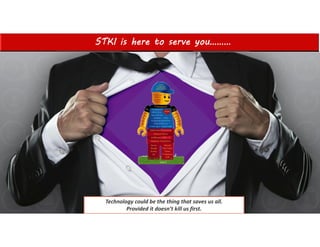
Technology could be the thing that saves us all.
Provided it doesn’t kill us first.
2
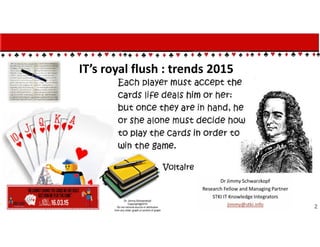
IT’s royal flush : trends 2015
3
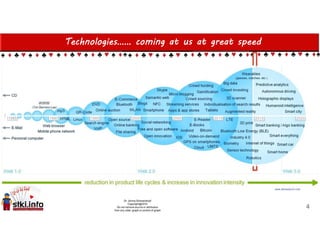
Technologies…… coming at us at great speed
4
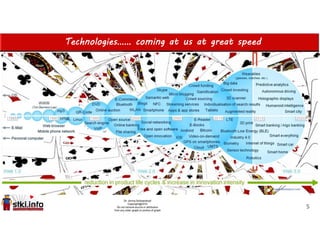
Technologies…… coming at us at great speed
5
'Re-enterprization' of IT
6
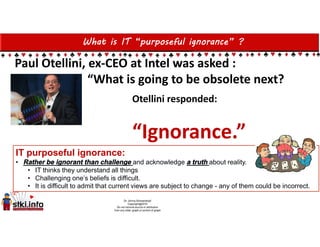
Paul Otellini, ex-CEO at Intel was asked :
“What is going to be obsolete next?
Otellini responded:
“Ignorance.”
IT purposeful ignorance:
• Rather be ignorant than challenge and acknowledge a truth about reality.
• IT thinks they understand all things
• Challenging one's beliefs is difficult.
• It is difficult to admit that current views are subject to change - any of them could be incorrect.
What is IT “purposeful ignorance” ?
But 2015: IT Strategy year
8
8
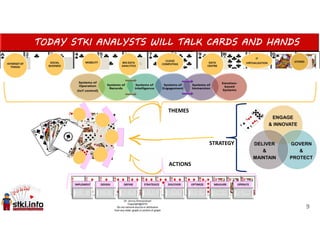
TODAY STKI ANALYSTS WILL TALK CARDS AND HANDS
9
STRATEGY
THEMES
ACTIONS
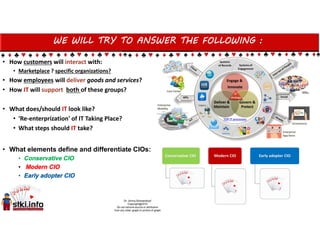
WE WILL TRY TO ANSWER THE FOLLOWING :
• How customers will interact with:
• Marketplace ? specific organizations?
• How employees will deliver goods and services?
• How IT will support both of these groups?
• What does/should IT look like?
• 'Re-enterprization' of IT Taking Place?
• What steps should IT take?
• What elements define and differentiate CIOs:
• Conservative CIO
• Modern CIO
• Early adopter CIO
11
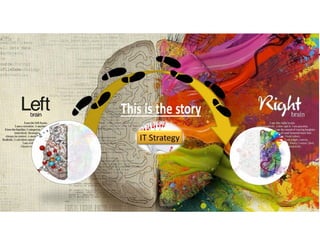
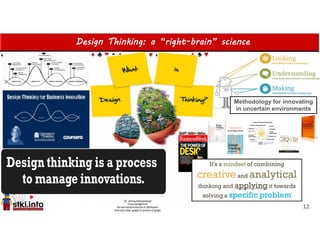
Design Thinking: a “right-brain” science
12
Methodology for innovating
in uncertain environments
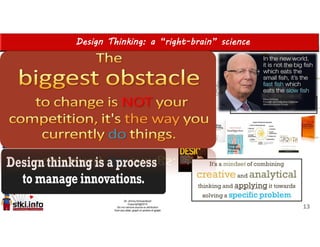
Design Thinking: a “right-brain” science
13
Methodology for innovating
in uncertain environments
14
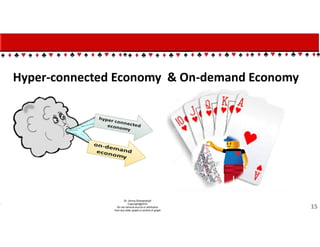
Hyper-connected Economy & On-demand Economy
15
The Hyperconnected Economy
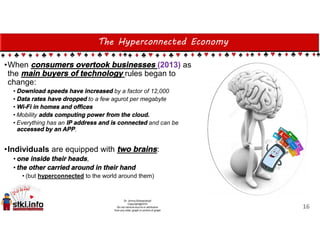
•When consumers overtook businesses (2013) as
the main buyers of technology rules began to
change:
• Download speeds have increased by a factor of 12,000
• Data rates have dropped to a few agurot per megabyte
• Wi-Fi in homes and offices
• Mobility adds computing power from the cloud.
• Everything has an IP address and is connected and can be
accessed by an APP.
•Individuals are equipped with two brains:
•one inside their heads,
•the other carried around in their hand
• (but hyperconnected to the world around them)
16
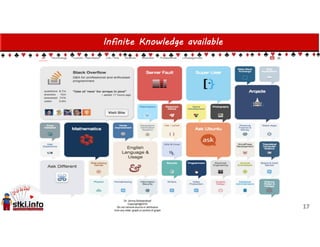
Infinite Knowledge available
17
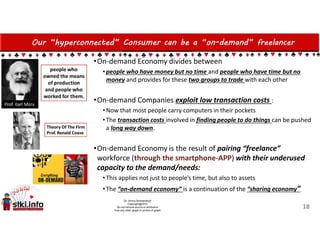
Our “hyperconnected” Consumer can be a “on-demand” freelancer
•On-demand Economy divides between
•people who have money but no time and people who have time but no
money and provides for these two groups to trade with each other
•On-demand Companies exploit low transaction costs :
•Now that most people carry computers in their pockets
•The transaction costs involved in finding people to do things can be pushed
a long way down.
•On-demand Economy is the result of pairing “freelance”
workforce (through the smartphone-APP) with their underused
capacity to the demand/needs:
•This applies not just to people’s time, but also to assets
•The “on-demand economy” is a continuation of the “sharing economy”
18
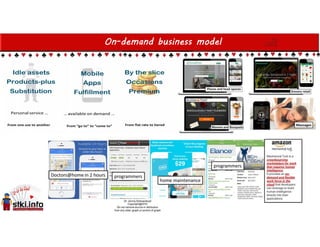
On-demand business model
Internet of Corporate Things (IoCT)
Internet of Things (IoT) Internet of People (IoP)
20
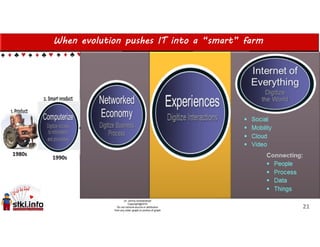
When evolution pushes IT into a “smart” farm
21
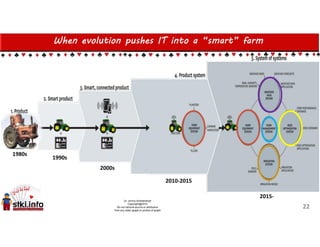
When evolution pushes IT into a “smart” farm
22
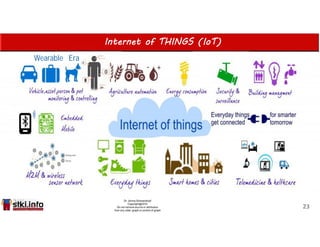
Internet of THINGS (IoT)
23
Wearable Era
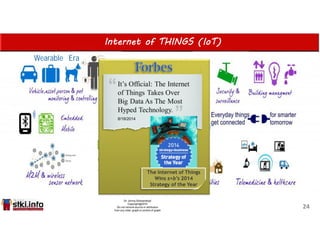
Internet of THINGS (IoT)
24
Wearable Era
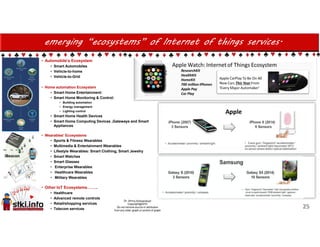
emerging “ecosystems” of Internet of things services.
• Automobile’s Ecosystem
• Smart Automobiles
• Vehicle-to-home
• Vehicle-to-Grid
• Home automation Ecosystem
• Smart Home Entertainment:
• Smart Home Monitoring & Control:
• Building automation
• Energy management
• Lighting control
• Smart Home Health Devices
• Smart Home Computing Devices ,Gateways and Smart
Appliances
• Wearables’ Ecosystems
• Sports & Fitness Wearables
• Multimedia & Entertainment Wearables
• Lifestyle Wearables: Smart Clothing, Smart Jewelry
• Smart Watches
• Smart Glasses
• Enterprise Wearables
• Healthcare Wearables
• Military Wearables
• Other IoT Ecosystems……..
• Healthcare
• Advanced remote controls
• Retail/shopping services
• Telecom services 25
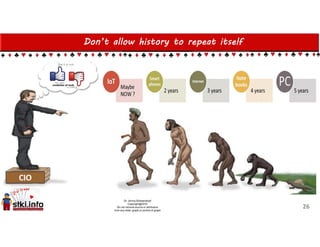
Don’t allow history to repeat itself
26
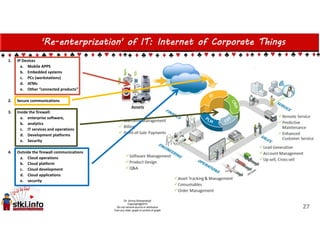
'Re-enterprization' of IT: Internet of Corporate Things
1. IP Devices
a. Mobile APPS
b. Embedded systems
c. PCs (workstations)
d. ATMs
e. Other “connected products”
2. Secure communications
3. Inside the firewall:
a. enterprise software,
b. analytics
c. IT services and operations
d. Development platforms
e. Security
4. Outside the firewall communications
a. Cloud operations
b. Cloud platform
c. Cloud development
d. Cloud applications
e. security
27
Israeli IoCT: police today
28
More Israeli examples of IoCT
29
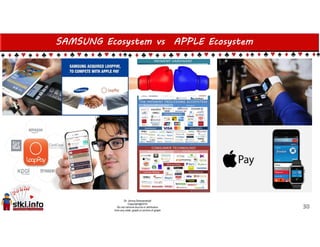
SAMSUNG Ecosystem vs APPLE Ecosystem
30
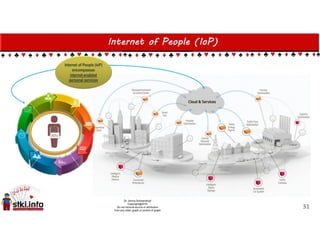
Internet of People (IoP)
31
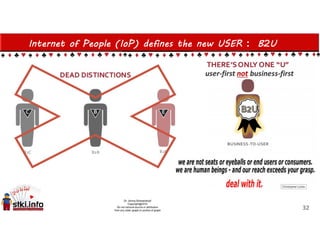
Internet of People (IoP) defines the new USER : B2U
32
B2U Buys Experiences, Not Things
33
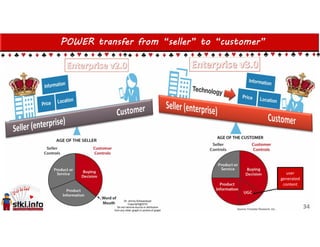
POWER transfer from “seller” to “customer”
34
user
generated
content
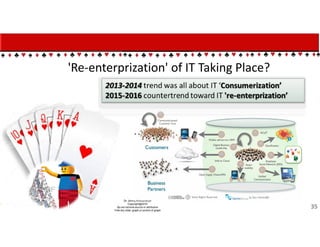
'Re-enterprization' of IT Taking Place?
35
ENGAGE & INNOVATE
36
ENGAGE
& INNOVATE
GOVERN
&
PROTECT
DELIVER
&
MAINTAIN
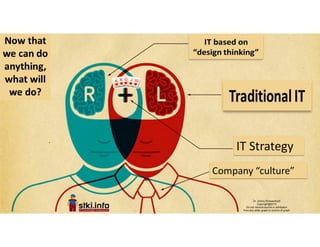
IT Strategy
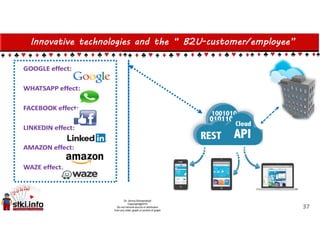
Innovative technologies and the “ B2U-customer/employee”
37
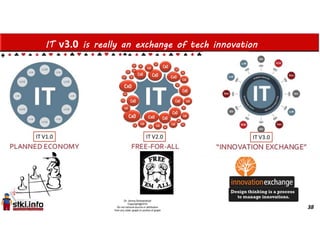
IT v3.0 is really an exchange of tech innovation
38
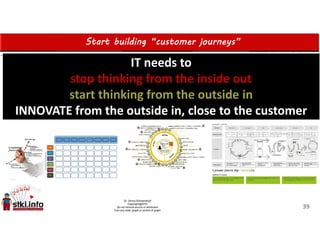
Start building “customer journeys”
39
IT needs to
stop thinking from the inside out
start thinking from the outside in
INNOVATE from the outside in, close to the customer
IT needs to
stop thinking from the inside out
start thinking from the outside in
INNOVATE from the outside in, close to the customer
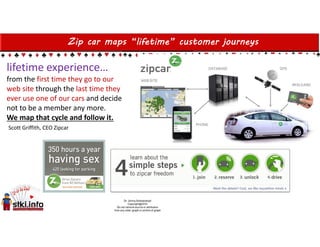
lifetime experience…
from the first time they go to our
web site through the last time they
ever use one of our cars and decide
not to be a member any more.
We map that cycle and follow it.
Scott Griffith, CEO Zipcar
Zip car maps “lifetime” customer journeys
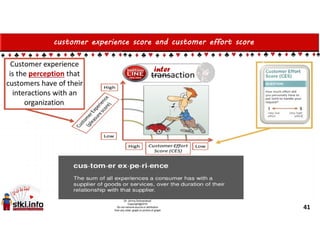
customer experience score and customer effort score
41
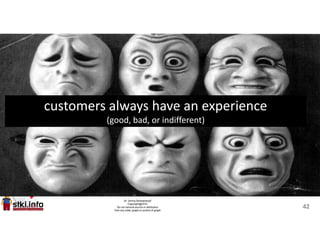
customers always have an experience
(good, bad, or indifferent)
42
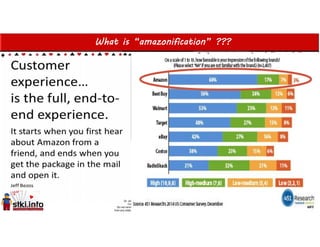
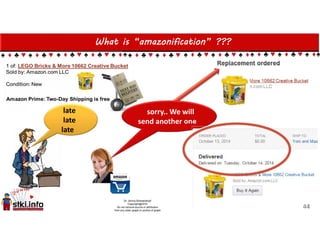
What is “amazonification” ???
44
late
late
late
sorry.. We will
send another one
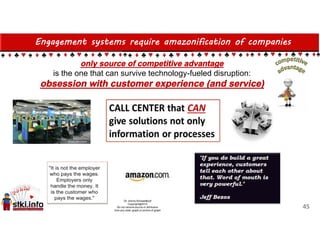
Engagement systems require amazonification of companies
45
only source of competitive advantage
is the one that can survive technology-fueled disruption:
obsession with customer experience (and service)
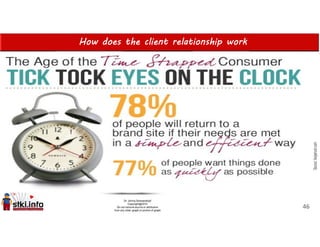
How does the client relationship work
46
2000-2005
2006-2014
2014-20XX
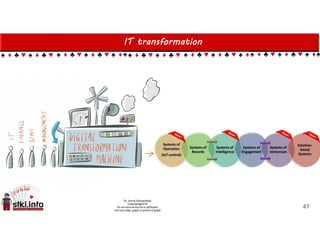
IT transformation
47
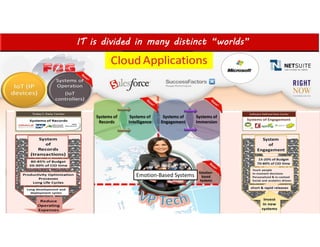
IT is divided in many distinct “worlds”
48
Emotion-Based Systems
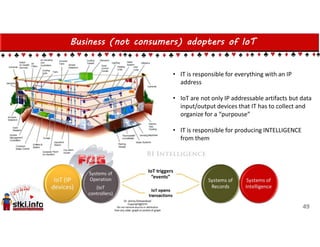
Business (not consumers) adopters of IoT
49
• IT is responsible for everything with an IP
address
• IoT are not only IP addressable artifacts but data
input/output devices that IT has to collect and
organize for a “purpouse”
• IT is responsible for producing INTELLIGENCE
from them
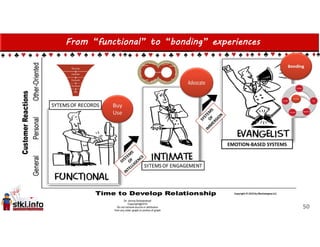
From “functional” to “bonding” experiences
50
EMOTION-BASED SYSTEMS
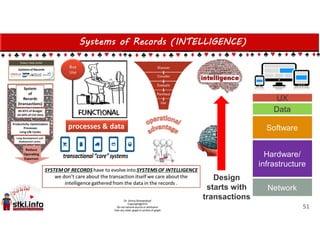
Systems of Records (INTELLIGENCE)
51
Design
starts with
transactions
processes & data
Systems of Engagement (IMMERSION)
52
Design starts
with
engagement
processes & data
Mobility and “the hub”
53
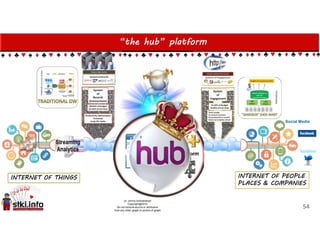
INFORMATION
REPOSITORY
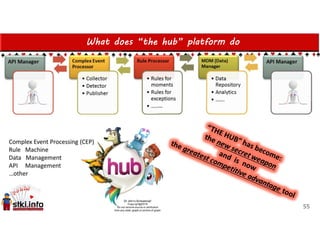
“the hub” platform
INTERNET OF THINGS INTERNET OF PEOPLE
PLACES & COMPANIES
54
Social Media
What does “the hub” platform do
55
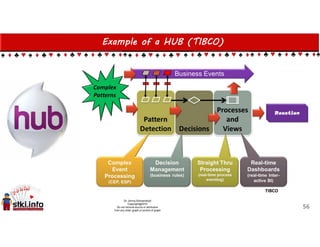
Example of a HUB (TIBCO)
56
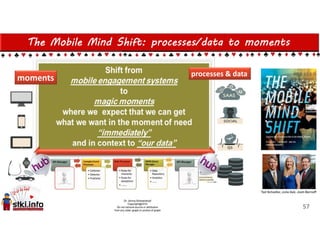
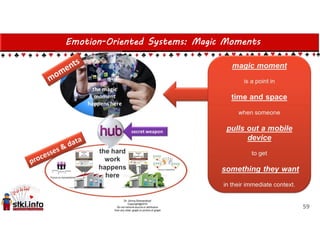
The Mobile Mind Shift: processes/data to moments
57
processes & data
moments
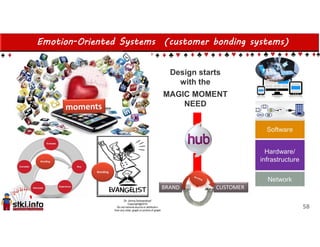
Emotion-Oriented Systems (customer bonding systems)
58
Design starts
with the
MAGIC MOMENT
NEED
Emotion-Oriented Systems: Magic Moments
59
2015-16 trend toward core-systems modernization
60
HUB is driving the need for more
agile and sophisticated core systems
(that can support more extensive use of data).
“Systems of records”
• were not architected in a way that was suited
for standard APIs.
• At the time they were designed no one was
doing analytics or connecting to mobile
APPs.
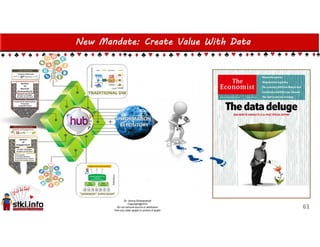
New Mandate: Create Value With Data
61
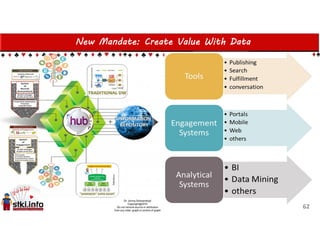
New Mandate: Create Value With Data
62
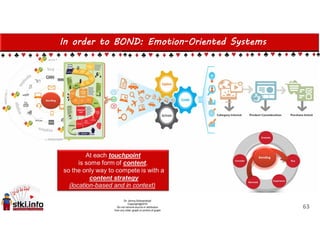
In order to BOND: Emotion-Oriented Systems
63
Apps and applications are two very different expressions of software
64
The defining characteristic of an APP is its reduced functional presence.
APPS do less than applications.They solve magical moments.
That is their goal
Transaction layer
Differentiation layer
Innovation layer
IT department up to 2014
Transaction layer
Differentiation layer
Innovation layer
IT department after 2014
40Source: Megan Quinn, KPCB Partner.
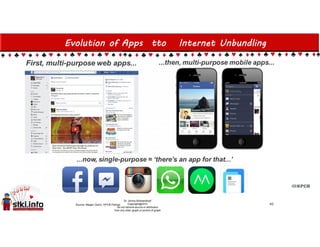
Evolution of Apps tto Internet Unbundling
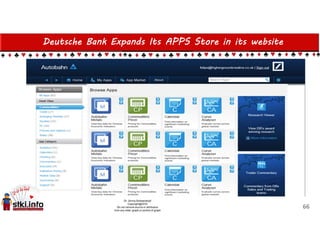
Deutsche Bank Expands Its APPS Store in its website
66
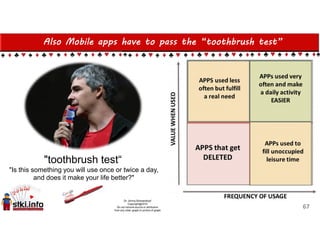
Also Mobile apps have to pass the “toothbrush test”
67
"toothbrush test“
"Is this something you will use once or twice a day,
and does it make your life better?"
“toothbrush test” examples
68
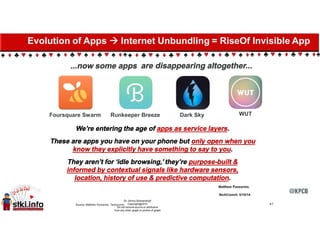
...now some apps are disappearing altogether...
WUTFoursquare Swarm Runkeeper Breeze Dark Sky
We’re entering the age of apps as service layers.
These are apps you have on your phone but only open when you
know they explicitly have something to say to you.
They aren’t for ‘idle browsing,’ they’re purpose-built &
informed by contextual signals like hardware sensors,
location, history of use & predictive computation.
41Source: Matthew Panzarino, Techcrunch.
Evolution of Apps  Internet Unbundling = RiseOf Invisible App
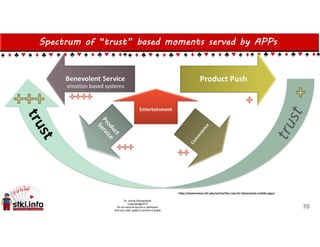
Spectrum of “trust” based moments served by APPs
70
emotion based systems
Spectrum of “trust” based APPs
71
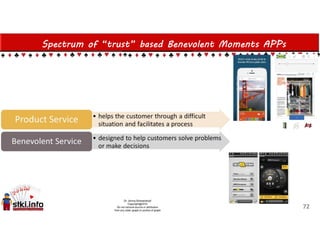
Spectrum of “trust” based Benevolent Moments APPs
72
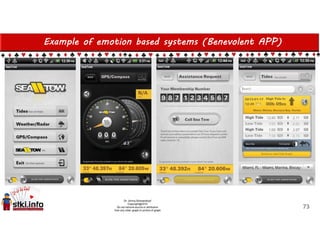
Example of emotion based systems (Benevolent APP)
73
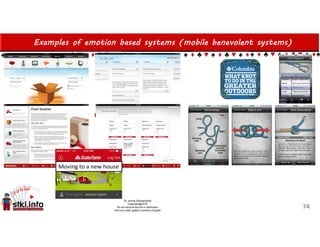
Examples of emotion based systems (mobile benevolent systems)
74
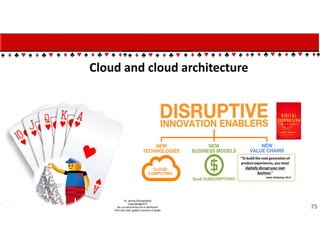
Cloud and cloud architecture
75
DELIVER & MAINTAIN
76
ENGAGE
& INNOVATE
GOVERN
&
PROTECT
DELIVER
&
MAINTAIN
IT Strategy
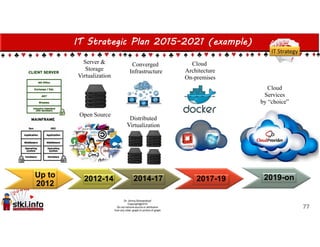
IT Strategic Plan 2015-2021 (example)
77
Server &
Storage
Virtualization
Distributed
Virtualization
Cloud
Architecture
On-premises
Cloud
Services
by “choice”
Up to
2012
2014-17 2017-19 2019-on2012-14
Open Source
Converged
Infrastructure
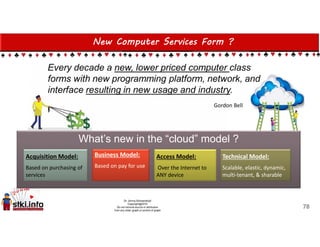
New Computer Services Form ?
What’s new in the “cloud” model ?
Acquisition Model:
Based on purchasing of
services
Business Model:
Based on pay for use
Access Model:
Over the Internet to
ANY device
Technical Model:
Scalable, elastic, dynamic,
multi-tenant, & sharable
Gordon Bell
78
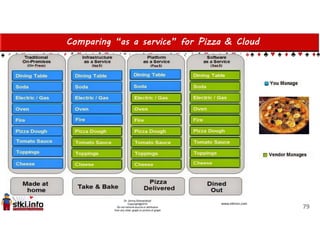
Comparing “as a service” for Pizza & Cloud
79
Cloud and Container Options
80
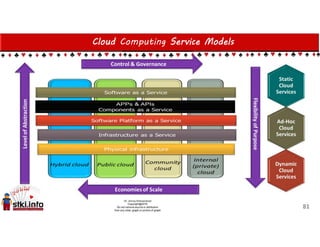
On-premisesIaaS IaaS
with containers
PaaSSaaS
Servers
Storage
Networking
O/S
Cloud Computing Service Models
81
82
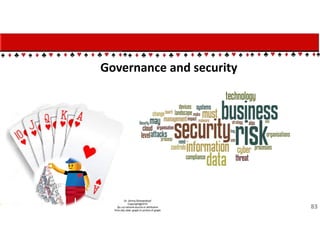
Governance and security
83
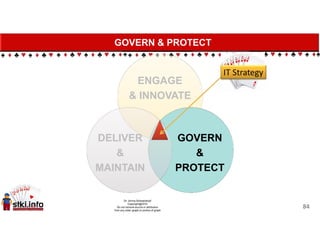
GOVERN & PROTECT
84
ENGAGE
& INNOVATE
GOVERN
&
PROTECT
DELIVER
&
MAINTAIN
IT Strategy
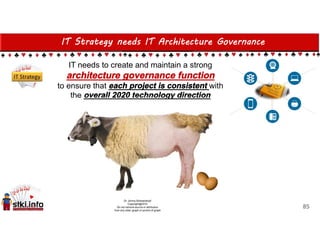
IT Strategy needs IT Architecture Governance
85
IT needs to create and maintain a strong
architecture governance function
to ensure that each project is consistent with
the overall 2020 technology direction
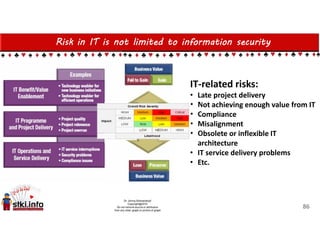
Risk in IT is not limited to information security
86
IT-related risks:
• Late project delivery
• Not achieving enough value from IT
• Compliance
• Misalignment
• Obsolete or inflexible IT
architecture
• IT service delivery problems
• Etc.
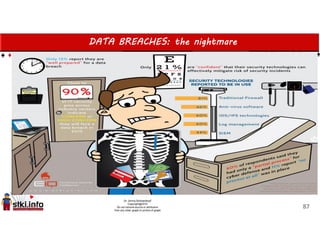
DATA BREACHES: the nightmare
87
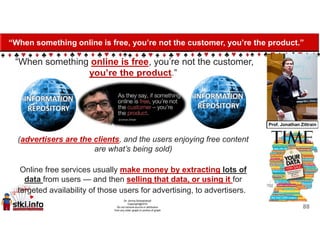
“When something online is free, you’re not the customer, you’re the product.”
“When something online is free, you’re not the customer,
you’re the product.”
(advertisers are the clients, and the users enjoying free content
are what’s being sold)
Online free services usually make money by extracting lots of
data from users — and then selling that data, or using it for
targeted availability of those users for advertising, to advertisers.
88
Reputation Economy: online reputation
89
Your online reputation is how others see you when they
look for you online. Online reputations are fast becoming
THE most valuable currency of the 21st century.
Online reputation : includes news articles, blog posts,
social media profiles, “people search” sites, public records,
Wikipedia articles, automatically generated content,
photos, videos—anything. Do you really want to let
someone else define your reputation?
Put out the content that tells your story:
the way you want it to be told
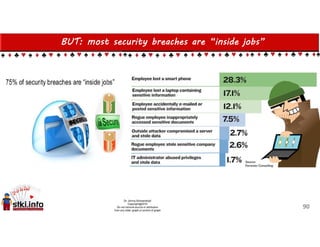
BUT: most security breaches are “inside jobs”
90
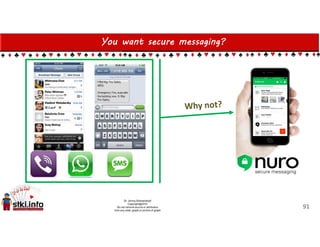
You want secure messaging?
91
92

STKI Summit 2015..Jimmy Main Tent Presentation: IT Trends 2015

  • 1.
    STKI is hereto serve you……… 1 Technology could be the thing that saves us all. Provided it doesn’t kill us first.
  • 2.
    2 IT’s royal flush: trends 2015
  • 3.
  • 4.
    Technologies…… coming atus at great speed 4
  • 5.
    Technologies…… coming atus at great speed 5
  • 6.
  • 7.
    Paul Otellini, ex-CEOat Intel was asked : “What is going to be obsolete next? Otellini responded: “Ignorance.” IT purposeful ignorance: • Rather be ignorant than challenge and acknowledge a truth about reality. • IT thinks they understand all things • Challenging one's beliefs is difficult. • It is difficult to admit that current views are subject to change - any of them could be incorrect. What is IT “purposeful ignorance” ?
  • 8.
    But 2015: ITStrategy year 8 8
  • 9.
    TODAY STKI ANALYSTSWILL TALK CARDS AND HANDS 9 STRATEGY THEMES ACTIONS
  • 10.
    WE WILL TRYTO ANSWER THE FOLLOWING : • How customers will interact with: • Marketplace ? specific organizations? • How employees will deliver goods and services? • How IT will support both of these groups? • What does/should IT look like? • 'Re-enterprization' of IT Taking Place? • What steps should IT take? • What elements define and differentiate CIOs: • Conservative CIO • Modern CIO • Early adopter CIO
  • 11.
  • 12.
    Design Thinking: a“right-brain” science 12 Methodology for innovating in uncertain environments
  • 13.
    Design Thinking: a“right-brain” science 13 Methodology for innovating in uncertain environments
  • 14.
  • 15.
    Hyper-connected Economy &On-demand Economy 15
  • 16.
    The Hyperconnected Economy •Whenconsumers overtook businesses (2013) as the main buyers of technology rules began to change: • Download speeds have increased by a factor of 12,000 • Data rates have dropped to a few agurot per megabyte • Wi-Fi in homes and offices • Mobility adds computing power from the cloud. • Everything has an IP address and is connected and can be accessed by an APP. •Individuals are equipped with two brains: •one inside their heads, •the other carried around in their hand • (but hyperconnected to the world around them) 16
  • 17.
  • 18.
    Our “hyperconnected” Consumercan be a “on-demand” freelancer •On-demand Economy divides between •people who have money but no time and people who have time but no money and provides for these two groups to trade with each other •On-demand Companies exploit low transaction costs : •Now that most people carry computers in their pockets •The transaction costs involved in finding people to do things can be pushed a long way down. •On-demand Economy is the result of pairing “freelance” workforce (through the smartphone-APP) with their underused capacity to the demand/needs: •This applies not just to people’s time, but also to assets •The “on-demand economy” is a continuation of the “sharing economy” 18
  • 19.
  • 20.
    Internet of CorporateThings (IoCT) Internet of Things (IoT) Internet of People (IoP) 20
  • 21.
    When evolution pushesIT into a “smart” farm 21
  • 22.
    When evolution pushesIT into a “smart” farm 22
  • 23.
    Internet of THINGS(IoT) 23 Wearable Era
  • 24.
    Internet of THINGS(IoT) 24 Wearable Era
  • 25.
    emerging “ecosystems” ofInternet of things services. • Automobile’s Ecosystem • Smart Automobiles • Vehicle-to-home • Vehicle-to-Grid • Home automation Ecosystem • Smart Home Entertainment: • Smart Home Monitoring & Control: • Building automation • Energy management • Lighting control • Smart Home Health Devices • Smart Home Computing Devices ,Gateways and Smart Appliances • Wearables’ Ecosystems • Sports & Fitness Wearables • Multimedia & Entertainment Wearables • Lifestyle Wearables: Smart Clothing, Smart Jewelry • Smart Watches • Smart Glasses • Enterprise Wearables • Healthcare Wearables • Military Wearables • Other IoT Ecosystems…….. • Healthcare • Advanced remote controls • Retail/shopping services • Telecom services 25
  • 26.
    Don’t allow historyto repeat itself 26
  • 27.
    'Re-enterprization' of IT:Internet of Corporate Things 1. IP Devices a. Mobile APPS b. Embedded systems c. PCs (workstations) d. ATMs e. Other “connected products” 2. Secure communications 3. Inside the firewall: a. enterprise software, b. analytics c. IT services and operations d. Development platforms e. Security 4. Outside the firewall communications a. Cloud operations b. Cloud platform c. Cloud development d. Cloud applications e. security 27
  • 28.
  • 29.
  • 30.
    SAMSUNG Ecosystem vsAPPLE Ecosystem 30
  • 31.
  • 32.
    Internet of People(IoP) defines the new USER : B2U 32
  • 33.
    B2U Buys Experiences,Not Things 33
  • 34.
    POWER transfer from“seller” to “customer” 34 user generated content
  • 35.
    'Re-enterprization' of ITTaking Place? 35
  • 36.
    ENGAGE & INNOVATE 36 ENGAGE &INNOVATE GOVERN & PROTECT DELIVER & MAINTAIN IT Strategy
  • 37.
    Innovative technologies andthe “ B2U-customer/employee” 37
  • 38.
    IT v3.0 isreally an exchange of tech innovation 38
  • 39.
    Start building “customerjourneys” 39 IT needs to stop thinking from the inside out start thinking from the outside in INNOVATE from the outside in, close to the customer IT needs to stop thinking from the inside out start thinking from the outside in INNOVATE from the outside in, close to the customer
  • 40.
    lifetime experience… from thefirst time they go to our web site through the last time they ever use one of our cars and decide not to be a member any more. We map that cycle and follow it. Scott Griffith, CEO Zipcar Zip car maps “lifetime” customer journeys
  • 41.
    customer experience scoreand customer effort score 41
  • 42.
    customers always havean experience (good, bad, or indifferent) 42
  • 43.
  • 44.
    What is “amazonification”??? 44 late late late sorry.. We will send another one
  • 45.
    Engagement systems requireamazonification of companies 45 only source of competitive advantage is the one that can survive technology-fueled disruption: obsession with customer experience (and service)
  • 46.
    How does theclient relationship work 46 2000-2005 2006-2014 2014-20XX
  • 47.
  • 48.
    IT is dividedin many distinct “worlds” 48 Emotion-Based Systems
  • 49.
    Business (not consumers)adopters of IoT 49 • IT is responsible for everything with an IP address • IoT are not only IP addressable artifacts but data input/output devices that IT has to collect and organize for a “purpouse” • IT is responsible for producing INTELLIGENCE from them
  • 50.
    From “functional” to“bonding” experiences 50 EMOTION-BASED SYSTEMS
  • 51.
    Systems of Records(INTELLIGENCE) 51 Design starts with transactions processes & data
  • 52.
    Systems of Engagement(IMMERSION) 52 Design starts with engagement processes & data
  • 53.
  • 54.
    INFORMATION REPOSITORY “the hub” platform INTERNETOF THINGS INTERNET OF PEOPLE PLACES & COMPANIES 54 Social Media
  • 55.
    What does “thehub” platform do 55
  • 56.
    Example of aHUB (TIBCO) 56
  • 57.
    The Mobile MindShift: processes/data to moments 57 processes & data moments
  • 58.
    Emotion-Oriented Systems (customerbonding systems) 58 Design starts with the MAGIC MOMENT NEED
  • 59.
  • 60.
    2015-16 trend towardcore-systems modernization 60 HUB is driving the need for more agile and sophisticated core systems (that can support more extensive use of data). “Systems of records” • were not architected in a way that was suited for standard APIs. • At the time they were designed no one was doing analytics or connecting to mobile APPs.
  • 61.
    New Mandate: CreateValue With Data 61
  • 62.
    New Mandate: CreateValue With Data 62
  • 63.
    In order toBOND: Emotion-Oriented Systems 63
  • 64.
    Apps and applicationsare two very different expressions of software 64 The defining characteristic of an APP is its reduced functional presence. APPS do less than applications.They solve magical moments. That is their goal Transaction layer Differentiation layer Innovation layer IT department up to 2014 Transaction layer Differentiation layer Innovation layer IT department after 2014
  • 65.
    40Source: Megan Quinn,KPCB Partner. Evolution of Apps tto Internet Unbundling
  • 66.
    Deutsche Bank ExpandsIts APPS Store in its website 66
  • 67.
    Also Mobile appshave to pass the “toothbrush test” 67 "toothbrush test“ "Is this something you will use once or twice a day, and does it make your life better?"
  • 68.
  • 69.
    ...now some appsare disappearing altogether... WUTFoursquare Swarm Runkeeper Breeze Dark Sky We’re entering the age of apps as service layers. These are apps you have on your phone but only open when you know they explicitly have something to say to you. They aren’t for ‘idle browsing,’ they’re purpose-built & informed by contextual signals like hardware sensors, location, history of use & predictive computation. 41Source: Matthew Panzarino, Techcrunch. Evolution of Apps  Internet Unbundling = RiseOf Invisible App
  • 70.
    Spectrum of “trust”based moments served by APPs 70 emotion based systems
  • 71.
  • 72.
    Spectrum of “trust”based Benevolent Moments APPs 72
  • 73.
    Example of emotionbased systems (Benevolent APP) 73
  • 74.
    Examples of emotionbased systems (mobile benevolent systems) 74
  • 75.
    Cloud and cloudarchitecture 75
  • 76.
    DELIVER & MAINTAIN 76 ENGAGE &INNOVATE GOVERN & PROTECT DELIVER & MAINTAIN IT Strategy
  • 77.
    IT Strategic Plan2015-2021 (example) 77 Server & Storage Virtualization Distributed Virtualization Cloud Architecture On-premises Cloud Services by “choice” Up to 2012 2014-17 2017-19 2019-on2012-14 Open Source Converged Infrastructure
  • 78.
    New Computer ServicesForm ? What’s new in the “cloud” model ? Acquisition Model: Based on purchasing of services Business Model: Based on pay for use Access Model: Over the Internet to ANY device Technical Model: Scalable, elastic, dynamic, multi-tenant, & sharable Gordon Bell 78
  • 79.
    Comparing “as aservice” for Pizza & Cloud 79
  • 80.
    Cloud and ContainerOptions 80 On-premisesIaaS IaaS with containers PaaSSaaS Servers Storage Networking O/S
  • 81.
  • 82.
  • 83.
  • 84.
    GOVERN & PROTECT 84 ENGAGE &INNOVATE GOVERN & PROTECT DELIVER & MAINTAIN IT Strategy
  • 85.
    IT Strategy needsIT Architecture Governance 85 IT needs to create and maintain a strong architecture governance function to ensure that each project is consistent with the overall 2020 technology direction
  • 86.
    Risk in ITis not limited to information security 86 IT-related risks: • Late project delivery • Not achieving enough value from IT • Compliance • Misalignment • Obsolete or inflexible IT architecture • IT service delivery problems • Etc.
  • 87.
    DATA BREACHES: thenightmare 87
  • 88.
    “When something onlineis free, you’re not the customer, you’re the product.” “When something online is free, you’re not the customer, you’re the product.” (advertisers are the clients, and the users enjoying free content are what’s being sold) Online free services usually make money by extracting lots of data from users — and then selling that data, or using it for targeted availability of those users for advertising, to advertisers. 88
  • 89.
    Reputation Economy: onlinereputation 89 Your online reputation is how others see you when they look for you online. Online reputations are fast becoming THE most valuable currency of the 21st century. Online reputation : includes news articles, blog posts, social media profiles, “people search” sites, public records, Wikipedia articles, automatically generated content, photos, videos—anything. Do you really want to let someone else define your reputation? Put out the content that tells your story: the way you want it to be told
  • 90.
    BUT: most securitybreaches are “inside jobs” 90
  • 91.
    You want securemessaging? 91
  • 92.