Chapter 3 – Leadership Behaviours
Leadership in organisations
Gary A. Yukl
Pádraig Carroll
April 2014
Why so many categories
What research methods
Describe the behaviours
Why: Task & Relations
Why: Change orientation
Effective use
Why so many ways to describe leadership behaviour?
50+ years of research
Abstract not Tangible
Broad versus Narrow
Methods of observation/ classification development
• Factor Analysis
• Judgmental
• Theoretical deductive
Major Types of Leadership Behaviour
Early Research shows 2 main
types of leadership behaviour
perception
Task & Relations
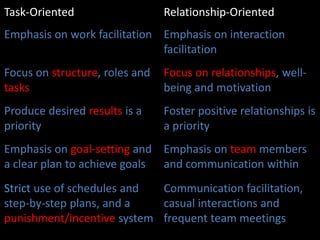
Task-Oriented Relationship-Oriented
Emphasis on work facilitation Emphasis on interaction
facilitation
Focus on structure, roles and
tasks
Focus on relationships, well-
being and motivation
Produce desired results is a
priority
Foster positive relationships is
a priority
Emphasis on goal-setting and
a clear plan to achieve goals
Emphasis on team members
and communication within
Strict use of schedules and
step-by-step plans, and a
punishment/incentive system
Communication facilitation,
casual interactions and
frequent team meetings
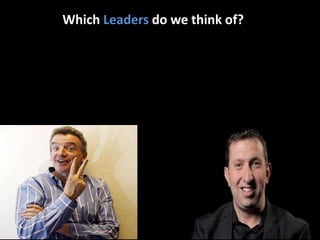
Which Leaders do we think of?
Change-oriented behaviour
Duffy, AIB
Other behaviour types
Participative leadership
Page, Google
Other behaviour types
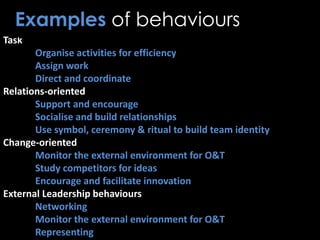
Task
Organise activities for efficiency
Assign work
Direct and coordinate
Relations-oriented
Support and encourage
Socialise and build relationships
Use symbol, ceremony & ritual to build team identity
Change-oriented
Monitor the external environment for O&T
Study competitors for ideas
Encourage and facilitate innovation
External Leadership behaviours
Networking
Monitor the external environment for O&T
Representing
Examples of behaviours
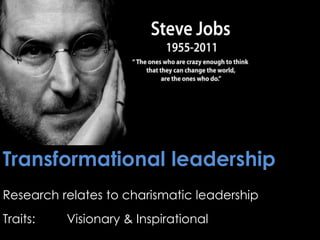
Transformational leadership
Research relates to charismatic leadership
Traits: Visionary & Inspirational
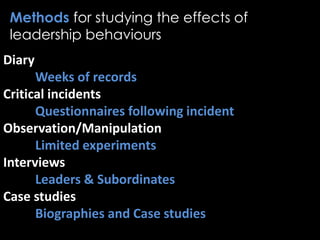
Methods for studying the effects of
leadership behaviours
Diary
Weeks of records
Critical incidents
Questionnaires following incident
Observation/Manipulation
Limited experiments
Interviews
Leaders & Subordinates
Case studies
Biographies and Case studies
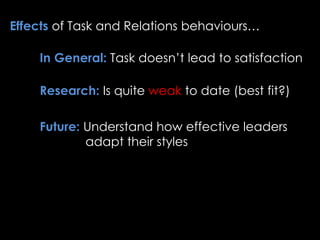
Effects of Task and Relations behaviours…
In General: Task doesn’t lead to satisfaction
Research: Is quite weak to date (best fit?)
Future: Understand how effective leaders
adapt their styles
The face of Leadership
A How To guide
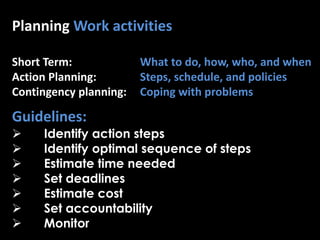
Planning Work activities
Short Term: What to do, how, who, and when
Action Planning: Steps, schedule, and policies
Contingency planning: Coping with problems
Guidelines:
 Identify action steps
 Identify optimal sequence of steps
 Estimate time needed
 Set deadlines
 Estimate cost
 Set accountability
 Monitor
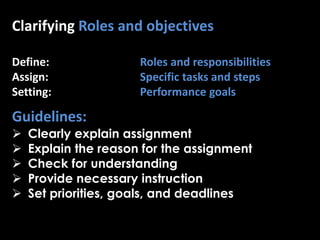
Clarifying Roles and objectives
Define: Roles and responsibilities
Assign: Specific tasks and steps
Setting: Performance goals
Guidelines:
 Clearly explain assignment
 Explain the reason for the assignment
 Check for understanding
 Provide necessary instruction
 Set priorities, goals, and deadlines
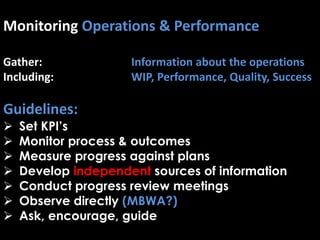
Monitoring Operations & Performance
Gather: Information about the operations
Including: WIP, Performance, Quality, Success
Guidelines:
 Set KPI’s
 Monitor process & outcomes
 Measure progress against plans
 Develop independent sources of information
 Conduct progress review meetings
 Observe directly (MBWA?)
 Ask, encourage, guide
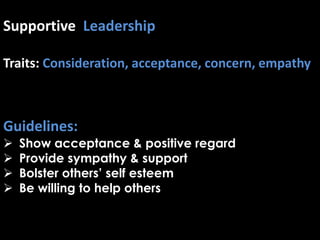
Supportive Leadership
Traits: Consideration, acceptance, concern, empathy
Guidelines:
 Show acceptance & positive regard
 Provide sympathy & support
 Bolster others’ self esteem
 Be willing to help others
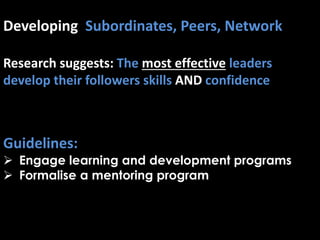
Developing Subordinates, Peers, Network
Research suggests: The most effective leaders
develop their followers skills AND confidence
Guidelines:
 Engage learning and development programs
 Formalise a mentoring program
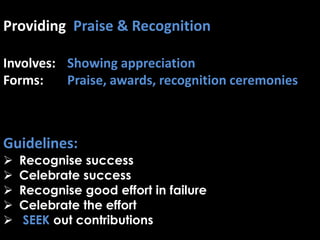
Providing Praise & Recognition
Involves: Showing appreciation
Forms: Praise, awards, recognition ceremonies
Guidelines:
 Recognise success
 Celebrate success
 Recognise good effort in failure
 Celebrate the effort
 SEEK out contributions
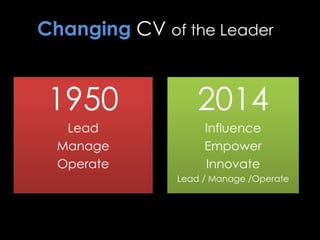
1950
Lead
Manage
Operate
2014
Influence
Empower
Innovate
Lead / Manage /Operate
Changing CV of the Leader
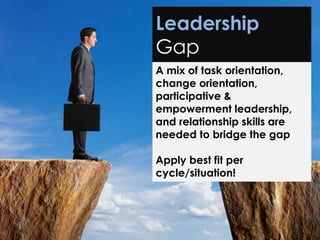
Leadership
Gap
A mix of task orientation,
change orientation,
participative &
empowerment leadership,
and relationship skills are
needed to bridge the gap
Apply best fit per
cycle/situation!

Padraig Carroll MBA leadership presentation Gary A. Yukl - Leadership in organisationschapter 3

  • 1.
    Chapter 3 –Leadership Behaviours Leadership in organisations Gary A. Yukl Pádraig Carroll April 2014
  • 2.
    Why so manycategories What research methods Describe the behaviours Why: Task & Relations Why: Change orientation Effective use
  • 3.
    Why so manyways to describe leadership behaviour?
  • 4.
    50+ years ofresearch Abstract not Tangible Broad versus Narrow Methods of observation/ classification development • Factor Analysis • Judgmental • Theoretical deductive
  • 5.
    Major Types ofLeadership Behaviour
  • 6.
    Early Research shows2 main types of leadership behaviour perception Task & Relations
  • 7.
    Task-Oriented Relationship-Oriented Emphasis onwork facilitation Emphasis on interaction facilitation Focus on structure, roles and tasks Focus on relationships, well- being and motivation Produce desired results is a priority Foster positive relationships is a priority Emphasis on goal-setting and a clear plan to achieve goals Emphasis on team members and communication within Strict use of schedules and step-by-step plans, and a punishment/incentive system Communication facilitation, casual interactions and frequent team meetings
  • 8.
    Which Leaders dowe think of?
  • 9.
  • 10.
  • 11.
    Task Organise activities forefficiency Assign work Direct and coordinate Relations-oriented Support and encourage Socialise and build relationships Use symbol, ceremony & ritual to build team identity Change-oriented Monitor the external environment for O&T Study competitors for ideas Encourage and facilitate innovation External Leadership behaviours Networking Monitor the external environment for O&T Representing Examples of behaviours
  • 12.
    Transformational leadership Research relatesto charismatic leadership Traits: Visionary & Inspirational
  • 13.
    Methods for studyingthe effects of leadership behaviours Diary Weeks of records Critical incidents Questionnaires following incident Observation/Manipulation Limited experiments Interviews Leaders & Subordinates Case studies Biographies and Case studies
  • 14.
    Effects of Taskand Relations behaviours… In General: Task doesn’t lead to satisfaction Research: Is quite weak to date (best fit?) Future: Understand how effective leaders adapt their styles
  • 15.
    The face ofLeadership A How To guide
  • 16.
    Planning Work activities ShortTerm: What to do, how, who, and when Action Planning: Steps, schedule, and policies Contingency planning: Coping with problems Guidelines:  Identify action steps  Identify optimal sequence of steps  Estimate time needed  Set deadlines  Estimate cost  Set accountability  Monitor
  • 17.
    Clarifying Roles andobjectives Define: Roles and responsibilities Assign: Specific tasks and steps Setting: Performance goals Guidelines:  Clearly explain assignment  Explain the reason for the assignment  Check for understanding  Provide necessary instruction  Set priorities, goals, and deadlines
  • 18.
    Monitoring Operations &Performance Gather: Information about the operations Including: WIP, Performance, Quality, Success Guidelines:  Set KPI’s  Monitor process & outcomes  Measure progress against plans  Develop independent sources of information  Conduct progress review meetings  Observe directly (MBWA?)  Ask, encourage, guide
  • 19.
    Supportive Leadership Traits: Consideration,acceptance, concern, empathy Guidelines:  Show acceptance & positive regard  Provide sympathy & support  Bolster others’ self esteem  Be willing to help others
  • 20.
    Developing Subordinates, Peers,Network Research suggests: The most effective leaders develop their followers skills AND confidence Guidelines:  Engage learning and development programs  Formalise a mentoring program
  • 21.
    Providing Praise &Recognition Involves: Showing appreciation Forms: Praise, awards, recognition ceremonies Guidelines:  Recognise success  Celebrate success  Recognise good effort in failure  Celebrate the effort  SEEK out contributions
  • 22.
  • 23.
    Leadership Gap A mix oftask orientation, change orientation, participative & empowerment leadership, and relationship skills are needed to bridge the gap Apply best fit per cycle/situation!