ACKNOWLEDGEMENT
We would like to express our special thanks of gratitude
to our teacher Mrs. LEENA SAJI, who gave us this
golden opportunity to do this wonderful presentation,
which also helped us in doing a lot of Research and
we came to know about so many new things .
We are really thankful to them.
Secondly we would also like to thank our parents and
friends who helped us a lot in finishing this
presentation within the limited time.
THANKS AGAIN TO ALL WHO HELPED US.
AND MOST IMPORTANTLY THANK GOD FOR EVERYTHING
AND BRINGING THIS PRESENTATION TO ITS PRESENT
FORM.
The surface area of a solid object is a measure of the
total area that the surface of an object occupies. The
mathematical definition of surface area in the presence
of curved surfaces is considerably more involved than
the definition of arc length of one-dimensional curves, or
of the surface area for polyhedra (i.e., objects with flat
polygonal faces), for which the surface area is the sum
of the areas of its faces.
Volume is the quantity of three-dimensional
space enclosed by some closed boundary, for
example, the space that a s substance or shape
occupies or contains.
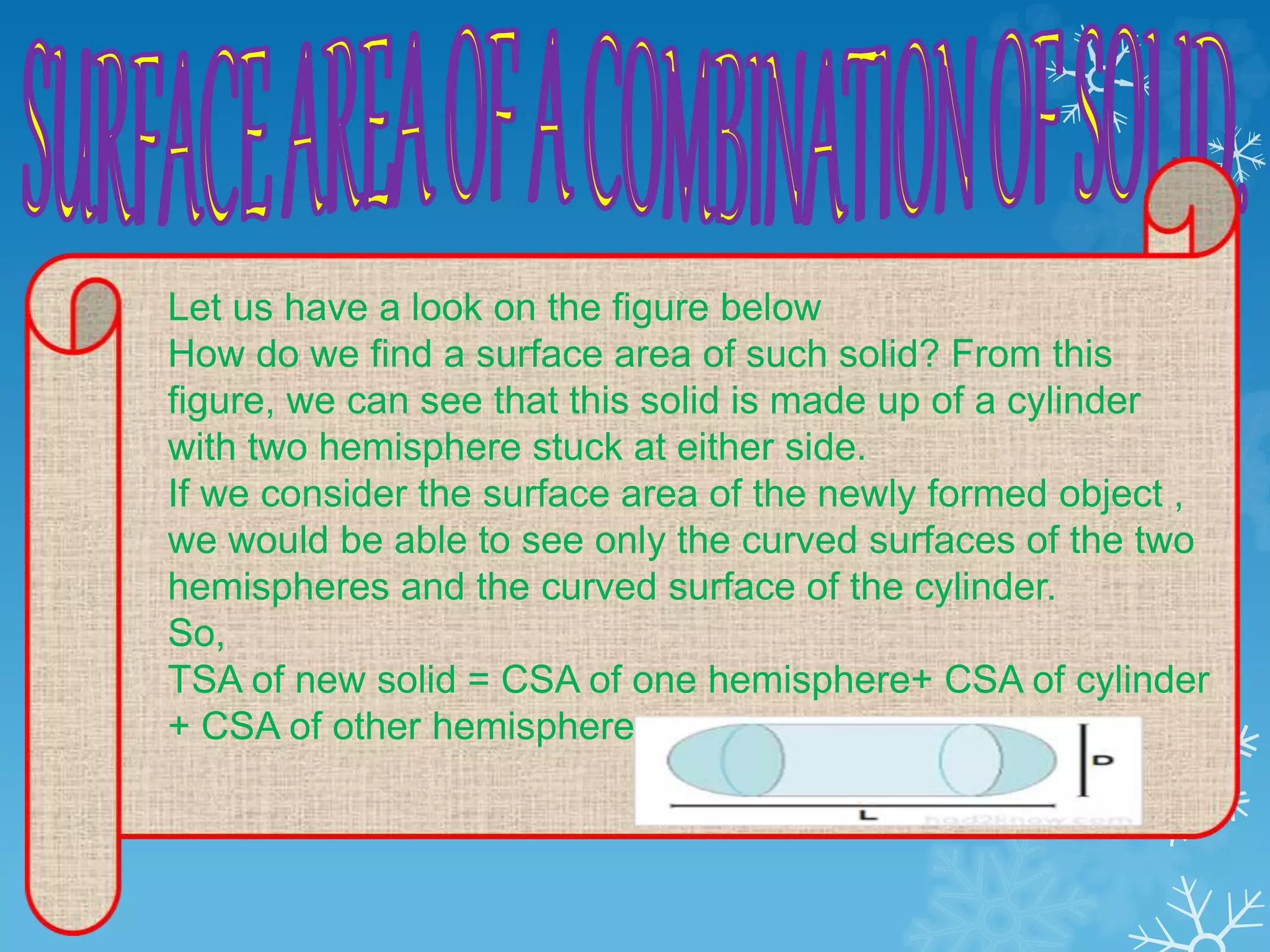
Let us have a look on the figure below
How do we find a surface area of such solid? From this
figure, we can see that this solid is made up of a cylinder
with two hemisphere stuck at either side.
If we consider the surface area of the newly formed object ,
we would be able to see only the curved surfaces of the two
hemispheres and the curved surface of the cylinder.
So,
TSA of new solid = CSA of one hemisphere+ CSA of cylinder
+ CSA of other hemisphere.
In the previous section, we have seen
How to find the surface area of solids
made up of combination of two basic
solids. Here, we shall see how to
calculate their volumes.
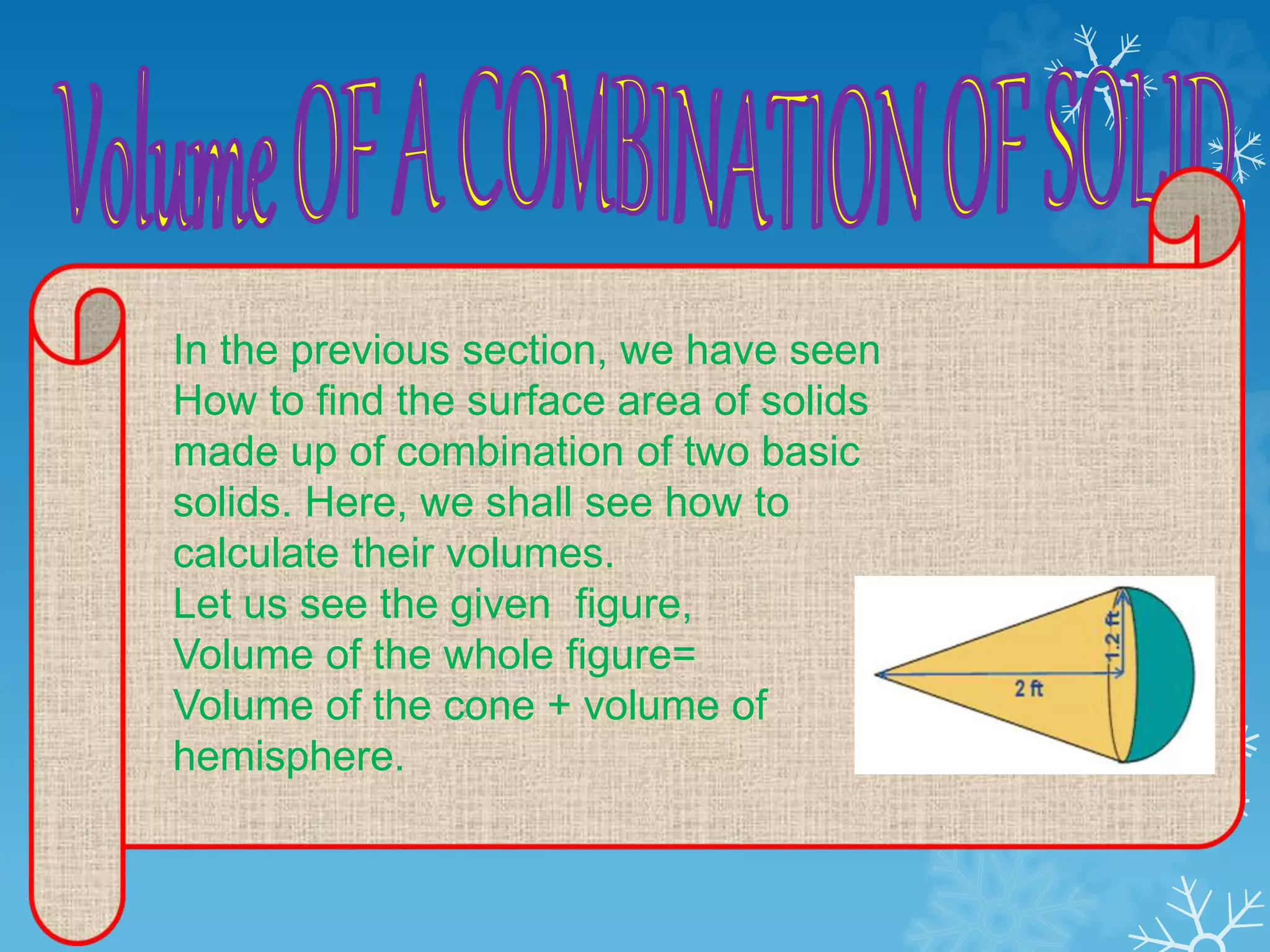
Let us see the given figure,
Volume of the whole figure=
Volume of the cone + volume of
hemisphere.
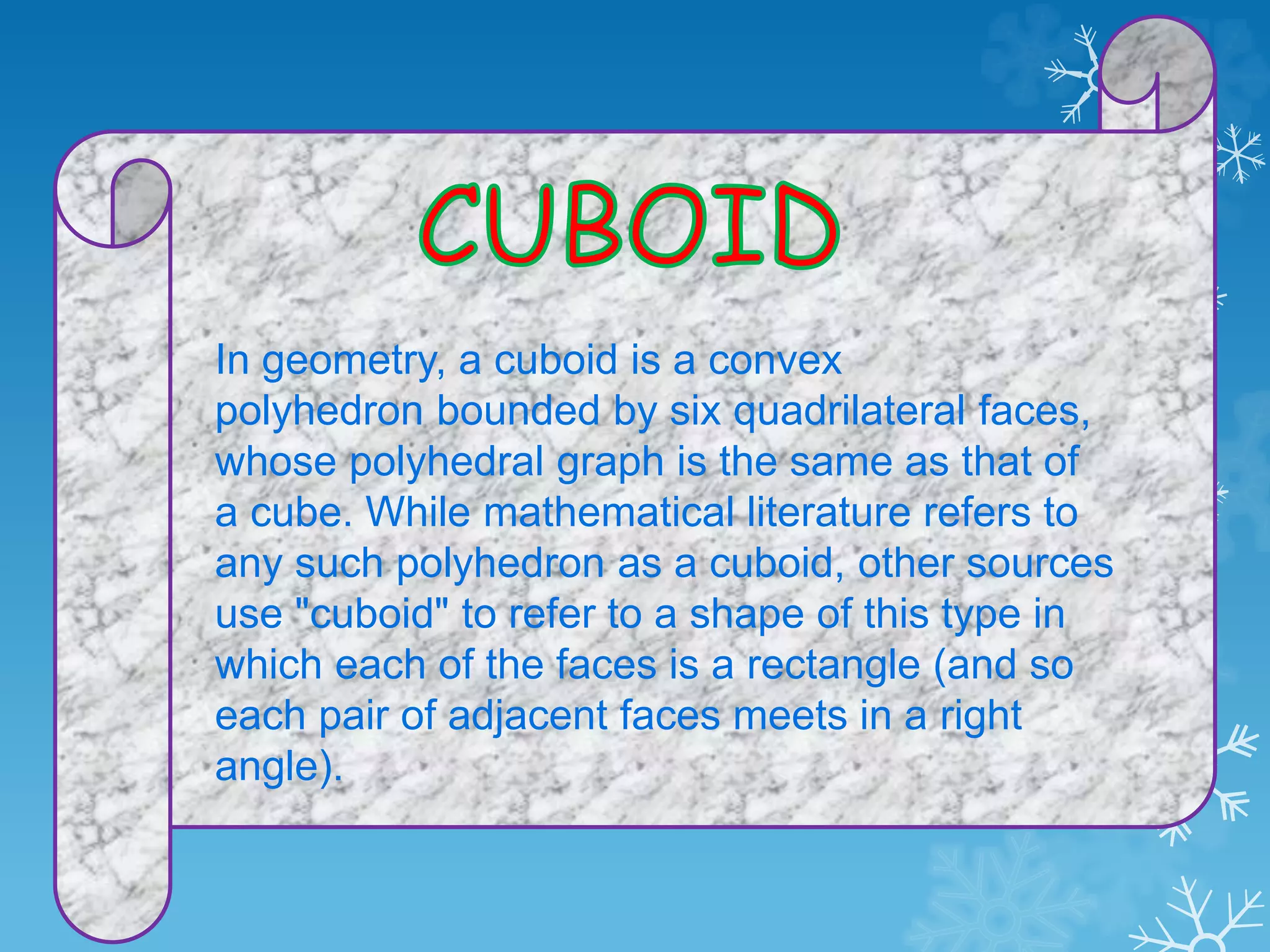
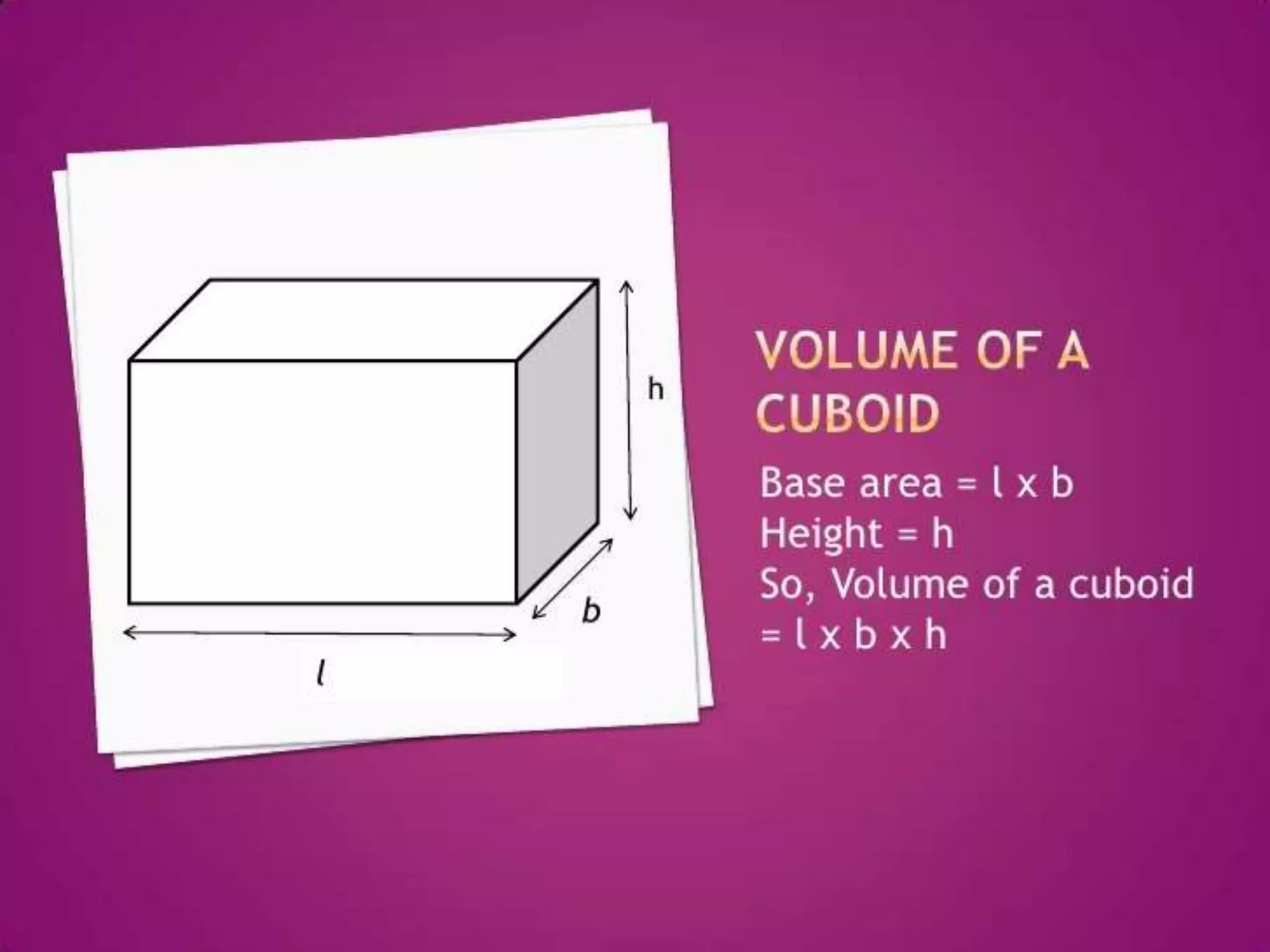
In geometry, a cuboid is a convex
polyhedron bounded by six quadrilateral faces,
whose polyhedral graph is the same as that of
a cube. While mathematical literature refers to
any such polyhedron as a cuboid, other sources
use "cuboid" to refer to a shape of this type in
which each of the faces is a rectangle (and so
each pair of adjacent faces meets in a right
angle).
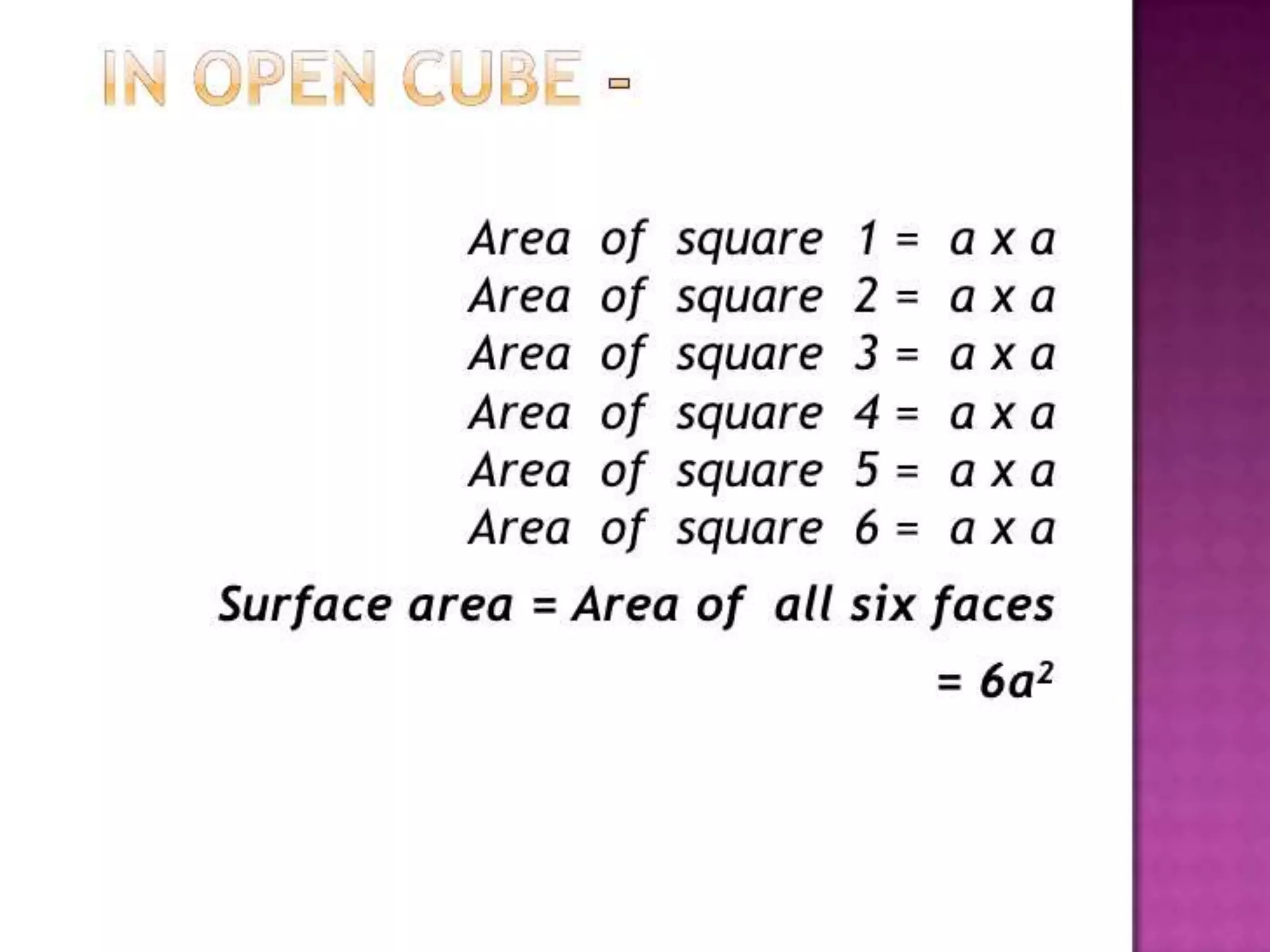
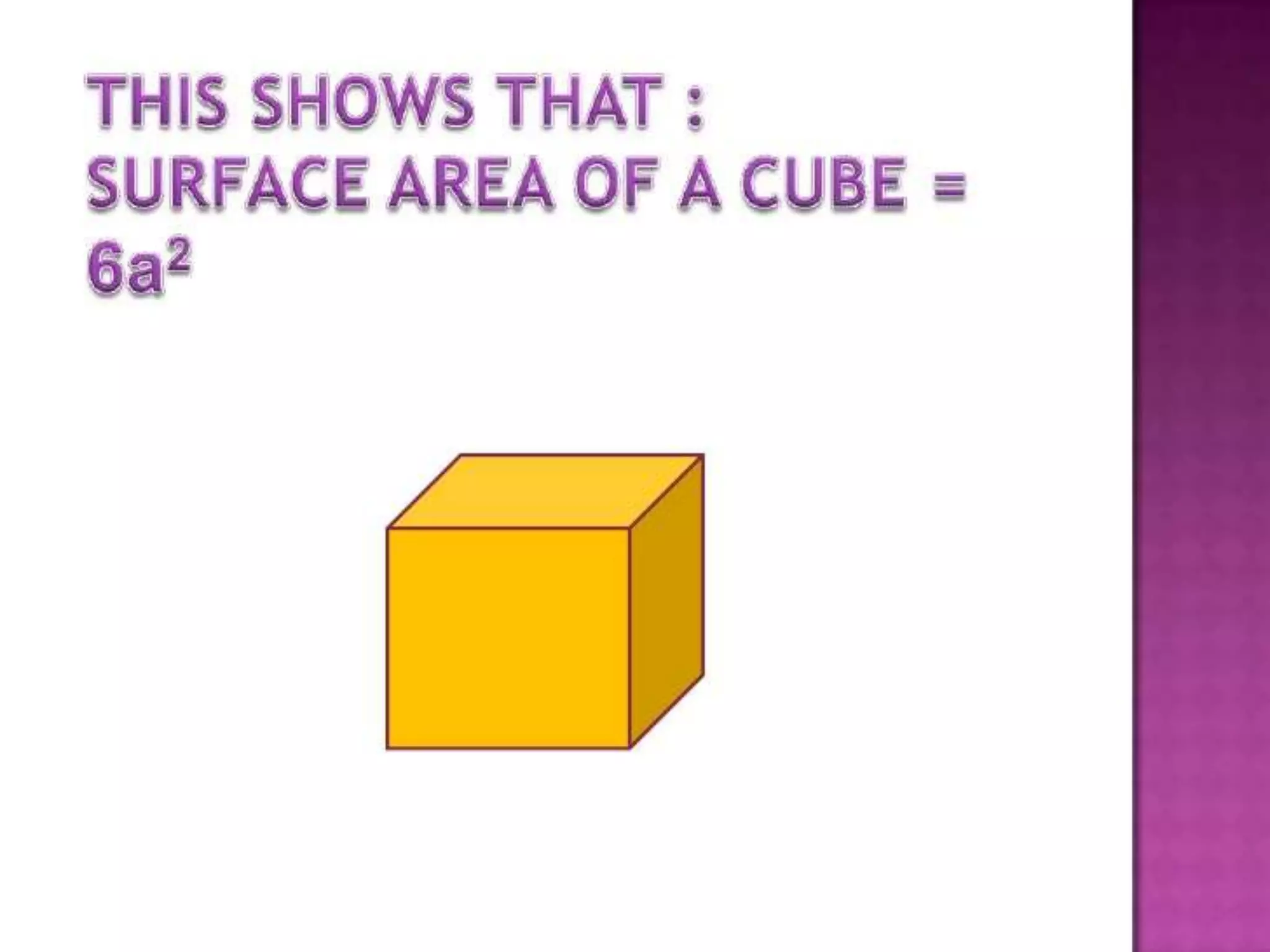
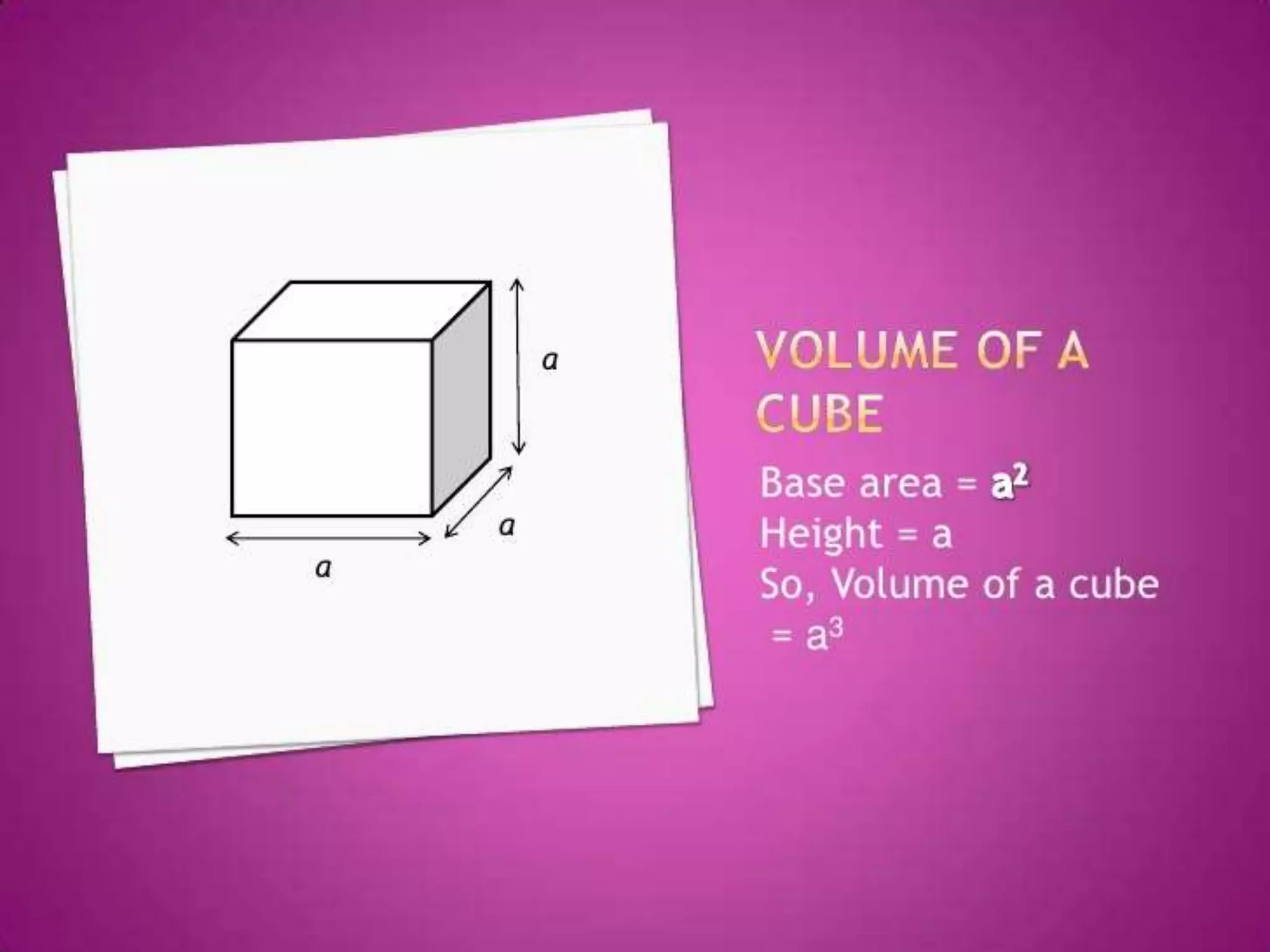
In geometry, a cube is a three-dimensional solid object
bounded by six square faces, facets or sides, with three
meeting at each vertex.
The cube is the only regular hexahedron and is one of the
five Platonic solids.
The cube is also a square parallelepiped, an
equilateral cuboid and a right rhombohedron. It is a regular
square prism in three orientations, and a trigonal
trapezohedron in four orientations.
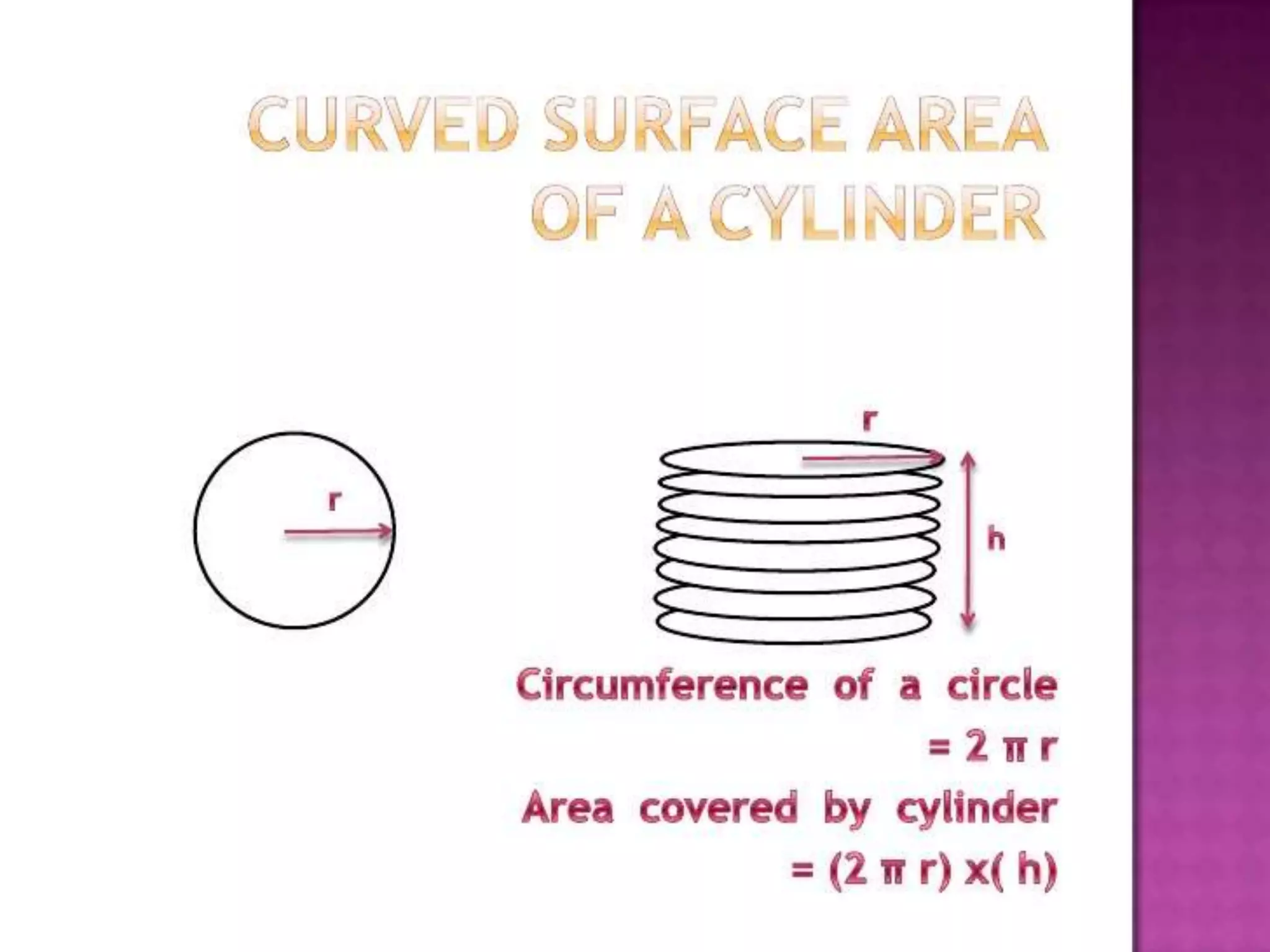
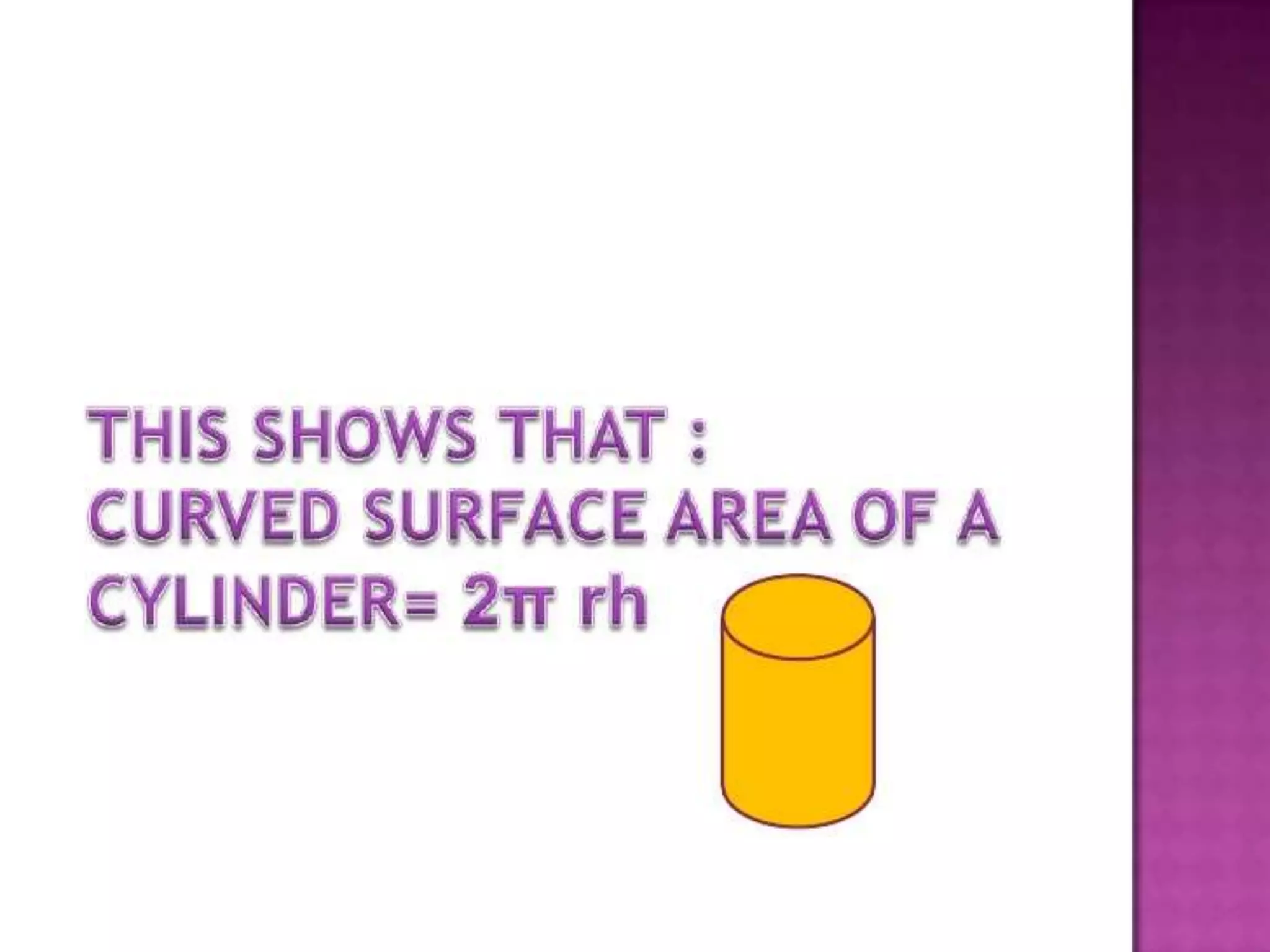
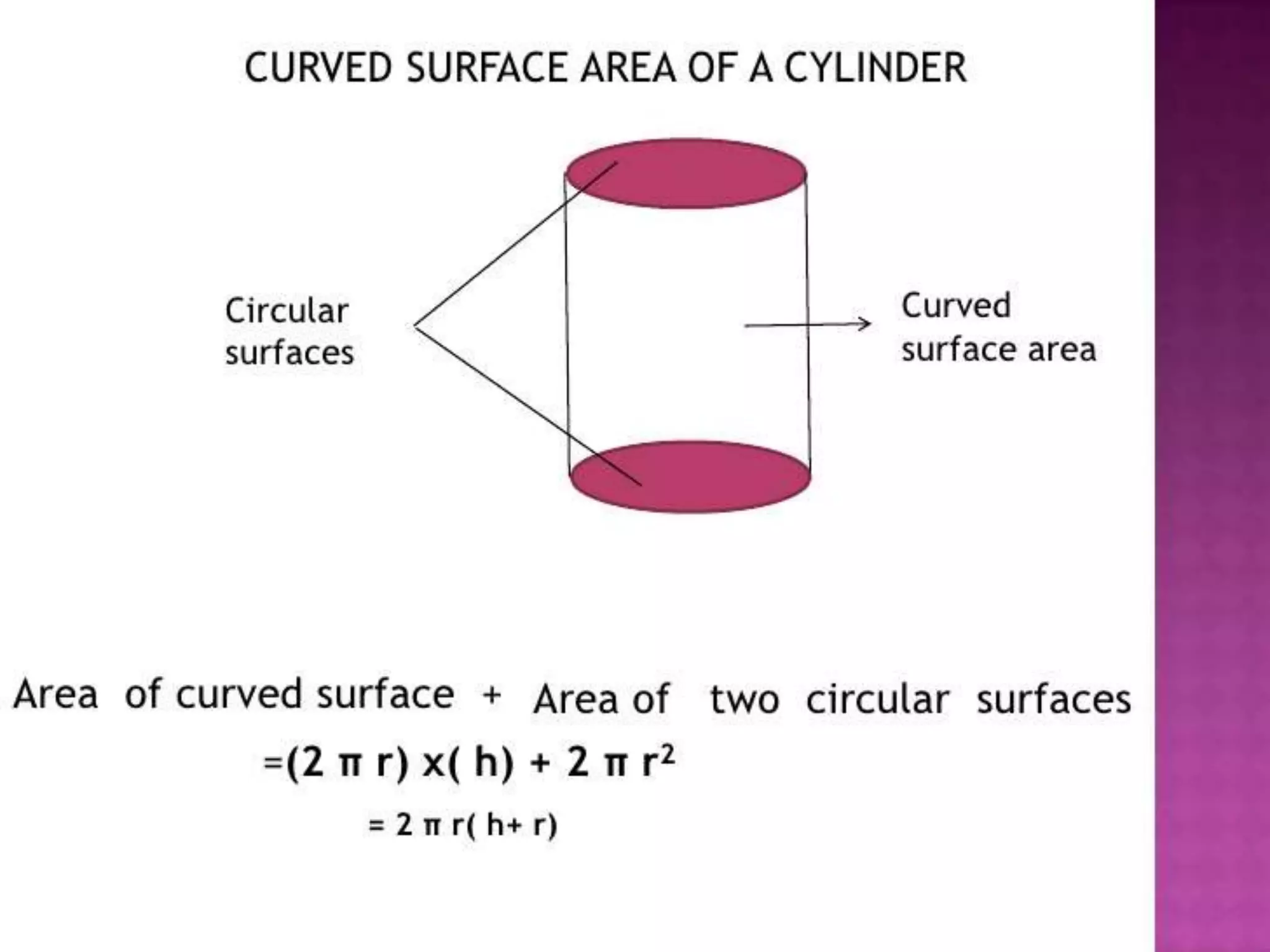
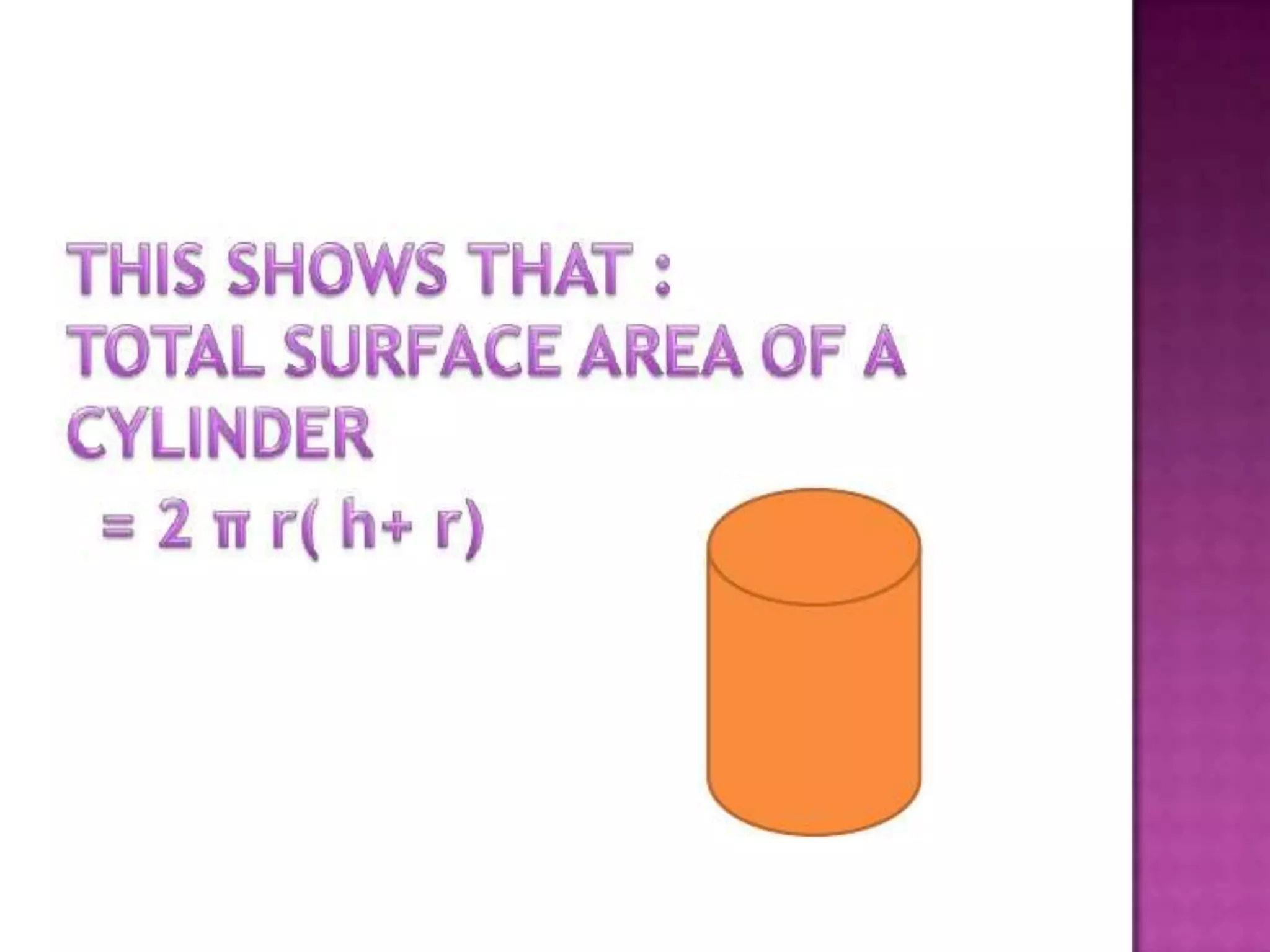
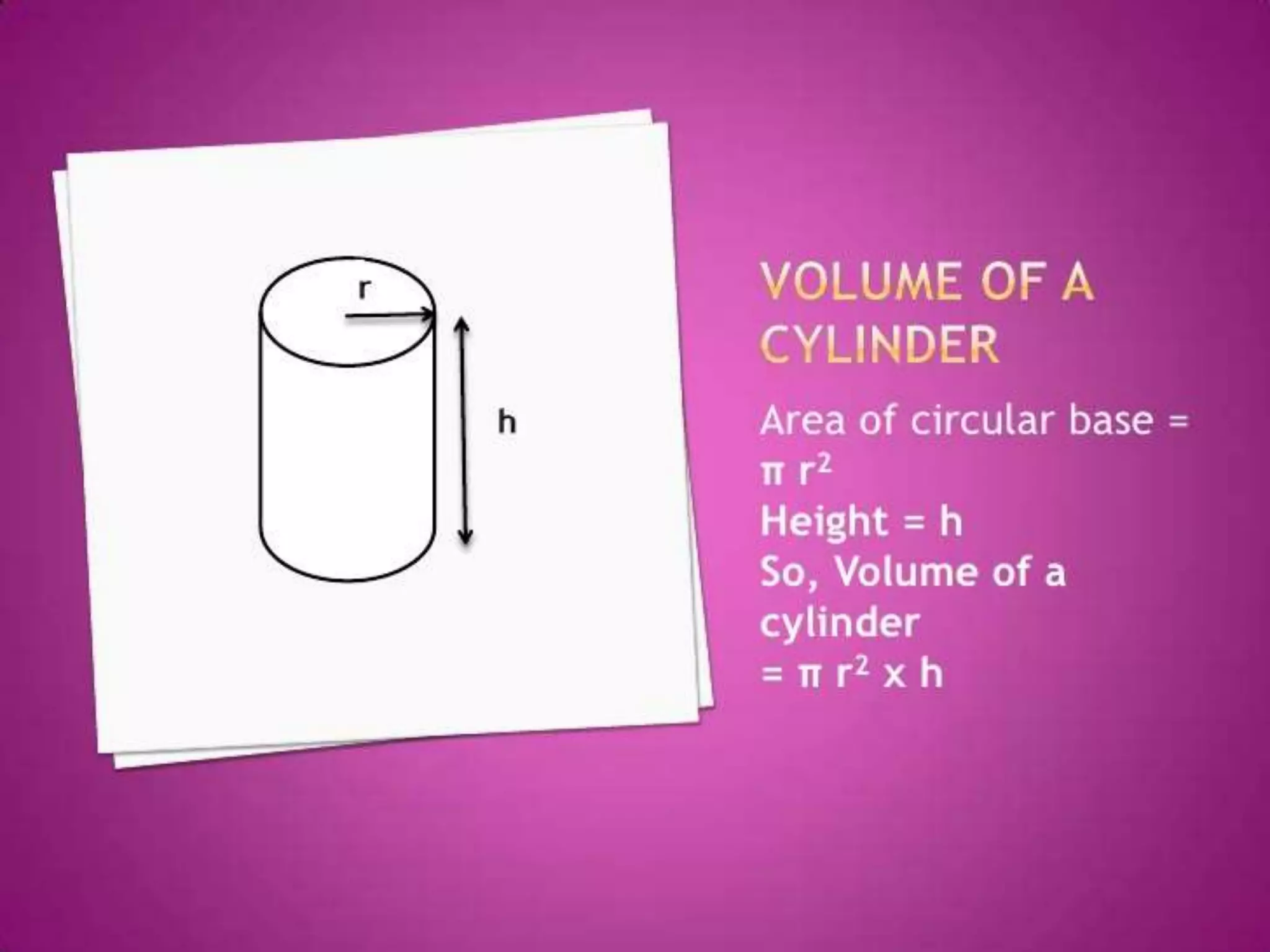
A cylinder is one of the most basic curvilinear
geometric shapes, the surface formed by the
points at a fixed distance from a given line
segment, the axis of the cylinder. The solid
enclosed by this surface and by two planes
perpendicular to the axis is also called a
cylinder. The surface area and the volume of a
cylinder have been known since deep
antiquity.
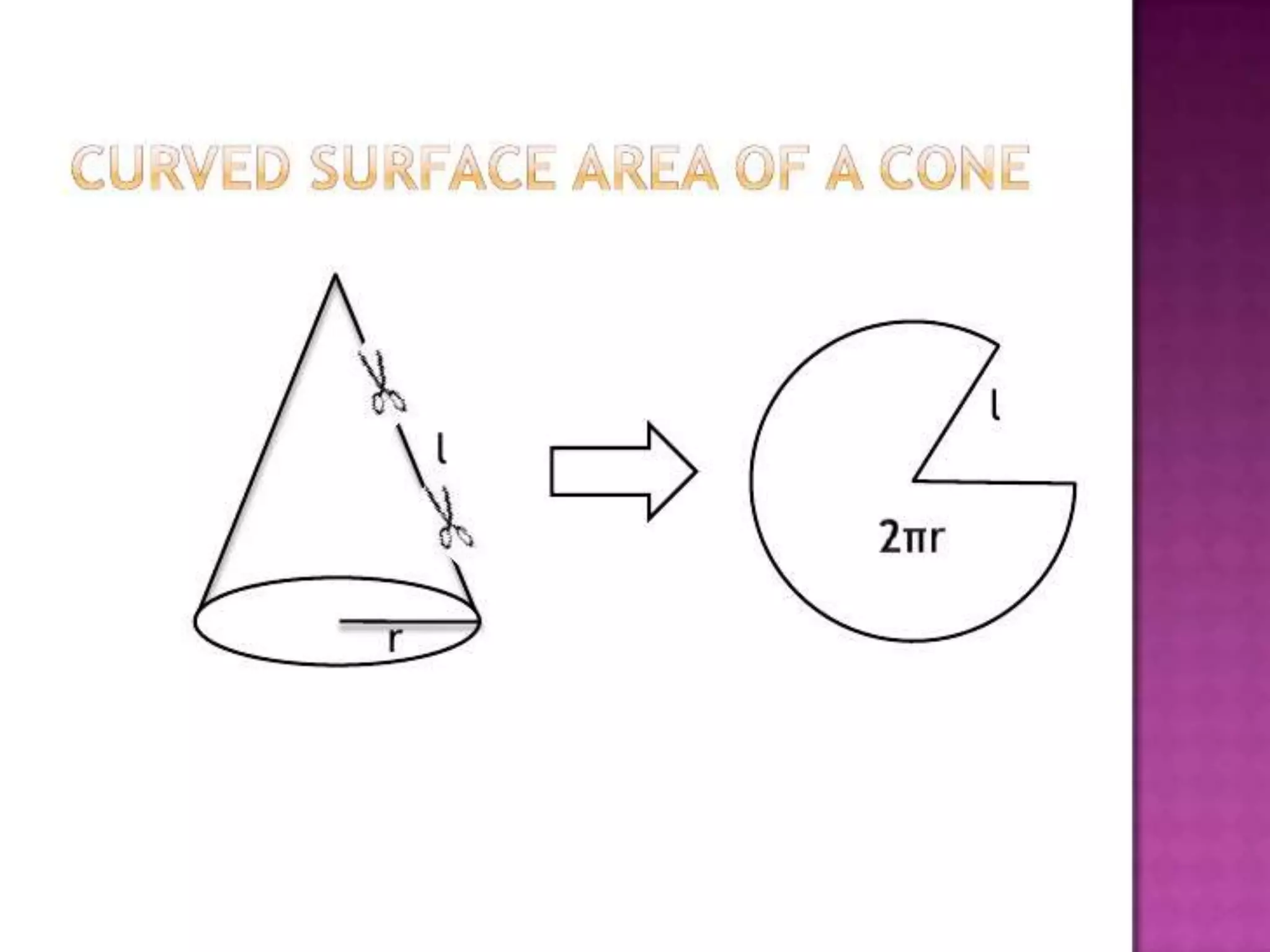
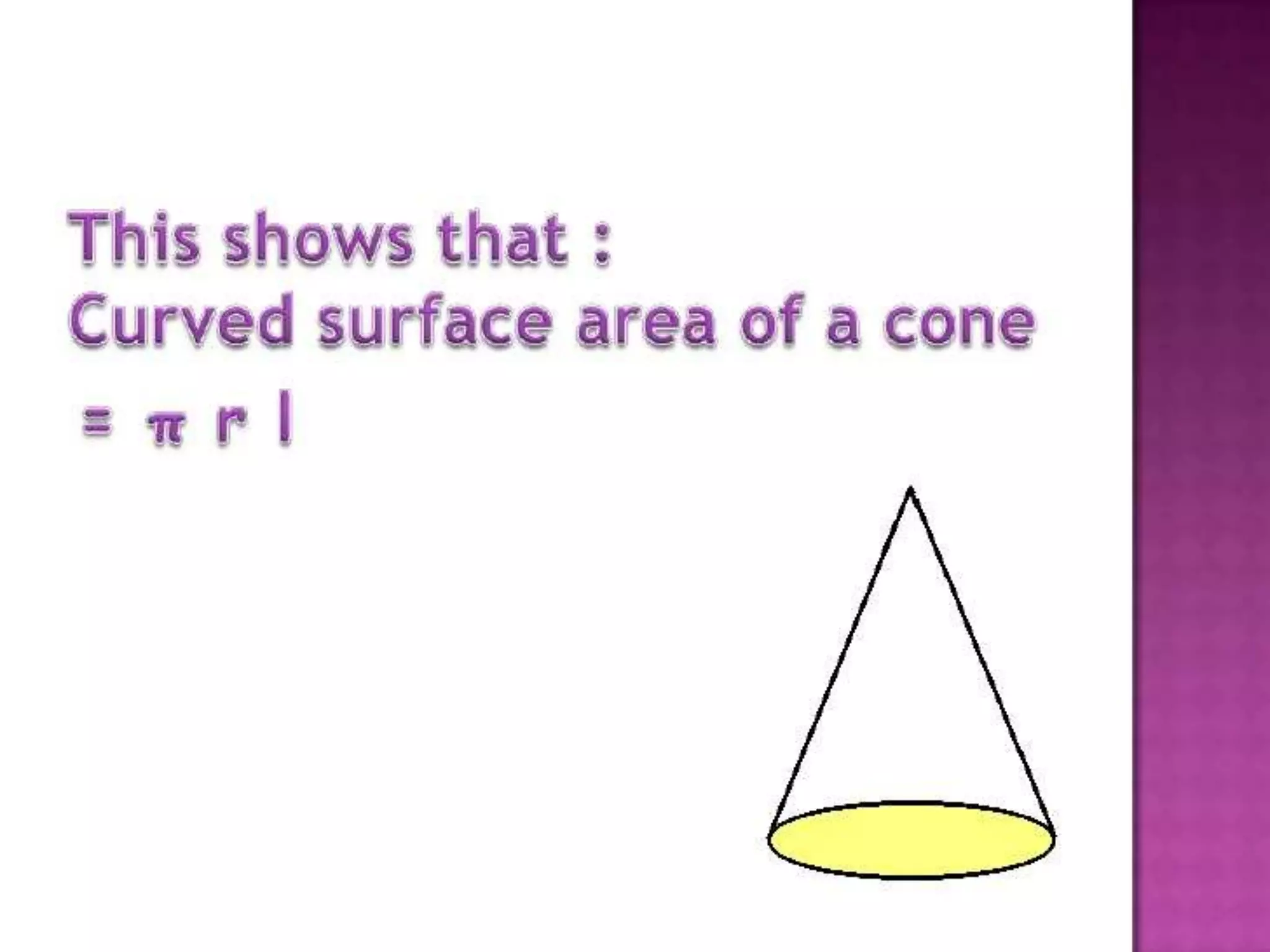
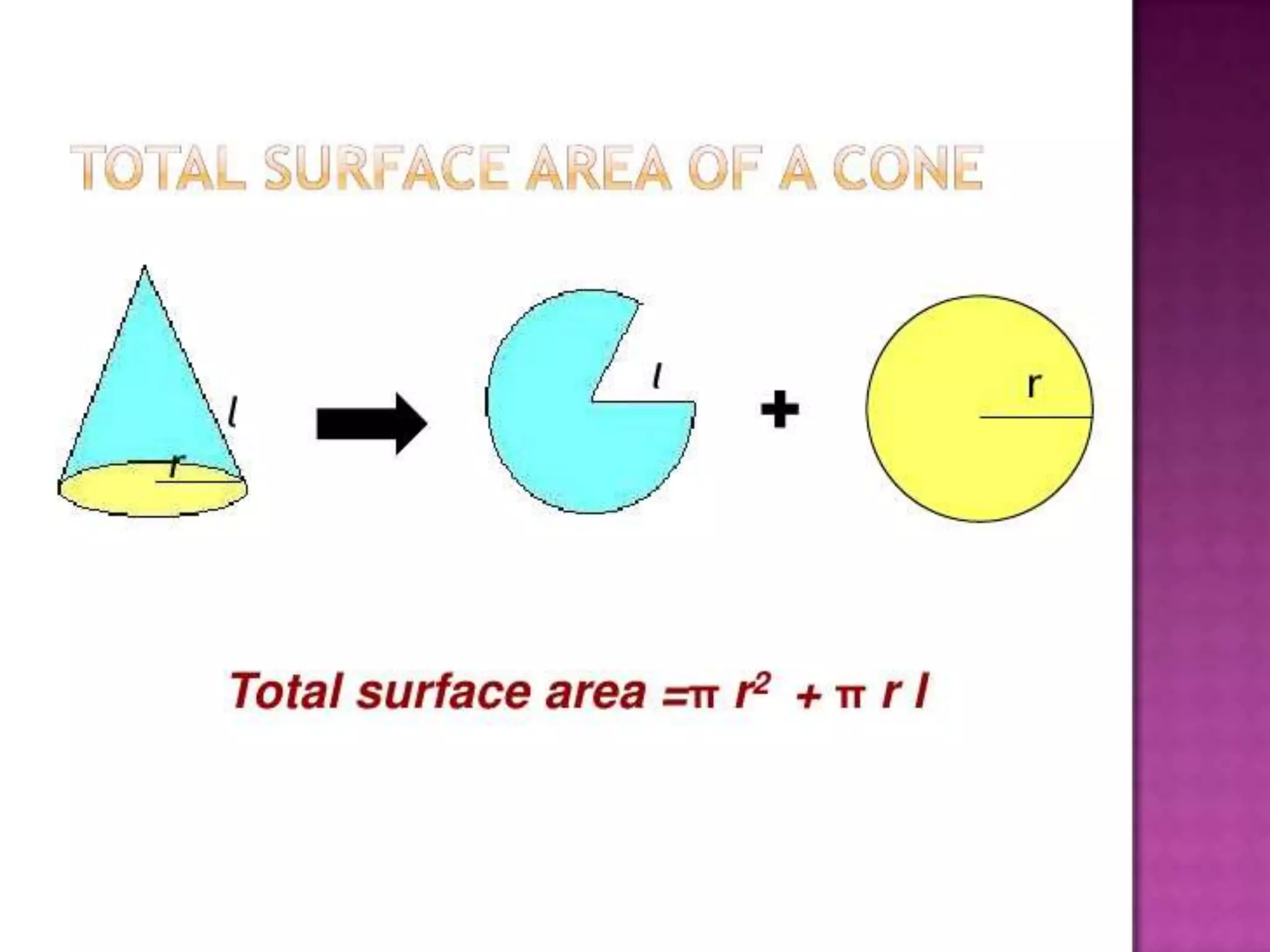
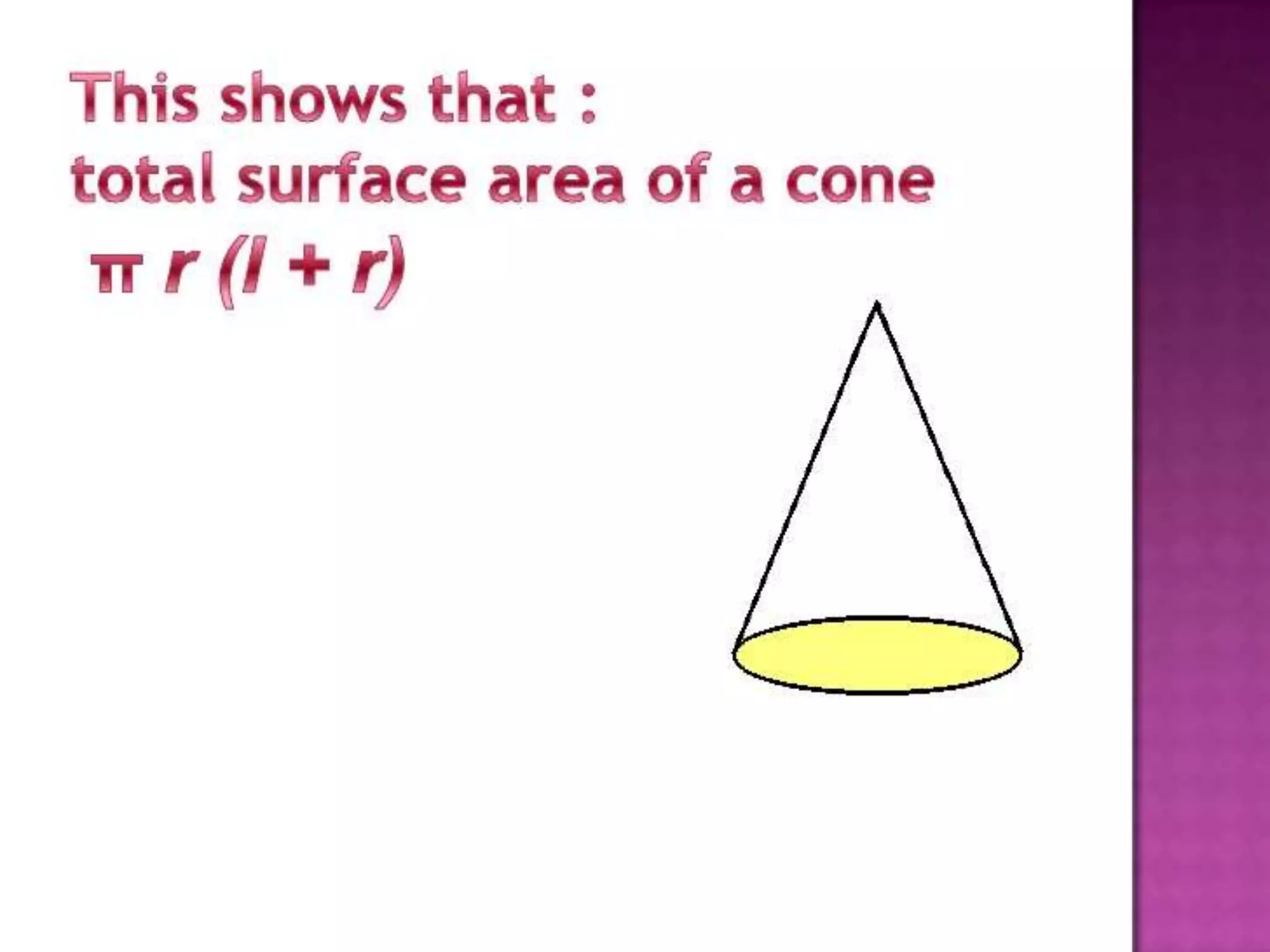
A cone is a three-dimensional geometric
shape that tapers smoothly from a flat
base (frequently, though not necessarily,
circular) to a point called the apex or
vertex.
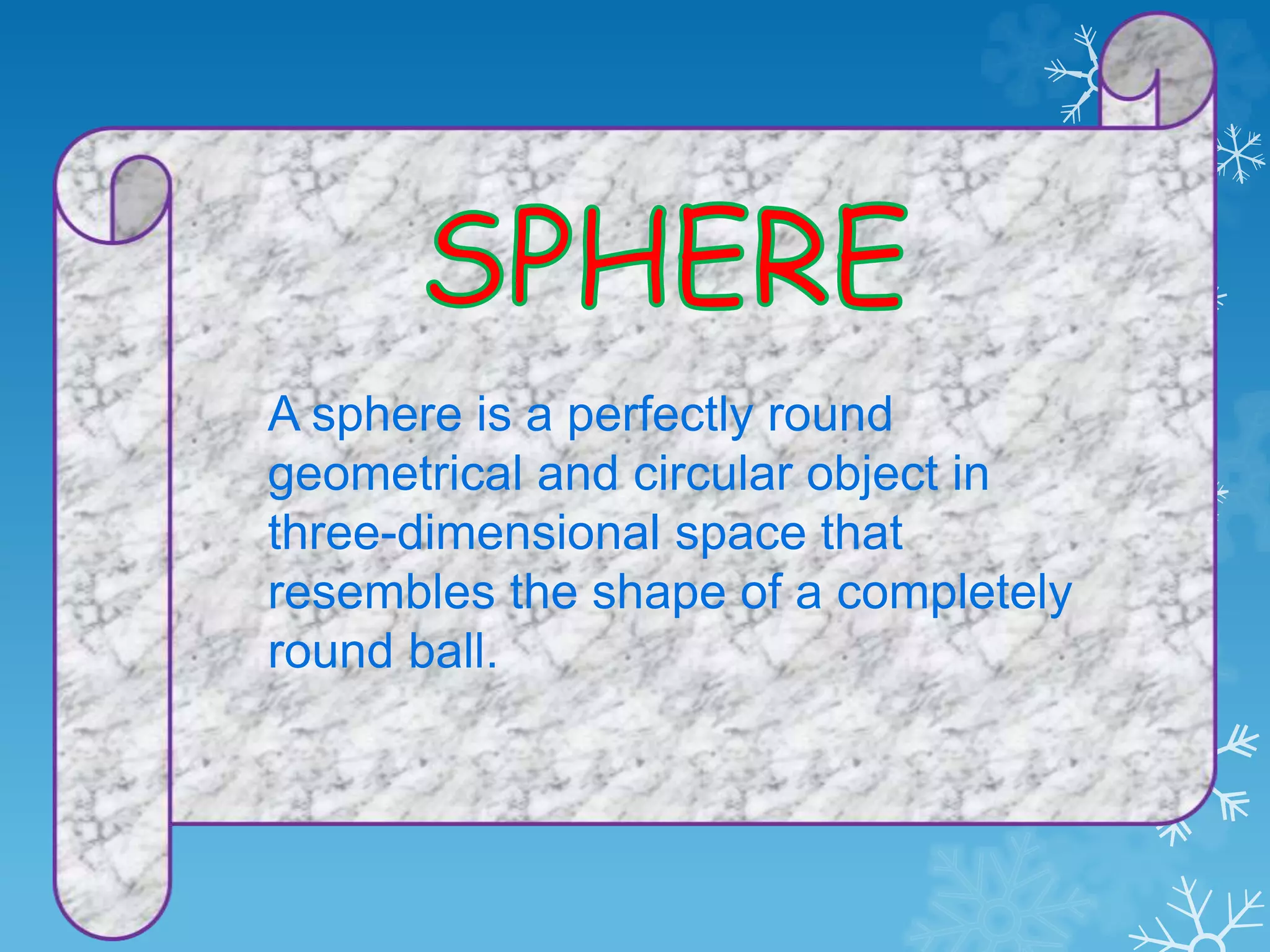
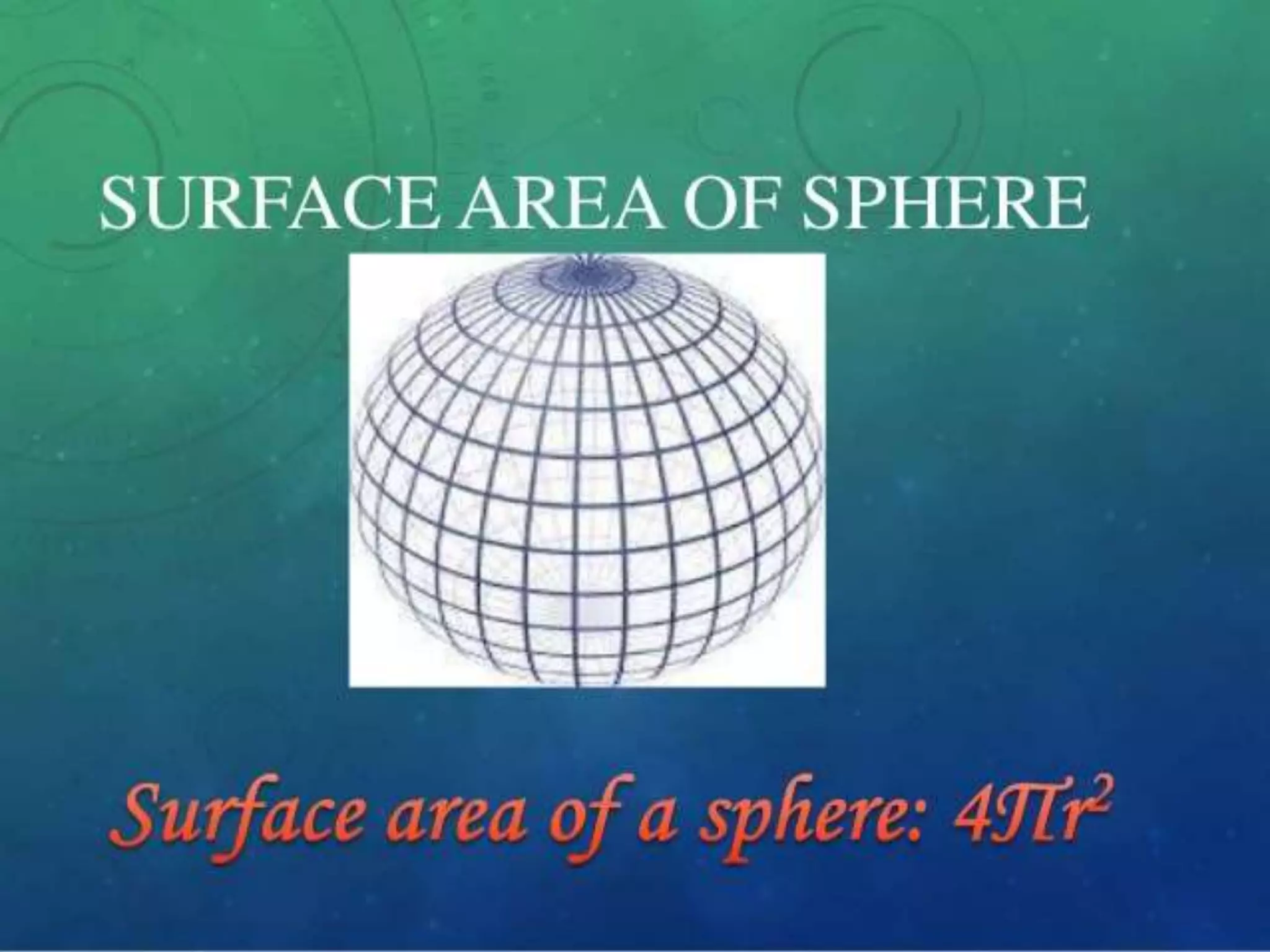
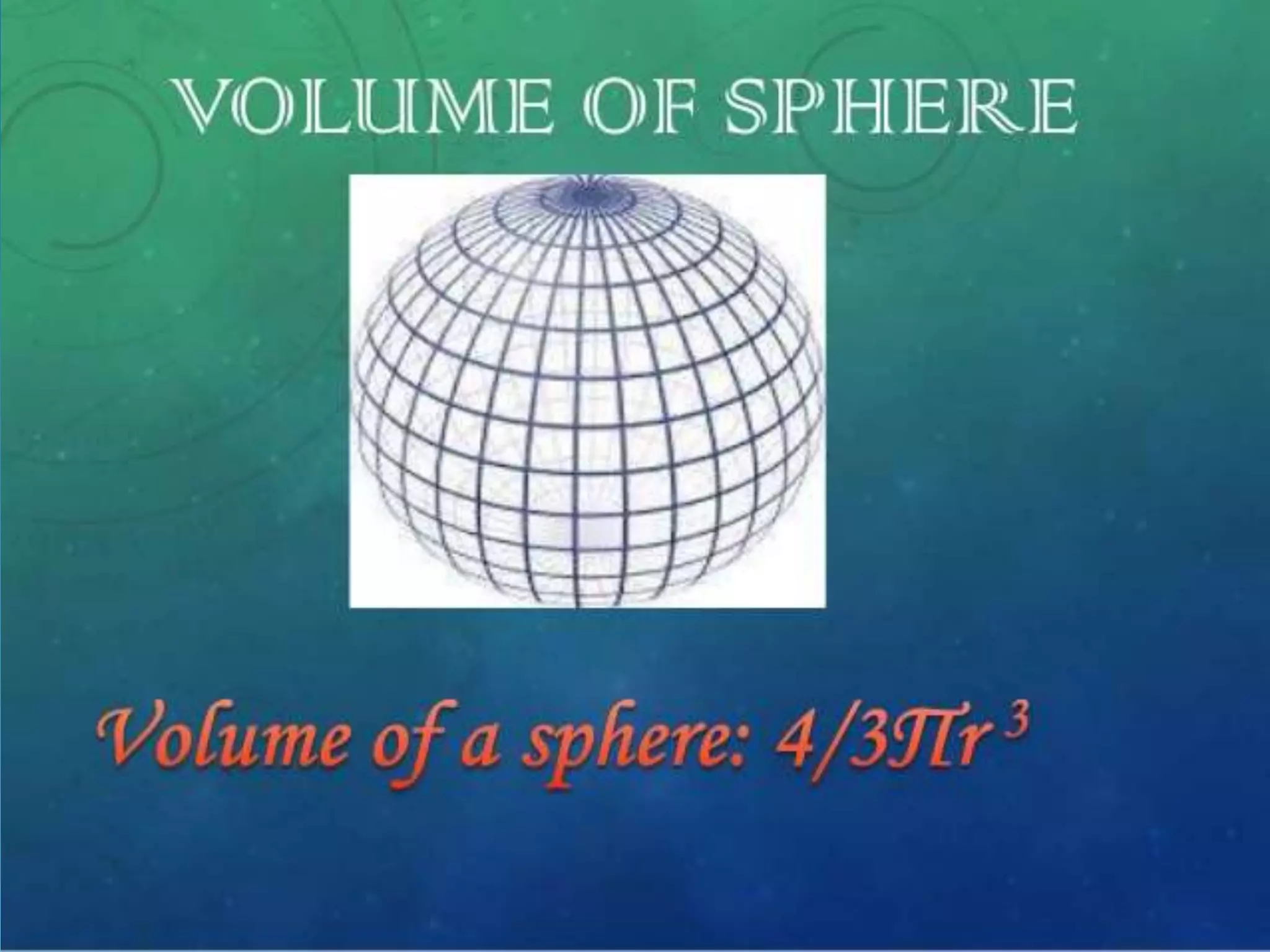
A sphere is a perfectly round
geometrical and circular object in
three-dimensional space that
resembles the shape of a completely
round ball.
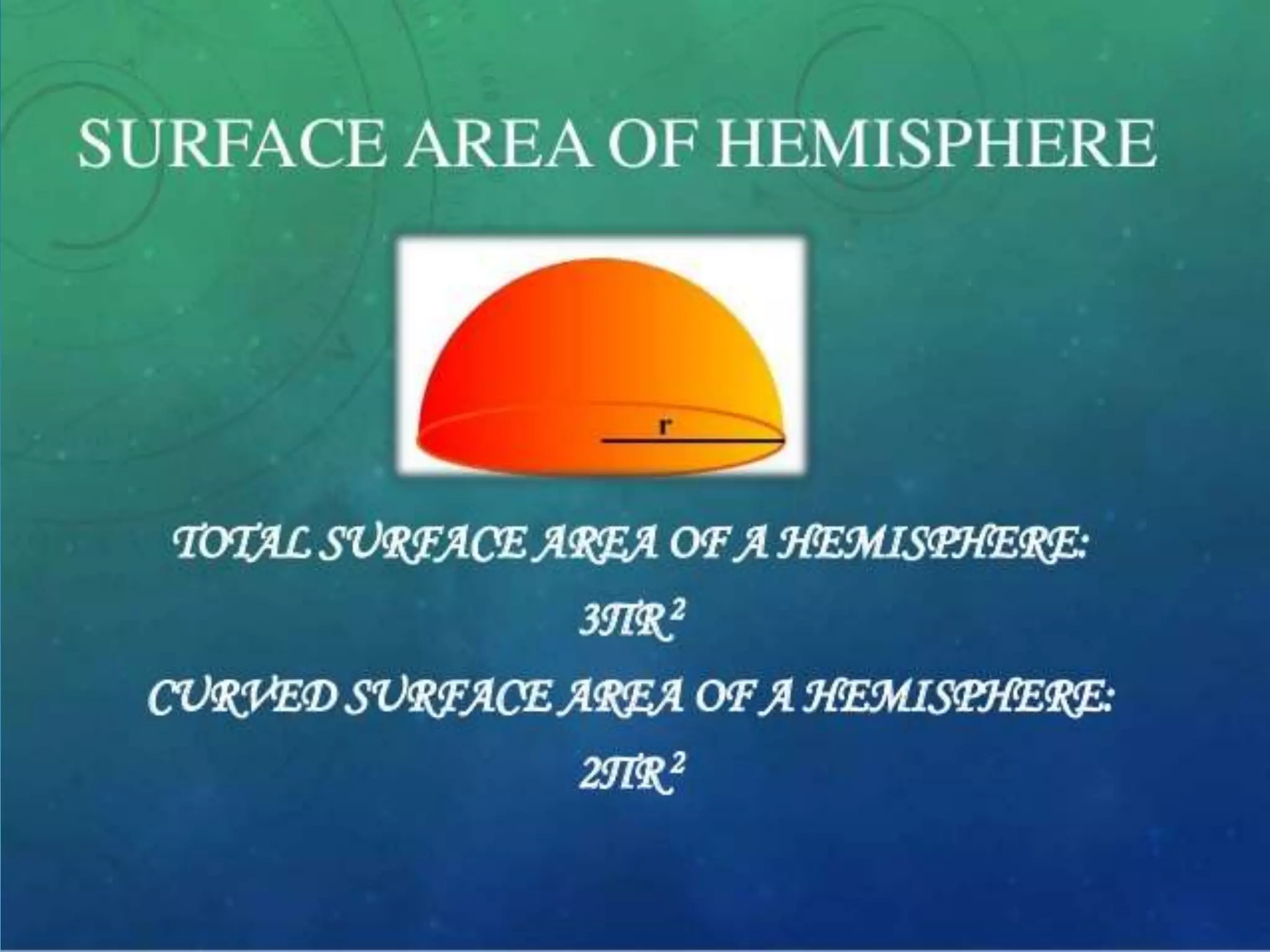
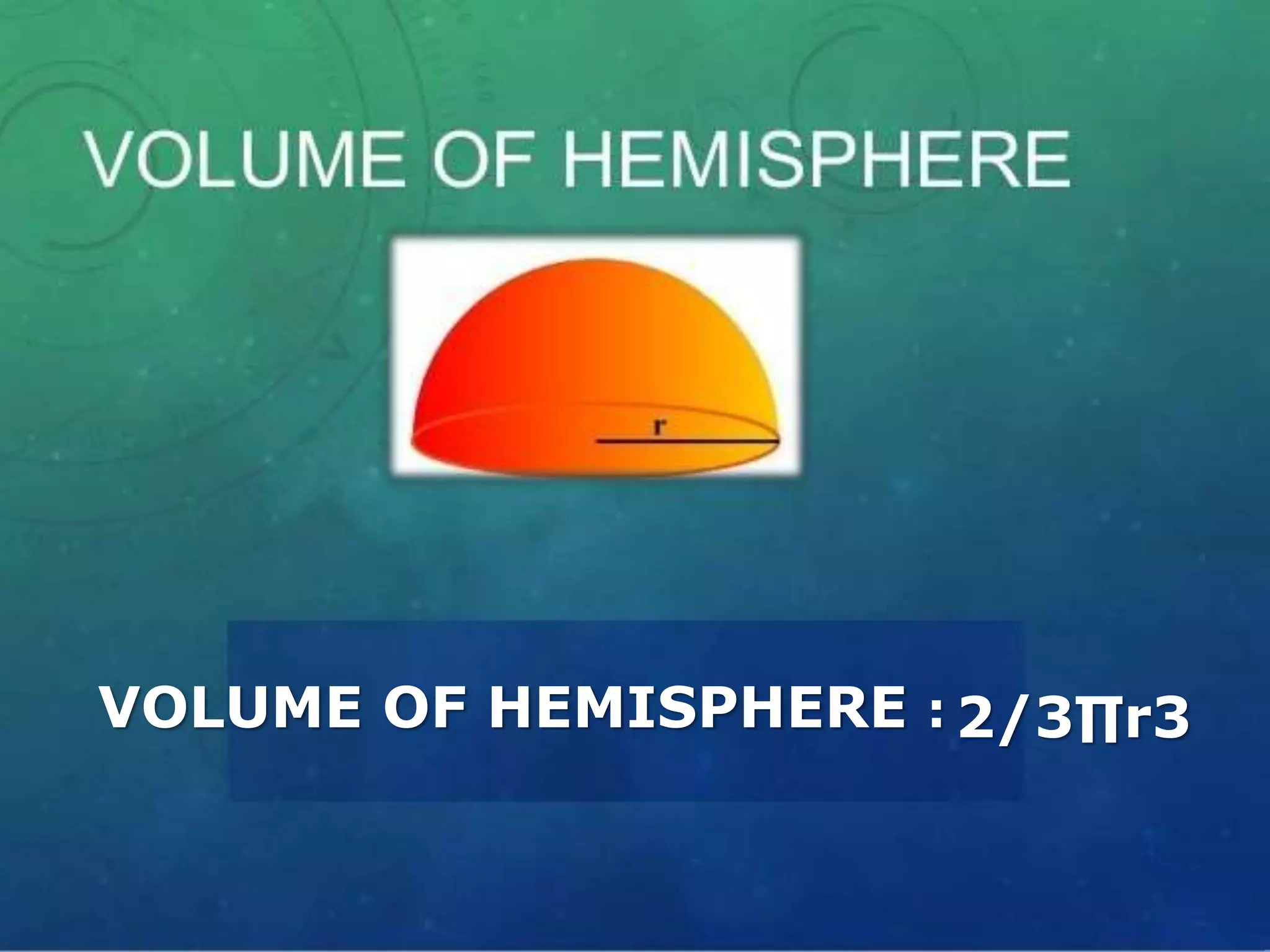
A half of the celestial sphere as
divided into two halves by the
horizon, the celestial equator, or the
ecliptic.
VOLUME OF HEMISPHERE : 2/3∏r3
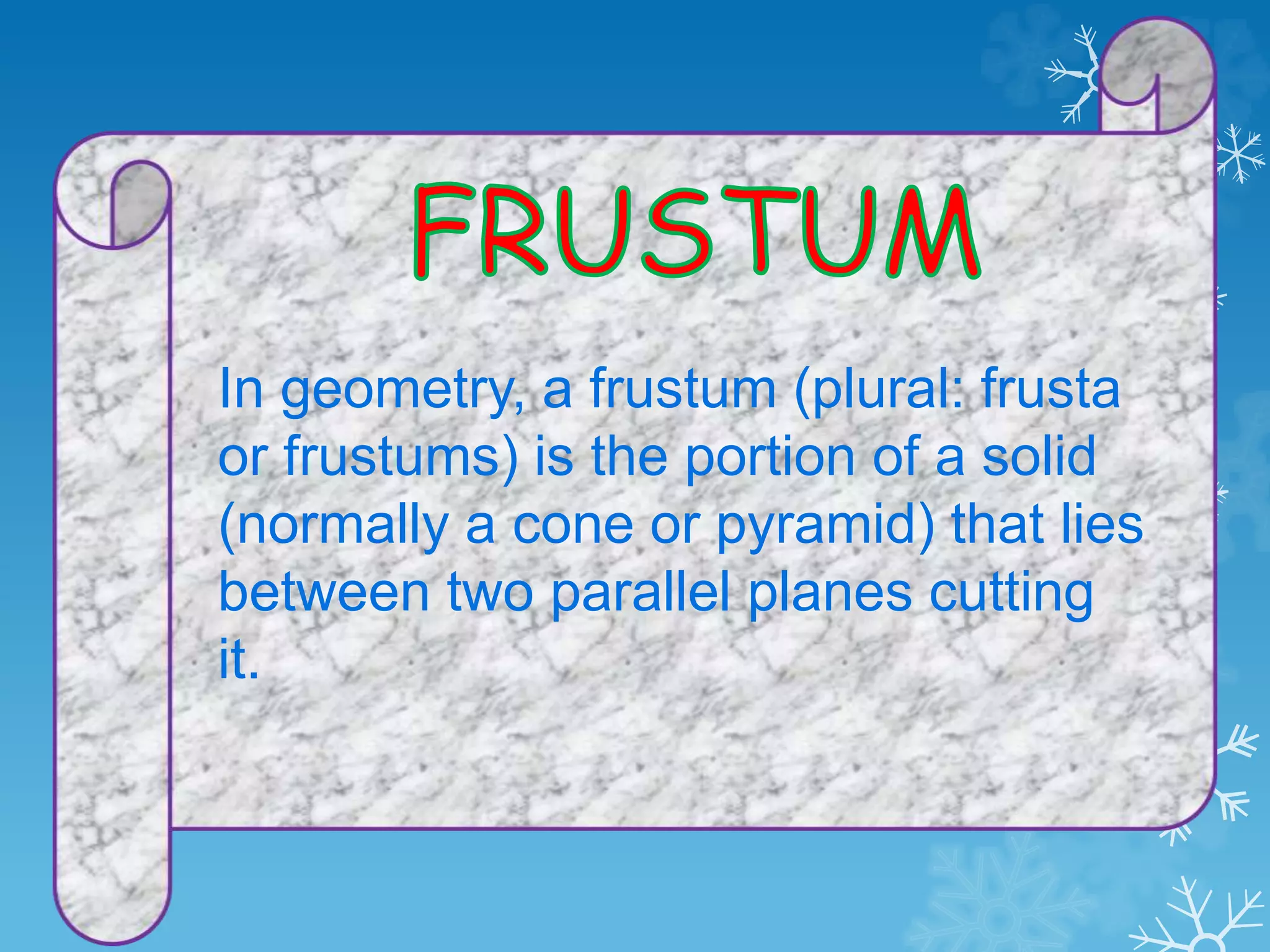
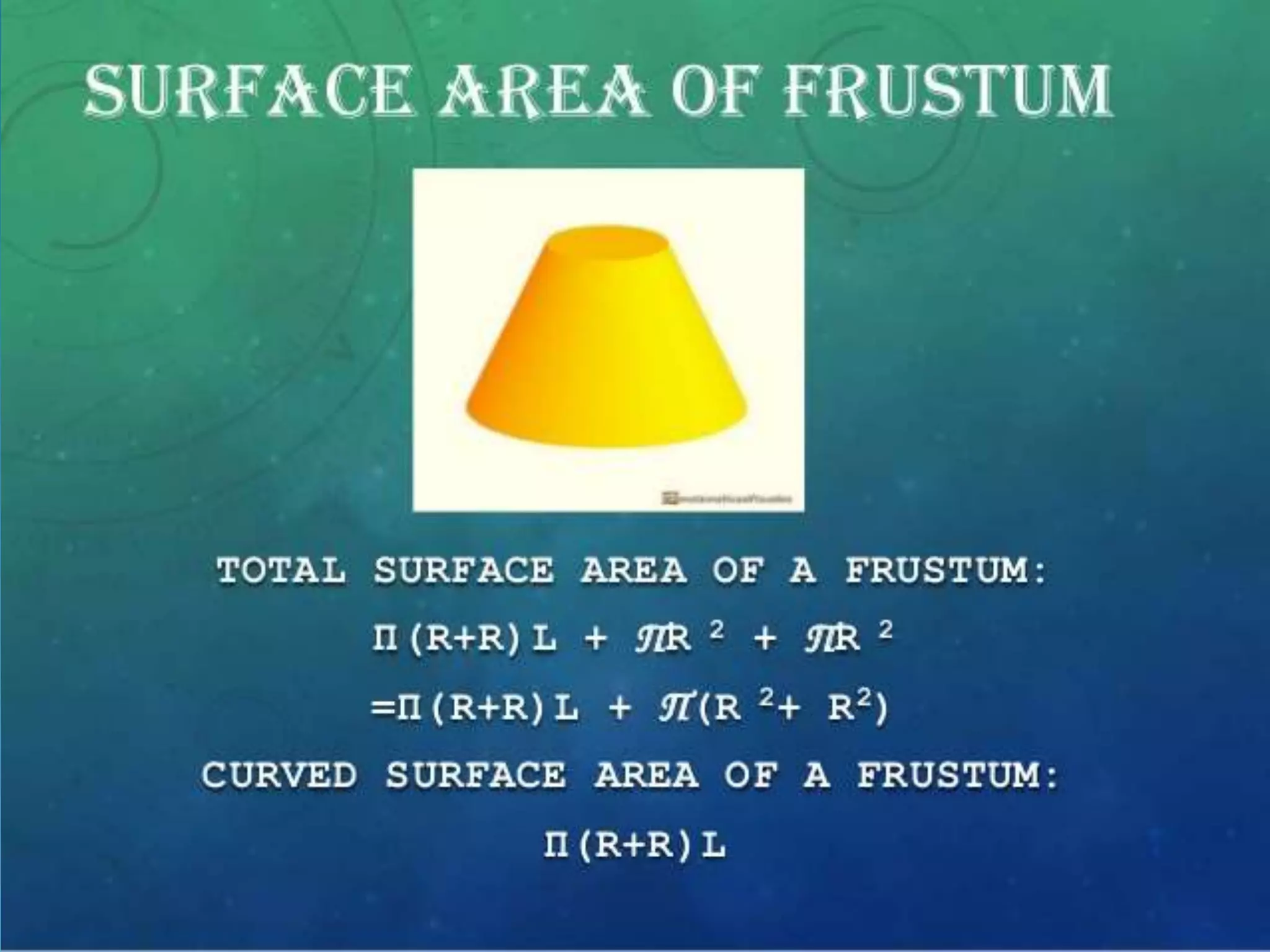
In geometry, a frustum (plural: frusta
or frustums) is the portion of a solid
(normally a cone or pyramid) that lies
between two parallel planes cutting
it.
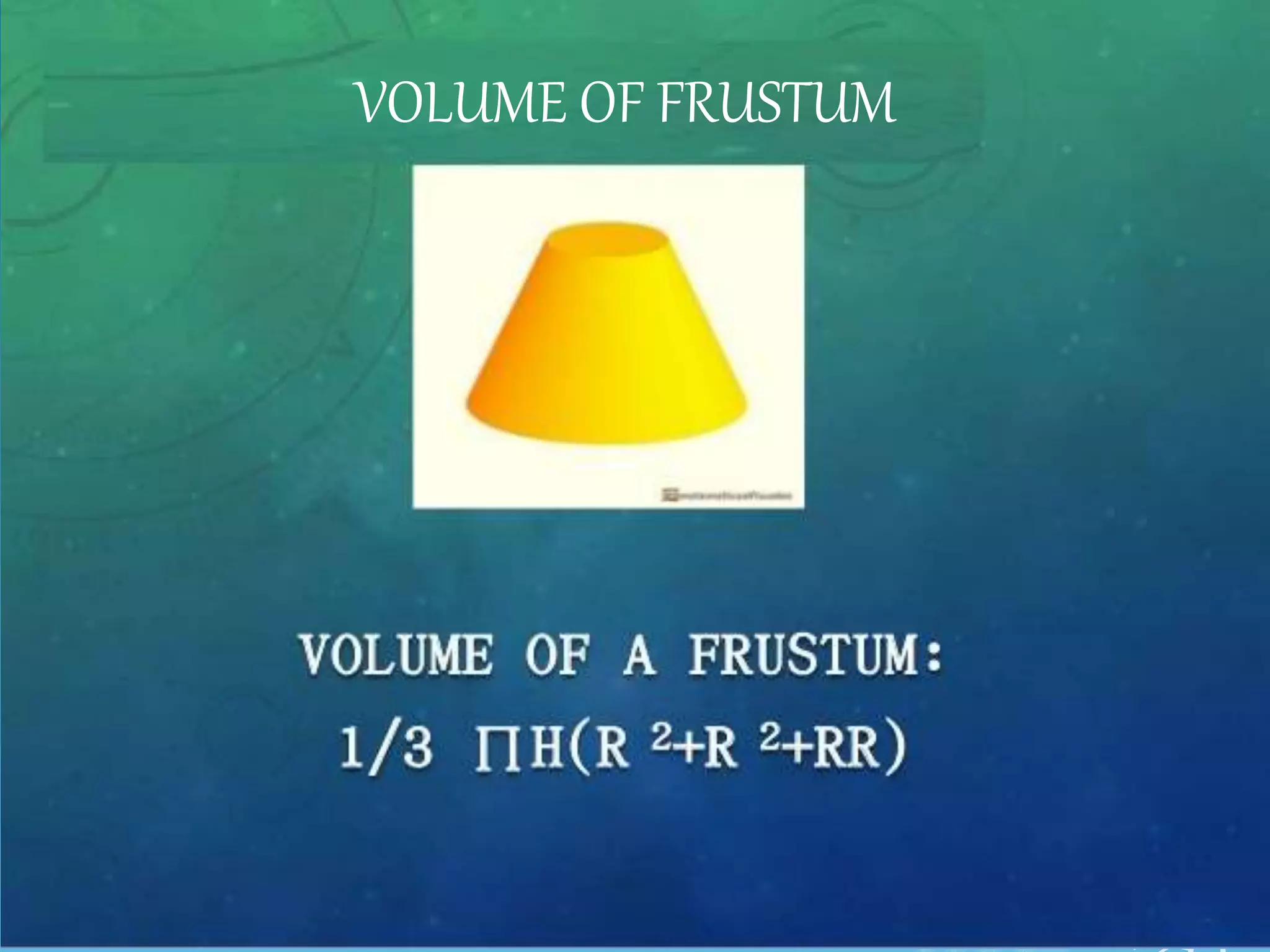
VOLUME OF FRUSTUM
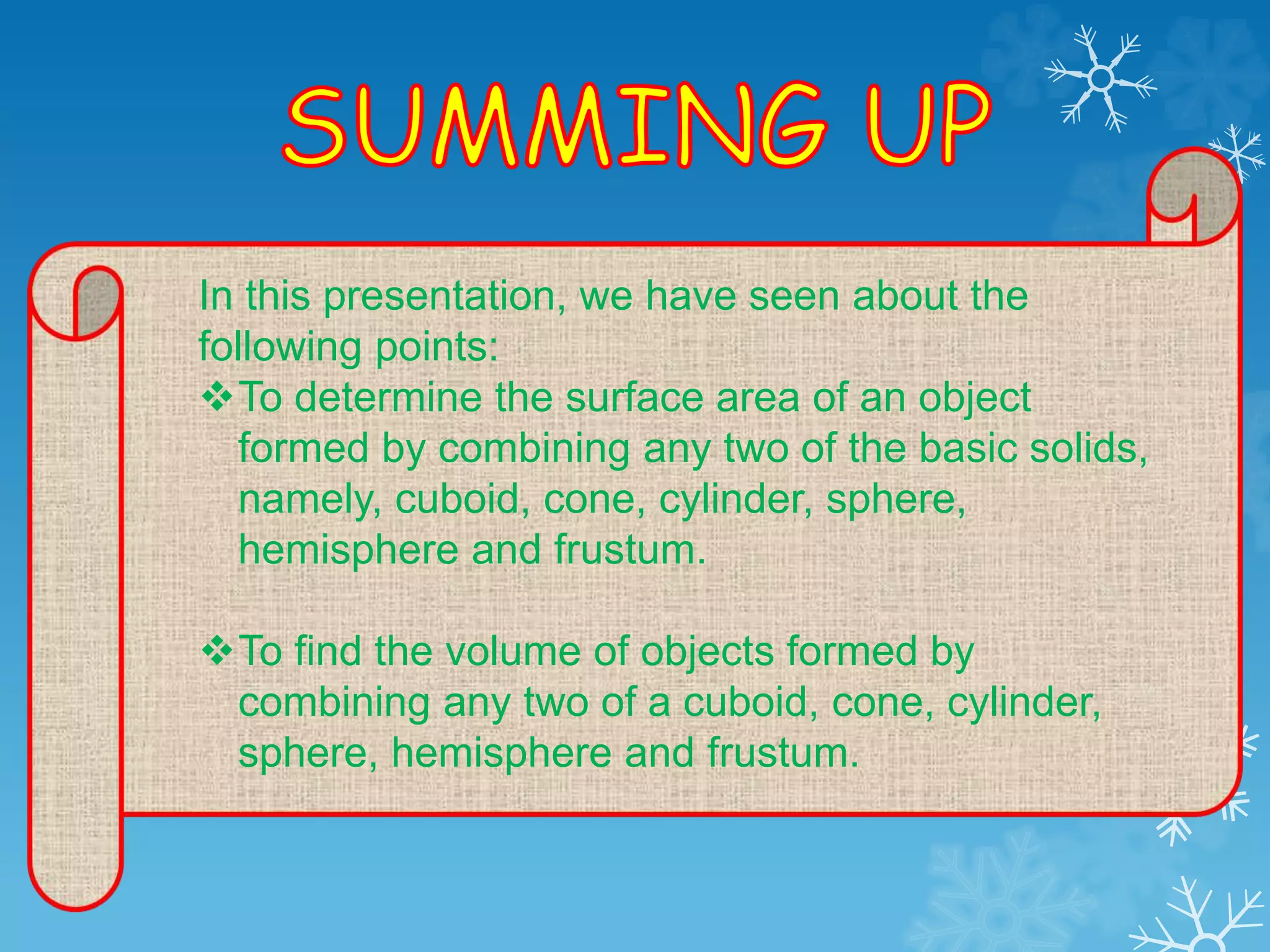
In this presentation, we have seen about the
following points:
To determine the surface area of an object
formed by combining any two of the basic solids,
namely, cuboid, cone, cylinder, sphere,
hemisphere and frustum.
To find the volume of objects formed by
combining any two of a cuboid, cone, cylinder,
sphere, hemisphere and frustum.
>>>>>>>> <<<<<<<<

MATHS PRESENTATION

  • 2.
    ACKNOWLEDGEMENT We would liketo express our special thanks of gratitude to our teacher Mrs. LEENA SAJI, who gave us this golden opportunity to do this wonderful presentation, which also helped us in doing a lot of Research and we came to know about so many new things . We are really thankful to them. Secondly we would also like to thank our parents and friends who helped us a lot in finishing this presentation within the limited time. THANKS AGAIN TO ALL WHO HELPED US. AND MOST IMPORTANTLY THANK GOD FOR EVERYTHING AND BRINGING THIS PRESENTATION TO ITS PRESENT FORM.
  • 6.
    The surface areaof a solid object is a measure of the total area that the surface of an object occupies. The mathematical definition of surface area in the presence of curved surfaces is considerably more involved than the definition of arc length of one-dimensional curves, or of the surface area for polyhedra (i.e., objects with flat polygonal faces), for which the surface area is the sum of the areas of its faces.
  • 7.
    Volume is thequantity of three-dimensional space enclosed by some closed boundary, for example, the space that a s substance or shape occupies or contains.
  • 8.
    Let us havea look on the figure below How do we find a surface area of such solid? From this figure, we can see that this solid is made up of a cylinder with two hemisphere stuck at either side. If we consider the surface area of the newly formed object , we would be able to see only the curved surfaces of the two hemispheres and the curved surface of the cylinder. So, TSA of new solid = CSA of one hemisphere+ CSA of cylinder + CSA of other hemisphere.
  • 9.
    In the previoussection, we have seen How to find the surface area of solids made up of combination of two basic solids. Here, we shall see how to calculate their volumes. Let us see the given figure, Volume of the whole figure= Volume of the cone + volume of hemisphere.
  • 12.
    In geometry, acuboid is a convex polyhedron bounded by six quadrilateral faces, whose polyhedral graph is the same as that of a cube. While mathematical literature refers to any such polyhedron as a cuboid, other sources use "cuboid" to refer to a shape of this type in which each of the faces is a rectangle (and so each pair of adjacent faces meets in a right angle).
  • 18.
    In geometry, acube is a three-dimensional solid object bounded by six square faces, facets or sides, with three meeting at each vertex. The cube is the only regular hexahedron and is one of the five Platonic solids. The cube is also a square parallelepiped, an equilateral cuboid and a right rhombohedron. It is a regular square prism in three orientations, and a trigonal trapezohedron in four orientations.

  • 24.
    A cylinder isone of the most basic curvilinear geometric shapes, the surface formed by the points at a fixed distance from a given line segment, the axis of the cylinder. The solid enclosed by this surface and by two planes perpendicular to the axis is also called a cylinder. The surface area and the volume of a cylinder have been known since deep antiquity.
  • 31.
    A cone isa three-dimensional geometric shape that tapers smoothly from a flat base (frequently, though not necessarily, circular) to a point called the apex or vertex.
  • 40.
    A sphere isa perfectly round geometrical and circular object in three-dimensional space that resembles the shape of a completely round ball.
  • 44.
    A half ofthe celestial sphere as divided into two halves by the horizon, the celestial equator, or the ecliptic.
  • 46.
  • 48.
    In geometry, afrustum (plural: frusta or frustums) is the portion of a solid (normally a cone or pyramid) that lies between two parallel planes cutting it.
  • 50.
  • 51.
    In this presentation,we have seen about the following points: To determine the surface area of an object formed by combining any two of the basic solids, namely, cuboid, cone, cylinder, sphere, hemisphere and frustum. To find the volume of objects formed by combining any two of a cuboid, cone, cylinder, sphere, hemisphere and frustum.
  • 54.