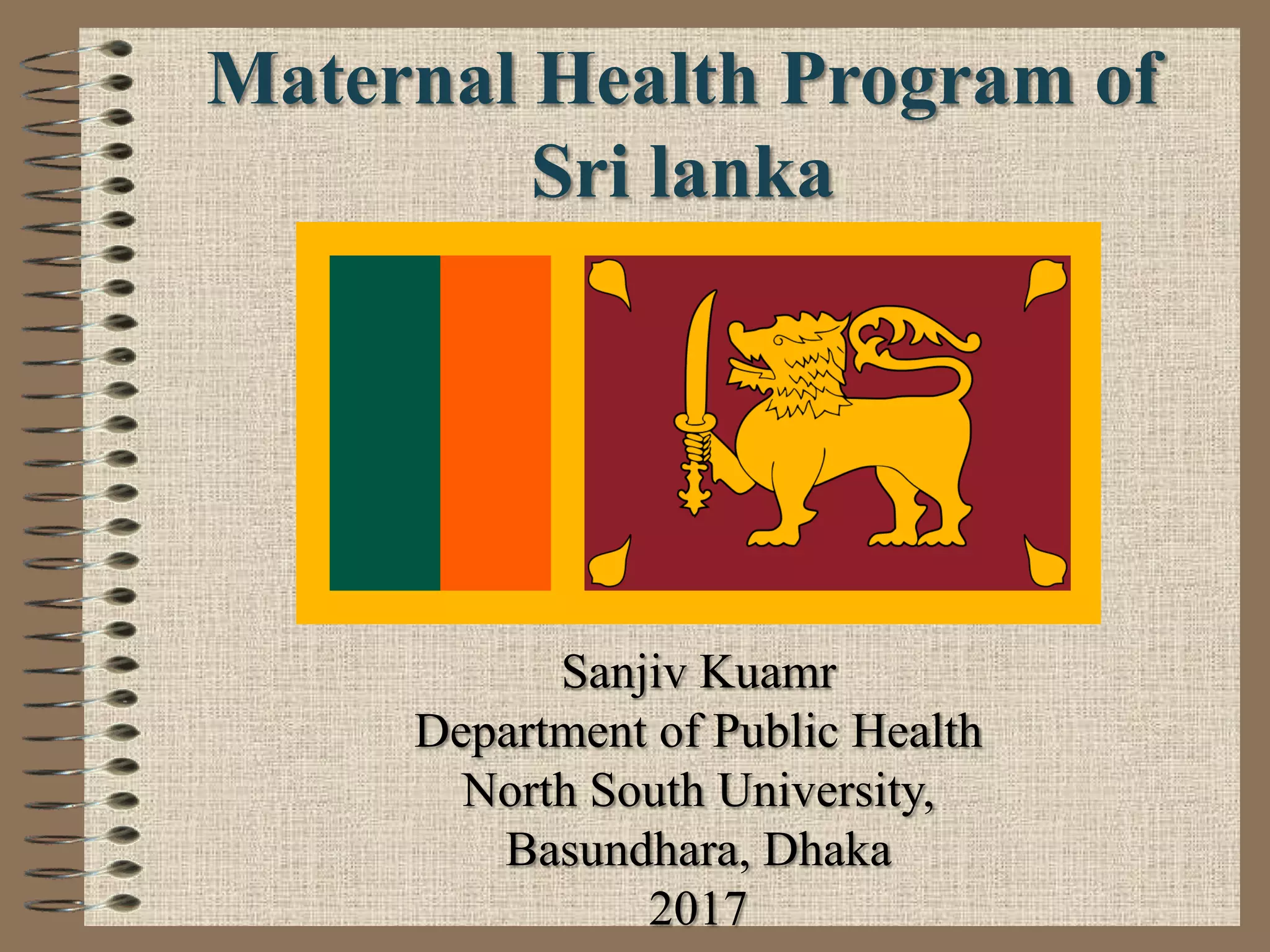

Maternal Health Program of
Sri lanka
Sanjiv Kuamr
Department of Public Health
North South University,
Basundhara, Dhaka
2017
Outline of the presentation
• Brief geographic and demographic
profile
• Current maternal Health situation
• Maternal Health program
• Challenges faced
• Lessons learnt
• References
Geographic, demographic,
Health and profile
Brief geographic profile
 Sri Lanka is an island
situated off the southern
coast of India
 Total area of the country is
65,610 km2 including
inland water
 The mean temperature
ranges from 14° C to 28.5°
C in the country.
 Sri Lanka is divided into 9
provinces, 25 districts and
331 divisional secretary
areas
Brief demographic profile
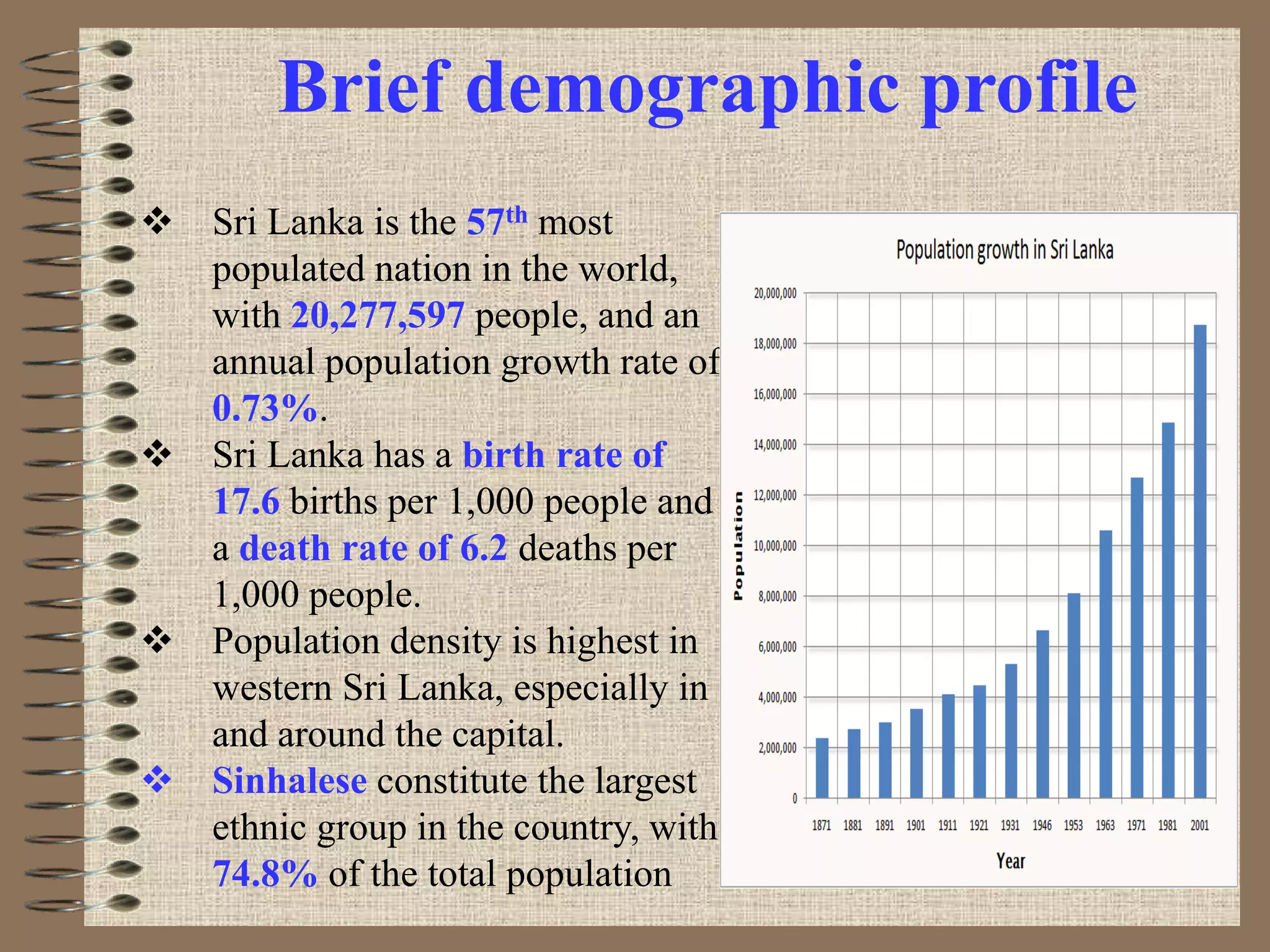
 Sri Lanka is the 57th most
populated nation in the world,
with 20,277,597 people, and an
annual population growth rate of
0.73%.
 Sri Lanka has a birth rate of
17.6 births per 1,000 people and
a death rate of 6.2 deaths per
1,000 people.
 Population density is highest in
western Sri Lanka, especially in
and around the capital.
 Sinhalese constitute the largest
ethnic group in the country, with
74.8% of the total population
Health & Education profile
 Sri Lankans have a life expectancy of 77.9 years
at birth, which is 10% higher than the world
average.
 The infant mortality rate stands at 8.5 per 1,000
births and the maternal mortality rate at 0.39 per
1,000 births, which is similar with the developed
countries
 The CPR is 55.7 % (Bangaldesh 56.7% , Nepal 48%)
 Literacy rate of 95.7% (F- 94.6 %, M- 96.9%) ,
Sri Lanka has one of the most literate populations
among developing nations.
Maternal health
program
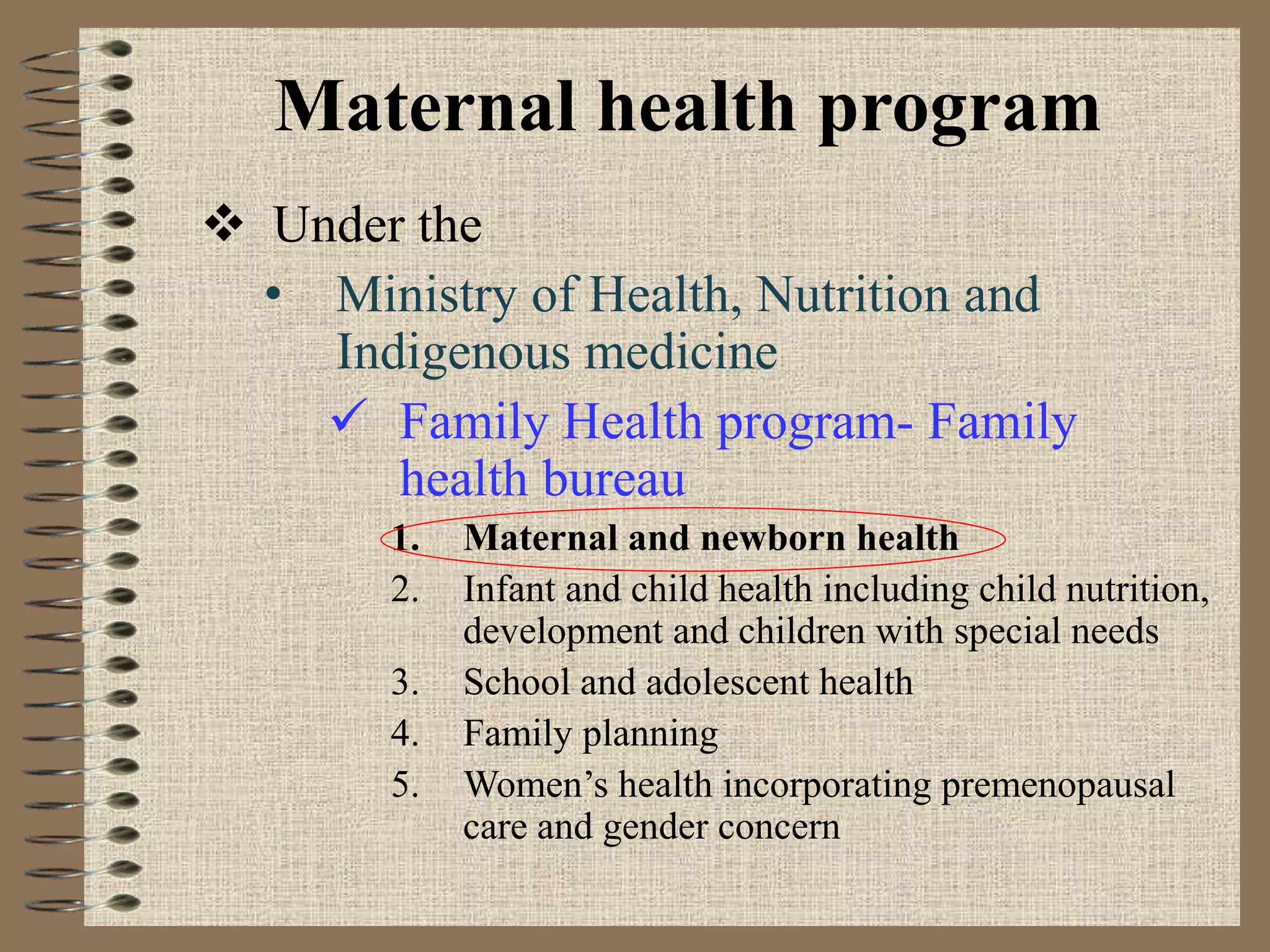
Maternal health program
 Under the
• Ministry of Health, Nutrition and
Indigenous medicine
 Family Health program- Family
health bureau
1. Maternal and newborn health
2. Infant and child health including child nutrition,
development and children with special needs
3. School and adolescent health
4. Family planning
5. Women’s health incorporating premenopausal
care and gender concern
Component of Maternal & Newborn care
Family Health Programme includes interventions that focus
the antenatal, intra-natal and postnatal aspects of pregnancy.
 Antenatal Care:
Registration of pregnant mothers
Field Clinic care
Antenatal screening- prepregnancy nutritional status
(Body Mass Index-BMI), maternal anaemia (Serum Hb),
STI and blood grouping and Rh.
Domiciliary Care- care offered by PHMs (Public
Health Midwifes) during home visits
Protection from Rubella and Tetanus
Component of Maternal & Newborn care
Intra-Natal and Newborn
Care:
Almost all the deliveries around
the country occur in institutions.
It is the duty of the PHMs to
report deliveries occurring to
mothers who reside permanently
in her area.
Postpartum and Newborn
Care:
o 1st visit -5 days
o 2nd visit and 6 - 10 days
o 3rd visit 14 days
o 4th visit 28 days
Current Situation
Human resources for health per 100 000
population in SEAR countries
Maternal Health Situation:
• Total population (in thousands) - 20,771
Maternal Mortality Ratio :
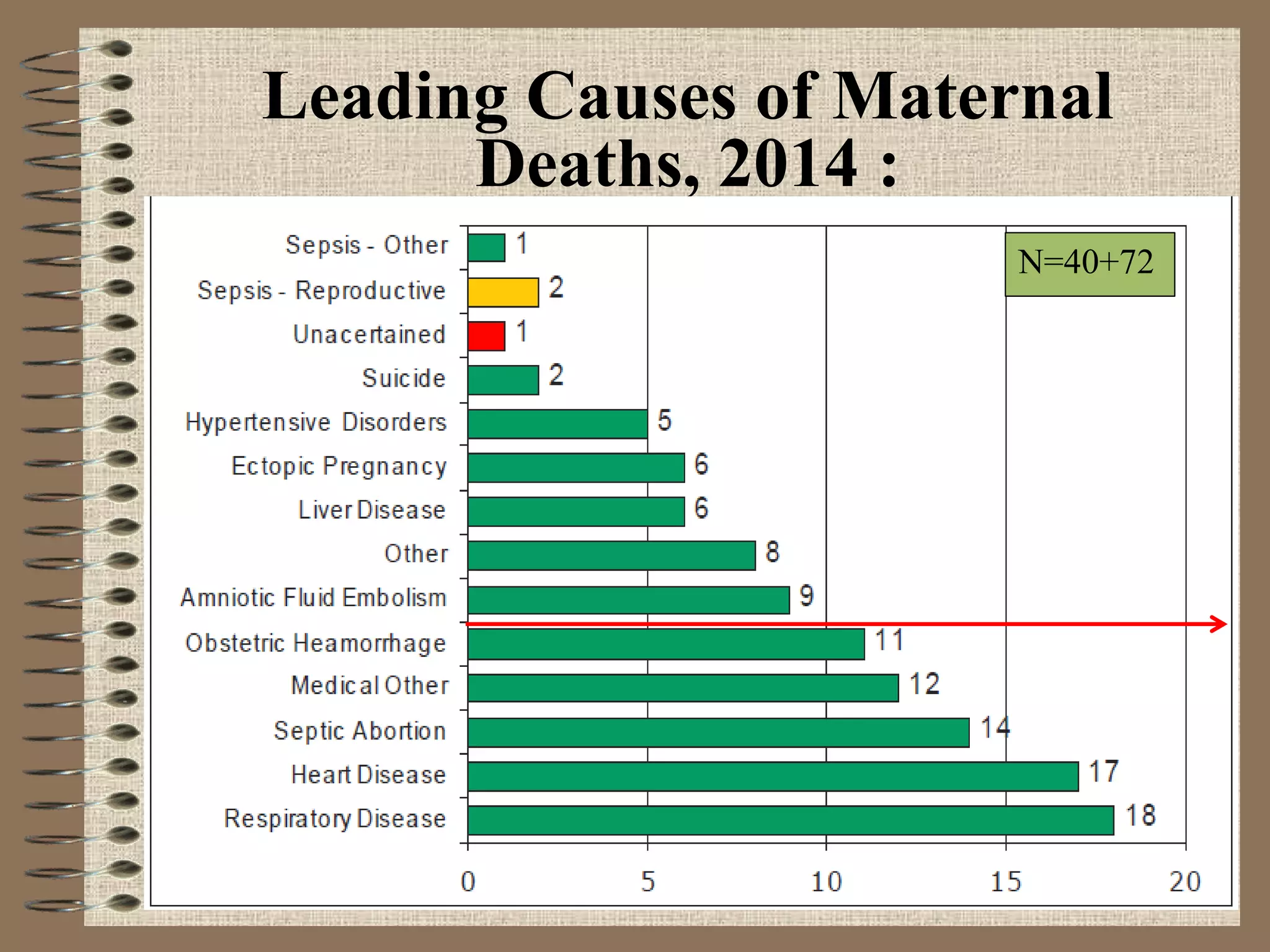
Leading Causes of Maternal
Deaths, 2014 :
N=40+72
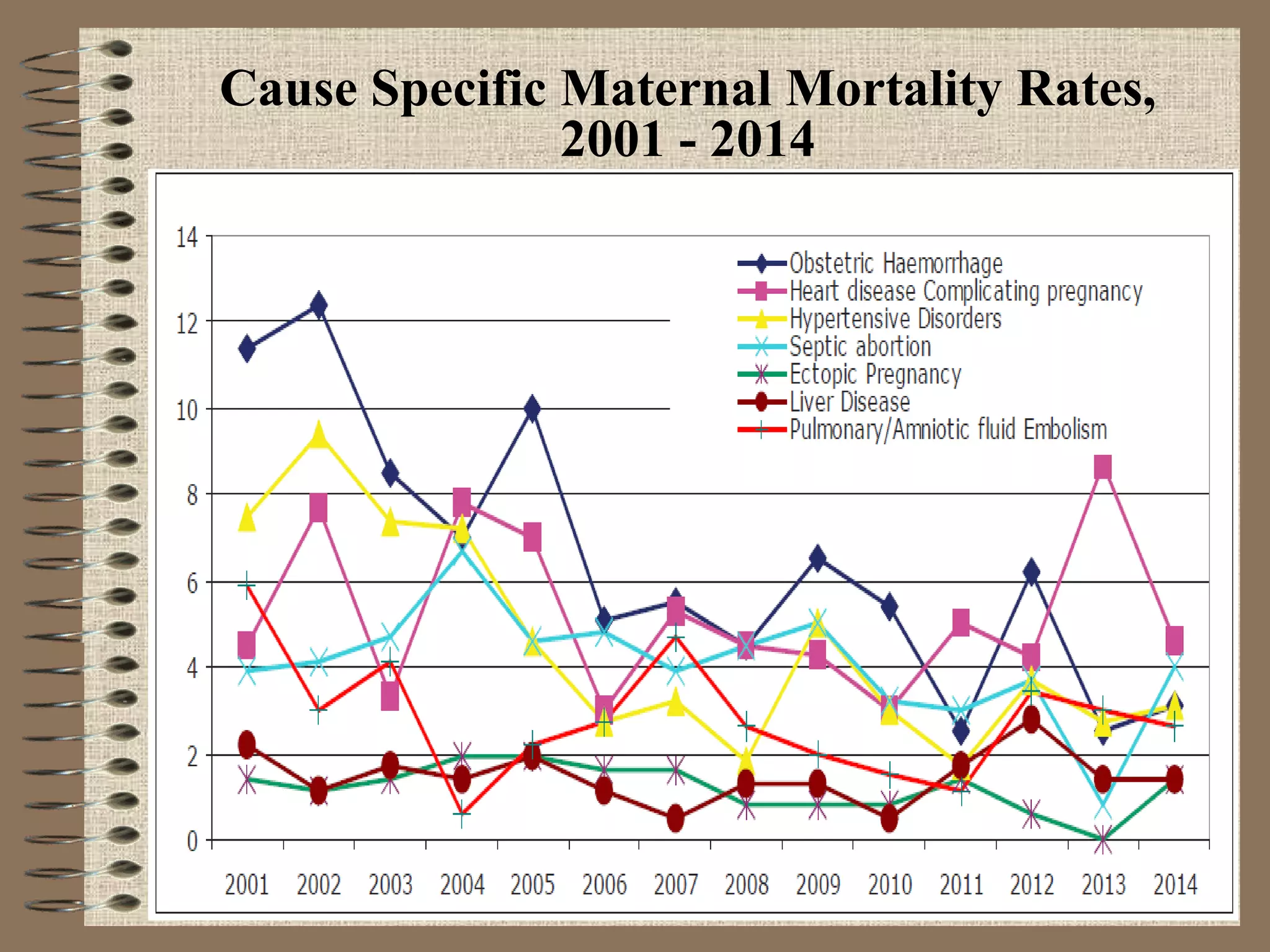
Cause Specific Maternal Mortality Rates,
2001 - 2014
89.8 90
85.9
94.3 94
90 91.2
6.7 6.5 6.5 6.1 6 5.3 4.9
26.3
25.4 25.4 24.6 23.8 23 24.3
99.6 99.7 99.8 99.9 99.9 99.9 99.7
25.8
27 27.7 28.7 30.5 31.1 32.1
79.4
75.9 75
77.4 77.3
80.6 79.3
0
10
20
30
40
50
60
70
80
90
100
2008 2009 2010 2011 2012 2013 2014
Achievementin%
Maternal Health Services
ANC visit
Teenage ANC visit
Mother with low BMI
Institutional delivery
C/S
PNC
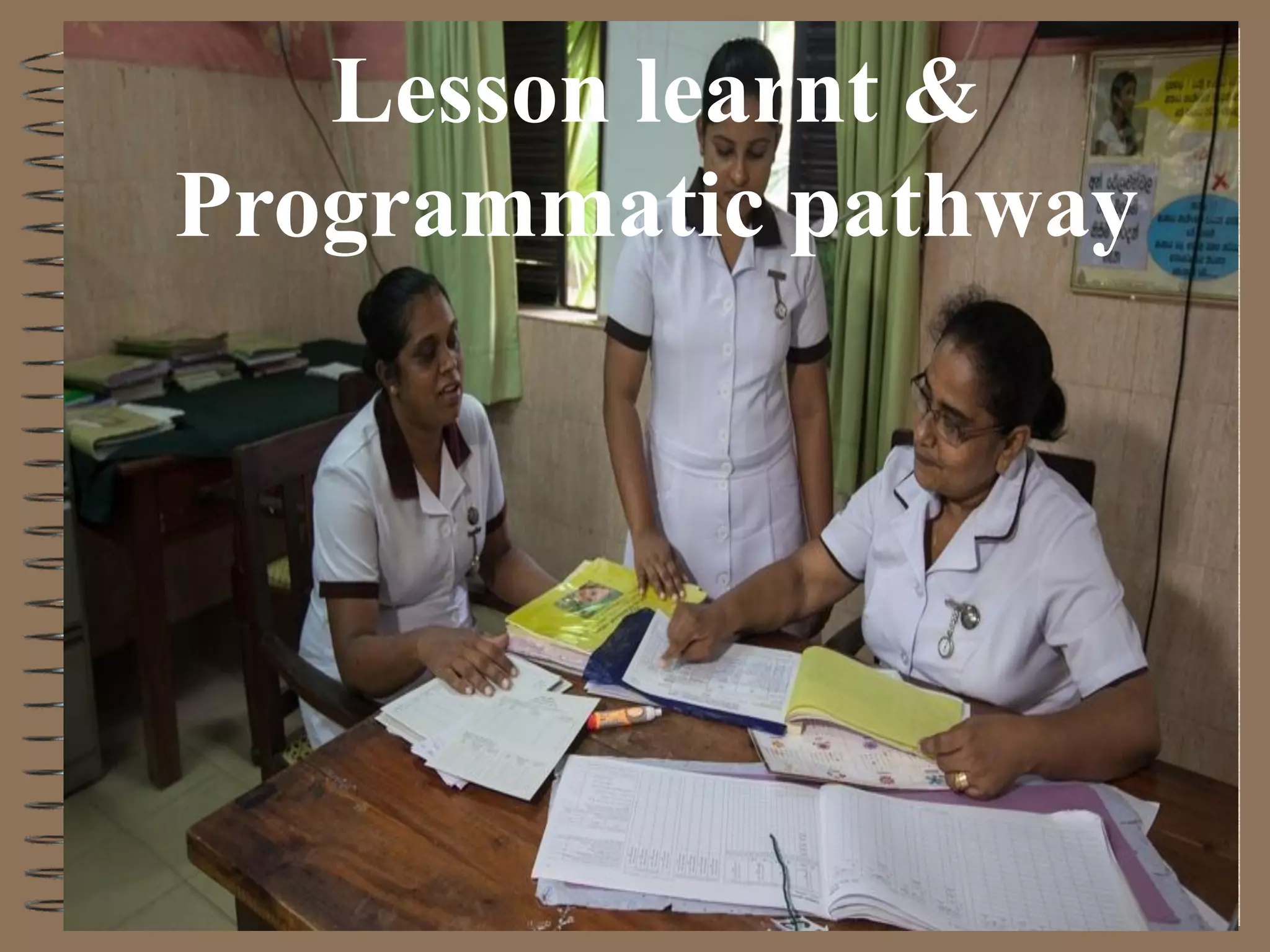
Lesson learnt &
Programmatic pathway
Lessons learnt:
• Early foundation for MCH services
• Continuous political commitment towards MCH
• Appropriate evidence based policies, programme and
interventions
• Strong health system with all six building blocks
• Expansion of institutional net work throughout the
country (preventive and curative)
• Integrated MCH /FP service delivery package with
continuum of care through life cycle approach
• Human resource expansion for MCH /FP (midwifery
and others)
• Free Health Services for all
Programmematic Pathway to improve
health status
Printed on recycled paper-actually
better, not printed at all
Challenges faced &
Strength
Challenges faced
To reduce maternal and child malnutrition
To provide high quality MCH services across the
country
Burden of unsafe abortion
Inter district disparities in MMR, IMR and other
MCH related indicators
Inadequate intra and inter-sectoral collaboration
between MCH programme conducted by different
organizations
NCD such as Diabetes , Hypertension and Heart
Diseases and their incidence and risk factors are
increasing
Strengths and opportunities to further
reduce maternal and neonatal deaths
Consistent political commitment towards MCH
High life expectancy at birth
High literacy rate especially among females
Free education and free health services
An organized health care delivery system for
MNCH services across the country
Some clips ....
References :
1. Annual Health bulletin 2014, Ministry of Health,
Nutrition and Indigenous medicine , Sri lanka
2. Demographic and Health survey 2006-07, Sri
lanka
3. National Strategic Plan Maternal and Newborn
Health 2012-2016
4. http://www.aljazeera.com/indepth/features/2016/
03/sri-lanka-beats-india-maternal-mortality-
ratios-160308105127735.html
5. Annual Report on family Health 2013,Family
Health Bureau, Ministry of Health, Sri Lanka
Basic Facts about Sri Lanka:
• Total population (in thousands) - 20,771

Maternal Health program of Srilanka

  • 1.
    Maternal Health Programof Sri lanka Sanjiv Kuamr Department of Public Health North South University, Basundhara, Dhaka 2017
  • 2.
    Outline of thepresentation • Brief geographic and demographic profile • Current maternal Health situation • Maternal Health program • Challenges faced • Lessons learnt • References
  • 3.
  • 4.
    Brief geographic profile Sri Lanka is an island situated off the southern coast of India  Total area of the country is 65,610 km2 including inland water  The mean temperature ranges from 14° C to 28.5° C in the country.  Sri Lanka is divided into 9 provinces, 25 districts and 331 divisional secretary areas
  • 5.
    Brief demographic profile Sri Lanka is the 57th most populated nation in the world, with 20,277,597 people, and an annual population growth rate of 0.73%.  Sri Lanka has a birth rate of 17.6 births per 1,000 people and a death rate of 6.2 deaths per 1,000 people.  Population density is highest in western Sri Lanka, especially in and around the capital.  Sinhalese constitute the largest ethnic group in the country, with 74.8% of the total population
  • 6.
    Health & Educationprofile  Sri Lankans have a life expectancy of 77.9 years at birth, which is 10% higher than the world average.  The infant mortality rate stands at 8.5 per 1,000 births and the maternal mortality rate at 0.39 per 1,000 births, which is similar with the developed countries  The CPR is 55.7 % (Bangaldesh 56.7% , Nepal 48%)  Literacy rate of 95.7% (F- 94.6 %, M- 96.9%) , Sri Lanka has one of the most literate populations among developing nations.
  • 7.
  • 8.
    Maternal health program Under the • Ministry of Health, Nutrition and Indigenous medicine  Family Health program- Family health bureau 1. Maternal and newborn health 2. Infant and child health including child nutrition, development and children with special needs 3. School and adolescent health 4. Family planning 5. Women’s health incorporating premenopausal care and gender concern
  • 9.
    Component of Maternal& Newborn care Family Health Programme includes interventions that focus the antenatal, intra-natal and postnatal aspects of pregnancy.  Antenatal Care: Registration of pregnant mothers Field Clinic care Antenatal screening- prepregnancy nutritional status (Body Mass Index-BMI), maternal anaemia (Serum Hb), STI and blood grouping and Rh. Domiciliary Care- care offered by PHMs (Public Health Midwifes) during home visits Protection from Rubella and Tetanus
  • 10.
    Component of Maternal& Newborn care Intra-Natal and Newborn Care: Almost all the deliveries around the country occur in institutions. It is the duty of the PHMs to report deliveries occurring to mothers who reside permanently in her area. Postpartum and Newborn Care: o 1st visit -5 days o 2nd visit and 6 - 10 days o 3rd visit 14 days o 4th visit 28 days
  • 11.
  • 12.
    Human resources forhealth per 100 000 population in SEAR countries
  • 13.
    Maternal Health Situation: •Total population (in thousands) - 20,771
  • 14.
  • 15.
    Leading Causes ofMaternal Deaths, 2014 : N=40+72
  • 16.
    Cause Specific MaternalMortality Rates, 2001 - 2014
  • 17.
    89.8 90 85.9 94.3 94 9091.2 6.7 6.5 6.5 6.1 6 5.3 4.9 26.3 25.4 25.4 24.6 23.8 23 24.3 99.6 99.7 99.8 99.9 99.9 99.9 99.7 25.8 27 27.7 28.7 30.5 31.1 32.1 79.4 75.9 75 77.4 77.3 80.6 79.3 0 10 20 30 40 50 60 70 80 90 100 2008 2009 2010 2011 2012 2013 2014 Achievementin% Maternal Health Services ANC visit Teenage ANC visit Mother with low BMI Institutional delivery C/S PNC
  • 18.
  • 19.
    Lessons learnt: • Earlyfoundation for MCH services • Continuous political commitment towards MCH • Appropriate evidence based policies, programme and interventions • Strong health system with all six building blocks • Expansion of institutional net work throughout the country (preventive and curative) • Integrated MCH /FP service delivery package with continuum of care through life cycle approach • Human resource expansion for MCH /FP (midwifery and others) • Free Health Services for all
  • 20.
    Programmematic Pathway toimprove health status Printed on recycled paper-actually better, not printed at all
  • 21.
  • 22.
    Challenges faced To reducematernal and child malnutrition To provide high quality MCH services across the country Burden of unsafe abortion Inter district disparities in MMR, IMR and other MCH related indicators Inadequate intra and inter-sectoral collaboration between MCH programme conducted by different organizations NCD such as Diabetes , Hypertension and Heart Diseases and their incidence and risk factors are increasing
  • 23.
    Strengths and opportunitiesto further reduce maternal and neonatal deaths Consistent political commitment towards MCH High life expectancy at birth High literacy rate especially among females Free education and free health services An organized health care delivery system for MNCH services across the country
  • 24.
  • 25.
    References : 1. AnnualHealth bulletin 2014, Ministry of Health, Nutrition and Indigenous medicine , Sri lanka 2. Demographic and Health survey 2006-07, Sri lanka 3. National Strategic Plan Maternal and Newborn Health 2012-2016 4. http://www.aljazeera.com/indepth/features/2016/ 03/sri-lanka-beats-india-maternal-mortality- ratios-160308105127735.html 5. Annual Report on family Health 2013,Family Health Bureau, Ministry of Health, Sri Lanka
  • 26.
    Basic Facts aboutSri Lanka: • Total population (in thousands) - 20,771