Approach to Maternal and Child Health Care :
•Follows a continuum of care from pre-pregnancy to post partum care.
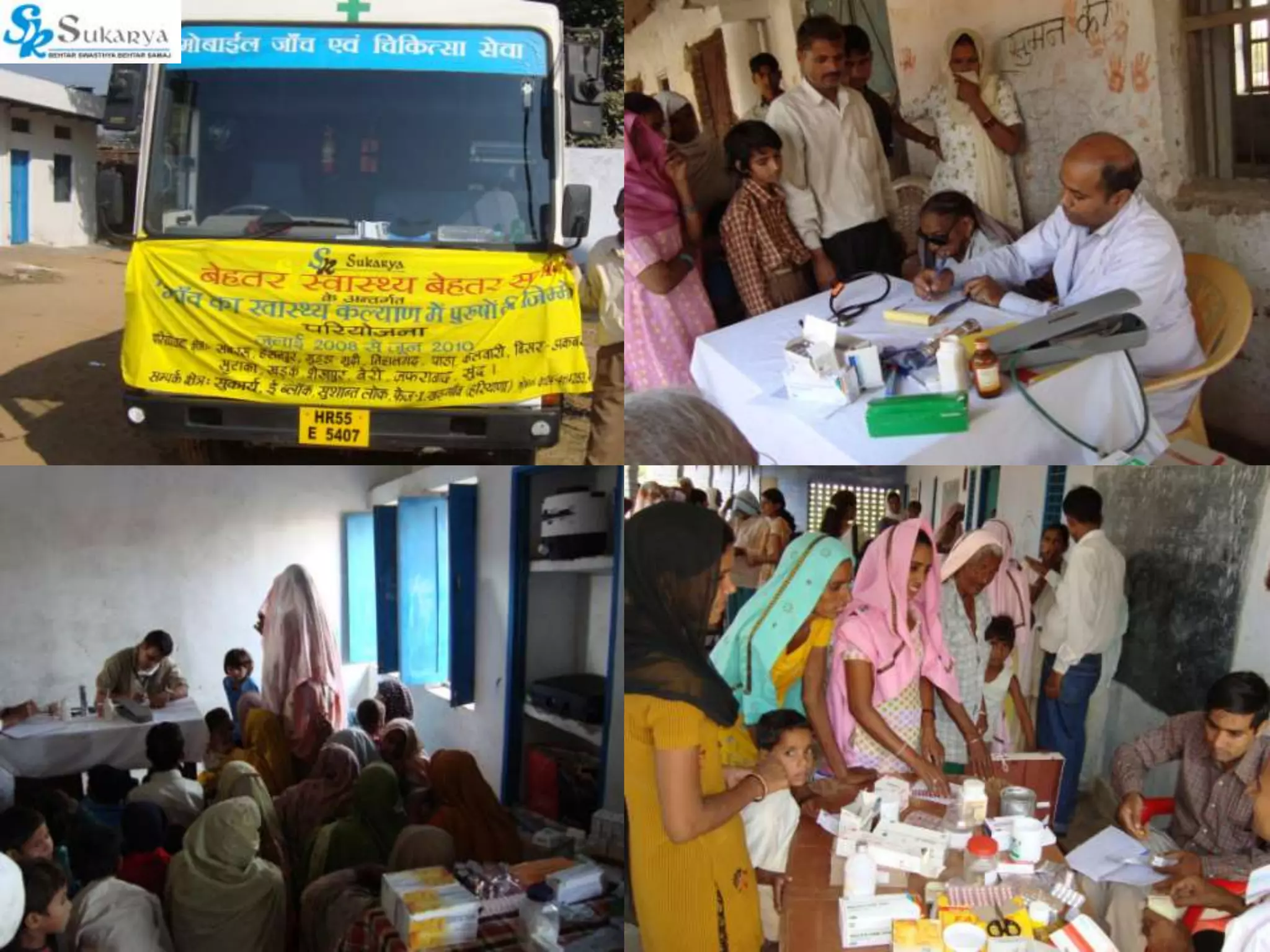
•Through mobile health clinics, health camps and community health
workers we reach women living in the underserved areas of Haryana and
bring essential services to their doorstep.
•We provide pregnant women easy access to quality ante natal care and
sensitise them about the importance of institutional deliveries.
• We build and strengthen linkages with the government system to ensure
that both mother and newborn are followed up post partum.
• We build awareness on adequate nutrition during pregnancy and
breastfeeding, adoption of hygienic practices during delivery and
adequate spacing of births to improve the health of women.
•We build awareness about the several reproductive health
issues and empower women and girls with the right information
so that they can make the right decisions.
•We work to increase access to reproductive health services and
involve men as active partners in the same.
•By providing community based health services supported by a
strong referral system, we help save the lives of thousands of
children living in the underserved areas of Haryana.
•We focus on preventing, identifying and providing key
interventions for all basic childhood diseases.
•We regularly check children for key developmental parameters
and sensitise communities on the importance of adequate
nutrition and care.
•We ensure that all children are provided with the required
immunisations, nutritional supplements and de-worming.
Feature Projects:
•Hifazat – Improving Mother and Child Health
through Specialised Clinics
•Knowledge Based Intervention In Reproductive
health Advocacy and Action (KIRAN)
• Men as Partners
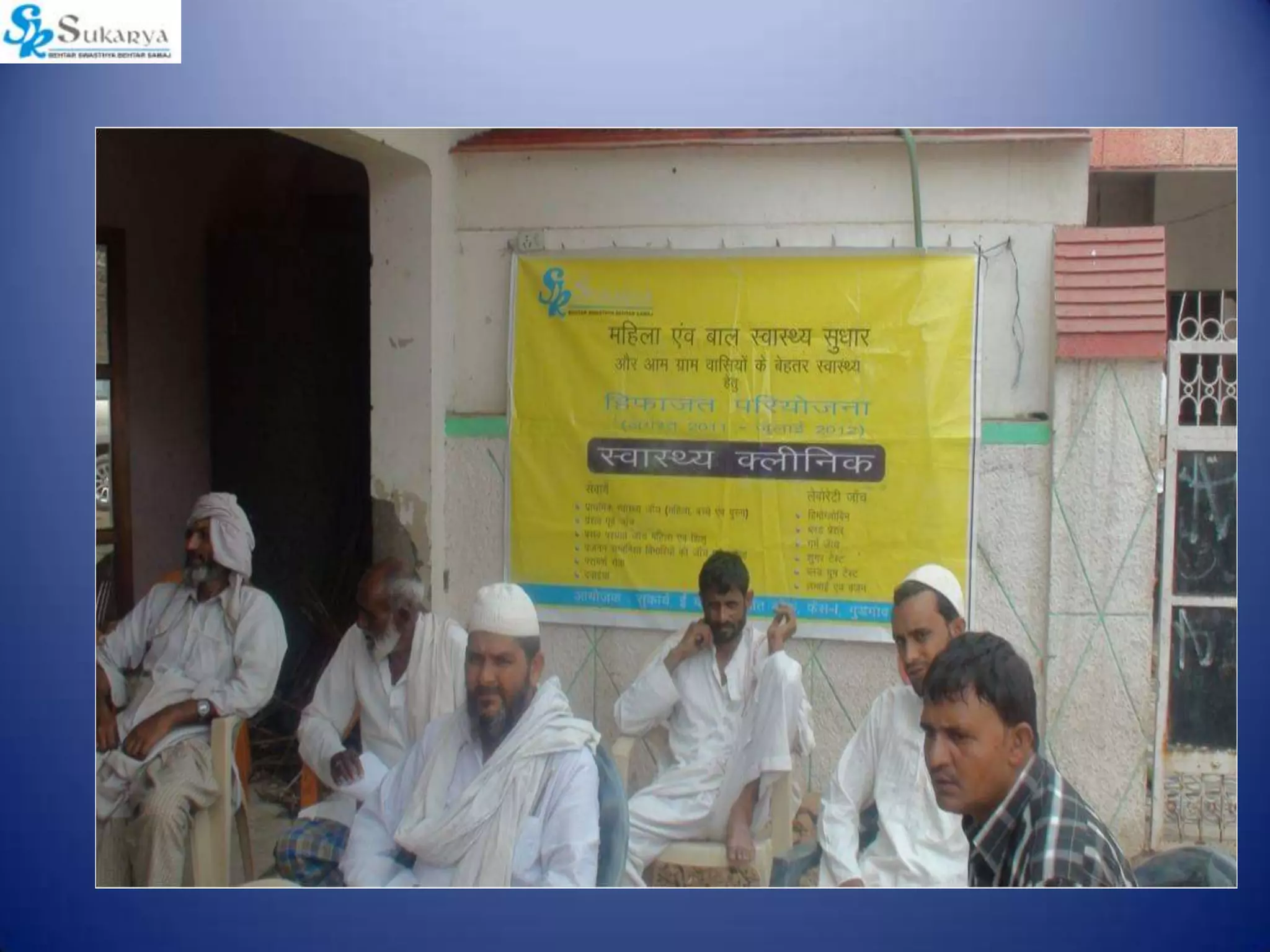
HIFAZAT:
•Started in July 2011,
•Working to improve maternal and child health in 15 villages of
Mewat, Jhajjar and Gurgaon districts by running specialized
mother and child health clinics.
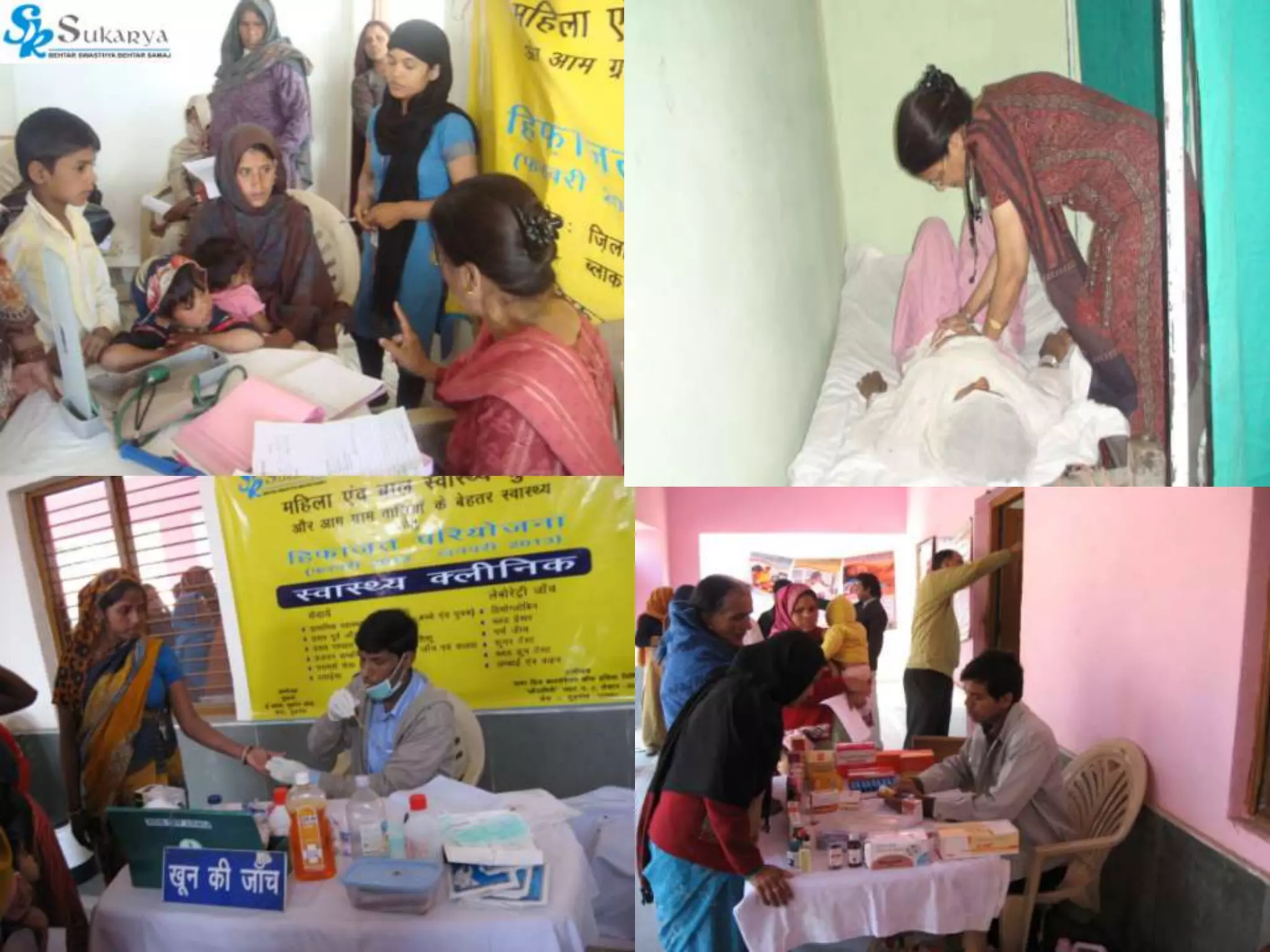
•We are running health clinics on a rotational basis, covering 8
villages in a month.
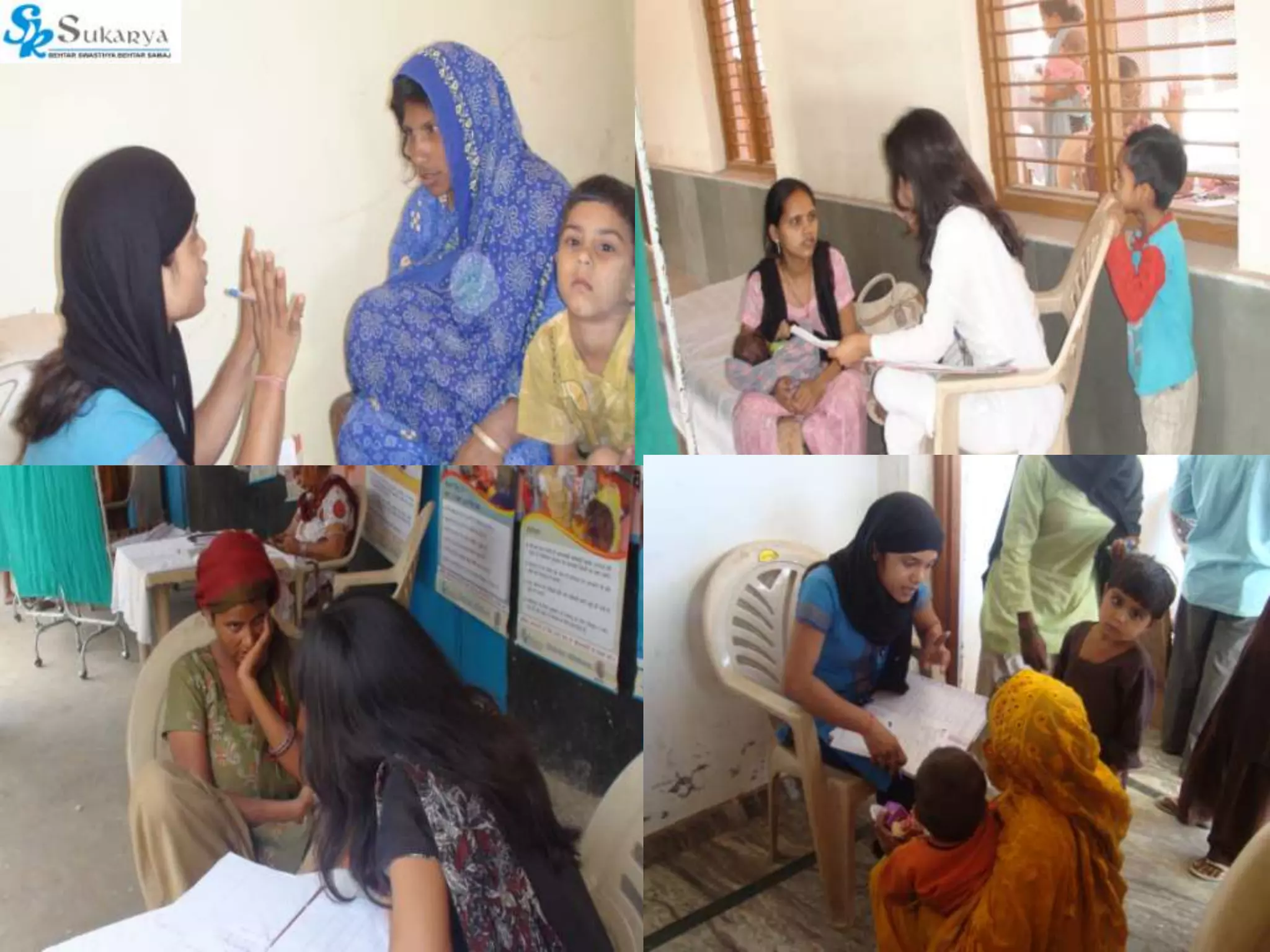
•Through the clinic we provide critical ante natal and post natal
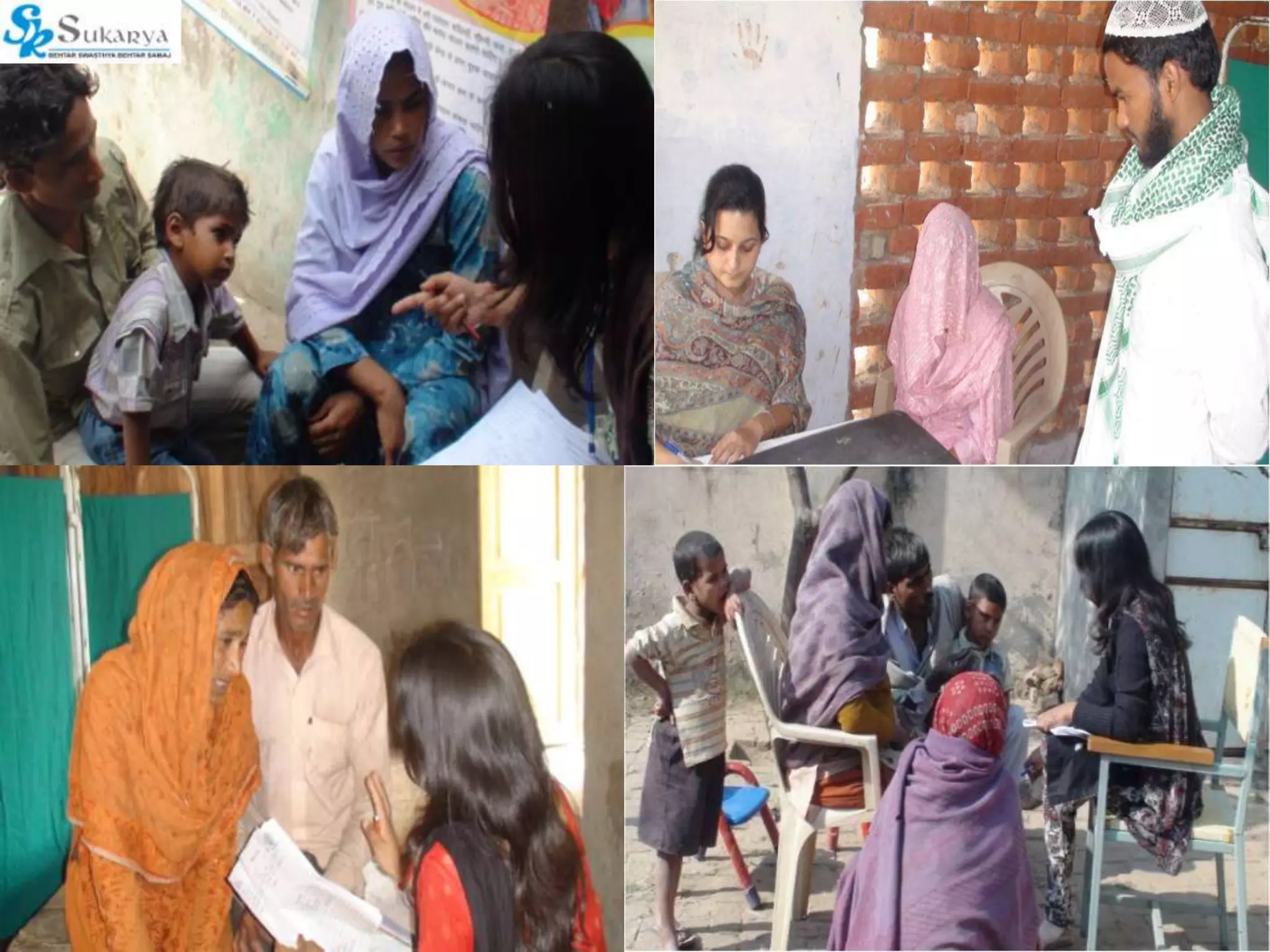
care, counseling on reproductive, maternal and child health and
hygiene,
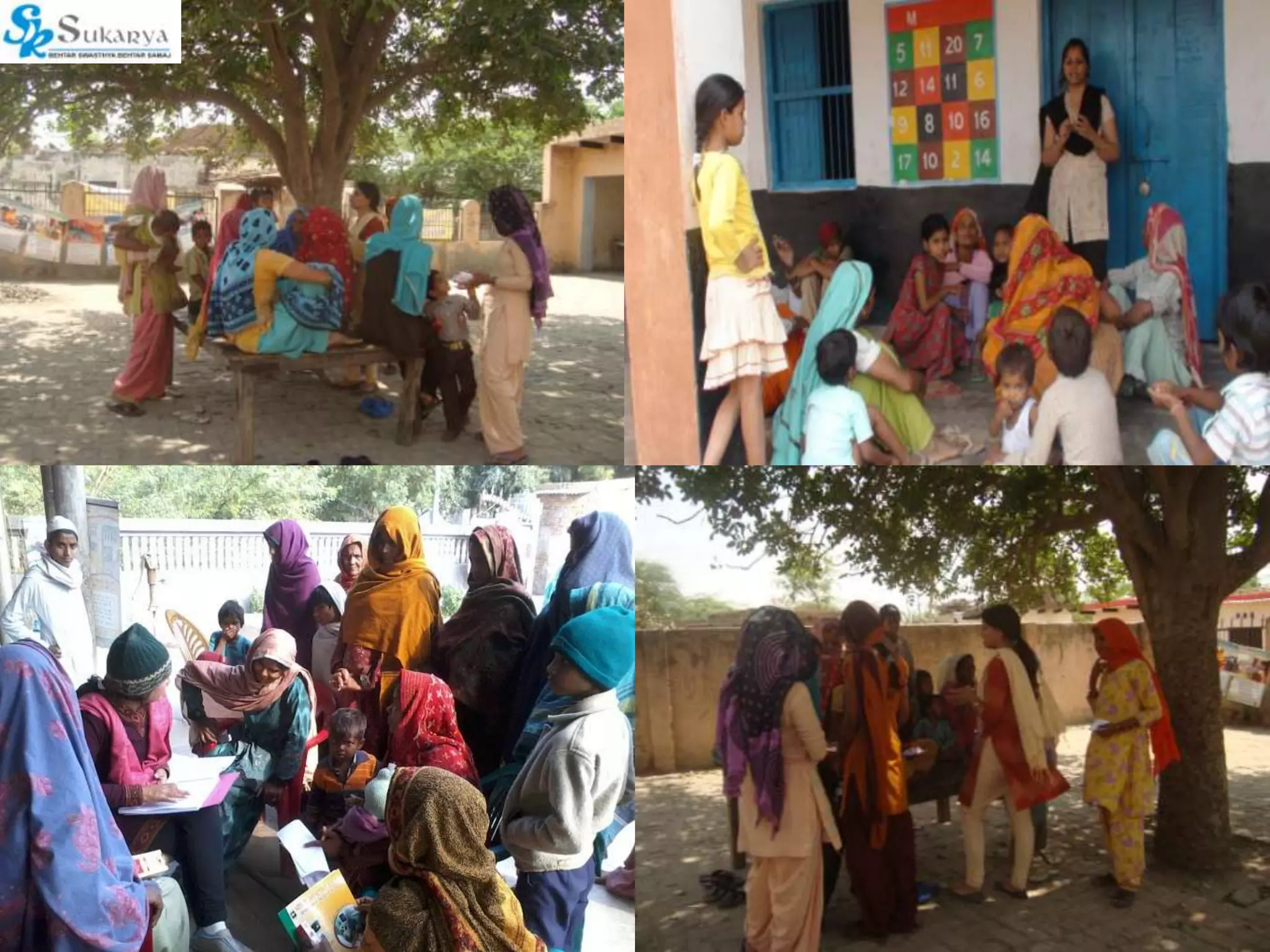
•The clinics are also a platform through which we build
awareness on importance of institutional deliveries,
importance of breastfeeding, care during pregnancy etc.
•This is supported by Power Grid Corporation of India Limited.
KIRAN
Joint initiative of Population Foundation of India (PFI)
and Sukarya.
Objective:
The overall objective of the project was to improve the
reproductive and child health status in Mewat. The
project was being implemented in 29 villages covering a
project population of about 70, 000.
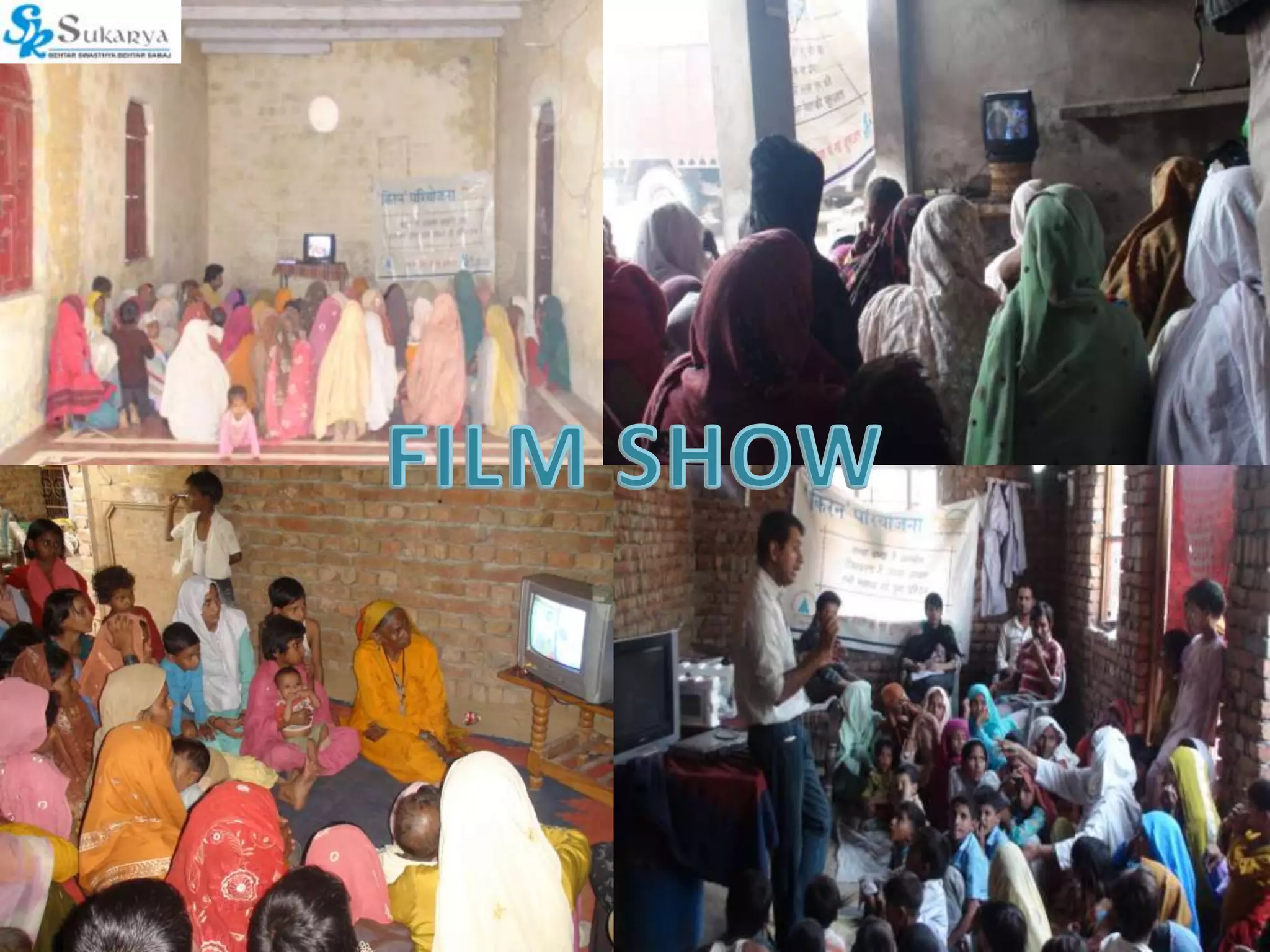
Two key issues:
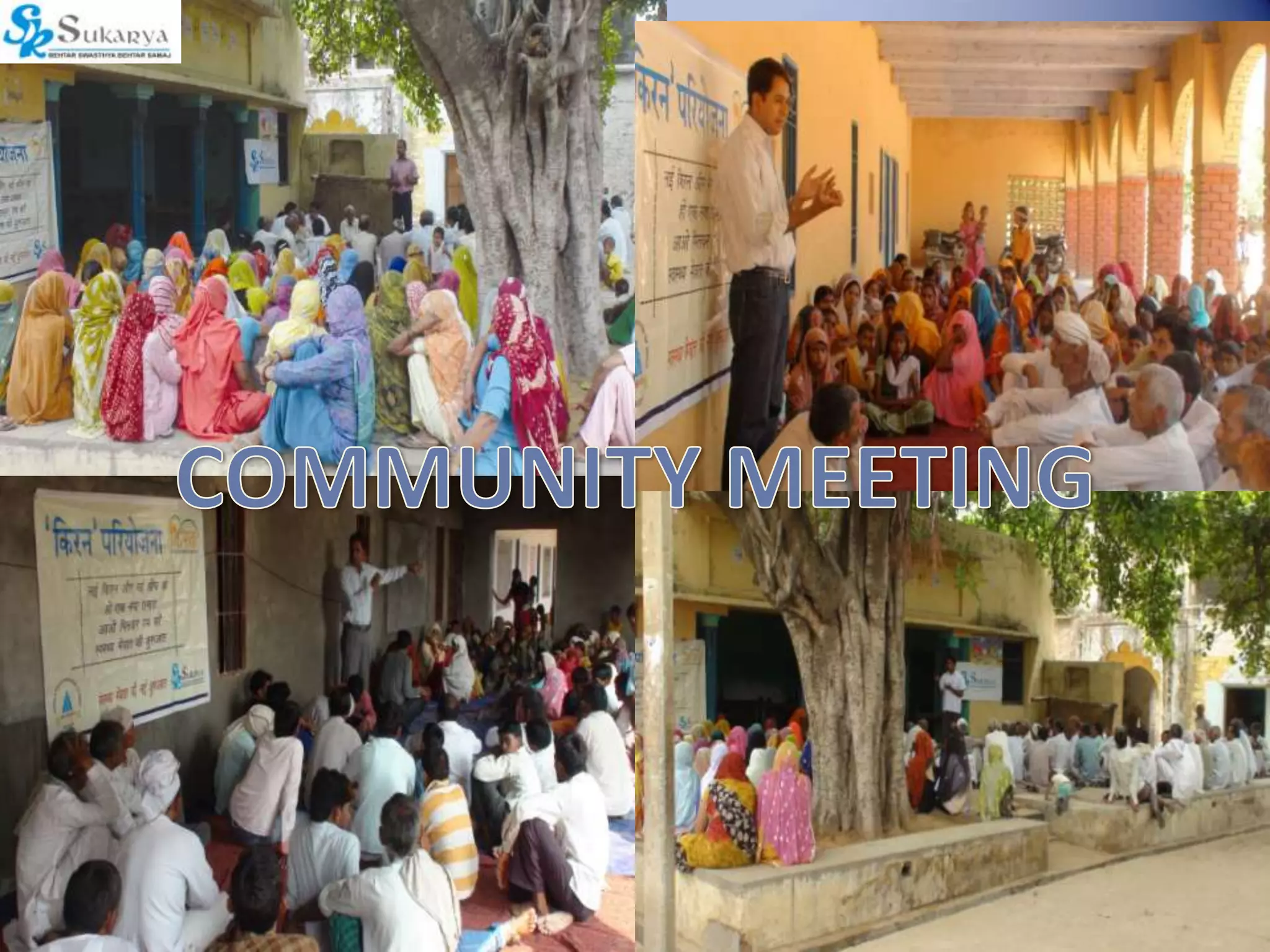
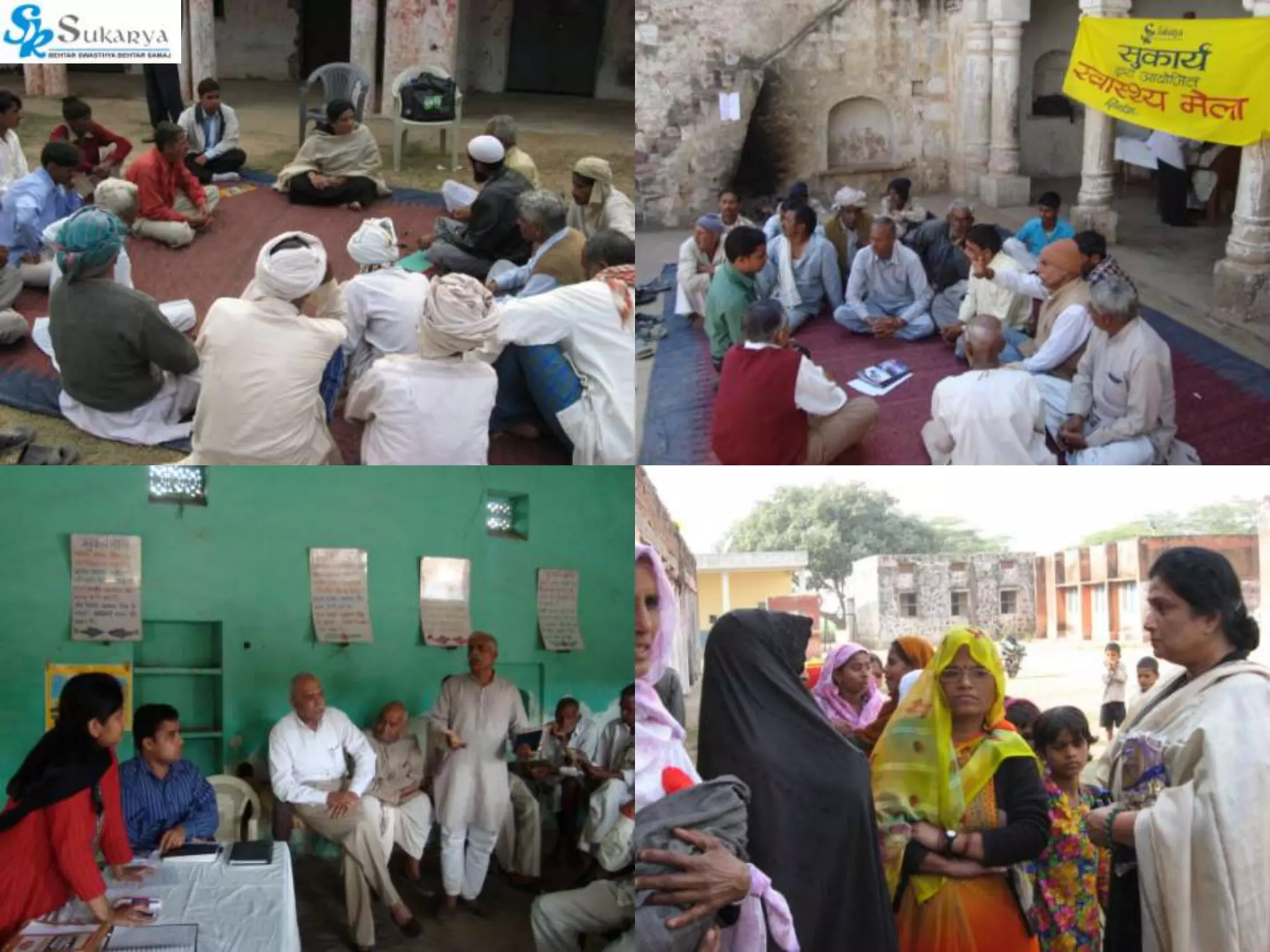
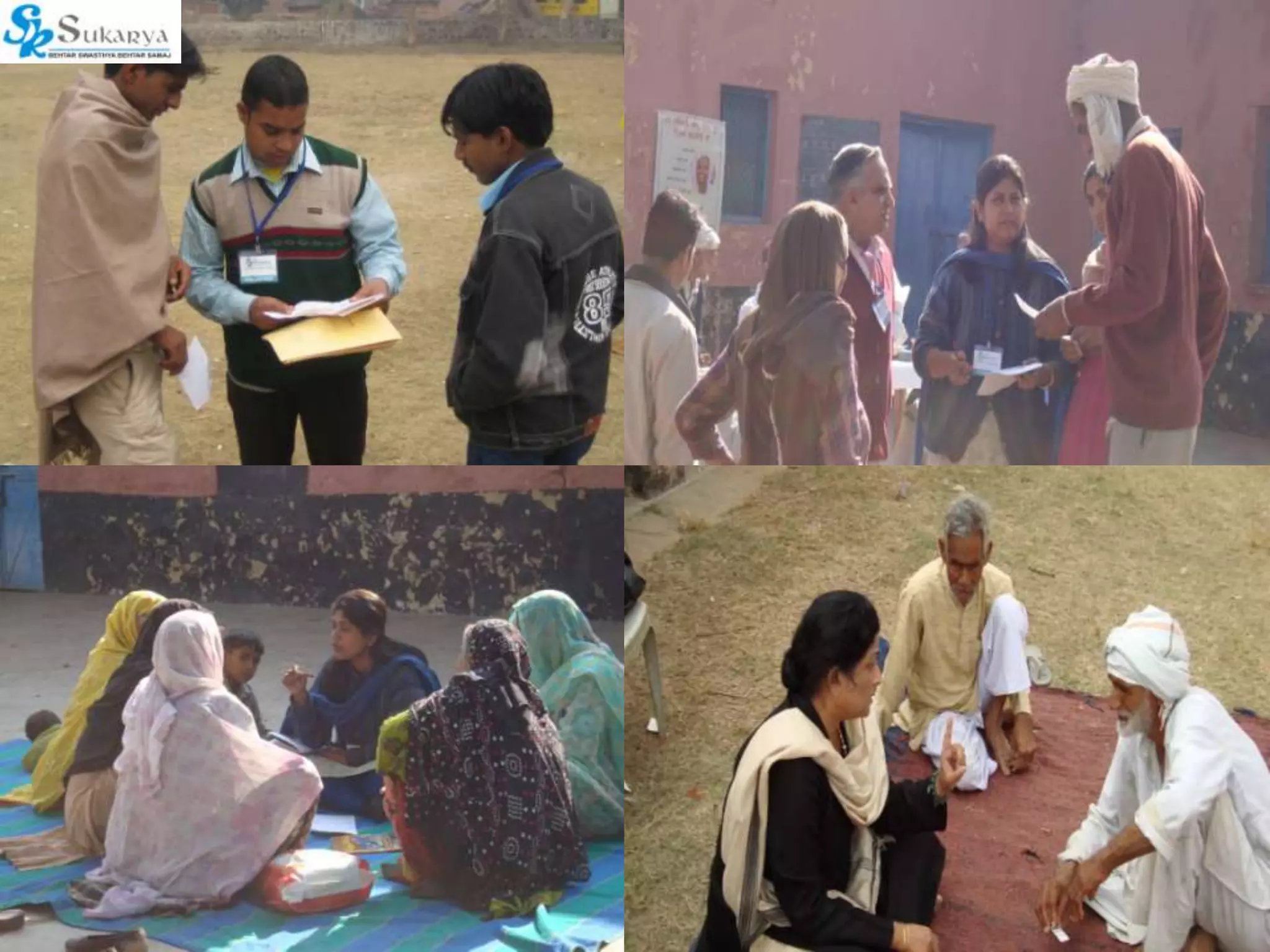
One, we sought to change the behaviour and attitudes of people
regarding maternal and child health by disseminating information,
conducting group awareness sessions, health camps and one-on-
one counselling. We spoke about importance of ante natal and post
natal care, institutional deliveries, adequate spacing of births, good
nutrition and timely immunisations to young women, their
partners, mothers-in-law and the other community members.
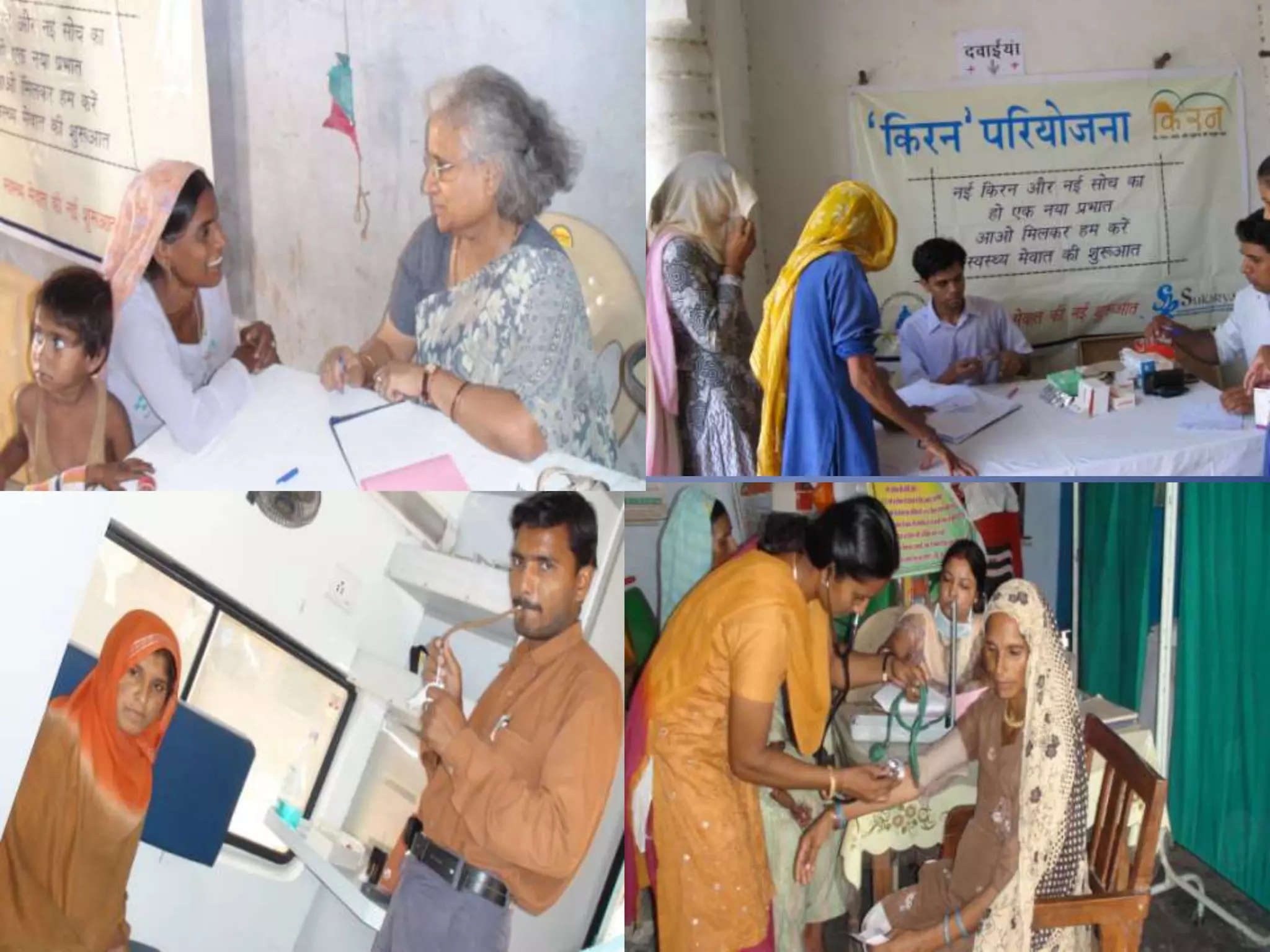
Second, we attempted to strengthen the availability of quality
services to ensure that women, who were willing, received
adequate help. Health camps were organised regularly to provide
key interventions and send referrals to government hospitals. Our
community health workers worked in close co-ordination with the
government Accredited Social Health Activists (ASHA) and
Anganwadi workers in following up pregnant and lactating women.
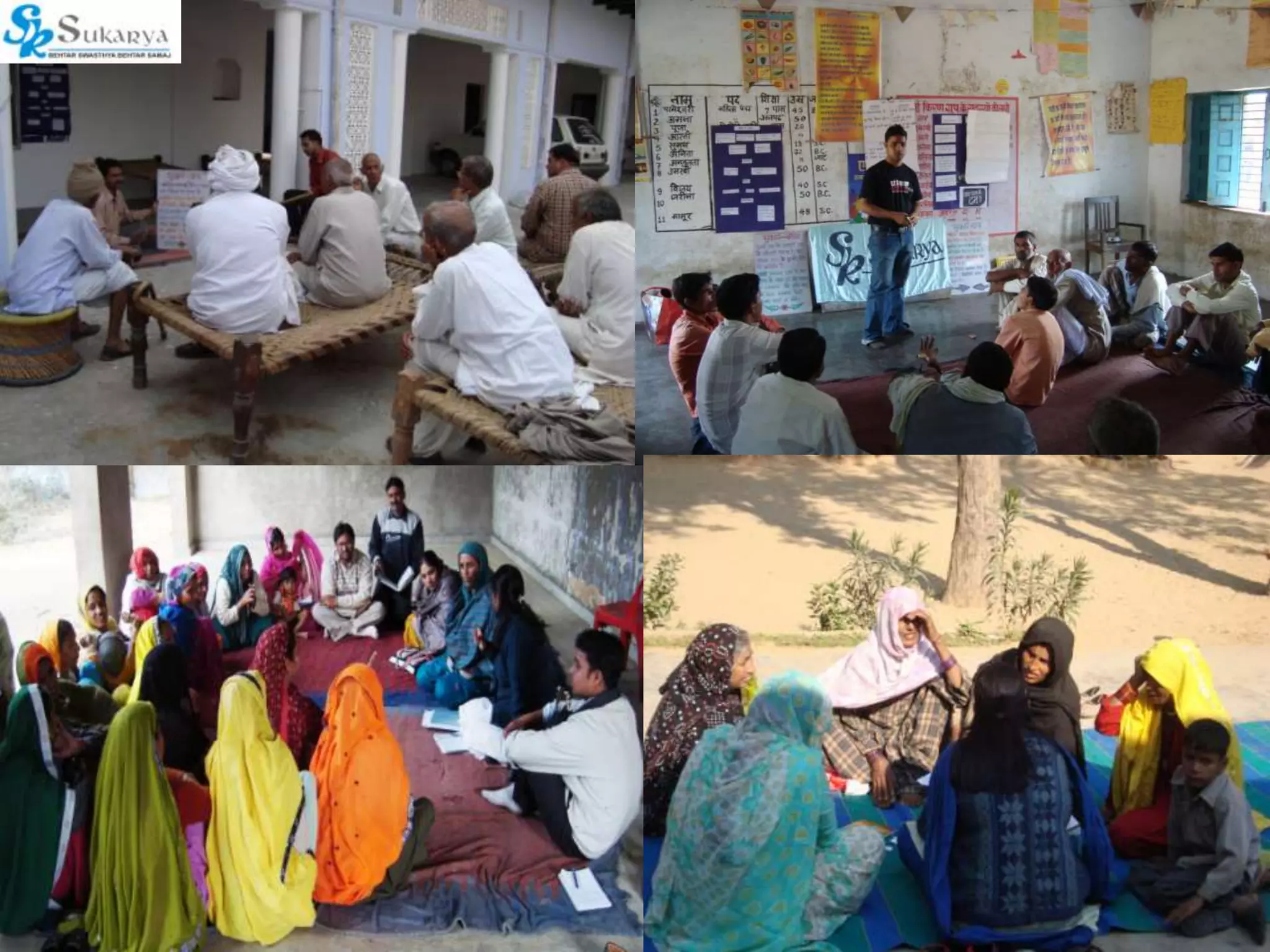
The project was implemented in 13 villages of Tauro Block
of Mewat District and sought to improve mother and child
health, promote good health practices and increase access
to reproductive health services by involving men as
partners. The main thrust of the project was health
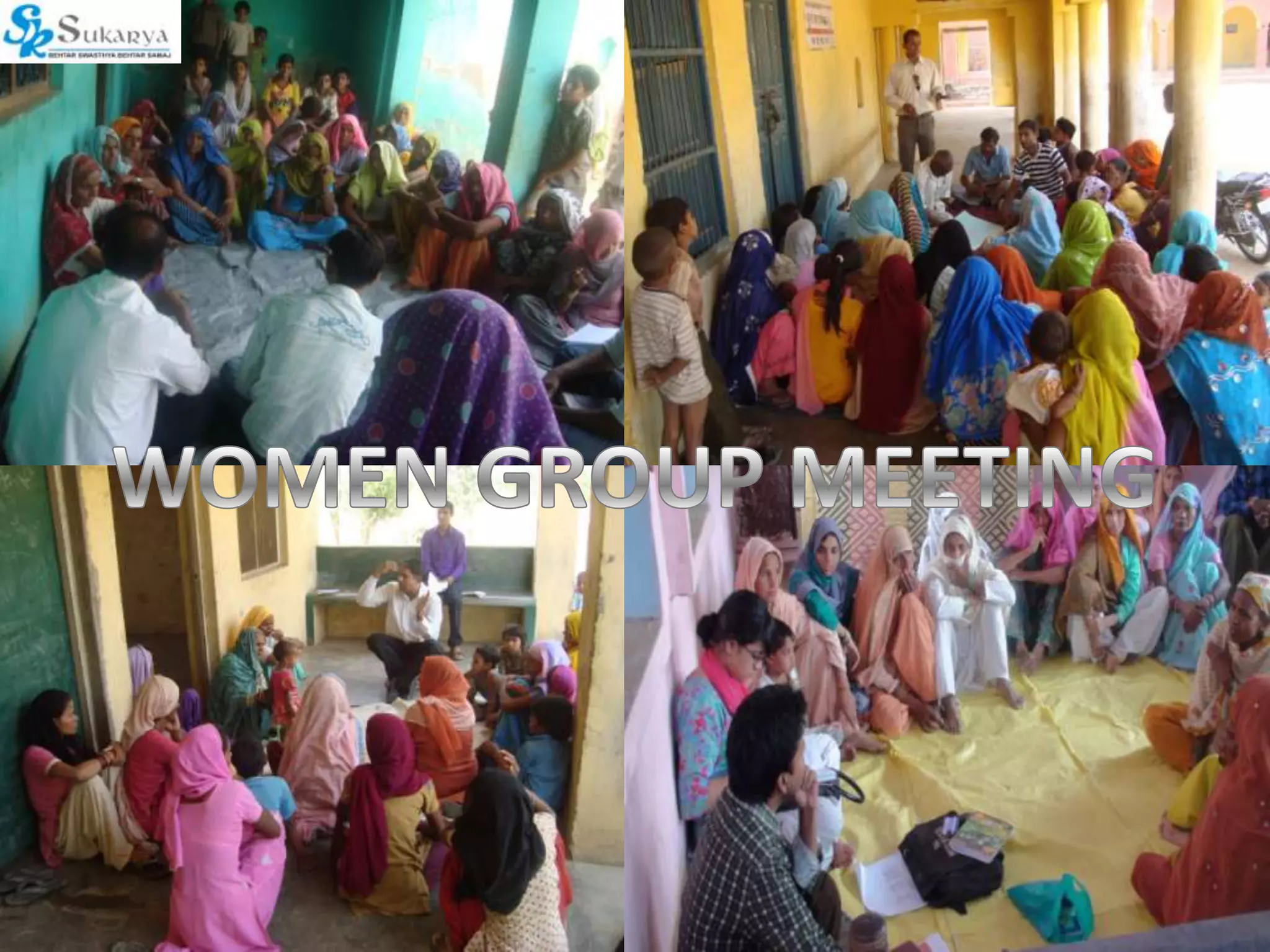
education and awareness, through male and female health
groups. These groups served as a platform for health
education, to identify health issues and to take the
necessary actions for seeking health products and
services.
Maternal and Child Health Programme

Maternal and Child Health Programme

  • 2.
    Approach to Maternaland Child Health Care : •Follows a continuum of care from pre-pregnancy to post partum care. •Through mobile health clinics, health camps and community health workers we reach women living in the underserved areas of Haryana and bring essential services to their doorstep. •We provide pregnant women easy access to quality ante natal care and sensitise them about the importance of institutional deliveries. • We build and strengthen linkages with the government system to ensure that both mother and newborn are followed up post partum. • We build awareness on adequate nutrition during pregnancy and breastfeeding, adoption of hygienic practices during delivery and adequate spacing of births to improve the health of women.
  • 3.
    •We build awarenessabout the several reproductive health issues and empower women and girls with the right information so that they can make the right decisions. •We work to increase access to reproductive health services and involve men as active partners in the same. •By providing community based health services supported by a strong referral system, we help save the lives of thousands of children living in the underserved areas of Haryana. •We focus on preventing, identifying and providing key interventions for all basic childhood diseases.
  • 4.
    •We regularly checkchildren for key developmental parameters and sensitise communities on the importance of adequate nutrition and care. •We ensure that all children are provided with the required immunisations, nutritional supplements and de-worming.
  • 5.
    Feature Projects: •Hifazat –Improving Mother and Child Health through Specialised Clinics •Knowledge Based Intervention In Reproductive health Advocacy and Action (KIRAN) • Men as Partners
  • 8.
    HIFAZAT: •Started in July2011, •Working to improve maternal and child health in 15 villages of Mewat, Jhajjar and Gurgaon districts by running specialized mother and child health clinics. •We are running health clinics on a rotational basis, covering 8 villages in a month. •Through the clinic we provide critical ante natal and post natal care, counseling on reproductive, maternal and child health and hygiene, •The clinics are also a platform through which we build awareness on importance of institutional deliveries, importance of breastfeeding, care during pregnancy etc. •This is supported by Power Grid Corporation of India Limited.
  • 22.
    KIRAN Joint initiative ofPopulation Foundation of India (PFI) and Sukarya. Objective: The overall objective of the project was to improve the reproductive and child health status in Mewat. The project was being implemented in 29 villages covering a project population of about 70, 000.
  • 23.
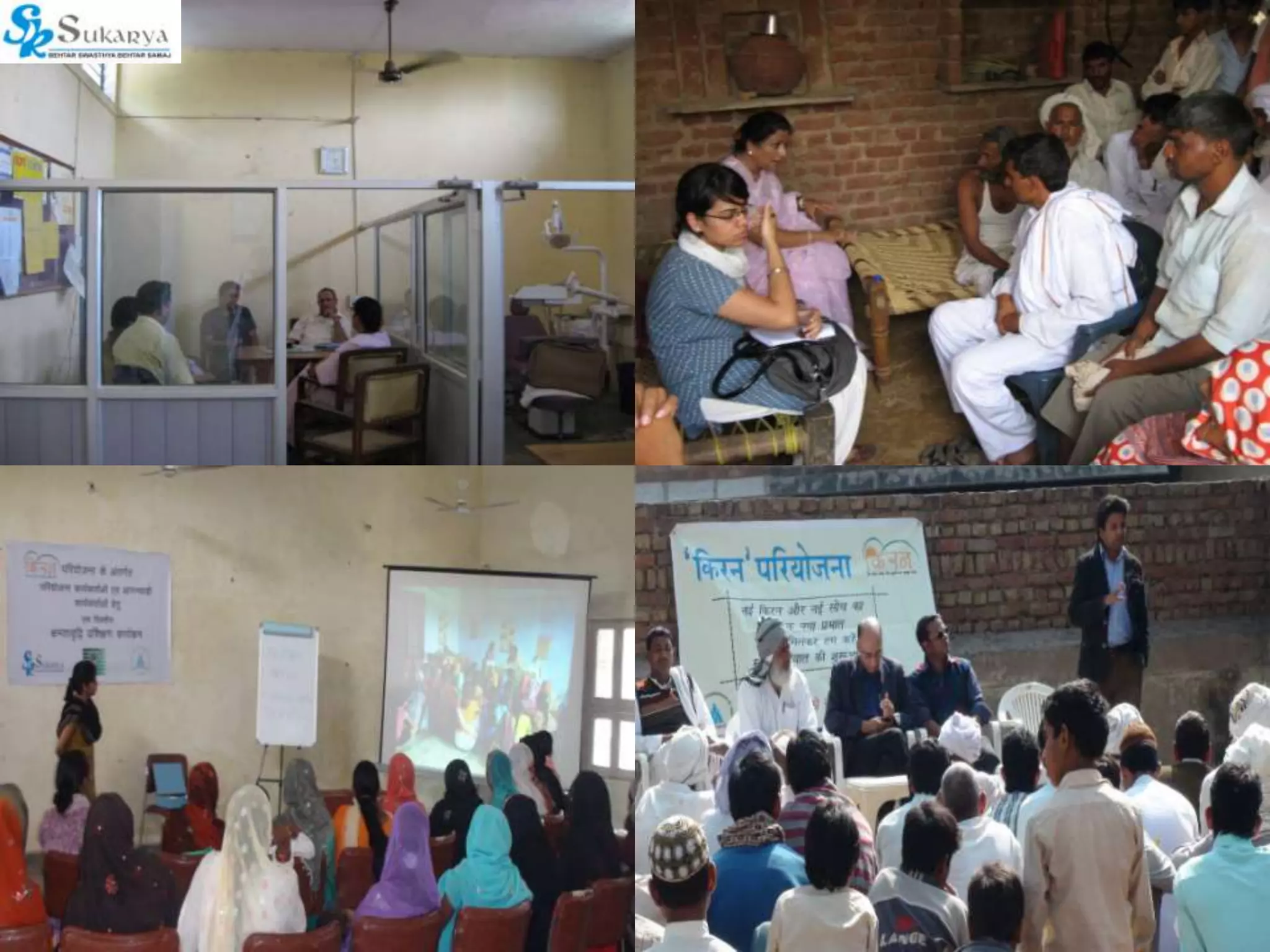
    Two key issues: One,we sought to change the behaviour and attitudes of people regarding maternal and child health by disseminating information, conducting group awareness sessions, health camps and one-on- one counselling. We spoke about importance of ante natal and post natal care, institutional deliveries, adequate spacing of births, good nutrition and timely immunisations to young women, their partners, mothers-in-law and the other community members. Second, we attempted to strengthen the availability of quality services to ensure that women, who were willing, received adequate help. Health camps were organised regularly to provide key interventions and send referrals to government hospitals. Our community health workers worked in close co-ordination with the government Accredited Social Health Activists (ASHA) and Anganwadi workers in following up pregnant and lactating women.
  • 35.
    The project wasimplemented in 13 villages of Tauro Block of Mewat District and sought to improve mother and child health, promote good health practices and increase access to reproductive health services by involving men as partners. The main thrust of the project was health education and awareness, through male and female health groups. These groups served as a platform for health education, to identify health issues and to take the necessary actions for seeking health products and services.