Phosphates Industry
Experts in process design and material
processing for over 65 years.
Material Handling in the
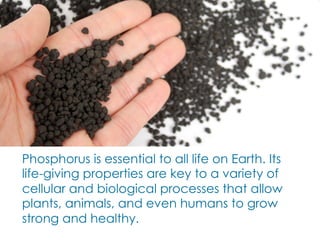
Phosphorus is essential to all life on Earth. Its
life-giving properties are key to a variety of
cellular and biological processes that allow
plants, animals, and even humans to grow
strong and healthy.
For this reason, phosphate rock is processed
into a variety of products, namely, animal
feeds and fertilizers.
For this reason, phosphate rock is processed
into a variety of products, namely, animal
feeds and fertilizers.
No matter what type of product is being
produced, however, all of these operations
have one thing in common: they all rely on
heavy-duty material handling equipment to
keep operations running seamlessly.
Material handling equipment is used
frequently throughout the phosphates
industry to bring automation and flexibility
to a process, with a variety of equipment
options available.
 
Common Handling
Equipment
Bucket Elevators
Bucket elevators transfer materials
vertically and are often chosen for their
high capacity capabilities.
Bucket Elevators
Bucket elevators transfer materials
vertically and are often chosen for their
high capacity capabilities.
The most popular type of bucket elevator
for phosphates handling is the double
chain continuous style, because it allows
for increased capacities and height
capabilities.
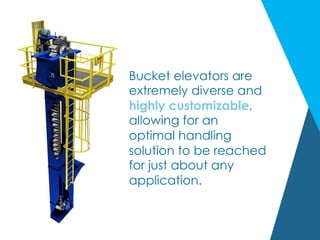
Bucket elevators are
extremely diverse and
highly customizable,
allowing for an
optimal handling
solution to be reached
for just about any
application.
Belt Conveyors
Belt conveyors are also frequently used in
phosphate processing facilities.
Belt Conveyors
Belt conveyors are also frequently used in
phosphate processing facilities.
They allow material to be moved
horizontally, and are commonly used to
move material from one building to the
next, and between process stops.
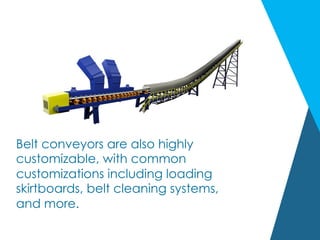
Belt conveyors are also highly
customizable, with common
customizations including loading
skirtboards, belt cleaning systems,
and more.
A variety of additional conveyor types
exist, allowing for increased flexibility.
Two of the most popular include:
A variety of additional conveyor types
exist, allowing for increased flexibility.
Two of the most popular include:
•  Reversing Shuttle Conveyors
A variety of additional conveyor types
exist, allowing for increased flexibility.
Two of the most popular include:
•  Reversing Shuttle Conveyors
•  Steep Incline Conveyors
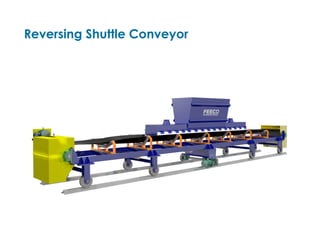
Reversing Shuttle Conveyor
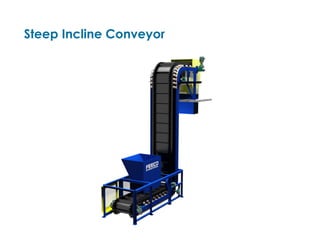
Steep Incline Conveyor
Belt Trippers & Plows
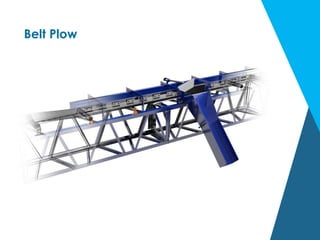
Trippers and plows add flexibility to a
conveyor system by creating discharge
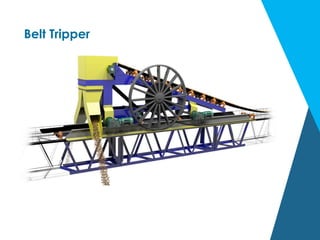
points. Trippers can be fixed or movable,
while belt plows are fixed, but allow for
discharge from one or both sides.
Belt Tripper
Belt Plow
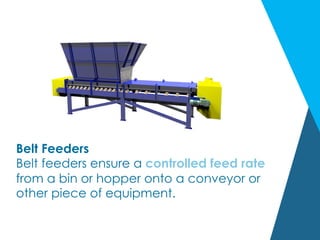
Belt Feeders
Belt feeders ensure a controlled feed rate
from a bin or hopper onto a conveyor or
other piece of equipment.
Considerations in
Handling Phosphates
Phosphates can present challenges to
handling equipment, requiring modifications
to ensure equipment is protected.
This might include reinforcing high-wear
areas such as transfer chutes with
resistant materials like alloys or
stainless steel.
This might include reinforcing high-wear
areas such as transfer chutes with
resistant materials like alloys or
stainless steel.
Additionally, material should not be
allowed to build up in equipment, as
this will promote excessive wear.
This might include reinforcing high-wear
areas such as transfer chutes with
resistant materials like alloys or
stainless steel.
Additionally, material should not be
allowed to build up in equipment, as
this will promote excessive wear.
This is especially true of seasonal
operations; equipment should be
cleaned out prior to downtime to avoid
the possibility of corrosive action.
Conclusion
The right material handling equipment is a
key component in creating a flexible,
seamless phosphates operation.
Conclusion
The right material handling equipment is a
key component in creating a flexible,
seamless phosphates operation.
While a one-size-fits-all solution may seem
attractive, a customized approach will yield
the best results.
Choosing a manufacturer that is familiar
with the unique characteristics of
phosphates will help to reach an optimal
handling solution.  
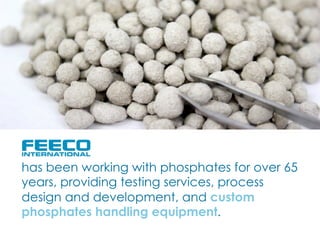
has been working with phosphates for over 65
years, providing testing services, process
design and development, and custom
phosphates handling equipment.
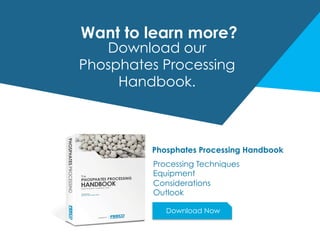
Want to learn more?
Download our
Phosphates Processing
Handbook.
Phosphates Processing Handbook
Processing Techniques
Equipment
Considerations
Outlook
Download Now

Material Handling in the Phosphates Industry

  • 1.
    Phosphates Industry Experts inprocess design and material processing for over 65 years. Material Handling in the
  • 2.
    Phosphorus is essentialto all life on Earth. Its life-giving properties are key to a variety of cellular and biological processes that allow plants, animals, and even humans to grow strong and healthy.
  • 3.
    For this reason,phosphate rock is processed into a variety of products, namely, animal feeds and fertilizers.
  • 4.
    For this reason,phosphate rock is processed into a variety of products, namely, animal feeds and fertilizers. No matter what type of product is being produced, however, all of these operations have one thing in common: they all rely on heavy-duty material handling equipment to keep operations running seamlessly.
  • 5.
    Material handling equipmentis used frequently throughout the phosphates industry to bring automation and flexibility to a process, with a variety of equipment options available.  
  • 6.
  • 7.
    Bucket Elevators Bucket elevatorstransfer materials vertically and are often chosen for their high capacity capabilities.
  • 8.
    Bucket Elevators Bucket elevatorstransfer materials vertically and are often chosen for their high capacity capabilities. The most popular type of bucket elevator for phosphates handling is the double chain continuous style, because it allows for increased capacities and height capabilities.
  • 9.
    Bucket elevators are extremelydiverse and highly customizable, allowing for an optimal handling solution to be reached for just about any application.
  • 10.
    Belt Conveyors Belt conveyorsare also frequently used in phosphate processing facilities.
  • 11.
    Belt Conveyors Belt conveyorsare also frequently used in phosphate processing facilities. They allow material to be moved horizontally, and are commonly used to move material from one building to the next, and between process stops.
  • 12.
    Belt conveyors arealso highly customizable, with common customizations including loading skirtboards, belt cleaning systems, and more.
  • 13.
    A variety ofadditional conveyor types exist, allowing for increased flexibility. Two of the most popular include:
  • 14.
    A variety ofadditional conveyor types exist, allowing for increased flexibility. Two of the most popular include: •  Reversing Shuttle Conveyors
  • 15.
    A variety ofadditional conveyor types exist, allowing for increased flexibility. Two of the most popular include: •  Reversing Shuttle Conveyors •  Steep Incline Conveyors
  • 16.
  • 17.
  • 18.
    Belt Trippers &Plows Trippers and plows add flexibility to a conveyor system by creating discharge points. Trippers can be fixed or movable, while belt plows are fixed, but allow for discharge from one or both sides.
  • 19.
  • 20.
  • 21.
    Belt Feeders Belt feedersensure a controlled feed rate from a bin or hopper onto a conveyor or other piece of equipment.
  • 22.
  • 23.
    Phosphates can presentchallenges to handling equipment, requiring modifications to ensure equipment is protected.
  • 24.
    This might includereinforcing high-wear areas such as transfer chutes with resistant materials like alloys or stainless steel.
  • 25.
    This might includereinforcing high-wear areas such as transfer chutes with resistant materials like alloys or stainless steel. Additionally, material should not be allowed to build up in equipment, as this will promote excessive wear.
  • 26.
    This might includereinforcing high-wear areas such as transfer chutes with resistant materials like alloys or stainless steel. Additionally, material should not be allowed to build up in equipment, as this will promote excessive wear. This is especially true of seasonal operations; equipment should be cleaned out prior to downtime to avoid the possibility of corrosive action.
  • 27.
    Conclusion The right materialhandling equipment is a key component in creating a flexible, seamless phosphates operation.
  • 28.
    Conclusion The right materialhandling equipment is a key component in creating a flexible, seamless phosphates operation. While a one-size-fits-all solution may seem attractive, a customized approach will yield the best results.
  • 29.
    Choosing a manufacturerthat is familiar with the unique characteristics of phosphates will help to reach an optimal handling solution.  
  • 30.
    has been workingwith phosphates for over 65 years, providing testing services, process design and development, and custom phosphates handling equipment.
  • 31.
    Want to learnmore? Download our Phosphates Processing Handbook. Phosphates Processing Handbook Processing Techniques Equipment Considerations Outlook Download Now