THE MATCHBOX
Where Transparency and Accountability Advocates
Get Project Support
WHAT IS THE ENGINE
ROOM?
We investigate and support
the effective use of data
and technology in advocacy
through:
● Applied research
● Direct support
WHAT IS THE MATCHBOX?
An accelerator for NGOs
Strategic and material support
Matchmaking between projects and experts
IS IT FREE?
It depends.
We want to partner with great organisations.
If you can pay, we charge on a sliding scale.
If you can’t pay, we fundraise from donors.
It is also very selective to ensure we deliver.
WHO IS IT FOR?
Advocacy organizations
Transparency and accountability projects integrating
technology into their work
Latin America and Southern Africa (for now...)
...SO WHAT EXACTLY DO
WE DO?
Idea refinement
Project planning
Matchmaking
External expertise
GIVE ME SOME EXAMPLES
Mexico: crowdsourcing public spending
Argentina: tracking bills in parliament
Zimbabwe: water monitoring with WhatsApp
Namibia: visualizing petroleum exploration
WHAT WE LEARNED
we’ve noticed a lot of patterns in how civil society,
journalists, and advocates can break complex ideas into
workable projects
TECH. HUH. WHAT IS IT
GOOD FOR?
Do you really need tech?
What is tech? (Baby don’t hurt me…)
Useful beats shiny every time
Avoid complexity
THINK SYSTEMIC
Technology can’t be compartmentalized
into a single project
Tech culture - learn the basics
In-house technical capacity
Make it last
ONE STEP AT A TIME
Taking technology one-step at a time is important to
develop smartly
Rushing into a technology overhaul will result in missteps
and poor planning
PREP, PREP, PREP.
Prep.
Many problems can be avoided by taking enough time to
think about a project before implementing it.
GO LOCAL
Don’t overly rely on international funders and technology
support providers (including us!)
Become familiar with technology communities in your city
or country.
THINK LIKE A HUMAN
User experience is key.
It doesn’t matter what you’re building - you are creating an
interaction.
Invest time to make sure your audience will want to engage
with your project.
...THEN THINK LIKE A
MACHINE
What will your data model look like?
What’s a data model?
QUESTIONS TO ASK
Key questions that you should ask yourself while
designing a project. These questions can save you
loads of time and help you refine your idea into a
workable project plan.
WHO IS THIS FOR?
Obvious, but again and again we see projects that do not
explore their real audience.
If you are building a tool for the ‘general public’ then you
haven’t done your homework.
The more time you spend unpacking what communities
your projects are for, the better your project will be.
WHAT DATA WILL I NEED?
Data is the petrol for technology projects.
Understanding what data you will need to get a project
moving is key.
Scraping? Crowdsourcing? SMS? Better know that at the
outset and plan for it.
IS IT SAFE?
Data is information - usually about human beings.
Protect the privacy of your community.
Controversial themes can make you a target.
Have doubts? Ask for expert advice.
AM I REINVENTING THE
WHEEL?
Are you the only one who tried this?
Hopefully there is someone somewhere who has built
something similar to what you are thinking about.
Comparable research and connections with similar projects
can inspire and provide you with headstart thinking and
resources.
WHAT OPEN TECH CAN I
USE?
Only start from scratch as a last resort.
Transparency and open source go hand in hand.
There are likely a lot of open source projects that can
jumpstart your project.
Meet new people, help a friend.
OUR PROCESS
Every project is different, but there are certain steps that
will make any project stronger, more focused and
remove some uncertainties.
1.CHECKING
ASSUMPTIONS
Hypothesis of change
Brainstorm your assumptions internally
Check them with your audience
2. DISCOVERY PHASE
Has anyone else done this?
Is there anything similar I can learn from?
What were their biggest wins?
What were their biggest obstacles?
What tools, resources, communities are out there that can
support me?
3. MAKE A PLAN, STAN
Start with a pilot
Design a broad project plan
Figure out what expertise you will need along the way
Find the expertise
Refine project plan
4. SKETCH IT OUT
Wireframes
Audience is crucial
Avoid the echo chamber
5. A HOUSE FOR YOUR
DATA
Develop the data model
Build your database
Put actual data in
6. A FACE FOR YOUR
PLACE
From wireframes to interface
Visual design is your friend
Keep it simple
7. BUILD AND REBUILD
Test early and often
Watch it break horribly
Rinse and repeat
Share with your audience
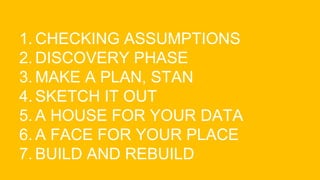
1. CHECKING ASSUMPTIONS
2. DISCOVERY PHASE
3. MAKE A PLAN, STAN
4. SKETCH IT OUT
5. A HOUSE FOR YOUR DATA
6. A FACE FOR YOUR PLACE
7. BUILD AND REBUILD
GET IN TOUCH!
thematchbox.io
tiny.cc/matchboxpoint15
@engnroom
@tingeber

Matchbox presentation

  • 1.
    THE MATCHBOX Where Transparencyand Accountability Advocates Get Project Support
  • 2.
    WHAT IS THEENGINE ROOM? We investigate and support the effective use of data and technology in advocacy through: ● Applied research ● Direct support
  • 3.
    WHAT IS THEMATCHBOX? An accelerator for NGOs Strategic and material support Matchmaking between projects and experts
  • 4.
    IS IT FREE? Itdepends. We want to partner with great organisations. If you can pay, we charge on a sliding scale. If you can’t pay, we fundraise from donors. It is also very selective to ensure we deliver.
  • 5.
    WHO IS ITFOR? Advocacy organizations Transparency and accountability projects integrating technology into their work Latin America and Southern Africa (for now...)
  • 6.
    ...SO WHAT EXACTLYDO WE DO? Idea refinement Project planning Matchmaking External expertise
  • 7.
    GIVE ME SOMEEXAMPLES Mexico: crowdsourcing public spending Argentina: tracking bills in parliament Zimbabwe: water monitoring with WhatsApp Namibia: visualizing petroleum exploration
  • 8.
    WHAT WE LEARNED we’venoticed a lot of patterns in how civil society, journalists, and advocates can break complex ideas into workable projects
  • 9.
    TECH. HUH. WHATIS IT GOOD FOR? Do you really need tech? What is tech? (Baby don’t hurt me…) Useful beats shiny every time Avoid complexity
  • 10.
    THINK SYSTEMIC Technology can’tbe compartmentalized into a single project Tech culture - learn the basics In-house technical capacity Make it last
  • 11.
    ONE STEP ATA TIME Taking technology one-step at a time is important to develop smartly Rushing into a technology overhaul will result in missteps and poor planning
  • 12.
    PREP, PREP, PREP. Prep. Manyproblems can be avoided by taking enough time to think about a project before implementing it.
  • 13.
    GO LOCAL Don’t overlyrely on international funders and technology support providers (including us!) Become familiar with technology communities in your city or country.
  • 14.
    THINK LIKE AHUMAN User experience is key. It doesn’t matter what you’re building - you are creating an interaction. Invest time to make sure your audience will want to engage with your project.
  • 15.
    ...THEN THINK LIKEA MACHINE What will your data model look like? What’s a data model?
  • 16.
    QUESTIONS TO ASK Keyquestions that you should ask yourself while designing a project. These questions can save you loads of time and help you refine your idea into a workable project plan.
  • 17.
    WHO IS THISFOR? Obvious, but again and again we see projects that do not explore their real audience. If you are building a tool for the ‘general public’ then you haven’t done your homework. The more time you spend unpacking what communities your projects are for, the better your project will be.
  • 18.
    WHAT DATA WILLI NEED? Data is the petrol for technology projects. Understanding what data you will need to get a project moving is key. Scraping? Crowdsourcing? SMS? Better know that at the outset and plan for it.
  • 19.
    IS IT SAFE? Datais information - usually about human beings. Protect the privacy of your community. Controversial themes can make you a target. Have doubts? Ask for expert advice.
  • 20.
    AM I REINVENTINGTHE WHEEL? Are you the only one who tried this? Hopefully there is someone somewhere who has built something similar to what you are thinking about. Comparable research and connections with similar projects can inspire and provide you with headstart thinking and resources.
  • 21.
    WHAT OPEN TECHCAN I USE? Only start from scratch as a last resort. Transparency and open source go hand in hand. There are likely a lot of open source projects that can jumpstart your project. Meet new people, help a friend.
  • 22.
    OUR PROCESS Every projectis different, but there are certain steps that will make any project stronger, more focused and remove some uncertainties.
  • 23.
    1.CHECKING ASSUMPTIONS Hypothesis of change Brainstormyour assumptions internally Check them with your audience
  • 24.
    2. DISCOVERY PHASE Hasanyone else done this? Is there anything similar I can learn from? What were their biggest wins? What were their biggest obstacles? What tools, resources, communities are out there that can support me?
  • 25.
    3. MAKE APLAN, STAN Start with a pilot Design a broad project plan Figure out what expertise you will need along the way Find the expertise Refine project plan
  • 26.
    4. SKETCH ITOUT Wireframes Audience is crucial Avoid the echo chamber
  • 27.
    5. A HOUSEFOR YOUR DATA Develop the data model Build your database Put actual data in
  • 28.
    6. A FACEFOR YOUR PLACE From wireframes to interface Visual design is your friend Keep it simple
  • 29.
    7. BUILD ANDREBUILD Test early and often Watch it break horribly Rinse and repeat Share with your audience
  • 30.
    1. CHECKING ASSUMPTIONS 2.DISCOVERY PHASE 3. MAKE A PLAN, STAN 4. SKETCH IT OUT 5. A HOUSE FOR YOUR DATA 6. A FACE FOR YOUR PLACE 7. BUILD AND REBUILD
  • 31.