Understanding Funding and Budgeting Finances


           Dr. Erick C. Jones, PE, CSSBB

              MATC Scholars Program
                  October 3rd – 6th
           University of Nebraska-Lincoln
OUTLINE

• Introduction

• Learning Objectives

• Learning Outcomes

• Session Presentation

• Conclusion
LEARNING OBJECTIVES

• Present Funding Sources

• Present Budgeting Basics

• Present strategies for maintaining   and
  increasing funding opportunities
LEARNING OUTCOMES

• Students will know what funding sources
  are available

• Students will have a strategy for managing
  their funds

• Students will know how to work with faculty
  to support research
WHY FUNDING IS IMPORTANT?
• Reduces student loan debt

• Limited ability to get loans

• Funding is prestigious and looks good on a
  resume

• Connection to faculty mentors and advisors
  • Critical   faculty    advising     project
    engagement
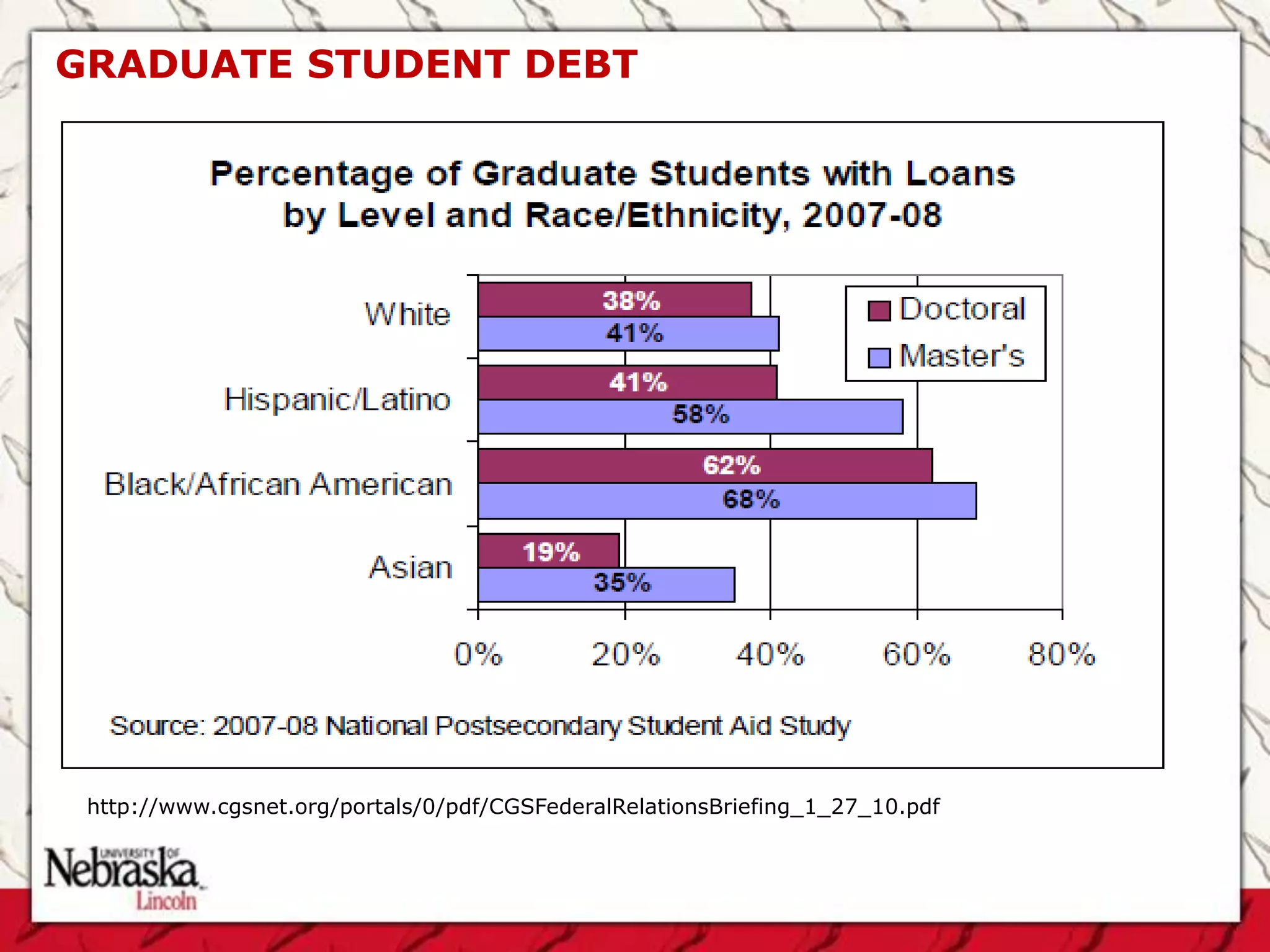
GRADUATE STUDENT DEBT


 http://www.cgsnet.org/portals/0/pdf/CGSFederalRelationsBriefing_1_27_10.pdf
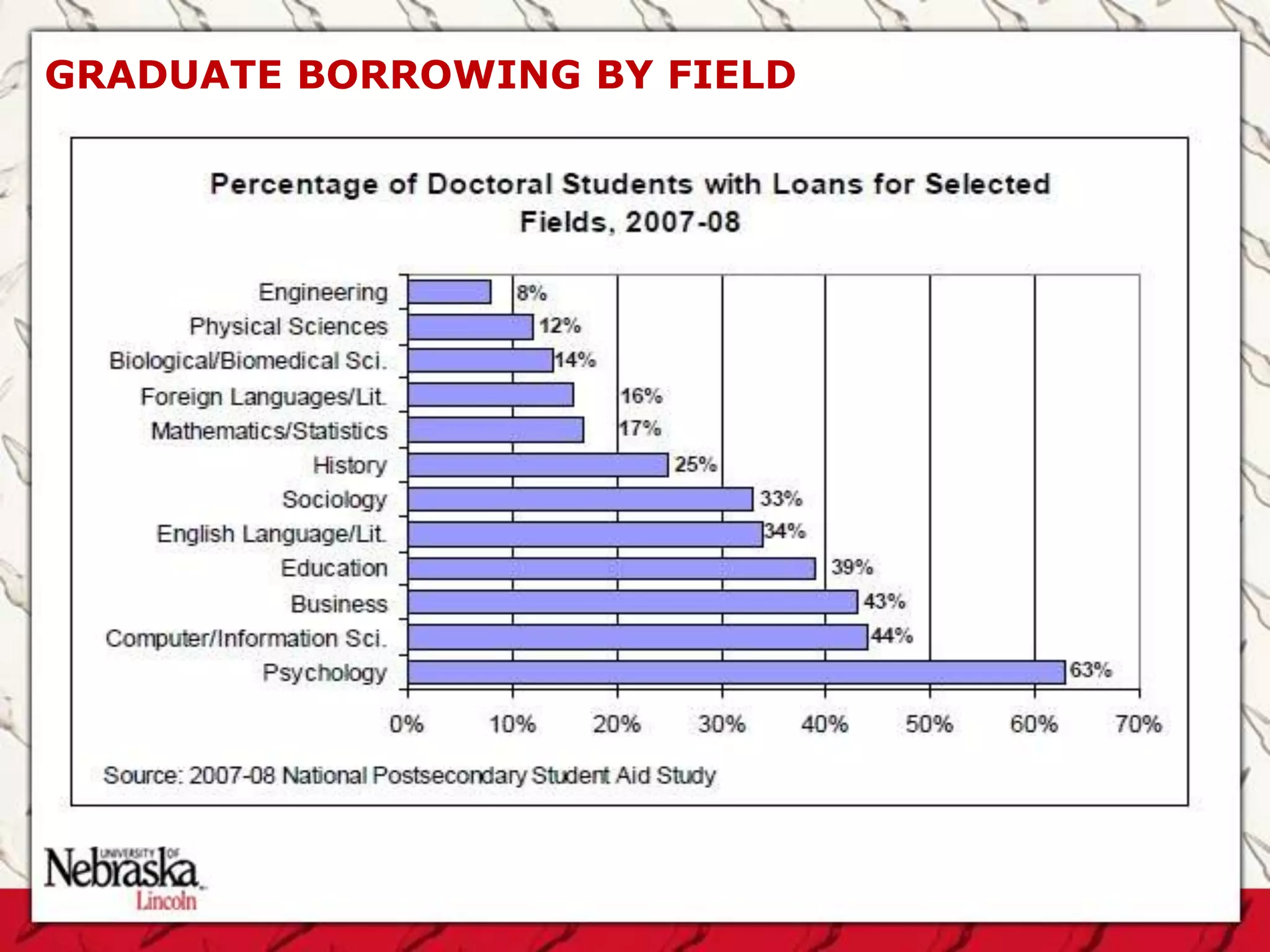
GRADUATE BORROWING BY FIELD
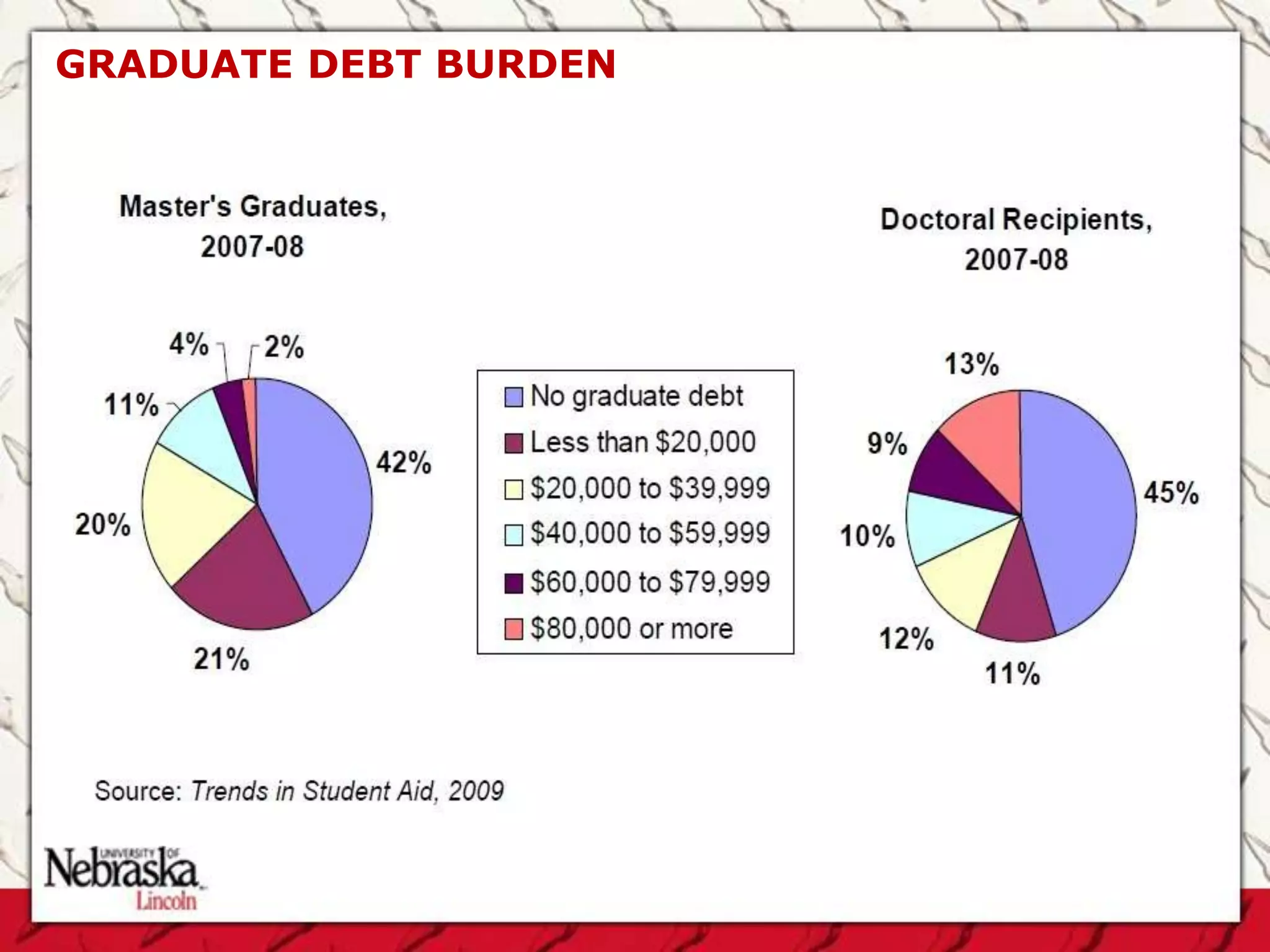
GRADUATE DEBT BURDEN
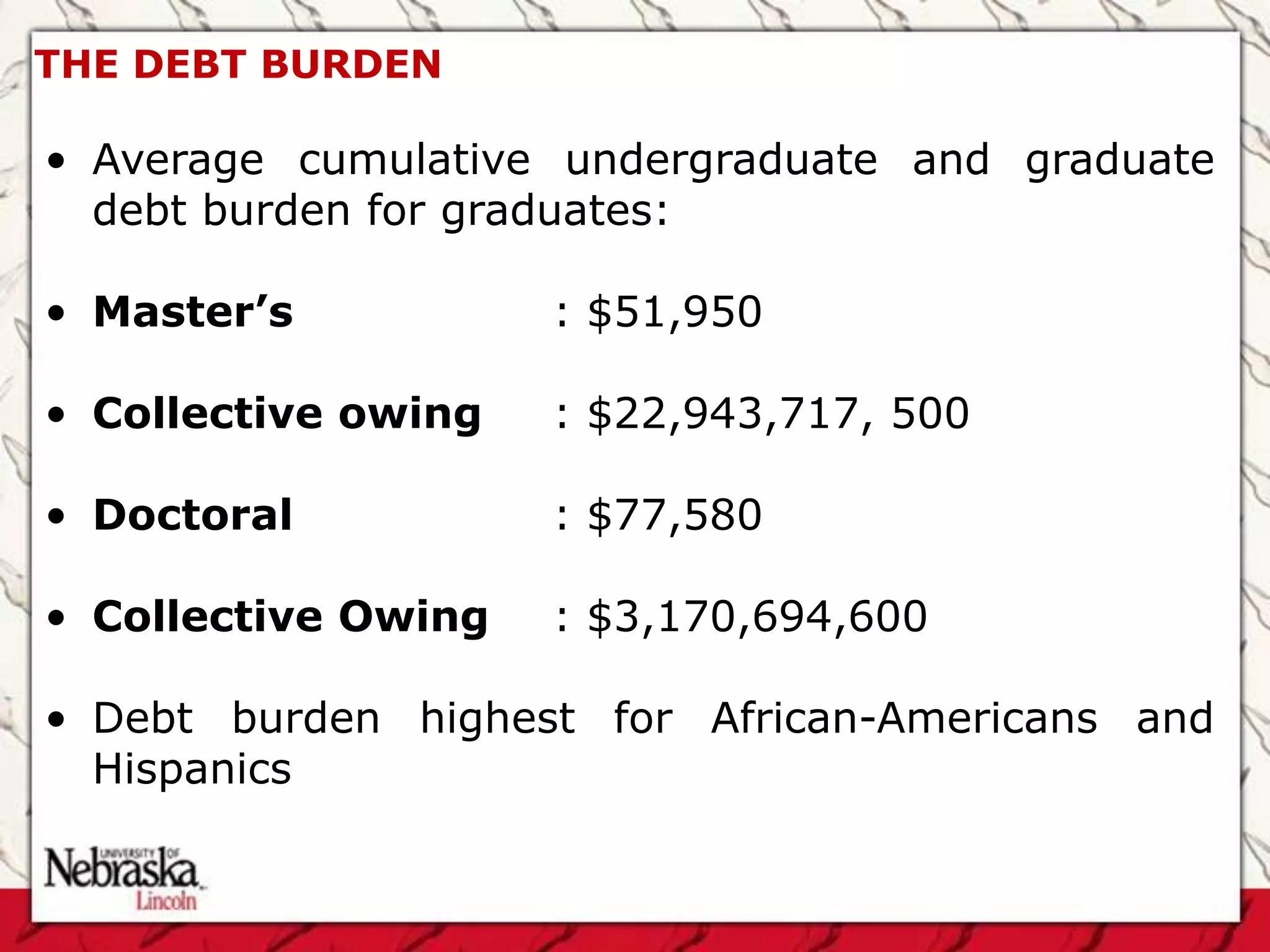
THE DEBT BURDEN

• Average cumulative undergraduate and graduate
  debt burden for graduates:

• Master’s           : $51,950

• Collective owing   : $22,943,717, 500

• Doctoral           : $77,580

• Collective Owing   : $3,170,694,600

• Debt burden highest for African-Americans and
  Hispanics
WHAT ARE SOME TYPES OF FUNDING?
• Grants

• Scholarships

• Fellowships
   – Recruitment
   – Special Needs
   – Faculty Associated

• Teaching Assistantships


• Research Assistantships
GRANTS

• Grants are gifts that you do not need to repay.

• Students may receive grants from the government
  or through private sources of funding.

• Grants may require students to maintain a specific
  GPA throughout their academic career.

• In graduate school, grants can be used
  towards, travel, research, experiments, or projects.
SCHOLARSHIPS
• Scholarships are awards given to students based on
  academic excellence and/or talent.

• Students may also receive scholarships based on
  factors like ethnic background, field of study, or
  financial need.

• Scholarships vary in their amounts and the number of
  years given aid.

• Like a grant, students do not need to pay back the
  money awarded in a scholarship.

• Scholarships can be awarded through your school or
  through private sources.
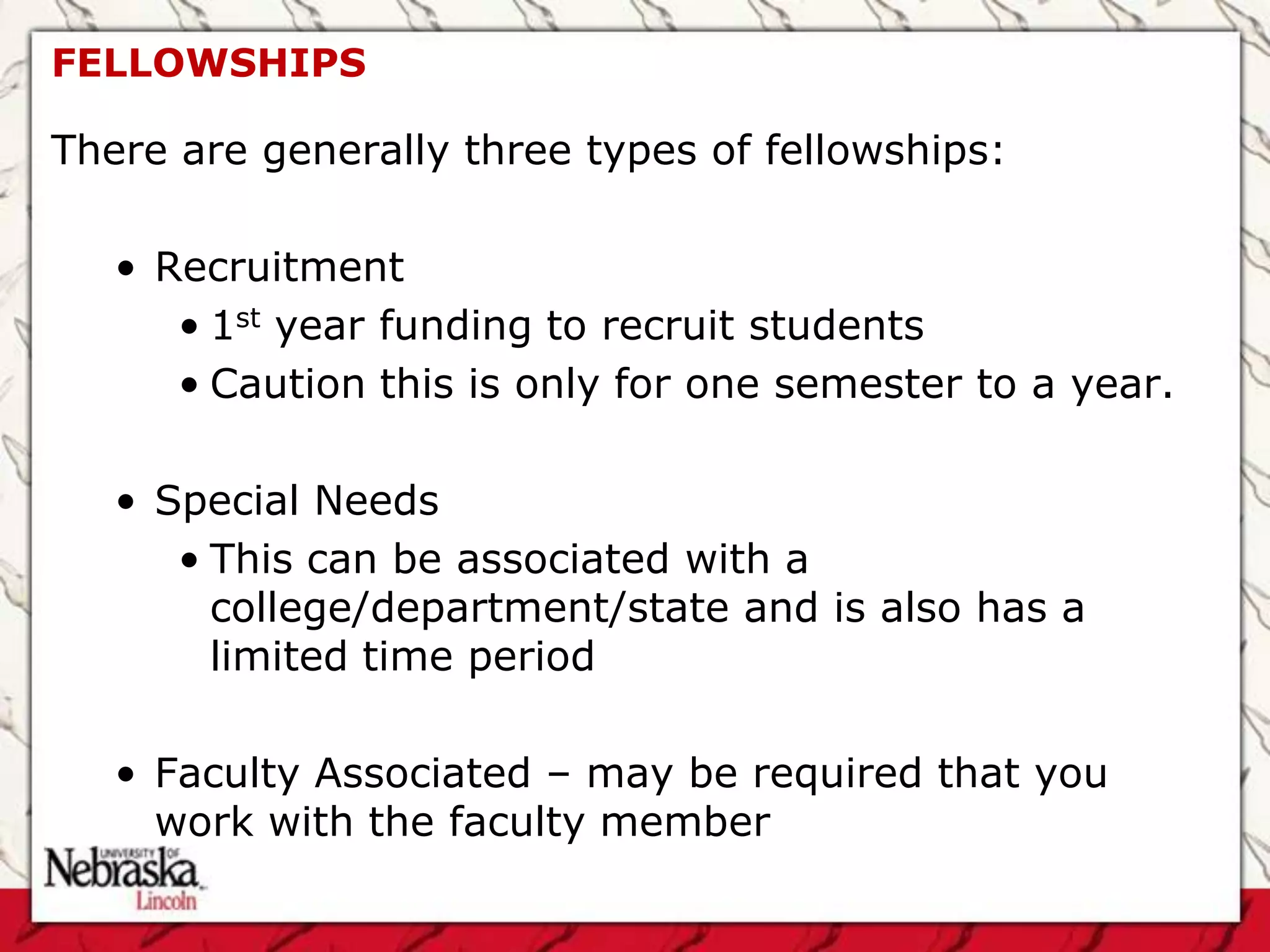
FELLOWSHIPS

There are generally three types of fellowships:

   • Recruitment
      • 1st year funding to recruit students
      • Caution this is only for one semester to a year.

   • Special Needs
      • This can be associated with a
        college/department/state and is also has a
        limited time period

   • Faculty Associated – may be required that you
     work with the faculty member
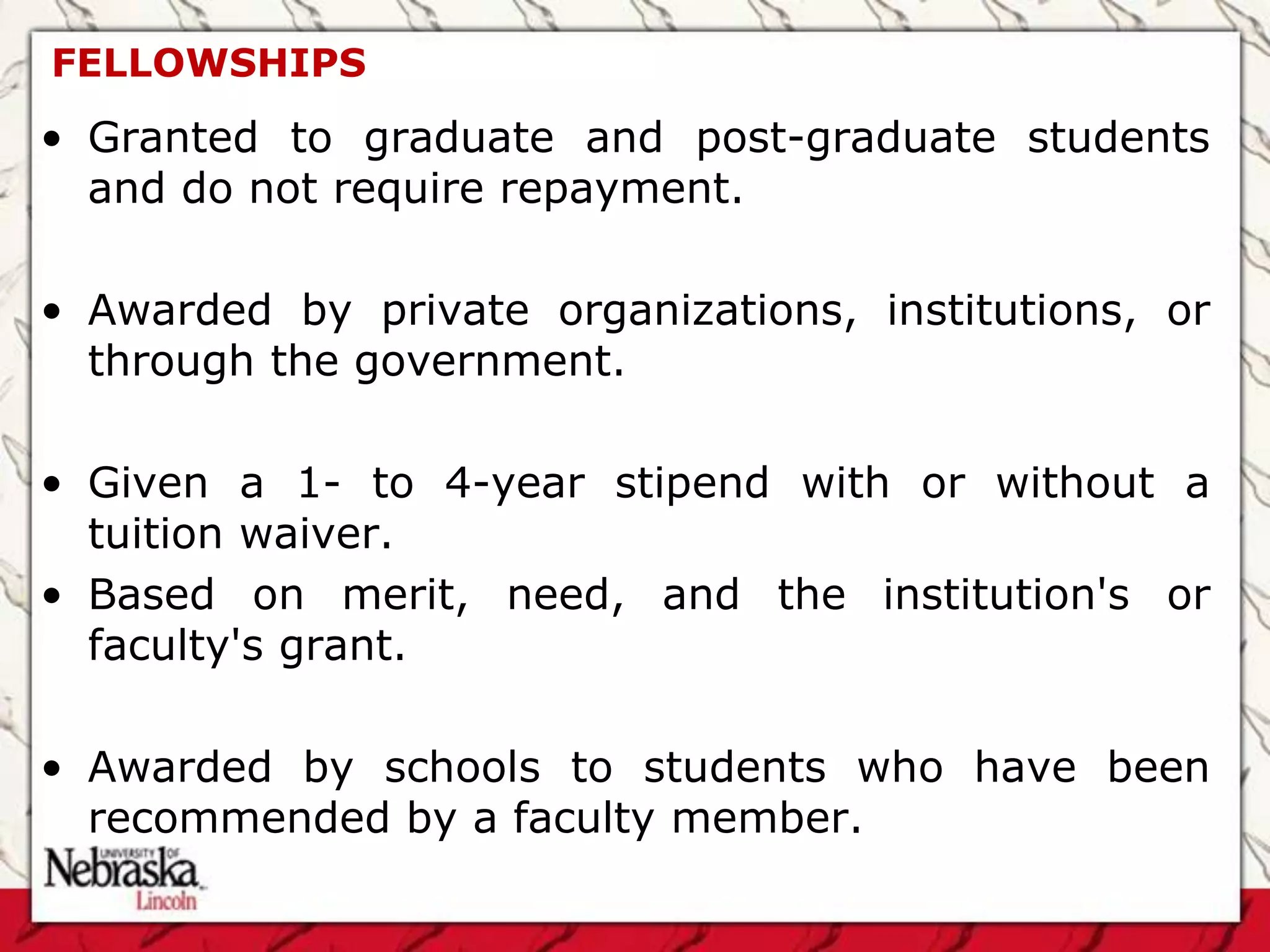
FELLOWSHIPS
• Granted to graduate and post-graduate students
  and do not require repayment.

• Awarded by private organizations, institutions, or
  through the government.

• Given a 1- to 4-year stipend with or without a
  tuition waiver.
• Based on merit, need, and the institution's or
  faculty's grant.

• Awarded by schools to students who have been
  recommended by a faculty member.
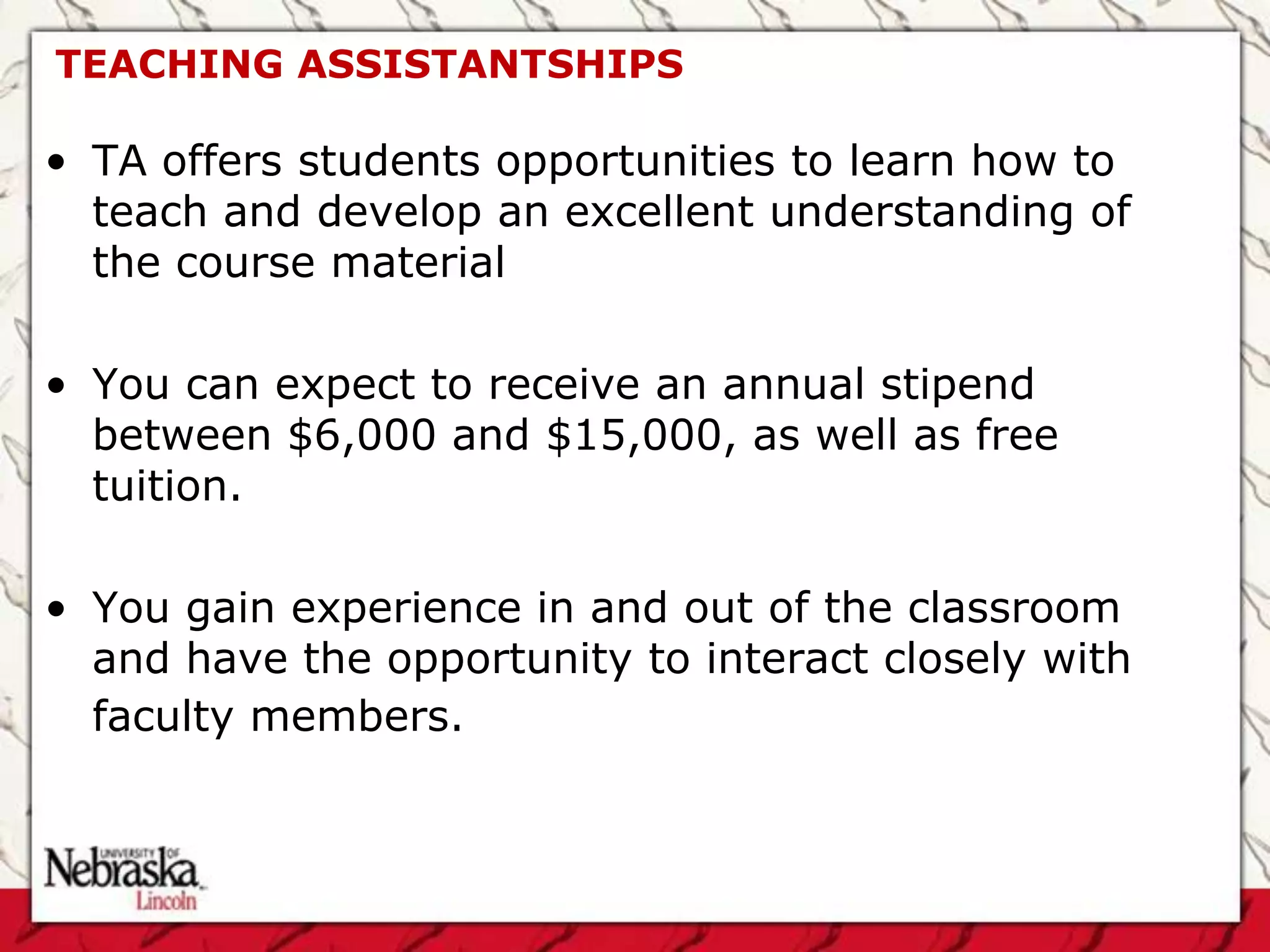
TEACHING ASSISTANTSHIPS

• TA offers students opportunities to learn how to
  teach and develop an excellent understanding of
  the course material

• You can expect to receive an annual stipend
  between $6,000 and $15,000, as well as free
  tuition.

• You gain experience in and out of the classroom
  and have the opportunity to interact closely with
  faculty members.
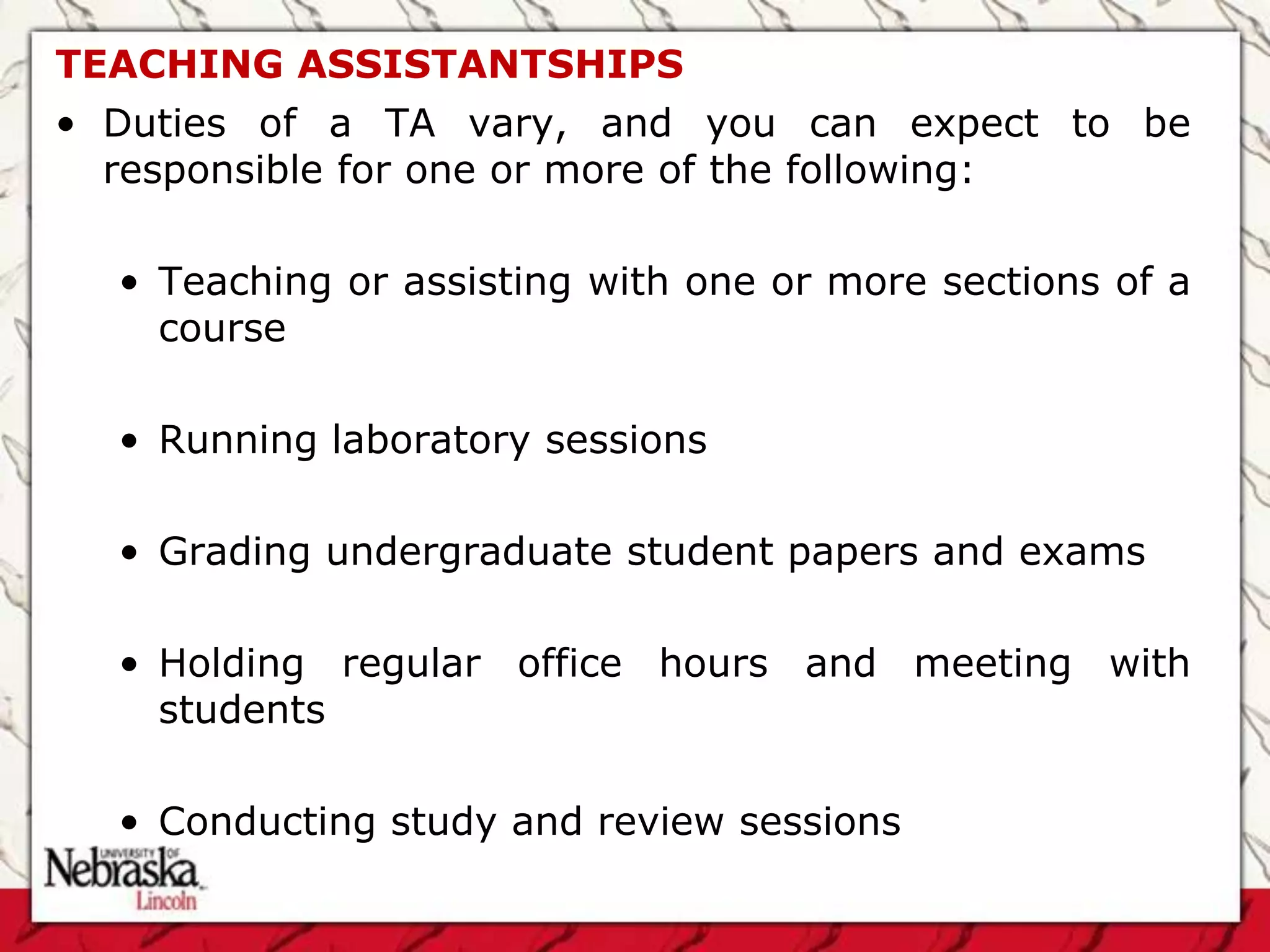
TEACHING ASSISTANTSHIPS
• Duties of a TA vary, and you can expect to be
  responsible for one or more of the following:

  • Teaching or assisting with one or more sections of a
    course

  • Running laboratory sessions

  • Grading undergraduate student papers and exams

  • Holding regular office hours and meeting with
    students

  • Conducting study and review sessions
GRADUATE ASSISTANTS

• Why Become a Research Assistant?

• What Does a Research Assistant Do?

• How Do You Get Involved as a Research
  Assistant?

• Benefits for Faculty
RISKS OF LOSING FUNDING?

• Not meeting funding renewal guidelines
  • Performance        (GPA,      publication
    record, teaching reviews)

• Agency program ending

• Changing faculty researchers
  • Voluntarily and involuntarily
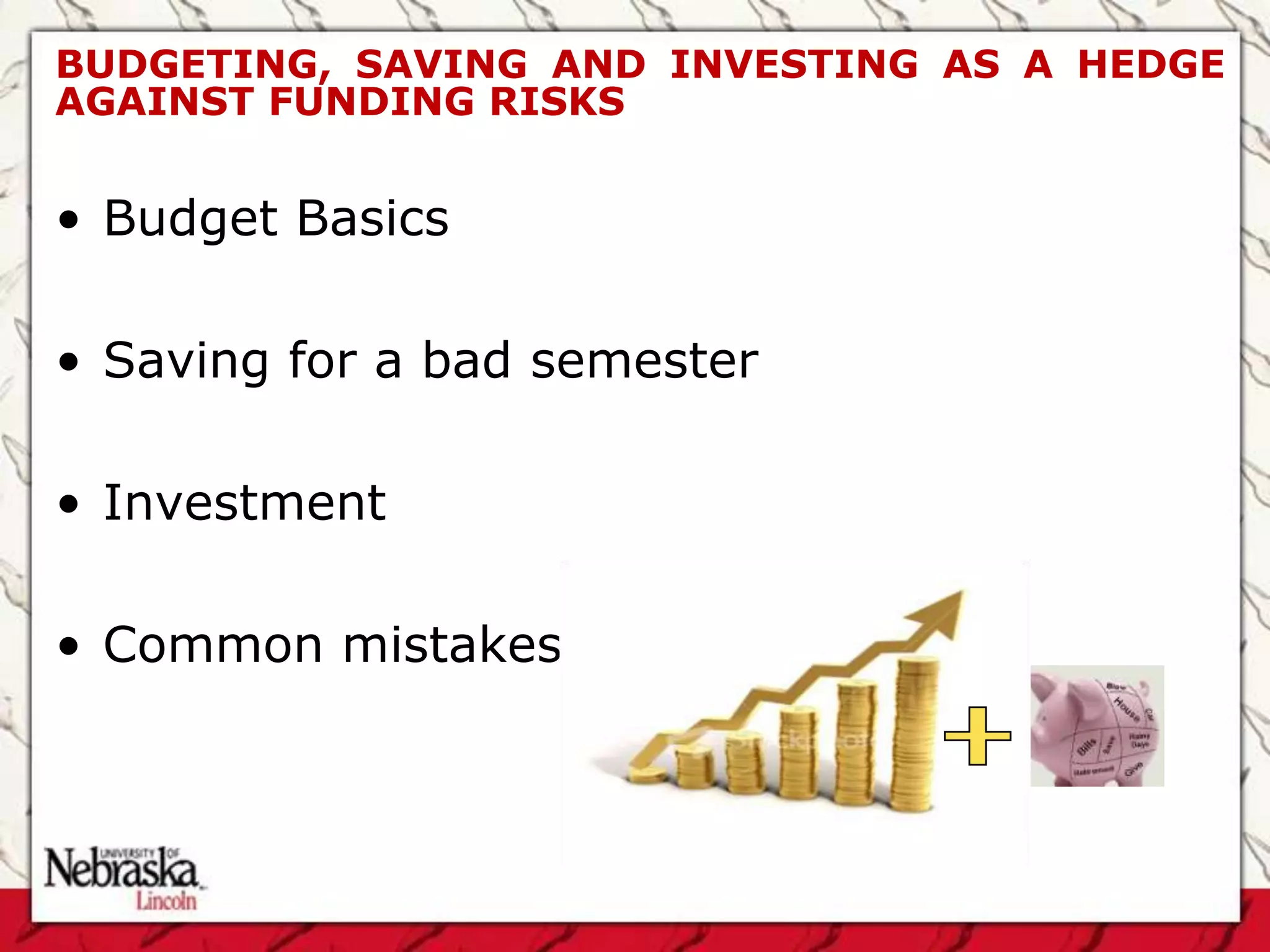
BUDGETING, SAVING AND INVESTING AS A HEDGE
AGAINST FUNDING RISKS


• Budget Basics

• Saving for a bad semester

• Investment

• Common mistakes
BUDGET BASICS

• Pass out budget form

• Show sample graduate student budget

• 5 minutes to do quickie budget

• Go over relevant percentages for expense categories

• Discuss zero-based budgeting

• Discuss the need for a real budget versus theoretical
  budget
SAVING FOR A BAD SEMESTER

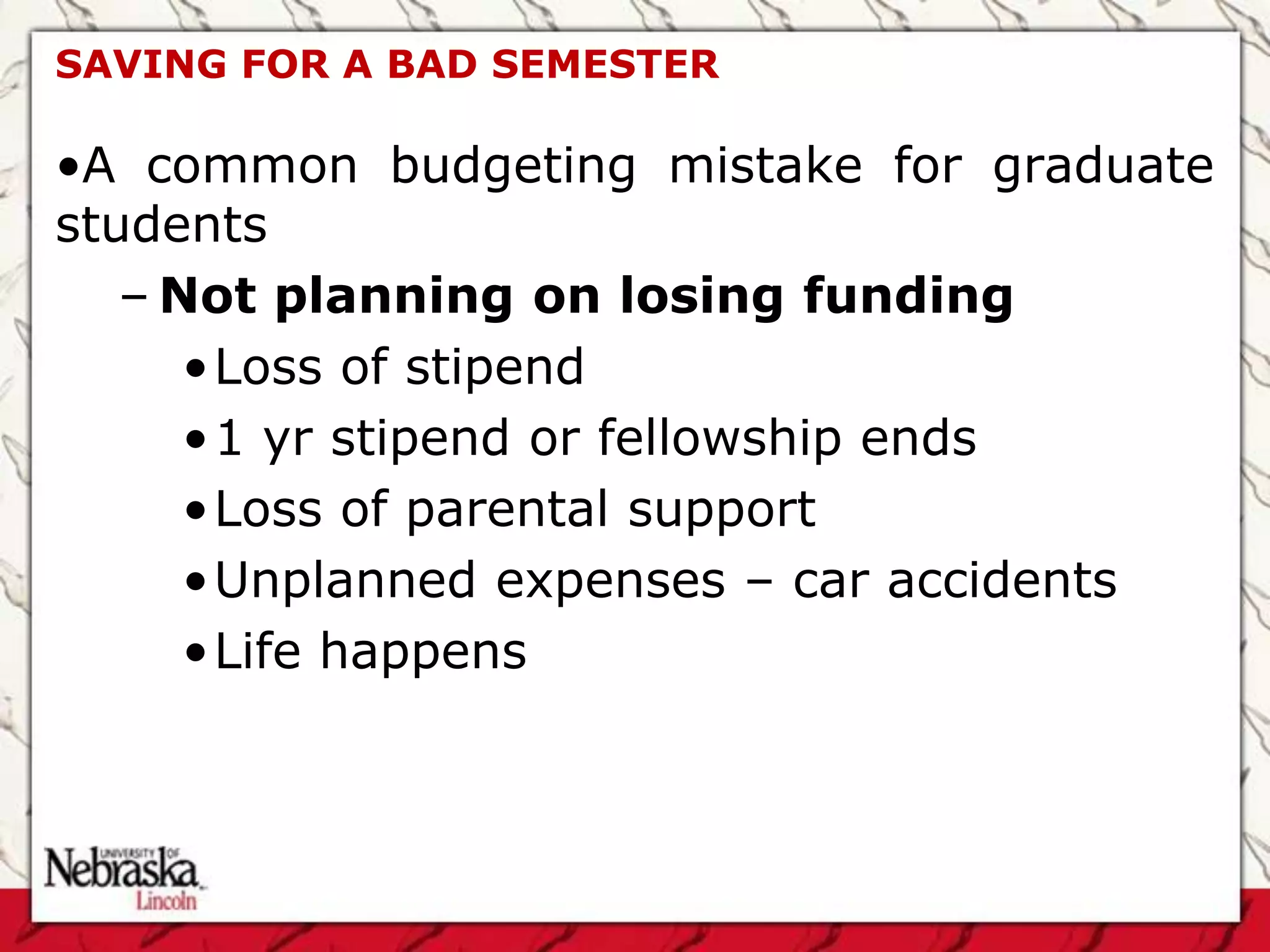
•A common budgeting mistake for graduate
students
   – Not planning on losing funding
      •Loss of stipend
      •1 yr stipend or fellowship ends
      •Loss of parental support
      •Unplanned expenses – car accidents
      •Life happens
SAVING FOR A BAD SEMESTER

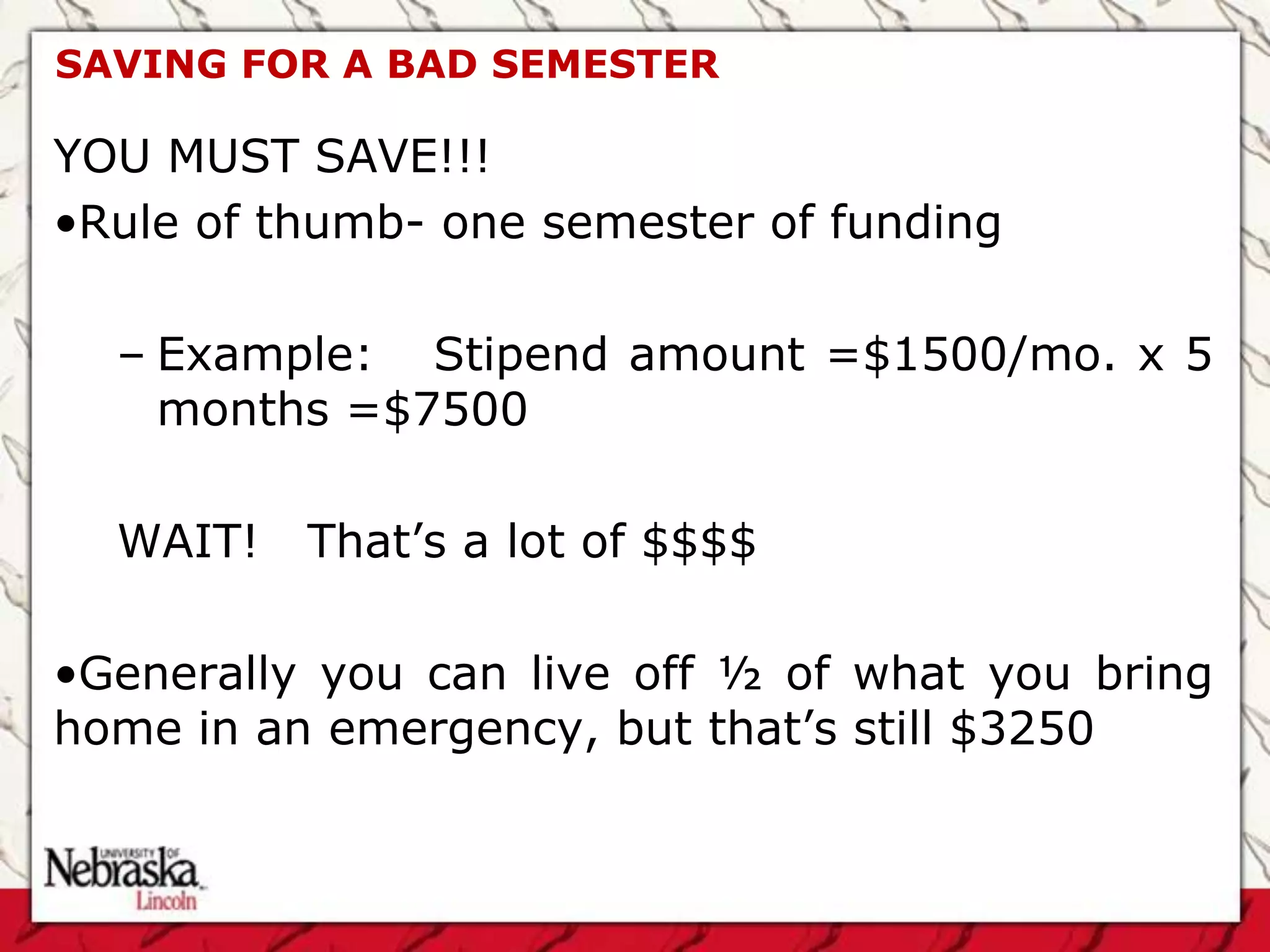
YOU MUST SAVE!!!
•Rule of thumb- one semester of funding

  – Example: Stipend amount =$1500/mo. x 5
    months =$7500

  WAIT!   That’s a lot of $$$$

•Generally you can live off ½ of what you bring
home in an emergency, but that’s still $3250
SAVING FOR A BAD SEMESTER

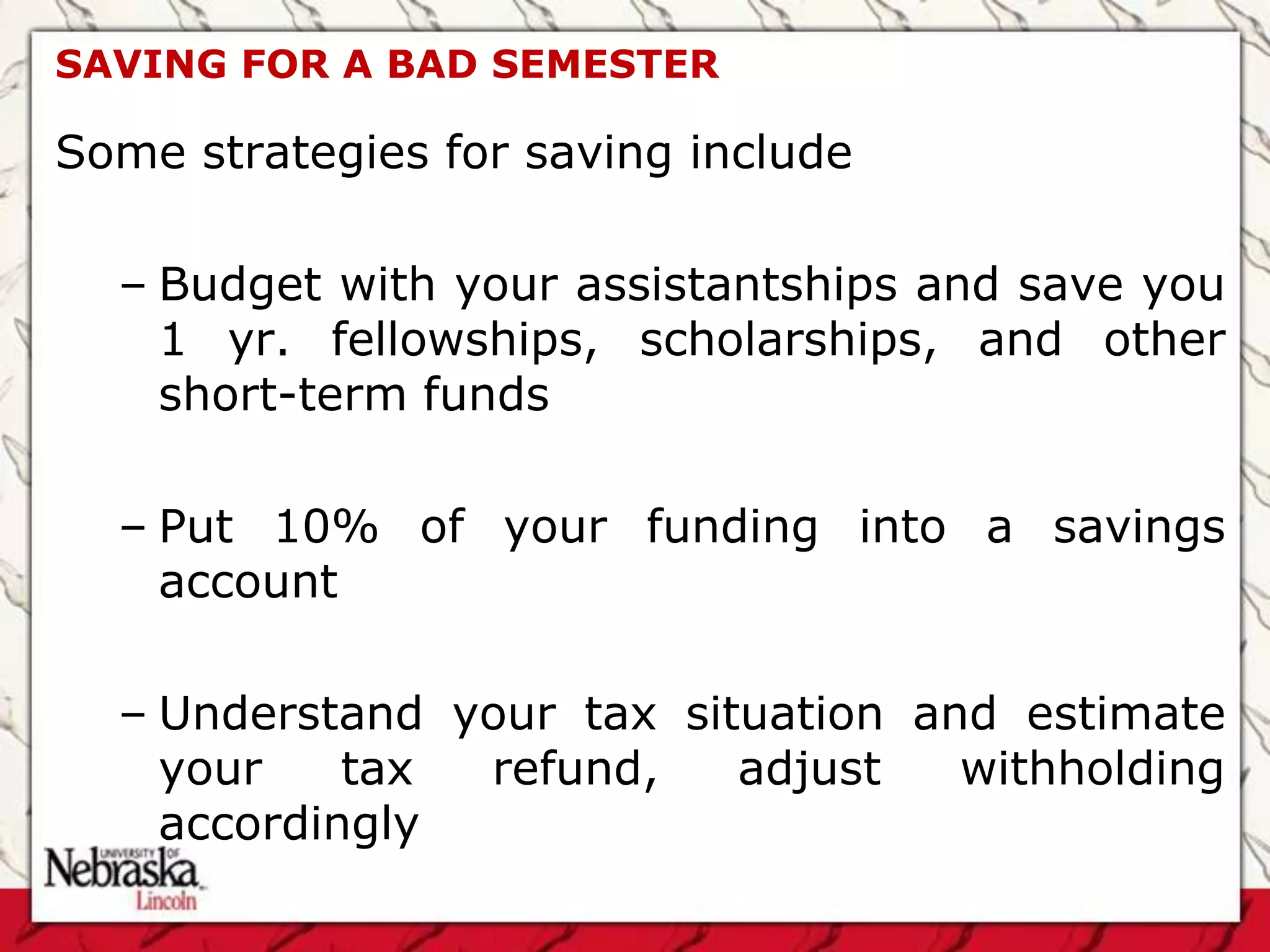
Some strategies for saving include

  – Budget with your assistantships and save you
    1 yr. fellowships, scholarships, and other
    short-term funds

  – Put 10% of your funding into a savings
    account

  – Understand your tax situation and estimate
    your    tax refund,    adjust   withholding
    accordingly
INVESTMENT
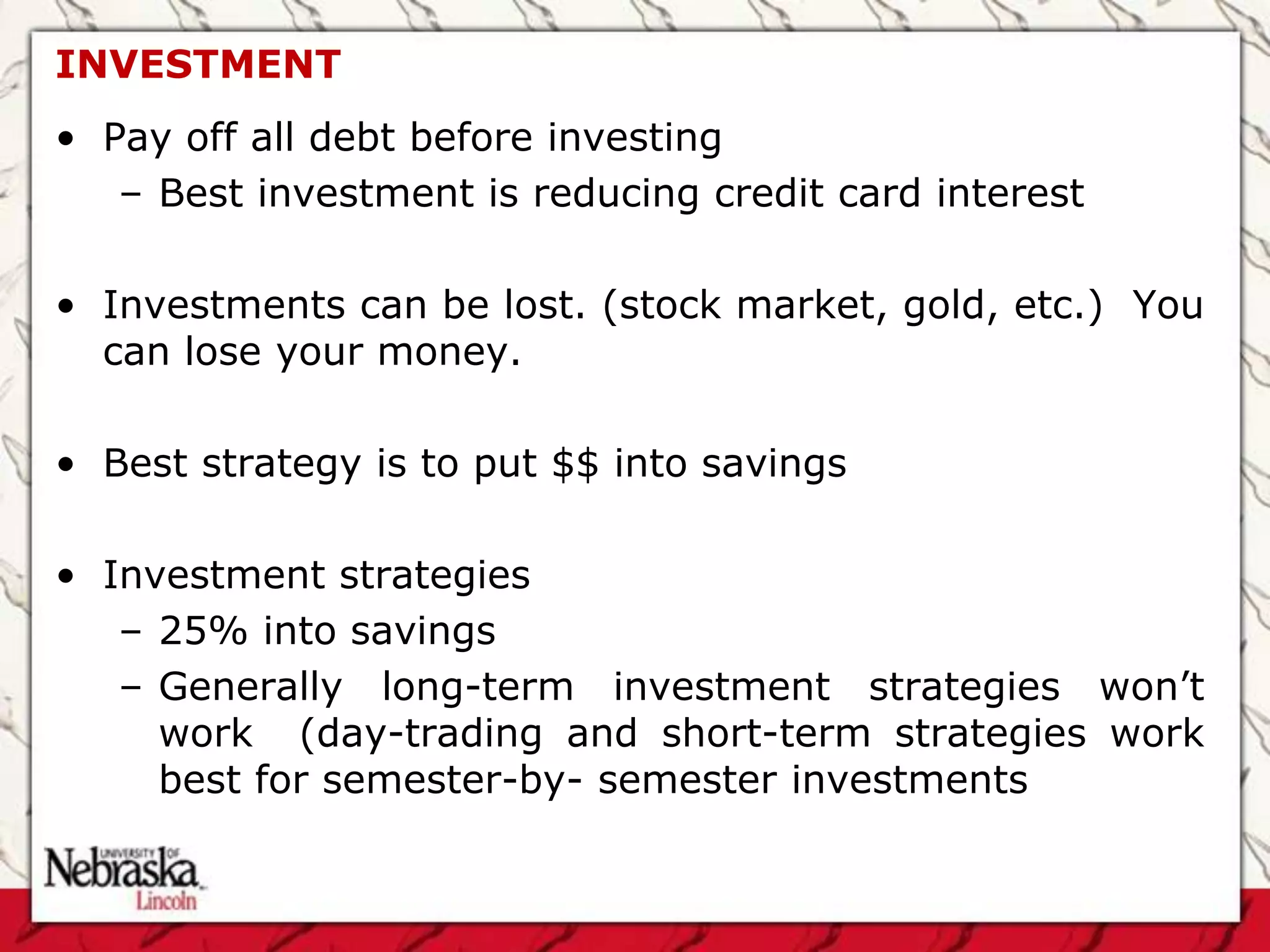
• Pay off all debt before investing
   – Best investment is reducing credit card interest

• Investments can be lost. (stock market, gold, etc.) You
  can lose your money.

• Best strategy is to put $$ into savings

• Investment strategies
   – 25% into savings
   – Generally long-term investment strategies won’t
     work (day-trading and short-term strategies work
     best for semester-by- semester investments
COMMON MISTAKES

• No savings for emergencies

• Invest and lose all your money

• Incurring a lot of school debt

• Not knowing     the   difference   between    funding
  sources

• Changing or not        changing    advisors   without
  considering funding
CONCLUSION
• Weigh the benefits of different types of
  funding

• For PhD students you will need a link to
  Research faculty

• Stack your funding
  – Applying to multiple sources
     •Be aware of conflicts

• Graduate with minimal debt
CREDITS


                Dr. Erick C. Jones, P.E., CSSBB
                      Associate Professor
                 University of Texas Arlington
Department of Industrial and Manufacturing Systems Engineering
                         420 Woolf Hall
                      Arlington, TX 76017
                       ecjones@uta.edu

                Slide design © 2009, Mid-America Transportation Center. All rights reserved.

MATC Scholars Program: Dr. Erick C. Jones

  • 1.
    Understanding Funding andBudgeting Finances Dr. Erick C. Jones, PE, CSSBB MATC Scholars Program October 3rd – 6th University of Nebraska-Lincoln
  • 2.
    OUTLINE • Introduction • LearningObjectives • Learning Outcomes • Session Presentation • Conclusion
  • 3.
    LEARNING OBJECTIVES • PresentFunding Sources • Present Budgeting Basics • Present strategies for maintaining and increasing funding opportunities
  • 4.
    LEARNING OUTCOMES • Studentswill know what funding sources are available • Students will have a strategy for managing their funds • Students will know how to work with faculty to support research
  • 5.
    WHY FUNDING ISIMPORTANT? • Reduces student loan debt • Limited ability to get loans • Funding is prestigious and looks good on a resume • Connection to faculty mentors and advisors • Critical faculty advising project engagement
  • 6.
    GRADUATE STUDENT DEBT http://www.cgsnet.org/portals/0/pdf/CGSFederalRelationsBriefing_1_27_10.pdf
  • 7.
  • 8.
  • 9.
    THE DEBT BURDEN •Average cumulative undergraduate and graduate debt burden for graduates: • Master’s : $51,950 • Collective owing : $22,943,717, 500 • Doctoral : $77,580 • Collective Owing : $3,170,694,600 • Debt burden highest for African-Americans and Hispanics
  • 10.
    WHAT ARE SOMETYPES OF FUNDING? • Grants • Scholarships • Fellowships – Recruitment – Special Needs – Faculty Associated • Teaching Assistantships • Research Assistantships
  • 11.
    GRANTS • Grants aregifts that you do not need to repay. • Students may receive grants from the government or through private sources of funding. • Grants may require students to maintain a specific GPA throughout their academic career. • In graduate school, grants can be used towards, travel, research, experiments, or projects.
  • 12.
    SCHOLARSHIPS • Scholarships areawards given to students based on academic excellence and/or talent. • Students may also receive scholarships based on factors like ethnic background, field of study, or financial need. • Scholarships vary in their amounts and the number of years given aid. • Like a grant, students do not need to pay back the money awarded in a scholarship. • Scholarships can be awarded through your school or through private sources.
  • 13.
    FELLOWSHIPS There are generallythree types of fellowships: • Recruitment • 1st year funding to recruit students • Caution this is only for one semester to a year. • Special Needs • This can be associated with a college/department/state and is also has a limited time period • Faculty Associated – may be required that you work with the faculty member
  • 14.
    FELLOWSHIPS • Granted tograduate and post-graduate students and do not require repayment. • Awarded by private organizations, institutions, or through the government. • Given a 1- to 4-year stipend with or without a tuition waiver. • Based on merit, need, and the institution's or faculty's grant. • Awarded by schools to students who have been recommended by a faculty member.
  • 15.
    TEACHING ASSISTANTSHIPS • TAoffers students opportunities to learn how to teach and develop an excellent understanding of the course material • You can expect to receive an annual stipend between $6,000 and $15,000, as well as free tuition. • You gain experience in and out of the classroom and have the opportunity to interact closely with faculty members.
  • 16.
    TEACHING ASSISTANTSHIPS • Dutiesof a TA vary, and you can expect to be responsible for one or more of the following: • Teaching or assisting with one or more sections of a course • Running laboratory sessions • Grading undergraduate student papers and exams • Holding regular office hours and meeting with students • Conducting study and review sessions
  • 17.
    GRADUATE ASSISTANTS • WhyBecome a Research Assistant? • What Does a Research Assistant Do? • How Do You Get Involved as a Research Assistant? • Benefits for Faculty
  • 18.
    RISKS OF LOSINGFUNDING? • Not meeting funding renewal guidelines • Performance (GPA, publication record, teaching reviews) • Agency program ending • Changing faculty researchers • Voluntarily and involuntarily
  • 19.
    BUDGETING, SAVING ANDINVESTING AS A HEDGE AGAINST FUNDING RISKS • Budget Basics • Saving for a bad semester • Investment • Common mistakes
  • 20.
    BUDGET BASICS • Passout budget form • Show sample graduate student budget • 5 minutes to do quickie budget • Go over relevant percentages for expense categories • Discuss zero-based budgeting • Discuss the need for a real budget versus theoretical budget
  • 21.
    SAVING FOR ABAD SEMESTER •A common budgeting mistake for graduate students – Not planning on losing funding •Loss of stipend •1 yr stipend or fellowship ends •Loss of parental support •Unplanned expenses – car accidents •Life happens
  • 22.
    SAVING FOR ABAD SEMESTER YOU MUST SAVE!!! •Rule of thumb- one semester of funding – Example: Stipend amount =$1500/mo. x 5 months =$7500 WAIT! That’s a lot of $$$$ •Generally you can live off ½ of what you bring home in an emergency, but that’s still $3250
  • 23.
    SAVING FOR ABAD SEMESTER Some strategies for saving include – Budget with your assistantships and save you 1 yr. fellowships, scholarships, and other short-term funds – Put 10% of your funding into a savings account – Understand your tax situation and estimate your tax refund, adjust withholding accordingly
  • 24.
    INVESTMENT • Pay offall debt before investing – Best investment is reducing credit card interest • Investments can be lost. (stock market, gold, etc.) You can lose your money. • Best strategy is to put $$ into savings • Investment strategies – 25% into savings – Generally long-term investment strategies won’t work (day-trading and short-term strategies work best for semester-by- semester investments
  • 25.
    COMMON MISTAKES • Nosavings for emergencies • Invest and lose all your money • Incurring a lot of school debt • Not knowing the difference between funding sources • Changing or not changing advisors without considering funding
  • 26.
    CONCLUSION • Weigh thebenefits of different types of funding • For PhD students you will need a link to Research faculty • Stack your funding – Applying to multiple sources •Be aware of conflicts • Graduate with minimal debt
  • 27.
    CREDITS Dr. Erick C. Jones, P.E., CSSBB Associate Professor University of Texas Arlington Department of Industrial and Manufacturing Systems Engineering 420 Woolf Hall Arlington, TX 76017 ecjones@uta.edu Slide design © 2009, Mid-America Transportation Center. All rights reserved.