Mastering Data Visualization With Microsoft Visio Professional 2016 David J Parker
Mastering Data Visualization With Microsoft Visio Professional 2016 David J Parker
Mastering Data Visualization With Microsoft Visio Professional 2016 David J Parker
Mastering Data Visualization With Microsoft Visio Professional 2016 David J Parker
Mastering Data Visualization With Microsoft Visio Professional 2016 David J Parker
1.
Mastering Data VisualizationWith Microsoft
Visio Professional 2016 David J Parker download
https://ebookbell.com/product/mastering-data-visualization-with-
microsoft-visio-professional-2016-david-j-parker-56344300
Explore and download more ebooks at ebookbell.com
2.
Here are somerecommended products that we believe you will be
interested in. You can click the link to download.
Excel Mastering Data Analysis Visualization And Automation For Success
With Microsoft 365 Sam Oa
https://ebookbell.com/product/excel-mastering-data-analysis-
visualization-and-automation-for-success-with-microsoft-365-sam-
oa-55577646
Mastering Matplotlib With Python For Developers Effective Techniques
For Data Visualization With Python Melendez
https://ebookbell.com/product/mastering-matplotlib-with-python-for-
developers-effective-techniques-for-data-visualization-with-python-
melendez-58304706
Mastering Power Bi Build Business Intelligence Applications Powered
With Dax Calculations Insightful Visualizations Advanced Bi Techniques
And Loads Of Data Sources English Edition Sinha
https://ebookbell.com/product/mastering-power-bi-build-business-
intelligence-applications-powered-with-dax-calculations-insightful-
visualizations-advanced-bi-techniques-and-loads-of-data-sources-
english-edition-sinha-34624500
Mastering Kvm Virtualization Design Expert Data Center Virtualization
Solutions With The Power Of Linux Kvm 2nd Edition Vedran Dakic Humble
Devassy Chirammal Prasad Mukhedkar Anil Vettathu
https://ebookbell.com/product/mastering-kvm-virtualization-design-
expert-data-center-virtualization-solutions-with-the-power-of-linux-
kvm-2nd-edition-vedran-dakic-humble-devassy-chirammal-prasad-
mukhedkar-anil-vettathu-22142148
3.
Mastering Python DataVisualization Kirthi Raman
https://ebookbell.com/product/mastering-python-data-visualization-
kirthi-raman-38548006
Mastering Qlikview Data Visualization Karl Pover
https://ebookbell.com/product/mastering-qlikview-data-visualization-
karl-pover-6808732
Mastering D3js Data Visualization For Javascript Developers Pablo
Navarro Castillo
https://ebookbell.com/product/mastering-d3js-data-visualization-for-
javascript-developers-pablo-navarro-castillo-6809274
Tableau For Beginners Learning And Mastering The Art Of Data
Visualization For Comprehensive Insights And Effective Decision Making
Murray
https://ebookbell.com/product/tableau-for-beginners-learning-and-
mastering-the-art-of-data-visualization-for-comprehensive-insights-
and-effective-decision-making-murray-55841886
Python Data Analytics Mastering Python For Effective Data Analysis And
Visualization Floyd Bax
https://ebookbell.com/product/python-data-analytics-mastering-python-
for-effective-data-analysis-and-visualization-floyd-bax-55924086
7.
Table of Contents
MasteringData Visualization with Microsoft Visio Professional 2016
Credits
About the Author
www.PacktPub.com
eBooks, discount offers, and more
Why subscribe?
Instant updates on new Packt books
Preface
What this book covers
What you need for this book
Who this book is for
Conventions
Reader feedback
Customer support
Downloading the example code
Downloading the color images of this book
Errata
Piracy
Questions
1. Data within Visio Essentials
Why use Visio for data diagramming?
The evolution of data in Visio before the Microsoft acquisition
v1.0 – modifiable ShapeSheets
v2.0 – OLE2 compliance
v4.0 – Custom Properties, Properties Reporter, and the OLE
link to DBs
v4.1 – the Database Connectivity wizard
v4.5 – ODBC-compliant DB connectivity, built-in VBA
The evolution of data in Microsoft Visio
v2002 – the improved database wizard
v2007 – linking data to shapes, data graphics, and pivot
diagrams
v2010 – validation rules, Visio services, and containers
8.
v2013 – improvedBCS, Visio services, and the OPC file format
v2016 – Quick Link and improved data graphics
Other significant current add-ons that use data
The Organization Chart
The Space Plan
The Pivot Diagram
Sadly missed add-ons that used data
A returning add-on…
Summary
2. Understanding How Data Is Stored within Visio
A very quick introduction to data in Visio
Defining Shape Data
Understanding the Visio object model
Starting with the Application object
Understanding the relationship of the Master shape and its
shape instances
Knowing how a shape can be identified
How to use a globally unique identifier
The danger of using the Index property
Reviewing shape text
Understanding the DataRecordsets collection
Understanding the Validation objects
Getting shapes selected in the UI
Understanding shape sections, rows, and cells
Getting to grips with the ShapeSheet
Understanding the Shape Data section
Specifying the type of Shape Data
Allowing text with the String type
Offering choices with the Fixed List type
Allowing only a numerical value with the Number type
Simplifying True/False choices with the Boolean type
Offer some choices but allow others with the Variable List
type
Presenting a date picker with the Date type
Measuring elapsed time with the Duration type
Entering monetary values with the Currency type
Listing Shape Data rows in code
9.
Auto-generating hyperlinks fromdata
Using the Off-page reference shape to jump around a
document
User-defined Cells
The Visio file format
Storing data as hidden XML
Knowing how shapes relate in structured diagrams
Connections
1D to 1D connections
2D to 2D connections
Why the Dynamic connector shape is special
Containers
Lists
Callouts
Summary
3. Linking Data to Shapes
A very quick introduction to importing and linking data
Knowing when to use the Quick Import tool
Importing to shapes without existing Shape Data rows
Importing to shapes with existing Shape Data rows
Using the Custom Import feature
Importing from Excel workbooks
Editing the column settings
Preventing Data Graphics from appearing automatically
Linking the data to the shapes
Carrying out the same import from an Excel workbook
with code
Using Excel as a refreshable data source
Using Excel as an intermediary source
Handling conflicts when data changes
Importing from Microsoft Access databases
Doing the same import from the Access database with
code
Importing from SharePoint lists
Doing the same import from a SharePoint view with code
Importing from SQL Server data
Using code to retrieve the SQL Server data
10.
Getting data withstored procedures
Importing data with OLEDB and ODBC
Connecting the Visio Samples via ODBC in code
Using previously created connections
Using XML data
Removing external data connections for privacy and efficiency
Creating data links to the shapes
Linking data to shapes manually
Linking data to shapes automatically
Linking shapes to a single data row
Linking multiple shapes to separate data rows
Linking a new shape to a data row
Linking multiple new shapes to data rows
Summary
4. Using the Built-In Data Graphics
Displaying data with graphics
Changing the position of a graphic item
Configuring the graphic item
Using the Advanced Data Graphics dialog
Understanding the Graphic Item types
Using Text Callouts
Using Icon Sets
Using Data Bars
Applying Color By Value
Adding a legend
Analyzing the composition of a Data Graphic
Summary
5. Using the Pivot Diagram Add-On
Choosing a data source
Using SQL Server Analysis Services
Looking behind the data
Configuring the default Data Graphics
Breaking down by category
Sorting Pivot Nodes
Editing Data Graphics of child nodes
Selecting Pivot Nodes
Configuring columns
11.
Merging nodes
Applying shapesto enhance legibility
Configuring the PivotDiagram options
Laying the nodes out
Overlaying linked data
Summary
6. Creating Custom Master Shapes
Modifying the ribbon
Preparing shapes for data linking
Making graphics respond to data value changes
Using elapsed days to size and position shapes
Sharing custom Templates, Stencils, and Masters
Including in a custom template
Delivering Templates and Stencils with SharePoint
Creating installation packages
Summary
7. Creating Custom Data Graphics
Understanding the structure of graphic item Masters
Knowing which Data Graphic is applied
Reviewing a Text Callout graphic item Master
Reviewing an Icon Set graphic item Master
Reviewing a Data Bar graphic item Master
Reviewing a Color by Value graphic item
Modifying graphic items
Modifying a Text Callout graphic item
Changing the symbol height
Using Text Callouts to display symbols
Modifying an Icon Set
Modifying a Data Bar
Summary
8. Validating and Extracting Information
Introducing validation rules
Getting information from data diagrams
Using Shape Reports
Reading Shape Data
Reading User-defined Cells
Reading connections
12.
Listing connected shapes
Listingglued shapes
Listing routes or pathways through a diagram
Reading containment
Summary
9. Automating Structured Diagrams
Structuring diagrams overview
Enabling diagram services
Setting undo scopes
Selecting a Master shape to drop
Dropping and linking shapes to data
Connecting shapes from data
Adding data-linked shapes to containers
Adding data-linked shapes to lists
Adding Callouts to shapes
Summary
10. Sharing Data Diagrams
Thinking about sharing
Viewing Visio documents without Visio
Embedding the Viewer in a Windows desktop application
Embedding the Viewer in a web page
Viewing in SharePoint/Office365 web pages
Protecting data
Coming soon
Sharing a Visio document
Exporting a Visio document
Creating a PDF or XPS document
Changing the file type
Saving as SVG
Publishing as a web page
Summary
11. Choosing a Deployment Methodology
Sharing custom stencils
Sharing custom templates
Sharing custom code
Summary
Index
About the Author
DavidJ Parker's background has been in data visualization ever
since he struggled to produce lists of hospital equipment from
Computer Aided Design models of buildings as a budding architect in
the '80s. He moved into building and infrastructure asset
management in the late '80s using a Unix system and gradually
migrated to Windows-based systems throughout the '90s.
He became a European Business partner of Visio Corporation in
1996 and presented the database-linked Visio solutions that he was
providing merchant banks in London and New York with at several
international conferences. David started bVisual Ltd. in 1998, which
provides Visio-based solutions to various industries, and became a
Silver-level Microsoft partner.
He has been a Microsoft MVP (Visio) for the last 12 years and has
helped Microsoft Corp, UK and Western Europe, by providing Visio
solutions, training, website content, and presentations. David has
had several books on Visio published and has been presenting
Visio/SharePoint integration courses for many years for Microsoft
Western Europe, from Oslo in the North down to Lisbon in the South.
He has presented at SQL and SharePoint Saturday conferences and
writes a regular blog for people interested in Microsoft Visio.
19.
www.PacktPub.com
eBooks, discount offers,and
more
Did you know that Packt offers eBook versions of every book
published, with PDF and ePub files available? You can upgrade to
the eBook version at www.PacktPub.com and as a print book
customer, you are entitled to a discount on the eBook copy. Get in
touch with us at <customercare@packtpub.com> for more details.
At www.PacktPub.com, you can also read a collection of free
technical articles, sign up for a range of free newsletters and receive
exclusive discounts and offers on Packt books and eBooks.
https://www2.packtpub.com/books/subscription/packtlib
Do you need instant solutions to your IT questions? PacktLib is
Packt's online digital book library. Here, you can search, access, and
read Packt's entire library of books.
Why subscribe?
Fully searchable across every book published by Packt
Copy and paste, print, and bookmark content
On demand and accessible via a web browser
Instant updates on new Packt books
20.
Get notified! Findout when new books are published by following
@PacktEnterprise on Twitter or the Packt Enterprise Facebook page.
21.
Preface
It is difficultto look at a technology website or publication without
some mention of data visualization. There is so much data available
now, and there will be even more in the future. Data is not useful
information unless it can be understood, so tools that can aid
comprehension are essential. Microsoft has recently been making
large strides in the business intelligence space with tools such as the
Power BI stack, but Microsoft Visio has been an operational
intelligence tool for businesses since the mid-nineties. Over the
years, Visio has matured even more and added many features to
provide links to data and special data graphics to visualize this data
easily. Technologies advance, expectations increase, and Visio
continues to evolve to provide greater capabilities and flexibility. For
many, BI (Business Intelligence) is concerned with the slicing and
dicing of data, usually using charts and graphs to provide greater
insight, but there are many times when information is best presented
with less constrained visual forms. This is where Visio excels with
thousands of pre-drawn shapes available and its ability to be
customized easily. This makes Visio the OI (Operational Intelligence)
of choice for many.
Microsoft Visio is a multipurpose graphical application that comes
with a large variety of templates that cover a wide spectrum of
business uses. A Template is a preconfigured Visio document with a
selection of Stencils (or libraries) of Masters (or shapes). There are
also a vast number of custom stencils available from the web (of
varying quality and capabilities). Traditionally, Visio has been used
mostly for organization charts, process flows, and network diagrams,
but it can do much more than that. Many of the built-in templates
come with add-ons that enhance the core application to provide
specific actions for a specialized user. This can turn a multipurpose
interface into a vertical solution centered one.
There are millions of Visio users around the globe, and over a billion
Microsoft Office users who are using a similar and familiar interface.
22.
However, every timeI show how simple it is to link Visio shapes to
data, and how the data can be easily visualized, I get the same
reaction, "I didn't know Visio could do that!" Visio is considered part
of the extended Microsoft Office family, but at the time of writing this
book, Visio does not have the web-based add-ons that the main
applications have. Nor is there a lightweight web Visio version, unlike
the other Office applications. However, it is easy to see that there is
a progression in this direction, and a large part of the latency is down
to the complexity of maintaining the integrity of such a complex
application that combines vector graphics and data.
The closest similarity to another Office product is not to PowerPoint,
but to Excel. Every shape, and that includes text, in Visio has a
programmable ShapeSheet behind it, just like a worksheet in Excel,
complete with cells that contain customizable formulas. Also, Visio
comes with VBA built in, which makes it easy for power users to
write macros, and for developers to prototype. The mature type
library can be programmed by standard .NET developers, and there
is even a JavaScript object model for the Visio Viewer and Visio Web
Access control.
Personally, I discovered the power of Visio in the mid-nineties,
several years before Microsoft acquired the product/company. I was
an early beta-tester of the ODBC data links that were introduced
then, and of the newer data-linking feature that was added in 2007. I
have been providing custom templates, stencils, and solutions ever
since because Visio has the depth to solve a lot of business data
visualization scenarios.
I cannot deny that I get some pleasure from creating Visio shapes
that respond to data value changes. It feels like life is breathed into
them, and they continue to live independently, turning a canvas into
a constantly updated information dashboard.
I believe the skills and the principles outlined in this book will be
relevant for many years to come, and they will enable businesses to
intelligently comprehend operational data.
23.
What this bookcovers
Chapter 1, Data within Visio Essentials, reviews the evolution of data
within Visio from the early nineties to the present day. The chapter
also introduces the key features and add-ons in Visio that make data
visual.
Chapter 2, Understanding How Data Is Stored within Visio, presents
the different ways in which data is stored within Visio documents,
pages, and shapes. It explains the relationship between the Visio
API and the unique ShapeSheet and introduces the concept of
structured diagrams.
Chapter 3, Linking Data to Shapes, explains how data can be
imported into Visio documents and linked to shapes, both manually
and automatically. It also shows how multiple hyperlinks can be
automatically created by data,
Chapter 4, Using the Built-In Data Graphics, demonstrates how the
built-in Data Graphics ( Icons Sets, Data Bars, Text Callouts, and
Color by Value) can easily display data values.
Chapter 5, Using the Pivot Diagram Add-On, explains how this useful
add-on can breakdown and aggregate data and be overlaid with
refreshable data.
Chapter 6, Creating Custom Master Shapes, reveals how built-in
Masters can be enhanced to provide better data visualization, and
how custom Masters can be created from scratch.
Chapter 7, Creating Custom Data Graphics, shows how built-in Data
Graphics and Graphic Items can be modified and new ones created.
Chapter 8, Validating and Extracting Information, explains how
diagrams can be checked for conformance and integrity, and how
data can be exported from Visio diagrams.
24.
Chapter 9, AutomatingStructured Diagrams, demonstrates how data
can be used to create Structured Diagrams automatically by
connecting shapes together, by adding them to containers and lists,
and by associating callout shapes.
Chapter 10, Sharing Data Diagrams, explains the different options
available for sharing Visio data and graphics with other viewers,
especially if they do not have Visio available.
Chapter 11, Choosing a Deployment Methodology, discusses the
different ways in which custom templates, stencils, and code can be
distributed for others to create their own data diagrams.
25.
What you needfor this book
Either Microsoft Visio Professional 2013+, Microsoft Visio 2010
Premium, or Microsoft Visio Pro for Office 365 are required for all of
the examples in this book.
Most of the code examples in this book are written using Visual
Basic for Applications because it is included within Microsoft Visio.
Microsoft Excel, Microsoft Access, and the Microsoft SQL Server are
used as data source examples.
26.
Who this bookis for
This book is aimed at the departmental-level operational intelligence
professional or Microsoft Office power-user. It is also intended for
SharePoint/Office365 developers who want to include visual data in
corporate websites.
27.
Conventions
In this book,you will find a number of text styles that distinguish
between different kinds of information. Here are some examples of
these styles and an explanation of their meaning.
Code words in text, database table names, folder names, filenames,
file extensions, pathnames, dummy URLs, user input, and Twitter
handles are shown as follows: "However, the supporting files are all
present and include a file called data.xml that contains all of the data
for each shape."
A block of code is set as follows:
<!DOCTYPE html>
<html>
<head>
<h1>Visio Viewer Example</h1>
</head>
<body>
<object id="DrawingControl1" height="500"
width="700"
classid="clsid:F8CF7A98-2C45-4c8d-9151-
2D716989DDAB" >
<param name="ToolbarVisible" value="1">
<param name="Src"
value="http://www.bvisual.net//examples/BaUNetwork
Diagram.vsd">
</object>
</body>
</html>
New terms and important words are shown in bold. Words that you
see on the screen, for example, in menus or dialog boxes, appear in
the text like this: "It is listed as Microsoft Visio Document when the
Developer | Insert | ActiveX controls | More Controls button is
pressed."
Reader feedback
Feedback fromour readers is always welcome. Let us know what
you think about this book—what you liked or disliked. Reader
feedback is important for us as it helps us develop titles that you will
really get the most out of.
To send us general feedback, simply e-mail
<feedback@packtpub.com>, and mention the book's title in the subject
of your message.
If there is a topic that you have expertise in and you are interested in
either writing or contributing to a book, see our author guide at
www.packtpub.com/authors.
30.
Customer support
Now thatyou are the proud owner of a Packt book, we have a
number of things to help you to get the most from your purchase.
Downloading the example code
You can download the example code files for this book from your
account at http://www.packtpub.com. If you purchased this book
elsewhere, you can visit http://www.packtpub.com/support and
register to have the files e-mailed directly to you.
You can download the code files by following these steps:
1. Log in or register to our website using your e-mail address and
password.
2. Hover the mouse pointer on the SUPPORT tab at the top.
3. Click on Code Downloads & Errata.
4. Enter the name of the book in the Search box.
5. Select the book for which you're looking to download the code
files.
6. Choose from the drop-down menu where you purchased this
book from.
7. Click on Code Download.
You can also download the code files by clicking on the Code Files
button on the book's webpage at the Packt Publishing website. This
page can be accessed by entering the book's name in the Search
box. Please note that you need to be logged in to your Packt
account.
Once the file is downloaded, please make sure that you unzip or
extract the folder using the latest version of:
WinRAR / 7-Zip for Windows
Zipeg / iZip / UnRarX for Mac
31.
7-Zip / PeaZipfor Linux
The code bundle for the book is also hosted on GitHub at
https://github.com/PacktPublishing/Mastering-Data-Visualization-
with-Microsoft-Visio-Professional-2016. We also have other code
bundles from our rich catalog of books and videos available at
https://github.com/PacktPublishing/. Check them out!
Downloading the color images of this
book
We also provide you with a PDF file that has color images of the
screenshots/diagrams used in this book. The color images will help
you better understand the changes in the output. You can download
this file from
http://www.packtpub.com/sites/default/files/downloads/1234OT_Colo
rImages.pdf.
Errata
Although we have taken every care to ensure the accuracy of our
content, mistakes do happen. If you find a mistake in one of our
books—maybe a mistake in the text or the code—we would be
grateful if you could report this to us. By doing so, you can save
other readers from frustration and help us improve subsequent
versions of this book. If you find any errata, please report them by
visiting http://www.packtpub.com/submit-errata, selecting your book,
clicking on the Errata Submission Form link, and entering the
details of your errata. Once your errata are verified, your submission
will be accepted and the errata will be uploaded to our website or
added to any list of existing errata under the Errata section of that
title.
To view the previously submitted errata, go to
https://www.packtpub.com/books/content/support and enter the
32.
name of thebook in the search field. The required information will
appear under the Errata section.
Piracy
Piracy of copyrighted material on the Internet is an ongoing problem
across all media. At Packt, we take the protection of our copyright
and licenses very seriously. If you come across any illegal copies of
our works in any form on the Internet, please provide us with the
location address or website name immediately so that we can
pursue a remedy.
Please contact us at <copyright@packtpub.com> with a link to the
suspected pirated material.
We appreciate your help in protecting our authors and our ability to
bring you valuable content.
Questions
If you have a problem with any aspect of this book, you can contact
us at <questions@packtpub.com>, and we will do our best to address
the problem.
33.
Chapter 1. Datawithin Visio
Essentials
From the very beginning, Visio was responsible for introducing the
visual data paradigm for business information reporting. A key
concept of Visio from the outset was smart shapes that could
respond to information changes. This chapter reviews the evolution
of data within Visio, from the introduction of a modifiable
ShapeSheet in the very first version (v1.0) in 1992, through to the
Quick Import feature in Visio 2016. It is important to understand the
important enhancements in Visio's evolution. It will empower the
prospective power user and developer with the knowledge of why
some code is written a certain way, how it can be more efficient, and
which solutions are potential dead-ends. It is always more productive
to create any solution on top of a core product because the object
model provides documented properties, methods, and events.
Visio has a number of add-ons that utilize the core Visio application
object model, and that are presented as different templates or
diagram types. Although some of these are very popular, such as the
Organization Chart add-on, extending either the code or the
associated master shapes can be problematic. However, some are
still useful, so I will describe these in more detail.
When looking at extracts of code from other books, Internet pages,
or even colleagues, it can be important to understand that the code
may have been efficient for its time but could be better now. I have
been guilty of this myself because I have offered code that worked
well for many years, while a student has seen the potential of newer
enhancements to the object model and proposed a better, more
efficient solution.
All of the screenshots in this book come from Microsoft Visio
Professional 2016, which was run in developer mode. The fact that
screenshots of the latest version can still be used to describe core
34.
parts of theengine that have been enhanced since the first version
demonstrates how the product has been built on firm foundations.
Tip
Running Visio in Developer Mode
Either tick the Developer tab in Customize Ribbon or Run in
developer mode in File | Options | Advanced | General.
In this chapter, we shall cover the following topics:
Why choose Visio for data diagramming?
The evolution of data in Visio prior to the Microsoft acquisition
The evolution of data in Microsoft Visio
Reviewing the significant current OOTB add-ons
Shedding a tear for the sadly missed OOTB add-ons
Why use Visio for data
diagramming?
Microsoft Visio first appeared as Visio from a company called
ShapeWare in 1992. From the very beginning, it was designed as a
smart diagramming system. Before long, the company changed its
name to Visio Corporation and a new information graphics paradigm
was born.
At that time, I was working as an implementation consultant for a
Unix CAD (Computer Aided Design) system that had a link to a
Unify database. I was using this system to provide personnel desk
locations, space chargeback, and cable management to merchant
banks in the city of London. In those days, you could not buy just the
software and install it on your own PC or Mac; instead, you had to
buy the hardware too. So, each workstation would cost about £20k
35.
($30k). This isquite an investment, and the skills required were quite
specialized, thus spending extra for a consultant to actually use it did
not seem so expensive. The work for the merchant banks took me
over to New York, and the cable management application even took
me to NASA in Alabama.
However, the merchant banks that I worked for began to demand
that any reports were formatted to an exacting standard. They had
become used to the WYSIWYG interface in new Windows
applications such as Word. "Unfortunately, this was not available
directly in UNIX, so, I invested in Microsoft Access for reporting, via
FTP. They soon also demanded better printed graphics than was
possible in CAD, so I had to seriously reconsider my toolset. The
consulting company that I worked for also sold a Windows CAD
system that could not produce acceptable graphics either. It was also
very difficult to automate, so I surveyed the available alternatives.
In the days before easy downloads from the Web were available,
every computer magazine had a cover disk (a 3.5" stiffy, not a CD)
with a few trial versions of programs on it, and I had previously tried
one called Visio 2. I had been impressed with its parametric behavior
and the provided ability to automate it using Object Linking and
Embedding (OLE), so I decided to find out more about the current
version at that time, which was version 4. I was excited to find that
the technical edition had now brought the ability to import some
types of CAD files, which meant that I would be able to utilize some
of the drawings that I had been using for years. It also introduced the
ability to link to databases via OLE.
I began to provide solutions using Visio Technical Edition linking to
data in Sybase, Oracle, SQL Server, Access, and Excel using the
database connectivity support that was introduced in Visio 4.
For example, I was linking 600 trader desks per floor on a single
Visio page to the corporate Sybase database, and with a single
macro I was able to refresh the text and color fill for each desk with
the up-to-date occupant details. These floor plans were used by the
help desk on these large open-plan floors to find traders who
36.
reported something amissin their workstation. At first, I had to
automate Visio from an external application, which I did with
Microsoft Access or Excel as they already had Visual Basic for
Applications (VBA) built in. I also wrote some code in Visual Basic
(VB) as executables, but all these methods ran code across
application boundaries, which slowed them down. I did manage to
wrap VB DLLs with C++ to get them running within Visio as add-ons,
but the coding time was increased by too much. Then, Visio itself
introduced built-in VBA, so the code could execute far quicker within
the Visio environment, and the time taken to write tactical solutions
was reduced.
The parametric capability of Visio shapes enabled me to construct a
single monitor SmartShape that changed size and appearance
depending on one of the 33 different combinations of manufacturer
and screen size that I entered into the Custom Properties of the
shape.
Note
A case study is available at
http://bvisual.net/Case_Studies/ChaseManhattanBank.aspx.
I was totally sold on the Visio paradigm and started a business
based on providing Visio-based solutions shortly before Microsoft
acquired Visio Corporation at the start of the year 2000.
Microsoft took over an extremely large amount of code and began
the process of assimilating the application into the extended
Microsoft Office family. This has had many challenges since the
original Visio developers had no access to Windows or Microsoft
Office code and practices. The "Big Three" Office applications (Word,
Excel, and PowerPoint) have always blazed the trail as far as user
interface design and file format are concerned, and Visio has
followed behind at a respectful distance.
37.
So, after theacquisition, Microsoft reviewed the breadth of features
available within the many different editions of Visio (Standard,
Technical, Professional, and Enterprise) that they had inherited and
began to consolidate them. Over time, a large number of add-ons
were added to the base product, and the Visio Corporation
voraciously acquired many products that were using the Visio
system (for example, IntelliCAD for CAD, InfoModeler for database
modelling, and Kaspia for network discovery). Some of the products
and code were incompatible with Microsoft's vision for Visio, so they
were deprecated.
Note
For a more complete history of Visio, take a look at
http://visio.mvps.org/History, which is maintained by the longest-
serving Microsoft MVP for Visio, John Marshall.
However, the core engine of Visio has matured and expanded over
many years of production use, with very little of it being removed.
Therefore, skills learned around Visio shape development or
automation have not been a waste of time, and most of the old
documentation about these subjects is still relevant.
Note
An oldie, but a goody, Developing Microsoft Visio Solutions can
be found at https://msdn.microsoft.com/en-
us/library/aa245244(v=office.10).aspx.
There are three available editions of Visio 2013 and 2016: Standard,
Professional, and Pro for Office365. In fact, the last two are exactly
the same apart from the licensing method. This book is not about the
Standard edition because it does not contain all of the data
capabilities.
38.
The evolution ofdata in Visio
before the Microsoft acquisition
The period between the years 1992 and 2000 saw Visio burst onto
the scene and rapidly grow in size, acquiring almost every other
product that used its drawing system. The first sales target was to
out-sell the best-selling flowcharting tool of the time, ABC
Flowcharter. This was done within 18 months, and Visio was on its
way.
Beyond the Standard Edition was the Technical Edition, which
contained CAD and engineering add-ons, and the Professional
Edition, which contained database modelling and network
diagramming. Eventually, there was also the Enterprise Edition with
network discovery.
Note
Visit http://www.visiocorp.info/boxes.aspx for more information on
the Visio Corporation.
39.
The timeline displaysthe most relevant milestones of data
diagramming, and a short explanation of each follows. They are
relevant because these features still exist, and there are still code
examples out there that use them.
v1.0 – modifiable ShapeSheets
The intelligence in Visio comes from its unique modifiable
ShapeSheet, which is reputedly modeled on an Excel worksheet.
Every single shape in Visio has one, as does each page and even
the document itself. So, it is important to understand it. It can be
opened from the Developer ribbon by the Shape Design | Show
ShapeSheet button. The following screenshot shows an example of
a current ShapeSheet, and it also shows the Shape Name dialog:
Note the Data 1, 2, and 3 boxes on the Shape Name dialog can
actually hold 64,000 characters, but only use it with caution because
there are some old add-ons out there that use them. Initially, they
were the only way to persist data in the shape. The ShapeSheet on
the right of the screenshot shows how it is broken down into
sections, rows, and cells. We will learn more about this in the next
chapter. In the first version of Visio, there was no User-defined
40.
Cells or ShapeData section because it was introduced in version 4.
The pre-cursor to User-Defined Cells was the Scratch section.
Both of these sections are optional because they can be created,
and have new rows inserted, as required. This is in contrast to the
fixed, mandatory sections such as Shape Transform because every
shape needs to have a location and rotation in the page that it is on.
In the center of the screenshot is the Drawing Explorer window,
which displays the document, pages, shapes, and so on. We will
learn more about that too in the next chapter.
v2.0 – OLE2 compliance
OLE2 and the published object model allowed Visio to be controlled
by programming languages such as Visual Basic 3. In fact, Visio was
the first non-Microsoft product to have OLE2 compliance.
v4.0 – Custom Properties, Properties
Reporter, and the OLE link to DBs
Custom Properties, later renamed as Shape Data in 2007, not only
provides a method of storing typed data for each shape, but also
provides a dialog to view and edit them. The following screenshot
shows that there is now a Shape Data popup dialog and a Shape
Data window that was added years later:
41.
There will bemuch more about Shape Data in Chapter 2,
Understanding How Data Is Stored within Visio.
Properties Reports, now called Shape Reports, provide a method
to create simple tabular reports from data in Visio shapes. The
following screenshot shows the Reports dialog, and there will be
more about this feature in Chapter 8, Validating and Extracting
Information:
42.
The OLE linkto databases provides a method to read and write data
to/from not only Custom Properties/Shape Data, but also from the
newly provided User-defined Cells, and in fact, almost all the
ShapeSheet cells and even the position of the shape in the page.
The following screenshot shows the Link to Database dialog that
can be opened from the View | Macros | Add-Ons | Visio Extras
ribbon menu:
43.
User-Defined Cells werean important addition in the ShapeSheet.
They have just two columns: Value and Prompt. This means that
formulae can be entered in the Value column with a description of
what they are there for in the Prompt column. Before that,
developers would use the Scratch section for formulae and
descriptions of their purpose. This can make it difficult to understand
the ShapeSheet code; however, the Scratch section does remain
44.
important for geometriccalculations because of the capabilities of
the X, Y, and A to D columns.
v4.1 – the Database Connectivity
wizard
This wizard provides an easy-to-use interface for data connectivity,
and the following screenshot shows how it can be started from the
View | Macros | Add-Ons | Visio Extras ribbon menu:
45.
All of thedata related add-ons under the View | Macros | Add-Ons |
Visio Extras ribbon menu are part of one large add-on, and they are
therefore not part of the core engine and object model in Visio. I
have covered their functionality in an earlier book of mine (take a
look at http://www.visualizinginformation.com), so it is not covered in
this book.
v4.5 – ODBC-compliant DB
connectivity, built-in VBA
This version saw improvements in the database connectivity and
ODBC compliance, and the inclusion of built-in VBA vastly increased
the speed of scripts.
46.
The speed improvementsthat I could make on automating updates
utilizing the database connectivity add-on with VBA were really good.
The time taken to update nearly 600 data-linked desks was reduced
from 6 minutes to less than 60 seconds. This was a great
improvement, but it was still relying on an add-on using ODBC.
Although the add-on is capable of two-way connectivity (it can
update the data source as well as refresh from the data source), it
still has issues. For example, only one link is possible to a single
shape. This is restricting in the corporate world, where for example
the facilities, IT, and HR departments loathe merging their databases
at source.
47.
The evolution ofdata in
Microsoft Visio
Post-acquisition, Visio has seen its challenges, not only for the new
custodians of the code base, but also for the Visio community.
Microsoft has had to undertake some rationalization and integration
with the extended Microsoft Office family. This has meant, for
example, that developers have had to change the whole Visio user
interface to use common Office elements. More latterly, this has
meant changing the file structure of Visio documents to use the
Open Packaging Convention (OPC) file format. The Visio
community saw little improvement as far as data was concerned until
Visio 2007, when the core engine was expanded at last. These
features have been further enhanced since then, but they remain the
cornerstone of data solutions in Visio 2016.
v2002 – the improved database wizard
Some improvements to the database add-on kept us going for a
while, but it uses older connectivity methodology and, as an add-on,
it is difficult to extend, as explained earlier.
48.
This add-on doeshave the ability to read and write data though,
which can be useful for power-users and developers. For example,
the position of a shape in a page, called its PinX and PinY, or its fill
and line patterns and colors, could be captured from Visio and sent
back directly to a table in the data source.
It is old, though, and other important information is unavailable, such
as the containers that a shape is within, which call-out shapes are
associated, or even which other shapes it is connected to. Chapter
8, Validating and Extracting Information, will cover extracting all
types of information from a Visio diagram.
Most Visio users do not realize that there is a sample MS Access
database called DBSample.mdb installed in the Program Files | Office
| lcid folder. It is named Visio Sample Database in the View | Add-
Ons | Visio Extras | Link to Database | Name drop-down list, and it
contains a few tables to play with. The Qualifier box displays the
installed location. However, I would recommend copying it to a
writable folder on your local or network drive before updating it.
v2007 – linking data to shapes, data
graphics, and pivot diagrams
In Visio 2007, there was a plethora of new data features added to
the core engine. This means that the Visio object model was
extended for Professional edition users at the very least. A new
property called DataFeaturesEnabled appeared on the Application
object, and a DataRecordsets collection appeared on the Document
object. Each normal DataRecordset appears in the new External
Data window so that rows of data can be linked to shapes.
Importantly, this data can be refreshed, either manually or after a set
time period, while the document is open, or by code opening and
refreshing each document. This provides extensibility for developers
who can now create data automation code on firm foundations.
The new pivot diagram add-on also creates DataRecordsets, but
these are not displayed in the External Data window.
49.
Tip
Detailed steps todownload the code bundle are mentioned in the
Preface of this book. Have a look.
The code bundle for the book is also hosted on GitHub at
https://github.com/PacktPublishing/Mastering-Data-Visualization-
with-Microsoft-Visio-Professional-2016. We also have other code
bundles from our rich catalog of books and videos available at
https://github.com/PacktPublishing/. Check them out!
The following screenshot from Visio 2016 shows two buttons
(Custom Import and Linked Data) that replace the one called Link
Data to Shapes, present in the earlier versions. There is no change
to the foundation though:
The Quick Import button, Data Graphics group, and Data Graphic
Fields checkbox were introduced in Visio 2016, and they will be
explained in the next chapter.
50.
The Display Data| Insert Legend button was not introduced until
Visio 2010.
v2010 – validation rules, Visio
services, and containers
Further integration with SharePoint was introduced in two ways.
First, Visio could be used to create simple SharePoint
Workflows, which could then be exported to SharePoint
Designer for enhancement. Since it would be dangerous to
export badly formed data to SharePoint, Visio 2010 was given a
validation rules engine so that the structure of diagrams could
be validated.
Second, a Visio web part was provided in SharePoint that could
not only display Visio documents faithfully, but also be partly
refreshed from a suitable linked data source.
Validation and Visio services were originally only available in the
Visio 2010 Premium edition, but Microsoft decided to offer all of the
Premium content in the Professional edition from Visio 2013.
Note
My previous book, Microsoft Visio 2013 Business Process
Diagramming and Validation, covers this topic in great detail.
Take a look at http://www.visiorules.com for more information.
Container and callout shapes were introduced as part of a structured
diagram concept, thus making it easier to construct and navigate
diagrams.
Validation and structured diagrams are part of the object model and
are discussed in more depth in Chapter 8, Validating and Extracting
Information.
51.
v2013 – improvedBCS, Visio services,
and the OPC file format
The Visio file format has remained unchanged since Visio 2003, but
it was time for Visio to join the rest of the Office applications and
embrace the OPC file format. This is a zipped up document with
many XML parts inside it; because it follows the OPC standard, it
becomes accessible to some standard coding techniques.
In addition, this version saw the addition of Business Connectivity
Services in SharePoint as a refreshable data source for Visio
diagrams, and the need to publish documents to SharePoint was
removed with native support of the new Visio file format by the Visio
web part. Visio files can now be utilized in SharePoint web pages on
any modern device, in any modern browser.
v2016 – Quick Link and improved data
graphics
The Quick Link button provides some automatic analysis of data in
Excel worksheets, and some improvements were made to data
graphics, such as the inclusion of icons in text callout items. These
features are discussed in more detail in Chapter 3, Linking Data to
Shapes.
52.
Other significant currentadd-
ons that use data
There are a few add-ons that use data to generate diagrams, and
they even provide the ability to export data. A couple of these utilize
more specialist data such as Schedule | Gantt Chart and Schedule
| Timeline for Microsoft Project. However, these three add-ons use
data to create the layout of a diagram, which can then be enhanced
with linked, refreshable data.
The Organization Chart
First introduced in Visio 4.0, this popular wizard and its supporting
add-on provide the ability to create hierarchical organization charts,
and as the following screenshot shows, it can use Microsoft
Exchange, Excel, text files, or an ODBC compliant data source:
The imported data is used to create a hierarchical structure, but
there is currently no refresh functionality. However, it can be overlaid
with refreshable data using the Data | Custom Import feature that is
53.
covered in Chapter3, Linking Data to Shapes. There is also the
ability to compare two Visio documents in order to check what the
differences are. It also has an export feature that outputs the shape
data and hierarchical relationship to an Excel workbook, text, or CSV
file.
This add-on has some other good features that some Visio users
love. For example, it has the ability to insert images into the shape
easily. This is all done using a non-extendable add-on, which makes
it difficult to develop with.
The Space Plan
First introduced in Visio 2003, this add-on provides the ability to
import and, as the following screenshot shows, use Microsoft
Exchange, Excel, Active Directory, or an ODBC-compliant data
source.
54.
The imported datais displayed in the Space Explorer window, and it
can be refreshed from the ribbon. Unless you need to directly import
data from Active Directory or Exchange Server, or particularly like
the Space Explorer tree view display or the ability to automatically
add shapes onto other shapes (such as Person or Asset shapes
onto Space shapes), then I recommend using the Data | Custom
Import feature that is covered in Chapter 3, Linking Data to Shapes.
The Pivot Diagram
drouthier," for sotrue has the eye of the sculptor proved, that every one is said
instantly to recognise the cobbler's phiz and person. A strange perverseness, indeed,
or fatality, or what you will, seems to have seized upon all the favored few selected as
fitting archetypes for these admirable figures. For, Tam's "nether man" occasioning
some anxiety in the perfecting of its sturdy symmetry, a carter, we believe, was laid
hold of, and the gamashins, being pulled on for half-an-hour, Tam's right leg was
finished in rivalship of the said gentleman's supporter. It appears to have been
agreed upon that he should return at a fitting opportunity, having thus left Tam
"hirpling:" but, in the interval, the story of the sitting unfortunately taking air, and the
soubriquet of "Tam o' Shanter" threatening to attach to the lawful and Christian
appellations of the man of carts, no inducement could again bring him within the
unhallowed precincts of our sculptor's work-room. In like manner, though at a
somewhat later period, while the artist was engaged upon the figure of the landlady,
no persuasion could prevail upon one of the many "bonny lasses" who have given
such celebrity to Ayr, to exhibit even the "fitting of their pearlings" to Mr. Thom's
gaze. One sonsy damsel, on being hard pressed to grant a sitting, replied, "Na, na,
I've nae mind to be nickinamed 'landlady;' and, as for gudewife, twa speerings maun
gang to that name."
It will, doubtless, excite the admiration of every one in the slightest degree
conversant with the Arts, that these figures, so full of life, ease and character, were
thus actually executed without model, or drawing, or palpable archetype whatsoever.
The artist, indeed, knows nothing of modelling; and so little of drawing, that we
question if he would not find difficulty in making even a tolerable sketch of his own
work. The chisel is his modelling tool—his pencil—the only instrument of his art, in
short, with which he is acquainted, but which he handles in a manner, we may say,
almost unprecedented in the history of sculpture.—This, however, is the minor part;
for we think, nay, are sure, we discover in this dexterity of hand, in this unerring
precision of eye, in this strong, though still untutored, conception of form and
character—the native elements of the highest art. These primodial attributes of
genius, by proper culture, may do honor to the country and to their possessor. At all
events, instruction will refine and improve attempts in the present walk of art, even
should study be unable to elevate attainment to a higher. Now, however, it would be
not only premature, but unjust, to criticise these statues as regular labors of
sculpture. They are to be regarded as wonderful, nay, almost miraculous, efforts of
native, unaided, unlearned talent—as an approach to truth almost in spite of nature
57.
and of science;but they do not hold with respect to legitimate sculpture—the high-
souled, the noblest, the severest of all arts—the same rank as, in painting, the works
of the Dutch masters do as compared with the lofty spirits of the Romans—precisely
for this reason, that while similar subjects are not only fit, but often felicitous,
subjects for the pencil, they are altogether improper objects of sculptural
representation.
Though, from the circumstance of being the principals in the composition, and from
the intrinsic excellence of their conception, these two figures have chiefly occupied
the public attention, they ought not to induce forgetfulness of the artist's other
labors. These, besides the Landlord and his mate, consist of several1 copies, in
various sizes, of this original group, and of numerous sculptures, of different
character and purpose, from a "head-stane" upwards, executed by Mr. Thom, since
his residence in Ayr as a professional stone-cutter. Here his studio is the resort of all
intelligent strangers who visit this ancient and beautiful burgh; while his modest
manners, and moral worth have conciliated the respect of every one. The character of
the Landlady is well sustained, as the buxom bustling head of a well frequented
"change-house." Her lord and master, on the other hand, is represented as one who
has little to say in his own house, and better qualified to drink, than to earn his pint.
The former seems by no means disinclined to reciprocate glances with Tam; while the
latter is so convulsed with laughter at the Souter's stories, as to be hardly capable of
maintaining the equipoise of the foaming tankard in his hand. Neither, however, is
equal in graphic truth and humor to their two companions. A more gigantic, but by no
means so happy a work, is the statue of the Scottish patriot, lately placed in the niche
of the New Tower, just erected in Ayr, on the site of the ancient "Wallace Tower" of
Burns. In fact, we regard this figure as nearly a failure. It possesses neither the truth
of nature, nor the dignity of ideal representation. Omitting others of less moment, we
shall pass to the most perfect of all Mr. Thom's works—the figure of "Old Mortality."
This, though only a model, and not yet, we believe, even commissioned in stone,
offers by far the most striking evidence of genius in its author.2 The costume,
attitude, and expression of the old man, as he is represented sitting upon a grave-
stone, which he has been occupied in cleaning, are most admirable; and perhaps no
artist ever more completely realized the exquisite conception of the original mind. The
history of this composition supplies a striking instance of the power of genius over
spirits of a congenial stamp, and of the singular coincidences which sometimes take
place in its manner of conceiving the same sentiment. During a voyage to London, in
58.
a Leith steampacket, Mr. Thom one day found in the cabin, Sir Walter's delightful tale
of Old Mortality, which he had never read. Taking it up, he quickly became entirely
engrossed in the narrative. The description of the old man, to whom posterity is
indebted for many a record, else lost, of our single-minded sufferers for conscience'
sake—so fixed itself upon the artist's imagination, that he instantly conceived the idea
of representing it in sculpture. By way of concentrating his thoughts, he sketched a
figure in the imagined attitude, on one of the boards of the book he had been
reading. Pleased with his idea, he transferred it to his pocket-book. A few days after
his arrival in London, he was introduced to our celebrated countryman, Wilkie, who,
with his accustomed kindness, showed him his portfolios. Mr. Thom's surprise may be
imagined, when in one of these he found a sketch of Old Mortality, almost identical
with his own, executed by Wilkie several years before. The same thought had struck
both, and almost in the same manner.
1 There are now five sets; three of which are the size of life, and two, four and
twenty inches high. One set is, or is to be deposited at the temple called the tomb of
Burns, in Ayrshire.—Another belongs to Lord Cassili. The third is in this country.
2 Since the above has been published, Thom has nearly finished his Old Mortality in a
block too small for his conception, and which will oblige him to execute an entirely
new figure.
[We extract the following affecting story from the "Western Monthly Magazine."
Though written in the form of romantic narrative, it presents one of the strongest
cases we recollect to have seen, in which innocence is overborne by powerful but
false appearances of guilt. It is certainly a strong illustration of the danger of
convicting a fellow creature, upon what is technically called presumptive evidence, a
topic upon which the gentlemen of the bar are furnished with as wide a field for the
display of professional ingenuity, as upon any other in the whole compass of
jurisprudence. That it is often safe, and indispensably necessary however to rely upon
59.
such kind ofevidence, is so obvious in itself—and so well established as a legal
maxim—that the danger of sometimes convicting, upon a train of specious but
deceptive circumstances, is less than the evil of acquittal in the absence of positive,
conclusive, and infallible testimony.]
CIRCUMSTANTIAL EVIDENCE.
A TALE FOUNDED ON FACT.
The circumstances which I am about to relate, are familiar to many
now living. In some particulars I have varied from the truth; but if in
the relation of an event which excited intense interest, at the time of
its occurrence, I shall succeed in impressing upon any one, the
delusive character of circumstantial evidence, my object will be
attained.
Beneath the magnificent sycamores which bordered a lovely stream
in the southwest part of Kentucky, a company of emigrants had
pitched their encampment, for the night. The tents were set up, the
night-fire threw its gleam upon the water, the weary horses were
feeding, the evening repast was over, and preparations were made
for repose. The party consisted of three brothers, with their families,
who were wending their way to the new lands of the distant
Missouri. On their visages, where the ague had left the sallow traces
of its touch, few of the nobler traits of the human character were
visible. Accustomed to reside upon the outskirts of society, little
versed in its forms, and as little accustomed to the restraints of law,
or the duties of morality, they were the fit pioneers of civilization,
because their frames were prepared for the utmost endurance of
fatigue, and society was purified by their removal. Theirs were not
the fearless independence, and frank demeanor which marks the
honest backwoodsman of our country; but the untamed license, and
the wiley deportment of violent men, who loved not the salutary
60.
influence of thelaw, nor mingled of choice with the virtuous of their
own species.
As they stirred the expiring fires, the column of light, mingled with
the smoke and cinder, that rose towards the clear sky of the mild
May night, revealed two travellers of a different appearance, who
had encamped on the margin of the same stream. One was a man
of thirty. Several years passed in the laborious practice of medicine,
in a southern climate, had destroyed his constitution, and he had
come to breathe the bracing air of a higher latitude. The wing of
health had fanned into new vigor the waning fires of life, and he was
now returning to the home of his adoption with a renovated frame.
The young man who sat by him, was a friend, to whom he had paid
a visit, and who was now attending him, a short distance, on his
journey. They had missed their way, and reluctantly accepted a
sullen permission of the emigrants to share their coarse fare, rather
than wander in the dark, through unknown forests. Hamilton, the
younger of the two, was, perhaps, twenty-seven years of age—and
was a young gentleman of prepossessing appearance, of cultivated
mind, and of a chivalrous and sensitive disposition. His parents were
indigent, and he had, by the energy of his own talents and industry,
redeemed them from poverty, and placed them in easy
circumstances. In one of his commercial expeditions down the
Mississippi, he had met with Saunders, the physician. An intimacy
ensued, which though brief, had already ripened into mature
friendship.
'Affection knoweth nought of time,
It riseth like the vernal flowers;
The heart pulse is its only chime,
And feelings are its hours.'
Together they had hunted over the flowery barrens, and through the
majestic forests of their native state—had scaled the precipice, and
swam the torrent—had explored the cavern, and visited whatever
was wonderful or curious in the region around them; and both
61.
looked forward, withpainful feelings, to the termination of an
intercourse which had been pleasing and instructive.—As they were
to separate in the morning, the evening was spent in conversation—
in that copious and involuntary flow of kindness and confidence
which the heart pours out at the moment when friends are about to
sever, when the past is recalled and the future anticipated, and
friendship no longer silent, nor motionless, displays itself like the
beauty of the ocean wave, which is most obvious at the moment of
its dissolution.
Early in the morning, the two friends prepared to pursue their
journey. As they were about to depart, one of the emigrants
advanced towards them, and remarked:
'I reckon, strangers, you allow to encamp at Scottville to-night?'
'Yes,' said Saunders, 'I do.'
'Well, then, I can tell you a chute, that's a heap shorter than the
road you talk of taking—and at the forks of Rushing river, there's a
smart chance of blue clay, that's miry like, and it's right scary
crossing at times.'
Supposing they had found a nearer and better road, and one by
which a dangerous ford would be avoided, they thanked their
informant, and proceeded on their journey.
In some previous conversations, Saunders had learned, that his
friend had recently experienced some heavy losses, and was at this
time much pressed for money, and wishing to offer him assistance,
had from time to time deferred it, from the difficulty of approaching
so delicate a subject. As the time of parting approached, however,
he drew the conversation to that point, and was informed that the
sum of five hundred dollars, would relieve his friend from
embarrassment. Having a large sum in his possession, he generously
tendered him the amount required, and Hamilton, after some
hesitation, accepted the loan, and proposed to give his note for its
62.
repayment, which Saundersdeclined, under the plea that the whole
transaction was a matter of friendship, and that no such formality
was requisite. When they were about to part, Hamilton unclasped
his breast-pin, and presented it to his friend. 'Let this,' said he,
'remind you sometimes of Kentucky—I trust, that when I visit you
next year, I shall not see it adorning the person of some favored fair
one.' 'I have not so much confidence in you,' laughingly returned the
other; and, handing him a silver-hafted penknife curiously
embossed, 'I am told that knives and scissors are not acceptable
presents to the fair, as they are supposed to cut love, so I have no
fear that Almira will get this—and I know that no other human being
would cause you to forget your friend.' They then parted.
As Hamilton was riding slowly homeward, engaged in thought, and
holding his bridle loosely, a deer sprang suddenly from a thicket, and
fell in the road, before his horse, who started and threw him to the
ground. In examining the deer, which had been mortally wounded,
and was still struggling, some of the blood was sprinkled on his
dress, which had been otherwise soiled by his fall. Paying little
attention to these circumstances, he returned home.
Though his absence had been brief, many hands grasped his in
cordial welcome, many eyes met his own in love, for few of the
young men of the county were so universally beloved, and so much
respected as Hamilton. But to none was his return so acceptable as
to Almira ——. She had been his playmate in infancy, his schoolmate
in childhood, in maturer years their intimacy had ripened into love,
and they were soon to be united in the holiest and dearest of ties.
But the visions of hope were soon to pass from before them, as the
mirage of the desert, that mocks the eye of the thirsty traveller, and
then leaves him a death-devoted wanderer on the arid waste.
A vague report was brought to the village, that the body of a
murdered man was found near Scottville. It was first mentioned by a
traveller, in a company where Hamilton was present; and he
instantly exclaimed, 'no doubt it is Saunders—how unfortunate that I
63.
left him!' andthen retired under great excitement. His manner and
expressions awakened suspicion, which was unhappily corroborated
by a variety of circumstances, that were cautiously whispered by
those, who dared not openly arraign a person whose whole conduct
through life had been honest, frank, and manly. He had ridden away
with Saunders, who was known to have been in possession of a
large sum of money. Since his return, he had paid off debts to a
considerable amount. The penknife of Saunders was recognized in
his hands—yet none were willing, on mere surmise, to hazard a
direct accusation.
The effect of the intelligence upon Hamilton was marked. The
sudden death of a dear friend is hard to be supported—but when
one who is loved and esteemed, is cut off by the dastardly hand of
the assassin, the pang of bereavement becomes doubly great, and
in this instance, the feelings of deep gratitude which Hamilton felt
towards his benefactor, caused him to mourn over the catastrophe,
with a melancholy anguish. He would sit for hours in a state of
abstraction, from which even the smile of love could not awaken
him.
The elections were at hand; and Hamilton was a candidate for the
legislature. In the progress of the canvass, the foul charge was
openly made, and propagated with the remorseless spirit of party
animosity. Yet he heard it not, until one evening as he sate with
Almira, in her father's house. They were conversing in low accents,
when the sound of an approaching footstep interrupted them, and
the father of Almira entered the room. 'Mr. Hamilton,' said he, 'I am
a frank man—I consented to your union with my daughter, believing
your character to be unstained—but I regret to hear that a charge
has been made against you, which, if true, must render you
amenable to the laws of your country. I believe it to be a fabrication
of your enemies—but, until it shall be disproved, and your character
as a man of honor, placed above suspicion, you must be sensible
that the proposed union cannot take place, and that your visits to
my house must be discontinued.'
64.
'What does myfather mean?' inquired the young lady, anxiously, as
her indignant parent retired.
'I do not know,' replied the lover, 'it is some electioneering story, no
doubt, which I can easily explain. I only regret that it should give
him, or you, a moment's uneasiness.'
'It shall cause me none,' replied the confiding girl: 'I cannot believe
any evil of you.'
He retired—sought out the nature of the charge, and to his
inexpressible astonishment and horror, learned that he was accused
of the murder and robbery of his friend! In a state little short of
distraction, he retired to his room, recalled with painful minuteness
all the circumstances connected with the melancholy catastrophe,
and for the first time, saw the dangerous ground on which he stood.
But proud in conscious innocence, he felt that to withdraw at that
stage of the canvass, might be construed into a confession of guilt.
He remained a candidate, and was beaten. Now, for the first time,
did he feel the wretchedness of a condemned and degraded man.
The tribunal of public opinion had pronounced against him the
sentence of conviction; and even his friends, as the excitement of
the party struggle subsided, became cold in his defence, and
wavering in their belief of his innocence. Conscious that the eye of
suspicion was open, and satisfied that nothing short of a public
investigation could restore him to honor, the unhappy young man
surrendered himself to the civil authority, and demanded a trial. Ah!
little did he know the malignity of man, or the fatal energy of
popular delusion! He reflected not that when the public mind is
imbued with prejudice, even truth itself ceases to be mighty. Many
believed him guilty, and those who, during the canvass, had
industriously circulated the report, now labored with untiring
diligence to collect and accumulate the evidence which should
sustain their previous assertions. But arrayed in the panoply of
innocence, he stood firm, and confident of acquittal. The best
counsel had been engaged—and on the day of trial, Hamilton stood
65.
before the assembledcounty—an arraigned culprit in the presence of
those before whom he had walked in honor from childhood.
As the trial proceeded, the confidence of his friends diminished, and
those who had doubted, became confirmed in the belief of the
prisoner's guilt. Trifles light as air became confirmations strong as
proofs of Holy Writ to the jealous minds of the audience, and one
fact was linked to another in curious coincidence, until the chain of
corroborating circumstances seemed irresistibly conclusive. His
recent intimacy with the deceased, and even the attentions which
friendship and hospitality had dictated, were ingeniously insisted
upon as evidences of a deliberate plan of wickedness—long formed
and gradually developed. The facts, that he had accompanied the
deceased on his way—that he had lost the path in a country with
which he was supposed to be familiar—his conduct on hearing of the
death of his friend—the money—the knife—caused the most
incredulous to tremble for his fate. But when the breast-pin of
Hamilton, found near the body of the murdered man, was produced
—and a pistol, known to have been that of the prisoner, was proved
to have been picked up near the same spot—but little room was left,
even for charity to indulge a benevolent doubt. Nor was this all—the
prosecution had still another witness—the pale girl who sate by him,
clasping his hand in hers, was unexpectedly called upon to rise and
give testimony. She shrunk from the unfeeling call, and buried her
face in her brother's bosom. That blow was not anticipated—for
none but the cunning myrmidons of party vengeance, who had even
violated the sanctuary of family confidence, in search of evidence,
dreamed that any criminating circumstance was in the possession of
this young lady. At the mandate of the court, she arose, laid aside
her veil, and disclosed a face haggard with anxiety and terror. In low
tremulous accents, broken with sobs, she reluctantly deposed, that
the clothes worn by her brother, on his return from that fatal
journey, were torn, soiled with earth, and bloody! An audible
murmur ran through the crowd, who were listening in breathless
silence—the prisoner bowed his head in mute despair—the witness
was borne away insensible—the argument proceeded, and after an
66.
eloquent, but vaindefence, the jury brought in a verdict of guilty!
The sentence of death was passed.
* * * * *
The summer had passed away. The hand of autumn had begun to
tinge with mellow hues the magnificent scenery of the forest. It was
evening, and the clear moonbeams were shining through the grates
of the prisoner's cell. The unhappy man, haggard, attenuated, and
heart-broken, was lying upon his wretched pallet, reflecting
alternately upon the early wreck of his bright hopes, the hour of
ignominy that was just approaching, and the dread futurity into
which he should soon be plunged. It was the season at which his
marriage with Almira was to have been solemnized. With what pride
and joy had he looked forward to this hour! And now, instead of the
wedding festivities, the lovely bride, and the train of congratulating
friends, so often pictured in fancy, he realized fetters, a dungeon,
and a disgraceful death! The well-known tread of the jailer
interrupted the bitter train of thought. The door opened, and as the
light streamed from a lantern across the cell, he saw a female form
timidly approaching. In a moment Almira had sunk on her knees
beside him, and their hands were silently clasped together. There are
occasions when the heart spurns all constraint, and acts up to its
own dictates, careless of public opinion, or prescribed forms—when
love becomes the absorbing and overruling passion—and when that
which under other circumstances would be mere unlicensed impulse,
becomes a hallowed and imperious duty. That noble-hearted girl had
believed to the last, that her lover would be honorably acquitted.
The intelligence of his condemnation, while it blighted her hopes,
and withered her health, never disturbed for one moment her
conviction of his innocence. There is an union of hearts which is
indestructible, which marriage may sanction, and nourish, and
hallow, but which separation cannot destroy—a love that endures
while life remains, or until its object shall prove faithless or
unworthy. Such was the affection of Almira; and she held her
promise to love and honor him, whose fidelity to her was unspotted,
67.
and whose charactershe considered honorable, to be as sacred, as
if they had been united in marriage. When all others forsook, she
resolved never to forsake him. She had come to visit him in his
desolation, and to risk all, to save one who was dear and innocent in
her estimation, though guilty in the eyes of the world.
The jailer, a blunt, though humane man, briefly disclosed a plan,
which he, with Almira, had devised, for the escape of Hamilton. He
had consented to allow the prisoner to escape, in female dress,
while she was to remain in his stead, so that the whole contrivance
should seem to be her own. 'I am a plain man,' concluded the jailer,
'but I know what's right. It 'aint fair to hang no man on suspicion—
and more than that, I am not agoing to stand in no man's way—
especially a friend who has done me favors, as you have. I go in for
giving every fellow a fair chance. The track's clear, Mr. Hamilton, and
the quicker you put out, the better.'
To his surprise, the prisoner peremptorily refused the offer.
'I am innocent,' said he; 'but I would suffer a thousand deaths rather
than injure the fair fame of this confiding girl.'
'Go, Dudley—my dear Dudley,' she sobbed: 'for my sake, for the
sake of your broken-hearted father and sister—'
'Do not tempt me—my dear Almira. I will not do that which would
expose you to disgrace.'
'Oh, who would blame me?'
'The world—the uncharitable world—they who believe me a
murderer, and have tortured the most innocent actions into proofs of
deliberate villainy, will not hesitate to brand you as the victim of a
cold-blooded felon. And why should I fly? to live a wretched
wanderer, with the brand of Cain on my forehead, and a character
stamped with infamy?'—
68.
He would havesaid more—but the form, that during this brief
dialogue, had sunk into his arms, was lying lifeless on his bosom. He
kissed her cold lips, and passionately repeated her name—but she
heard him not—her pure spirit had gently disengaged itself, and was
flown forever. Her heart was broken. She had watched, and wept,
and prayed, in hopeless grief, until the physical energies of a delicate
frame were exhausted: and the excitement of the last scene had
snapped the attenuated thread of life.
Hamilton did not survive her long. His health was already shattered
by long confinement, and the chaffing of a proud spirit. Almira had
died for him—and his own mother—oh! how cautiously did they
whisper the sad truth, when he asked why she who loved him better
than her own life, had forsaken him in the hour of affliction—she,
too, had sunk under the dreadful blow. His father lived a withered,
melancholy man, crushed in spirit; and as his sister hung like a
guardian angel over his death-bed, and he gazed at her pale,
emaciated, sorrow-stricken countenance, he saw that she, too,
would soon be numbered among the victims of this melancholy
persecution. When, with his last breath, he suggested that they
would soon meet, she replied: 'I trust that God will spare me to see
your innocence established, and then will I die contented.' And her
confidence was rewarded—for God does not disappoint those who
put their trust in him. About a year afterwards, a wretch, who was
executed at Natchez, and who was one of the three persons named
in the commencement of this narrative, confessed that he had
murdered Saunders, with a pistol which he had found at the place
where the two friends had slept. 'I knew it would be so,'—was the
only reply of the fast declining sister—and soon after she was buried
by the side of Dudley and Almira.—Reader, this is not fiction—nor are
the decisions of God unjust—but his ways are above our
comprehension.
EMILLION.
69.
LAW LECTURE ATWILLIAM AND MARY.
A Lecture on the Study of the Law; being an Introduction to a course of lectures on
that subject, in the College of William and Mary, by Beverley Tucker, Professor of Law.
—Richmond: T. W. White. Nov. 1834.
It is impossible for a Virginian not to feel an interest in old William and Mary.
Recollecting the many able men who have been nurtured within its walls, and
signalized as lawyers, legislators and statesmen, we cannot but feel gratified at every
effort in its behalf that promises to be of use. From the time of Judge Semple's last
appointment as Judge of the General Court, until the month of July, the law chair had
remained vacant. A vacancy in so important a department continuing for so long a
period, could not fail to be prejudicial to the institution. It was in vain that the other
professorships were ably filled. The circumstance of the lectures in the law
department being suspended, made many fear that the other professorships would
one by one share the same fate—that this vacancy was but a precursor to others—
that a failure to fill this would be followed by like failures hereafter—and that in a few
years the doors of this venerable pile would be closed. These inferences are
strengthened by the fact, that a very important professorship (the professorship of
mathematics) had formerly been permitted to remain vacant for even a longer period
than that which is the subject of these brief reflections. With such anticipations, it is
no wonder that every class has latterly been characterized by the smallness of its
numbers.
The Board of Visiters, at their meeting in July, resolved that the vacancy should
continue no longer, and conferred the appointment of law professor upon Beverley
Tucker. Mr. Tucker is well known as a writer upon constitutional questions, and his
appointment to the bench of another state, after a short residence in it, affords
evidence of the estimation in which his legal attainments were there held. The same
professorship to which he is now appointed, was filled many years ago by his father
70.
St. George Tucker,whose edition of Blackstone's Commentaries, and subsequent
appointment first in the state and then in the federal judiciary, have given him a
reputation with members of the bar throughout the Union.
The letter and answer which precede the introductory lecture of Professor Tucker,
sufficiently explain the circumstances under which that lecture is published.
Williamsburg, October 27, 1834.
Dear Sir:—The students of William and Mary, highly gratified by your able and
eloquent address, delivered before them this day, have held a special meeting, and by
unanimous vote adopted the following resolution:
Resolved, (At a meeting of the students in the large lecture room on the 27th inst.)
That a committee be appointed to address a note to Professor Tucker, for the purpose
of expressing their admiration of the able and interesting lecture which he has this
day delivered, introductory to his course on law, and to solicit the same for
publication.
We hope for your assent to this request, and in performing this agreeable duty, we
tender you our sentiments of respect and esteem.
JNO. W. DEW,
WM. T. FRENCH,
CHAS. H. KENNEDY,
JOHN MURDAUGH,
Committee.
Professor Tucker.
Williamsburg, October 28, 1834.
Gentlemen:—I acknowledge the receipt of your polite note, and am happy to comply
with the request which it conveys. Identified with the College of William and Mary by
the early recollections and warm affections of youth, I have nothing so much at heart
as a desire to be found worthy to aid in restoring that venerable institution to all its
former prosperity and usefulness. Your approbation is dear to me, as encouraging a
71.
hope that myefforts may not be unavailing. If I shall be so fortunate as to send out
into the world but one more, to be added to the list of illustrious men, who are every
where found upholding, with generous, devoted and enlightened zeal, the free
institutions inherited from our fathers, in their true spirit, I shall have my reward. If I
can succeed in impressing on my class the conviction, that freedom has its duties, as
well as its rights, and can only be preserved by the faithful discharge of those duties,
I shall have my reward. If I can do no more than to furnish to the profession
members devoted to its duties, and qualified to sustain its high character for
intelligence and integrity, by diligence and fidelity even in its humblest walks, I shall
still have my reward. In either case I shall have rendered valuable service, to you, to
this venerable institution, to this scene of my earliest, happiest and best days, and to
Virginia—my mother—the only country to which my heart has ever owned allegiance.
Far as my feet have wandered from her soil, my affections have always cleaved to
her, and as the faithful mussulman, in every clime, worships with his face towards the
tomb of his prophet, so has my heart ever turned to her, alive to all her interests,
jealous of her honor, resentful of her wrongs, partaking in all her struggles, exulting
in her triumphs, and mourning her defeats. May she again erect herself to her former
proud attitude and walk before the children of liberty in the pathless desert where
they now wander, as a "cloud by day, and a pillar of fire by night."
For yourselves, gentlemen, and those whom you represent, be pleased to accept my
acknowledgments for the compliment implied in your application. I would ask you to
accept the expression of another sentiment, if I knew how to express it. Returning to
Williamsburg after an absence commencing in early life, the long and dreary interval
seems obliterated. I find myself remitted at once to the scenes and to the feelings of
youth. It would seem more natural to me to come among you as a companion than
as an instructer. But this may not be much amiss. My business is with your heads, but
the road to them is through the heart, and if I can only bring you to understand and
reciprocate my feelings, there will be nothing wanting to facilitate the communication
of any instruction I may be capable of bestowing.
I remain, gentlemen, with high regard, your friend and obedient servant,
B. TUCKER.
To Messrs. J. W. Dew, John Murdaugh, Wm. T. French, and Chs. H. Kennedy.
72.
YOUNG GENTLEMEN:
I gladlyavail myself of an established custom, to offer some remarks
on the mutual relation into which we have just entered, and the
studies which will occupy our attention during the ensuing course.
This day is to you the commencement of the most important æra of
life. You have heretofore been engaged in studies, for the most part
useful, but sometimes merely ornamental or amusing. The mind, it is
true, can hardly fail to improve, by the exertion necessary to the
acquisition of knowledge of any kind, even as the athletic sports of
the boy harden and prepare the body for the labors of the man. But,
in many particulars, what you have heretofore learned may be of
little practical value in the business of life; and your past neglects
may perhaps be attended with no loss of prosperity or respectability
in future. Some of you are probably acquainted with sciences of
which others are ignorant; but are not for that reason any better
prepared for the new course of studies on which you are about to
enter. Nor will such knowledge necessarily afford its possessors any
advantage at the bar, or in the senate, or on any of the arenas,
where the interests of individuals and nations are discussed, and the
strifes of men decided. But the time is now past with you, young
gentlemen, when you can lose a moment, or neglect an opportunity
of improvement, without a lasting and irreparable detriment to
yourselves. You this day put on the toga virilis, and enter on the
business of life. This day you commence those studies on which
independence, prosperity, respectability, and the comfort and
happiness of those who will be dearest to you, must depend. For,
trust me, these things mainly depend on excellence in the profession
or occupation, whatever it may be, which a man chooses as the
business of his life. The humblest mechanic will derive more of all
these good things from diligence and proficiency in his trade, than
he possibly can from any knowledge unconnected with it.
73.
This, which istrue of all occupations, is most emphatically true of
that which you have chosen. To be eminent in our profession is to
hold a place among the great ones of the earth; and they, who
devote themselves to it, have the rare advantage of treading the
path which leads to the highest objects of honorable ambition, even
while walking the round of daily duties, and providing for the daily
wants of private life. The history of our country is full of proof that
the bar is the road to eminence; and I beg you to remark how few
of its members have attained to this eminence in public life, without
having been first distinguished in the profession. To win its honors,
and to wear them worthily, is to attain an elevation from which all
other honors are accessible: but to turn aside disgusted with its
labors, is to lose this vantage ground, and to sink again to the dead
level of the common mass. You should therefore learn to look on the
profession of your choice, as the source from whence are to flow all
the comforts, the honors, and the happiness of life. Let it be as a
talisman, in which, under God, you put your trust, assuring
yourselves that whatever you seek by means of it you will receive.
I have the more naturally fallen into these remarks, as they are in
some sort suggested, and are certainly justified by the history of this
institution. If you trace back the lives of the men, who at this
moment occupy the most enviable pre-eminence in your native
state, you will find that they received the rudiments of their
professional and political education at this venerable but decayed
seminary. There are certainly distinguished members of the
profession, and illustrious men out of the profession, to whom this
remark does not apply. But when Virginia (Magna Parens Virum,) is
called on to show her jewels, to whom does she more proudly point
than to men who once occupied those very seats; who here received
the first impulse in their career; who here commenced that generous
strife for superiority which has placed them all so high.
The subject of our researches, young gentlemen, will be the
municipal law of Virginia. The text book which will be placed in your
hands is the American edition of Blackstone's Commentaries,
74.
published thirty yearsago by one of my predecessors in this chair.
You will readily believe that it would be my pride to walk, with filial
reverence by the lights which he has given us, and that, in doing so,
I should feel secure of escaping any harsh animadversion from those
to whom I am responsible, and who still cherish so favorable a
recollection of his services. I shall certainly endeavor to avail myself
of this privilege; though it may be occasionally necessary to assume
a more perilous responsibility. A brief sketch of the plan which I
propose to myself, will show you how far I shall follow, and wherein,
and why, I shall deviate from the path which he has traced.
Municipal law is defined by Mr. Blackstone, "to be a rule of civil
conduct prescribed by the supreme power of the state." By Justinian
it is said, "Id quod quisque populus sibi jus constituit, vocatur jus
civile:" which has been well rendered thus: "It is the system of rules
of civil conduct which any state has ordained for itself."
Whatever definition we adopt, we shall find that municipal law is
distinguishable into four grand divisions, which may be properly
designated by the following description:
1. That which regulates the nature and form of the body politic;
which establishes the relation that each individual bears to it, and
the rights and duties growing out of that relation, which determines
the principles on which it exercises authority over him; and settles a
system of jurisprudence by which it operates to protect and enforce
right, and to redress and punish wrong.
2. That which determines the relations of individual members of
society to each other; which defines the rights growing out of that
relation; and regulates the right of property, and such personal
rights as must subsist even in a state of nature.
3. That which defines the wrongs that may be done by one
individual member of society to another, in prejudice of his rights,
75.
whether of personor property, and provides means for preventing or
redressing such wrongs.
4. That which defines and denounces the wrongs which may be
done by any individual member of society, in violation of the duties
growing out of his relation to the body politic, and provides means
for preventing and punishing such violation.
The first of these divisions is treated by Mr. Blackstone in his first
book, under the comprehensive head of "The Rights of Persons."
Under the same head he includes so much of the second division as
relates to such personal rights as must have belonged to man in a
state of nature, and such as grow out of his relation to other
individual members of society. Such are the relative rights of
husband and wife, parent and child, guardian and ward, and master
and servant—and the absolute rights, of personal liberty, and of
security to life, limb and reputation. These rights are obviously not
the creatures of civil society, however they may be regulated and
modified by municipal law. They in no wise depend on "the nature or
form of the body politic;" nor on "the relations which individuals bear
to it;" nor on "the rights and duties growing out of that relation;" nor
on "the principles on which it exercises authority over individuals;"
nor on "the system of jurisprudence."
As little indeed do they depend on "the rights of property," but they
have much in common with them. Together with them, they
collectively form the mass of "individual rights," as
contradistinguished from "political rights." Neither class derives its
existence from civil society, although both are alike liable to be
regulated by it, and the two together form the subject of almost all
controversies between man and man. Now with rights in actual and
peaceable enjoyment, law has nothing to do. It is controversy which
calls it into action; and as both this class of personal rights, and the
rights of property, have the same common origin—both subsisting by
titles paramount to the constitutions of civil society; as both are the
ordinary subjects of controversy between individuals; and as these
76.
controversies are allconducted according to similar forms, decided
by the same tribunals, and adjusted by the like means,—it is found
convenient to arrange them together in a course of instruction. Such
I believe has always been the practice in this institution. Proposing
to conform to it, I have thought it best, in the outset, to intimate this
slight difference between this practice and Mr. Blackstone's
arrangement.
There is another particular in which Mr. Blackstone's order of
instruction has been advantageously changed at this place. His is
certainly the true philosophical arrangement of the subject. When
we are told that "municipal law is a rule of civil conduct prescribed
by the supreme power in the state," it is obvious to ask, "what is
that supreme power, and whence comes its supremacy?" When we
are told that it is "the system of rules of civil conduct, which the
state has ordained for itself," the first inquiry is, "what is the state?"
Thus whatever definition of municipal law we adopt, the subject of
inquiry that meets us at the threshold is the Lex Legum; the law
which endues the municipal law itself with authority.
If the individual to be instructed were one who had heretofore lived
apart from law and government, yet capable (if such a thing were
possible) of understanding the subject, it is here we ought to
commence. To him it would be indispensable to explain, in the first
instance, the structure of the body politic; to specify the rights
surrendered by individuals; and to set before him the equivalent
privileges received in exchange. We too might be supposed to
require a like exposition before we would be prepared to submit to
the severe restraints and harsh penalties of criminal law. But in
regard to controversies between individuals we feel no such
jealousies. In these, the law, acting but as an arbiter, indifferent
between the parties, no question concerning its authority occurs to
the mind. The readiness with which we acquiesce in its decisions, is
strikingly manifested in the fact, that the whole of England, Ireland
and the United States are, for the most part, governed by a law
which has no voucher for its authority but this acquiescence. The
77.
same thing maybe said of the authority of the civil law on the
continent of Europe. It thus appears that the mind does not always
require to be informed of the origin of the law which regulates and
enforces, or protects individual rights, before it will condescend to
inquire what are its behests. Prima facie it should be so; but being,
in point of fact, born in the midst of law, habituated to it from our
infancy, and accustomed to witness uniform obedience to its
authority on the part of those whom we were taught to obey, we
learn to regard it as a thing in rerum natura, rather than of human
invention; a sort of moral atmosphere, which, like that we breathe,
seems a very condition of our existence.
There is therefore no inconvenience to be apprehended from taking
up the subject in an inverted order, treating first of individual rights,
and reserving those that grow out of the relation of the citizen to the
body politic, and the correlative duties of that relation, for future
inquiry.
While there is nothing to be objected to this arrangement, there is
much in favor of it. It is important that they who engage in the study
of political law, should come to the task with minds prepared for it;
well stored with analogous information, and sobered and subdued
by the discipline of severe investigation. There is a simplicity in some
views of government which is apt to betray the student into a
premature belief that he understands it thoroughly; and then,
measuring the value of his imagined acquirements, not by the labor
that they have cost him, but by the dignity and importance of the
subject, he becomes inflated, self-satisfied and unteachable; resting
in undoubting assurance on the accuracy and sufficiency of such
bare outline as his instructer may have thought proper to place
before him. But in those countries where the authority of
government rests on a questionable title, they who are entrusted
with the education of youth, may naturally wish to keep them from
looking into it too narrowly. Hence it may be a measure of policy
with them, to introduce the student, in the first place, to the study
of political law, in the hope of making on his raw and unpractised
78.
mind, such animpression, as may secure his approbation of the
existing order of things. The faculty of investigating legal questions,
and forming legal opinions, may almost be regarded as an acquired
faculty; so that, in the earlier part of his researches, the student
necessarily acquiesces in the doctrines which are pronounced ex
cathedra by his teacher. At this time he readily receives opinions on
trust; and if it be his interest to cherish them, or if he is never called
on in after life to reexamine them, he is apt to carry them with him
to the grave. This is perhaps as it should be in England and other
countries of Europe. Having no part in the government, it may be
well enough that he should learn to sit down contented with this sort
of enlightened ignorance.
But with us the case is different. The authority of our governments is
derived by a title that fears no investigation. We feel sure, that, the
better it is understood, the more it will be approved. It rests too on a
charter conferring regulated and limited powers; and the well being
of the country requires that the limitations and regulations be strictly
observed. Now every man among us has his "place in the
commonwealth." It is on the one hand, the duty of every man to aid
in giving full effect to all legitimate acts of government; and on the
other, to bear his part in restraining the exercise of all powers
forbidden or not granted. Every man therefore owes it to his country
to acquire a certain proficiency in constitutional law, so as to act
understandingly, when called on to decide between an alleged
violation of the constitution, and an imputed opposition to lawful
authority. Such occasions are of daily occurrence. Scarcely a day has
passed, since the adoption of the federal constitution, when some
question of this sort has not been before the public. Such is the
effect of that impatience of restraint natural to man. So prompt are
the people to become restive under laws of questionable authority,
and so apt are rulers to strain at the curb of constitutional
limitations, that one or the other, or both of these spectacles, is
almost always before us.
79.
When you comethen, young gentlemen, to the study of political and
constitutional law, you will find it no small advantage to have been
engaged for some months before in studies of a similar character.
The opinions you will then form will be properly your own. I may not
be so successful as I might wish, in impressing you with those I
entertain; but I shall be more gratified to find you prepared to "give
a reason for the faith that is in you," whatever that faith may be,
than to hear you rehearse, by rote, any political catechism that I
could devise. I shall accordingly postpone any remarks on
constitutional and political law, until your minds have been exercised
and hardened by the severe training they will undergo in the study
of the private rights of individuals, of wrongs done in prejudice of
such rights, and of the remedies for such wrongs. All these topics
are embraced in the second and third division of municipal law, that
I have laid before you.
To these belong the most intricate and difficult questions in the
science of law. In introducing you to the study of these, let me say,
in the language of one from whom I am proud to quote, that, "I
cannot flatter you with the assurance that 'your yoke is easy and
your burden light.' I will not tell you that your path leads over gentle
ascents and through flowery meads, where every new object entices
us forward, and stimulates to perseverance. By no means! The task
you have undertaken is one of the most arduous; the profession you
have chosen one of the most laborious; the study you are about to
pursue, one of the most difficult that can be conceived. But you
have made your election. You have severed yourselves from the
common herd of youth, who shrink from every thing that demands
exertion and perseverance. You have chosen between the
allurements of pleasure and the honors which await the disciples of
wisdom. You yield to others to keep the noiseless tenor of their way
in inglorious ease. You have elected for yourselves the path that
philosophers and moralists represent as leading, up a rugged ascent,
to the temple of fame. It may be the lot of some of you to elevate
yourselves by talents and unabating zeal, in the pursuit you have
selected. But these distinguished honors are not to be borne away
80.
by the slothfuland inert. Nulla palma sine pulvere. He who would
win the laurel, must encounter the sweat and toil of the arena. Nor
will it suffice that he occasionally presses on to the goal. If he
slackens in his efforts he must lose ground. We roll a Sisyphean
stone to an exalted eminence. He who gives back loses what his
strength had gained; and sinking under the toil his own indolence
increases, will at length give up his unsteady efforts in despair."—1.
T. C. Introduction, p. vi.
I can add nothing to these striking remarks but my testimony to
their truth. There is, perhaps, no study that tasks the powers of the
mind more severely than that of law. In it, as in the study of
mathematics, nothing is learned at all that is not learned perfectly;
and a careless perusal of Euclid's elements would not be more
unprofitable, than that of a treatise on the laws of property. Nor will
a mere effort of memory be of more avail in the one case than in the
other. Both must be remembered by being understood; by being
through the exercise of intense thought, incorporated as it were into
the very texture of the mind. To this end its powers must be fully
and faithfully exerted. As, in lifting at a weight, you do but throw
away your labor, until you man yourself to the exertion of the full
measure of strength necessary to raise it; so, in this study, you may
assure yourselves that all you have done is of no avail, if you pass
from any topic without thoroughly understanding it. And let no man
persuade you that genius can supply the place of this exertion.
Genius does not so manifest itself. The secret of its wonderful
achievements is in the energy which it inspires. It is because its
prompting sting, like the sharp goad of necessity, urges to herculean
effort, that it is seen to accomplish herculean tasks. He is deceived
who fancies himself a favored child of genius, unless he finds his
highest enjoyment in intellectual exercise. He should go to the toil of
thought like the champion to the lists, seeking in the very certaminis
gaudia the rich reward of all his labors.
There may be something startling, I fear, in this exhibition of the
difficulties that lie before you, and it is proper to encourage you by
81.
the assurance thatby strenuous effort they may be certainly
overcome. Remember too that this effort will be painful only in the
outset. The mind, like the body, soon inures itself to toil, and wears
off the soreness consequent on its first labors. When this is done,
the task becomes interesting in proportion to its difficulty, and
subjects which are understood without effort, and which do not
excite the mind to thought, seem flat and insipid.
But lest the student should falter and give back in his earlier
struggles, it is the duty of the teacher to afford him such aids as he
can. This is mainly to be done by means of such an analysis and
arrangement of the subject as may prevent confusion, and
consequent perplexity and discouragement.
There are two sorts of analysis, each proper in its place. The one
philosophical, by which the different parts of a subject are so
arranged, as to exhibit in distinct groups those things that depend
on the same or like principles, and such as are marked by
characteristic points of resemblance; giving a sort of honorary
precedence to the most important. The other sort of analysis may be
termed logical. It is that method by which different propositions are
so arranged, as that no one of them shall ever be brought under
consideration, until all others which may be necessary to the right
understanding of that one, have been established and explained. Of
this last description sire Euclid's elements, in which it is interesting to
observe that no one proposition could with propriety be made to
change its place; each one depending for its demonstration, directly
or indirectly, upon all that have gone before.
Blackstone's Commentaries may be cited as an example of
philosophical analysis. He has indeed been careful to avoid
perplexing his reader, through the want of a strictly logical
arrangement, by dealing chiefly in generalities, and never
descending to such particulars as might be unintelligible for want of
a knowledge of matters not yet treated of. This I take to be the
reason why his work has been characterized as being "less an
82.
Welcome to ourwebsite – the perfect destination for book lovers and
knowledge seekers. We believe that every book holds a new world,
offering opportunities for learning, discovery, and personal growth.
That’s why we are dedicated to bringing you a diverse collection of
books, ranging from classic literature and specialized publications to
self-development guides and children's books.
More than just a book-buying platform, we strive to be a bridge
connecting you with timeless cultural and intellectual values. With an
elegant, user-friendly interface and a smart search system, you can
quickly find the books that best suit your interests. Additionally,
our special promotions and home delivery services help you save time
and fully enjoy the joy of reading.
Join us on a journey of knowledge exploration, passion nurturing, and
personal growth every day!
ebookbell.com




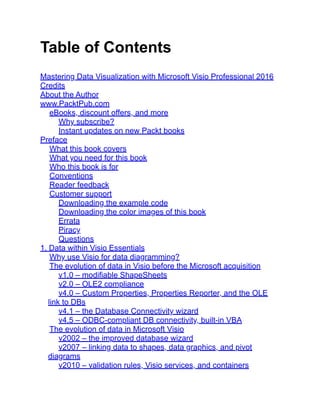
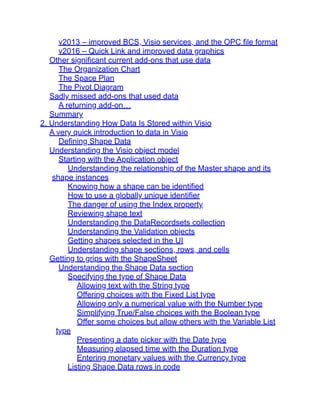










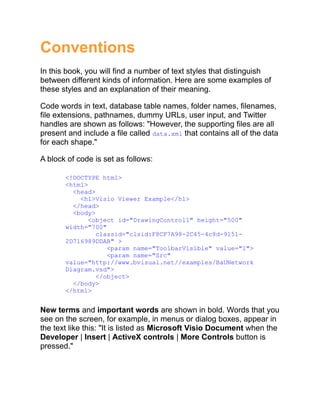
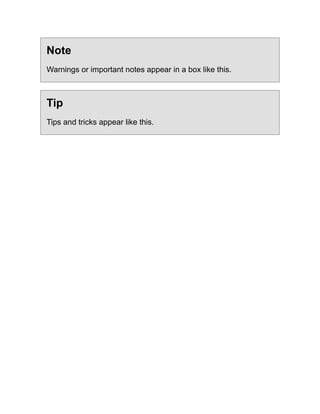



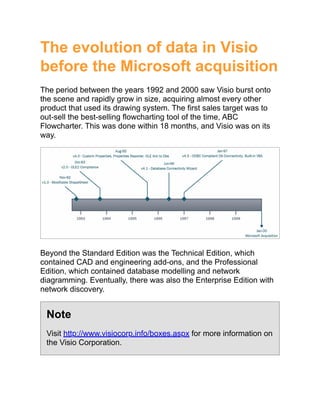
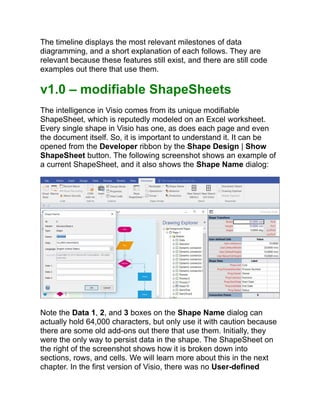
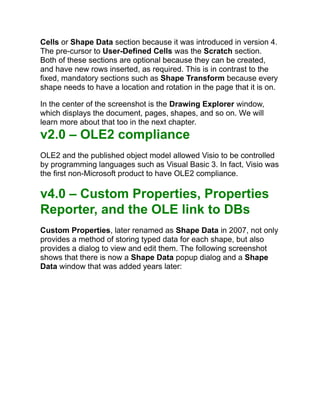
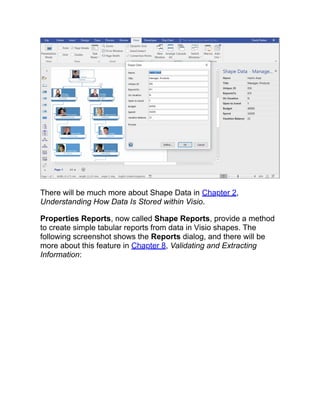
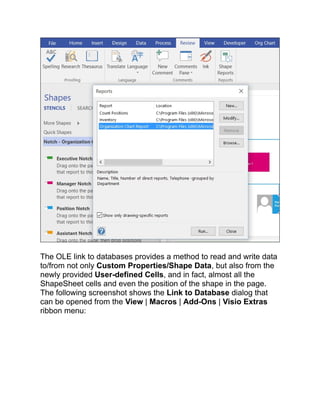
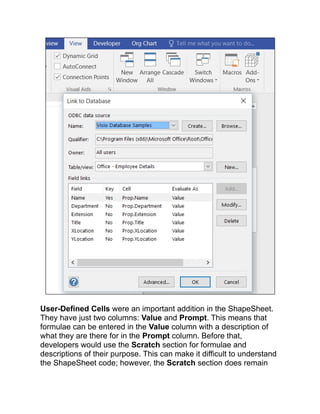
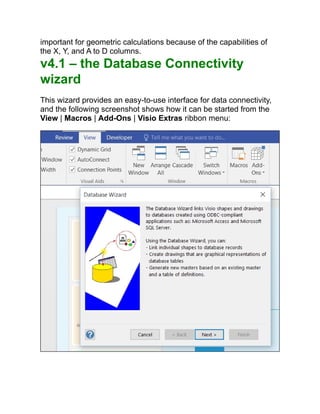


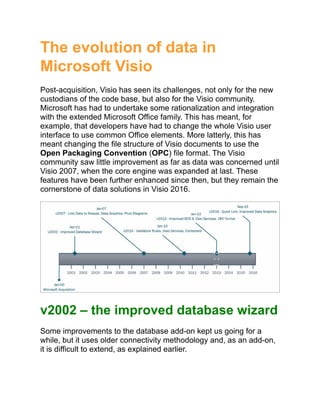
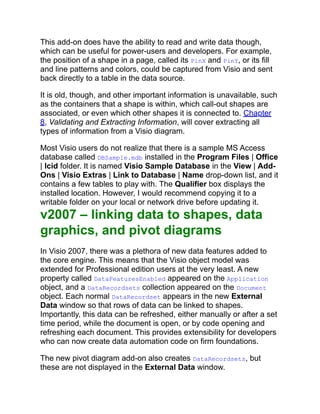
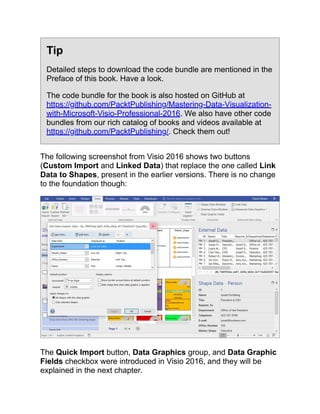

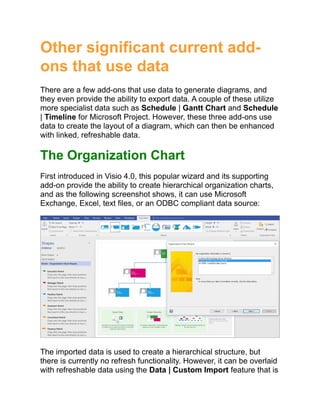
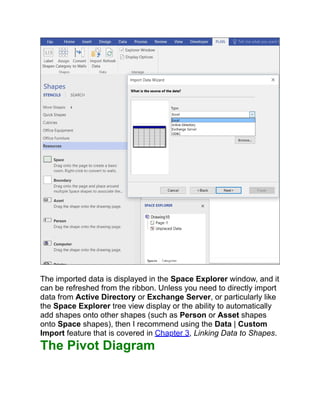

![such kind of evidence, is so obvious in itself—and so well established as a legal
maxim—that the danger of sometimes convicting, upon a train of specious but
deceptive circumstances, is less than the evil of acquittal in the absence of positive,
conclusive, and infallible testimony.]
CIRCUMSTANTIAL EVIDENCE.
A TALE FOUNDED ON FACT.
The circumstances which I am about to relate, are familiar to many
now living. In some particulars I have varied from the truth; but if in
the relation of an event which excited intense interest, at the time of
its occurrence, I shall succeed in impressing upon any one, the
delusive character of circumstantial evidence, my object will be
attained.
Beneath the magnificent sycamores which bordered a lovely stream
in the southwest part of Kentucky, a company of emigrants had
pitched their encampment, for the night. The tents were set up, the
night-fire threw its gleam upon the water, the weary horses were
feeding, the evening repast was over, and preparations were made
for repose. The party consisted of three brothers, with their families,
who were wending their way to the new lands of the distant
Missouri. On their visages, where the ague had left the sallow traces
of its touch, few of the nobler traits of the human character were
visible. Accustomed to reside upon the outskirts of society, little
versed in its forms, and as little accustomed to the restraints of law,
or the duties of morality, they were the fit pioneers of civilization,
because their frames were prepared for the utmost endurance of
fatigue, and society was purified by their removal. Theirs were not
the fearless independence, and frank demeanor which marks the
honest backwoodsman of our country; but the untamed license, and
the wiley deportment of violent men, who loved not the salutary](https://image.slidesharecdn.com/28172150-250516105503-984e9fda/85/Mastering-Data-Visualization-With-Microsoft-Visio-Professional-2016-David-J-Parker-59-320.jpg)