Read Anytime AnywhereEasy Ebook Downloads at ebookluna.com
Data Analysis with Microsoft Power Bi - eBook PDF
https://ebookluna.com/download/data-analysis-with-microsoft-
power-bi-ebook-pdf/
OR CLICK HERE
DOWLOAD EBOOK
Visit and Get More Ebook Downloads Instantly at https://ebookluna.com
2.
Instant digital products(PDF, ePub, MOBI) available
Download now and explore formats that suit you...
Microsoft Power BI Quick Start Guide (eBook PDF)
https://ebookluna.com/product/microsoft-power-bi-quick-start-guide-
ebook-pdf/
ebookluna.com
Pro DAX with Power BI (eBook PDF)
https://ebookluna.com/product/pro-dax-with-power-bi-ebook-pdf/
ebookluna.com
(eBook PDF) Financial Analysis with Microsoft Excel 2016
8th
https://ebookluna.com/product/ebook-pdf-financial-analysis-with-
microsoft-excel-2016-8th/
ebookluna.com
(eBook PDF) Financial Analysis with Microsoft Excel 9th
Edition
https://ebookluna.com/product/ebook-pdf-financial-analysis-with-
microsoft-excel-9th-edition/
ebookluna.com
3.
(eBook PDF) QualitativeData Analysis with ATLAS.ti 3rd
Edition
https://ebookluna.com/product/ebook-pdf-qualitative-data-analysis-
with-atlas-ti-3rd-edition/
ebookluna.com
Financial Analysis with Microsoft Excel 8th Edition
Timothy R. Mayes - eBook PDF
https://ebookluna.com/download/financial-analysis-with-microsoft-
excel-ebook-pdf/
ebookluna.com
(eBook PDF) Statistics: Unlocking the Power of Data
https://ebookluna.com/product/ebook-pdf-statistics-unlocking-the-
power-of-data/
ebookluna.com
Statistics: Unlocking the Power of Data, 2nd Edition
(eBook PDF)
https://ebookluna.com/product/statistics-unlocking-the-power-of-
data-2nd-edition-ebook-pdf/
ebookluna.com
(eBook PDF) Statistics: Unlocking the Power of Data, 2nd
Edition
https://ebookluna.com/product/ebook-pdf-statistics-unlocking-the-
power-of-data-2nd-edition/
ebookluna.com
6.
Contents
1. Cover
2. TitlePage
3. Copyright Page
4. Dedication
5. Contents at a Glance
6. Contents
7. Acknowledgments
8. Part I Understanding Business Intelligence and Power BI
1. Chapter 1 How to Use This Book
1. The Tool Chest Called Power BI
1. The BI Process
2. Power BI Parts and Pieces
2. The Right Tool(s) for the Job
1. Consuming Power BI Reports
2. Power BI as a Data Visualization Tool
3. Power BI as a Modeling Tool
4. Power BI as a Data Warehouse/Data Mart
3. Where to Find What You Need
1. Obtaining Power BI Desktop Software
2. Sample Code and Supporting Materials
3. Information on Power BI New Features and
Enhancements
4. How to Succeed at Self-Service Analytics
7.
2. Chapter 2Successful Self-Service Analytics
1. What Is Business Intelligence?
1. Defining KPIs
2. Is Your Organization Ready for BI?
1. Desire
2. Realistic Expectations
3. Ongoing Care and Feeding
4. Well-Defined KPIs
5. Actionable KPIs
6. Reliable Sources of Data
3. Implementation: Best Practices
1. Take an Iterative Implementation Approach
2. Utilize a Data Warehouse/Data Mart
3. Cleanse and Validate During Data Gathering
4. Create User-Friendly Data Models
5. Publish Latency
6. Provide Training and Support
7. Use the Right Tool for the Job
8. Establish Standards and Limits
4. Successfully Using Power BI
9. Part II Interacting with Power BI
1. Chapter 3 Power BI Architecture
1. The Power BI Architecture
1. Power BI Desktop
2. The Power BI Service
3. The Power BI Report Server
4. The Power BI Mobile App
8.
2. Power BIDesktop Optimizations
3. Power BI Updates
4. Microsoft On-premises Data Gateway
5. What Does the Data Have to Say?
2. Chapter 4 Using Power BI Visualizations
1. Power BI Desktop
1. Obtaining What You Need
2. Opening the Report/Preparing the Environment
2. Interacting with a Power BI Report
1. Working with a Single Report Item
2. Interacting with Multiple Report Items
3. Changing the Data with Slicers and Filters
1. Slicers
2. Filters
4. Navigating Power BI Reports
1. Drill Down and Drillthrough
2. Buttons
3. Bookmarks
4. Additional Data Interactions
5. A Cloudy Forecast
3. Chapter 5 Using the Power BI Service (PowerBI.com)
1. PowerBI.com
1. The Organization of PowerBI.com
2. Connecting to PowerBI.com
3. The Navigation Pane
9.
2. Workspaces
1. Reports
2.Dashboards
3. Workbooks
4. Datasets
5. Dataflows
3. Additional Areas and Items Within PowerBI.com
1. Additional Navigation Pane Items
2. Additional Buttons
4. How It All Gets Made
10. Part III Creating Visualizations
1. Chapter 6 Basic Data Visualizations
1. Learn By Doing
1. Starting Point
2. Basic Visualizations
1. Maximum Miniatures Manufacturing
2. Our First Report Page
3. Text-based Visualizations
4. Graphical Visualizations
3. Interactivity
1. Slicers
2. Filters
3. Drillthrough
4. Geographic Visualizations
10.
1. Bing MapVisualizations
2. Shape Map Visualizations
3. GIS Map Visualizations
5. Other Visual Elements
1. Text Boxes, Images, and Shapes
6. Fancy Formatting
2. Chapter 7 Visualization Formatting
1. The Visualization Format Tab
1. Report Page
2. All Items
3. Charts
4. Additional Chart Functional Groups
5. Table and Matrix
6. Card and Multi-row Card
7. Pie Chart, Donut Chart, Treemap, and Maps
8. Funnel
9. Gauge
10. KPI
11. Slicer
12. Button, Shape, and Image
2. Advanced Formatting Dialog Boxes
1. Conditional Formatting Advanced Controls
Dialog Box
2. Data Bars Advanced Controls Dialog Box
3. The Visualization Analytics Tab
1. Types of Analytics Lines
2. Controls for Editing Analytics Lines
11.
4. Themes
5. NewWays to Interact and Visualize
3. Chapter 8 Advanced Interactivity and Custom Visualizations
1. Controlling Interactivity
1. Controlling Interactions
2. Synchronizing Slicers
2. Creating Interactivity
1. Custom Tooltips
2. Bookmarks
3. Selection Pane
4. Buttons
3. Customizing Visualizations
1. Custom Visualizations from the Marketplace
2. Custom Visualizations from R and Python
3. Creating a Custom Shape Map
4. Moving on to Modeling
11. Part IV Building Data Models
1. Chapter 9 Loading Data with Power BI
1. Gathering Data
1. Get Data
2. Power BI Connection Types
2. Transforming Data During the Data Import
1. The Power BI Query Editor
2. A New Sample: World Population
12.
3. Repeating andChanging the Data Import
1. Refreshing Data in Power BI Desktop
2. Modifying Queries
3. The Advanced Editor and the Power Query
Formula Language
4. Data Source Permissions
4. Relationships and Intermediate Tables
1. Creating an Intermediate Table from a Data
Source
2. Manually Creating Intermediate Tables
5. Parameters
1. Putting Parameters to Use
6. Transformers
2. Chapter 10 Power BI Transformation Reference
1. Transformation Reference
1. Informational-Only Transformations
2. Transformations on the Query Editor Home
Tab
3. Transformations on the Query Editor
Transform Tab
4. Transformations on the Query Editor Add
Column Tab
2. Model Building
3. Chapter 11 Creating a Tabular Model in Power BI
1. Relationships
13.
1. Creating Relationships
2.User-Friendly Models
1. Hiding Columns from the End User
2. Column Names and Descriptions
3. Formatting and Categories
1. One Final Relationship
2. Data Categories
3. Hierarchies, Groups, and Bins
4. Measuring Up
4. Chapter 12 Measures and Calculated Columns
1. Calculated Columns
1. Creating a Calculated Column
2. The Context for Calculated Columns
2. Measures
1. Default Summarization
2. Explicit Measures
3. Measures and Context
4. Defining Context Within a Measure
5. Time Analytics
6. Row-by-Row Calculations
7. The FILTER() Function
3. DAX Variables
1. Declaring DAX Variables and Assigning a
Value
2. Using a DAX Variable
3. Using Return in a Measure
14.
4. Everything DAX
5.Chapter 13 DAX Language Reference
1. DAX Operators
1. Comparison Operators
2. Arithmetic Operators
3. Text Operator
4. Logical Operators
2. DAX Functions
1. Modifying Context
2. Table-Valued Functions
3. Aggregate Functions
4. DAX Functions for Time Analytics
5. Parent/Child Relationships
6. Additional DAX Functions
3. Additional Modeling
6. Chapter 14 Additional Power BI Desktop Features
1. Additional Power BI Data Model Features
1. Synonyms
2. Linguistic Schemas
3. Display Folder
4. What-If Parameters
5. Roles
2. Performance Analyzer
1. Capturing Performance Information
2. Viewing the DAX Query
3. Import and Export
1. Excel WorkbookContent
2. Power BI Templates
4. Spreading the Word
12. Part V Sharing Content
1. Chapter 15 Sharing Content on the Power BI Service
(PowerBI.com)
1. The Power BI Service and Data Refresh
1. The On-premises Data Gateway
2. The On-premises Data Gateway Architecture
3. Installing the On-premises Data Gateway
4. Managing the On-premises Data Gateway
5. Managing the On-premises Data Gateway
(personal mode)
6. Setting a Dataset for Scheduled Refresh
2. The Power BI Service and Sharing
1. Using Share
2. Using Content Packs
3. Using Apps
3. The Power BI Service and Row-Level Security
1. Assigning Users to a Custom Security Role
4. Another Way to Share
2. Chapter 16 Saving to the Power BI Report Server
1. Power BI Service and Power BI Report Server
Comparison
1. Versions
17.
2. Power BIDesktop Optimizations
2. Installing Power BI Report Server
1. The Power BI Report Server Installation
Executable
2. The Report Server Configuration Manager
3. The Report Catalog
1. Folders
2. The Web Portal
3. Saving a Report to the Power BI Report Server
4. Security
1. Folder and Report Security
2. Row-Level Security
5. Branding the Power BI Report Server
1. Modifying the Site Name
2. Creating a Brand Package
6. Powered Up and Ready to Go
13. Index
Guide
1. Cover
2. Title Page
3. Data Analysis with Microsoft Power BI
18.
Page List
1. i
2.ii
3. iii
4. iv
5. v
6. vi
7. vii
8. viii
9. ix
10. x
11. xi
12. xii
13. xiii
14. xiv
15. xv
16. xvi
17. 1
18. 2
19. 3
20. 4
21. 5
22. 6
23. 7
24. 8
25. 9
26. 10
27. 11
28. 12
29. 13
30. 14
31. 15
32. 16
33. 17
34. 18
35. 19
36. 20
37. 21
The doctrine of
thepassions.
and defects is immediately quit of them, if he do not attach to them
importance." The observations that Hegel makes in his Æsthetic,
regarding the type of the Magdalen in Italian art, are in this respect
especially curious. "In Italian painting the Magdalen appears, both
within and without, as the beautiful sinner; sin in her is as seductive
as conversion. But here neither sin nor sanctity are to be taken too
seriously. She was pardoned, because she had loved much; she
sinned through love and beauty; and the affecting element lies in
this, that she has scruples about her love, and beautiful and sensible
as she is, sheds torrents of tears. But her error is not that she has
loved so much; her beautiful and moving error is precisely that she
believes herself to be a sinner, whereas her sensitive beauty gives
the impression that she could not have been otherwise than noble
and of lofty senses in her love."[17]
V. The relation between the passions or desires and
the will has rather been studied at the moment of
strife between the will and the passions, than for
itself and within its two terms, although Aristotle had already begun
an analysis as to the diversity of appetites or βούλησις in respect to
the intention or προαίρεσις, observing that the intention relates only
to what can be done, whereas the appetition relates also to things
that are impossible.[18] The opposed schools of the Cynics and
Cyrenaïcs, Stoics and Epicureans, and others such, were chiefly
concerned with the antithesis of the passions and the rational will;
but the formulæ of all these schools, if they have some empirical
value as precepts of life more or less suitable for definite individuals,
classes and times, possess none or very little for philosophy. Cynics
and Cyrenaïcs, Stoics and Epicureans, they seem rather to be monks
following this or that rule than philosophers. The question as to the
mode of freeing oneself from the passions and of dominating them,
which lingered till the treatises of Descartes and Spinoza, has also a
chiefly empirical character. G. B. Vico took up a position opposed to
the two opposed degenerations arising from those practical
tendencies, that of "quenching the senses," and of "making a rule of
them." He despised both Stoics and Epicureans as "monastic or
23.
Virtues and Vices.
Thedoctrine of
individuality:
Schleiermacher.
solitary philosophers," and maintained as "a philosopher politician,"
that it is needful "not to tear away his own nature from man, nor to
abandon him in his corruption," but "to moderate the human
passions and to make of them human virtues."[19] Rarely has the
defence of the passions enjoyed an equally limpid philosophical
enunciation; as a rule, and even in Hegel, it has been directed
chiefly against certain social tendencies, rather than against
philosophical doctrines.[20] The absolute abandonment to the
passions or their absolute destruction, are theories that have not
had true and proper representatives.—The confusion between the
various meanings of the word "passion," understood now as
appetition, or concrete and actual passion, now as a state of the
soul (joy and sorrow), now as volitional habit, is to be found in the
various treatises that we have already had occasion to record. It is
natural that their character of indifference when understood as
habits should have often been observed. Thus for Descartes, elles
sont toutes bonnes de leur nature et nous n'avons rien à éviter que
leurs mauvais usages ou leur excès.[21]
On the other hand, the erroneous form of the
defence of the passions, consisting of making them
the preparation or cause of the virtues, is already
to be found in the English philosophers of the seventeenth and
eighteenth centuries (More, Shaftesbury, etc.); and in the celebrated
Fable of the Bees of Mandeville, it assumes the aspect of a
paradoxical theory, in which the vices are looked upon as promoters
and factors of progress, morality as inefficacious and harmful for this
purpose. And La Rochefoucauld had written: "Les vices entrent dans
la composition des vertus comme les poisons dans la composition
des remèdes."[22]
All these are false or crude forms, in which is
involved the doctrine of the right to individuality,
and they have always constituted and still
constitute its danger. This doctrine received its
most energetic expression in the romantic and preromantic period,
24.
Romantic and
very modern
theories.
thanksabove all to Schleiermacher, after it had been referred to in a
rather vague way by Jacobi.[23]
"For some time" (writes Schleiermacher in the Monologues) "I too
was satisfied that I had discovered Reason; and venerating equality
with the Unique Being as that which is most lofty, I believed that
there was one single measure for every case, that action should be
in all of them the same, and that each one is distinguished from the
other only in so far as it occupies a place of its own in space. I
believed that humanity manifested itself differently only in the
variety of external facts; but that the internal man, the individual,
was not a being peculiarly (eigenthümlich) constructed, and that
each was everywhere equal to the other." "But afterwards was
revealed to me that which instantly raised me to a high state of
exaltation: it became clear that every man must represent humanity
in his own way, in an altogether individual combination of its
elements, in order that it may manifest itself in every mode, and that
everything most different may issue from its bosom and become
effectual in the fulness of time and space.... Owing to this thought, I
felt myself to be a work individually willed and therefore elected by
the Divinity and such that it must enjoy a particular form and
culture; and the free act to which this thought belongs has collected
and intimately joined together the elements of human nature in a
peculiar existence."
"While I now do whatever I do according to my spirit and sense, my
fancy places before me as very clear proof of the internal
determination, a thousand other modes, in which it would be
possible to act otherwise without offending the laws of humanity: I
rethink myself in a thousand different forms, in order to discover
with the greater certainty that which is especially mine."[24]
But this peculiarity (Eigenthümlichkeit,)
opportunely placed in relief by Schleiermacher, and
a thought much loved by the Romantics (Herder,
Jacobi, G. Humboldt, the Schlegels, etc.), is often
seen to degenerate into individual caprice, even in those times, as
25.
The concept of
developmentand
progress.
may be observed in the sort of caricature which Frederick Schlegel
made of the Fichtian I, become the individual I, and in the notorious
Lucinde, to which the same Schleiermacher inconsiderately devoted
a series of letters of comment and defence. The last offshoots of the
Romantics were Max Stirner and Frederick Nietzsche: in the former
the value of individuality becomes changed into an affirmation of
spasmodic egotism; in the second there is a continuous mixture of
true and false, of good and of bad individuality, as is natural in a
writer whose Eigenthümlichkeit was rather that of a poet than of a
thinker.
VI. We have discussed elsewhere Hegel's concept
of development, and his thought as synthesis of
opposites, which essentially belongs to the
Hegelian philosophy and has been superficially
treated and adopted by other philosophical schools, and this is not
the place either to retrace their history or to demonstrate into what
errors Hegel fell through abusing the truth that he had discovered.
Among the errors of that philosophy (as for that matter of all
contemporary philosophies and of those that have followed one
another down to our own day), is to be noted the persistence of the
concept of Nature as a mode of reality opposed to the mode of the
Spirit, whence came a dualism that was not effectually surpassed,
save in appearance. The doctrine of development by opposites is to
be understood as accepted and maintained here, with the correction
of the concept of nature, and also the doctrine of the synthesis of
opposites, free from the use or abuse of it by Hegel for distinct
concepts (and worse still, for empirical concepts). As for the concept
of Providence, which is neither Fate nor Fortune, nor the work of a
transcendent God, this, in its modern form, goes back to the Scienza
nuova of Vico and is not to be confounded with the personal
religious beliefs that Vico held and kept distinct from his
philosophical concept as to immanent Providence. The same concept
reappears in the Hegelian philosophy under the form of the Idea, or
of the astuteness of Reason, which avails itself of men as its
instruments and managers of business.[25] Finally, the conception of
26.
cosmic progress wasextraneous to the oriental world, to the Græco-
Roman, and to the Christian worlds, prevailing in turn in the latter
that of decadence from an original state of perfection and of circles
or returns. In its modern form it takes its origin from thinkers free of
these religious views, who merge in the philosophies of becoming
and of evolution. But the concept of progress destroyed itself in
many of these rationalistic philosophies, the "disappearance of evil"
being posited as possible (Spencer), and a definite state of
perfection conceived (though transferred from the past into the
future), that is to say a Reality that should be Reality, indeed, perfect
Reality having ceased to be development, that is to say, itself.
[1] Kr. d. prakt. Vern. p. 119.
[2] Phil. d. Rechtes, §§ 4, 15.
[3] Lotze, Grundzüge der Ethik (Leipzig, 1884), pp. 26, 30-31;
Wundt, Ethik2 (Stuttgart, 1892), pp. 463-464.
[4] Essai sur les données immédiates de la conscience (Paris,
1898).
[5] Tract, theol.-pol. vi. c. 6; Ethica, p. iv. intr.; Epist.36 (Opera,
pp. 208, 378, 597).
[6] Kr. d. pr. Vernf. p. 79.
[7] System der Sittenlehre, in Werke, iv. pp. 198-205.
[8] See my study: Ciò che è vivo e ciò che è morto della filosofia
di Hegel (Bari, 1907).
[9] Médit. iv.
[10] For example, Compendio di Etica (Roma, 1907), p. 56.
[11] Mentor, iv. c. 2, § 19 sqq.
[12] Hippias minor, 375.
[13] Pascal, Provine, i, iv.; Hegel, Phil. d. Rechtes, § 40.
[14] Enc.§ 248.
[15] Allg. prakt. Phil. pp. 121-122; Einl. i. d. Phil. (trad, ital.), pp.
118, 171, 224.
[16] Ethic, iv. prop. 54, p. 480.
27.
Double result;
precedence ofthe
theoretical over
the practical and
of the practical
over the
theoretical.
[17] Gesch. d. Phil. ii. 240-241; Vorles. üb. Aesth. ii. 162-163.
[18] Eth. Nicom. Bk. iii. cc. 2-3, 1111-1113.
[19] Scienza nuova seconda, degn. 5.
[20] Phän. d. Geistes, pp. 484-486; Encycl. § 474; Phil. d.
Rechtes, § 124; Phil. d. Gesch. pp. 39-41.
[21] Traité des passions, iii. § 211.
[22] Maximes, n. 182 (Ed. Garnier, p. 43).
[23] Woldemar, pp. 112-113.
[24] Monologen, in Werke, i. 366-368, 372.
[25] See the study of Hegel mentioned.
THIRD SECTION
UNITY OF THE THEORETICAL AND THE PRACTICAL
The study of the practical activity in its relations
that we made in the first section has removed all
doubt as to the thesis that the practical activity
presupposes the theoretical, or that knowledge is
the necessary precedent of volition and action.[1]
But the succeeding study of the practical activity in
its dialectic having led to the result that the
practical activity is reality itself in its immediacy, and that no other
reality (or we may say other nature) is conceivable outside will-
action, compels us also to affirm the opposite thesis, that the
theoretic activity presupposes the practical, and that the will is the
necessary precedent of knowledge.[2] And it is a precedent, not
indeed in the sense admitted from the beginning, of the necessary
implication of the will in every theoretical act, as will to know, by
means of the unity of the Spirit[3] (for this will is subsidiary and not
constitutive; but if it become constitutive it produces, as has been
seen, wilfulness and the theoretical error[4]), but precisely in the
28.
Error of those
whomaintain the
exclusive
precedence of
either.
sense of a constitutive will, without which no knowledge would be
thinkable.
Knowledge, indeed, is knowledge of something: it is the remaking of
a fact, an ideal recreation of a real creation. If there have not
previously been a desire, an aspiration, a nostalgia, there cannot be
poetry; if there have not been an impulse or a heroic deed, the epic
cannot arise; if the sun do not illumine a landscape, or a soul invoke
a ray of sunlight upon the countryside, the picture of a luminous
landscape cannot exist. And if there be not a world of reality that
generates a world of representations, Philosophy, which is the search
for the universal, is not conceivable, nor History, the understanding
of the individual.
The indubitability of this affirmation, which no force
of sophistry can destroy, renders fallacious both the
opposite theses, which have several times been
variously proposed and maintained: the exclusive
priority of the theoretic, and the exclusive priority
of the practical.
Those who maintain them enter into so desperate a contest with
reality, that in order to issue from it without too much dishonour,
they are finally compelled to call in the aid of a third term, which is
in turn either thought that is not thought, or will that is not will, or
something grey that contains in itself thought and will, without being
either the one or the other, nor the unity of that duality. On the one
hand is postulated a Logos, a thought in se (one does not
understand how this can ever think and be thought), and it is made
to adopt the resolution (which one does not understand how it can
ever adopt) of coming forth from itself and creating a nature, in
order to be able to return finally to itself, by means of this alienation,
and to be henceforth per se, that is to say, able to think and to will.
The defect of this artificial construction, its mythological and
religious origin, can be said to have been already revealed, in the
comparison employed with reference to it by the author who
maintained it (Hegel), to the effect that the Logos is God before the
29.
Problem of the
unityof this
duality.
Not the duality of
opposites.
creation of the world: a God, that is to say, altogether unreal and
absurd. On the other hand, the excogitation of a blind Will
(Schelling, Schopenhauer) completely tallies with this Thought that
does not think because it has not previously willed, and that does
not truly will because it has not previously thought, and all of a
sudden fashions for itself the instrument of knowledge, to succeed in
surpassing itself in this alienation from itself, by means of liberation
from willing obtained in the contemplation of the ideas and in
asceticism. Here, too, we must repeat that the one error passes over
and converts itself into the other, and this inevitable conversion
causes the other secondary and hybrid forms of theory to have but
slight interest, those in which the priority has been conceived as that
of fancy, or feeling, or the unconscious, or the indifferentiated, and
the like, all of which represent vain efforts to suppress one of the
two fundamental forms of the spirit, or to derive them from a third,
which consciousness does not reveal.
This however does not mean that the demand to
conceive the link of that duality, or the unity of the
theoretical and the practical, manifested in all
these erroneous attempts, is not legitimate. But in
order to conceive this, it is necessary to insist above all upon the
reality of this duality, of which is sought the connection and the
unity.
This connection cannot be the relation or synthesis
of opposites. The theoretical is not the opposite of
the practical, nor the practical the opposite of the
theoretical: the opposite of the theoretical is error or the false, as
the opposite of the practical is the volitional contradiction or evil.
The theoretical, far from being negative, is positive, not less than
the practical, and inversely. Neither form can therefore be in any
way debased to a simple opposite. Opposition is intrinsic to the spirit
and is to be found in each one of its forms: hence the general value
of the spirit (activity against passivity, rationality and reality against
irrationality and unreality, being against not-being) and that of its
special forms (beautiful against ugly, true against false, useful
30.
Not duality of
finiteand infinite.
Perfect analogy of
the two forms,
theoretic and
practical.
against useless, good against evil). But precisely for this reason, it
cannot constitute the character of one form in respect to the other:
neither that of the true against the good, nor that of the beautiful
against the useful, and so on.
Nor can the connection be thought as are thought
the subdivisions of the theoretic and the practical
forms, or according to the relations of individual to
universal, of finite to infinite, the first of which terms conditions the
second, but is conditioned by it only in an implicit manner. Of the
two theoretical forms (and we shall see further on that the forms of
the practical are also two), the æsthetic precedes the logical and is
autonomous: a song, a story, a statue, do not express any concept;
but the philosophy that gives the concept, is at the same time fancy,
expression, word: the prose of the philosopher is his song. The
æsthetic form is the knowledge of the individual; the logical that of
the universal, which is also individual. But this relation that arises
within the theoretic, as within the practical form, cannot be
transported to the relation of the two forms without logical
incoherence: the subdivision, so to speak, is not the division.
Thought is not the finite in respect of willing, which is the infinite;
nor is the will the finite in respect of thought, which is the infinite.
Thought and will are both of them at once finite and infinite,
individual and universal. He who passes from action to thought, does
not limit his own being by becoming finite; nor does he limit it by
passing from thought to action; or better, in both cases he makes
himself finite to attain to the infinite; poet to open to himself the
way to the thought of the eternally true; man of action, that he may
dedicate his work to the eternal good.
The two forms, theoretical and practical, both
positive, both a connection of finite and infinite,
correspond in everything, as has already appeared
from our exposition, in which the appeal to the one
from the problems of the other has always aided a
better penetration of the nature of such problems and the finding of
their solution. Thus in both there is genius and creation (geniuses of
31.
Not a parallelism,
buta circle.
The circle of
Reality: thought
and being, subject
and object.
art and of thought, and geniuses of action); in both, reproduction
and judgment take place in the same way (æsthetic taste, practical
taste; history of art and history of philosophy, history of actions); in
both arise representative concepts and empirical rules. The analogy
will be better illustrated by what is to follow, when will be
demonstrated the correspondence between art and economic, logical
thought and ethicity, historical discrimination and ethical
discrimination, empirical concepts and laws of action, and so on.
If this analogy exclude the possibility of the two
forms being unequal, it must not, on the other
hand, be perverted with the object of conceiving
them parallel, as would perhaps be pleasing to the parallelists of
spirit and nature, soul and body; this is an expedient that is certainly
easy, but certainly not satisfying. They are not parallel, but are on
the contrary bound, the one to the other, in such a way that the one
proceeds from the other. From the æsthetic apprehension of reality,
from philosophical reflection upon it, from historical reconstruction,
which is its result, is obtained that knowledge of the actual situation,
on which alone is formed and can be formed the volitional and
practical synthesis, the new action. And this new action is in its turn
the material of the new æsthetic figuration, of the new philosophical
reflection, of the new historical reconstruction. In short, knowledge
and will, theory and practice, are not two parallels, but two lines,
such that the head of the one is joined to the tail of the other; or, if
a geometric symbol also be desired, such that they constitute, not a
parallelism, but a circle.
They constitute therefore the circle of reality and of
life, which is duality-unity of thought and being, of
subject and object, in such a way that to think the
subject is the same as to think the subject of an
object, and to think an object is the same as to
think the object of a subject. In truth, it sometimes seems strange
and almost impossible that such hard and difficult questions should
have arisen as to the objectivity of knowledge, and as to whether
thought attains to being, or whether there be a being beyond
32.
thought. Thought issuch, precisely because it affirms being, and
being is such, precisely because it is generated by a thought. It is
only when we remember that in those questions were included
others of a very difficult and intricate nature, concerning divine
transcendency and the content of the concept of nature
(gnoseological questions, which it is the glory of modern philosophy
to have asked and solved);—it is only then that we understand how
the relation of thought and being, of knowing and of willing, has also
become obscure. Kant was forced to come to a stop before the
mystery of reality, because he had not altogether conquered
transcendency, nor altogether surpassed the false conception of
nature as ens, given by the naturalists. It revealed itself to him, not
as a circle, but as an assemblage of lines diverging or joining to
infinity. Hegel made two of will and nature, owing to the
insufficiency of his gnoseological theory relating to the natural
sciences, and was led to posit a Philosophy of nature in opposition to
a Philosophy of the spirit, thus permitting to exist a form of non-
mediate dualism, after he had destroyed so many, or making it
mediate in the artificial manner to which we have referred. The
shadows of that gnoseology having been dispersed, the relation
between theory and practice, subject and object, appears in full
light; and the answer becomes very simple to the question as to
how, when everything is unconvertible relation of condition and
conditioned, thought and being are reciprocally condition and
conditioned, and as to how the vicious circle is avoided. The criticism
of vicious circles includes in itself and affirms the idea of a circularity
that is not vicious; thought and being are not a succession of two
finites, but an absolute relation, that is, the Absolute itself. To
express ourselves mythologically, if the creation of the world be the
passage from chaos to cosmos, from not-being to being, this
passage does not begin either with the theoretic or with the
practical, with the subject, or with the object, but with the Absolute,
which is the absolute relation of the two terms. In the beginning was
neither the Word nor the Act; but the Word of the Act and the Act of
the Word.
33.
Critique of the
theoriesas to the
primacy of
theoretical or of
practical reason.
It is well to state again that in consequence of the
relation and correlation established, all the
questions as to the primacy of thought or will, of
the contemplative or active life, and speaking more
empirically, of the thinker or the man of action,
disappear. To pose such problems is as though one
were to ask which of the two semicircles of a circle has precedence.
Similar questions, always insoluble or badly solved, have their origin
in internal obscurity as to the fundamental correlation. When man
has attained to the summit of knowledge (a summit that is certainly
not Art; nor, strictly speaking, Philosophy, but History, the knowledge
of the concrete real, that is, the actuality of philosophy), when he
has completely penetrated the actual situation, can he perhaps stop
at this point and say hic manebimus optime? Can he arrest life which
is raging and demanding to be continued? And if he succeed in
suspending it for an instant in thought, why has he suspended, if not
to continue it? Knowledge is not an end, but an instrument of life:
knowledge that did not serve life would be superfluous and harmful.
—On the other hand, when a man has willed and has thrown himself
into action, when he has produced another piece of life, can he
blindly continue to produce life for ever? Would not blindness
impede the production itself? Therefore he must rise from life to
knowing, if he wish to look in the face the product that he has lived,
and surpass it with thought, for which life is now means and
instrument. Knowledge serves life and life serves knowledge; the
contemplative life, if it do not wish to become insipid ease, must
lead to activity, and that activity, if it do not wish to become an
irrational and sterile tumult, must lead to contemplation. Reality, in
specifying aptitudes, has formed men of thought and men of action,
or of prevailing thought or prevailing action, these not superior to
those, for they are collaborators.—Thus the discussions as to
whether human progress be moral or intellectual, or whether the
propelling force be the practical and economic activity, or philosophy,
or religion (Buckle, Kidd, etc.), are shown to be vain.
34.
New pragmatism:
life conditioning
Philosophy.
Deductive
confirmationof
the two forms and
deductive
exclusion of the
third feeling.
It is rather to be considered that from this bond
between theory and practice is obtained a
pragmatism of a new sort, of which the
pragmatists have never thought, or at least have
not been able to distinguish from the others and to give it value. If
Life condition Thought, we have in this the apodictic demonstration
of the always historically conditioned form of every thought; not only
of Art, which is always the art of a time, of a soul, of a moment; but
also of Philosophy which can solve only those problems presented by
Life. Every philosophy reflects and cannot but reflect the
preoccupations, as they are called, of a definite historical moment;
and this, not in the quality of its solutions (in which case it would be
and is indeed bad philosophy), but in the quality of its problems.
Thus it is at once contingent and eternal, mortal and immortal,
extratemporal and living only in time and history.
Finally, with the establishment of the duality-unity
of the theoretical and the practical, we have
demonstrated that which at the beginning of the
exposition had only been asserted and
presupposed: namely, why a practical form of the
spirit must be placed beside the theoretical,[5] and
why there is no third form beyond these, whether it be called feeling
or by any other name.[6] The theoretical form postulates the
practical, because the subject postulates the object; but the spirit
does not postulate a third form intermediate between the two, or
unity of the two, because it is itself precisely mediator and unity of
itself, subject-object.
[1] Section I.
[2] Section II.
[3] Section I. c. 3.
[4] Section I. c. 4.
[5] Section I. c. 1.
35.
The utilitarian or
economicform,
and the moral or
ethical form.
[6] Section I. c. 2.
SECOND PART
THE PRACTICAL ACTIVITY IN ITS SPECIAL
FORMS
FIRST SECTION
THE TWO PRACTICAL FORMS: ECONOMIC AND ETHIC
I
DISTINCTION OF THE TWO FORMS IN THE PRACTICAL
CONSCIOUSNESS
All that has been developed in the preceding book
concerns the practical activity in general: therefore
no account has been taken of the special
distinctions of the practical forms, as though there
were none, or they have only been alluded to as
something problematical; and when exemplifications have been
given, recourse has been had indifferently to one or to the other of
the forms commonly admitted, whether or no they are to be held
philosophically distinguishable. Now, on the contrary, we affirm in an
explicit manner that the spirit, which we have seen distinguished as
theoretical and practical, is sub-distinguished as practical spirit, into
36.
Insufficiency of
the descriptive
andpsychological
distinction.
two forms, of which the first may be called utilitarian or economic,
the second moral or ethical.
In affirming this sub-distinction, we are obliged to
renounce (as we have already done for the
practical in respect to the theoretical) a
demonstration by the psychological method, which
has already shown itself to be vicious. If indeed it
were applicable in this field, we should doubtless be able to strike
the intellect and persuade the soul for a moment, by pointing to the
spectacle of life as a demonstration of the two forms, economic and
ethic, showing on the one hand, farmers, commercial men,
speculators, conquerors of men and of territories, wielders of the
word or of the sword as instrument of dominion; and, on the other
hand, educators, benefactors, disinterested and self-sacrificing men,
martyrs and heroes; on the one hand, economic institutions
(manufactories, mines, exchanges, exploration companies), and on
the other moral institutions (educators and schools, charitable
societies, orders of Sisters of Charity, or red, white, or blue Cross
Companies, and so on). What can be better proof of the reality of
the bipartition enunciated? Cannot we touch it, as with the hand?
However (as already in the case of the distinction between the
theoretical and the practical), what is touched with the hand is not
on that account seized by the intellect, and indeed in a little while it
also escapes the hand which had thought to be its master. For when
we better observe the individuals who seemed to be merely
economic, they seem to be also moral, and inversely;—moral
institutions are also economic, and economic moral The benefactor
calculates and wishes to attain his object with the same cupiditas as
the peasant, all intent upon gain; and the peasant in his turn is
ennobled in his chase after lucre by the dignity of labour and by the
moral impulses that sustain it;—all charitable institutions are
economic undertakings, and economic undertakings are subject to
moral laws, so that in drawing up accounts there is no knowing
where is that material distinction between the economic and the
ethical activities. The truth is that here too it is not possible to start
37.
Deduction and the
necessityof
integrating it with
induction.
The two forms as
a fact of
consciousness.
from contingent facts and from their classes with empirical
limitations, to attain to philosophical distinctions, but that it is
necessary to start from these, in order to interpret contingent facts,
and finally to understand also the mode of formation of empirical
classes. For this reason the psychological method revolves in a circle
that is effectively vicious.
Neither is it possible to proceed with the method
that we shall call deductive solely; that is, we see
the necessity of the two sub-forms of the practical
activity, which, being the object of the subject and
therefore in every way analogous to the activity of
the subject, that is, to the theoretical, must have a duplication of
forms answering to the duplication of the theoretical activity into
æsthetic and logical, and cannot posit the universal practical without
positing the individual that shall be its vehicle. This deduction,
although in every way correct and rigorous, cannot be convincing,
save when it is also demonstrated that it responds to fact as
revealed by observation, that is, when deduction is also induction, as
the speculative method demands.
Leaving, therefore, on this occasion also, the
deductive proof to the complete development of
the theory, we shall begin by appealing to
observation of self, in order that every one may
verify in himself the existence of the two different forms of volitional
acts, termed by us economic and ethic. The economic activity is that
which wills and effects only what corresponds to the conditions of
fact in which a man finds himself; the ethical activity is that which,
although it correspond to these conditions, also refers to something
that transcends them. To the first correspond what are called
individual ends, to the second universal ends; the one gives rise to
the judgment concerning the greater or less coherence of the action
taken in itself, the other to that concerning its greater or less
coherence in respect to the universal end, which transcends the
individual.
38.
The economic
form.
If wewish to recognize only the moral form of
activity, we soon perceive that it draws with it the
other, from which it is distinct; for our action,
although universal in its meaning, cannot but be something concrete
and individually determined. What is put in practice is not morality in
universal, but always a determinate moral volition: as Hegel
remarked in a different connection, we do not eat fruit in general,
but cherries, pears, plums, or, these cherries, these pears, these
plums; we hasten to comfort in this or that way an individual, made
in this or that way, who finds himself in this or that state of
misfortune; we do justice at this or that point of time and space to
individual beings on a definite matter. If a good action be not solely
our individual pleasure, it must become so: otherwise, how could we
carry it out? Thus, by closer examination, we realize that our action
always obeys a rational law, even when its moral law is suppressed,
so that, when every inclination that transcends the individual has
been set aside, we do not on that account remain the prey of
caprice. We shall desire only our own will, we shall follow only our
own individual inclination; but, even so, it is necessary to will this
will and this inclination coherently, not to undulate between two or
more volitions at the same time. And if we succeed in really
obtaining our desire, if, while the moral conscience is for a moment
suspended within us, we abandon ourselves to the execution of a
project of vengeance and attain to it in spite of many obstacles, thus
executing a masterpiece of ability, a practical masterpiece; even
when, in this case, populus non plaudit, we for our part certainly nos
nobis plaudimus, and feel most satisfied, at least so long as lasts the
suspension of the moral consciousness; for we have done what we
willed to do, we have tasted, though but for a little while, the
pleasure of the gods. Whereas if, although we follow our desire, we
do something different from it, or mingle several mutually exclusive
desires with one, and having decided not to drink wine, for example,
in order to obey the advice of the doctor and to remain in good
health, we yet yield to the wish to drink it, that pleasure is, so to
say, poisoned by preoccupation, the taste is at the same time
distaste, unless we succeed in forgetting for some moments the
39.
The ethical form.
adviceof the doctor, or think that very possibly he does not know
what he is saying. We continually apply the same criterion to the
incidents of life; actions and individuals, of whom we cannot morally
approve, drag from us sometimes cries of admiration for the ability
with which they have conducted themselves, for the firmness that
they display, worthy (as is said) of a better cause. The Epicurean
Farinata, who raised himself erect on his red-hot bed, or the impious
Capaneus who cursed Jove beneath the rain of punishing fire, obtain
from us that esteem which we refuse to those sad souls who lived
without infamy and without praise. Art has celebrated in tragedies
and poems the strong characters of great criminals, but it has turned
to ridicule in comedies little criminals, the violent who show
themselves timid, the astute who let themselves be cheated.
As we cannot fail to recognize this form of the
practical activity, quite individual, hedonistic,
utilitarian, and economic, and the importance that
it possesses, joined to or separated from morality, as the case may
be, and the special practical judgments that have their origin in it
(the judgment of convenience, whether it be called utilitarian or
economic), so it would be impossible not to recognize the moral
form. Yes, the volitional act satisfies us as individuals occupying a
definite point of time and space, but if it fail to satisfy us at the
same time as beings transcending time and space, our satisfaction
will be ephemeral and will rapidly be changed into dissatisfaction. To
one desire succeeds another, and to this another, and so on to
infinity; but the one is different from the other, and the new either
condemns the old or is by it condemned. If we succeed in arranging
our pleasures in series and classes, and in subordinating and
connecting them, certainly there will be some gain; but the gain will
not have been a true one on this occasion either. We shall at the
most be able to guide our life according to some plan, and for a
certain time that has not the exactitude of the moment; instead of
the instantaneous will to which succeeds a different will, we shall
have general ends for which we shall work. We shall propose, for
instance, to do certain work and to abstain from doing certain other
40.
Impossibility of
eliminating it.
work,in order to marry a loved one, to win a seat in Parliament, or
to obtain literary fame. But those ends are also merely contingent
(they are general, not universal), and consequently cannot assuage
our thirst. When we all have attained to them, we shall experience le
déboire that la cueillaison d'un rêve au cœur qui l'a cueilli always
leaves behind. The company of the fair beloved will weary, the
political ambition realized will leave the soul empty, literary fame will
seem the shadow of vanity. Perhaps too, we shall change our side,
like the sick man who cannot rest on his bed of feathers, and begin
to follow other ends; the lover deluded with matrimony will turn to
other loves; the ambitious man, weary of political life, will think of
new ambitions, or of that of not having any, and of retiring to so-
called domestic peace; the seeker for literary fame will long for ease,
silence, and forgetting. But in vain: dissatisfaction persists. And it
will always persist, and pallid Care will always sit behind us, on the
croup of our horse, if we are not able to tear from the contingent its
character of contingent, breaking its spell, and bringing ourselves to
a full stop in that progressus ad infinitum from thing to thing, from
pleasure to pleasure, to which it impels us, if we be not able to place
the eternal in the contingent, the universal in the individual, duty in
desire. Then only do we acquire that internal peace, which is not in
the future, but in the present, because eternity is in the moment, for
him who knows how to place it there. Our actions will always be
new, because reality always places new problems before us, but if
we accomplish them with lofty souls, and with purity of heart,
seeking in them that which surpasses them, we shall on every
occasion possess the Whole. Such is the character of the moral
action, which satisfies us, not as individuals, but as men, and as
individuals only in so far as we are men; and in so far as we are
men, only by means of individual satisfaction.
Those men in whom the moral consciousness is
wanting, or is confused and intermittent, make us
fearful—fearful for ourselves, obliged to be on our
guard against them and to ward off their snares and injuries, and
fearful for them, for if they have not already fallen the prey to the
41.
most terrible torments,they certainly will do so. They are like people
dancing unconsciously upon ground that has been mined; the
conscious spectator trembles for them, they do not; but if by chance
they escape the danger, they will be retrospectively horrified when
they look back. The inebriation evaporates and the clear outlines of
reality reappear, but that which restores form to those outlines is the
eternal, not the contingent, morality, not desire. We see this take
place in an intense form in what are called conversions, followed by
the intention of leaving the world and its false joys and retiring to a
cloister; or, without metaphor, of becoming regenerated, of
beginning a new life with new ideal presuppositions. But intensive
conversions are catastrophes which occur, like popular revolutions,
when continuous evolution is impeded. The wise man is converted
and renewed at every moment, without the solemnity of a
conversion, and with the memorare novissima he retains in the
contingent, his contact with the eternal. He knows that he must love
things and creatures one by one, each in its individuality, for he who
does not love thus is neither good nor bad, not even being a man.
He will wish for literary fame, political power, matrimony, according
to his aptitudes and to the conditions in which he finds himself; but
he will wish for all these things without wishing for them; he will
wish for them, not for themselves, but for that which they contain of
universal and constant; he will love them in God, ready to abandon
them immediately their ideal content shall have left them; he will
seriously desire them with all ardour for themselves, but only when
their self is also "his other self." No thing, no creature possesses
unconditioned value, which belongs only to that which is neither
thing nor creature. The value of our individual life is conditioned for
each of us, and we must guarantee and defend it as vehicle of the
universal, and we must be ready to throw it away, as a useless and
pernicious thing, when it does not serve this end, or rebels. But the
value of every being dear to us is not less conditioned, and Jesus
said with reason, when preparing himself for his divine mission, that
he had come to separate men from their wives, their sons, their
friends, and from their native land. That separation in union, that
union in separation, is the moral activity, individual and universal.
42.
Confirmed by
facts.
Thus ithappens that art, which has celebrated
strong characters, able men and affairs well
conducted, has also celebrated, and with greater
liveliness, those strong men who have placed their strength at the
service of that other strength which surpasses them and makes
them eternal. For this reason, no embittered soul, no sceptic and
pessimist remains long firm in his negation of all moral light; such
negations are indeed as a rule true amantium irae. The singer of the
lesser Brutus who had thus ferociously imprecated:
Foolish Virtue, hollow mists and fields
Of restless ghosts
Are thy schools, and Repentance turns her back upon
thee, ...
is the same who, on witnessing a slight act of generosity, exclaims
with emotion:
Fair Virtue, when my spirit becomes aware of thee,
It exults, as at a joyous event....
The coldest and most self-contained philosophers, when they speak
of it, find themselves sometimes impelled to adopt a poetic tone,
and Aristotle will say of Justice that it is "a more wonderful thing
than Hesperus or the Morning Star,"[1] and Emmanuel Kant will
compose an apostrophe to Duty, and will write at the end of the
Critique of Practical Reason: "Two things fill the soul with ever new
and ever increasing veneration and admiration the more often and
the longer reflection is occupied with them: the starry heaven above
me, and the moral law within me." And even the great mass of
rhetoric that has for its object virtue or the moral law is a homage
rendered to this supreme force of life, reality of reality.
The impossibility of suppressing the economic or the moral form of
the activity in our practical consciousness, the continual appeal that
the one makes to the other, the revolving of our practical judgment
about the two aspects, both of them necessary, of the useful and the
honest, energy and goodness, pleasure and duty, explain why the
43.
Exclusion of
materialistic and
ofintellectualistic
criticisms.
Psychology and the Description of practical life have constituted the
two kinds of types and classes, of economic and of moral men, of
economic and of moral institutions. Such rough and approximate
distinctions have however at bottom, in this as in other cases, an
intimate and rigorous distinction, which every one will find evident in
himself, if he look inward upon himself and fix his gaze persistently
on the universal forms of the spirit that acts within him.
[1] Eth. Nicom.1. v. c. i, 1129 b.
II
CRITIQUE OF THE NEGATIONS OF THE ETHICAL FORM
The distinction of the two forms, well known to the
inner consciousness, will appear more clearly when
we examine the reasons for which the one or the
other of them has been denied. We say the one or
the other, because we have now freed ourselves
from the obligation of refuting the theses that have their origin in
presuppositions, both materialistic and intellectualiste, and therefore
deny the moral and economic activities, either because they do not
admit the concept of spiritual activity itself, or because they do not
admit the more special conception of practical activity. The greater
number of those who deny morality are nothing but mechanicists,
empiricists, materialists, and positivists, to whose brains not only do
economy and morality appear inconceivable, but also art and science
and, in short, every spiritual value. They ask: Where is this moral
principle of which you discourse? Point it out to us with your finger.
But they also ask: Where are the categories or the pure concept?
Where is the æsthetic synthesis and the pure intuition? Where is the
a priori of perception and of history? Where are all these fine things
you talk of as though they existed, and that we neither see nor
44.
The two possible
negations.
Thethesis of
utilitarianism
against the
existence of moral
acts.
touch?—And for our part, we can henceforth let them say what they
will, only praying in our hearts that God may illuminate them and
make them discover (at least when they are near to death and the
dense veil of their bodies has become more thin) that if the
universals were things that it was possible to perceive as we do
individual things, they would not be universals.
When the double assumption of a spiritual activity
and of a practical form of it has been admitted, it is
not possible to do otherwise than either to deny
the economic for the moral form, or the moral for the economic.
What might seem to be a third possibility, that of denying the two
forms, is reducible to the first, because, when the distinction of the
terms has been suppressed, there remains nothing but the practical
activity considered in general, which coincides with the individual
and economic activity. We shall begin then with the examination of
the negation of morality for economy, which is the thesis of
utilitarianism. Those same materialists have recourse to utilitarianism
when they wish to present some sort of a Philosophy of the
practical, but with what little right they avail themselves of such aid,
is clear from what has already been said: the useful is always value
and teleology, and materialism, in all its sub-forms and varieties, is
incapable of positing the smallest concept of value and finality.
Utilitarianism affirms that no other volition exists
save that which answers to the merely individual
determination, or, as it is also expressed, to the
pleasure of the individual, understanding by
pleasure, not the generic pleasure that also
accompanies moral satisfaction in the individual,
but that which is exclusively individual. Actions, therefore, as it says,
are what concern it, not their motives, that is, the motive of the
individuality of the act abstractly conceived, not that of the spirit
become concrete in it; thus, not killing for fear of punishment and
not killing because repugnant to one's own conscience, become the
same thing. They are the consequences of different conditions, but
in both cases of the same motive, which is personal convenience.
45.
Difficulties arising
from thepresence
of these.
And as there does not exist a pleasure that cannot be and is not
substituted for a different pleasure, so there is not an action,
however moral it be called, that cannot be interrupted and changed,
when different conditions present themselves. Every action, every
man has his price: it is all a matter of discovering what that price is.
He who seems to place the glory of his country above all other
aspirations, although he cannot, for example, be corrupted by
money, by vanity, or by pleasure, will yet always have in him some
weak point that a more expert corrupter will discover or be able to
discover; and when the discovery has been made and the suitable
transaction proposed, the glory of his country will be abandoned,
because it has been well compensated for by something else. This
way of looking upon human actions has appeared to be concrete,
exact, rational; and the utilitarian theory, if it have often been called
hedonistic, and sometimes even æsthetic (understanding by
æsthetic, individual pleasure), is also wont to be decorated with the
name of ethical or practical rationalism, rational morality.
All would go very well, and the practical activity
would in this way be entirely explained and unified,
if we did not at every moment of life run against
the distinction between mere pleasure and duty,
between the useful and the honest action, and if there did not arise
in our conscience an invincible distinction between the things that
have a price and those that have none, and if an abyss did not
differentiate among apparently similar actions that which has a
merely utilitarian from that which has a moral motive. The
utilitarians even (who, although bad philosophers, are men, and as
such carry at the bottom of their souls a far better philosophy than
they profess in books and in the schools) are not able to suppress
that distinction in themselves and to deny all recognition to the
power of morality, to which, as men, they submit at every moment.
How then are they to behave? How are they to explain the genesis
of that distinction which, by the premises that they have posited,
cannot be other than illusion? What is there that gives effective
46.
Attempt to explain
themas
quantitative
distinctions.
existence to the fallacious category of morality, side by side with the
veracious one of utility?
There have been several attempts to solve that
hard resisting term of morality. The first, which was
logically bound to present itself, was that of
considering facts called moral as nothing but
empirical groups of utilitarian facts, and of
explaining the false category as an hypostasis of those empirical
groups, arbitrarily reduced to a rigorous and philosophical concept.
Banking, usury, commerce, industry, agriculture, and labour are
empirically distinguished, yet are all economic facts. Courage,
prudence, temperance, chastity, justice, modesty are empirically
distinguished, yet are all moral facts. Why not unite the two series,
and recognize the unity and continuity of nature by the insertion
among them of other types and terms? Morality is also utility, but
the utility of the greater number; interest is interest, but well
understood; pleasure is pleasure, but pleasure of greater duration
and quantity, preferred to another less intense, or more fugitive;
egoism, egoism of family, of race, of human race, egoism of species,
altruism; eudemonism, but social eudemonism, enjoyment, but
enjoyment of sympathy, utility, but utility of conforming, not to one's
own individual judgment, but to that of public opinion. Thus are
moral facts included in utilitarian, in the same way as the number a
hundred thousand is not less a number than two or three and the
others inferior to it, because it is composed of three and of two and
of other numbers less than itself. Cæsar Borgia murders his brother
and thus gets rid of a rival both in love and in politics, that is, he
seeks his advantage; but Giordano Bruno also seeks his own
advantage, and nothing else, when he allows himself to be burned in
order to assert his philosophy, because, for one constituted as he,
with that demoniacal fury of his for philosophical truth, the pyre
must have seemed a very miserable and negligible thing, just as his
brother's blood seemed to Cæsar Borgia. Call the one of these
actions utility of a complexity of ten and the other utility of a
complexity of a hundred, or give to the complexity a hundred the
47.
Critique.
Attempt to explain
themas facts
either extraneous
to the practical or
irrational and
stupid.
name of morality, of well-understood self-interest, of sympathy, of
altruism, and so on, and to the complexity of ten that of utility, of
individual interest, of egoism: the two actions will not thus have
been declared of a different nature.
But the fact is that they have already been
declared of a different nature by the utilitarians
themselves. No one, indeed, will have been
deceived with the ingenious phraseology excogitated: well-
understood interest is no longer mere self-interest; the egoism of
species is not egoism, durable pleasure is not mere pleasure. The
difference between the one term and the other is not quantitative,
and even where a greater quantity is talked of, a greater duration, a
greater number, arithmetical definitions are not posited, but symbols
pointing to qualitative differences. There is a difference, not of
complexity but of nature, between the action of Cæsar Borgia and
that of Giordano Bruno; there is no common measure between
baseness and moral elevation as there is between undulating plains
and mountains. The two series, of empirical utilitarian concepts and
of empirical moral concepts, are not only irreducible to a single
series, but remain obstinately distinct and irreducible. All that can be
done, and has been done, is to unify them verbally; and in this the
utilitarians have shown themselves as bold as it was possible to be in
so miserable an enterprise. But the identity or similarity of words
does not suffice to cancel the profound distinctions of things.
There would have been an immediate passage
from the consciousness of the puerility of such
identifications to the recognition of a distinct
ethical form, if purpose and prejudice had not
made resistance, prompting, on the contrary, the
search for new expedients for setting themselves
free in theory from the tedious and recurring phantom of morality.
On this occasion also these expedients must have been just two:
that is, to declare morality or concept extraneous to the practical, or
intrinsic to it indeed, but contrary. The first was attempted, but
feebly, when morality was spoken of as the fantasticality of poets, as
48.
the dream orrosy illusion caressed in life. No attention was paid to
the fact that what the poet imagines cannot be contradictory and
absurd, but must indeed be founded in the reality of life and in the
nature of things; and that morality is not the æsthetic form in which
it is reproduced and represented, but practical form or action. But
the unmaintainability of this attempt was too evident for its success.
The other expedient, on the contrary, has always had and still has
great success. This turns morality into a practical contradictory
concept, that is, into something certainly practical, but without
motive, incoherent, and in contradiction to the healthy development
of the practical. It is true that it is usually enunciated in very
different words from those used by us. They speak as follows: What
is called a good and virtuous action is nothing but the product of the
association between certain acts that are for us the means to a
pleasure, and that pleasure itself; so that gradually, even where the
primitive pleasure is absent, those acts are sought and repeated for
themselves, as though in themselves pleasurable. The savage fought
against the enemies who assailed his tribe, that he might not be
made a slave or sacrificed to the idol of another tribe, that is to say,
in order to defend his personal liberty or his life; but later on, man,
forgetting that the tribe or the city or the State were simple means
for protecting life and goods, defends them for themselves and
allows himself to be despoiled and slain for his country. In the same
way (to employ the classical example), money is first sought as a
means to enjoyment, and to form a supply for procuring a life more
comfortable and secure; but by degrees he who amasses money
turns in his soul the means into the end, and becomes avaricious,
that is, he finds delight in the mere possession of money, and
sacrifices for that all his other joys, even an easy life, food, house
and sleep, which he originally intended that money should obtain for
him. Morality arises entirely from a similar process of association
between means and end, and the case of the miser explains by
analogy every act of virtue that cannot be directly reduced to simple
pleasure and individual utility.
49.
Associationism
and evolutionism.
Critique.
Now theassociation here discussed is neither that
of logic nor of æsthetic, nor valid association,
synthesis, but irrational and fallacious association.
It is only possible to exchange means for end as
the result of a bad association of ideas: therefore that association is
folly and stupidity, as the miser adduced as an example is stupid and
foolish, being called "miser" precisely for this reason, with the
intention of blaming him (for this word does not mean "economic" or
"provident"). And behold! morality should be defined as that which is
practically irrational, foolish, stupid, the product of illusion and
confusion, or the contrary of the practical activity, which is clear-
sightedness, rationality, wisdom. Thus defined, it is at the same time
annulled. Indeed, irrationality is that which is condemned to be
perpetually subjected to the rational; and what is called the moral
man, if he were nothing but a false associator of ideas, would be
constantly confuted by the man of good sense, by the utilitarian,
who would prevent him from committing the stupidity of sacrificing
himself for his children, for his country, or for knowledge; or, were
he to persist, would cover him with contempt and ridicule. The fear
that to discover its origin would be tantamount to abolishing morality
would therefore be perfectly justified in this new sense also; or
better, it would not be a question of a fear, but of a fact: morality
would be in a state of progressive annulment, as the effect of
increasing instruction, both in the individual and in society. It has
been replied that neither this fear nor this fact arises, because that
false association is indissoluble, being a product of heredity, or, to
speak of it in proper terms, it is hereditary stupidity (evolutionistic
utilitarianism). But whether inherited or acquired, it is so dissoluble
as to be dissolved in the theory proposed: lux facta est, and no one
succeeds in obscuring it any longer. If, notwithstanding that
pretended light, morality be not dissipated, if recourse be had to the
miserable subterfuge of insuperable heredity (which is surpassed at
the very moment in which its origin is made clear), this means to say
that, for the moralist himself, morality is not the irrational, but
something very rational. He does not succeed in identifying it with
the merely individually useful, but neither can he reject it as the
50.
A desperate
attempt:
theological
utilitarianism and
mystery.
pureand simple negative of this. And since he does not wish to
abandon the utilitaristic hypothesis, there is no other path open to
him but that of recourse to mystery.
This is precisely what happens in the last form of
utilitarianism, which has seemed to be capricious
and extravagant, but is on the contrary profoundly
auto-critical, since it reveals the ultimate essence
and defect of the doctrine: what is known as
theological utilitarianism. Human actions are
always inspired by what is merely useful to the individual, and if a
number of these seems to diverge from this criterion, this happens
because account is not taken of an actual fact, by means of which
even the actions which seem to be divergent are reduced to the
common measure. This given fact is the life beyond this world, in
which God rewards or punishes him who has obeyed or disobeyed
his will, in the life of this world. He who in this life seems to resist
the impulse of his personal advantage and performs sacrifices of
every sort, even to that of his own life, follows equally with the
others his personal advantage; and believing in God, in the
immortality of the soul, and in the reward and the punishment that
await him, he regulates his action according to these actual facts.
Intuitionistic Ethic, which places a moral duty at the side of
individual pleasure, but indeducible from it, is in reality deduced
from individual pleasure, and is likewise turned into rational or
utilitarian Ethic by means of the transcendental datum. In this way
the solution makes shipwreck in mystery; since God, immortality, the
other life, the divine command, punishments and rewards, cannot be
defined and justified by means of thought and concept. When
utilitarianism becomes theological, it abandons the philosophical
field, confessing by so doing its philosophical defeat. And to
philosophical consideration the distinction between the individually
useful and that which is also superindividual shines out ever more
clearly after the many vain attacks of utilitarianism, the affirmation
of the moral form, as united and distinct from the utilitarian; the
51.
The thesis of
moral
abstracticism
againstthe
concept of the
useful.
The useful as the
means or as
theoretical fact.
autonomy of Ethic against every form of utilitarianism and every
heteronomous Ethic.
III
CRITIQUE OF THE NEGATIONS OF THE ECONOMIC FORM
If in the course of philosophical history, the theory
of utility has sought to cause the disappearance of
the other practical term, which is morality, by
swallowing it up, we are not to believe that
morality has been for its part more modest and
discreet and has not in its turn attempted to
devour its companion. One exaggeration has been met with another;
to utilitarianism has been opposed that error which may be called
moral abstracticism, by means of which is refused to the concept of
utility the place that belongs to it in the organism of the spirit.
Such a refusal (analogous to our analysis of the utilitarian theory)
cannot take place, save in three ways: that is, in so far as value is
denied to the useful, either as practical concept, or as positive
concept, or as philosophical concept. Here too we naturally do not
take count of the theses of the materialists or of the intellectualists,
which (especially those of the former) have raged in the field of
Economy not less than in that of Ethic, giving rise to insane attempts
to explain the useful on mechanical principles, or with the
contingencies of historical evolution.
The useful (it has been said) is nothing but the
means to obtain a certain end. For example, if I
take a walk every day with a view to keeping
myself in good health, the daily walk is the suitable
means and is therefore useful; if, on the contrary, I find that it
makes me ill, this means that it is not the suitable means and it
52.
Technical and
hypothetical
imperatives.
would be,and I should declare it to be, useless or harmful. Now by
the demonstration given above, it is known that means and end are
indistinguishable in the practical, for what is called means is nothing
but the actual situation (and the knowledge of it), from which arises
the practical act, and to which that act corresponds. Thus it is most
possible to separate the means from the end; but in so doing, the
consideration of the practical act is abandoned, and we pass to that
of its theoretical antecedent; and if the mere theoretical antecedent
be called "useful" or "practical" in ordinary speech (remembering the
practical act, to which it has been or it is presumed that it may be
united) then a metaphor is employed, against which there is nothing
to be said. Those, then, who define the useful as the means should
once for all realize that with such a definition they remove that
concept from the circle of the Philosophy of the practical and
transport it into Logic, where the relation of means and end is the
very same as that of cause and effect, and it again becomes part of
the theory of empirical concepts, in which cause and effect are wont
to be posited as terms separately conceivable. This has been more
or less consciously recognized, when the useful has been defined as
the technical, for we know that the technical is nothing but
knowledge thus made into a metaphor, owing to the relation that it
has or is presumed to be capable of having, with an action that has
been done or is about to be done.
The theoretical character of the technical has, on
the contrary, been obscured, when technical
knowledge has received the name of hypothetical
imperatives, distinct and ranged beside the
categorical. The imperative is will, and is therefore always both
categoric and imperative: a is willed (categorically), but a would not
be willed if the condition of fact and situation b did not exist
(hypothetically). The merely hypothetical imperative is the
knowledge, that remains when abstraction is made of the practical
act or of the will; and is no longer an imperative, but a theoretic
affirmation. Where effective will is not, imperatives cannot be talked
of.
53.
Welcome to ourwebsite – the ideal destination for book lovers and
knowledge seekers. With a mission to inspire endlessly, we offer a
vast collection of books, ranging from classic literary works to
specialized publications, self-development books, and children's
literature. Each book is a new journey of discovery, expanding
knowledge and enriching the soul of the reade
Our website is not just a platform for buying books, but a bridge
connecting readers to the timeless values of culture and wisdom. With
an elegant, user-friendly interface and an intelligent search system,
we are committed to providing a quick and convenient shopping
experience. Additionally, our special promotions and home delivery
services ensure that you save time and fully enjoy the joy of reading.
Let us accompany you on the journey of exploring knowledge and
personal growth!
ebookluna.com





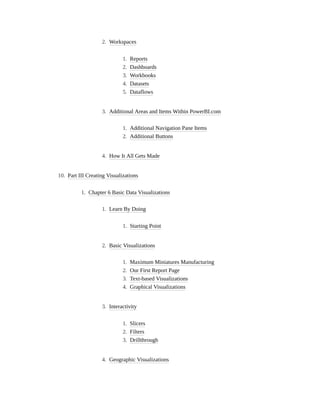
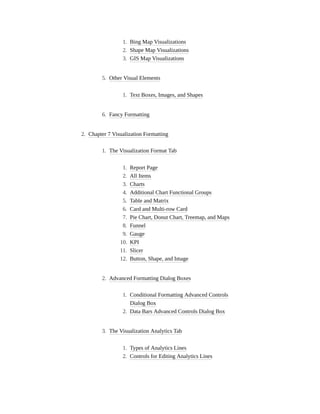
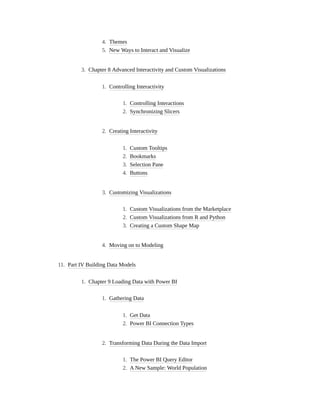
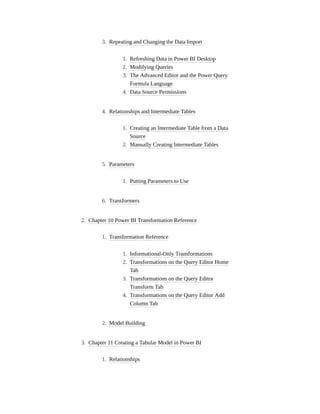
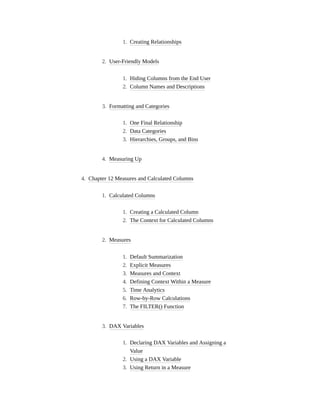
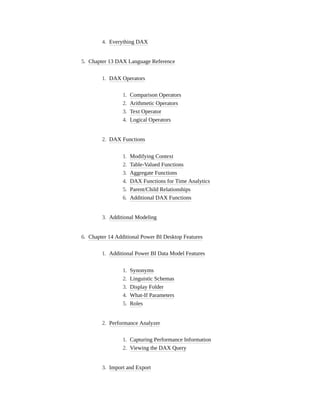

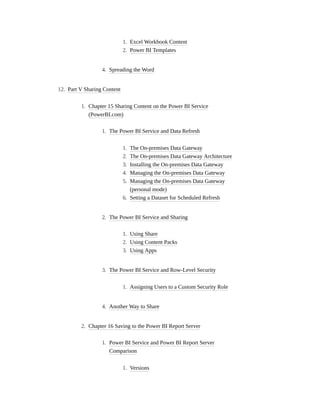
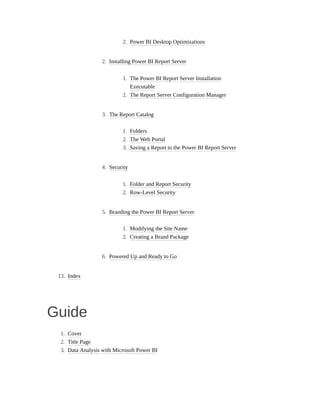

![The doctrine of
the passions.
and defects is immediately quit of them, if he do not attach to them
importance." The observations that Hegel makes in his Æsthetic,
regarding the type of the Magdalen in Italian art, are in this respect
especially curious. "In Italian painting the Magdalen appears, both
within and without, as the beautiful sinner; sin in her is as seductive
as conversion. But here neither sin nor sanctity are to be taken too
seriously. She was pardoned, because she had loved much; she
sinned through love and beauty; and the affecting element lies in
this, that she has scruples about her love, and beautiful and sensible
as she is, sheds torrents of tears. But her error is not that she has
loved so much; her beautiful and moving error is precisely that she
believes herself to be a sinner, whereas her sensitive beauty gives
the impression that she could not have been otherwise than noble
and of lofty senses in her love."[17]
V. The relation between the passions or desires and
the will has rather been studied at the moment of
strife between the will and the passions, than for
itself and within its two terms, although Aristotle had already begun
an analysis as to the diversity of appetites or βούλησις in respect to
the intention or προαίρεσις, observing that the intention relates only
to what can be done, whereas the appetition relates also to things
that are impossible.[18] The opposed schools of the Cynics and
Cyrenaïcs, Stoics and Epicureans, and others such, were chiefly
concerned with the antithesis of the passions and the rational will;
but the formulæ of all these schools, if they have some empirical
value as precepts of life more or less suitable for definite individuals,
classes and times, possess none or very little for philosophy. Cynics
and Cyrenaïcs, Stoics and Epicureans, they seem rather to be monks
following this or that rule than philosophers. The question as to the
mode of freeing oneself from the passions and of dominating them,
which lingered till the treatises of Descartes and Spinoza, has also a
chiefly empirical character. G. B. Vico took up a position opposed to
the two opposed degenerations arising from those practical
tendencies, that of "quenching the senses," and of "making a rule of
them." He despised both Stoics and Epicureans as "monastic or](https://image.slidesharecdn.com/41776-250305182533-9a2b99f8/85/Data-Analysis-with-Microsoft-Power-Bi-eBook-PDF-22-320.jpg)
![Virtues and Vices.
The doctrine of
individuality:
Schleiermacher.
solitary philosophers," and maintained as "a philosopher politician,"
that it is needful "not to tear away his own nature from man, nor to
abandon him in his corruption," but "to moderate the human
passions and to make of them human virtues."[19] Rarely has the
defence of the passions enjoyed an equally limpid philosophical
enunciation; as a rule, and even in Hegel, it has been directed
chiefly against certain social tendencies, rather than against
philosophical doctrines.[20] The absolute abandonment to the
passions or their absolute destruction, are theories that have not
had true and proper representatives.—The confusion between the
various meanings of the word "passion," understood now as
appetition, or concrete and actual passion, now as a state of the
soul (joy and sorrow), now as volitional habit, is to be found in the
various treatises that we have already had occasion to record. It is
natural that their character of indifference when understood as
habits should have often been observed. Thus for Descartes, elles
sont toutes bonnes de leur nature et nous n'avons rien à éviter que
leurs mauvais usages ou leur excès.[21]
On the other hand, the erroneous form of the
defence of the passions, consisting of making them
the preparation or cause of the virtues, is already
to be found in the English philosophers of the seventeenth and
eighteenth centuries (More, Shaftesbury, etc.); and in the celebrated
Fable of the Bees of Mandeville, it assumes the aspect of a
paradoxical theory, in which the vices are looked upon as promoters
and factors of progress, morality as inefficacious and harmful for this
purpose. And La Rochefoucauld had written: "Les vices entrent dans
la composition des vertus comme les poisons dans la composition
des remèdes."[22]
All these are false or crude forms, in which is
involved the doctrine of the right to individuality,
and they have always constituted and still
constitute its danger. This doctrine received its
most energetic expression in the romantic and preromantic period,](https://image.slidesharecdn.com/41776-250305182533-9a2b99f8/85/Data-Analysis-with-Microsoft-Power-Bi-eBook-PDF-23-320.jpg)
![Romantic and
very modern
theories.
thanks above all to Schleiermacher, after it had been referred to in a
rather vague way by Jacobi.[23]
"For some time" (writes Schleiermacher in the Monologues) "I too
was satisfied that I had discovered Reason; and venerating equality
with the Unique Being as that which is most lofty, I believed that
there was one single measure for every case, that action should be
in all of them the same, and that each one is distinguished from the
other only in so far as it occupies a place of its own in space. I
believed that humanity manifested itself differently only in the
variety of external facts; but that the internal man, the individual,
was not a being peculiarly (eigenthümlich) constructed, and that
each was everywhere equal to the other." "But afterwards was
revealed to me that which instantly raised me to a high state of
exaltation: it became clear that every man must represent humanity
in his own way, in an altogether individual combination of its
elements, in order that it may manifest itself in every mode, and that
everything most different may issue from its bosom and become
effectual in the fulness of time and space.... Owing to this thought, I
felt myself to be a work individually willed and therefore elected by
the Divinity and such that it must enjoy a particular form and
culture; and the free act to which this thought belongs has collected
and intimately joined together the elements of human nature in a
peculiar existence."
"While I now do whatever I do according to my spirit and sense, my
fancy places before me as very clear proof of the internal
determination, a thousand other modes, in which it would be
possible to act otherwise without offending the laws of humanity: I
rethink myself in a thousand different forms, in order to discover
with the greater certainty that which is especially mine."[24]
But this peculiarity (Eigenthümlichkeit,)
opportunely placed in relief by Schleiermacher, and
a thought much loved by the Romantics (Herder,
Jacobi, G. Humboldt, the Schlegels, etc.), is often
seen to degenerate into individual caprice, even in those times, as](https://image.slidesharecdn.com/41776-250305182533-9a2b99f8/85/Data-Analysis-with-Microsoft-Power-Bi-eBook-PDF-24-320.jpg)
![The concept of
development and
progress.
may be observed in the sort of caricature which Frederick Schlegel
made of the Fichtian I, become the individual I, and in the notorious
Lucinde, to which the same Schleiermacher inconsiderately devoted
a series of letters of comment and defence. The last offshoots of the
Romantics were Max Stirner and Frederick Nietzsche: in the former
the value of individuality becomes changed into an affirmation of
spasmodic egotism; in the second there is a continuous mixture of
true and false, of good and of bad individuality, as is natural in a
writer whose Eigenthümlichkeit was rather that of a poet than of a
thinker.
VI. We have discussed elsewhere Hegel's concept
of development, and his thought as synthesis of
opposites, which essentially belongs to the
Hegelian philosophy and has been superficially
treated and adopted by other philosophical schools, and this is not
the place either to retrace their history or to demonstrate into what
errors Hegel fell through abusing the truth that he had discovered.
Among the errors of that philosophy (as for that matter of all
contemporary philosophies and of those that have followed one
another down to our own day), is to be noted the persistence of the
concept of Nature as a mode of reality opposed to the mode of the
Spirit, whence came a dualism that was not effectually surpassed,
save in appearance. The doctrine of development by opposites is to
be understood as accepted and maintained here, with the correction
of the concept of nature, and also the doctrine of the synthesis of
opposites, free from the use or abuse of it by Hegel for distinct
concepts (and worse still, for empirical concepts). As for the concept
of Providence, which is neither Fate nor Fortune, nor the work of a
transcendent God, this, in its modern form, goes back to the Scienza
nuova of Vico and is not to be confounded with the personal
religious beliefs that Vico held and kept distinct from his
philosophical concept as to immanent Providence. The same concept
reappears in the Hegelian philosophy under the form of the Idea, or
of the astuteness of Reason, which avails itself of men as its
instruments and managers of business.[25] Finally, the conception of](https://image.slidesharecdn.com/41776-250305182533-9a2b99f8/85/Data-Analysis-with-Microsoft-Power-Bi-eBook-PDF-25-320.jpg)
![cosmic progress was extraneous to the oriental world, to the Græco-
Roman, and to the Christian worlds, prevailing in turn in the latter
that of decadence from an original state of perfection and of circles
or returns. In its modern form it takes its origin from thinkers free of
these religious views, who merge in the philosophies of becoming
and of evolution. But the concept of progress destroyed itself in
many of these rationalistic philosophies, the "disappearance of evil"
being posited as possible (Spencer), and a definite state of
perfection conceived (though transferred from the past into the
future), that is to say a Reality that should be Reality, indeed, perfect
Reality having ceased to be development, that is to say, itself.
[1] Kr. d. prakt. Vern. p. 119.
[2] Phil. d. Rechtes, §§ 4, 15.
[3] Lotze, Grundzüge der Ethik (Leipzig, 1884), pp. 26, 30-31;
Wundt, Ethik2 (Stuttgart, 1892), pp. 463-464.
[4] Essai sur les données immédiates de la conscience (Paris,
1898).
[5] Tract, theol.-pol. vi. c. 6; Ethica, p. iv. intr.; Epist.36 (Opera,
pp. 208, 378, 597).
[6] Kr. d. pr. Vernf. p. 79.
[7] System der Sittenlehre, in Werke, iv. pp. 198-205.
[8] See my study: Ciò che è vivo e ciò che è morto della filosofia
di Hegel (Bari, 1907).
[9] Médit. iv.
[10] For example, Compendio di Etica (Roma, 1907), p. 56.
[11] Mentor, iv. c. 2, § 19 sqq.
[12] Hippias minor, 375.
[13] Pascal, Provine, i, iv.; Hegel, Phil. d. Rechtes, § 40.
[14] Enc.§ 248.
[15] Allg. prakt. Phil. pp. 121-122; Einl. i. d. Phil. (trad, ital.), pp.
118, 171, 224.
[16] Ethic, iv. prop. 54, p. 480.](https://image.slidesharecdn.com/41776-250305182533-9a2b99f8/85/Data-Analysis-with-Microsoft-Power-Bi-eBook-PDF-26-320.jpg)
![Double result;
precedence of the
theoretical over
the practical and
of the practical
over the
theoretical.
[17] Gesch. d. Phil. ii. 240-241; Vorles. üb. Aesth. ii. 162-163.
[18] Eth. Nicom. Bk. iii. cc. 2-3, 1111-1113.
[19] Scienza nuova seconda, degn. 5.
[20] Phän. d. Geistes, pp. 484-486; Encycl. § 474; Phil. d.
Rechtes, § 124; Phil. d. Gesch. pp. 39-41.
[21] Traité des passions, iii. § 211.
[22] Maximes, n. 182 (Ed. Garnier, p. 43).
[23] Woldemar, pp. 112-113.
[24] Monologen, in Werke, i. 366-368, 372.
[25] See the study of Hegel mentioned.
THIRD SECTION
UNITY OF THE THEORETICAL AND THE PRACTICAL
The study of the practical activity in its relations
that we made in the first section has removed all
doubt as to the thesis that the practical activity
presupposes the theoretical, or that knowledge is
the necessary precedent of volition and action.[1]
But the succeeding study of the practical activity in
its dialectic having led to the result that the
practical activity is reality itself in its immediacy, and that no other
reality (or we may say other nature) is conceivable outside will-
action, compels us also to affirm the opposite thesis, that the
theoretic activity presupposes the practical, and that the will is the
necessary precedent of knowledge.[2] And it is a precedent, not
indeed in the sense admitted from the beginning, of the necessary
implication of the will in every theoretical act, as will to know, by
means of the unity of the Spirit[3] (for this will is subsidiary and not
constitutive; but if it become constitutive it produces, as has been
seen, wilfulness and the theoretical error[4]), but precisely in the](https://image.slidesharecdn.com/41776-250305182533-9a2b99f8/85/Data-Analysis-with-Microsoft-Power-Bi-eBook-PDF-27-320.jpg)
![New pragmatism:
life conditioning
Philosophy.
Deductive
confirmation of
the two forms and
deductive
exclusion of the
third feeling.
It is rather to be considered that from this bond
between theory and practice is obtained a
pragmatism of a new sort, of which the
pragmatists have never thought, or at least have
not been able to distinguish from the others and to give it value. If
Life condition Thought, we have in this the apodictic demonstration
of the always historically conditioned form of every thought; not only
of Art, which is always the art of a time, of a soul, of a moment; but
also of Philosophy which can solve only those problems presented by
Life. Every philosophy reflects and cannot but reflect the
preoccupations, as they are called, of a definite historical moment;
and this, not in the quality of its solutions (in which case it would be
and is indeed bad philosophy), but in the quality of its problems.
Thus it is at once contingent and eternal, mortal and immortal,
extratemporal and living only in time and history.
Finally, with the establishment of the duality-unity
of the theoretical and the practical, we have
demonstrated that which at the beginning of the
exposition had only been asserted and
presupposed: namely, why a practical form of the
spirit must be placed beside the theoretical,[5] and
why there is no third form beyond these, whether it be called feeling
or by any other name.[6] The theoretical form postulates the
practical, because the subject postulates the object; but the spirit
does not postulate a third form intermediate between the two, or
unity of the two, because it is itself precisely mediator and unity of
itself, subject-object.
[1] Section I.
[2] Section II.
[3] Section I. c. 3.
[4] Section I. c. 4.
[5] Section I. c. 1.](https://image.slidesharecdn.com/41776-250305182533-9a2b99f8/85/Data-Analysis-with-Microsoft-Power-Bi-eBook-PDF-34-320.jpg)
![The utilitarian or
economic form,
and the moral or
ethical form.
[6] Section I. c. 2.
SECOND PART
THE PRACTICAL ACTIVITY IN ITS SPECIAL
FORMS
FIRST SECTION
THE TWO PRACTICAL FORMS: ECONOMIC AND ETHIC
I
DISTINCTION OF THE TWO FORMS IN THE PRACTICAL
CONSCIOUSNESS
All that has been developed in the preceding book
concerns the practical activity in general: therefore
no account has been taken of the special
distinctions of the practical forms, as though there
were none, or they have only been alluded to as
something problematical; and when exemplifications have been
given, recourse has been had indifferently to one or to the other of
the forms commonly admitted, whether or no they are to be held
philosophically distinguishable. Now, on the contrary, we affirm in an
explicit manner that the spirit, which we have seen distinguished as
theoretical and practical, is sub-distinguished as practical spirit, into](https://image.slidesharecdn.com/41776-250305182533-9a2b99f8/85/Data-Analysis-with-Microsoft-Power-Bi-eBook-PDF-35-320.jpg)
![Confirmed by
facts.
Thus it happens that art, which has celebrated
strong characters, able men and affairs well
conducted, has also celebrated, and with greater
liveliness, those strong men who have placed their strength at the
service of that other strength which surpasses them and makes
them eternal. For this reason, no embittered soul, no sceptic and
pessimist remains long firm in his negation of all moral light; such
negations are indeed as a rule true amantium irae. The singer of the
lesser Brutus who had thus ferociously imprecated:
Foolish Virtue, hollow mists and fields
Of restless ghosts
Are thy schools, and Repentance turns her back upon
thee, ...
is the same who, on witnessing a slight act of generosity, exclaims
with emotion:
Fair Virtue, when my spirit becomes aware of thee,
It exults, as at a joyous event....
The coldest and most self-contained philosophers, when they speak
of it, find themselves sometimes impelled to adopt a poetic tone,
and Aristotle will say of Justice that it is "a more wonderful thing
than Hesperus or the Morning Star,"[1] and Emmanuel Kant will
compose an apostrophe to Duty, and will write at the end of the
Critique of Practical Reason: "Two things fill the soul with ever new
and ever increasing veneration and admiration the more often and
the longer reflection is occupied with them: the starry heaven above
me, and the moral law within me." And even the great mass of
rhetoric that has for its object virtue or the moral law is a homage
rendered to this supreme force of life, reality of reality.
The impossibility of suppressing the economic or the moral form of
the activity in our practical consciousness, the continual appeal that
the one makes to the other, the revolving of our practical judgment
about the two aspects, both of them necessary, of the useful and the
honest, energy and goodness, pleasure and duty, explain why the](https://image.slidesharecdn.com/41776-250305182533-9a2b99f8/85/Data-Analysis-with-Microsoft-Power-Bi-eBook-PDF-42-320.jpg)
![Exclusion of
materialistic and
of intellectualistic
criticisms.
Psychology and the Description of practical life have constituted the
two kinds of types and classes, of economic and of moral men, of
economic and of moral institutions. Such rough and approximate
distinctions have however at bottom, in this as in other cases, an
intimate and rigorous distinction, which every one will find evident in
himself, if he look inward upon himself and fix his gaze persistently
on the universal forms of the spirit that acts within him.
[1] Eth. Nicom.1. v. c. i, 1129 b.
II
CRITIQUE OF THE NEGATIONS OF THE ETHICAL FORM
The distinction of the two forms, well known to the
inner consciousness, will appear more clearly when
we examine the reasons for which the one or the
other of them has been denied. We say the one or
the other, because we have now freed ourselves
from the obligation of refuting the theses that have their origin in
presuppositions, both materialistic and intellectualiste, and therefore
deny the moral and economic activities, either because they do not
admit the concept of spiritual activity itself, or because they do not
admit the more special conception of practical activity. The greater
number of those who deny morality are nothing but mechanicists,
empiricists, materialists, and positivists, to whose brains not only do
economy and morality appear inconceivable, but also art and science
and, in short, every spiritual value. They ask: Where is this moral
principle of which you discourse? Point it out to us with your finger.
But they also ask: Where are the categories or the pure concept?
Where is the æsthetic synthesis and the pure intuition? Where is the
a priori of perception and of history? Where are all these fine things
you talk of as though they existed, and that we neither see nor](https://image.slidesharecdn.com/41776-250305182533-9a2b99f8/85/Data-Analysis-with-Microsoft-Power-Bi-eBook-PDF-43-320.jpg)