Mass Communication & Media Literacy 03
The Greek word ‘logos’indicates a rational principle and order to explaining phenomenasemiologySemiology seeks to identify how the content of media messages come to have significance and mean what they do‘sem’ comes from the Greek for signand is found in words such as semaphoreand semantics
SemiologyThe study of meaning and the different systems that make meaning possibleImagesColourBodily gesturesMusicMedia forms in all their variety
RhetoricDraws our attention to what someone is saying, along with the setting, the way they speak, etc.SemiologyWhy do specific things (a ‘posh’ accent, a black face, a suit and tie, a grey backdrop, the street rather than the studio, mean what they do?How is meaning created?Not in the mind of the reader ...Not in the text ...In the interaction between reader and text
‘Psychologically, what are our ideas, apart from our language? They probably do not exist. Or in a form that may be described as amorphous. We should probably be unable according to philosophers and linguists to distinguish two ideas clearly with the help of language’ (Saussure, 1993)Language doesn’t describe the world ... it constitutes it!
Key thinkersFerdinand de Saussure (1857-1913)Charles Sanders Pierce (1839-1914)Roland Barthes (1915-1980)Umberto Eco (1932 -  )
Core ideasMedia texts are constructionsNot natural but manufacturedMeanings are the result of social convention not any ‘essential’ property in things or the relationship of words or other signs to the things or concepts depictedMeanings are socially determined, the organisation and rules of languageMeaning is as much a result of conventions as it is the intentions of those who produced the texts
The meaning of a song is not fixed by the songwriter or singerMeanings are produced by the conventions of used both by media workers and the listeners who consume itHidden meanings/sub-texts
Why stop at red?SignsSignifier = physical properties of a signSignified = the conceptual aspect of the sign
The picture of dog presents us with the sign ‘dog’. The signifier (the image itself, with 2D physical properties) presents the signified of both ‘dogness’ and this particular dog (Sparky) in the image.
I took my dog to the vets on Friday.I’m dog-tired.I’m going to kill that dog of a boyfriend of mine.Don’t focus on the analysis of signs at the level of signifier and signified as the basis of understanding.Stay at the level of the sign as a way of understanding how language works
From linguistics to media studiesSaussure was a linguist who realised that his analysis of language could be applied to any form of communication or signifying system.So, we can extend the semiological approach to identify the signs inComputer gamesTV programmesPodcastsMagazine articlesAdvertsFilmsPieces of musicAnd this will take us deeper than rhetoric allowed
Semiology: tools & techniquesSigns combine together to create meaningful textSingle word signs – sentences – paragraphs – storiesWritten elements – typeface – images – photosFacial features – hairstyles – clothing – backgroundsMeaning is determined by the selection of signs and their combination in textSemiology makes sense of the process and the signifying results of that selection and combination
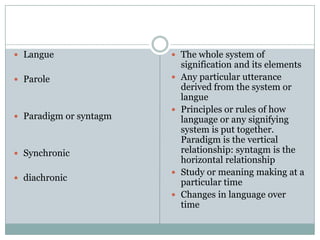
Langue	ParoleParadigm or syntagmSynchronic diachronicThe whole system of signification and its elementsAny particular utterance derived from the system or languePrinciples or rules of how language or any signifying system is put together. Paradigm is the vertical relationship: syntagm is the horizontal relationshipStudy or meaning making at a particular timeChanges in language over time
Verbal and visual signsDon’t be fooled!Once an object is captured by a signifying system (a dog in digital photographic form or on filmic celluloid) it is no longer an innocent object. It now exists as a sign – something selected and embraced within a system of communication
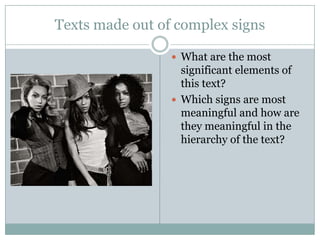
Texts made out of complex signsWhat are the most significant elements of this text?Which signs are most meaningful and how are they meaningful in the hierarchy of the text?
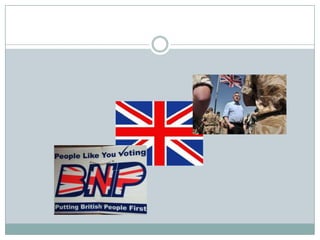
Denotation & connotationBarthes took up Saussure’s work and used them to think about the social context and role of the mediaAny sign will be associated with an initial aspect of signification but that this will trigger further associationsLiteral meaning – denotationFurther associative meanings - connotation
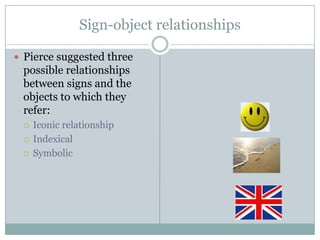
Sign-object relationshipsPierce suggested three possible relationships between signs and the objects to which they refer:Iconic relationship IndexicalSymbolic
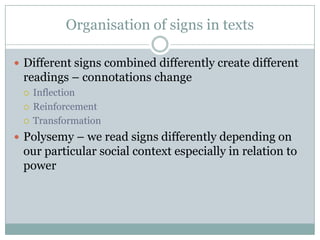
Organisation of signs in textsDifferent signs combined differently create different readings – connotations changeInflectionReinforcementTransformationPolysemy – we read signs differently depending on our particular social context especially in relation to power
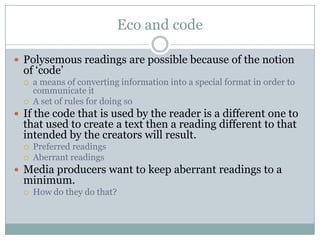
Eco and codePolysemous readings are possible because of the notion of ‘code’ a means of converting information into a special format in order to communicate itA set of rules for doing soIf the code that is used by the reader is a different one to that used to create a text then a reading different to that intended by the creators will result.Preferred readingsAberrant readingsMedia producers want to keep aberrant readings to a minimum.How do they do that?
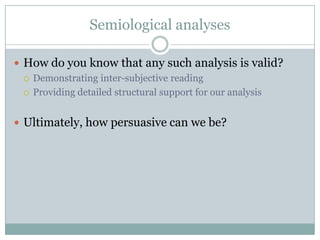
Semiological analysesHow do you know that any such analysis is valid?Demonstrating inter-subjective readingProviding detailed structural support for our analysisUltimately, how persuasive can we be?

Mass communication & media literacy 03

  • 1.
    Mass Communication &Media Literacy 03
  • 2.
    The Greek word‘logos’indicates a rational principle and order to explaining phenomenasemiologySemiology seeks to identify how the content of media messages come to have significance and mean what they do‘sem’ comes from the Greek for signand is found in words such as semaphoreand semantics
  • 3.
    SemiologyThe study ofmeaning and the different systems that make meaning possibleImagesColourBodily gesturesMusicMedia forms in all their variety
  • 4.
    RhetoricDraws our attentionto what someone is saying, along with the setting, the way they speak, etc.SemiologyWhy do specific things (a ‘posh’ accent, a black face, a suit and tie, a grey backdrop, the street rather than the studio, mean what they do?How is meaning created?Not in the mind of the reader ...Not in the text ...In the interaction between reader and text
  • 5.
    ‘Psychologically, what areour ideas, apart from our language? They probably do not exist. Or in a form that may be described as amorphous. We should probably be unable according to philosophers and linguists to distinguish two ideas clearly with the help of language’ (Saussure, 1993)Language doesn’t describe the world ... it constitutes it!
  • 6.
    Key thinkersFerdinand deSaussure (1857-1913)Charles Sanders Pierce (1839-1914)Roland Barthes (1915-1980)Umberto Eco (1932 - )
  • 7.
    Core ideasMedia textsare constructionsNot natural but manufacturedMeanings are the result of social convention not any ‘essential’ property in things or the relationship of words or other signs to the things or concepts depictedMeanings are socially determined, the organisation and rules of languageMeaning is as much a result of conventions as it is the intentions of those who produced the texts
  • 8.
    The meaning ofa song is not fixed by the songwriter or singerMeanings are produced by the conventions of used both by media workers and the listeners who consume itHidden meanings/sub-texts
  • 9.
    Why stop atred?SignsSignifier = physical properties of a signSignified = the conceptual aspect of the sign
  • 10.
    The picture ofdog presents us with the sign ‘dog’. The signifier (the image itself, with 2D physical properties) presents the signified of both ‘dogness’ and this particular dog (Sparky) in the image.
  • 11.
    I took mydog to the vets on Friday.I’m dog-tired.I’m going to kill that dog of a boyfriend of mine.Don’t focus on the analysis of signs at the level of signifier and signified as the basis of understanding.Stay at the level of the sign as a way of understanding how language works
  • 12.
    From linguistics tomedia studiesSaussure was a linguist who realised that his analysis of language could be applied to any form of communication or signifying system.So, we can extend the semiological approach to identify the signs inComputer gamesTV programmesPodcastsMagazine articlesAdvertsFilmsPieces of musicAnd this will take us deeper than rhetoric allowed
  • 13.
    Semiology: tools &techniquesSigns combine together to create meaningful textSingle word signs – sentences – paragraphs – storiesWritten elements – typeface – images – photosFacial features – hairstyles – clothing – backgroundsMeaning is determined by the selection of signs and their combination in textSemiology makes sense of the process and the signifying results of that selection and combination
  • 14.
    Langue ParoleParadigm or syntagmSynchronicdiachronicThe whole system of signification and its elementsAny particular utterance derived from the system or languePrinciples or rules of how language or any signifying system is put together. Paradigm is the vertical relationship: syntagm is the horizontal relationshipStudy or meaning making at a particular timeChanges in language over time
  • 15.
    Verbal and visualsignsDon’t be fooled!Once an object is captured by a signifying system (a dog in digital photographic form or on filmic celluloid) it is no longer an innocent object. It now exists as a sign – something selected and embraced within a system of communication
  • 16.
    Texts made outof complex signsWhat are the most significant elements of this text?Which signs are most meaningful and how are they meaningful in the hierarchy of the text?
  • 17.
    Denotation & connotationBarthestook up Saussure’s work and used them to think about the social context and role of the mediaAny sign will be associated with an initial aspect of signification but that this will trigger further associationsLiteral meaning – denotationFurther associative meanings - connotation
  • 19.
    Sign-object relationshipsPierce suggestedthree possible relationships between signs and the objects to which they refer:Iconic relationship IndexicalSymbolic
  • 20.
    Organisation of signsin textsDifferent signs combined differently create different readings – connotations changeInflectionReinforcementTransformationPolysemy – we read signs differently depending on our particular social context especially in relation to power
  • 21.
    Eco and codePolysemousreadings are possible because of the notion of ‘code’ a means of converting information into a special format in order to communicate itA set of rules for doing soIf the code that is used by the reader is a different one to that used to create a text then a reading different to that intended by the creators will result.Preferred readingsAberrant readingsMedia producers want to keep aberrant readings to a minimum.How do they do that?
  • 22.
    Semiological analysesHow doyou know that any such analysis is valid?Demonstrating inter-subjective readingProviding detailed structural support for our analysisUltimately, how persuasive can we be?