Field Research

1
Still Life
Observe and describe the objects you can

see on the table.

2
Physical Description
Select a section of this room which is

immediately across from where you are
sitting. Describe this section of the room in
detail. I’ll ask you to stop after 15 minutes.

3
Physical Description


Discussion
How did you approach this exercise?
How is this exercise like the previous?

Unlike?
What was the most difficult part of the
exercise?

4
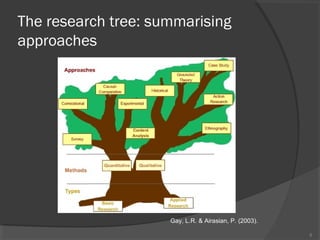
The research tree: summarising
approaches

Gay, L.R. & Airasian, P. (2003).
5
Ethnography


Ethnography is the art and science of
describing a human group – its
institutions, interpersonal behaviours,
material productions, and beliefs.



Ethnographic researchers are primarily
concerned with the routine, everyday
lives of the people they study.
Flick
6
Ethnography as Method








Field based
Personalised
Multifactorial (triangulation)
Long-term
Inductive
Dialogic
holistic

7
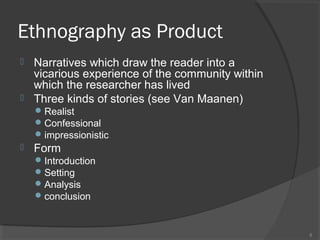
Ethnography as Product
Narratives which draw the reader into a
vicarious experience of the community within
which the researcher has lived
 Three kinds of stories (see Van Maanen)


 Realist
 Confessional
 impressionistic



Form
 Introduction
 Setting
 Analysis
 conclusion

8
Research Design: cyclical
Collecting
ethnographic data

Selecting an
ethnographic
project

Making an
ethnographic record

Asking ethnographic
questions

Analysing
ethnographic data
Writing an
ethnography

9
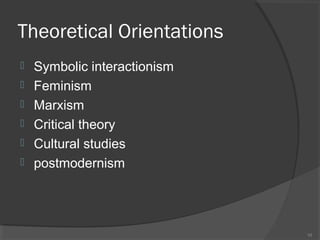
Theoretical Orientations







Symbolic interactionism
Feminism
Marxism
Critical theory
Cultural studies
postmodernism

10
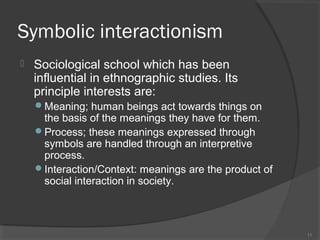
Symbolic interactionism


Sociological school which has been
influential in ethnographic studies. Its
principle interests are:
Meaning; human beings act towards things on

the basis of the meanings they have for them.
Process; these meanings expressed through
symbols are handled through an interpretive
process.
Interaction/Context: meanings are the product of
social interaction in society.

11
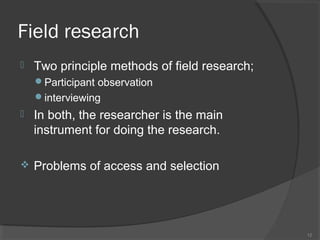
Field research


Two principle methods of field research;
Participant observation
interviewing



In both, the researcher is the main
instrument for doing the research.



Problems of access and selection

12
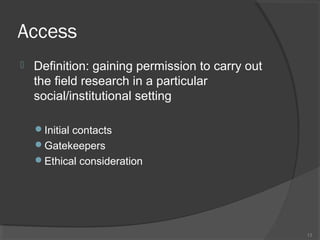
Access


Definition: gaining permission to carry out
the field research in a particular
social/institutional setting
Initial contacts
Gatekeepers
Ethical consideration

13
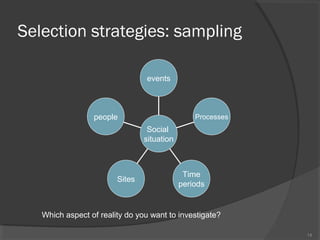
Selection strategies: sampling
events

people

Processes

Social
situation

Sites

Time
periods

Which aspect of reality do you want to investigate?
14
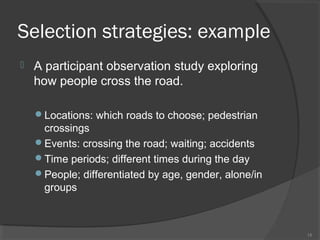
Selection strategies: example


A participant observation study exploring
how people cross the road.
Locations: which roads to choose; pedestrian

crossings
Events: crossing the road; waiting; accidents
Time periods; different times during the day
People; differentiated by age, gender, alone/in
groups

15
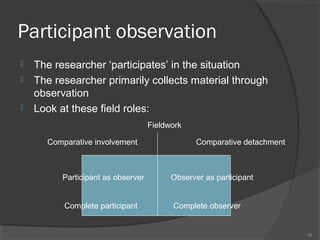
Participant observation




The researcher ‘participates’ in the situation
The researcher primarily collects material through
observation
Look at these field roles:
Fieldwork
Comparative involvement

Participant as observer
Complete participant

Comparative detachment

Observer as participant
Complete observer

16
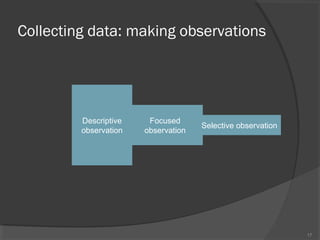
Collecting data: making observations

Descriptive
observation

Focused
observation

Selective observation

17
Descriptive observation


Aims to describe the social situation
The setting
People
events




Understanding context is fundamental
Descriptive observation often result in
narratives – stories
Events/episodes
Roles/characters
Time sequences

18
Focussed/Selective observation


Focussed





Limiting the scope – focussing
Made after analysing descriptive data
They construct particular elements of the study



Selective



Further focus
Looking for contrasts, differences between
different elements





19
Description


Task: To describe a person sitting across from
you, either one you know or a stranger.



Time: 15 mins
Select a person to describe physically
Arrange your 15 minutes to your best advantage
Use descriptive terms and work for accuracy





20
Description: Feedback


What can you identify as major differences in
observation of a still life, a setting and a person?



How did you approach this exercise?



What was difficult for you in the exercise and what do
you want to do about it?

21
Physical Description


Select an area on campus to observe. Set
aside 30 minutes of quiet time to describe
it. Set reasonable goals for the description.
For example, select one part of the library
or one section of the student union.



Again, write down your notes in fieldwork
form and then write them up on the wiki.
(nb do this with all the observation
exercises we complete)

22
Feedback


How did you approach this description of a
setting?



How did this differ from the previous
description you completed?



What was the most difficult part of this
exercise for you?

23

Lang cult field research

  • 1.
  • 2.
    Still Life Observe anddescribe the objects you can see on the table. 2
  • 3.
    Physical Description Select asection of this room which is immediately across from where you are sitting. Describe this section of the room in detail. I’ll ask you to stop after 15 minutes. 3
  • 4.
    Physical Description  Discussion How didyou approach this exercise? How is this exercise like the previous? Unlike? What was the most difficult part of the exercise? 4
  • 5.
    The research tree:summarising approaches Gay, L.R. & Airasian, P. (2003). 5
  • 6.
    Ethnography  Ethnography is theart and science of describing a human group – its institutions, interpersonal behaviours, material productions, and beliefs.  Ethnographic researchers are primarily concerned with the routine, everyday lives of the people they study. Flick 6
  • 7.
    Ethnography as Method        Fieldbased Personalised Multifactorial (triangulation) Long-term Inductive Dialogic holistic 7
  • 8.
    Ethnography as Product Narrativeswhich draw the reader into a vicarious experience of the community within which the researcher has lived  Three kinds of stories (see Van Maanen)   Realist  Confessional  impressionistic  Form  Introduction  Setting  Analysis  conclusion 8
  • 9.
    Research Design: cyclical Collecting ethnographicdata Selecting an ethnographic project Making an ethnographic record Asking ethnographic questions Analysing ethnographic data Writing an ethnography 9
  • 10.
  • 11.
    Symbolic interactionism  Sociological schoolwhich has been influential in ethnographic studies. Its principle interests are: Meaning; human beings act towards things on the basis of the meanings they have for them. Process; these meanings expressed through symbols are handled through an interpretive process. Interaction/Context: meanings are the product of social interaction in society. 11
  • 12.
    Field research  Two principlemethods of field research; Participant observation interviewing  In both, the researcher is the main instrument for doing the research.  Problems of access and selection 12
  • 13.
    Access  Definition: gaining permissionto carry out the field research in a particular social/institutional setting Initial contacts Gatekeepers Ethical consideration 13
  • 14.
  • 15.
    Selection strategies: example  Aparticipant observation study exploring how people cross the road. Locations: which roads to choose; pedestrian crossings Events: crossing the road; waiting; accidents Time periods; different times during the day People; differentiated by age, gender, alone/in groups 15
  • 16.
    Participant observation    The researcher‘participates’ in the situation The researcher primarily collects material through observation Look at these field roles: Fieldwork Comparative involvement Participant as observer Complete participant Comparative detachment Observer as participant Complete observer 16
  • 17.
    Collecting data: makingobservations Descriptive observation Focused observation Selective observation 17
  • 18.
    Descriptive observation  Aims todescribe the social situation The setting People events   Understanding context is fundamental Descriptive observation often result in narratives – stories Events/episodes Roles/characters Time sequences 18
  • 19.
    Focussed/Selective observation  Focussed   Limiting thescope – focussing Made after analysing descriptive data They construct particular elements of the study  Selective  Further focus Looking for contrasts, differences between different elements   19
  • 20.
    Description  Task: To describea person sitting across from you, either one you know or a stranger.  Time: 15 mins Select a person to describe physically Arrange your 15 minutes to your best advantage Use descriptive terms and work for accuracy    20
  • 21.
    Description: Feedback  What canyou identify as major differences in observation of a still life, a setting and a person?  How did you approach this exercise?  What was difficult for you in the exercise and what do you want to do about it? 21
  • 22.
    Physical Description  Select anarea on campus to observe. Set aside 30 minutes of quiet time to describe it. Set reasonable goals for the description. For example, select one part of the library or one section of the student union.  Again, write down your notes in fieldwork form and then write them up on the wiki. (nb do this with all the observation exercises we complete) 22
  • 23.
    Feedback  How did youapproach this description of a setting?  How did this differ from the previous description you completed?  What was the most difficult part of this exercise for you? 23