Market Segmentation
S.DHIVYA
ASSISTANT PROFESSOR
DEPARTMENT OF COMMERCE
SRM INSTITUITION OF SCIENCE AND
TECHONOLOGY
RAMAPURAM
CHENNAI
Market
Segmentation
Market segmentation is the process of dividing a large
market into smaller groups of consumers who share
similar characteristics. The success of business
depends upon market segmentation.
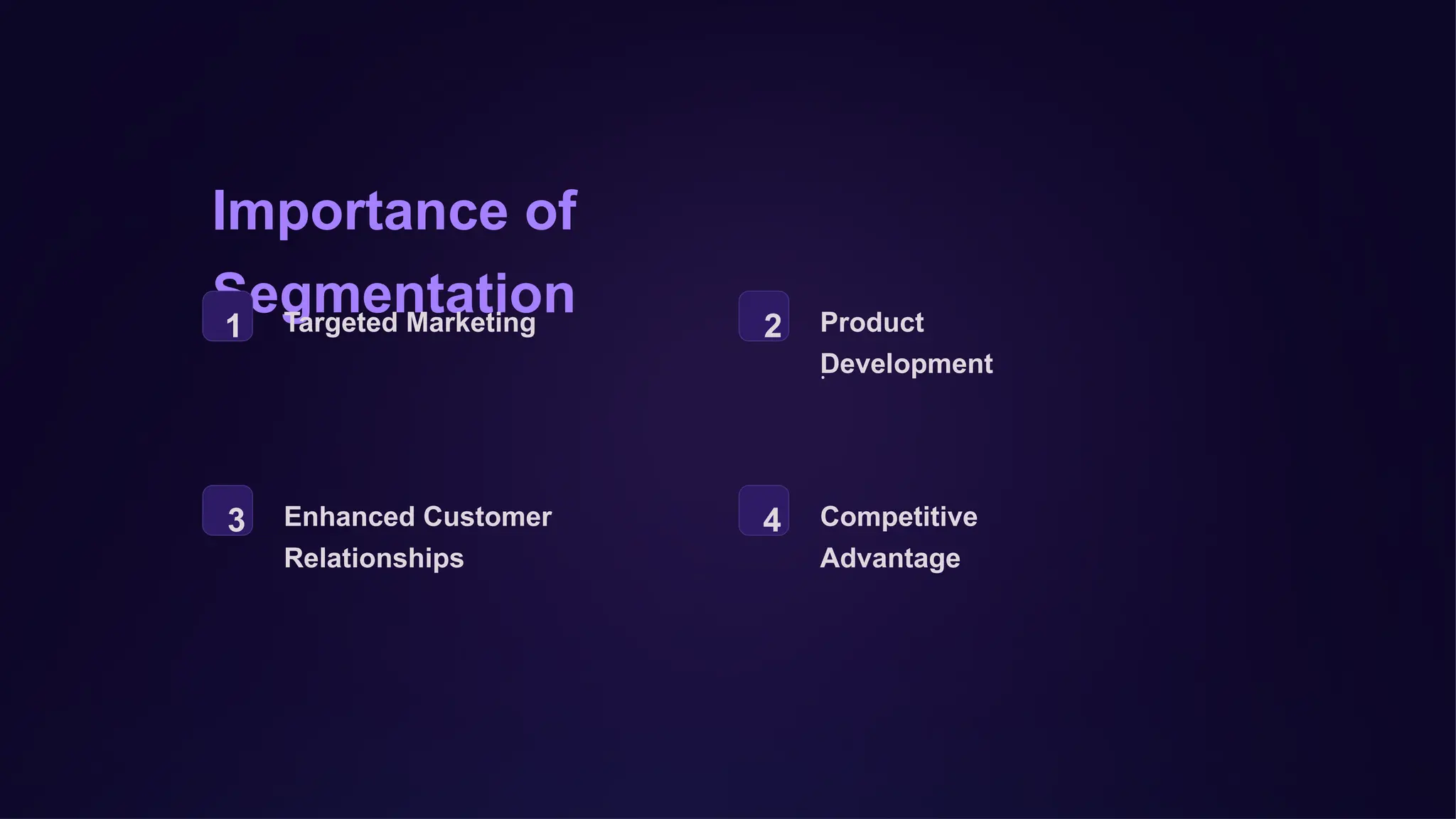
Importance of
Segmentation
1 Targeted Marketing 2 Product
Development
.
3 Enhanced Customer
Relationships
4 Competitive
Advantage
Bases for Segmenting a Consumer
Market
To segment a market one must find significant variations amongst the customer . These distinction
may be based on a number of variables or “ segmentation bases
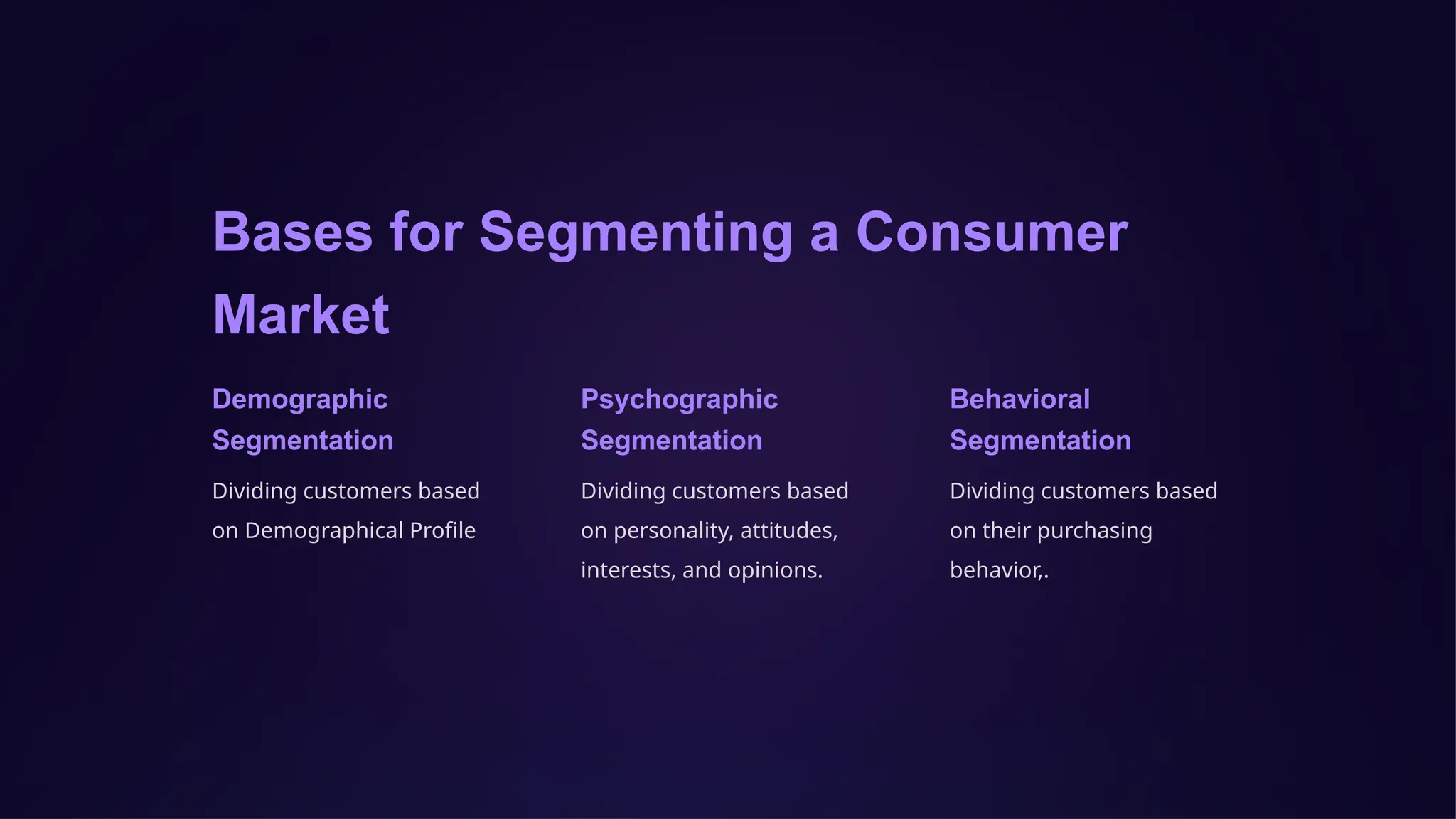
Bases for Segmenting a Consumer
Market
Demographic
Segmentation
Dividing customers based
on Demographical Profile
Psychographic
Segmentation
Dividing customers based
on personality, attitudes,
interests, and opinions.
Behavioral
Segmentation
Dividing customers based
on their purchasing
behavior,.
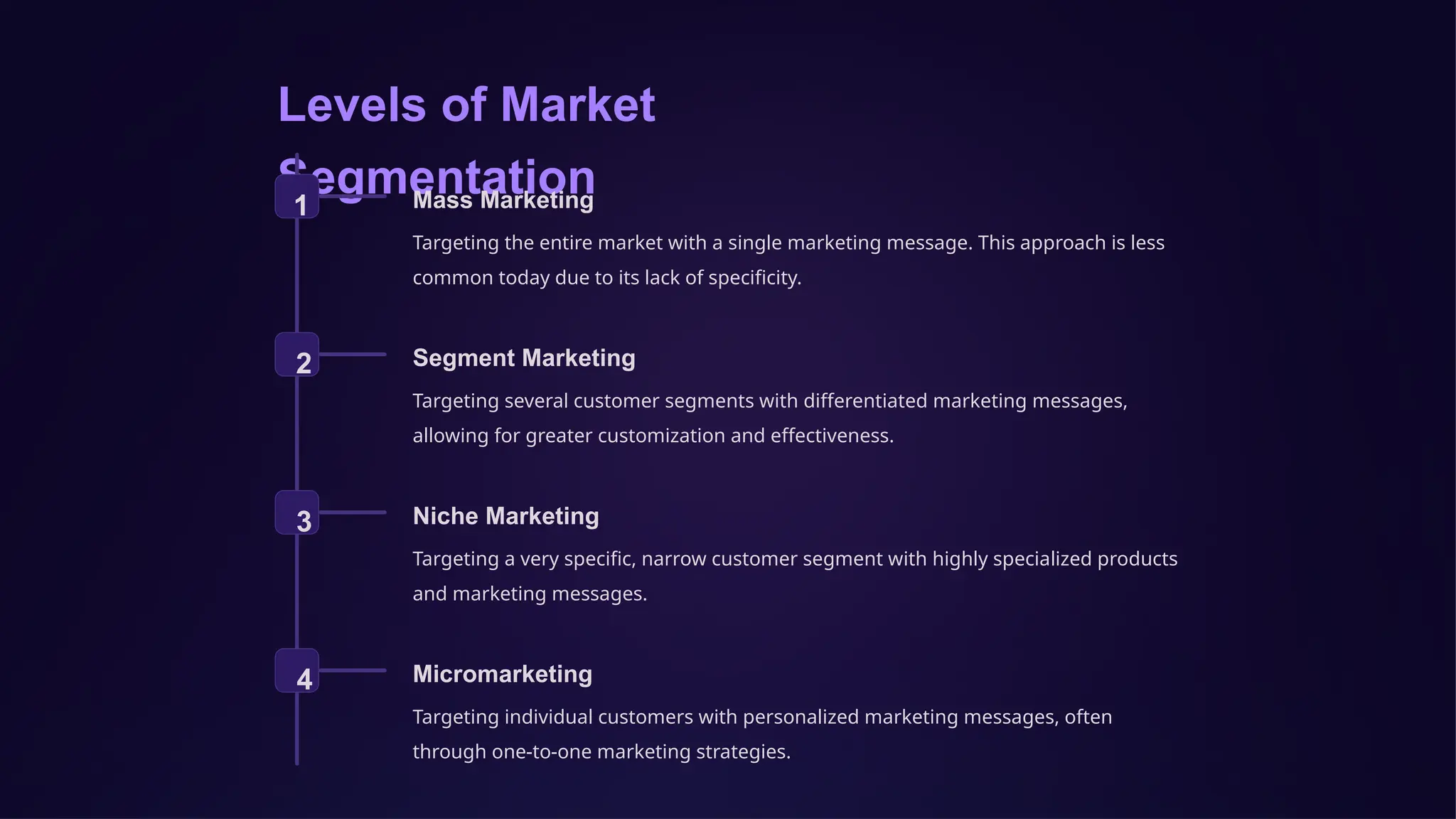
Levels of Market
Segmentation
1 Mass Marketing
Targeting the entire market with a single marketing message. This approach is less
common today due to its lack of specificity.
2 Segment Marketing
Targeting several customer segments with differentiated marketing messages,
allowing for greater customization and effectiveness.
3 Niche Marketing
Targeting a very specific, narrow customer segment with highly specialized products
and marketing messages.
4 Micromarketing
Targeting individual customers with personalized marketing messages, often
through one-to-one marketing strategies.
Benefits of Market
Segments
Increased
Efficiency
Improved Customer
Satisfaction
.
Enhanced Competitive
Advantage
Data-Driven
Insights
.
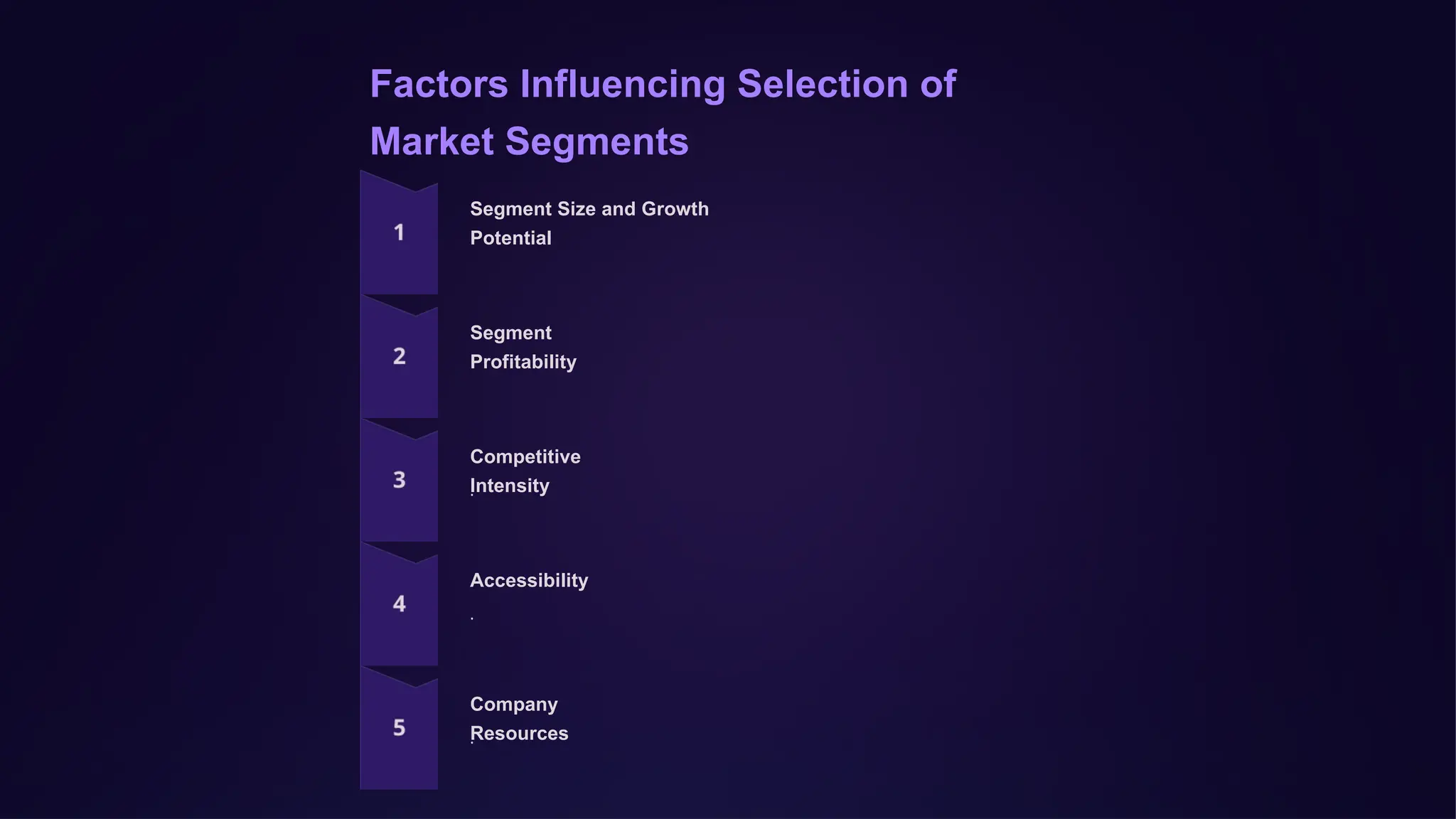
Factors Influencing Selection of
Market Segments
Segment Size and Growth
Potential
Segment
Profitability
Competitive
Intensity
.
Accessibility
.
Company
Resources
.
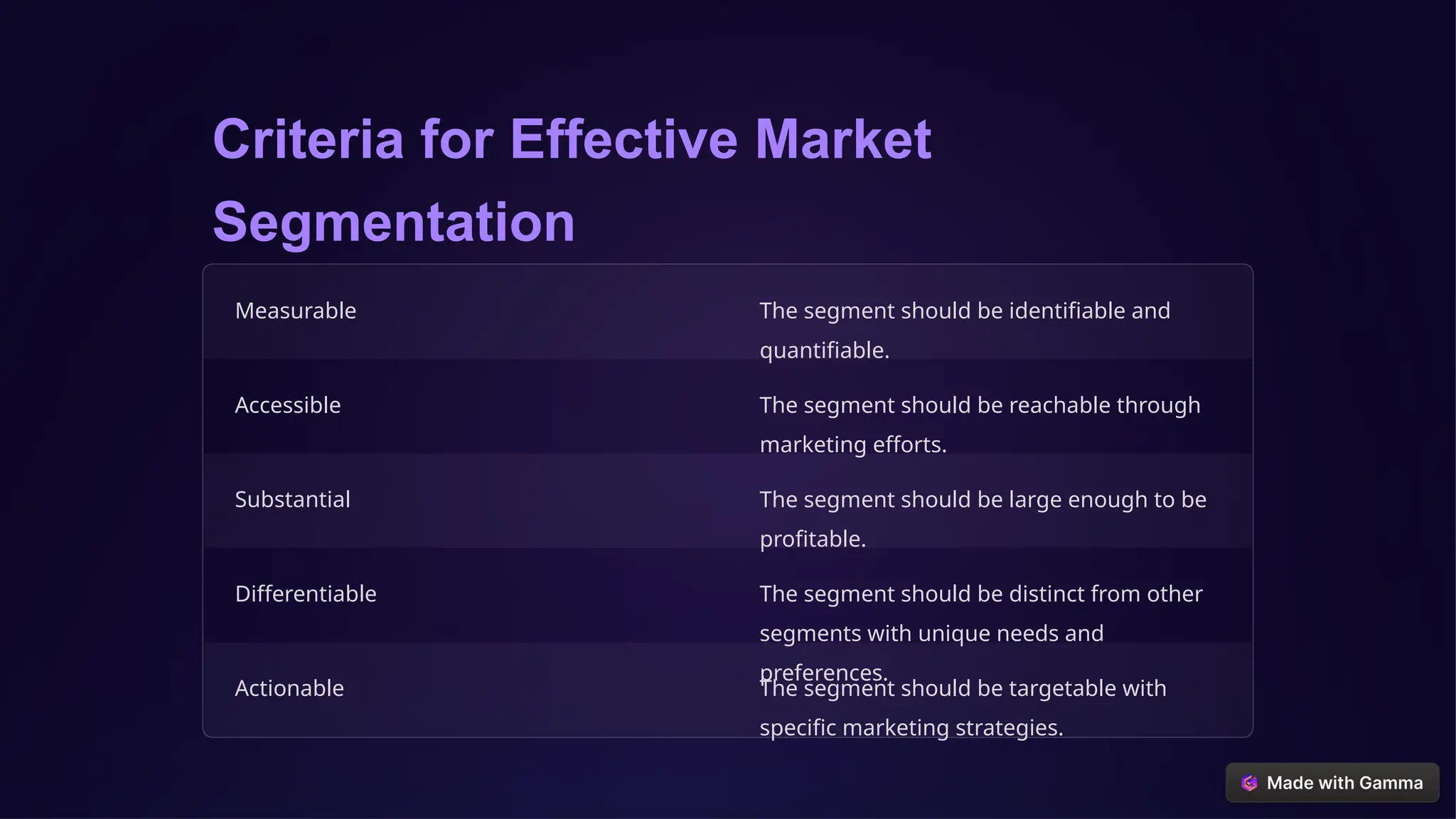
Criteria for Effective Market
Segmentation
Measurable The segment should be identifiable and
quantifiable.
Accessible The segment should be reachable through
marketing efforts.
Substantial The segment should be large enough to be
profitable.
Differentiable The segment should be distinct from other
segments with unique needs and
preferences.
Actionable The segment should be targetable with
specific marketing strategies.

market segmentation and benefits of market segmentation

  • 1.
    Market Segmentation S.DHIVYA ASSISTANT PROFESSOR DEPARTMENTOF COMMERCE SRM INSTITUITION OF SCIENCE AND TECHONOLOGY RAMAPURAM CHENNAI
  • 2.
    Market Segmentation Market segmentation isthe process of dividing a large market into smaller groups of consumers who share similar characteristics. The success of business depends upon market segmentation.
  • 3.
    Importance of Segmentation 1 TargetedMarketing 2 Product Development . 3 Enhanced Customer Relationships 4 Competitive Advantage
  • 4.
    Bases for Segmentinga Consumer Market To segment a market one must find significant variations amongst the customer . These distinction may be based on a number of variables or “ segmentation bases
  • 5.
    Bases for Segmentinga Consumer Market Demographic Segmentation Dividing customers based on Demographical Profile Psychographic Segmentation Dividing customers based on personality, attitudes, interests, and opinions. Behavioral Segmentation Dividing customers based on their purchasing behavior,.
  • 6.
    Levels of Market Segmentation 1Mass Marketing Targeting the entire market with a single marketing message. This approach is less common today due to its lack of specificity. 2 Segment Marketing Targeting several customer segments with differentiated marketing messages, allowing for greater customization and effectiveness. 3 Niche Marketing Targeting a very specific, narrow customer segment with highly specialized products and marketing messages. 4 Micromarketing Targeting individual customers with personalized marketing messages, often through one-to-one marketing strategies.
  • 7.
    Benefits of Market Segments Increased Efficiency ImprovedCustomer Satisfaction . Enhanced Competitive Advantage Data-Driven Insights .
  • 8.
    Factors Influencing Selectionof Market Segments Segment Size and Growth Potential Segment Profitability Competitive Intensity . Accessibility . Company Resources .
  • 9.
    Criteria for EffectiveMarket Segmentation Measurable The segment should be identifiable and quantifiable. Accessible The segment should be reachable through marketing efforts. Substantial The segment should be large enough to be profitable. Differentiable The segment should be distinct from other segments with unique needs and preferences. Actionable The segment should be targetable with specific marketing strategies.