Market Driven Research Towards Creativity, Innovation and the Marketplace Mohd. Murray Hunter
Introduction Traditionally Research has been: ●   Single disciplinary ●  Followed personal interests of researchers ●  Research output objectives: ► a paper ► a conference presentation ●  Not part of any strategic research plan
Researchers’ Environment Teaching commitments Intellectual and market isolation Research driven by need of funding Little expectation other than ‘traditional research output’ ‘ Lukewarm’ supportive environment Something that is expected
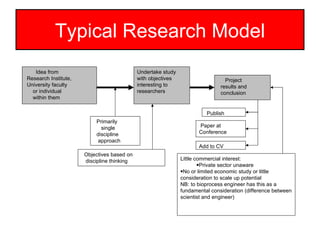
Typical Research Model Idea from  Research Institute,  University faculty  or individual  within them Undertake study with objectives interesting to researchers Primarily  single  discipline  approach Objectives based on  discipline thinking Project  results and  conclusion Publish Paper at Conference Add to CV Little commercial interest: Private sector unaware No or limited economic study or little consideration to scale up potential NB: to bioprocess engineer has this as a fundamental consideration (difference between scientist and engineer)
New Expectations Market driven Collaborative and interdisciplinary Industry partner R&D&D  or R&D&C&C National Responsibility (driver of economic growth) Bias towards applied research Commercialisation is the desired output
Problems Associated with Commercialisation Market Technology takers Legal Institutional Technology Other
Market Problems Failure of invention to meet market needs Small size of target market Lower price than expected Unable to gain distribution Lack of market research
Technology Taker Problems Lack of willingness of companies to take up technology Disagreements on terms and conditions of technology transfer Perceived complexity of technology and risk Limited human resources on the part of companies to put time into implementing the new technology or launching the product Not familiar with industry Financially weak Returns not attractive enough High capital expenditure not worth the risk Limited distribution capability
Legal Problems Lack of Clear and clean patent ownership Government regulations Legal costs Due diligence and burden of risk License exclusivity  Long period of time for patent grant
Institutional Problems Too many people to deal with at the university or research institute Low priority by university administrators to allocate resources for patents, contract research, consultancy, technology transfer and education services High cost of licensing Post license technical support offered by university Researcher leaves institution Researchers too many projects (time constraint) Lack of expertise in commercialisation unit
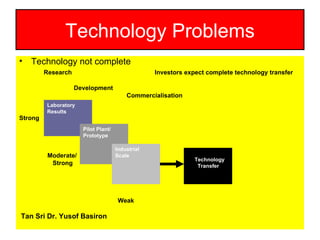
Technology Problems Technology not complete  Research  Investors expect complete technology transfer Development Commercialisation Strong Moderate/ Strong  Weak  Tan Sri Dr. Yusof Basiron   Laboratory Results Pilot Plant/ Prototype Industrial  Scale Technology  Transfer
Other Problems Unreliable financial estimates Rely on Government grant that never comes Poor follow up
The Elements of a Successful Research Cluster 1. A creative environment for  motivation and productivity 2. Innovation to develop and screen  ideas  3. A strategic approach to be  relevant to the marketplace
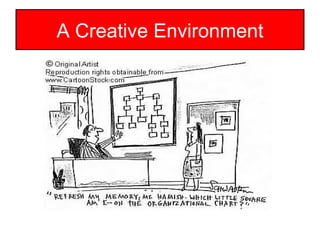
A Creative Environment
A Creative Person enthusiastic, risk taker, can think both serially and laterally, good at assessing opportunities, friendly, has good technical know-how, able to access what he or she doesn’t know, broad vision, an eye for detail, strong motivation to overcome hurdles, can give honest assessments and is aware of their personal strengths and weaknesses
University Organisation  Hierarchical Process orientated Procedurised Departmentalised Strong “conformity” values Social goals verses performance goals THIS IS AN EXCELLENT ORGANISATION DESIGN FOR A TEACHING INSTITUTION
Conflict Between Organisational Design and the Creative Individual  Hierarchical design excellent for time and motion activities – In macro terms a teaching organisation is a time and motion logistical exercise An organic organisational structure has been found to be much more supportive of a creative environment
 
Desired Characteristics of a Research Cluster (Matching RM9 Desired Output Objectives) Strong Science Base  Leading research organisations: University departments, hospitals/medical centres and schools, charities, critical mass of researchers, world leading scientist(s)  Comment: Remote from us Entrepreneurial Culture  Commercial awareness and entrepreneurship in universities and research institutes, role models and recognition of entrepreneurs, second generation entrepreneurs. Comment: Need to create   Growing Company Base  Thriving spin-out and start up companies, more mature role model companies.   Comment: We are at a great disadvantage, have to work hard on this issue
Ability to Attract Key Staff  Critical mass of employment opportunities, image/reputation as biotechnology cluster, attractive place to live.  Comment: Have to compensate through strong collaboration Premises and Infrastructure  Incubators available close to research institutes, premises with wet labs and flexible leasing arrangements, space to expand, good transport links, motorways, rail, international airport.  Comment: Time may improve this Availability of Finance  Grant agencies, Venture capitalists, business angels   Comments: Have to be very active in this area Desired Characteristics of a Research Cluster (cont..)
Business Support Services and Large Companies  Specialist business, legal, patent, recruitment, property advisors, large companies in related sectors (healthcare, agrichemical, chemical, food processing)  Comment: A disadvantage, have to work hard on this Skilled Workforce  Skilled workforce, training courses at all levels.  Comment: Require coordinated programs Effective Networking  Shared aspirations to be a cluster: regional trade associations, shared equipment and infrastructure, frequent collaborations .  Comments: Need to work hard Supportive Policy Environment  National and sector innovation support policies, proportionate fiscal and regulatory frameworks, support from RDA’s and other economic development agencies, sympathetic planning authorities.  Comment: Positive retric there Desired Characteristics of a Research Cluster (cont..)
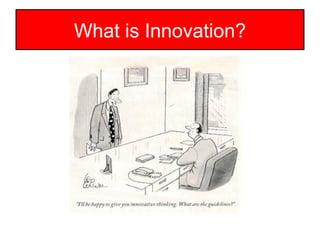
What is Innovation?
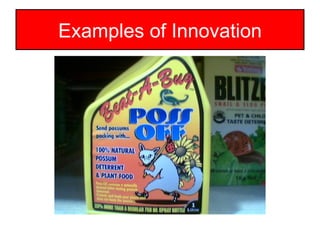
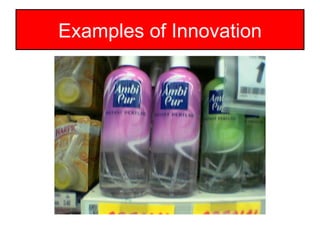
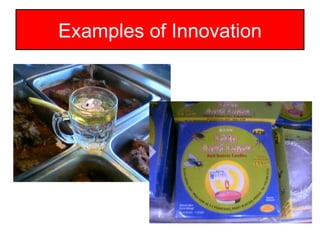
Examples of Innovation
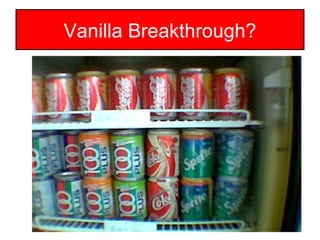
Vanilla Breakthrough?
Cationic Breakthrough?
To soap or not to soap?
Is this a breakthrough or not?
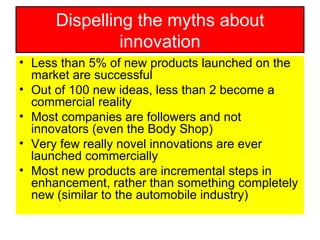
Dispelling the myths about innovation Less than 5% of new products launched on the market are successful Out of 100 new ideas, less than 2 become a commercial reality Most companies are followers and not innovators (even the Body Shop) Very few really novel innovations are ever launched commercially Most new products are incremental steps in enhancement, rather than something completely new (similar to the automobile industry)
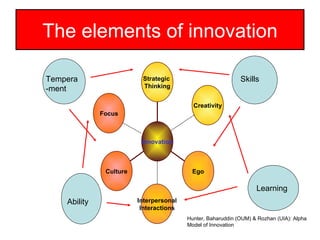
The elements of innovation Creativity Interpersonal Interactions Hunter, Baharuddin (OUM) & Rozhan (UIA): Alpha Model of Innovation  Tempera -ment Ability Skills Learning Culture Ego Strategic  Thinking Innovation Focus
Focus Time Identified Idea Action Hunter, Baharuddin (OUM) & Rozhan (UIA): Alpha Model of Innovation
Strategic Thinking Strategic Thinking Orientation towards gaining benefits Orientation towards effectiveness Orientation towards resource sufficiency Vision and foresight Hunter, Baharuddin (OUM) & Rozhan (UIA): Alpha Model of Innovation
Creativity Lateral thinking Serial Thinking Group Education Culture Strategic Thinking Personality Hunter, Baharuddin (OUM) & Rozhan (UIA): Alpha Model of Innovation  Solutions Opportunities Ideas Creativity
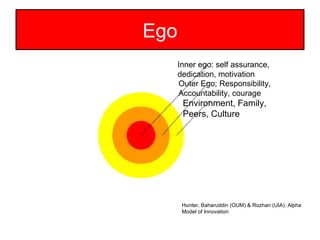
Ego Environment, Family, Peers, Culture Outer Ego; Responsibility, Accountability, courage Inner ego: self assurance,  dedication, motivation Hunter, Baharuddin (OUM) & Rozhan (UIA): Alpha Model of Innovation
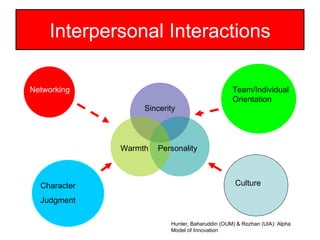
Interpersonal Interactions Sincerity Warmth Personality Networking Team/Individual Orientation Character  Judgment Culture Hunter, Baharuddin (OUM) & Rozhan (UIA): Alpha Model of Innovation
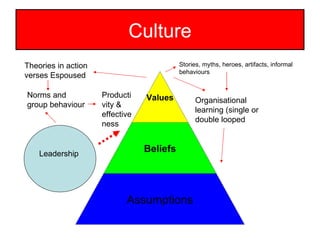
Culture Leadership Theories in action verses Espoused Norms and group behaviour Organisational learning (single or double looped Productivity & effectiveness Stories, myths, heroes, artifacts, informal behaviours Values Beliefs Assumptions
Effect of Factors on Innovation Variable Absent Extreme Focus Random Tunnel vision Strategic Thinking Switched off Unfocused Creativity Unimaginative Over-imaginative, lose sight of big picture Ego Purposelessness  Self-deluded Interpersonal Relationships Individualistic and independent Hesitent to take responsibility Culture Self centered and moraless Fanatical
Optimum Innovation Innovation Component Qualities (at mean spectrum) Focus Have control of the situation Put the project first Strategic Thinking Able to spot and work towards exploiting the opportunity Able to secure resources (beg, borrow or steal) Creativity Able to create both laterally and serially Spot and exploit opportunities Ego Inner need to make a difference Able to take risks Interpersonal relationships Able to network effectively Culture Spot and exploit causes Create social capital
Factor Synergy Ideas  Solution  Opportunities  Screen  Realisation Spots  Evaluates  Selects  Targets Creativity Strategic Thinking Focus
The Innovation of the Eagle Idea - Food Scans Opportunities, Spots, Evaluates & Selects (resource choices) Targets Realises his catch Perfect Creativity, Strategic Thinking & Focus
A Strategic Approach to be Relevant to the Marketplace
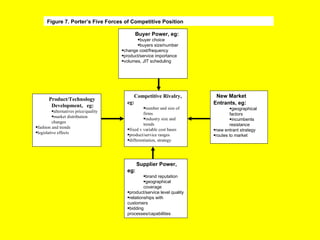
Buyer Power, eg: buyer choice buyers size/number change cost/frequency product/service importance volumes, JIT scheduling New Market Entrants, eg : geographical factors incumbents resistance new entrant strategy routes to market Competitive Rivalry, eg: number and size of firms industry size and trends fixed v variable cost bases product/service ranges differentiation, strategy Product/Technology  Development,  eg: alternatives price/quality  market distribution changes fashion and trends legislative effects Supplier Power, eg: brand reputation geographical coverage product/service level quality relationships with customers bidding processes/capabilities Figure 7. Porter’s Five Forces of Competitive Position
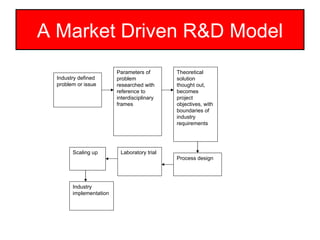
A Market Driven R&D Model Industry defined problem or issue Parameters of problem researched with reference to interdisciplinary frames Theoretical solution thought out, becomes project objectives, with boundaries of industry requirements Process design Laboratory trial Scaling up Industry implementation
Process   Engineering Electrical Engineering Sensors GMP Process  Manufacturing Environment & Occupational Safety Issues Market & Commercialisation Product  Development Refining of  Crude Extracts Extraction  Processing Cultivation Domestication Bio-  Prospecting Extraction Techniques Bio-Chemistry Analytical Chemistry Tissue Culture Agricultural Engineering Precision Farming Bio-Chemistry Processing Bio-Chemical Engineering Fractionation & Bio-Reactor Techno-Preneurship Figure 8. From Bio-Diversity to Laboratory to Market-Place
Beware of Becoming Dyfunctional Identification of Active ingredient in  plant Identification of  Active ingredient in  plant Preliminary ASSAY Preliminary ASSAY Cultivation, harvesting, extraction, refining, stabilisation, etc Cultivation, harvesting, extraction, refining, stabilisation, etc Trials in ‘made up’ formulations, eg shampoo, cream Trials in ‘made up’ formulations, eg shampoo, cream Go to market and sell product to customers, supermarkets, direct selling, distributors, etc. Find a distributor Seek advice on market potential Collaborate Collaborate Various trials and assays Collaborate Negotiate Agreements (farming, processing, marketing) Product Registration To international market as  a raw material fine  chemical Little IP Generated Most likely to stay in domestic market IP Generated that is transferable for  Value Potentially has a global market Figure 4. Two Pathways for the Commercialisation of Research (example for a plant extract) Farm to Consumer  As an Intermediate Product
Conclusions First and foremost: Industry collaboration Principal of research wide, focus narrow: Inter institutional collaboration Develop the correct organisational structure for maximum creativity Seek incremental advances in research to reduce risk and shorten lead times for research output generation Become a strategic thinker and scan the environment Plan your expected milestones and outcomes A techno-entrepreneurship and commercialisation component of the cluster
Techno-entrepreneurship & Commercialisation Component to carry out specific research regarding the specialist area of engineering techno-entrepreneurship to support KUKUM’s role as an engineering university, Post Graduate techno-entrepreneurship research programs (i.e., engineering background who want to undertake post graduate research in technology commercialisation, issues with technology commercialisation and technology management)
to run seminars and workshops on techno-entrepreneurship for the cluster, schools and university, to provide input into core entrepreneurship undergraduate programs as a resource to PKKK, to liaise and assist other parts of the cluster develop entrepreneurship and commercialisation of their research (interdisciplinary) Techno-entrepreneurship & Commercialisation Component
to assist in funding and finding stakeholders for start-ups from the cluster techno-entrepreneurship policy development centre to develop seminars for target audiences to enhance KUKUM’s expertise image as an techno-engineering institution & source of revenue Techno-entrepreneurship & Commercialisation Component
to carry out the incubator function as required for grants and IPTA policy to act as an entrepreneurial think tank Techno-entrepreneurship & Commercialisation Component
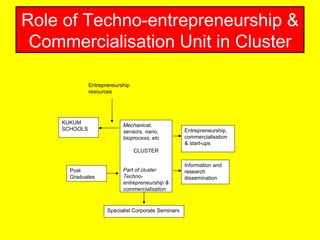
Role of Techno-entrepreneurship & Commercialisation Unit in Cluster Mechanical, sensors, nano, bioprocess, etc CLUSTER Part of cluster Techno-entrepreneurship & commercialisation KUKUM SCHOOLS Entrepreneurship resources Post Graduates Entrepreneurship, commercialisation & start-ups Information and research dissemination Specialist Corporate Seminars
Thank You

Market driven research

  • 1.
    Market Driven ResearchTowards Creativity, Innovation and the Marketplace Mohd. Murray Hunter
  • 2.
    Introduction Traditionally Researchhas been: ● Single disciplinary ● Followed personal interests of researchers ● Research output objectives: ► a paper ► a conference presentation ● Not part of any strategic research plan
  • 3.
    Researchers’ Environment Teachingcommitments Intellectual and market isolation Research driven by need of funding Little expectation other than ‘traditional research output’ ‘ Lukewarm’ supportive environment Something that is expected
  • 4.
    Typical Research ModelIdea from Research Institute, University faculty or individual within them Undertake study with objectives interesting to researchers Primarily single discipline approach Objectives based on discipline thinking Project results and conclusion Publish Paper at Conference Add to CV Little commercial interest: Private sector unaware No or limited economic study or little consideration to scale up potential NB: to bioprocess engineer has this as a fundamental consideration (difference between scientist and engineer)
  • 5.
    New Expectations Marketdriven Collaborative and interdisciplinary Industry partner R&D&D or R&D&C&C National Responsibility (driver of economic growth) Bias towards applied research Commercialisation is the desired output
  • 6.
    Problems Associated withCommercialisation Market Technology takers Legal Institutional Technology Other
  • 7.
    Market Problems Failureof invention to meet market needs Small size of target market Lower price than expected Unable to gain distribution Lack of market research
  • 8.
    Technology Taker ProblemsLack of willingness of companies to take up technology Disagreements on terms and conditions of technology transfer Perceived complexity of technology and risk Limited human resources on the part of companies to put time into implementing the new technology or launching the product Not familiar with industry Financially weak Returns not attractive enough High capital expenditure not worth the risk Limited distribution capability
  • 9.
    Legal Problems Lackof Clear and clean patent ownership Government regulations Legal costs Due diligence and burden of risk License exclusivity Long period of time for patent grant
  • 10.
    Institutional Problems Toomany people to deal with at the university or research institute Low priority by university administrators to allocate resources for patents, contract research, consultancy, technology transfer and education services High cost of licensing Post license technical support offered by university Researcher leaves institution Researchers too many projects (time constraint) Lack of expertise in commercialisation unit
  • 11.
    Technology Problems Technologynot complete Research Investors expect complete technology transfer Development Commercialisation Strong Moderate/ Strong Weak Tan Sri Dr. Yusof Basiron Laboratory Results Pilot Plant/ Prototype Industrial Scale Technology Transfer
  • 12.
    Other Problems Unreliablefinancial estimates Rely on Government grant that never comes Poor follow up
  • 13.
    The Elements ofa Successful Research Cluster 1. A creative environment for motivation and productivity 2. Innovation to develop and screen ideas 3. A strategic approach to be relevant to the marketplace
  • 14.
  • 15.
    A Creative Personenthusiastic, risk taker, can think both serially and laterally, good at assessing opportunities, friendly, has good technical know-how, able to access what he or she doesn’t know, broad vision, an eye for detail, strong motivation to overcome hurdles, can give honest assessments and is aware of their personal strengths and weaknesses
  • 16.
    University Organisation Hierarchical Process orientated Procedurised Departmentalised Strong “conformity” values Social goals verses performance goals THIS IS AN EXCELLENT ORGANISATION DESIGN FOR A TEACHING INSTITUTION
  • 17.
    Conflict Between OrganisationalDesign and the Creative Individual Hierarchical design excellent for time and motion activities – In macro terms a teaching organisation is a time and motion logistical exercise An organic organisational structure has been found to be much more supportive of a creative environment
  • 18.
  • 19.
    Desired Characteristics ofa Research Cluster (Matching RM9 Desired Output Objectives) Strong Science Base Leading research organisations: University departments, hospitals/medical centres and schools, charities, critical mass of researchers, world leading scientist(s) Comment: Remote from us Entrepreneurial Culture Commercial awareness and entrepreneurship in universities and research institutes, role models and recognition of entrepreneurs, second generation entrepreneurs. Comment: Need to create Growing Company Base Thriving spin-out and start up companies, more mature role model companies. Comment: We are at a great disadvantage, have to work hard on this issue
  • 20.
    Ability to AttractKey Staff Critical mass of employment opportunities, image/reputation as biotechnology cluster, attractive place to live. Comment: Have to compensate through strong collaboration Premises and Infrastructure Incubators available close to research institutes, premises with wet labs and flexible leasing arrangements, space to expand, good transport links, motorways, rail, international airport. Comment: Time may improve this Availability of Finance Grant agencies, Venture capitalists, business angels Comments: Have to be very active in this area Desired Characteristics of a Research Cluster (cont..)
  • 21.
    Business Support Servicesand Large Companies Specialist business, legal, patent, recruitment, property advisors, large companies in related sectors (healthcare, agrichemical, chemical, food processing) Comment: A disadvantage, have to work hard on this Skilled Workforce Skilled workforce, training courses at all levels. Comment: Require coordinated programs Effective Networking Shared aspirations to be a cluster: regional trade associations, shared equipment and infrastructure, frequent collaborations . Comments: Need to work hard Supportive Policy Environment National and sector innovation support policies, proportionate fiscal and regulatory frameworks, support from RDA’s and other economic development agencies, sympathetic planning authorities. Comment: Positive retric there Desired Characteristics of a Research Cluster (cont..)
  • 22.
  • 23.
  • 24.
  • 25.
  • 26.
  • 27.
  • 28.
  • 29.
  • 30.
  • 31.
  • 32.
  • 33.
  • 34.
    To soap ornot to soap?
  • 35.
    Is this abreakthrough or not?
  • 36.
    Dispelling the mythsabout innovation Less than 5% of new products launched on the market are successful Out of 100 new ideas, less than 2 become a commercial reality Most companies are followers and not innovators (even the Body Shop) Very few really novel innovations are ever launched commercially Most new products are incremental steps in enhancement, rather than something completely new (similar to the automobile industry)
  • 37.
    The elements ofinnovation Creativity Interpersonal Interactions Hunter, Baharuddin (OUM) & Rozhan (UIA): Alpha Model of Innovation Tempera -ment Ability Skills Learning Culture Ego Strategic Thinking Innovation Focus
  • 38.
    Focus Time IdentifiedIdea Action Hunter, Baharuddin (OUM) & Rozhan (UIA): Alpha Model of Innovation
  • 39.
    Strategic Thinking StrategicThinking Orientation towards gaining benefits Orientation towards effectiveness Orientation towards resource sufficiency Vision and foresight Hunter, Baharuddin (OUM) & Rozhan (UIA): Alpha Model of Innovation
  • 40.
    Creativity Lateral thinkingSerial Thinking Group Education Culture Strategic Thinking Personality Hunter, Baharuddin (OUM) & Rozhan (UIA): Alpha Model of Innovation Solutions Opportunities Ideas Creativity
  • 41.
    Ego Environment, Family,Peers, Culture Outer Ego; Responsibility, Accountability, courage Inner ego: self assurance, dedication, motivation Hunter, Baharuddin (OUM) & Rozhan (UIA): Alpha Model of Innovation
  • 42.
    Interpersonal Interactions SincerityWarmth Personality Networking Team/Individual Orientation Character Judgment Culture Hunter, Baharuddin (OUM) & Rozhan (UIA): Alpha Model of Innovation
  • 43.
    Culture Leadership Theoriesin action verses Espoused Norms and group behaviour Organisational learning (single or double looped Productivity & effectiveness Stories, myths, heroes, artifacts, informal behaviours Values Beliefs Assumptions
  • 44.
    Effect of Factorson Innovation Variable Absent Extreme Focus Random Tunnel vision Strategic Thinking Switched off Unfocused Creativity Unimaginative Over-imaginative, lose sight of big picture Ego Purposelessness Self-deluded Interpersonal Relationships Individualistic and independent Hesitent to take responsibility Culture Self centered and moraless Fanatical
  • 45.
    Optimum Innovation InnovationComponent Qualities (at mean spectrum) Focus Have control of the situation Put the project first Strategic Thinking Able to spot and work towards exploiting the opportunity Able to secure resources (beg, borrow or steal) Creativity Able to create both laterally and serially Spot and exploit opportunities Ego Inner need to make a difference Able to take risks Interpersonal relationships Able to network effectively Culture Spot and exploit causes Create social capital
  • 46.
    Factor Synergy Ideas Solution Opportunities Screen Realisation Spots Evaluates Selects Targets Creativity Strategic Thinking Focus
  • 47.
    The Innovation ofthe Eagle Idea - Food Scans Opportunities, Spots, Evaluates & Selects (resource choices) Targets Realises his catch Perfect Creativity, Strategic Thinking & Focus
  • 48.
    A Strategic Approachto be Relevant to the Marketplace
  • 49.
    Buyer Power, eg:buyer choice buyers size/number change cost/frequency product/service importance volumes, JIT scheduling New Market Entrants, eg : geographical factors incumbents resistance new entrant strategy routes to market Competitive Rivalry, eg: number and size of firms industry size and trends fixed v variable cost bases product/service ranges differentiation, strategy Product/Technology Development, eg: alternatives price/quality market distribution changes fashion and trends legislative effects Supplier Power, eg: brand reputation geographical coverage product/service level quality relationships with customers bidding processes/capabilities Figure 7. Porter’s Five Forces of Competitive Position
  • 50.
    A Market DrivenR&D Model Industry defined problem or issue Parameters of problem researched with reference to interdisciplinary frames Theoretical solution thought out, becomes project objectives, with boundaries of industry requirements Process design Laboratory trial Scaling up Industry implementation
  • 51.
    Process Engineering Electrical Engineering Sensors GMP Process Manufacturing Environment & Occupational Safety Issues Market & Commercialisation Product Development Refining of Crude Extracts Extraction Processing Cultivation Domestication Bio- Prospecting Extraction Techniques Bio-Chemistry Analytical Chemistry Tissue Culture Agricultural Engineering Precision Farming Bio-Chemistry Processing Bio-Chemical Engineering Fractionation & Bio-Reactor Techno-Preneurship Figure 8. From Bio-Diversity to Laboratory to Market-Place
  • 52.
    Beware of BecomingDyfunctional Identification of Active ingredient in plant Identification of Active ingredient in plant Preliminary ASSAY Preliminary ASSAY Cultivation, harvesting, extraction, refining, stabilisation, etc Cultivation, harvesting, extraction, refining, stabilisation, etc Trials in ‘made up’ formulations, eg shampoo, cream Trials in ‘made up’ formulations, eg shampoo, cream Go to market and sell product to customers, supermarkets, direct selling, distributors, etc. Find a distributor Seek advice on market potential Collaborate Collaborate Various trials and assays Collaborate Negotiate Agreements (farming, processing, marketing) Product Registration To international market as a raw material fine chemical Little IP Generated Most likely to stay in domestic market IP Generated that is transferable for Value Potentially has a global market Figure 4. Two Pathways for the Commercialisation of Research (example for a plant extract) Farm to Consumer As an Intermediate Product
  • 53.
    Conclusions First andforemost: Industry collaboration Principal of research wide, focus narrow: Inter institutional collaboration Develop the correct organisational structure for maximum creativity Seek incremental advances in research to reduce risk and shorten lead times for research output generation Become a strategic thinker and scan the environment Plan your expected milestones and outcomes A techno-entrepreneurship and commercialisation component of the cluster
  • 54.
    Techno-entrepreneurship & CommercialisationComponent to carry out specific research regarding the specialist area of engineering techno-entrepreneurship to support KUKUM’s role as an engineering university, Post Graduate techno-entrepreneurship research programs (i.e., engineering background who want to undertake post graduate research in technology commercialisation, issues with technology commercialisation and technology management)
  • 55.
    to run seminarsand workshops on techno-entrepreneurship for the cluster, schools and university, to provide input into core entrepreneurship undergraduate programs as a resource to PKKK, to liaise and assist other parts of the cluster develop entrepreneurship and commercialisation of their research (interdisciplinary) Techno-entrepreneurship & Commercialisation Component
  • 56.
    to assist infunding and finding stakeholders for start-ups from the cluster techno-entrepreneurship policy development centre to develop seminars for target audiences to enhance KUKUM’s expertise image as an techno-engineering institution & source of revenue Techno-entrepreneurship & Commercialisation Component
  • 57.
    to carry outthe incubator function as required for grants and IPTA policy to act as an entrepreneurial think tank Techno-entrepreneurship & Commercialisation Component
  • 58.
    Role of Techno-entrepreneurship& Commercialisation Unit in Cluster Mechanical, sensors, nano, bioprocess, etc CLUSTER Part of cluster Techno-entrepreneurship & commercialisation KUKUM SCHOOLS Entrepreneurship resources Post Graduates Entrepreneurship, commercialisation & start-ups Information and research dissemination Specialist Corporate Seminars
  • 59.