DEVELOPING AN
EFFECTIVE SOCIAL
MEDIA STRATEGY
& USING METRICS TO DRIVE RESULTS
JILL PIMENTEL
PROGRAM AND COMMUNICATIONS COORDINATOR
BROWN UNIVERSITY
SOCIAL MEDIA
REVOLUTION
• 53% of millennials would rather lose their sense of smell
than their technology
• By 2018 video will account for over 2/3 of mobile usage
• Grandparents are the fastest growing demographic on
Twitter
• The average person has a :07 attention span; the average
goldfish has :08
• The 4 P’s of Marketing have been replaced with the 4 C’s
of Digital Content
• Creating, Curating, Connecting, Culture
Source: Erik Qualman, Social Media Revolution 2015
https://www.youtube.com/watch?v=jottDMuLesU
WHY FOCUS SPECIFICALLY
ON SOCIAL MEDIA?
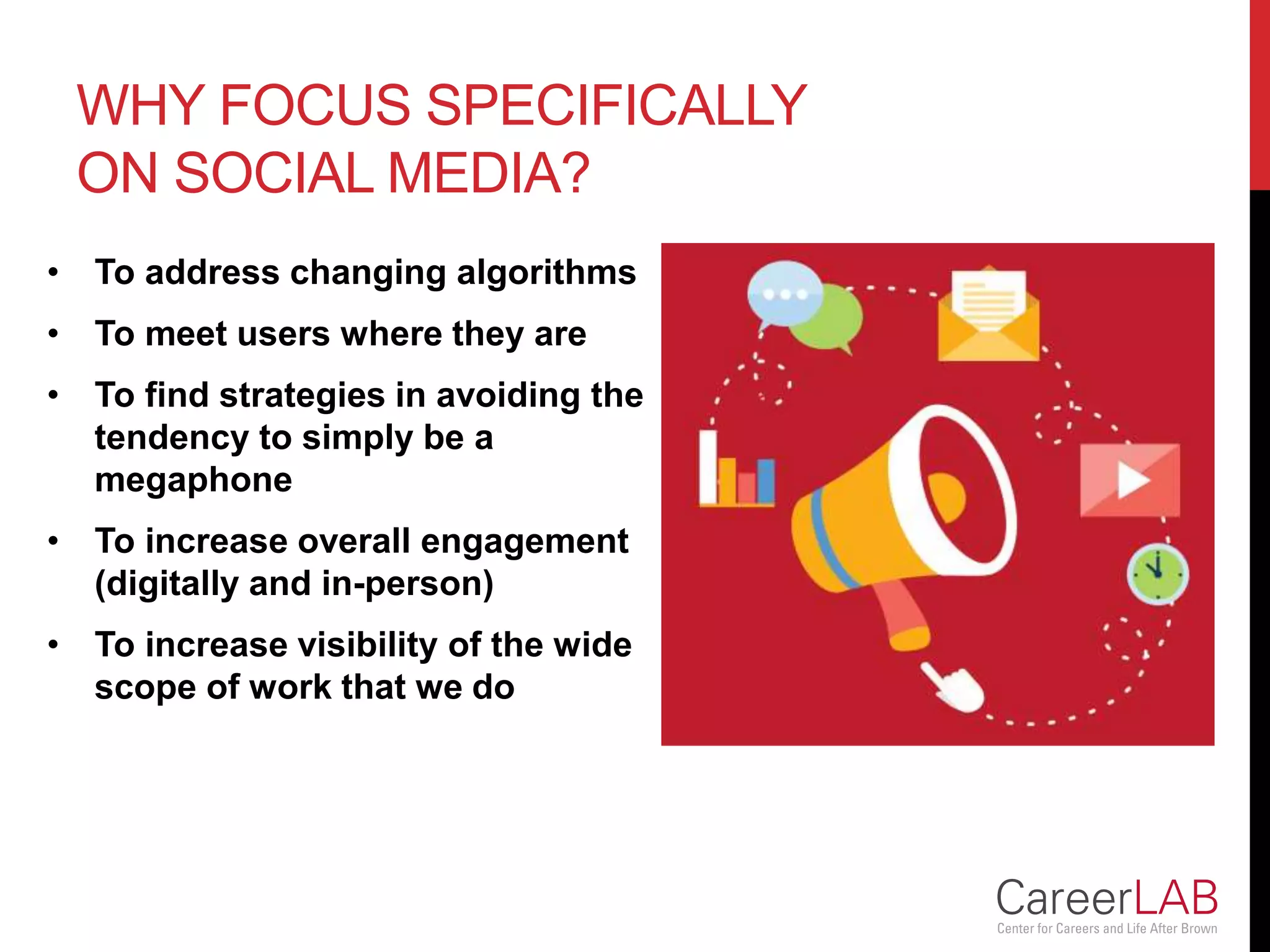
• To address changing algorithms
• To meet users where they are
• To find strategies in avoiding the
tendency to simply be a
megaphone
• To increase overall engagement
(digitally and in-person)
• To increase visibility of the wide
scope of work that we do
HOW WE PREVIOUSLY
MANAGED SOCIAL MEDIA
• Twitter: just jobs
• Facebook: everything (thanks to Hootsuite)
• Instagram: not yet used
HOW CAREERLAB
MANAGES SOCIAL MEDIA
• Team of Peer Career Advisors (PCAs) help to find and
generate content across channels
• PCAs split into teams based on interest
• Social Media Ambassador is the lead PCA and helps
strategize and create digital content
• Two video interns film and produce alumni spotlights and
event takeaways
• Editorial calendar and strategic processes for scheduling
posts
TWITTER
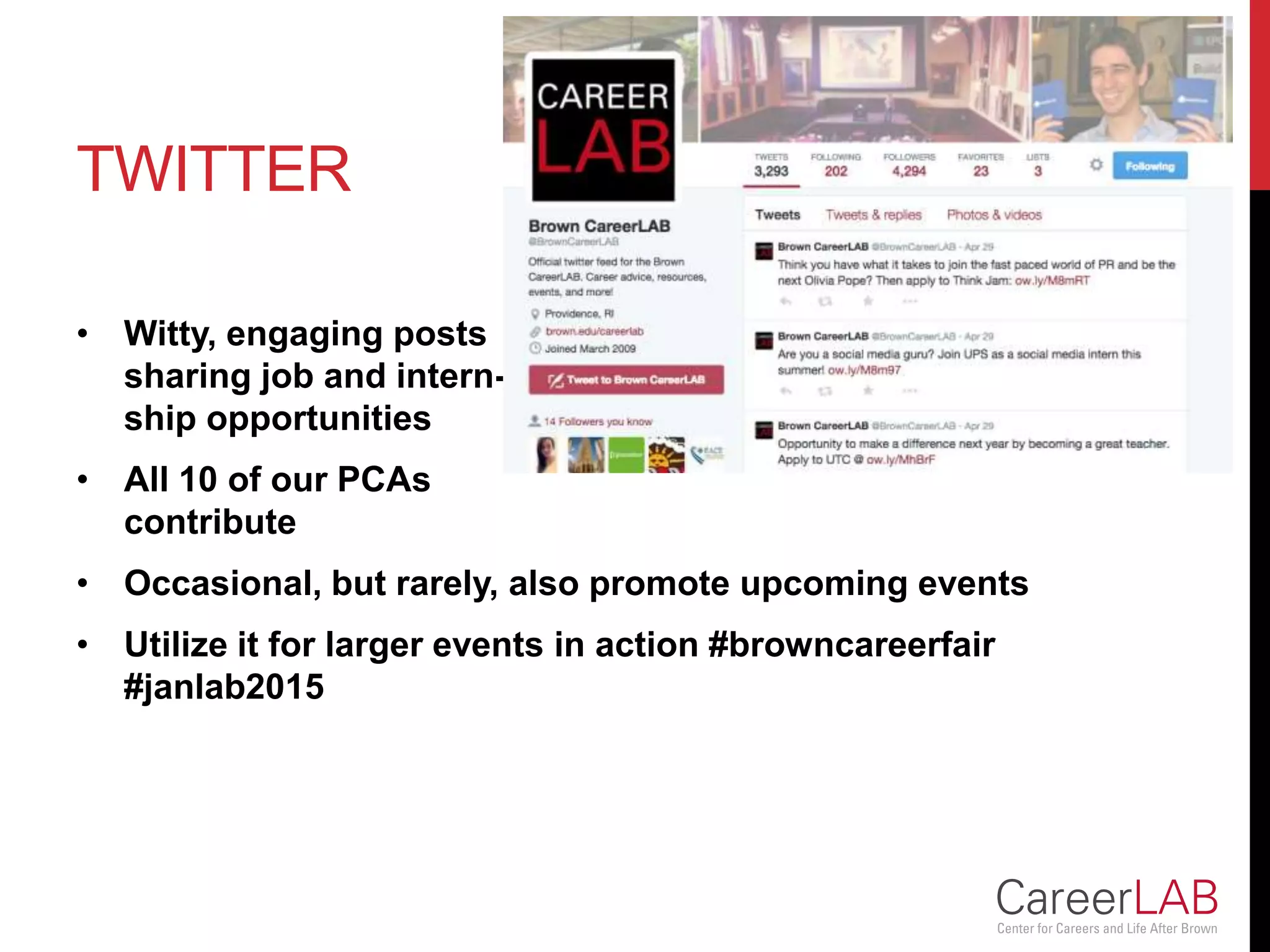
• Witty, engaging posts
sharing job and intern-
ship opportunities
• All 10 of our PCAs
contribute
• Occasional, but rarely, also promote upcoming events
• Utilize it for larger events in action #browncareerfair
#janlab2015
FACEBOOK
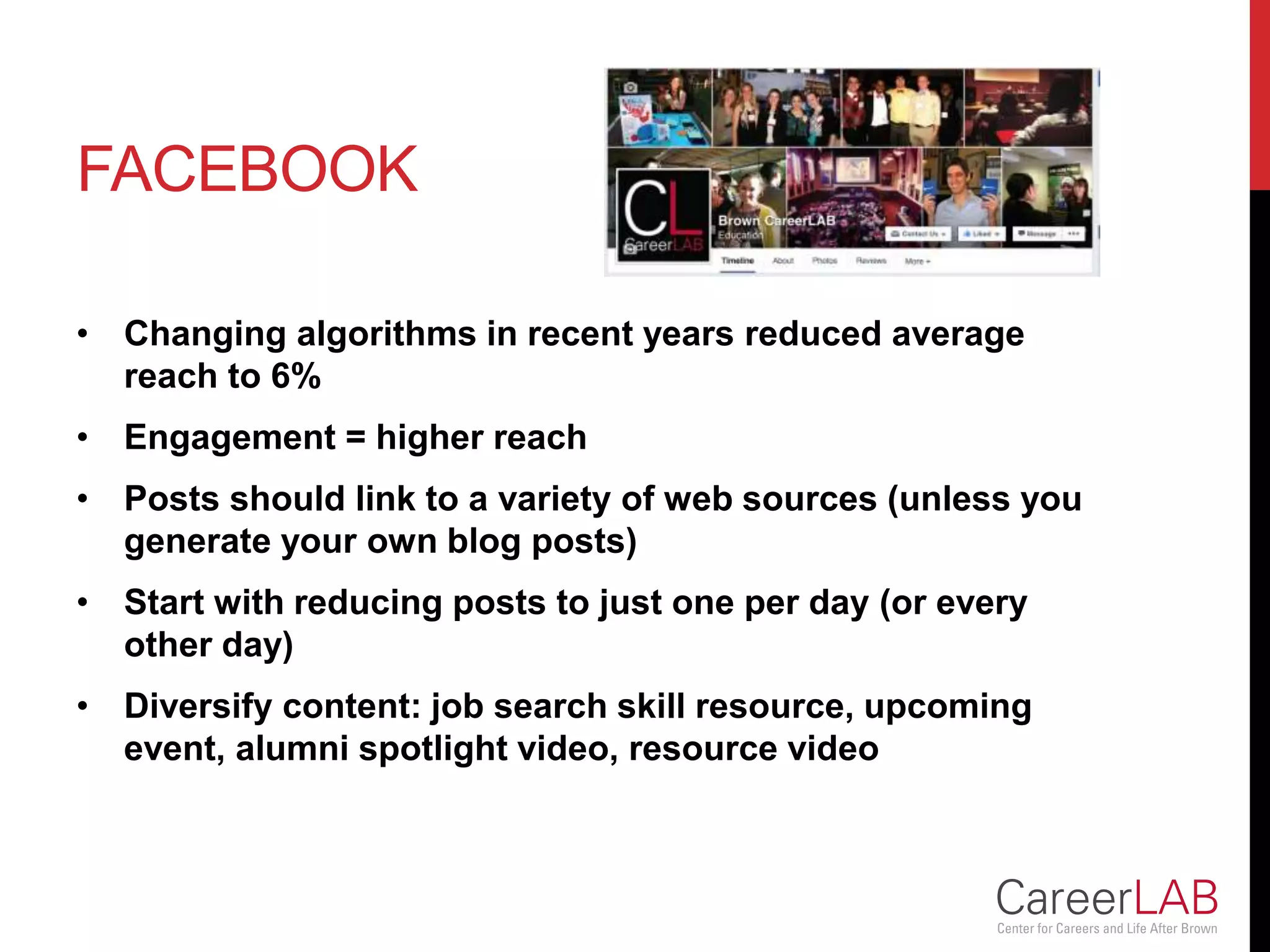
• Changing algorithms in recent years reduced average
reach to 6%
• Engagement = higher reach
• Posts should link to a variety of web sources (unless you
generate your own blog posts)
• Start with reducing posts to just one per day (or every
other day)
• Diversify content: job search skill resource, upcoming
event, alumni spotlight video, resource video
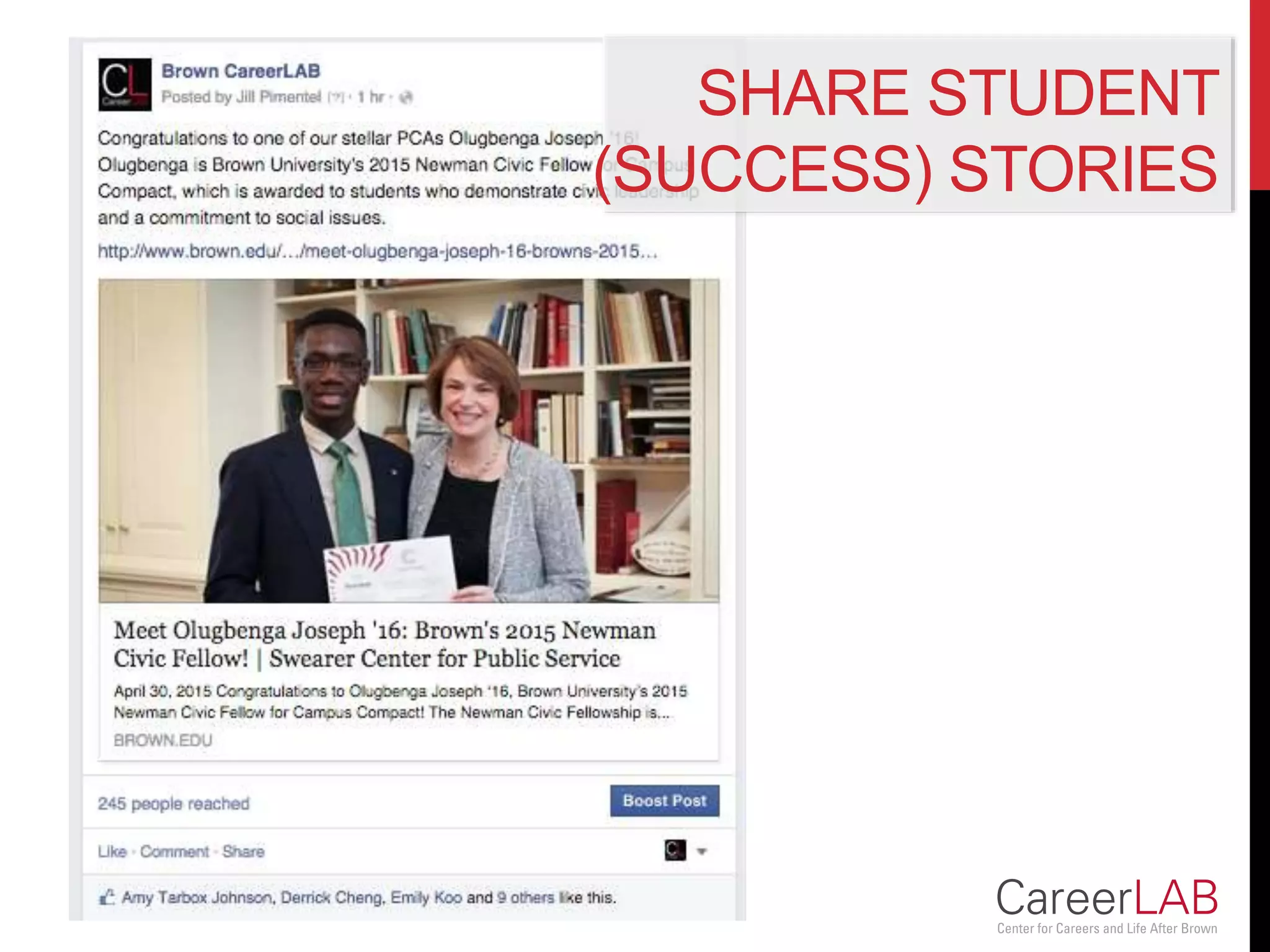
SHARE STUDENT
(SUCCESS) STORIES
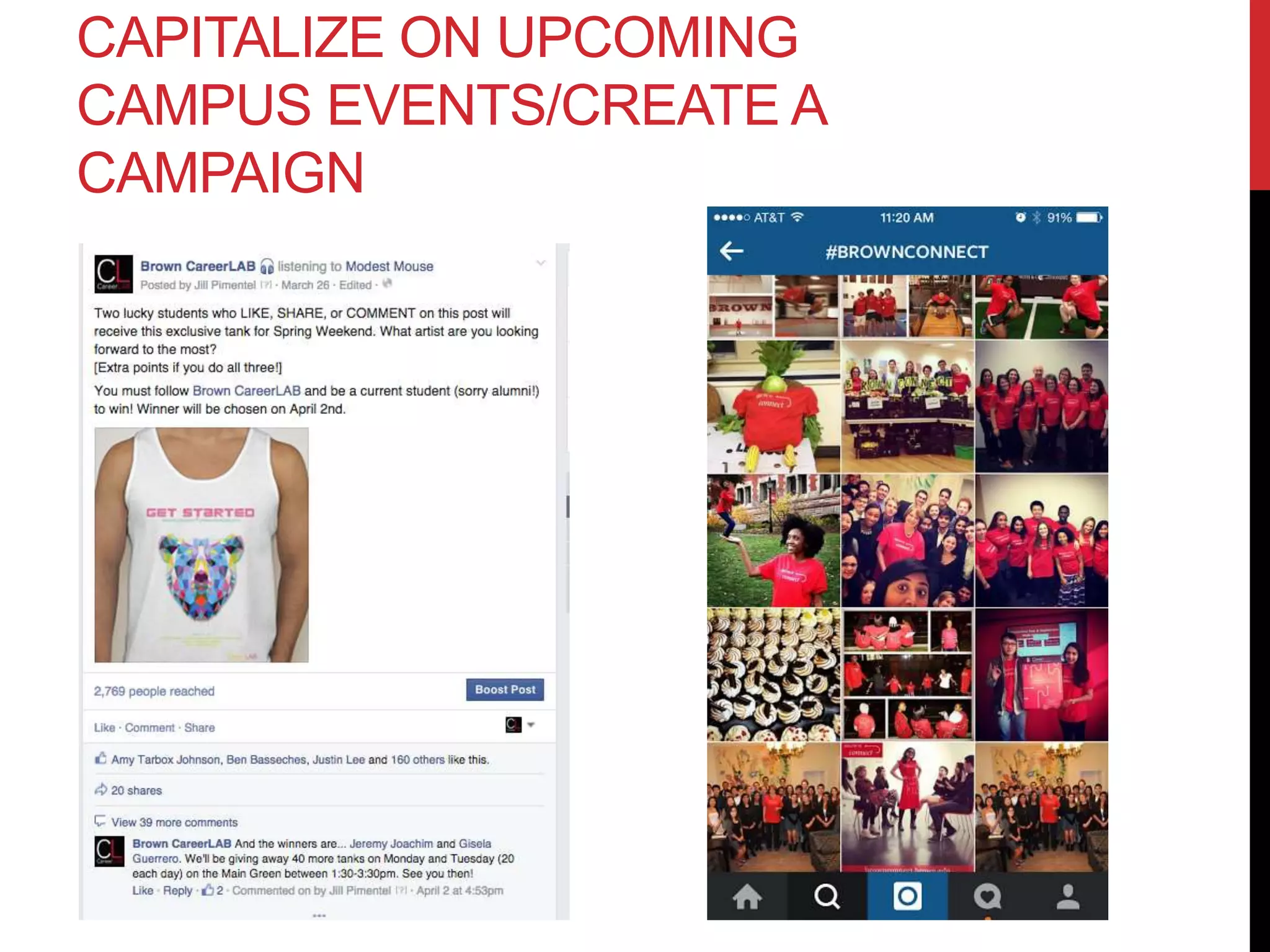
CAPITALIZE ON UPCOMING
CAMPUS EVENTS/CREATE A
CAMPAIGN
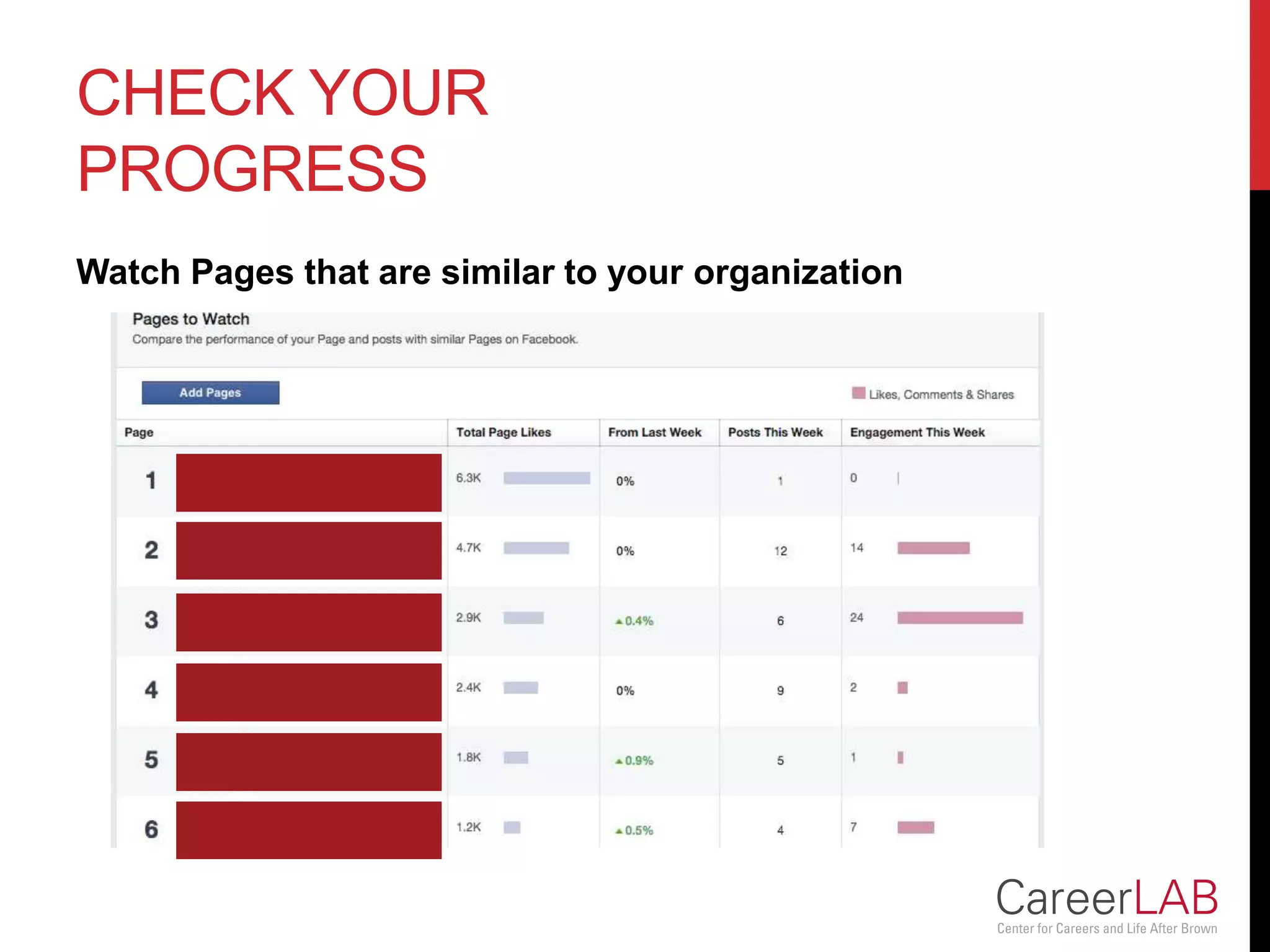
CHECK YOUR
PROGRESS
Watch Pages that are similar to your organization
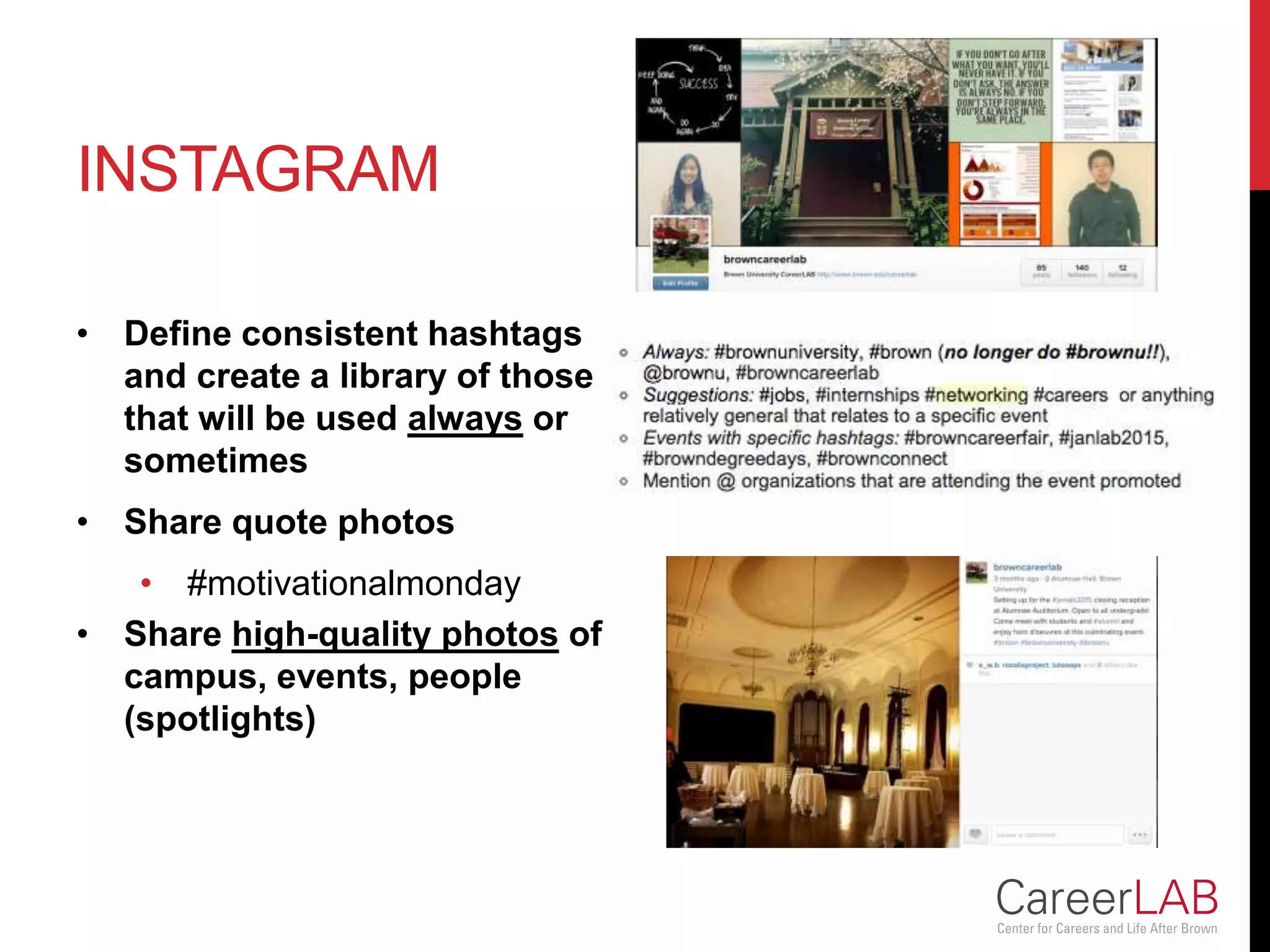
INSTAGRAM
• Define consistent hashtags
and create a library of those
that will be used always or
sometimes
• Share quote photos
• #motivationalmonday
• Share high-quality photos of
campus, events, people
(spotlights)
VIDEO
“[On Facebook] video posts had
organic reach of 8.71%, far higher
than text-only statuses’ 5.77%,
link posts’ 5.29%, and photo
posts’ 3.73%”
Food for thought: consider
building out video content
• Alumni Spotlights
• Larger events
• Hangouts on Air
• Informational videos
about our services
Source: Seiter, Courtney. “12 Facebook Tactics Working Right Now.” Buffer Social.
30 Mar. 2015. Web. 4 May 2015.
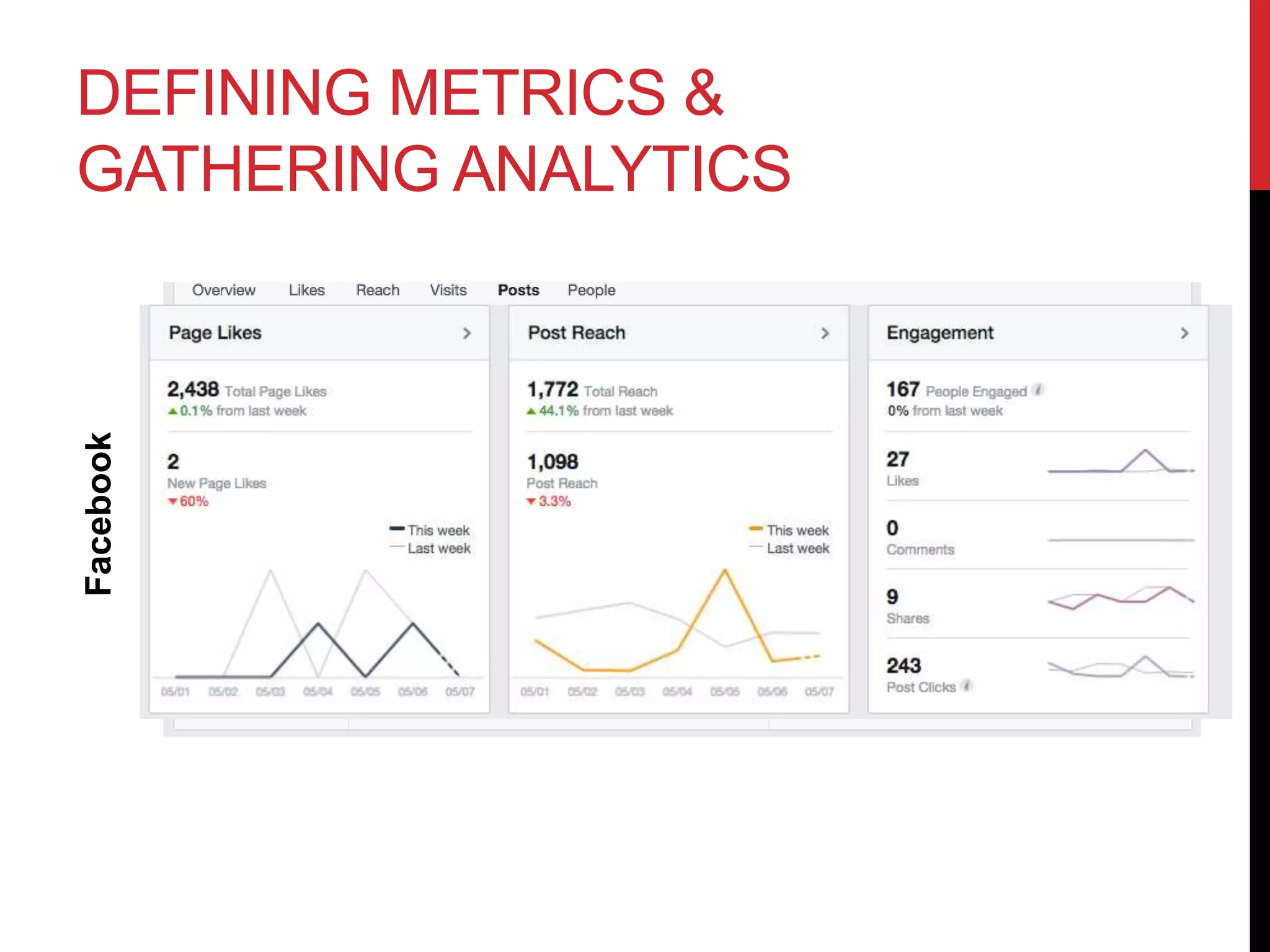
DEFINING METRICS &
GATHERING ANALYTICS
Facebook
DEFINING METRICS &
GATHERING ANALYTICS
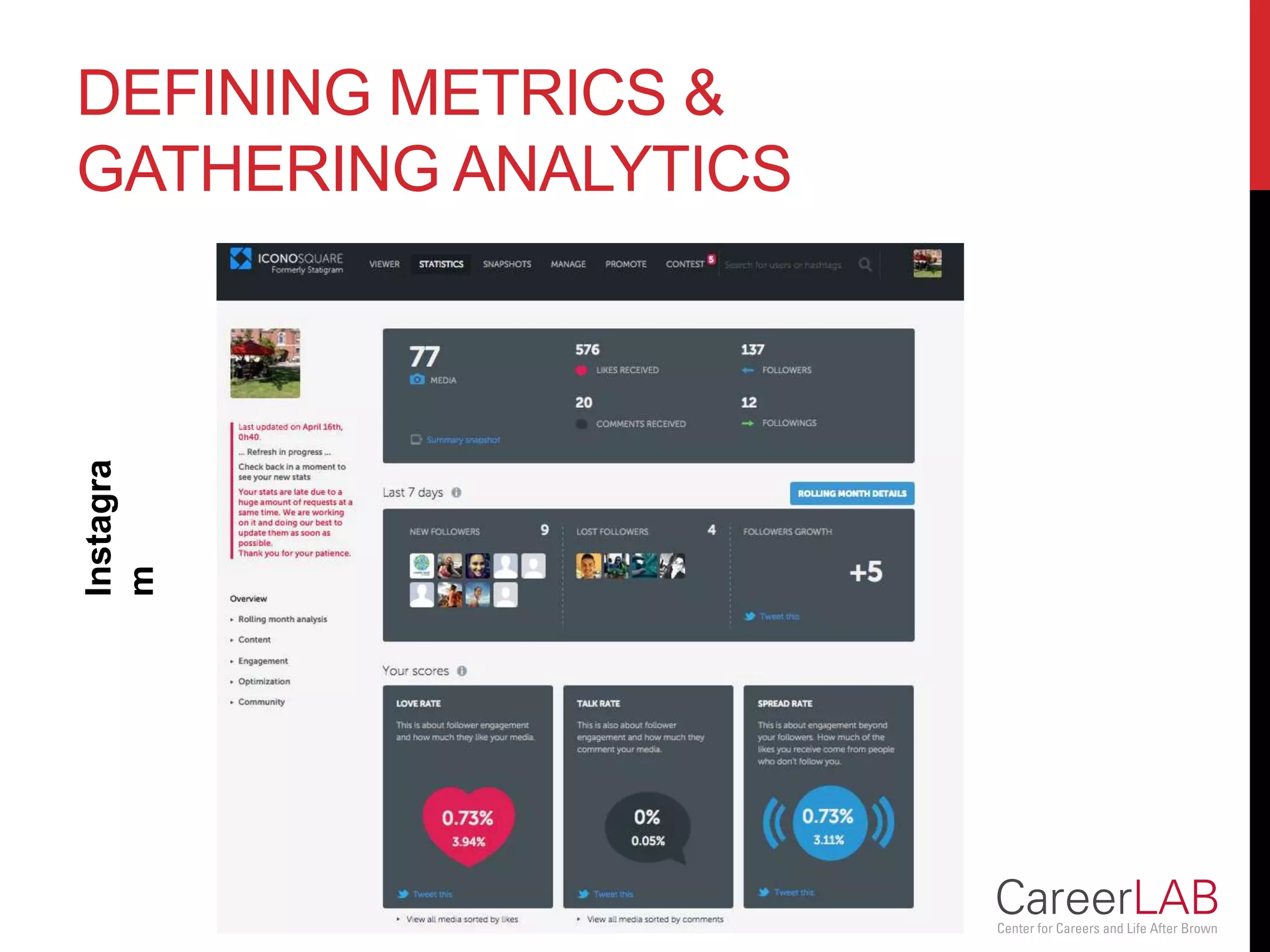
Instagra
m
DEFINING METRICS &
GATHERING ANALYTICS
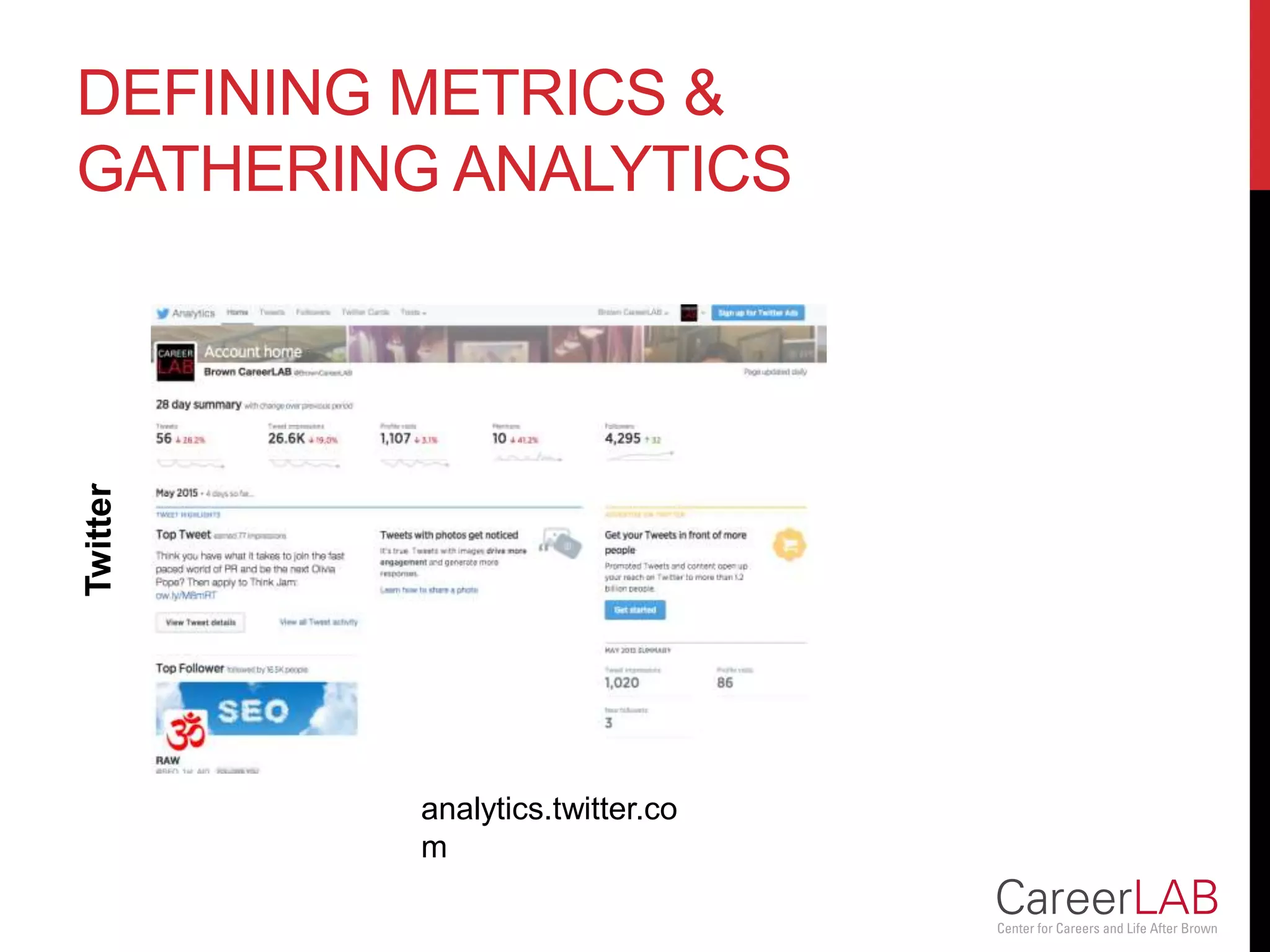
Twitter
analytics.twitter.co
m
DEFINING GOALS
• Tracking video content views/engagements more
deliberately
• Creating clear, measureable goals for the next academic
year
• Engagement (clicks vs. likes/favorites vs. shares/retweets)
• Reach
• Engagement based on content type
• Follower growth
DO
• Measure your progress across channels (likes, engagements,
follows, etc.)
• Twitter: Iconosquare
• Facebook: Built-in insights
• Twitter: Built-in insights
• YouTube: Built-in insights
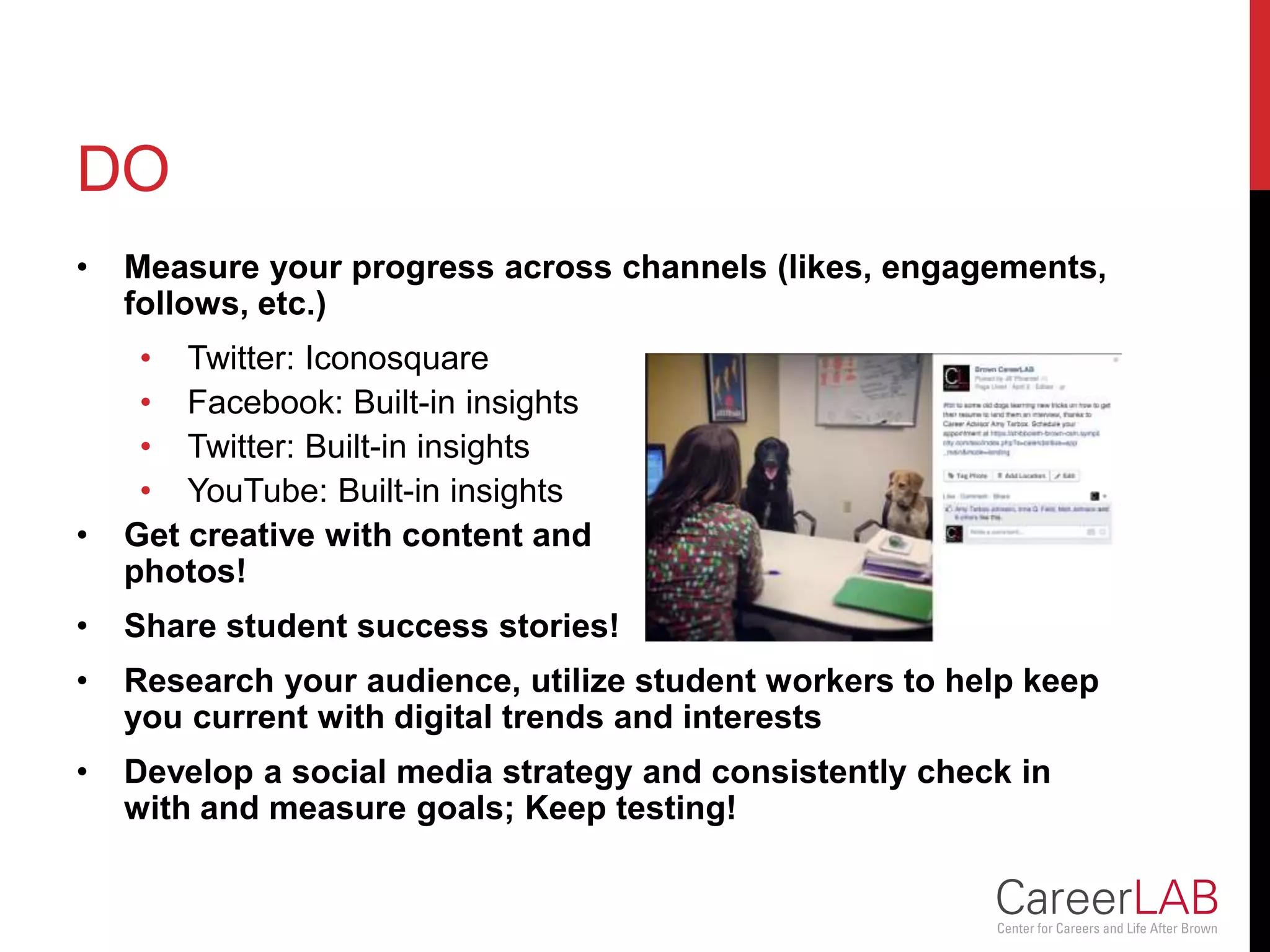
• Get creative with content and
photos!
• Share student success stories!
• Research your audience, utilize student workers to help keep
you current with digital trends and interests
• Develop a social media strategy and consistently check in
with and measure goals; Keep testing!
DON’T
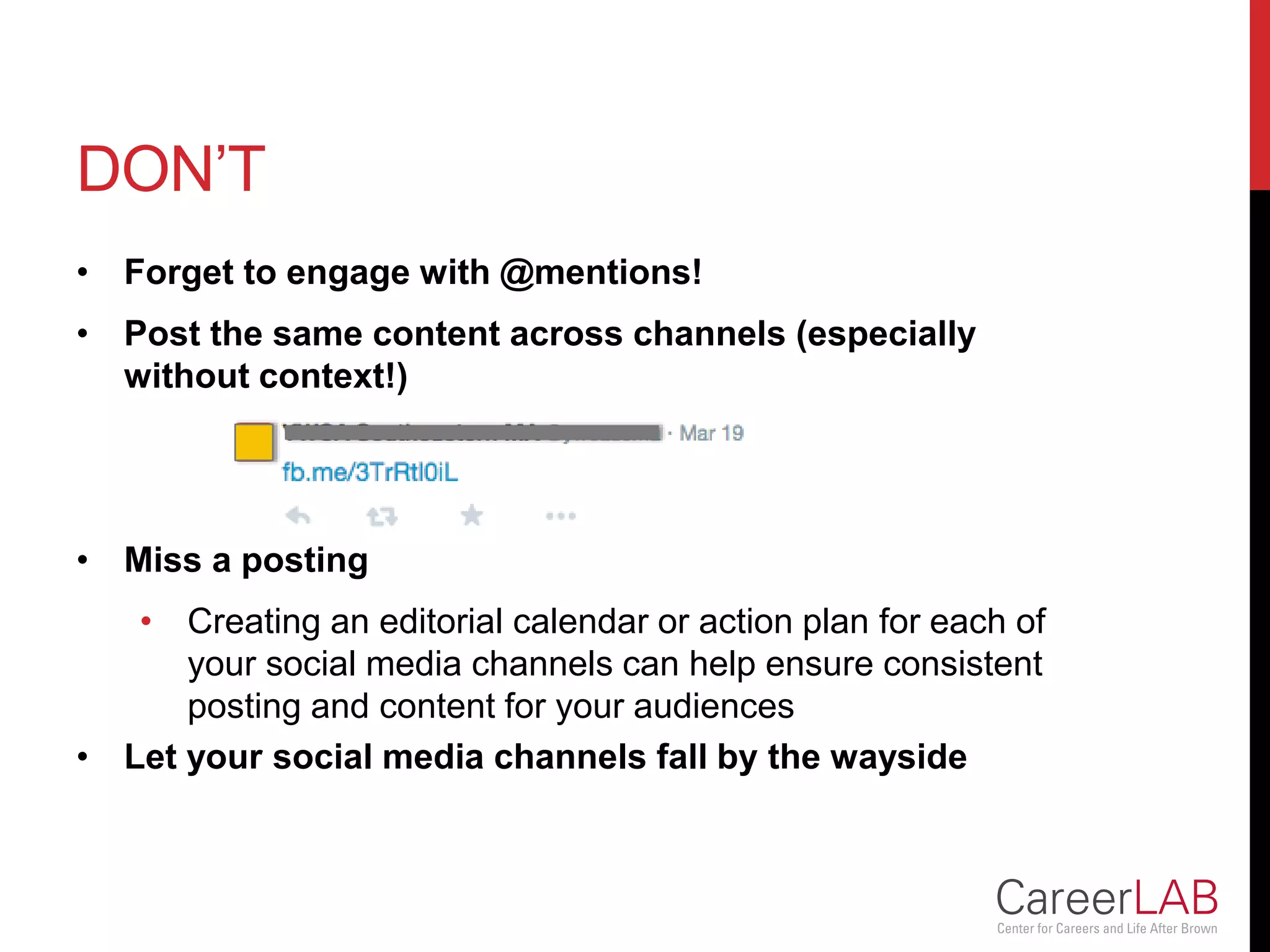
• Forget to engage with @mentions!
• Post the same content across channels (especially
without context!)
• Miss a posting
• Creating an editorial calendar or action plan for each of
your social media channels can help ensure consistent
posting and content for your audiences
• Let your social media channels fall by the wayside
QUESTIONS?
Thank You!

MARCOM_JillPimentelFINAL

  • 1.
    DEVELOPING AN EFFECTIVE SOCIAL MEDIASTRATEGY & USING METRICS TO DRIVE RESULTS JILL PIMENTEL PROGRAM AND COMMUNICATIONS COORDINATOR BROWN UNIVERSITY
  • 2.
    SOCIAL MEDIA REVOLUTION • 53%of millennials would rather lose their sense of smell than their technology • By 2018 video will account for over 2/3 of mobile usage • Grandparents are the fastest growing demographic on Twitter • The average person has a :07 attention span; the average goldfish has :08 • The 4 P’s of Marketing have been replaced with the 4 C’s of Digital Content • Creating, Curating, Connecting, Culture Source: Erik Qualman, Social Media Revolution 2015 https://www.youtube.com/watch?v=jottDMuLesU
  • 3.
    WHY FOCUS SPECIFICALLY ONSOCIAL MEDIA? • To address changing algorithms • To meet users where they are • To find strategies in avoiding the tendency to simply be a megaphone • To increase overall engagement (digitally and in-person) • To increase visibility of the wide scope of work that we do
  • 4.
    HOW WE PREVIOUSLY MANAGEDSOCIAL MEDIA • Twitter: just jobs • Facebook: everything (thanks to Hootsuite) • Instagram: not yet used
  • 5.
    HOW CAREERLAB MANAGES SOCIALMEDIA • Team of Peer Career Advisors (PCAs) help to find and generate content across channels • PCAs split into teams based on interest • Social Media Ambassador is the lead PCA and helps strategize and create digital content • Two video interns film and produce alumni spotlights and event takeaways • Editorial calendar and strategic processes for scheduling posts
  • 6.
    TWITTER • Witty, engagingposts sharing job and intern- ship opportunities • All 10 of our PCAs contribute • Occasional, but rarely, also promote upcoming events • Utilize it for larger events in action #browncareerfair #janlab2015
  • 7.
    FACEBOOK • Changing algorithmsin recent years reduced average reach to 6% • Engagement = higher reach • Posts should link to a variety of web sources (unless you generate your own blog posts) • Start with reducing posts to just one per day (or every other day) • Diversify content: job search skill resource, upcoming event, alumni spotlight video, resource video
  • 8.
  • 9.
    CAPITALIZE ON UPCOMING CAMPUSEVENTS/CREATE A CAMPAIGN
  • 10.
    CHECK YOUR PROGRESS Watch Pagesthat are similar to your organization
  • 11.
    INSTAGRAM • Define consistenthashtags and create a library of those that will be used always or sometimes • Share quote photos • #motivationalmonday • Share high-quality photos of campus, events, people (spotlights)
  • 12.
    VIDEO “[On Facebook] videoposts had organic reach of 8.71%, far higher than text-only statuses’ 5.77%, link posts’ 5.29%, and photo posts’ 3.73%” Food for thought: consider building out video content • Alumni Spotlights • Larger events • Hangouts on Air • Informational videos about our services Source: Seiter, Courtney. “12 Facebook Tactics Working Right Now.” Buffer Social. 30 Mar. 2015. Web. 4 May 2015.
  • 13.
    DEFINING METRICS & GATHERINGANALYTICS Facebook
  • 14.
    DEFINING METRICS & GATHERINGANALYTICS Instagra m
  • 15.
    DEFINING METRICS & GATHERINGANALYTICS Twitter analytics.twitter.co m
  • 16.
    DEFINING GOALS • Trackingvideo content views/engagements more deliberately • Creating clear, measureable goals for the next academic year • Engagement (clicks vs. likes/favorites vs. shares/retweets) • Reach • Engagement based on content type • Follower growth
  • 17.
    DO • Measure yourprogress across channels (likes, engagements, follows, etc.) • Twitter: Iconosquare • Facebook: Built-in insights • Twitter: Built-in insights • YouTube: Built-in insights • Get creative with content and photos! • Share student success stories! • Research your audience, utilize student workers to help keep you current with digital trends and interests • Develop a social media strategy and consistently check in with and measure goals; Keep testing!
  • 18.
    DON’T • Forget toengage with @mentions! • Post the same content across channels (especially without context!) • Miss a posting • Creating an editorial calendar or action plan for each of your social media channels can help ensure consistent posting and content for your audiences • Let your social media channels fall by the wayside
  • 19.

Editor's Notes

  • #5 + Twitter: PCAs would post jobs and internships using Hootsuite – they’d post to not only Twitter (and appropriate accounts) but also to facebook + Facebook: events and jobs; Facebook would be oversaturated with about 5-6 posts per day; we did not highlight students or engage in more humorous ways
  • #6 + Facebook team: finds content based on editorial calendar; I curate that content; Social Media Ambassador queues up posts + Instagram team: assigned posting days to post either photos of campus, upcoming events, or videos of PCAs or the office + Twitter (all): post job and internship opportunities based on our job board or unique opportunities from advisors + Spotlights on alumni or students, as well as more humorous content surrouncing job search skills, helps to improve engagement
  • #9  ----- Meeting Notes (5/5/15 14:41) ----- This post ended up resulting in 22 likes!
  • #11 Insights >>> Overview >>> Scroll down and you can add pages to see how you compare When you click on a page, you see their top posts for that week, which can give you an idea of the types of content students are engaging with
  • #14 + used this to inform how we told our story; which posts were more engaged with defined how we developed our ed cal and the types of content
  • #17 Hiring a specific Social Media Intern: ONE CONSISTENT VOICE; CONSISTENCY ACROSS CHANNELS
  • #19 @mentions – I’ve tried to engage with orgs on twitter asking a question or following up on a post of theirs with no response! Make sure someone is accountable for checking and responding to any mentions.