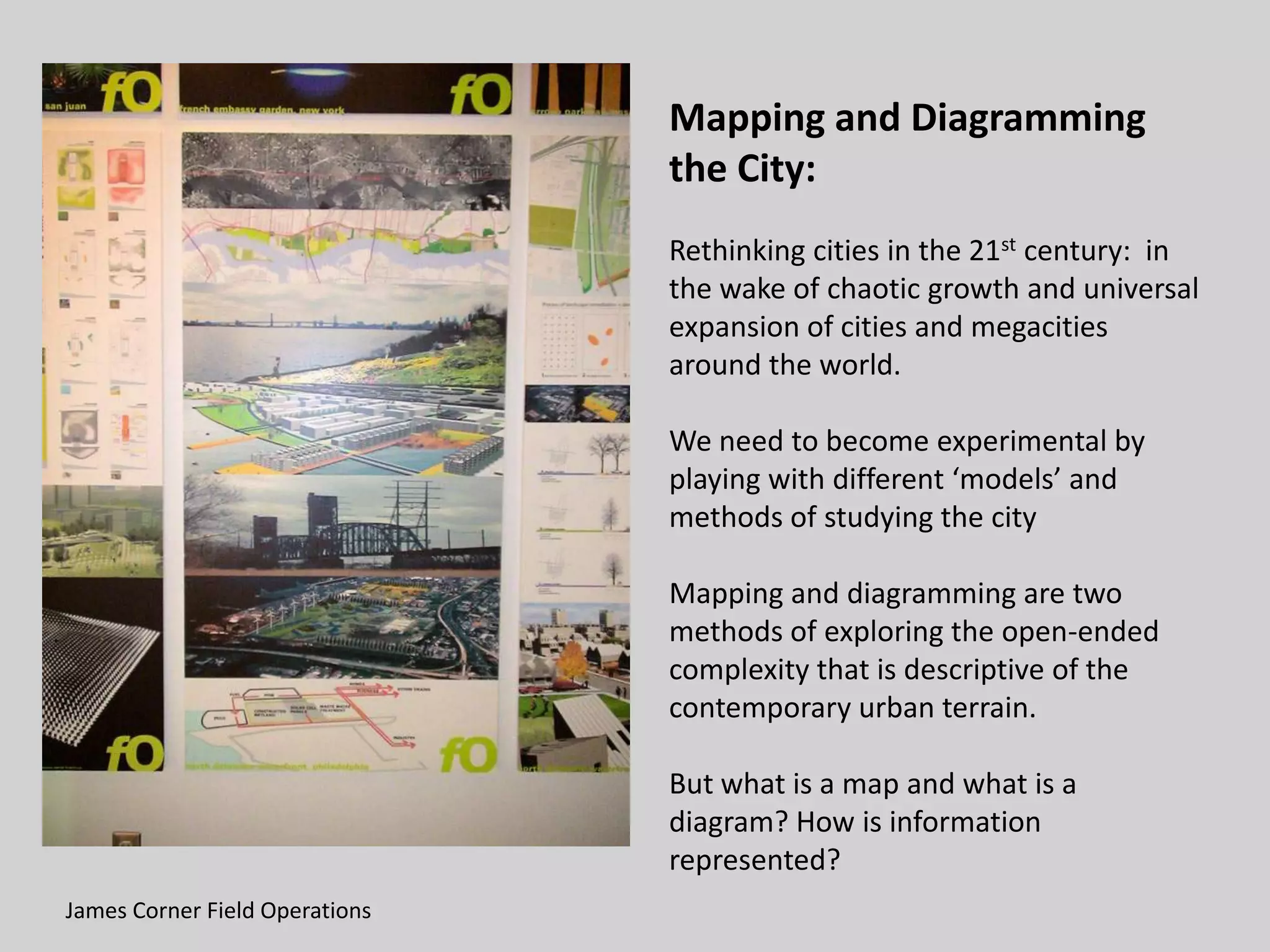
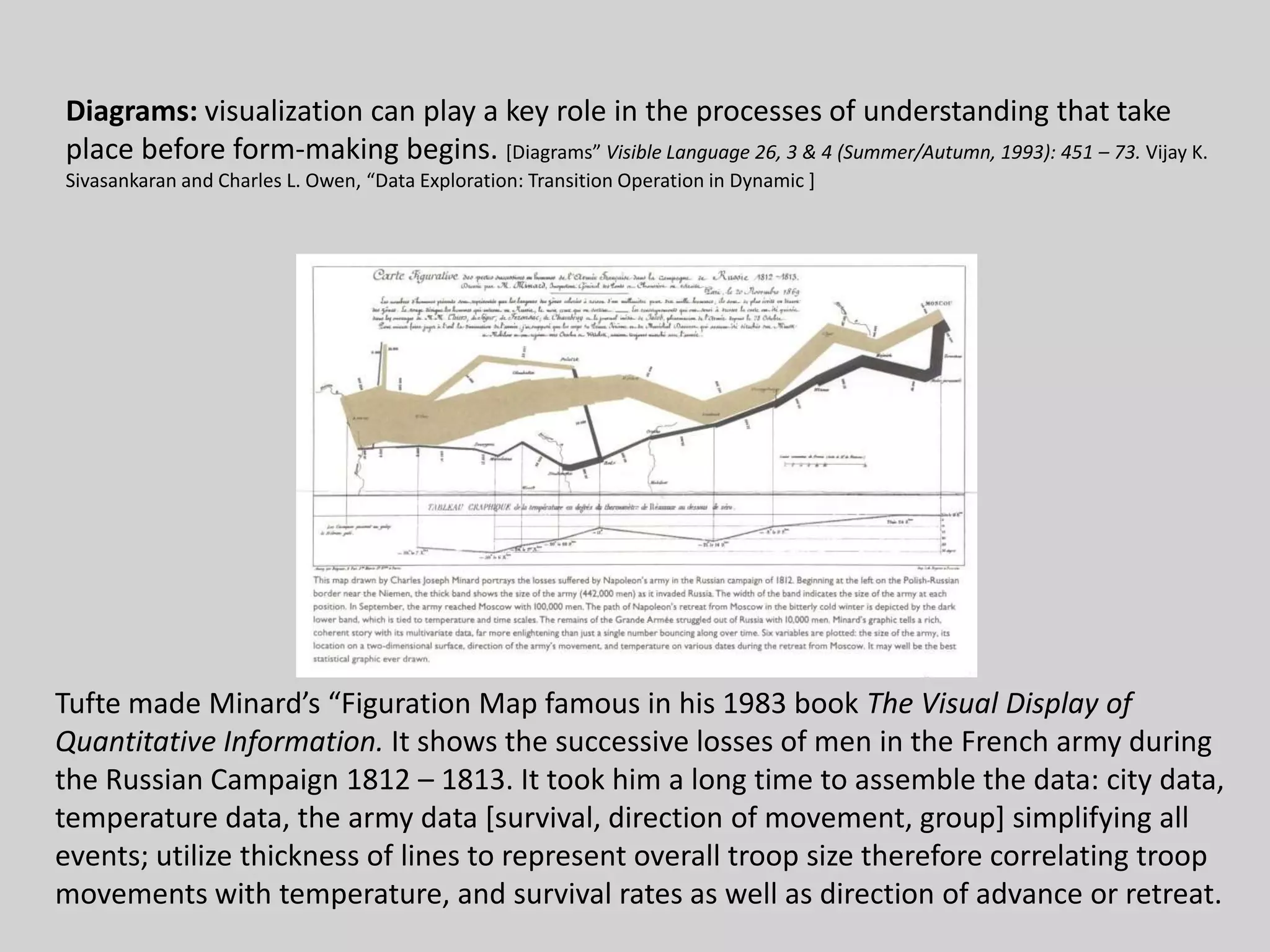
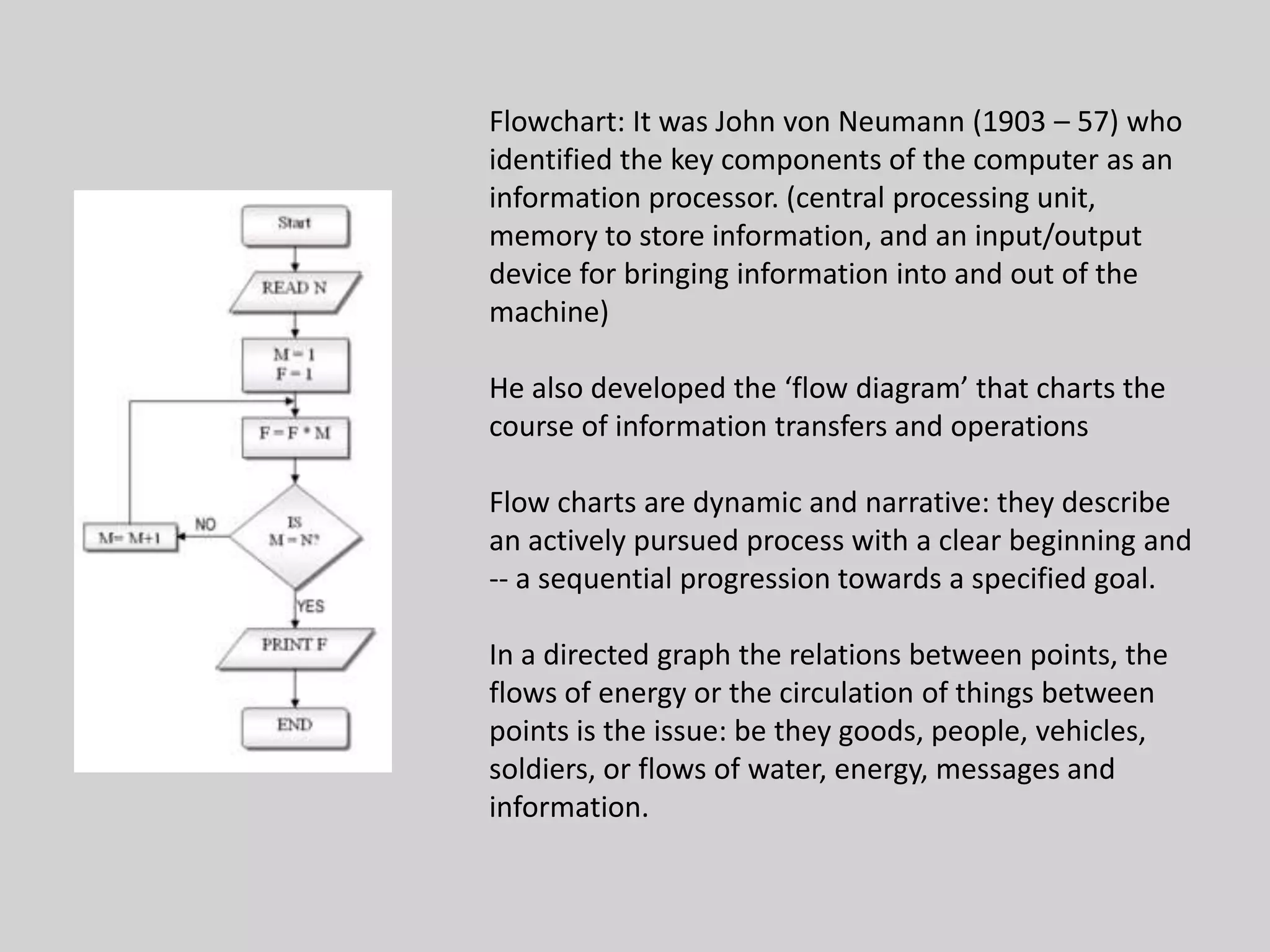
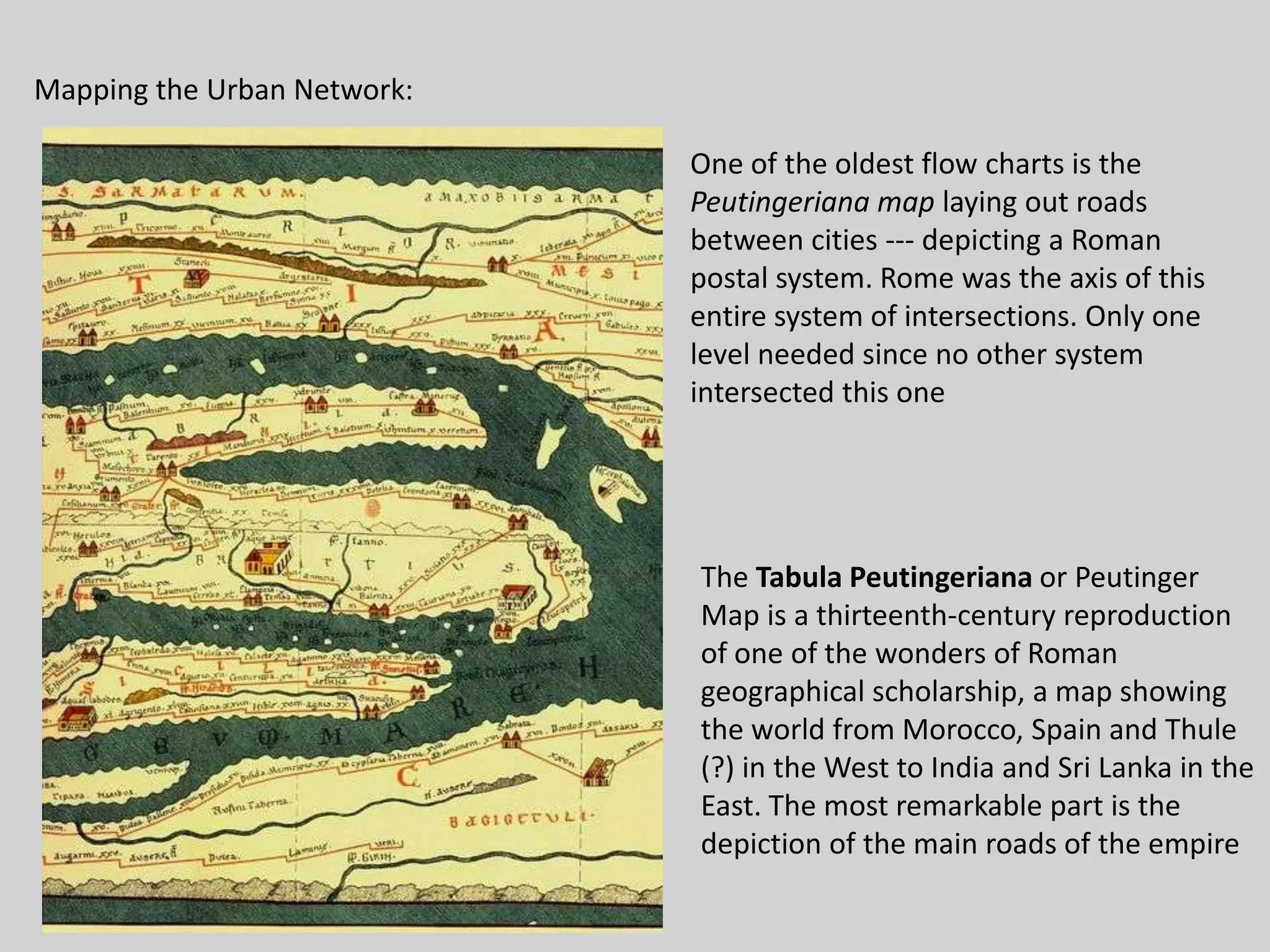
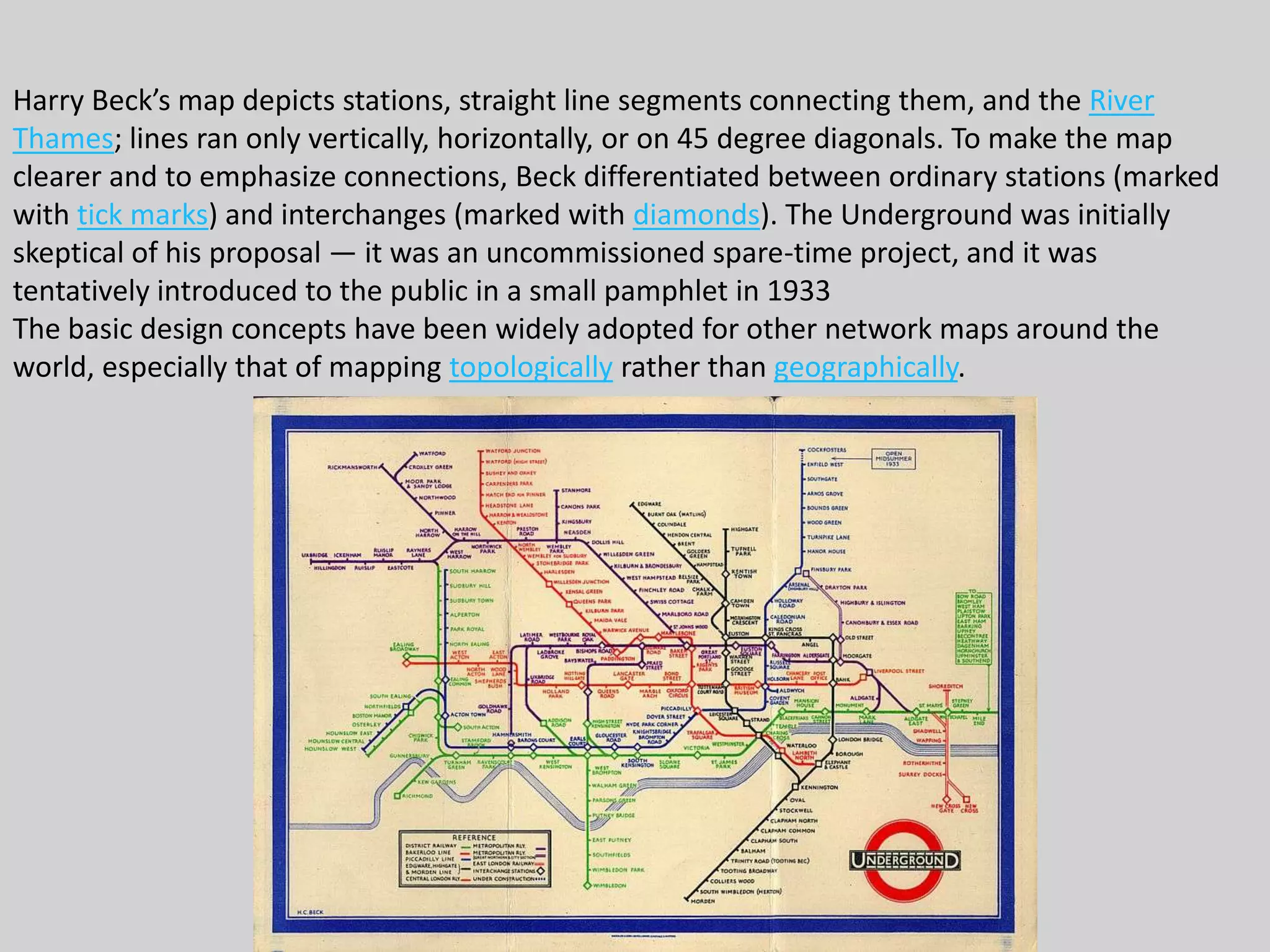
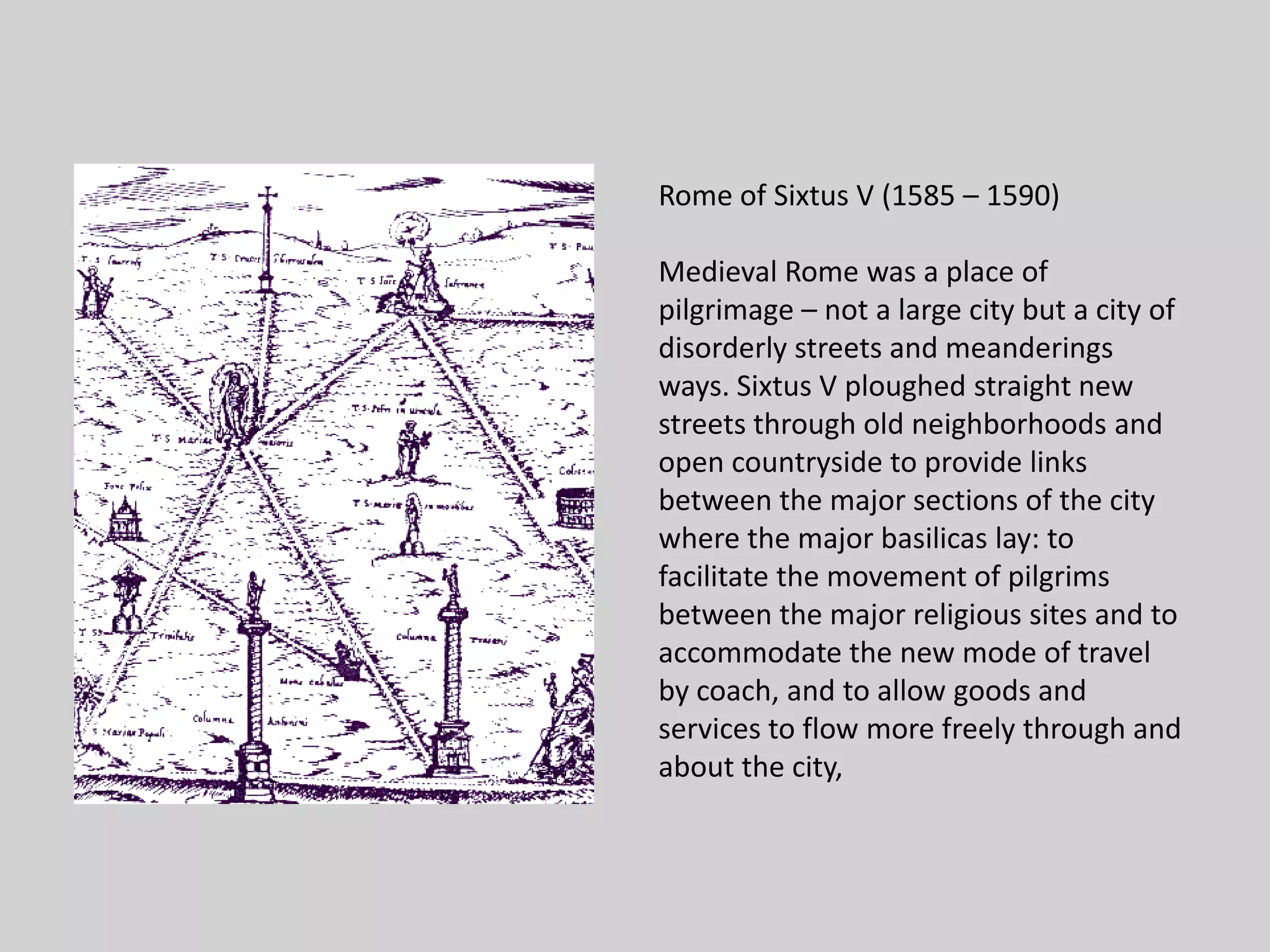
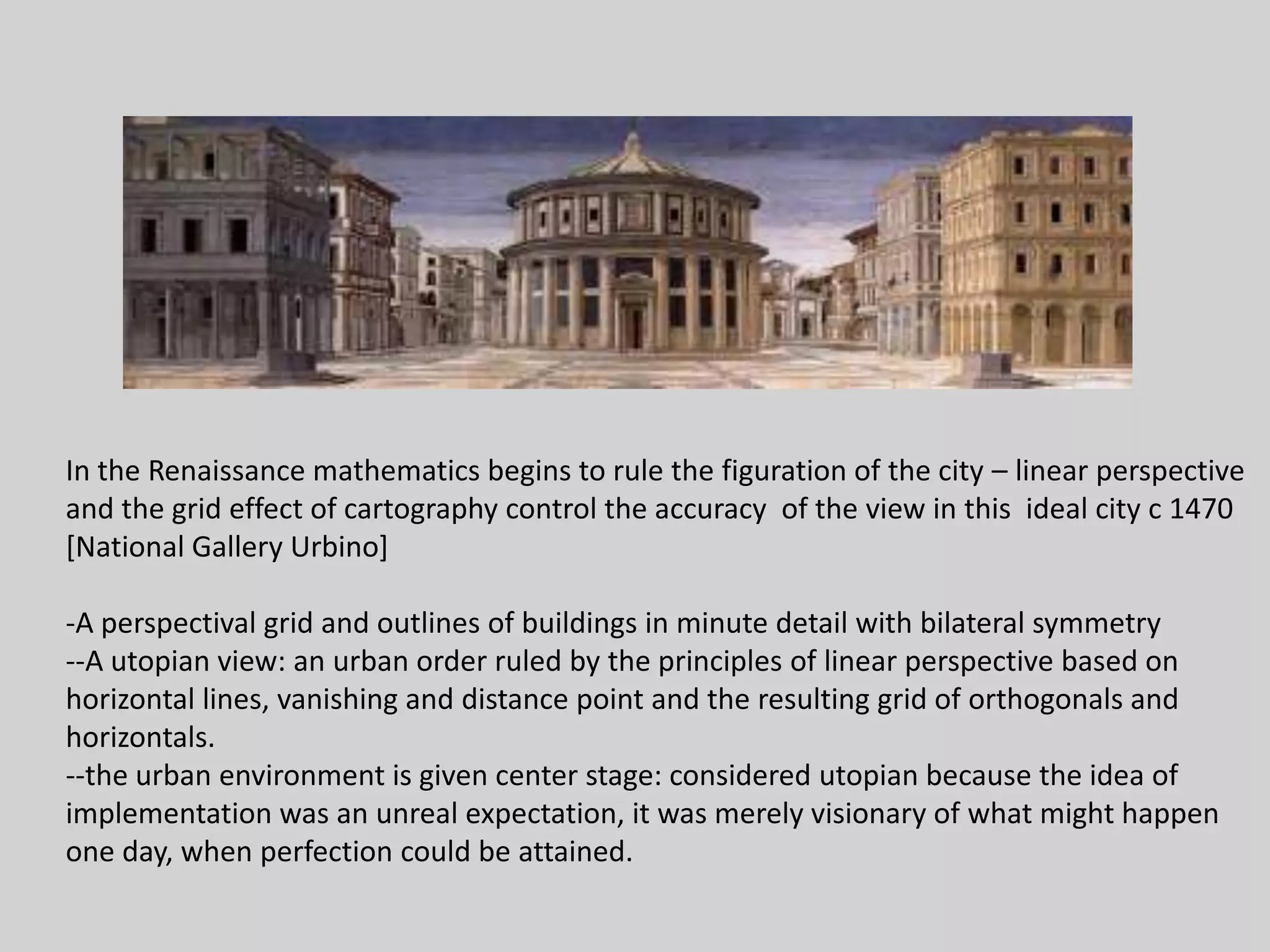
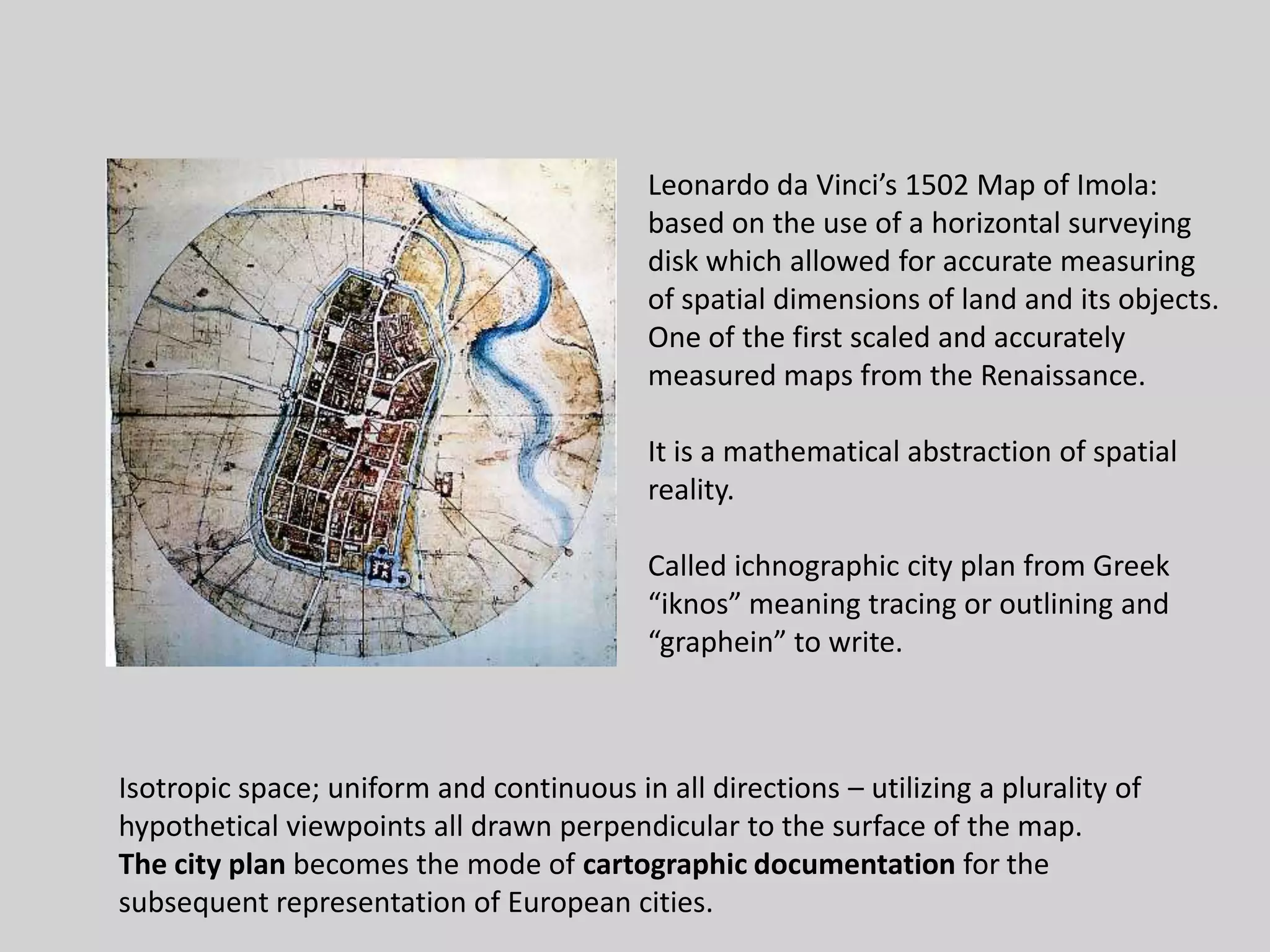
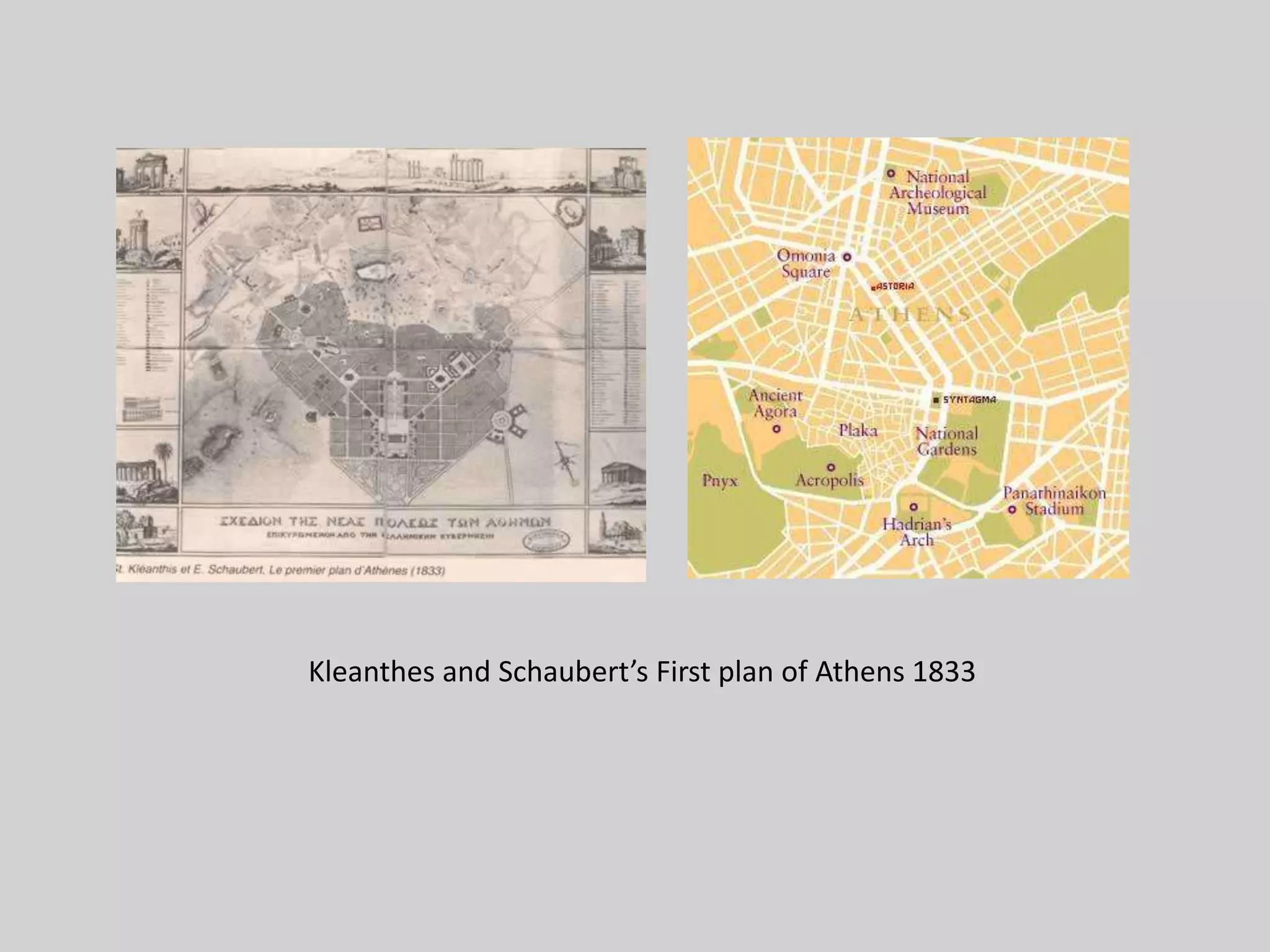
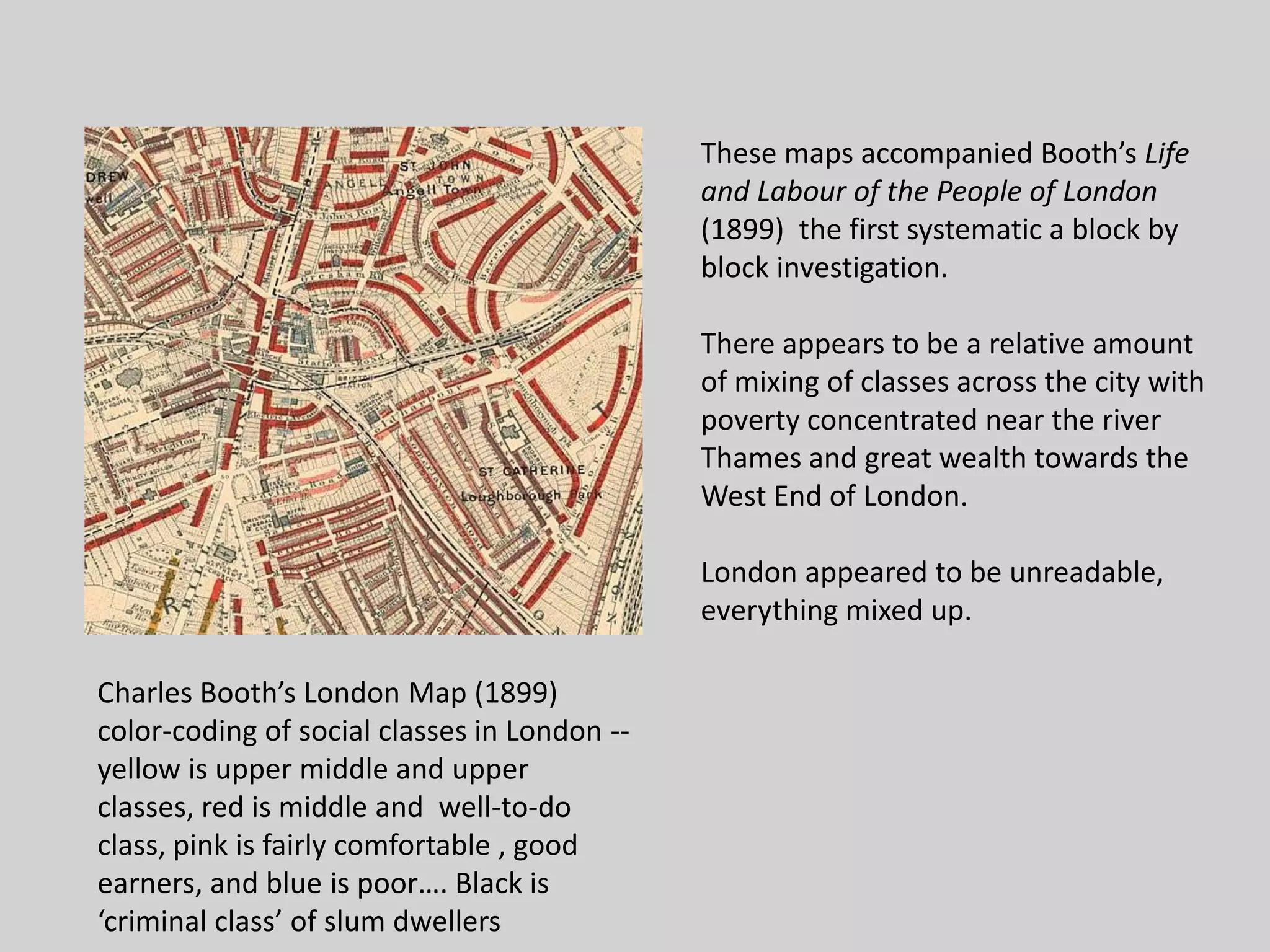
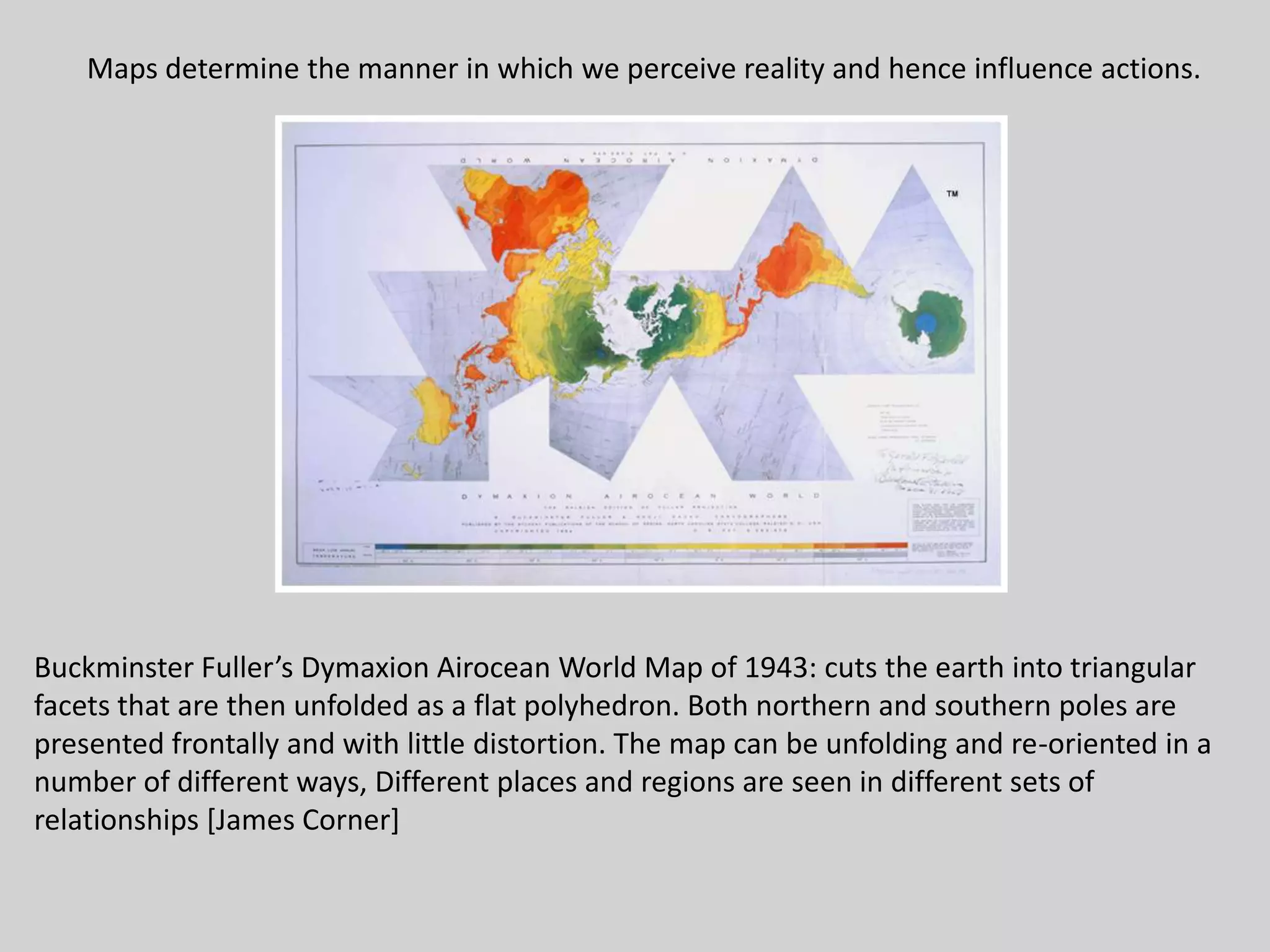
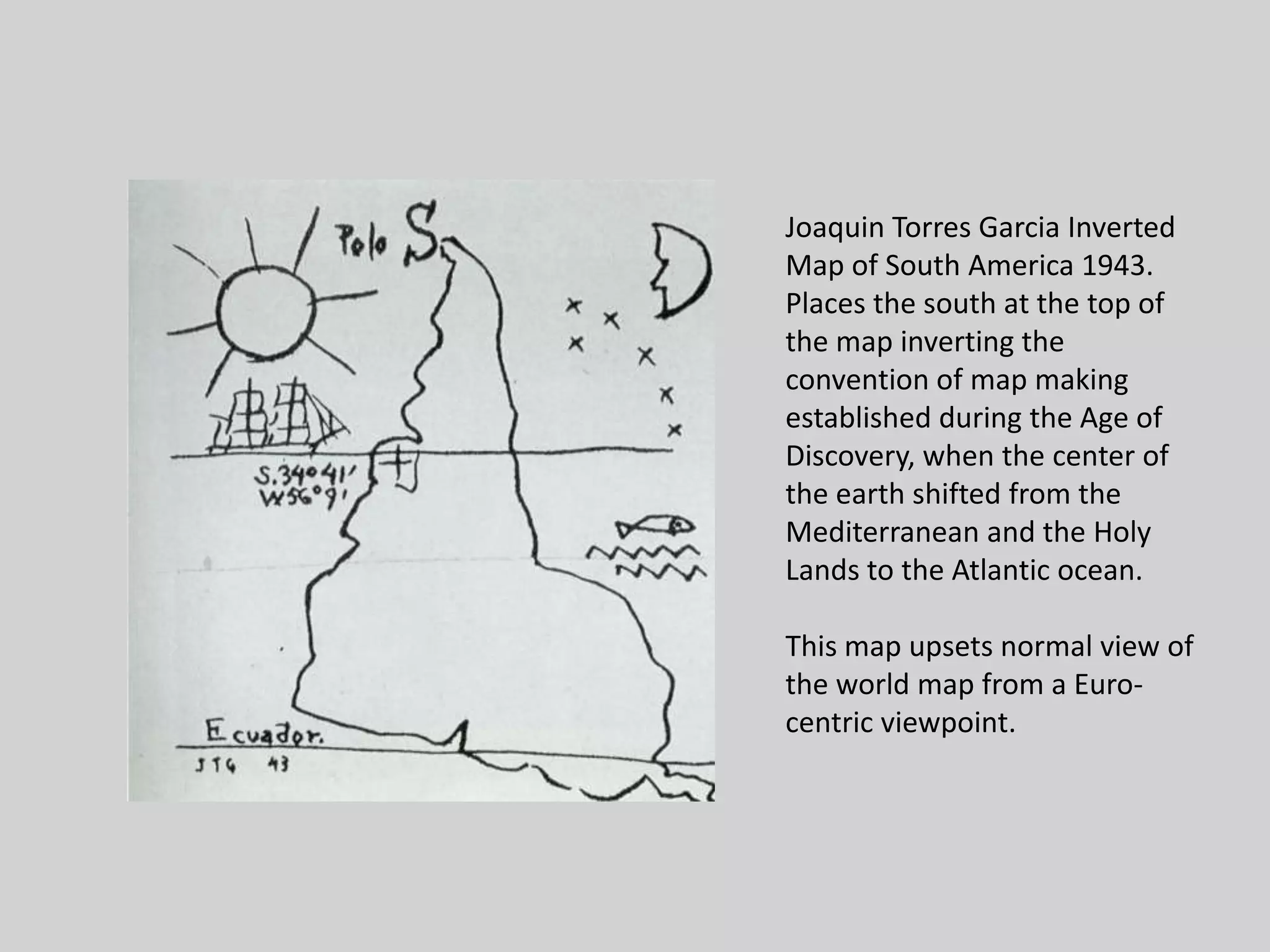
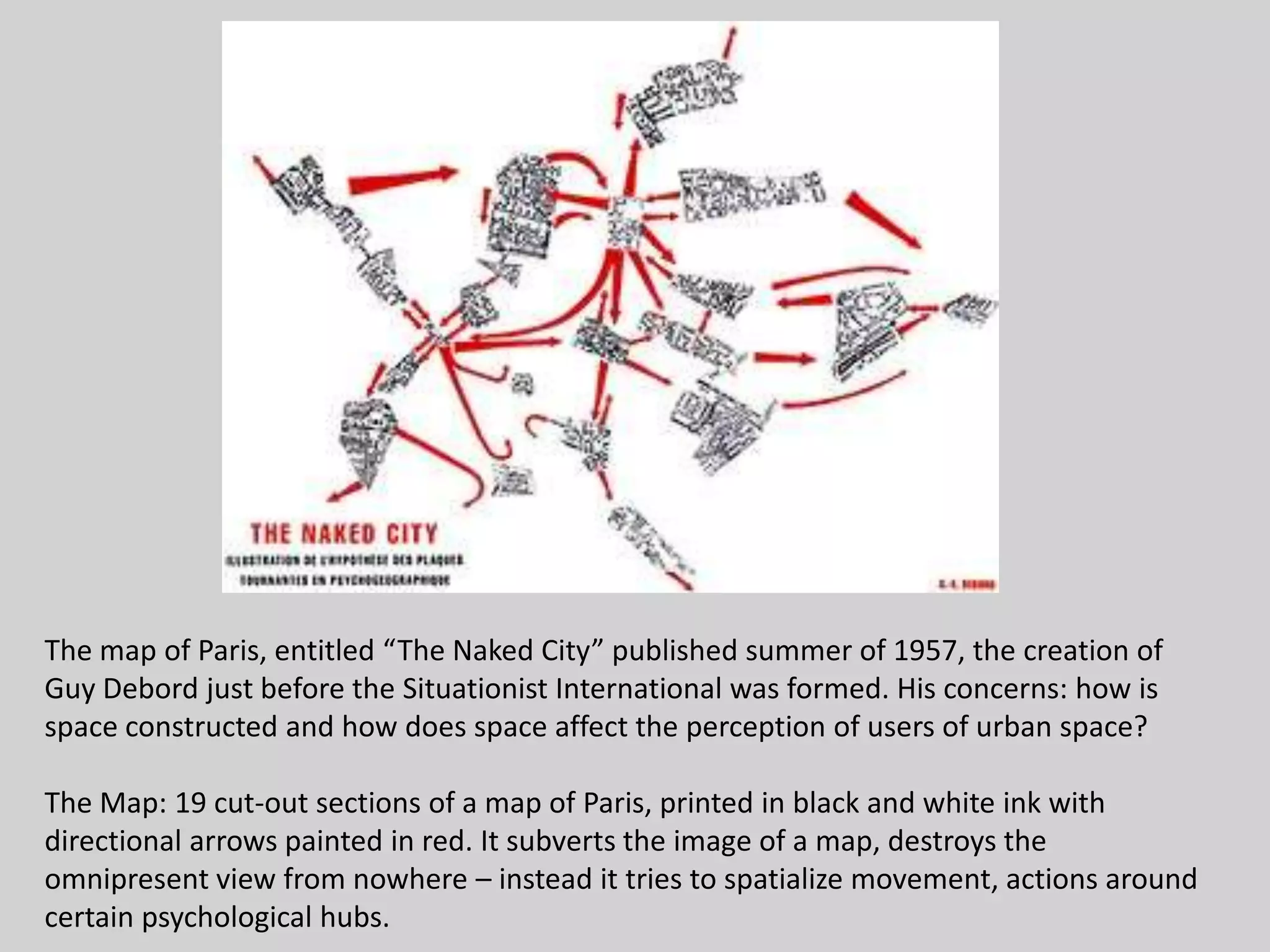
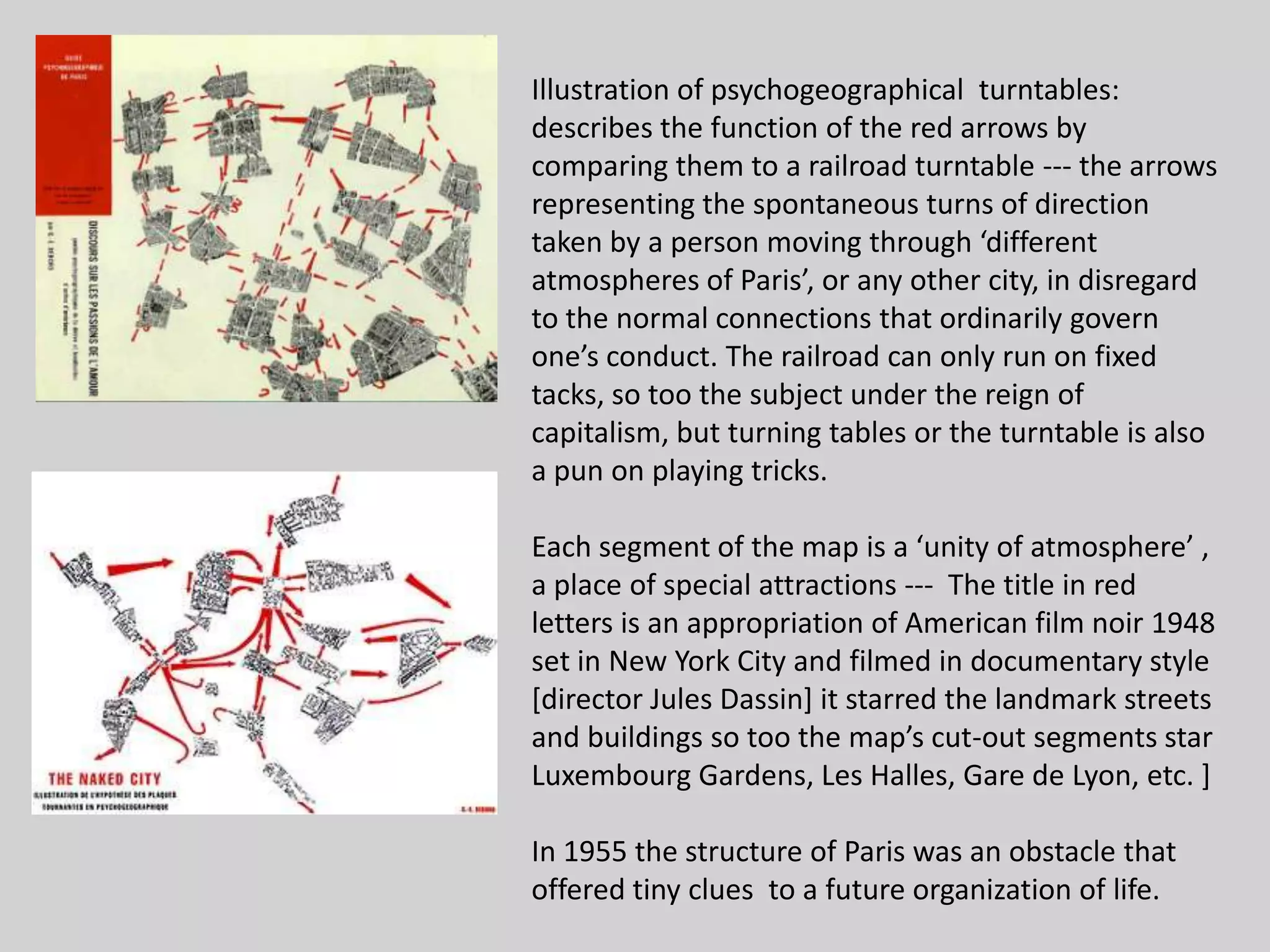
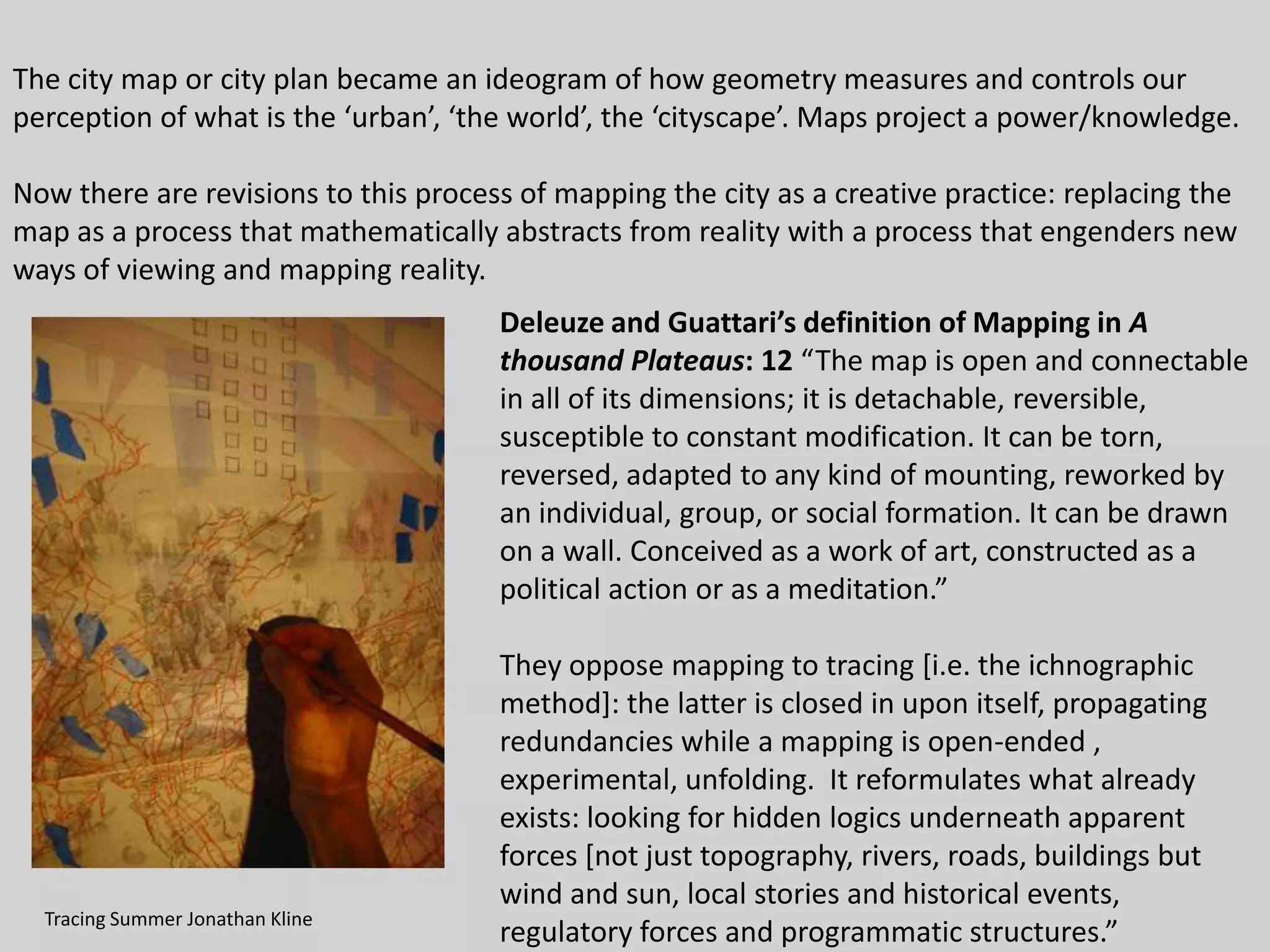
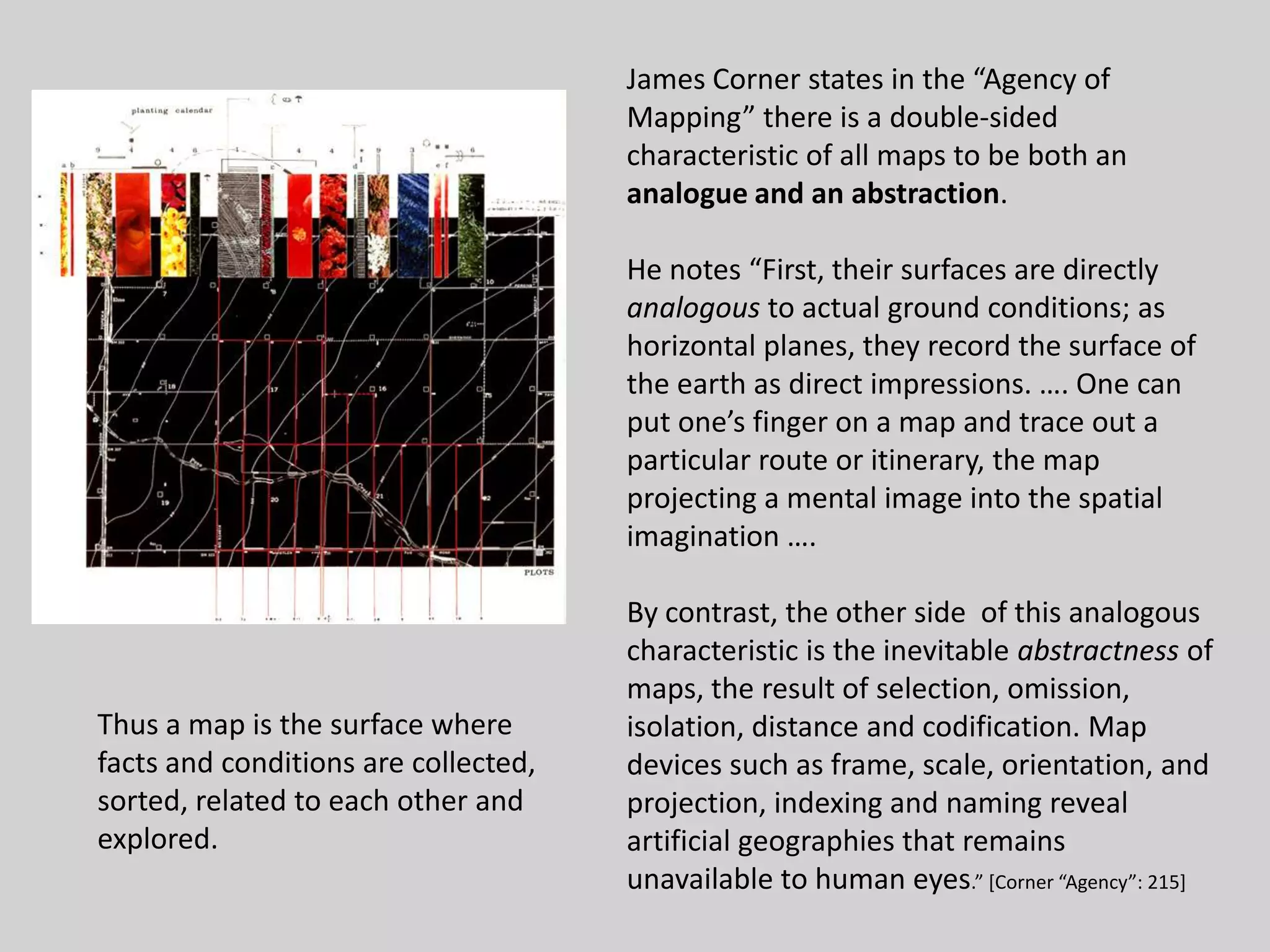
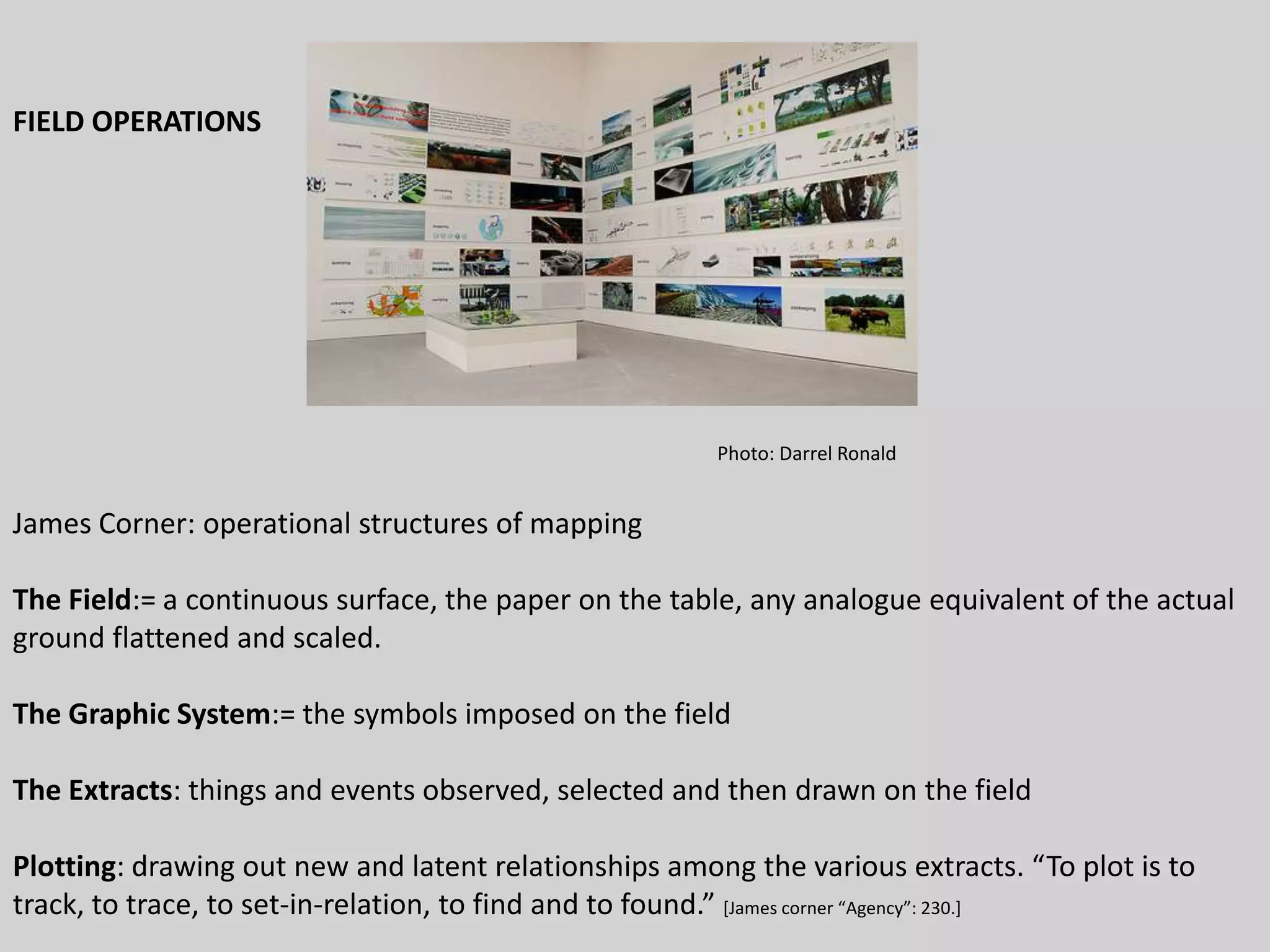
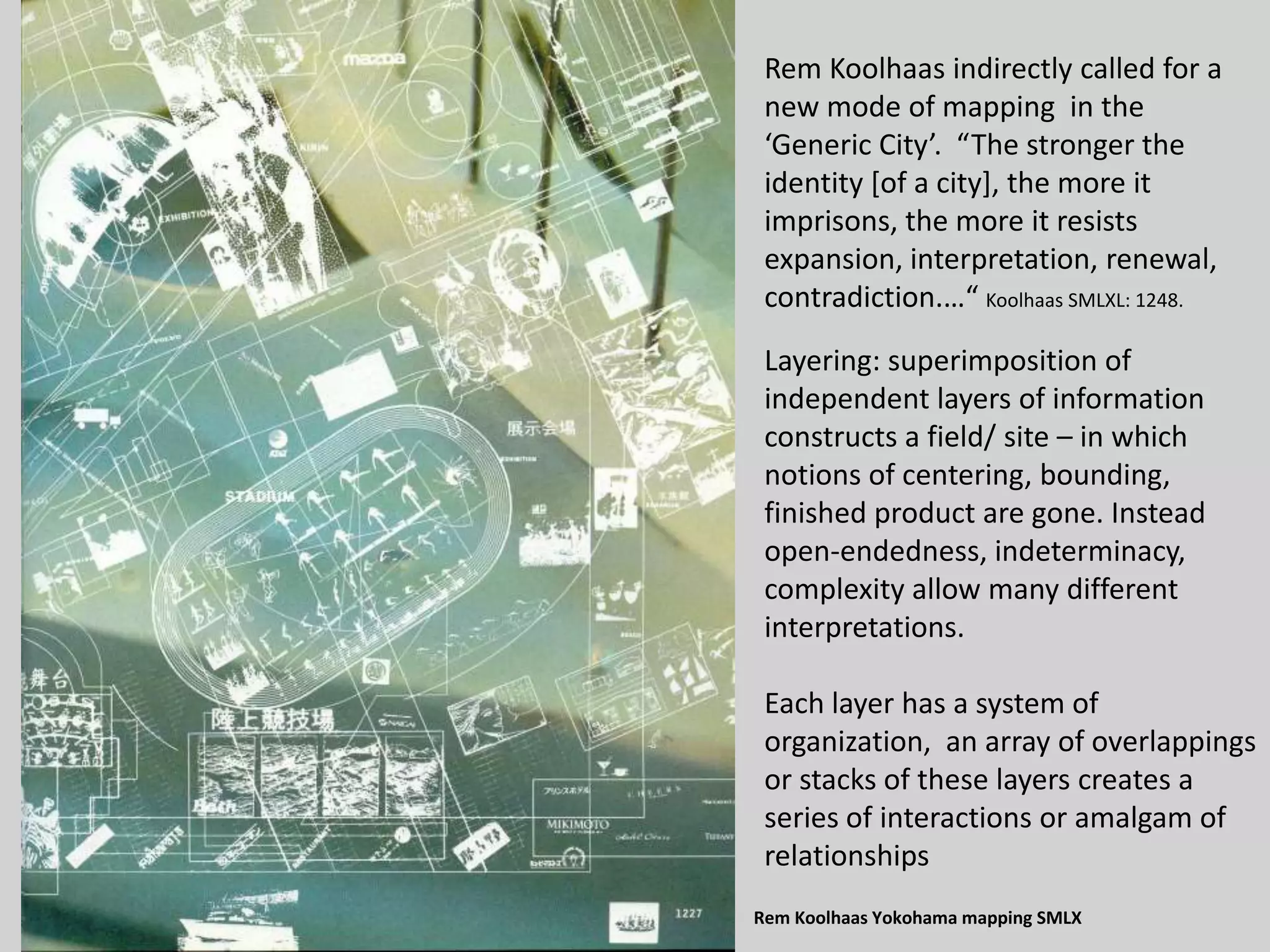
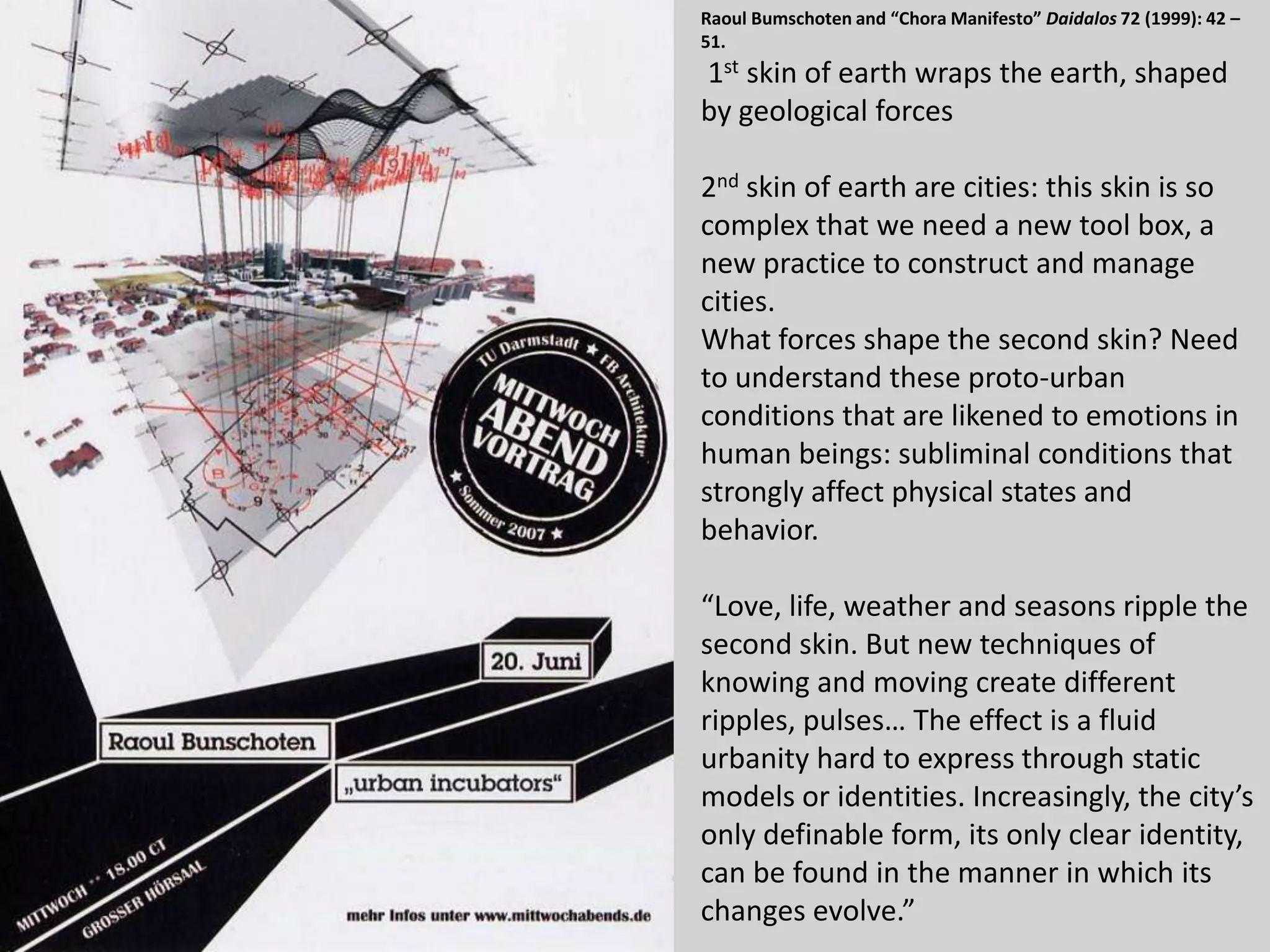
This document discusses various methods of mapping and diagramming cities to understand their complexity. It begins by looking at mapping and diagramming as experimental methods for studying 21st century cities and megacities. It then discusses the differences between maps and diagrams, and how they represent information. A number of examples of historical and conceptual maps and diagrams are provided, ranging from flow charts to psychogeographical maps. These examples illustrate different ways of mapping networks, movements, social classes, and urban atmospheres. The document argues that maps are both analogues of reality but also abstractions, and that new forms of mapping are needed to understand the layered complexity of contemporary cities.


![Introto geography[1]](https://cdn.slidesharecdn.com/ss_thumbnails/introtogeography1-130411124640-phpapp02-thumbnail.jpg?width=640&height=640&fit=bounds)


![Coded Agents – with UiPath SDK + LangGraph [Virtual Hands-on Workshop]](https://cdn.slidesharecdn.com/ss_thumbnails/codedagentsdeck-251215155422-5497c599-thumbnail.jpg?width=640&height=640&fit=bounds)


