CURRICULUM MAP
Subject: MAPEH (Arts) Grade Level: 9 Teacher: Angel Dianne O. Legaspi
Vision: Mission: Goals and Objectives:
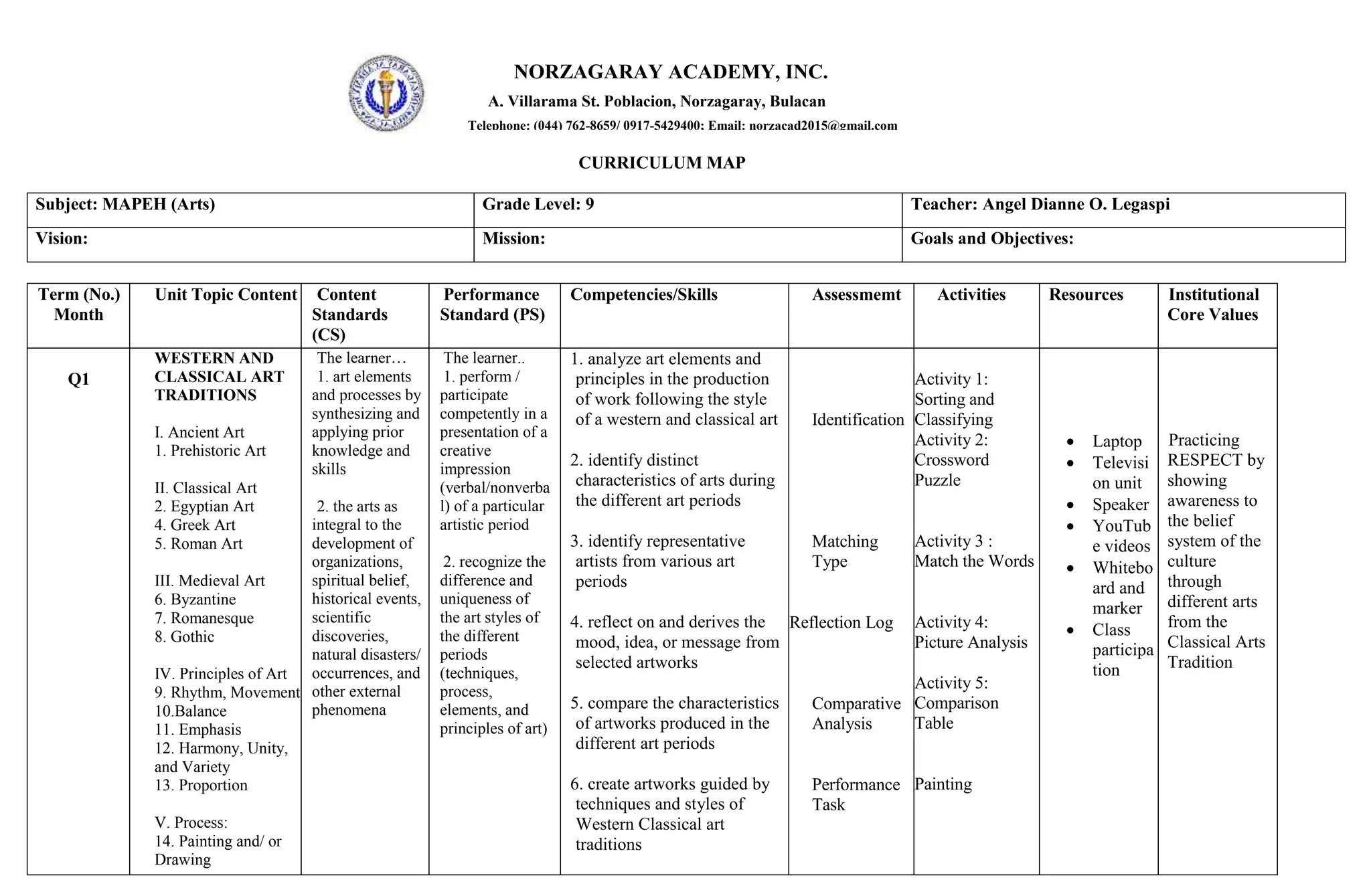
Term (No.)
Month
Unit Topic Content Content
Standards
(CS)
Performance
Standard (PS)
Competencies/Skills Assessmemt Activities Resources Institutional
Core Values
Q1
WESTERN AND
CLASSICAL ART
TRADITIONS
I. Ancient Art
1. Prehistoric Art
II. Classical Art
2. Egyptian Art
4. Greek Art
5. Roman Art
III. Medieval Art
6. Byzantine
7. Romanesque
8. Gothic
IV. Principles of Art
9. Rhythm, Movement
10.Balance
11. Emphasis
12. Harmony, Unity,
and Variety
13. Proportion
V. Process:
14. Painting and/ or
Drawing
The learner…
1. art elements
and processes by
synthesizing and
applying prior
knowledge and
skills
2. the arts as
integral to the
development of
organizations,
spiritual belief,
historical events,
scientific
discoveries,
natural disasters/
occurrences, and
other external
phenomena
The learner..
1. perform /
participate
competently in a
presentation of a
creative
impression
(verbal/nonverba
l) of a particular
artistic period
2. recognize the
difference and
uniqueness of
the art styles of
the different
periods
(techniques,
process,
elements, and
principles of art)
1. analyze art elements and
principles in the production
of work following the style
of a western and classical art
2. identify distinct
characteristics of arts during
the different art periods
3. identify representative
artists from various art
periods
4. reflect on and derives the
mood, idea, or message from
selected artworks
5. compare the characteristics
of artworks produced in the
different art periods
6. create artworks guided by
techniques and styles of
Western Classical art
traditions
Identification
Matching
Type
Reflection Log
Comparative
Analysis
Performance
Task
Activity 1:
Sorting and
Classifying
Activity 2:
Crossword
Puzzle
Activity 3 :
Match the Words
Activity 4:
Picture Analysis
Activity 5:
Comparison
Table
Painting
 Laptop
 Televisi
on unit
 Speaker
 YouTub
e videos
 Whitebo
ard and
marker
 Class
participa
tion
Practicing
RESPECT by
showing
awareness to
the belief
system of the
culture
through
different arts
from the
Classical Arts
Tradition
NORZAGARAY ACADEMY, INC.
A. Villarama St. Poblacion, Norzagaray, Bulacan
Telephone: (044) 762-8659/ 0917-5429400; Email: norzacad2015@gmail.com
15. Sculpture and
Assemblage
16. Mounting an
exhibit:
17. Concept
18. Content / Labels
19. Physical layout
7. describe the influence of
iconic artists belonging to
Western Classical art on the
evolution of art forms
8. evaluate works of art in
terms of artistic concepts and
ideas using criteria from the
Western Classical art
traditions
Statement
Completion
Essay
Activity 6 :
Timeline Photo
Discussion and
Music Analysis
Perform a song
from the
Medieval,
Renaissance and
Baroque era.
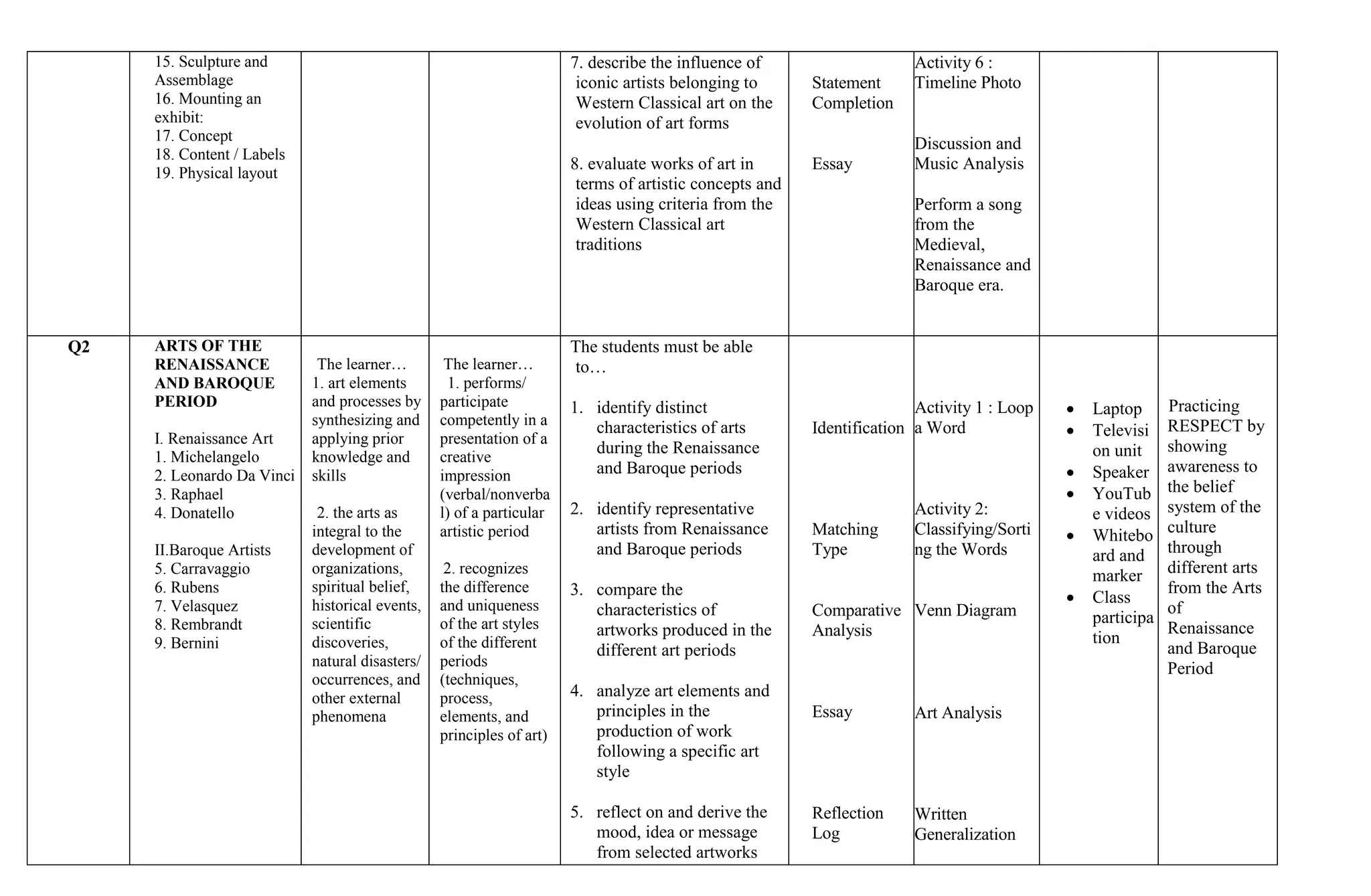
Q2 ARTS OF THE
RENAISSANCE
AND BAROQUE
PERIOD
I. Renaissance Art
1. Michelangelo
2. Leonardo Da Vinci
3. Raphael
4. Donatello
II.Baroque Artists
5. Carravaggio
6. Rubens
7. Velasquez
8. Rembrandt
9. Bernini
The learner…
1. art elements
and processes by
synthesizing and
applying prior
knowledge and
skills
2. the arts as
integral to the
development of
organizations,
spiritual belief,
historical events,
scientific
discoveries,
natural disasters/
occurrences, and
other external
phenomena
The learner…
1. performs/
participate
competently in a
presentation of a
creative
impression
(verbal/nonverba
l) of a particular
artistic period
2. recognizes
the difference
and uniqueness
of the art styles
of the different
periods
(techniques,
process,
elements, and
principles of art)
The students must be able
to…
1. identify distinct
characteristics of arts
during the Renaissance
and Baroque periods
2. identify representative
artists from Renaissance
and Baroque periods
3. compare the
characteristics of
artworks produced in the
different art periods
4. analyze art elements and
principles in the
production of work
following a specific art
style
5. reflect on and derive the
mood, idea or message
from selected artworks
Identification
Matching
Type
Comparative
Analysis
Essay
Reflection
Log
Activity 1 : Loop
a Word
Activity 2:
Classifying/Sorti
ng the Words
Venn Diagram
Art Analysis
Written
Generalization
 Laptop
 Televisi
on unit
 Speaker
 YouTub
e videos
 Whitebo
ard and
marker
 Class
participa
tion
Practicing
RESPECT by
showing
awareness to
the belief
system of the
culture
through
different arts
from the Arts
of
Renaissance
and Baroque
Period
6. create artworks guided by
techniques and styles of
the Renaissance and the
Baroque periods
Performance
Task
Painting

MAPEH 9-(Arts)_CM -.docx MAPEH 9 CMAP ARTS

  • 1.
    CURRICULUM MAP Subject: MAPEH(Arts) Grade Level: 9 Teacher: Angel Dianne O. Legaspi Vision: Mission: Goals and Objectives: Term (No.) Month Unit Topic Content Content Standards (CS) Performance Standard (PS) Competencies/Skills Assessmemt Activities Resources Institutional Core Values Q1 WESTERN AND CLASSICAL ART TRADITIONS I. Ancient Art 1. Prehistoric Art II. Classical Art 2. Egyptian Art 4. Greek Art 5. Roman Art III. Medieval Art 6. Byzantine 7. Romanesque 8. Gothic IV. Principles of Art 9. Rhythm, Movement 10.Balance 11. Emphasis 12. Harmony, Unity, and Variety 13. Proportion V. Process: 14. Painting and/ or Drawing The learner… 1. art elements and processes by synthesizing and applying prior knowledge and skills 2. the arts as integral to the development of organizations, spiritual belief, historical events, scientific discoveries, natural disasters/ occurrences, and other external phenomena The learner.. 1. perform / participate competently in a presentation of a creative impression (verbal/nonverba l) of a particular artistic period 2. recognize the difference and uniqueness of the art styles of the different periods (techniques, process, elements, and principles of art) 1. analyze art elements and principles in the production of work following the style of a western and classical art 2. identify distinct characteristics of arts during the different art periods 3. identify representative artists from various art periods 4. reflect on and derives the mood, idea, or message from selected artworks 5. compare the characteristics of artworks produced in the different art periods 6. create artworks guided by techniques and styles of Western Classical art traditions Identification Matching Type Reflection Log Comparative Analysis Performance Task Activity 1: Sorting and Classifying Activity 2: Crossword Puzzle Activity 3 : Match the Words Activity 4: Picture Analysis Activity 5: Comparison Table Painting  Laptop  Televisi on unit  Speaker  YouTub e videos  Whitebo ard and marker  Class participa tion Practicing RESPECT by showing awareness to the belief system of the culture through different arts from the Classical Arts Tradition NORZAGARAY ACADEMY, INC. A. Villarama St. Poblacion, Norzagaray, Bulacan Telephone: (044) 762-8659/ 0917-5429400; Email: norzacad2015@gmail.com
  • 2.
    15. Sculpture and Assemblage 16.Mounting an exhibit: 17. Concept 18. Content / Labels 19. Physical layout 7. describe the influence of iconic artists belonging to Western Classical art on the evolution of art forms 8. evaluate works of art in terms of artistic concepts and ideas using criteria from the Western Classical art traditions Statement Completion Essay Activity 6 : Timeline Photo Discussion and Music Analysis Perform a song from the Medieval, Renaissance and Baroque era. Q2 ARTS OF THE RENAISSANCE AND BAROQUE PERIOD I. Renaissance Art 1. Michelangelo 2. Leonardo Da Vinci 3. Raphael 4. Donatello II.Baroque Artists 5. Carravaggio 6. Rubens 7. Velasquez 8. Rembrandt 9. Bernini The learner… 1. art elements and processes by synthesizing and applying prior knowledge and skills 2. the arts as integral to the development of organizations, spiritual belief, historical events, scientific discoveries, natural disasters/ occurrences, and other external phenomena The learner… 1. performs/ participate competently in a presentation of a creative impression (verbal/nonverba l) of a particular artistic period 2. recognizes the difference and uniqueness of the art styles of the different periods (techniques, process, elements, and principles of art) The students must be able to… 1. identify distinct characteristics of arts during the Renaissance and Baroque periods 2. identify representative artists from Renaissance and Baroque periods 3. compare the characteristics of artworks produced in the different art periods 4. analyze art elements and principles in the production of work following a specific art style 5. reflect on and derive the mood, idea or message from selected artworks Identification Matching Type Comparative Analysis Essay Reflection Log Activity 1 : Loop a Word Activity 2: Classifying/Sorti ng the Words Venn Diagram Art Analysis Written Generalization  Laptop  Televisi on unit  Speaker  YouTub e videos  Whitebo ard and marker  Class participa tion Practicing RESPECT by showing awareness to the belief system of the culture through different arts from the Arts of Renaissance and Baroque Period
  • 3.
    6. create artworksguided by techniques and styles of the Renaissance and the Baroque periods Performance Task Painting