MAPEH 9
Instrumental Music of the
Renaissance Music
The noise or sound which musicians make
while they are tuning their instruments is
nothing pleasant to hear, but yet is a cause
why the music is sweeter afterwards.
- Francis Bacon
Keywords
• Ricercare
• Canzona
• Ornamentation
• Counterpoint
• Tablature
• Dissonance
• Recorder
• Clavichord
• Positive Organ
• Viol
• Vihuela
• Lute
• Harpsichord
Development
During the Renaissance Period, instrumental
music may be considered subordinate to or less
important than vocal music. This is because
instrumentation is traditionally intended to
accompany voices or singing. However it is
essential to note that hits gave rise to
emancipation of instrumental music from vocal
music specifically during the 16th century. Among
are these important characteristics of this music’s
development are the following.
Characteristics of Instrumental
Renaissance Music
1. The instrumental music generally remained
within the bounds set by the standards and
styles of vocal performance.
2. Creating music extemporaneously played an
essential role in performing melodic
embellishments.
3. There was considerable number of musical
scores or sheets of vocal music which were
intended for performing instrumentally.
4. There were also some instrumental forms which
were developed from the vocal forms.
The Renaissance style of instrumental music is
performed in the following manner.
1. The range of the melody exceeds what the human
voice could reach.
2. The melodic contour is characterized by a lot of wide
skips.
3. Parts with counterpoint (texture or technique that
combines two or more independent melodic lines ) in
music; involving keyboard and lute are either easily
included or excluded without designated rests.
4. It also contains fast and lengthy melodic lines.
5. Dissonance or harmonic intervals that produce the
effect of action or tension are employed more freely.
6. Musical ornamentations are extensively used.
Renaissance Musical Instruments
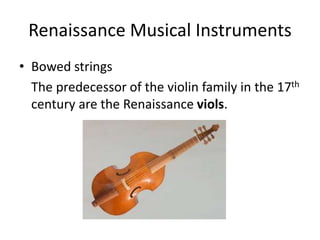
• Bowed strings
The predecessor of the violin family in the 17th
century are the Renaissance viols.
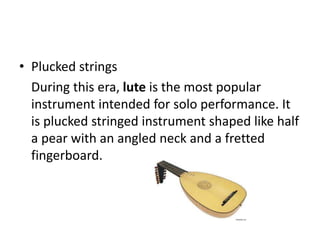
• Plucked strings
During this era, lute is the most popular
instrument intended for solo performance. It
is plucked stringed instrument shaped like half
a pear with an angled neck and a fretted
fingerboard.
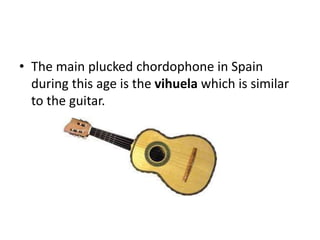
• The main plucked chordophone in Spain
during this age is the vihuela which is similar
to the guitar.
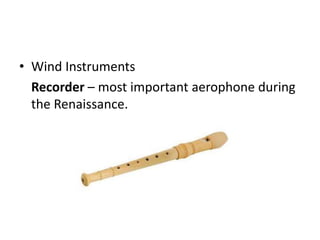
• Wind Instruments
Recorder – most important aerophone during
the Renaissance.
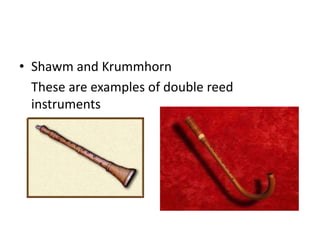
• Shawm and Krummhorn
These are examples of double reed
instruments
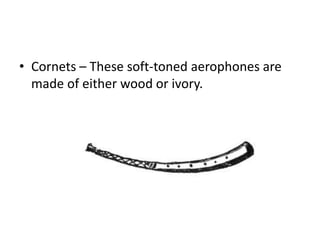
• Cornets – These soft-toned aerophones are
made of either wood or ivory.
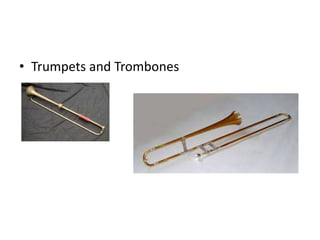
• Trumpets and Trombones
• Keyboard Instruments
1. Positive Organ
2. Portative
3. Clavichord
4. harpsichord
Instrumental Genres
• Dance Music
1. Pavane
2. Ronde and Saltarello
3. Tanz und Nachtanz and Des Prinzen Tanz-
Proprtz
Other dances
4. Passamezzo, basse-danse and branle or bransle
5. Allemande or Alma and Courante or Currento
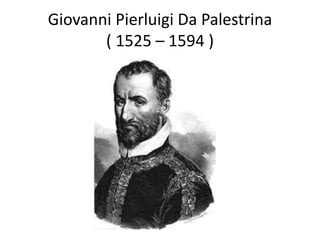
Giovanni Pierluigi Da Palestrina
( 1525 – 1594 )

Mapeh 9 renaissance

  • 1.
    MAPEH 9 Instrumental Musicof the Renaissance Music
  • 2.
    The noise orsound which musicians make while they are tuning their instruments is nothing pleasant to hear, but yet is a cause why the music is sweeter afterwards. - Francis Bacon
  • 3.
    Keywords • Ricercare • Canzona •Ornamentation • Counterpoint • Tablature • Dissonance • Recorder • Clavichord • Positive Organ • Viol • Vihuela • Lute • Harpsichord
  • 4.
    Development During the RenaissancePeriod, instrumental music may be considered subordinate to or less important than vocal music. This is because instrumentation is traditionally intended to accompany voices or singing. However it is essential to note that hits gave rise to emancipation of instrumental music from vocal music specifically during the 16th century. Among are these important characteristics of this music’s development are the following.
  • 5.
    Characteristics of Instrumental RenaissanceMusic 1. The instrumental music generally remained within the bounds set by the standards and styles of vocal performance. 2. Creating music extemporaneously played an essential role in performing melodic embellishments. 3. There was considerable number of musical scores or sheets of vocal music which were intended for performing instrumentally. 4. There were also some instrumental forms which were developed from the vocal forms.
  • 6.
    The Renaissance styleof instrumental music is performed in the following manner. 1. The range of the melody exceeds what the human voice could reach. 2. The melodic contour is characterized by a lot of wide skips. 3. Parts with counterpoint (texture or technique that combines two or more independent melodic lines ) in music; involving keyboard and lute are either easily included or excluded without designated rests. 4. It also contains fast and lengthy melodic lines. 5. Dissonance or harmonic intervals that produce the effect of action or tension are employed more freely. 6. Musical ornamentations are extensively used.
  • 7.
    Renaissance Musical Instruments •Bowed strings The predecessor of the violin family in the 17th century are the Renaissance viols.
  • 8.
    • Plucked strings Duringthis era, lute is the most popular instrument intended for solo performance. It is plucked stringed instrument shaped like half a pear with an angled neck and a fretted fingerboard.
  • 9.
    • The mainplucked chordophone in Spain during this age is the vihuela which is similar to the guitar.
  • 10.
    • Wind Instruments Recorder– most important aerophone during the Renaissance.
  • 11.
    • Shawm andKrummhorn These are examples of double reed instruments
  • 12.
    • Cornets –These soft-toned aerophones are made of either wood or ivory.
  • 13.
  • 14.
    • Keyboard Instruments 1.Positive Organ 2. Portative 3. Clavichord 4. harpsichord
  • 15.
    Instrumental Genres • DanceMusic 1. Pavane 2. Ronde and Saltarello 3. Tanz und Nachtanz and Des Prinzen Tanz- Proprtz Other dances 4. Passamezzo, basse-danse and branle or bransle 5. Allemande or Alma and Courante or Currento
  • 16.
    Giovanni Pierluigi DaPalestrina ( 1525 – 1594 )

Editor's Notes

  • #7 https://www.youtube.com/watch?v=z5I6qi9qwRg
  • #15 Research on How they look like.
  • #17 See video about his life and works.