COMPUTER AIDED
MANUFACTURING
MANUFACTURING SUPPORT SYSTEM
Presented by: Santan Chaurasiya
Branch: M-Tech(Manufacturing
Technology)
Lovely professional university, Punjab
Registration no: 11700177
Guided by: Harpreet Singh
Introduction:
• manufacturing support systems: it is the set of procedures used by
the company to manage production and to solve the technical and
logistics problems encountered in ordering materials, moving the
work through the factory, and ensuring that products meet quality
standards.
• Product design and certain business functions are included among the
manufacturing support systems.
©2008 Pearson Education, Inc., Upper Saddle River, NJ. All rights reserved. This material is protected under all copyright laws as they currently exist.
2 / 29
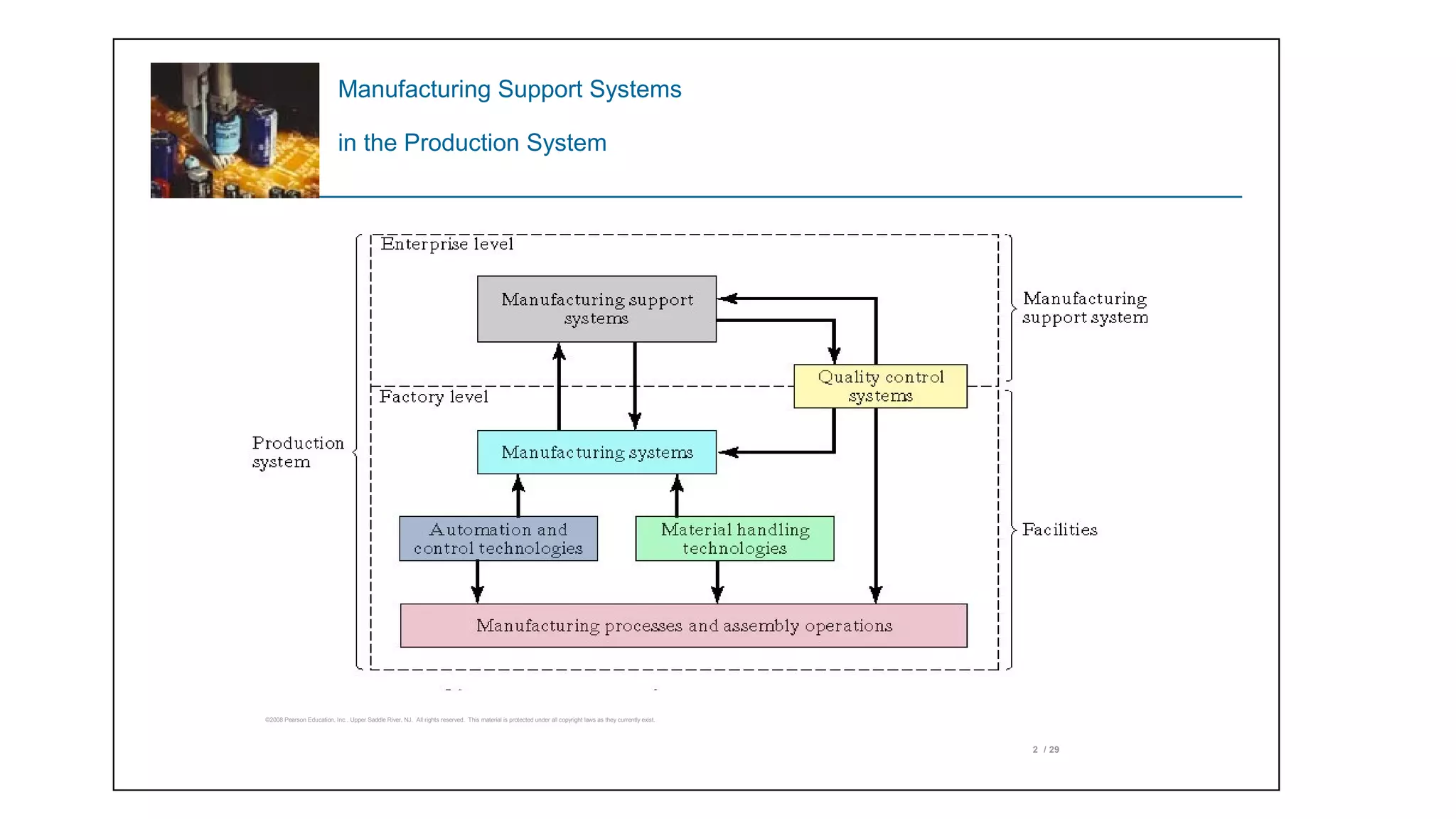
Manufacturing Support Systems
in the Production System
©2008 Pearson Education, Inc., Upper Saddle River, NJ. All rights reserved. This material is protected under all copyright laws as they currently exist.
4 / 29
Manufacturing Support Systems
The procedures and systems used by a firm to manage its
production operations and solve the technical and logistics
problems associated with:
ƒ Designing the products,
ƒ Planning the processes,
ƒ Ordering materials,
ƒ Controlling work-in-process as it moves through the
plant, and
ƒ Delivering quality products to customers
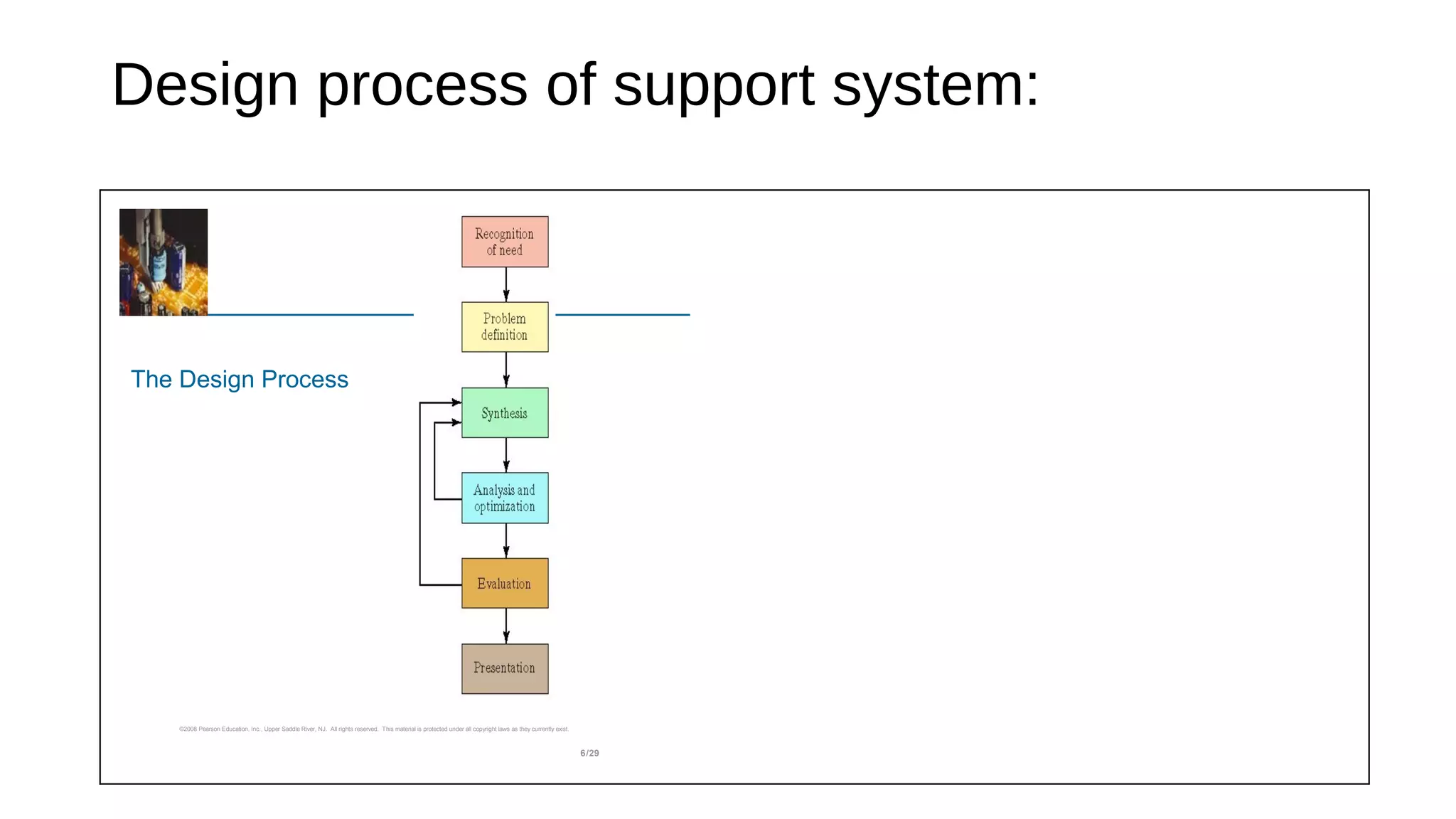
Design process of support system:
• The general process of design is characterized as an iterative process
consisting of six phases:
• Recognition of need - someone recognizes the need that can be
satisfied by a new design
• Problem definition - specification of the item
• Synthesis - creation and conceptualization
• Analysis and optimization - the concept is analyzed and redesigned
• Evaluation - compare design against original specification
• Presentation - documenting the design (e.g., drawings)
Design process of support system:
©2008 Pearson Education, Inc., Upper Saddle River, NJ. All rights reserved. This material is protected under all copyright laws as they currently exist.
6/29
The Design Process
Function of Manufacturing Support System:
It’s Involves a cycle of information-processing activities that consists of
four functions:
1. Business functions - sales and marketing, order entry, cost accounting,
customer billing
2. Product design - research and development, design engineering, prototype
shop
3. Manufacturing planning - process planning, production planning, MRP,
capacity planning
4. Manufacturing control - shop floor control, inventory control, quality
control
Information Processing Cycle in
Manufacturing Support Systems:
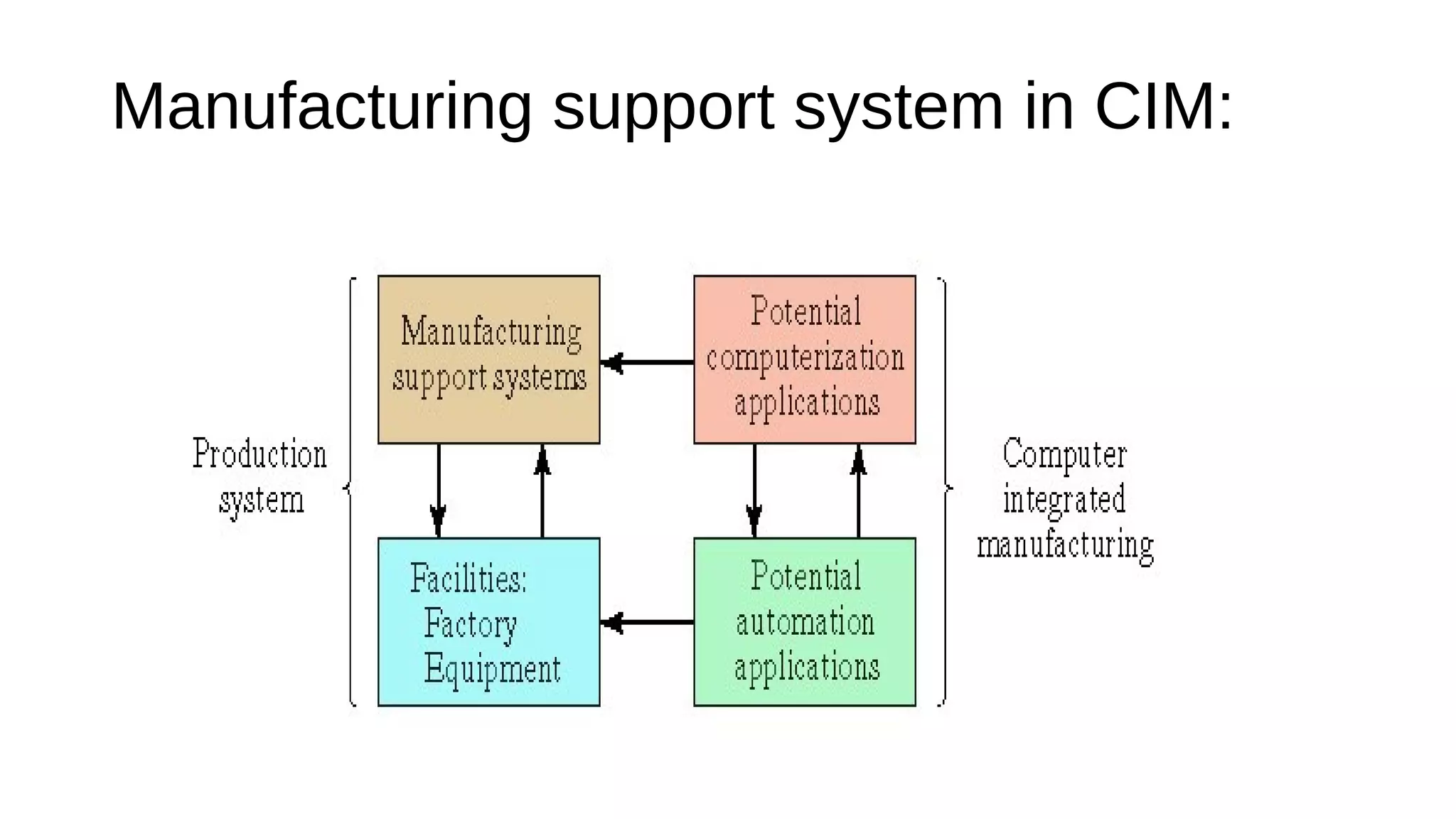
Categories of automation:
Two categories of automation in the production system:
1. Automation of manufacturing systems in the factory
2. Computerization of the manufacturing support systems
 The two categories overlap because manufacturing support systems
are connected to the factory manufacturing systems
• Computer-Integrated Manufacturing (CIM)
Manufacturing support system in CIM:
Actual diagram for manufacturing support
system:
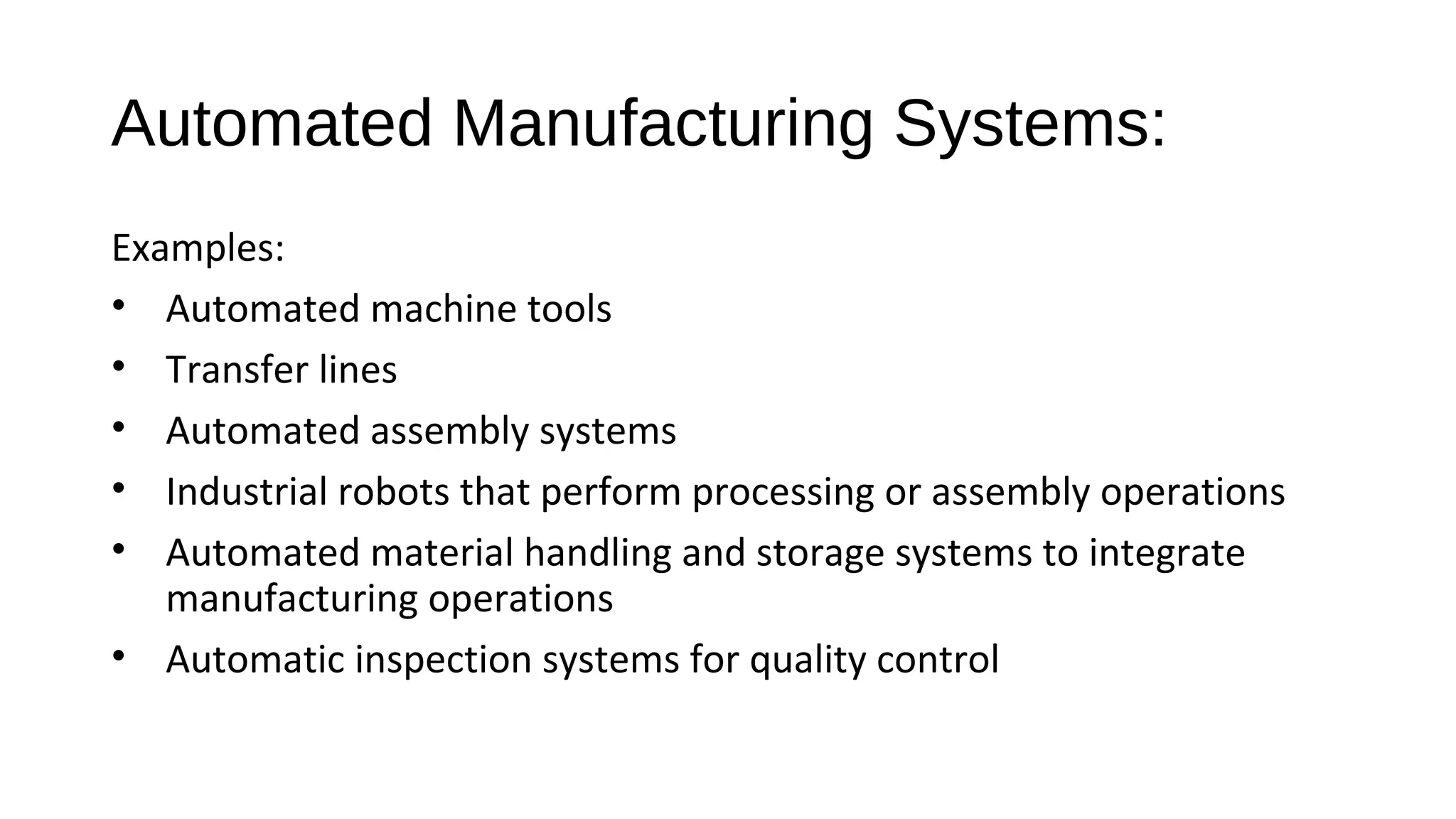
Automated Manufacturing Systems:
Examples:
• Automated machine tools
• Transfer lines
• Automated assembly systems
• Industrial robots that perform processing or assembly operations
• Automated material handling and storage systems to integrate
manufacturing operations
• Automatic inspection systems for quality control
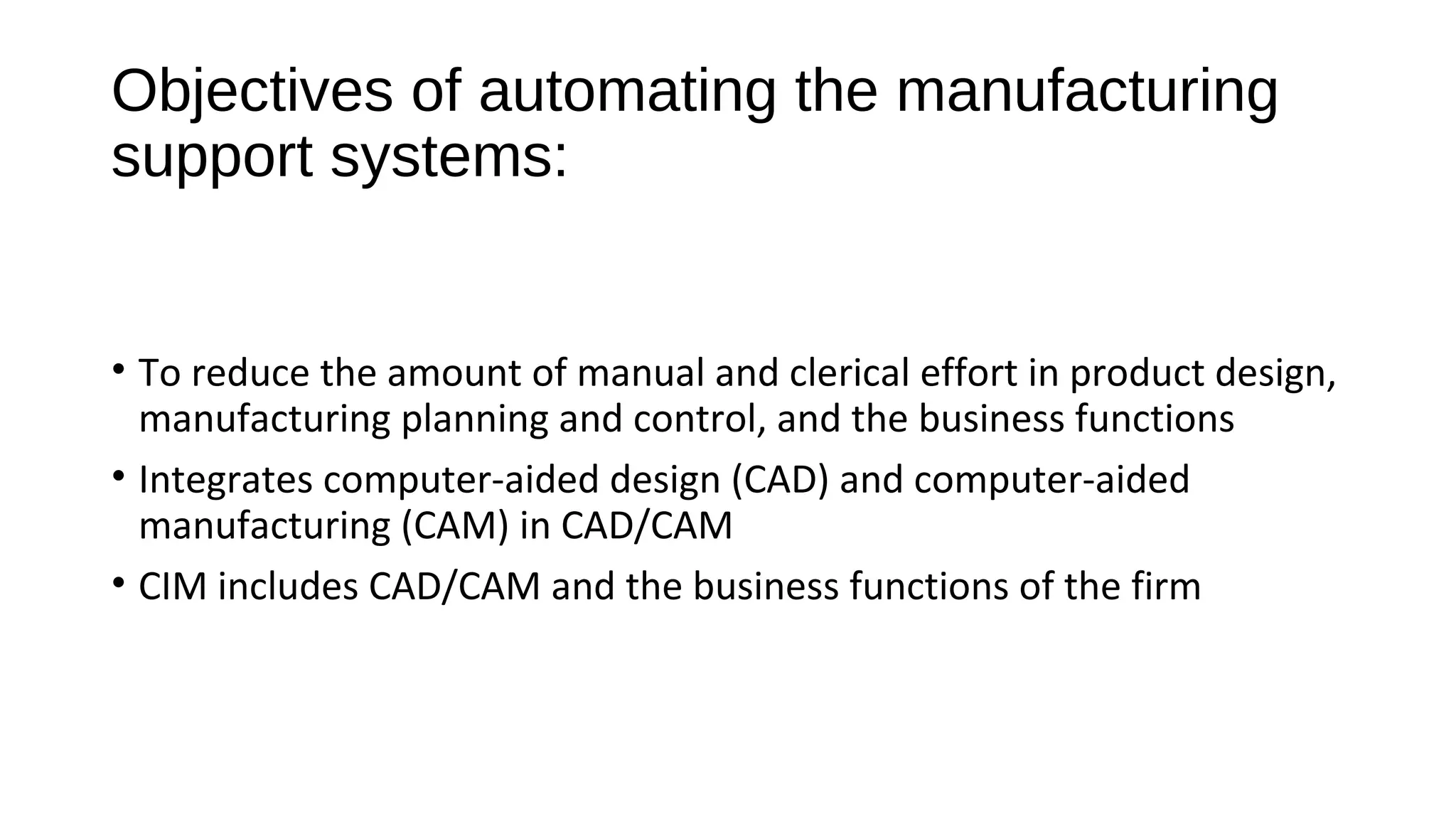
Objectives of automating the manufacturing
support systems:
• To reduce the amount of manual and clerical effort in product design,
manufacturing planning and control, and the business functions
• Integrates computer-aided design (CAD) and computer-aided
manufacturing (CAM) in CAD/CAM
• CIM includes CAD/CAM and the business functions of the firm
Labor in Manufacturing Support Systems:
• Product designers who bring creativity to the design task
• Manufacturing engineers who
Design the production equipment and tooling
And plan the production methods and routings
• Equipment maintenance
• Programming and computer operation
• Engineering project work
• Plant management
Reasons for implementing manufacturing
support system:
1. To increase labor productivity
2. To reduce labor cost
3. To mitigate the effects of labor shortages
4. To reduce or remove routine manual and clerical tasks
5. To improve worker safety
6. To improve product quality
7. To reduce manufacturing lead time
8. To accomplish what cannot be done manually
9. To avoid the high cost of not automating
manufacturing support system

manufacturing support system

  • 1.
    COMPUTER AIDED MANUFACTURING MANUFACTURING SUPPORTSYSTEM Presented by: Santan Chaurasiya Branch: M-Tech(Manufacturing Technology) Lovely professional university, Punjab Registration no: 11700177 Guided by: Harpreet Singh
  • 2.
    Introduction: • manufacturing supportsystems: it is the set of procedures used by the company to manage production and to solve the technical and logistics problems encountered in ordering materials, moving the work through the factory, and ensuring that products meet quality standards. • Product design and certain business functions are included among the manufacturing support systems.
  • 3.
    ©2008 Pearson Education,Inc., Upper Saddle River, NJ. All rights reserved. This material is protected under all copyright laws as they currently exist. 2 / 29 Manufacturing Support Systems in the Production System
  • 4.
    ©2008 Pearson Education,Inc., Upper Saddle River, NJ. All rights reserved. This material is protected under all copyright laws as they currently exist. 4 / 29 Manufacturing Support Systems The procedures and systems used by a firm to manage its production operations and solve the technical and logistics problems associated with: ƒ Designing the products, ƒ Planning the processes, ƒ Ordering materials, ƒ Controlling work-in-process as it moves through the plant, and ƒ Delivering quality products to customers
  • 5.
    Design process ofsupport system: • The general process of design is characterized as an iterative process consisting of six phases: • Recognition of need - someone recognizes the need that can be satisfied by a new design • Problem definition - specification of the item • Synthesis - creation and conceptualization • Analysis and optimization - the concept is analyzed and redesigned • Evaluation - compare design against original specification • Presentation - documenting the design (e.g., drawings)
  • 6.
    Design process ofsupport system: ©2008 Pearson Education, Inc., Upper Saddle River, NJ. All rights reserved. This material is protected under all copyright laws as they currently exist. 6/29 The Design Process
  • 7.
    Function of ManufacturingSupport System: It’s Involves a cycle of information-processing activities that consists of four functions: 1. Business functions - sales and marketing, order entry, cost accounting, customer billing 2. Product design - research and development, design engineering, prototype shop 3. Manufacturing planning - process planning, production planning, MRP, capacity planning 4. Manufacturing control - shop floor control, inventory control, quality control
  • 8.
    Information Processing Cyclein Manufacturing Support Systems:
  • 9.
    Categories of automation: Twocategories of automation in the production system: 1. Automation of manufacturing systems in the factory 2. Computerization of the manufacturing support systems  The two categories overlap because manufacturing support systems are connected to the factory manufacturing systems • Computer-Integrated Manufacturing (CIM)
  • 10.
  • 11.
    Actual diagram formanufacturing support system:
  • 12.
    Automated Manufacturing Systems: Examples: •Automated machine tools • Transfer lines • Automated assembly systems • Industrial robots that perform processing or assembly operations • Automated material handling and storage systems to integrate manufacturing operations • Automatic inspection systems for quality control
  • 13.
    Objectives of automatingthe manufacturing support systems: • To reduce the amount of manual and clerical effort in product design, manufacturing planning and control, and the business functions • Integrates computer-aided design (CAD) and computer-aided manufacturing (CAM) in CAD/CAM • CIM includes CAD/CAM and the business functions of the firm
  • 14.
    Labor in ManufacturingSupport Systems: • Product designers who bring creativity to the design task • Manufacturing engineers who Design the production equipment and tooling And plan the production methods and routings • Equipment maintenance • Programming and computer operation • Engineering project work • Plant management
  • 15.
    Reasons for implementingmanufacturing support system: 1. To increase labor productivity 2. To reduce labor cost 3. To mitigate the effects of labor shortages 4. To reduce or remove routine manual and clerical tasks 5. To improve worker safety 6. To improve product quality 7. To reduce manufacturing lead time 8. To accomplish what cannot be done manually 9. To avoid the high cost of not automating