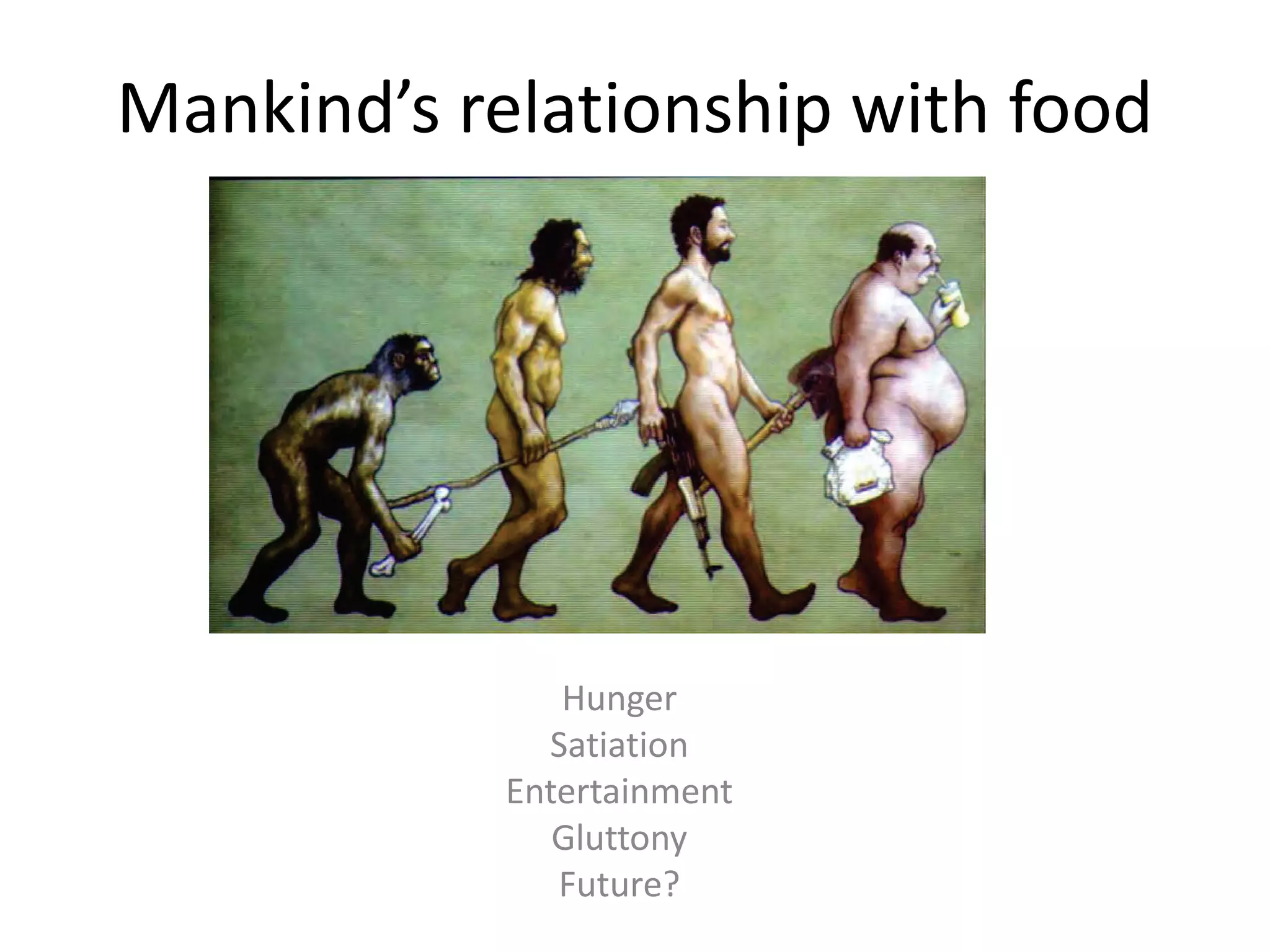
Mankind’s relationship with food
Hunger
Satiation
Entertainment
Gluttony
Future?
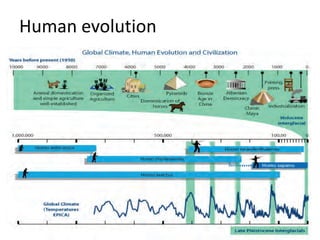
Human evolution
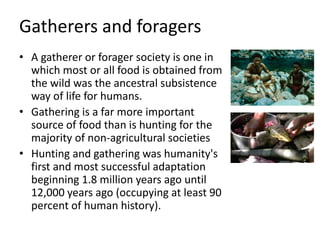
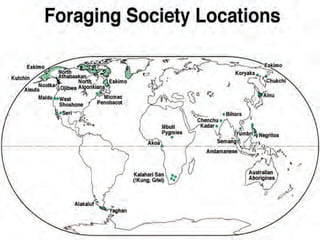
Gatherers and foragers
• A gatherer or forager society is one in
which most or all food is obtained from
the wild was the ancestral subsistence
way of life for humans.
• Gathering is a far more important
source of food than is hunting for the
majority of non-agricultural societies
• Hunting and gathering was humanity's
first and most successful adaptation
beginning 1.8 million years ago until
12,000 years ago (occupying at least 90
percent of human history).
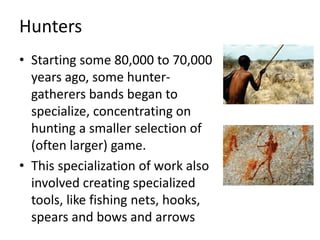
Hunters
• Starting some 80,000 to 70,000
years ago, some hunter-
gatherers bands began to
specialize, concentrating on
hunting a smaller selection of
(often larger) game.
• This specialization of work also
involved creating specialized
tools, like fishing nets, hooks,
spears and bows and arrows
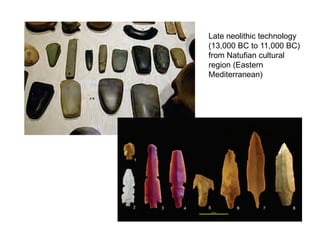
Late neolithic technology
(13,000 BC to 11,000 BC)
from Natufian cultural
region (Eastern
Mediterranean)
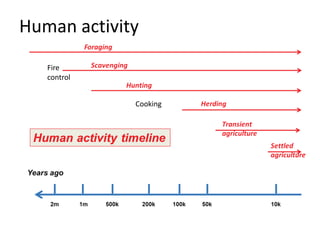
Human activity
Fire
control
Cooking
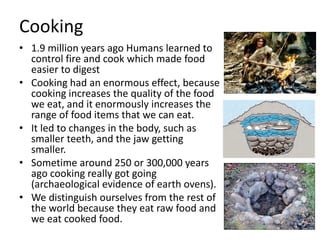
Cooking
• 1.9 million years ago Humans learned to
control fire and cook which made food
easier to digest
• Cooking had an enormous effect, because
cooking increases the quality of the food
we eat, and it enormously increases the
range of food items that we can eat.
• It led to changes in the body, such as
smaller teeth, and the jaw getting
smaller.
• Sometime around 250 or 300,000 years
ago cooking really got going
(archaeological evidence of earth ovens).
• We distinguish ourselves from the rest of
the world because they eat raw food and
we eat cooked food.
Benefits of Cooking
– Freeing humans from having to spend half the day
chewing tough raw food (as most of our primate
relatives do)
– Cooked food is also softer, meaning the body uses
less energy digesting what it takes in.
– Preservation - being able to store excess food
• cooking allowed early humans to devote
themselves to other productive activities, such
as the development of tools, agriculture, and
social networks.
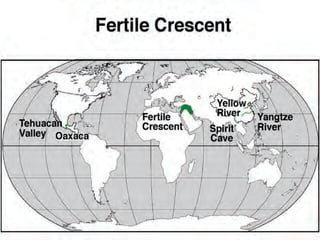
Agriculture and Domestication
• It is thought that intermittent and seasonal
harvesting of wild foods began 11,000 years
ago.
• Actual cultivation by settled communities can
be traced to 9,000 years ago.
• Utilized pre-adapted wild plants
– (e.g., wheat, corn, pea, barley, lentel, rice)
• Arose in different areas at different times
• Allowed for settlements and increases in rates
of “advancement” in civilization
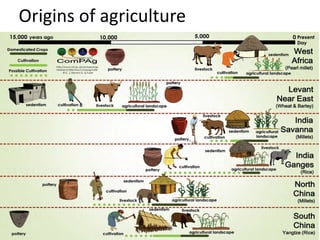
Origins of agriculture
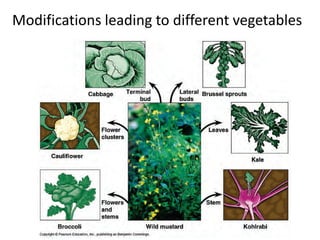
Modifications leading to different vegetables
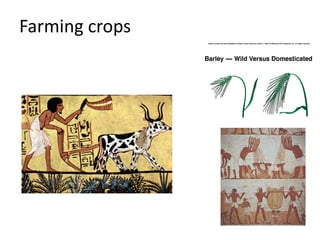
Farming crops
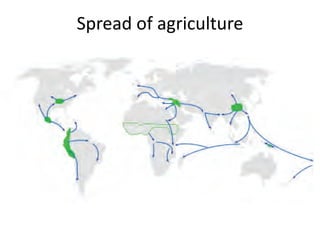
Spread of agriculture
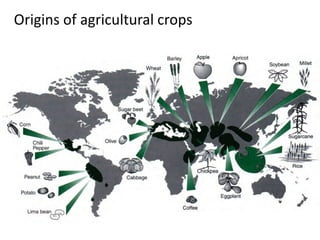
Origins of agricultural crops
History of Domestication
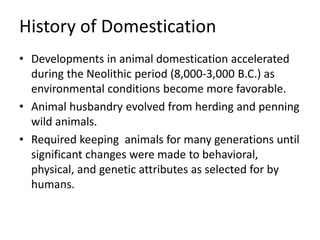
• Developments in animal domestication accelerated
during the Neolithic period (8,000-3,000 B.C.) as
environmental conditions become more favorable.
• Animal husbandry evolved from herding and penning
wild animals.
• Required keeping animals for many generations until
significant changes were made to behavioral,
physical, and genetic attributes as selected for by
humans.
Domestication of the dog
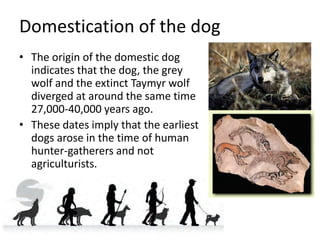
• The origin of the domestic dog
indicates that the dog, the grey
wolf and the extinct Taymyr wolf
diverged at around the same time
27,000-40,000 years ago.
• These dates imply that the earliest
dogs arose in the time of human
hunter-gatherers and not
agriculturists.
History of Domestication
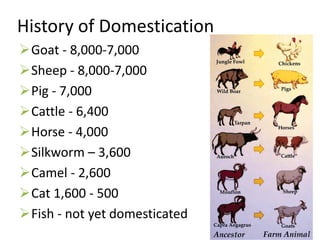
Goat - 8,000-7,000
Sheep - 8,000-7,000
Pig - 7,000
Cattle - 6,400
Horse - 4,000
Silkworm – 3,600
Camel - 2,600
Cat 1,600 - 500
Fish - not yet domesticated
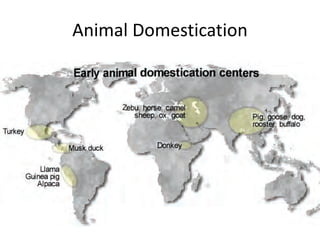
Animal Domestication
Consequences
• Population Growth
– Domestication and agriculture caused food
supplies to become more stable and reliable.
– More food poor acre of land, so can support larger
population.
• Health and Nutrition
– Closer contact with people and animals, so easier
spread of disease.
– Less variety - Same unvarying diet, poorer
nutrition.
• Must be defended
Positive Side effects
• Agriculture leads to sedentary populations.
• Surplus can provide during lean times.
• Surpluses can be traded for other
commodities.
• Surpluses mean some of the population does
not have to engage in food production.
– This gives rise to different roles within society and
produces social stratification.
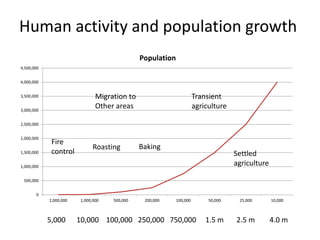
Human activity and population growth
0
500,000
1,000,000
1,500,000
2,000,000
2,500,000
3,000,000
3,500,000
4,000,000
4,500,000
2,000,000 1,000,000 500,000 200,000 100,000 50,000 25,000 10,000
Population
Migration to
Other areas
5,000 10,000 100,000 250,000 750,000 1.5 m 2.5 m 4.0 m
Fire
control
BakingRoasting
Transient
agriculture
Settled
agriculture
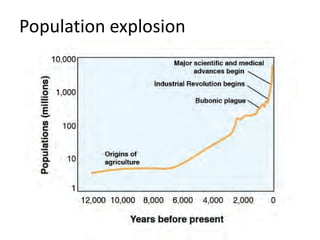
Population explosion
In the Drome valley?
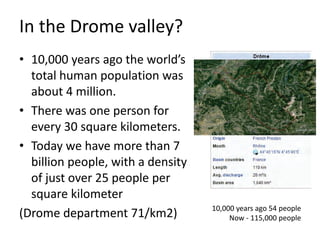
• 10,000 years ago the world’s
total human population was
about 4 million.
• There was one person for
every 30 square kilometers.
• Today we have more than 7
billion people, with a density
of just over 25 people per
square kilometer
(Drome department 71/km2) 10,000 years ago 54 people
Now - 115,000 people
Development of modern agriculture
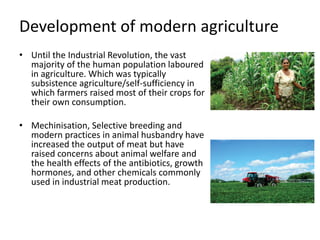
• Until the Industrial Revolution, the vast
majority of the human population laboured
in agriculture. Which was typically
subsistence agriculture/self-sufficiency in
which farmers raised most of their crops for
their own consumption.
• Mechinisation, Selective breeding and
modern practices in animal husbandry have
increased the output of meat but have
raised concerns about animal welfare and
the health effects of the antibiotics, growth
hormones, and other chemicals commonly
used in industrial meat production.
Development of modern agriculture
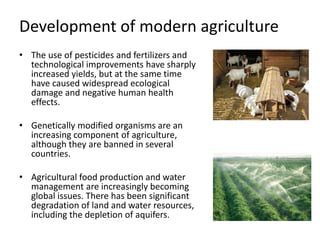
• The use of pesticides and fertilizers and
technological improvements have sharply
increased yields, but at the same time
have caused widespread ecological
damage and negative human health
effects.
• Genetically modified organisms are an
increasing component of agriculture,
although they are banned in several
countries.
• Agricultural food production and water
management are increasingly becoming
global issues. There has been significant
degradation of land and water resources,
including the depletion of aquifers.
Modern eating habits
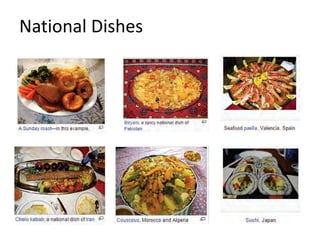
• National dishes
• Fast food
• Teenagers
• Spicy food
• Sugar consumption
• Chocolate consumption
• Food entertainment
National Dishes
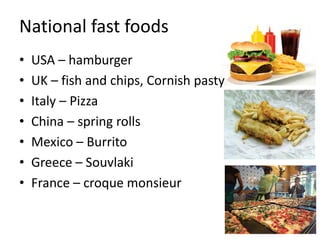
National fast foods
• USA – hamburger
• UK – fish and chips, Cornish pasty
• Italy – Pizza
• China – spring rolls
• Mexico – Burrito
• Greece – Souvlaki
• France – croque monsieur
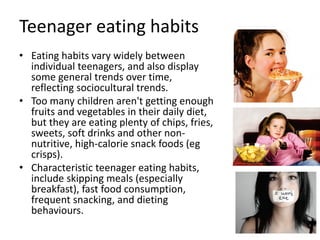
Teenager eating habits
• Eating habits vary widely between
individual teenagers, and also display
some general trends over time,
reflecting sociocultural trends.
• Too many children aren't getting enough
fruits and vegetables in their daily diet,
but they are eating plenty of chips, fries,
sweets, soft drinks and other non-
nutritive, high-calorie snack foods (eg
crisps).
• Characteristic teenager eating habits,
include skipping meals (especially
breakfast), fast food consumption,
frequent snacking, and dieting
behaviours.
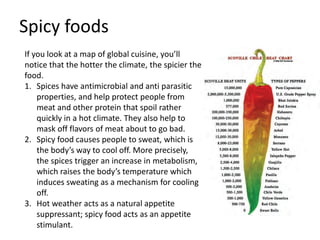
Spicy foods
If you look at a map of global cuisine, you’ll
notice that the hotter the climate, the spicier the
food.
1. Spices have antimicrobial and anti parasitic
properties, and help protect people from
meat and other protein that spoil rather
quickly in a hot climate. They also help to
mask off flavors of meat about to go bad.
2. Spicy food causes people to sweat, which is
the body’s way to cool off. More precisely,
the spices trigger an increase in metabolism,
which raises the body’s temperature which
induces sweating as a mechanism for cooling
off.
3. Hot weather acts as a natural appetite
suppressant; spicy food acts as an appetite
stimulant.
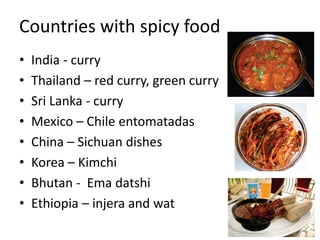
Countries with spicy food
• India - curry
• Thailand – red curry, green curry
• Sri Lanka - curry
• Mexico – Chile entomatadas
• China – Sichuan dishes
• Korea – Kimchi
• Bhutan - Ema datshi
• Ethiopia – injera and wat
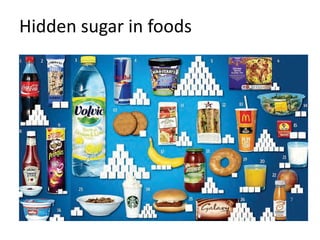
Hidden sugar in foods
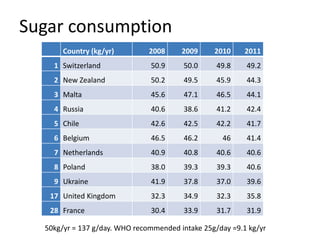
Sugar consumption
Country (kg/yr) 2008 2009 2010 2011
1 Switzerland 50.9 50.0 49.8 49.2
2 New Zealand 50.2 49.5 45.9 44.3
3 Malta 45.6 47.1 46.5 44.1
4 Russia 40.6 38.6 41.2 42.4
5 Chile 42.6 42.5 42.2 41.7
6 Belgium 46.5 46.2 46 41.4
7 Netherlands 40.9 40.8 40.6 40.6
8 Poland 38.0 39.3 39.3 40.6
9 Ukraine 41.9 37.8 37.0 39.6
17 United Kingdom 32.3 34.9 32.3 35.8
28 France 30.4 33.9 31.7 31.9
50kg/yr = 137 g/day. WHO recommended intake 25g/day =9.1 kg/yr
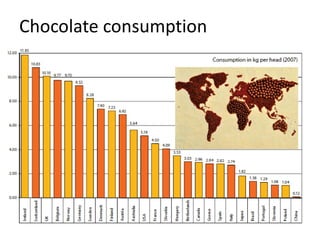
Chocolate consumption
Food as entertainment
Country
Michelin Star
Restaurants
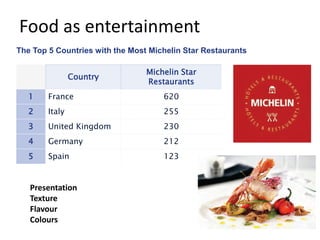
1 France 620
2 Italy 255
3 United Kingdom 230
4 Germany 212
5 Spain 123
The Top 5 Countries with the Most Michelin Star Restaurants
Presentation
Texture
Flavour
Colours
Modern eating habits - consequences
• Food wastage
• Overweight and Obesity
Food wastage
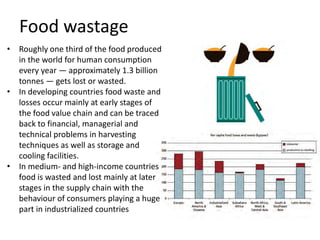
• Roughly one third of the food produced
in the world for human consumption
every year — approximately 1.3 billion
tonnes — gets lost or wasted.
• In developing countries food waste and
losses occur mainly at early stages of
the food value chain and can be traced
back to financial, managerial and
technical problems in harvesting
techniques as well as storage and
cooling facilities.
• In medium- and high-income countries
food is wasted and lost mainly at later
stages in the supply chain with the
behaviour of consumers playing a huge
part in industrialized countries
Food wastage
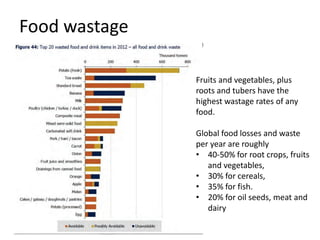
Fruits and vegetables, plus
roots and tubers have the
highest wastage rates of any
food.
Global food losses and waste
per year are roughly
• 40-50% for root crops, fruits
and vegetables,
• 30% for cereals,
• 35% for fish.
• 20% for oil seeds, meat and
dairy
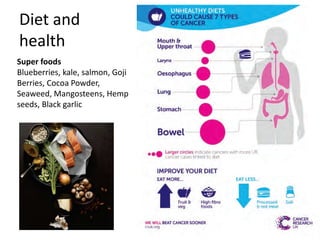
Diet and
health
Super foods
Blueberries, kale, salmon, Goji
Berries, Cocoa Powder,
Seaweed, Mangosteens, Hemp
seeds, Black garlic
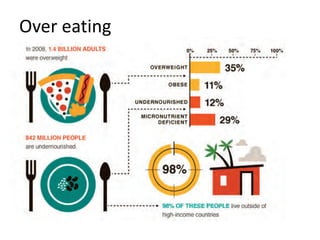
Over eating
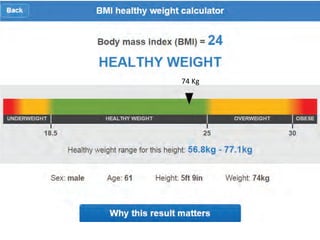
84 Kg
Gluttony
overweight Obese74 Kg
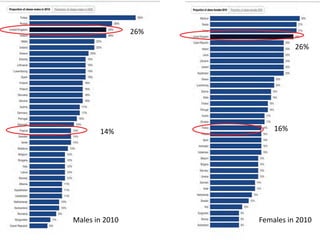
26%
26%
16%14%
Males in 2010 Females in 2010
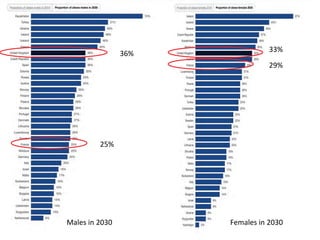
Males in 2030
36%
33%
29%
25%
Females in 2030
Modern eating trends
• Good food
– Slow food
– The Mediterranean diet
• Diets
– Paleo diet
– 5:2 diet
• The future?
Slow food
• Founded by Carlo Petrini in Italy in 1986, Slow
Food movement says that all people ought to
be eating quality food that tastes good, while
still impacting their health in an overall positive
way.
• Further, that food should be good for everyone
on the chain — from the people who grow it,
to the people who consume it, and perhaps
most importantly, to the planet that nurtures it
while it’s in the ground.
• In a word, slow down. Enjoy the tradition of
dining and sharing conversation with others.
Take life in, one forkful at a time.
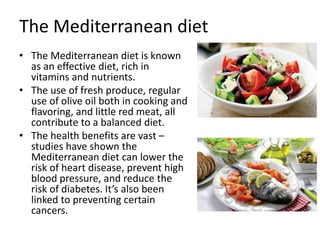
The Mediterranean diet
• The Mediterranean diet is known
as an effective diet, rich in
vitamins and nutrients.
• The use of fresh produce, regular
use of olive oil both in cooking and
flavoring, and little red meat, all
contribute to a balanced diet.
• The health benefits are vast –
studies have shown the
Mediterranean diet can lower the
risk of heart disease, prevent high
blood pressure, and reduce the
risk of diabetes. It’s also been
linked to preventing certain
cancers.
Diets to be healthy and lose weight
• Traditional diets
– Weight watchers – calorie counting
– Atkins diet – low carbohydrate
– Dukan diet – high protein / low carbohydrate
– Eat fat and grow thin diet
– Cabbage soup diet
• New diets
– Paleo diet
– 5:2 diet
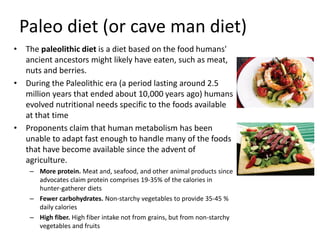
Paleo diet (or cave man diet)
• The paleolithic diet is a diet based on the food humans'
ancient ancestors might likely have eaten, such as meat,
nuts and berries.
• During the Paleolithic era (a period lasting around 2.5
million years that ended about 10,000 years ago) humans
evolved nutritional needs specific to the foods available
at that time
• Proponents claim that human metabolism has been
unable to adapt fast enough to handle many of the foods
that have become available since the advent of
agriculture.
– More protein. Meat and, seafood, and other animal products since
advocates claim protein comprises 19-35% of the calories in
hunter-gatherer diets
– Fewer carbohydrates. Non-starchy vegetables to provide 35-45 %
daily calories
– High fiber. High fiber intake not from grains, but from non-starchy
vegetables and fruits
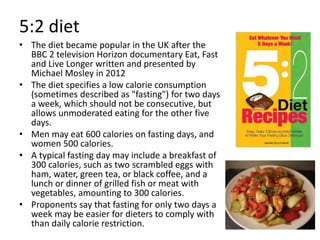
5:2 diet
• The diet became popular in the UK after the
BBC 2 television Horizon documentary Eat, Fast
and Live Longer written and presented by
Michael Mosley in 2012
• The diet specifies a low calorie consumption
(sometimes described as "fasting") for two days
a week, which should not be consecutive, but
allows unmoderated eating for the other five
days.
• Men may eat 600 calories on fasting days, and
women 500 calories.
• A typical fasting day may include a breakfast of
300 calories, such as two scrambled eggs with
ham, water, green tea, or black coffee, and a
lunch or dinner of grilled fish or meat with
vegetables, amounting to 300 calories.
• Proponents say that fasting for only two days a
week may be easier for dieters to comply with
than daily calorie restriction.
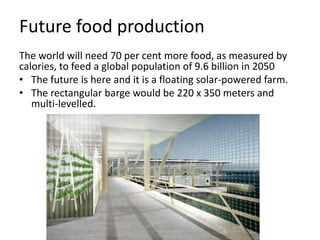
Future food production
The world will need 70 per cent more food, as measured by
calories, to feed a global population of 9.6 billion in 2050
• The future is here and it is a floating solar-powered farm.
• The rectangular barge would be 220 x 350 meters and
multi-levelled.
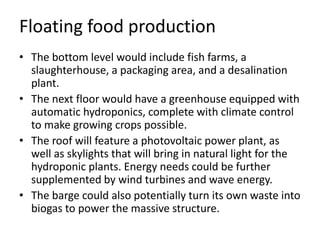
Floating food production
• The bottom level would include fish farms, a
slaughterhouse, a packaging area, and a desalination
plant.
• The next floor would have a greenhouse equipped with
automatic hydroponics, complete with climate control
to make growing crops possible.
• The roof will feature a photovoltaic power plant, as
well as skylights that will bring in natural light for the
hydroponic plants. Energy needs could be further
supplemented by wind turbines and wave energy.
• The barge could also potentially turn its own waste into
biogas to power the massive structure.
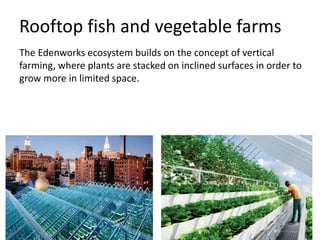
Rooftop fish and vegetable farms
The Edenworks ecosystem builds on the concept of vertical
farming, where plants are stacked on inclined surfaces in order to
grow more in limited space.
Rooftop farms
• In five stacked tiers of growing beds, which contain
trays of soilless growing medium, Edenworks is
cultivating a variety of leafy greens and herbs.
Different than traditional farming or hydroponics,
however, these plants are being fed fish manure.
• Behind the rows of plants are massive 1,000 cubic
meter water tank that contain Tilapia and freshwater
prawns.
• The wastewater from the fish is digested by beneficial
bacteria and converted into high-quality plant food for
the crops, which absorb the fertilizer and filter the
water before it’s returned to the fish tanks
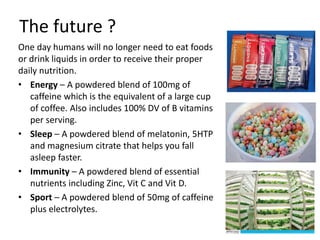
The future ?
One day humans will no longer need to eat foods
or drink liquids in order to receive their proper
daily nutrition.
• Energy – A powdered blend of 100mg of
caffeine which is the equivalent of a large cup
of coffee. Also includes 100% DV of B vitamins
per serving.
• Sleep – A powdered blend of melatonin, 5HTP
and magnesium citrate that helps you fall
asleep faster.
• Immunity – A powdered blend of essential
nutrients including Zinc, Vit C and Vit D.
• Sport – A powdered blend of 50mg of caffeine
plus electrolytes.
Take home message
• We started off hungry
• We developed ways to feed ourselves
• We learned how to preserve food
• We developed efficient industrialised farming
• We started to overeat and become fat
• We had to find ways to stop ourselves from
over feeding or to lose weight
• With increasing population we are having to
find new ways to produce food

Mankind’s relationship with food

  • 1.
    Mankind’s relationship withfood Hunger Satiation Entertainment Gluttony Future?
  • 2.
  • 3.
    Gatherers and foragers •A gatherer or forager society is one in which most or all food is obtained from the wild was the ancestral subsistence way of life for humans. • Gathering is a far more important source of food than is hunting for the majority of non-agricultural societies • Hunting and gathering was humanity's first and most successful adaptation beginning 1.8 million years ago until 12,000 years ago (occupying at least 90 percent of human history).
  • 5.
    Hunters • Starting some80,000 to 70,000 years ago, some hunter- gatherers bands began to specialize, concentrating on hunting a smaller selection of (often larger) game. • This specialization of work also involved creating specialized tools, like fishing nets, hooks, spears and bows and arrows
  • 6.
    Late neolithic technology (13,000BC to 11,000 BC) from Natufian cultural region (Eastern Mediterranean)
  • 7.
  • 8.
    Cooking • 1.9 millionyears ago Humans learned to control fire and cook which made food easier to digest • Cooking had an enormous effect, because cooking increases the quality of the food we eat, and it enormously increases the range of food items that we can eat. • It led to changes in the body, such as smaller teeth, and the jaw getting smaller. • Sometime around 250 or 300,000 years ago cooking really got going (archaeological evidence of earth ovens). • We distinguish ourselves from the rest of the world because they eat raw food and we eat cooked food.
  • 9.
    Benefits of Cooking –Freeing humans from having to spend half the day chewing tough raw food (as most of our primate relatives do) – Cooked food is also softer, meaning the body uses less energy digesting what it takes in. – Preservation - being able to store excess food • cooking allowed early humans to devote themselves to other productive activities, such as the development of tools, agriculture, and social networks.
  • 10.
    Agriculture and Domestication •It is thought that intermittent and seasonal harvesting of wild foods began 11,000 years ago. • Actual cultivation by settled communities can be traced to 9,000 years ago. • Utilized pre-adapted wild plants – (e.g., wheat, corn, pea, barley, lentel, rice) • Arose in different areas at different times • Allowed for settlements and increases in rates of “advancement” in civilization
  • 12.
  • 13.
    Modifications leading todifferent vegetables
  • 14.
  • 15.
  • 16.
  • 17.
    History of Domestication •Developments in animal domestication accelerated during the Neolithic period (8,000-3,000 B.C.) as environmental conditions become more favorable. • Animal husbandry evolved from herding and penning wild animals. • Required keeping animals for many generations until significant changes were made to behavioral, physical, and genetic attributes as selected for by humans.
  • 18.
    Domestication of thedog • The origin of the domestic dog indicates that the dog, the grey wolf and the extinct Taymyr wolf diverged at around the same time 27,000-40,000 years ago. • These dates imply that the earliest dogs arose in the time of human hunter-gatherers and not agriculturists.
  • 19.
    History of Domestication Goat- 8,000-7,000 Sheep - 8,000-7,000 Pig - 7,000 Cattle - 6,400 Horse - 4,000 Silkworm – 3,600 Camel - 2,600 Cat 1,600 - 500 Fish - not yet domesticated
  • 20.
  • 21.
    Consequences • Population Growth –Domestication and agriculture caused food supplies to become more stable and reliable. – More food poor acre of land, so can support larger population. • Health and Nutrition – Closer contact with people and animals, so easier spread of disease. – Less variety - Same unvarying diet, poorer nutrition. • Must be defended
  • 22.
    Positive Side effects •Agriculture leads to sedentary populations. • Surplus can provide during lean times. • Surpluses can be traded for other commodities. • Surpluses mean some of the population does not have to engage in food production. – This gives rise to different roles within society and produces social stratification.
  • 23.
    Human activity andpopulation growth 0 500,000 1,000,000 1,500,000 2,000,000 2,500,000 3,000,000 3,500,000 4,000,000 4,500,000 2,000,000 1,000,000 500,000 200,000 100,000 50,000 25,000 10,000 Population Migration to Other areas 5,000 10,000 100,000 250,000 750,000 1.5 m 2.5 m 4.0 m Fire control BakingRoasting Transient agriculture Settled agriculture
  • 24.
  • 25.
    In the Dromevalley? • 10,000 years ago the world’s total human population was about 4 million. • There was one person for every 30 square kilometers. • Today we have more than 7 billion people, with a density of just over 25 people per square kilometer (Drome department 71/km2) 10,000 years ago 54 people Now - 115,000 people
  • 26.
    Development of modernagriculture • Until the Industrial Revolution, the vast majority of the human population laboured in agriculture. Which was typically subsistence agriculture/self-sufficiency in which farmers raised most of their crops for their own consumption. • Mechinisation, Selective breeding and modern practices in animal husbandry have increased the output of meat but have raised concerns about animal welfare and the health effects of the antibiotics, growth hormones, and other chemicals commonly used in industrial meat production.
  • 27.
    Development of modernagriculture • The use of pesticides and fertilizers and technological improvements have sharply increased yields, but at the same time have caused widespread ecological damage and negative human health effects. • Genetically modified organisms are an increasing component of agriculture, although they are banned in several countries. • Agricultural food production and water management are increasingly becoming global issues. There has been significant degradation of land and water resources, including the depletion of aquifers.
  • 28.
    Modern eating habits •National dishes • Fast food • Teenagers • Spicy food • Sugar consumption • Chocolate consumption • Food entertainment
  • 29.
  • 30.
    National fast foods •USA – hamburger • UK – fish and chips, Cornish pasty • Italy – Pizza • China – spring rolls • Mexico – Burrito • Greece – Souvlaki • France – croque monsieur
  • 31.
    Teenager eating habits •Eating habits vary widely between individual teenagers, and also display some general trends over time, reflecting sociocultural trends. • Too many children aren't getting enough fruits and vegetables in their daily diet, but they are eating plenty of chips, fries, sweets, soft drinks and other non- nutritive, high-calorie snack foods (eg crisps). • Characteristic teenager eating habits, include skipping meals (especially breakfast), fast food consumption, frequent snacking, and dieting behaviours.
  • 32.
    Spicy foods If youlook at a map of global cuisine, you’ll notice that the hotter the climate, the spicier the food. 1. Spices have antimicrobial and anti parasitic properties, and help protect people from meat and other protein that spoil rather quickly in a hot climate. They also help to mask off flavors of meat about to go bad. 2. Spicy food causes people to sweat, which is the body’s way to cool off. More precisely, the spices trigger an increase in metabolism, which raises the body’s temperature which induces sweating as a mechanism for cooling off. 3. Hot weather acts as a natural appetite suppressant; spicy food acts as an appetite stimulant.
  • 33.
    Countries with spicyfood • India - curry • Thailand – red curry, green curry • Sri Lanka - curry • Mexico – Chile entomatadas • China – Sichuan dishes • Korea – Kimchi • Bhutan - Ema datshi • Ethiopia – injera and wat
  • 34.
  • 35.
    Sugar consumption Country (kg/yr)2008 2009 2010 2011 1 Switzerland 50.9 50.0 49.8 49.2 2 New Zealand 50.2 49.5 45.9 44.3 3 Malta 45.6 47.1 46.5 44.1 4 Russia 40.6 38.6 41.2 42.4 5 Chile 42.6 42.5 42.2 41.7 6 Belgium 46.5 46.2 46 41.4 7 Netherlands 40.9 40.8 40.6 40.6 8 Poland 38.0 39.3 39.3 40.6 9 Ukraine 41.9 37.8 37.0 39.6 17 United Kingdom 32.3 34.9 32.3 35.8 28 France 30.4 33.9 31.7 31.9 50kg/yr = 137 g/day. WHO recommended intake 25g/day =9.1 kg/yr
  • 36.
  • 37.
    Food as entertainment Country MichelinStar Restaurants 1 France 620 2 Italy 255 3 United Kingdom 230 4 Germany 212 5 Spain 123 The Top 5 Countries with the Most Michelin Star Restaurants Presentation Texture Flavour Colours
  • 38.
    Modern eating habits- consequences • Food wastage • Overweight and Obesity
  • 39.
    Food wastage • Roughlyone third of the food produced in the world for human consumption every year — approximately 1.3 billion tonnes — gets lost or wasted. • In developing countries food waste and losses occur mainly at early stages of the food value chain and can be traced back to financial, managerial and technical problems in harvesting techniques as well as storage and cooling facilities. • In medium- and high-income countries food is wasted and lost mainly at later stages in the supply chain with the behaviour of consumers playing a huge part in industrialized countries
  • 41.
    Food wastage Fruits andvegetables, plus roots and tubers have the highest wastage rates of any food. Global food losses and waste per year are roughly • 40-50% for root crops, fruits and vegetables, • 30% for cereals, • 35% for fish. • 20% for oil seeds, meat and dairy
  • 42.
    Diet and health Super foods Blueberries,kale, salmon, Goji Berries, Cocoa Powder, Seaweed, Mangosteens, Hemp seeds, Black garlic
  • 43.
  • 44.
  • 45.
  • 46.
  • 47.
  • 48.
    Modern eating trends •Good food – Slow food – The Mediterranean diet • Diets – Paleo diet – 5:2 diet • The future?
  • 49.
    Slow food • Foundedby Carlo Petrini in Italy in 1986, Slow Food movement says that all people ought to be eating quality food that tastes good, while still impacting their health in an overall positive way. • Further, that food should be good for everyone on the chain — from the people who grow it, to the people who consume it, and perhaps most importantly, to the planet that nurtures it while it’s in the ground. • In a word, slow down. Enjoy the tradition of dining and sharing conversation with others. Take life in, one forkful at a time.
  • 50.
    The Mediterranean diet •The Mediterranean diet is known as an effective diet, rich in vitamins and nutrients. • The use of fresh produce, regular use of olive oil both in cooking and flavoring, and little red meat, all contribute to a balanced diet. • The health benefits are vast – studies have shown the Mediterranean diet can lower the risk of heart disease, prevent high blood pressure, and reduce the risk of diabetes. It’s also been linked to preventing certain cancers.
  • 51.
    Diets to behealthy and lose weight • Traditional diets – Weight watchers – calorie counting – Atkins diet – low carbohydrate – Dukan diet – high protein / low carbohydrate – Eat fat and grow thin diet – Cabbage soup diet • New diets – Paleo diet – 5:2 diet
  • 52.
    Paleo diet (orcave man diet) • The paleolithic diet is a diet based on the food humans' ancient ancestors might likely have eaten, such as meat, nuts and berries. • During the Paleolithic era (a period lasting around 2.5 million years that ended about 10,000 years ago) humans evolved nutritional needs specific to the foods available at that time • Proponents claim that human metabolism has been unable to adapt fast enough to handle many of the foods that have become available since the advent of agriculture. – More protein. Meat and, seafood, and other animal products since advocates claim protein comprises 19-35% of the calories in hunter-gatherer diets – Fewer carbohydrates. Non-starchy vegetables to provide 35-45 % daily calories – High fiber. High fiber intake not from grains, but from non-starchy vegetables and fruits
  • 53.
    5:2 diet • Thediet became popular in the UK after the BBC 2 television Horizon documentary Eat, Fast and Live Longer written and presented by Michael Mosley in 2012 • The diet specifies a low calorie consumption (sometimes described as "fasting") for two days a week, which should not be consecutive, but allows unmoderated eating for the other five days. • Men may eat 600 calories on fasting days, and women 500 calories. • A typical fasting day may include a breakfast of 300 calories, such as two scrambled eggs with ham, water, green tea, or black coffee, and a lunch or dinner of grilled fish or meat with vegetables, amounting to 300 calories. • Proponents say that fasting for only two days a week may be easier for dieters to comply with than daily calorie restriction.
  • 54.
    Future food production Theworld will need 70 per cent more food, as measured by calories, to feed a global population of 9.6 billion in 2050 • The future is here and it is a floating solar-powered farm. • The rectangular barge would be 220 x 350 meters and multi-levelled.
  • 55.
    Floating food production •The bottom level would include fish farms, a slaughterhouse, a packaging area, and a desalination plant. • The next floor would have a greenhouse equipped with automatic hydroponics, complete with climate control to make growing crops possible. • The roof will feature a photovoltaic power plant, as well as skylights that will bring in natural light for the hydroponic plants. Energy needs could be further supplemented by wind turbines and wave energy. • The barge could also potentially turn its own waste into biogas to power the massive structure.
  • 56.
    Rooftop fish andvegetable farms The Edenworks ecosystem builds on the concept of vertical farming, where plants are stacked on inclined surfaces in order to grow more in limited space.
  • 57.
    Rooftop farms • Infive stacked tiers of growing beds, which contain trays of soilless growing medium, Edenworks is cultivating a variety of leafy greens and herbs. Different than traditional farming or hydroponics, however, these plants are being fed fish manure. • Behind the rows of plants are massive 1,000 cubic meter water tank that contain Tilapia and freshwater prawns. • The wastewater from the fish is digested by beneficial bacteria and converted into high-quality plant food for the crops, which absorb the fertilizer and filter the water before it’s returned to the fish tanks
  • 58.
    The future ? Oneday humans will no longer need to eat foods or drink liquids in order to receive their proper daily nutrition. • Energy – A powdered blend of 100mg of caffeine which is the equivalent of a large cup of coffee. Also includes 100% DV of B vitamins per serving. • Sleep – A powdered blend of melatonin, 5HTP and magnesium citrate that helps you fall asleep faster. • Immunity – A powdered blend of essential nutrients including Zinc, Vit C and Vit D. • Sport – A powdered blend of 50mg of caffeine plus electrolytes.
  • 59.
    Take home message •We started off hungry • We developed ways to feed ourselves • We learned how to preserve food • We developed efficient industrialised farming • We started to overeat and become fat • We had to find ways to stop ourselves from over feeding or to lose weight • With increasing population we are having to find new ways to produce food