

chemical, physical & microbiological nature of food and any transformation that food undergoes from the time it is produced to the time


                                            HRM 212
• FOOD - - is any article whether simple,
   mixed or compounded, which is used as
   food or drink, confectionery or condiment.
- Any matter eaten by man to sustain life and
   nourish the body
- Any substance which when taken into the
   body provides energy, builds and repairs
   tissues and regulated bodily processes.
• FOOD SCIENCE- is the study of chemical,
  physical & microbiological nature of food and
  any transformation that food undergoes from
  the time it is produced to the time it is
  consumed.
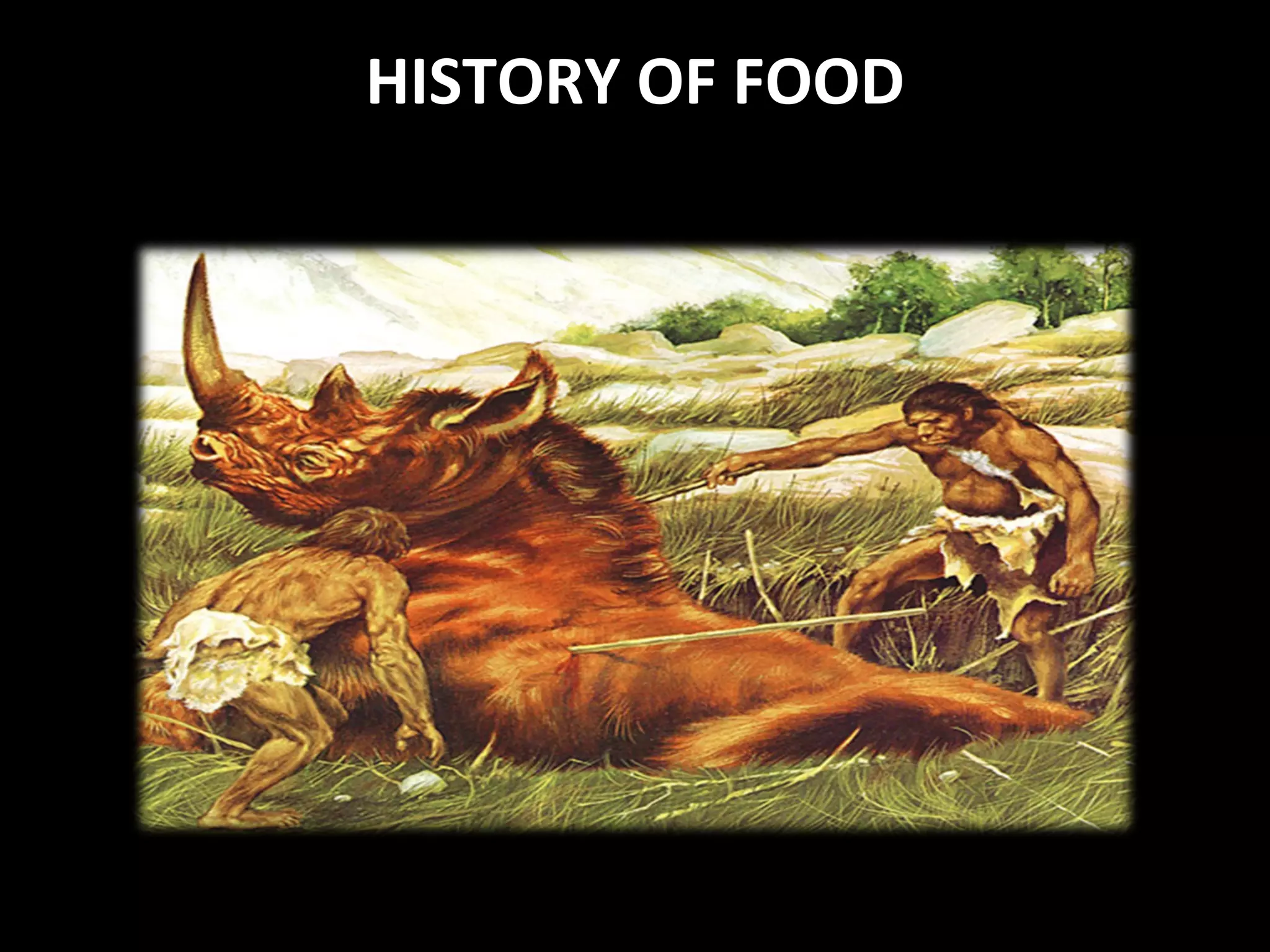
HISTORY OF FOOD
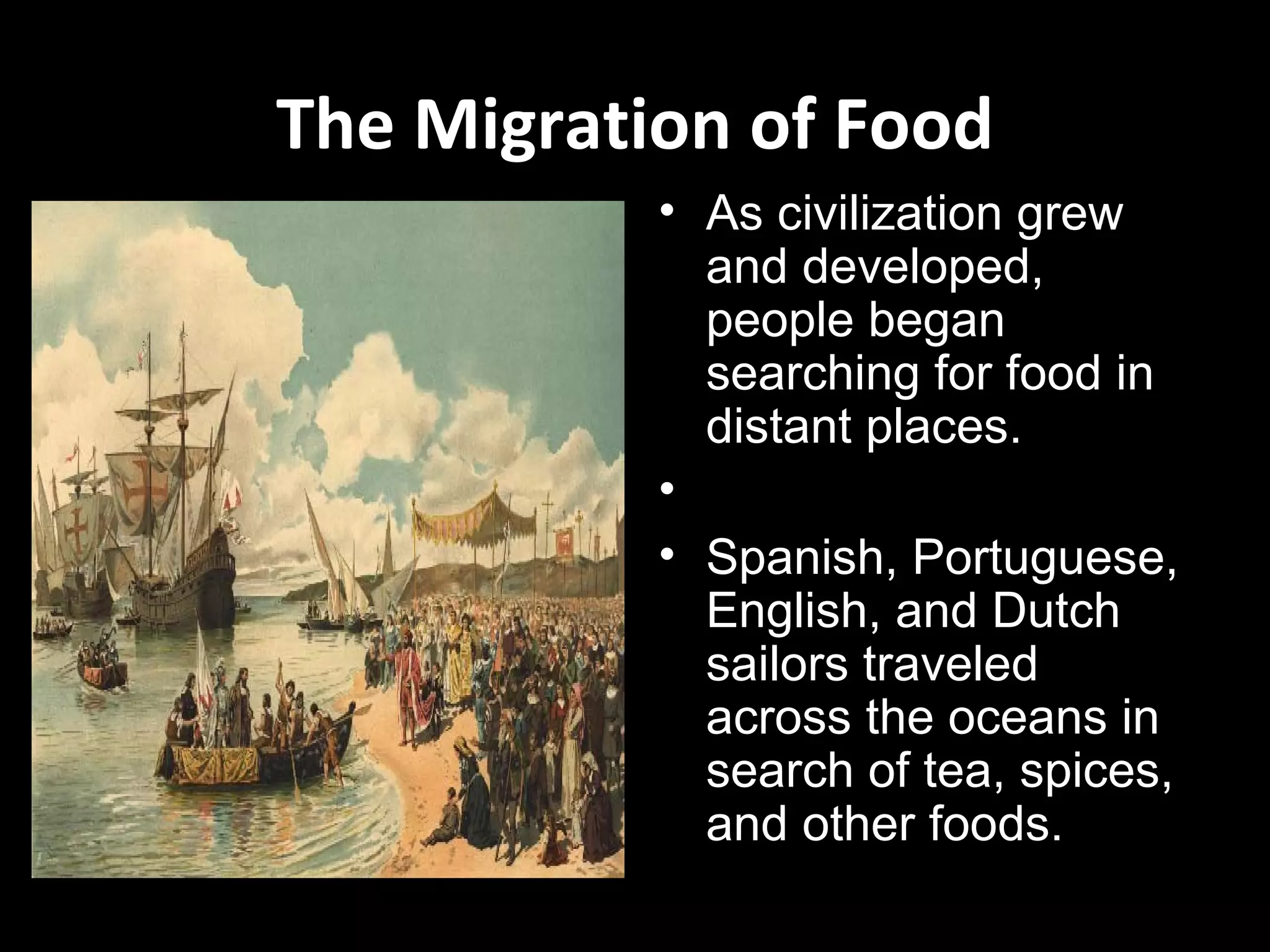
The Migration of Food
           • As civilization grew
             and developed,
             people began
             searching for food in
             distant places.
           •
           • Spanish, Portuguese,
             English, and Dutch
             sailors traveled
             across the oceans in
             search of tea, spices,
             and other foods.
• The explorers introduced food they carried with
  them in new lands.
•
• In the U.S. – the Spanish explorers introduced
  cane sugar, wheat, oranges, and sheep. English
  explorers brought apple, pears, and walnuts.
•
• The explorers also carried foods from the land
  they explored, back to their homelands.
•
• Therefore, foods that were once native to once
  place are now found in many places. This type of
  exchange led to increased variety of foods
  throughout the world.
Time line of Food
• 20,000 BC People in Europe eat mammoth,
  reindeer, red deer, bison and wild horses
• 1,200 BC People in Egypt eat bread and
  beer. The also eat sheep, pigs, cows and
  goats as well as ducks, geese and fish. They
  grow marrows, beans, lentils, leeks, radishes
  and lettuces
• 400 BC Ordinary people in Greece eat a
  great deal of bread. They also eat cheese
  and fish and (if they can afford it) meat. They
  also eat beans, onions, garlic and olives.
  Greeks drink wine and water.
Time line of Food
  70 AD The Romans introduce new foods into
  Britain, celery, cabbages, radishes, carrots,
  cucumbers, broad beans and walnuts.
• 800 AD The Saxons eat bread and fish,
  cheese and eggs. They drink beer and mead
• . 1300 The wealthy eat meat including ducks,
  swans, herons and blackbirds. Poor people
  live on bread and cheese and pottage (grain
  boiled in water with vegetables and (if you
  could afford it) meat or fish.
• c 1525 Turkeys are introduced into England.
1585 Potatoes are introduced into England.
 However the English diet remains very
 much the same as in the Middle Ages.
1633 The first record of bananas being sold
 in England
1680 The well to do eat pineapples and ice
 cream. Coffee and tea are popular drinks.
 Otherwise little changes. Poor people still
 live on bread and pottage.
• 1760 Eating potatoes and drinking tea
  has become common among ordinary
  people. Bread is still a very important part
  of peoples diet.
• 1861 Garibaldi biscuits are introduced in
  Britain.
• 1885 The cream cracker is invented
• 1892 Digestive biscuits are introduced
• 1900 The diet of ordinary people has
  greatly improved since 1900. Meat and
  sugar have become cheaper. People eat
  less bread and a more varied diet. 1927
  Jaffa Cakes go on sale
• 1940 Food rationing begins in Britain
• 1950 The diet of ordinary people has
  improved since 1900. Food has become
  much cheaper.
CRITERIAS OF FOOD QUALITY
•   Nutritional Quality
•   Digestibility
•   Palatability
•   Economical Quality
•   Sanitary Quality
Psychological and physiological
        factors which differ among
                individuals
•   Age
•   Allergy
•   State of health
•   Food habits
•   Emotional conditions
•   Threshold vale
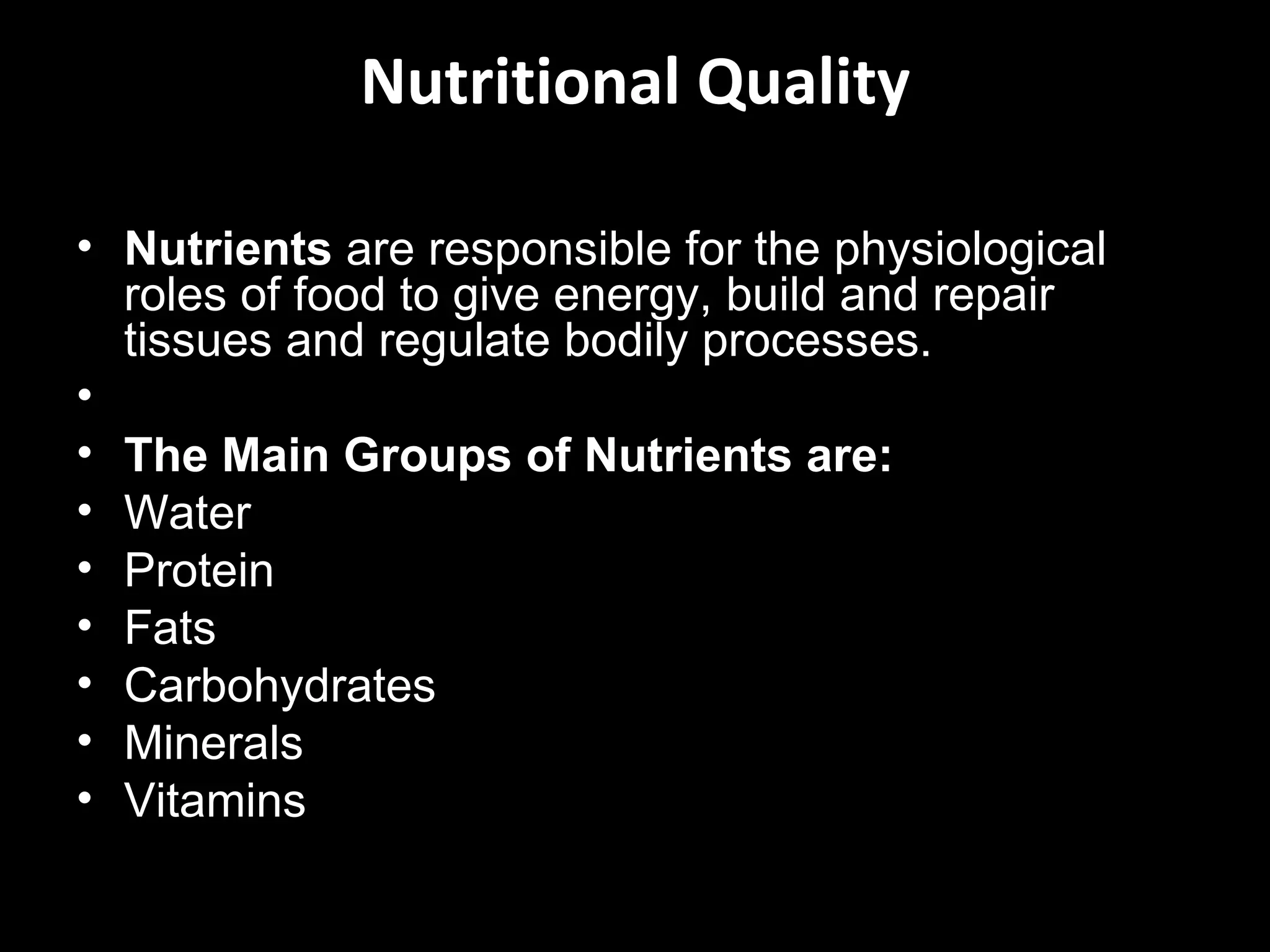
Nutritional Quality

• Nutrients are responsible for the physiological
  roles of food to give energy, build and repair
  tissues and regulate bodily processes.
•
• The Main Groups of Nutrients are:
• Water
• Protein
• Fats
• Carbohydrates
• Minerals
• Vitamins
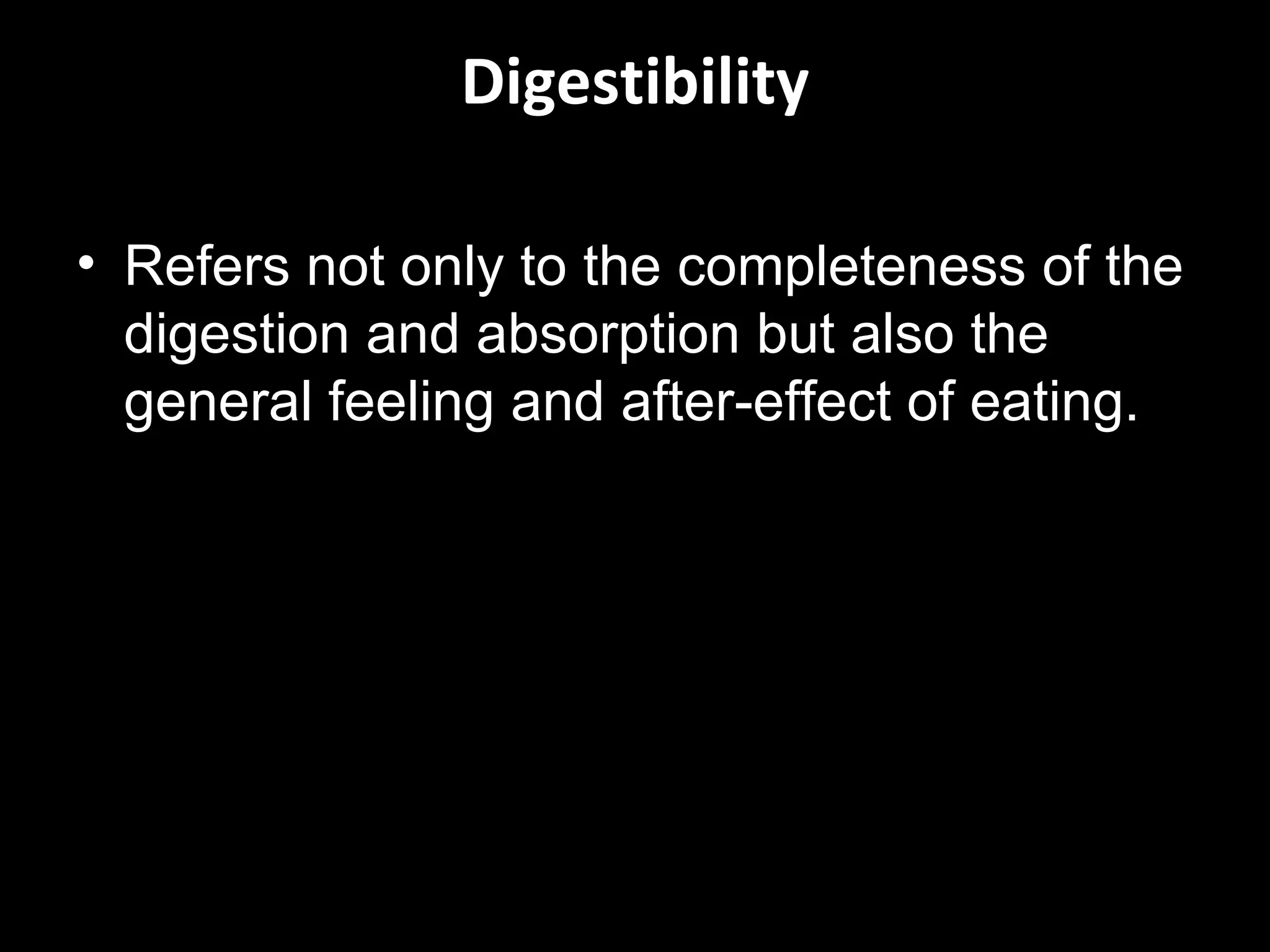
Digestibility

• Refers not only to the completeness of the
  digestion and absorption but also the
  general feeling and after-effect of eating.
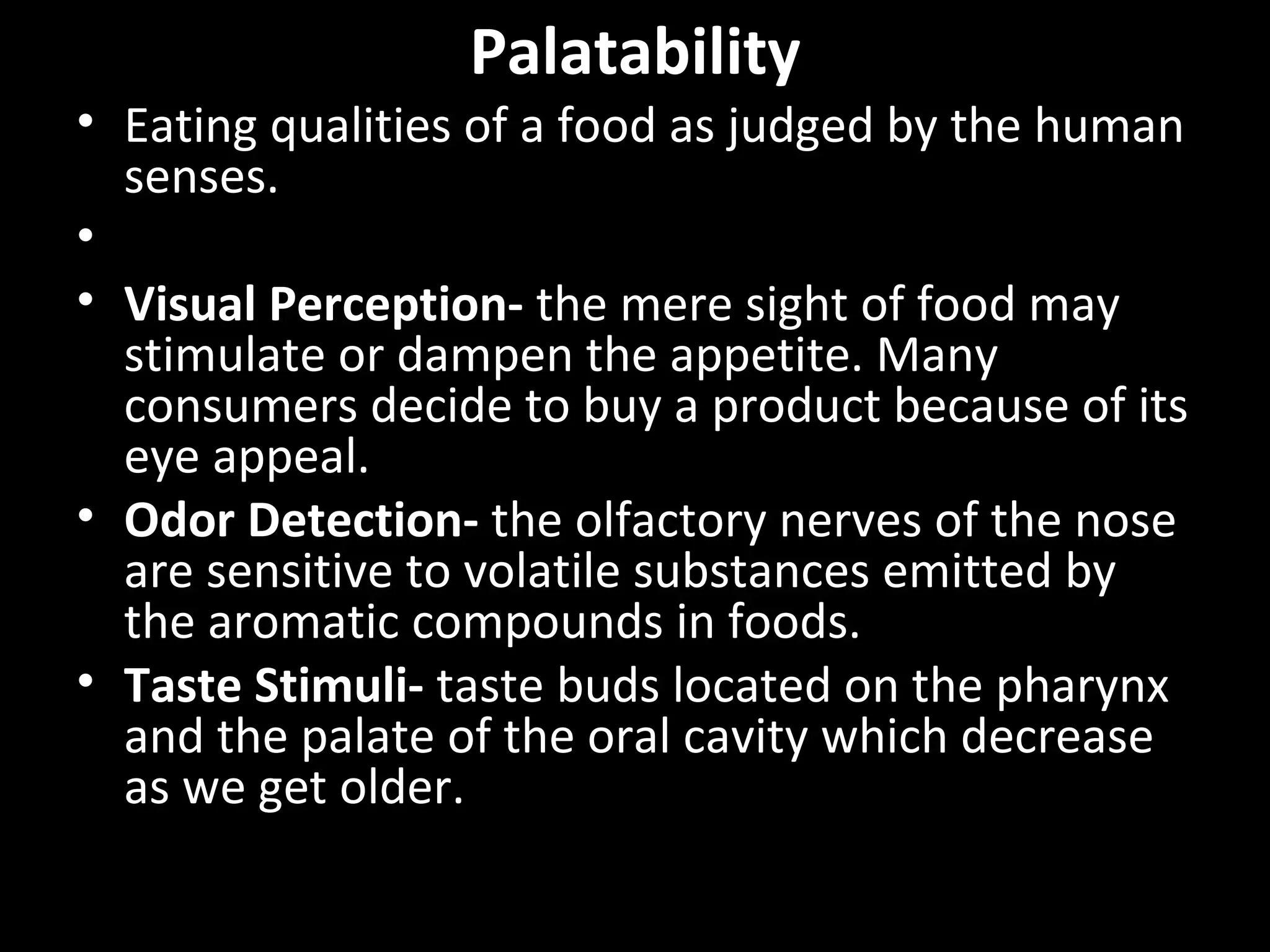
Palatability
• Eating qualities of a food as judged by the human
  senses.
•
• Visual Perception- the mere sight of food may
  stimulate or dampen the appetite. Many
  consumers decide to buy a product because of its
  eye appeal.
• Odor Detection- the olfactory nerves of the nose
  are sensitive to volatile substances emitted by
  the aromatic compounds in foods.
• Taste Stimuli- taste buds located on the pharynx
  and the palate of the oral cavity which decrease
  as we get older.
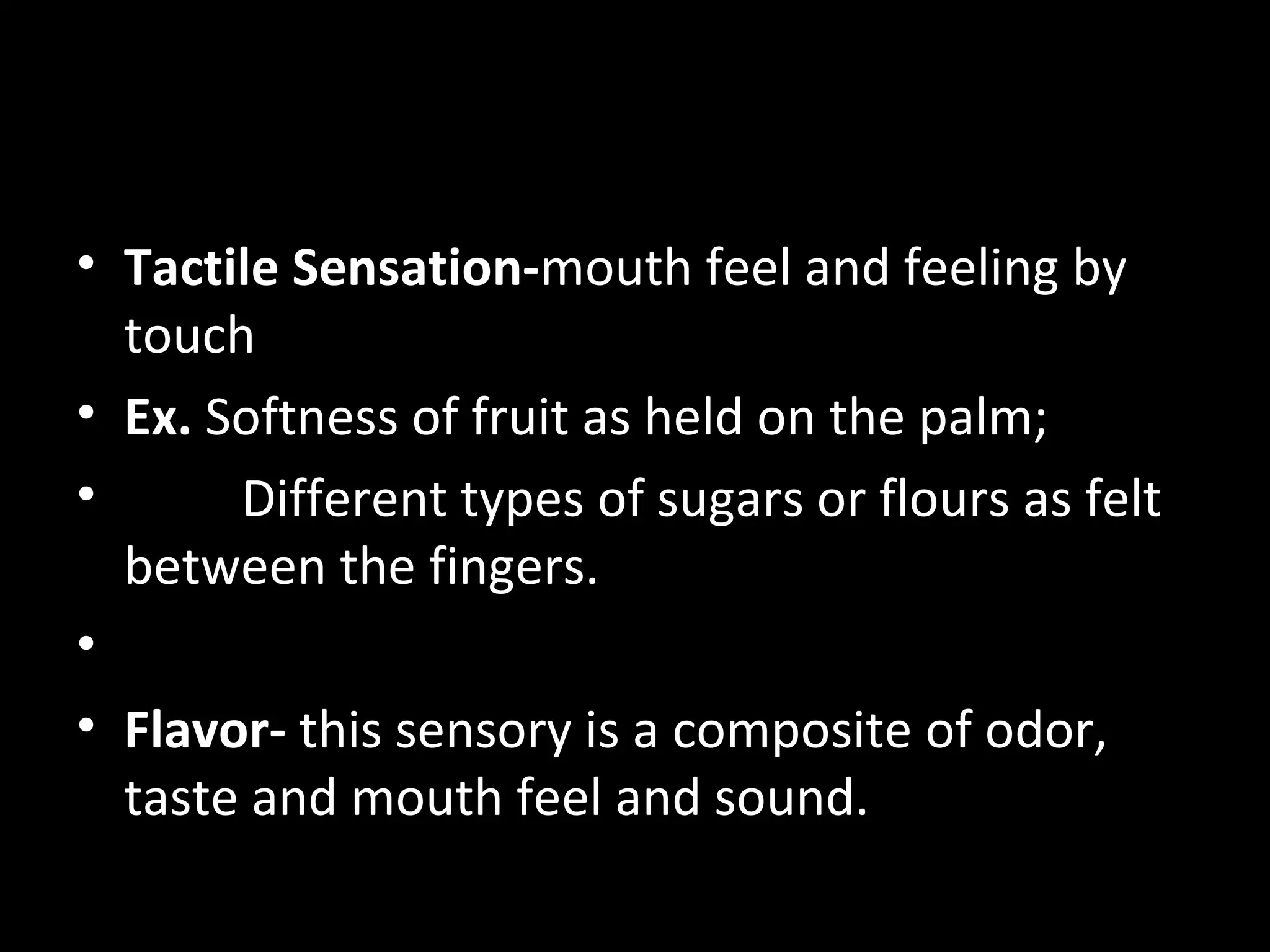
• Tactile Sensation-mouth feel and feeling by
  touch
• Ex. Softness of fruit as held on the palm;
•      Different types of sugars or flours as felt
  between the fingers.
•
• Flavor- this sensory is a composite of odor,
  taste and mouth feel and sound.
Psychological and physiological
        factors which differ among
                individuals
•   Age
•   Allergy
•   State of health
•   Food habits
•   Emotional conditions
•   Threshold vale
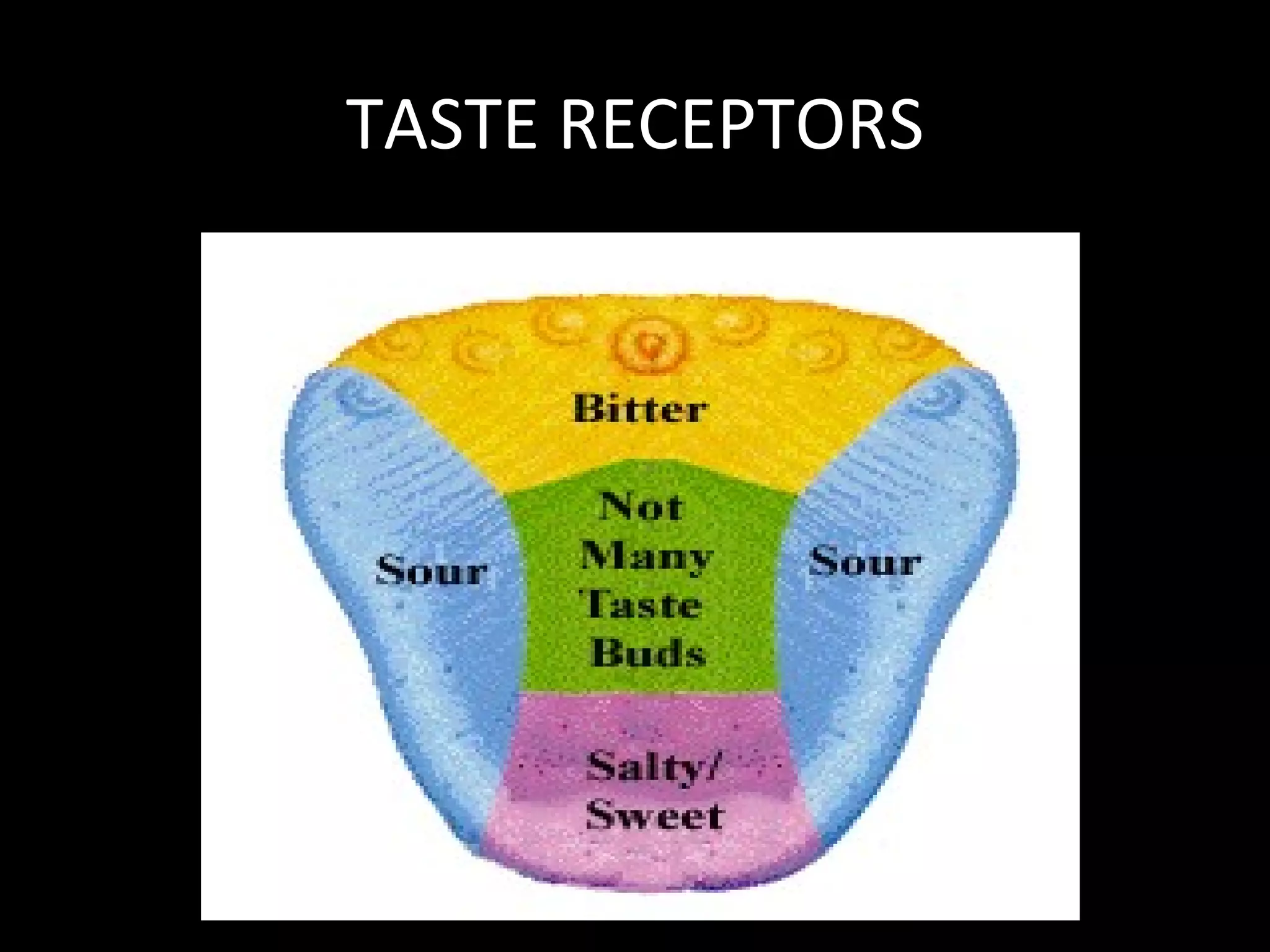
There are four basic tastes:

•   Salty (sides and tip)
•   Bitter (mostly at the back)
•   Sweet (concentrated at the tip)
•   Sour (mostly on the sides)
TASTE RECEPTORS
• Economical Quality
• Amount of money spent for the ingredients,
  the amount of time, equipment and labor
  utilized for cooking, serving and storing the
  food.
• Sanitary Quality
• Prepared under sanitary condition
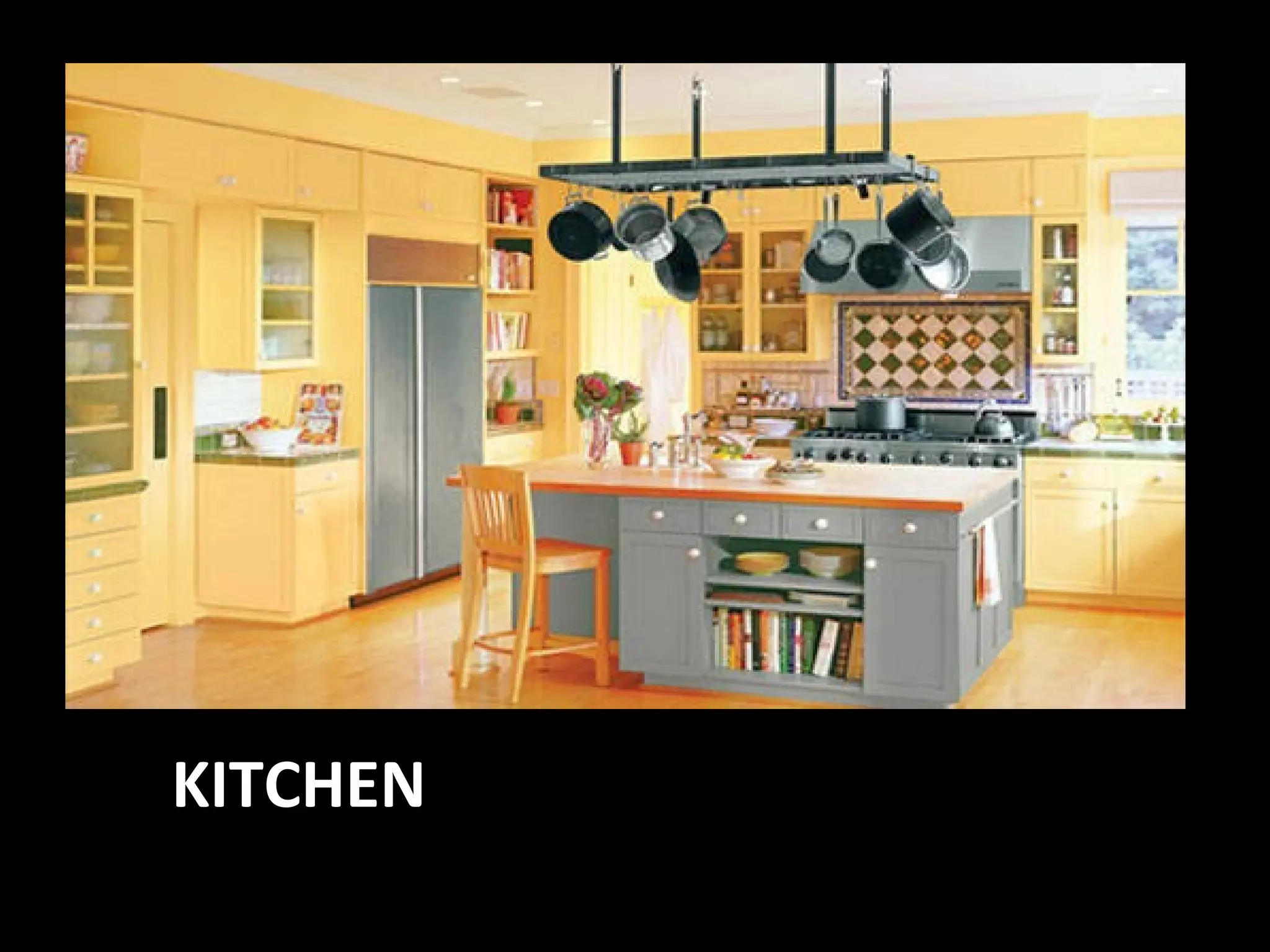
KITCHEN
Three Main Activity/Work centers:

• Food preparation and storage area center
• Cooking and serving center
• Clean up or washing center
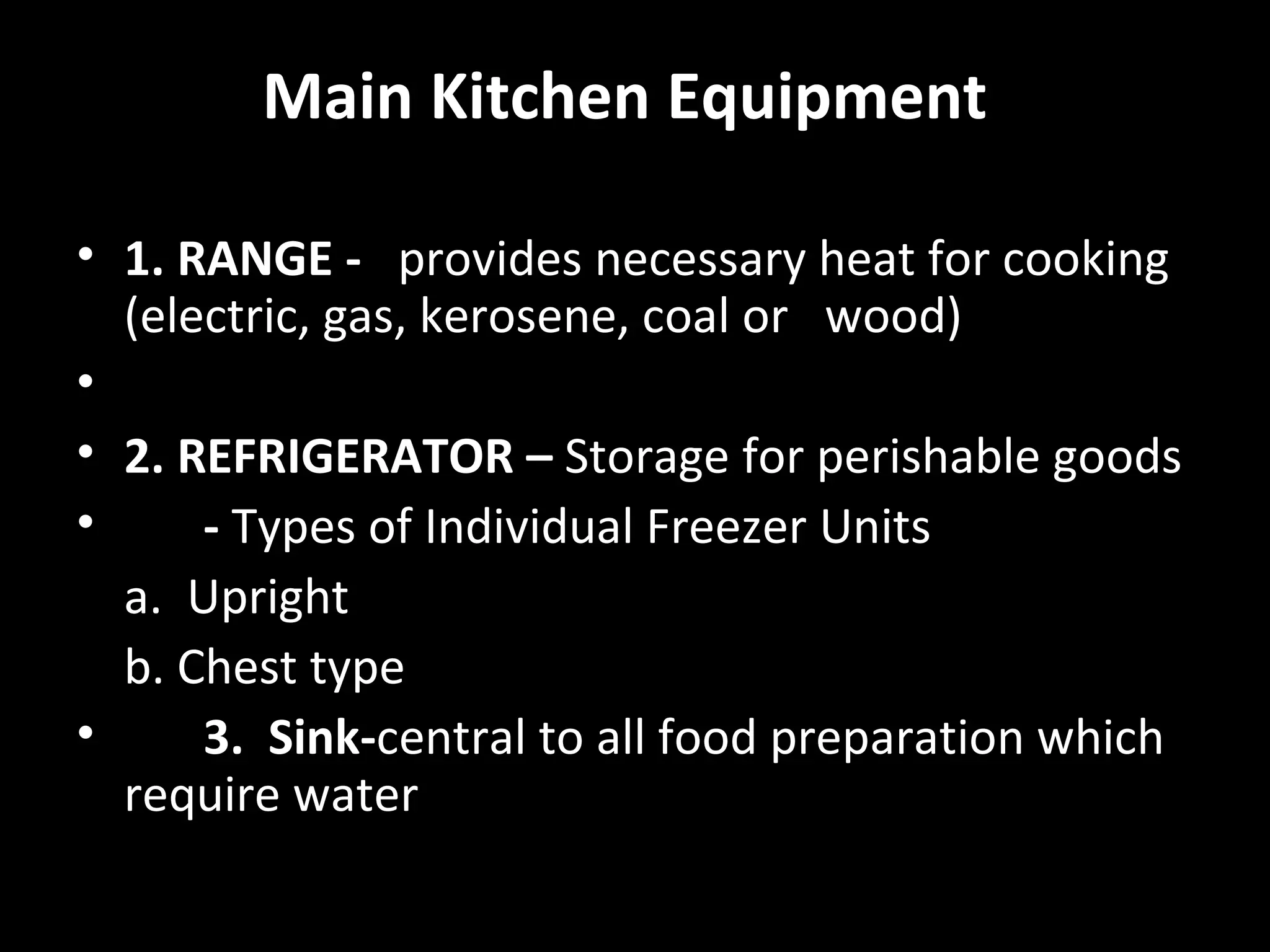
Main Kitchen Equipment

• 1. RANGE - provides necessary heat for cooking
  (electric, gas, kerosene, coal or wood)
•
• 2. REFRIGERATOR – Storage for perishable goods
•     - Types of Individual Freezer Units
  a. Upright
  b. Chest type
•     3. Sink-central to all food preparation which
  require water
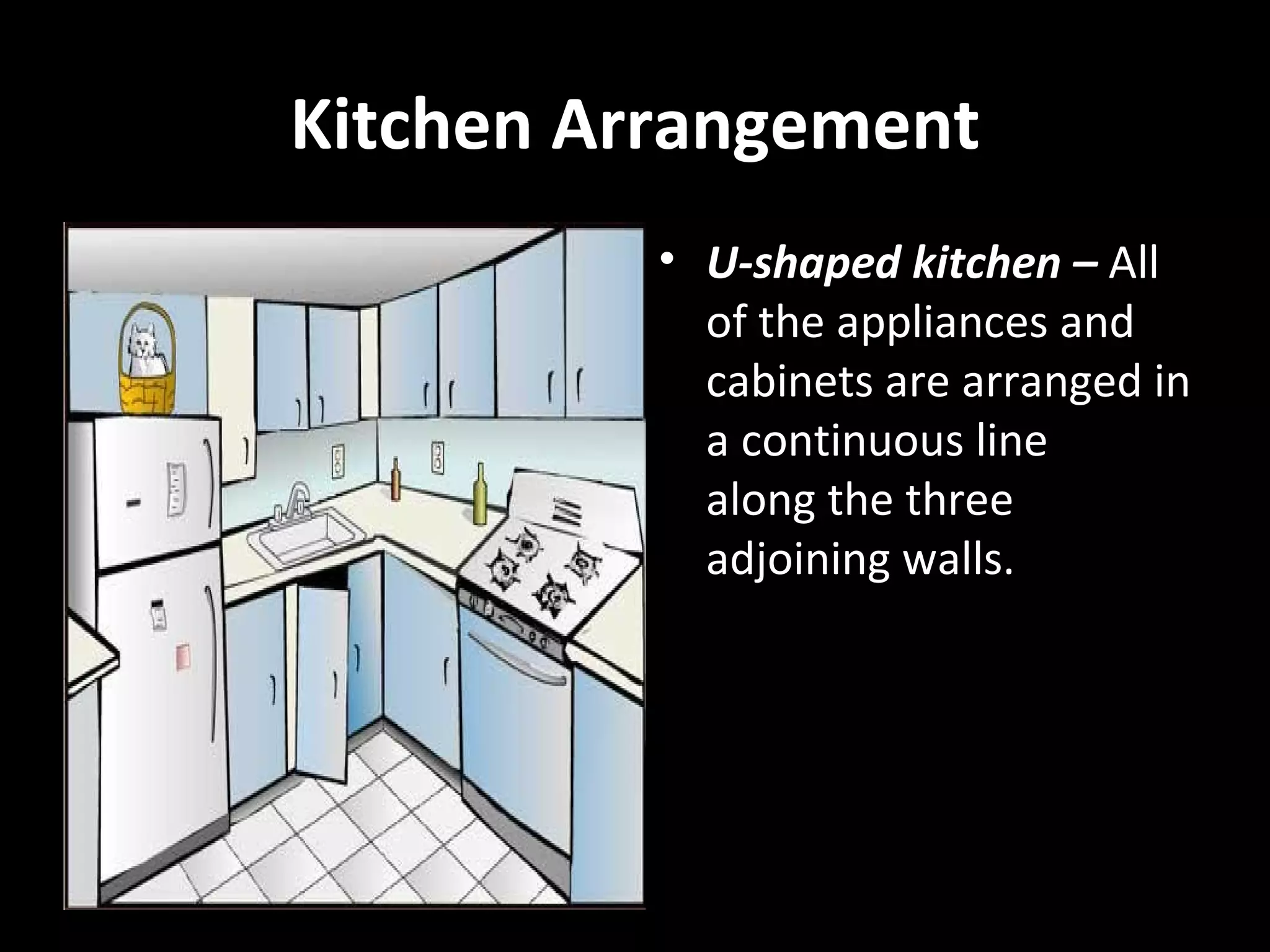
Kitchen Arrangement
          • U-shaped kitchen – All
            of the appliances and
            cabinets are arranged in
            a continuous line
            along the three
            adjoining walls.
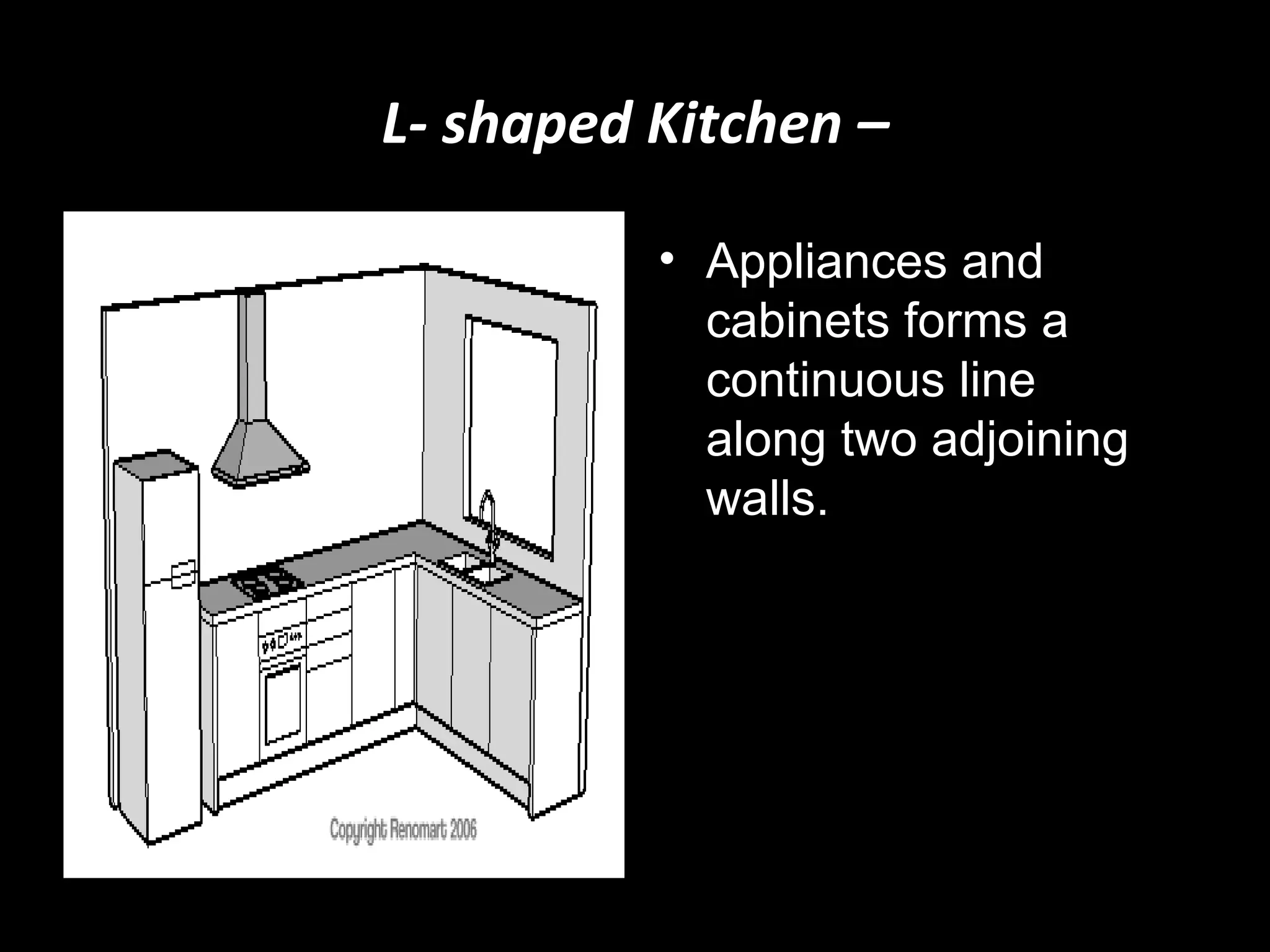
L- shaped Kitchen –

          • Appliances and
            cabinets forms a
            continuous line
            along two adjoining
            walls.
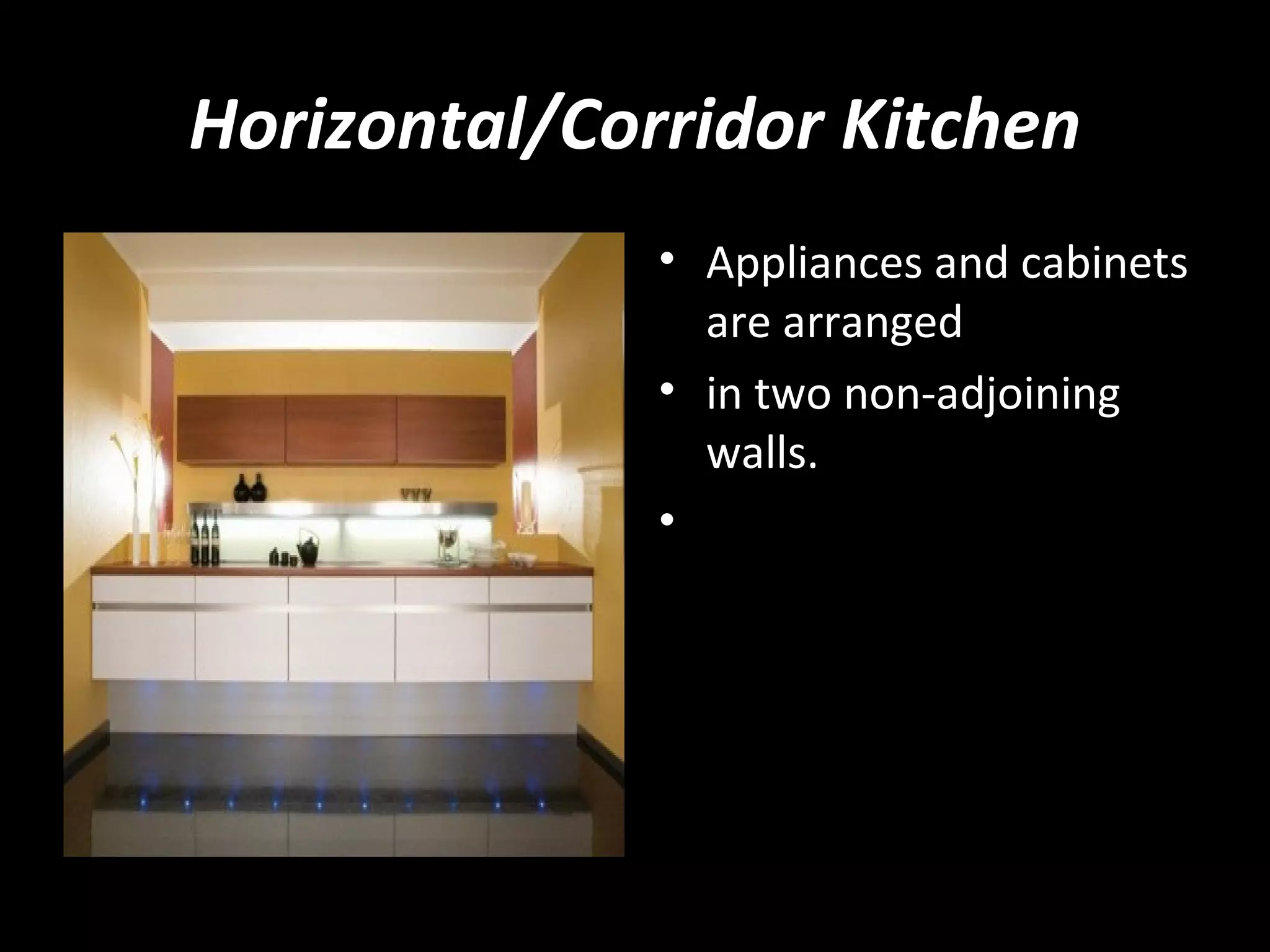
Horizontal/Corridor Kitchen
              • Appliances and cabinets
                are arranged
              • in two non-adjoining
                walls.
              •
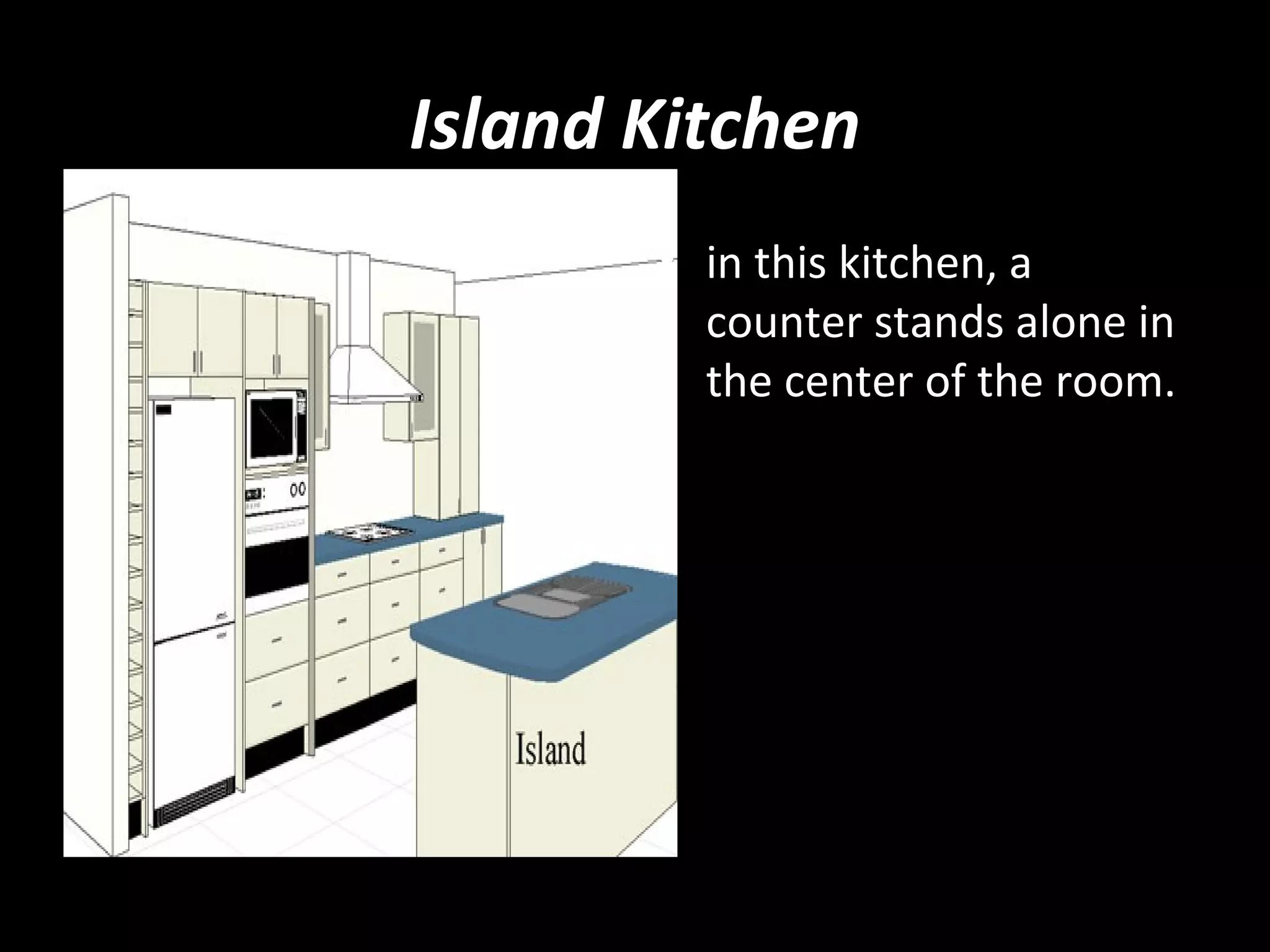
Island Kitchen
       • in this kitchen, a
         counter stands alone in
         the center of the room.
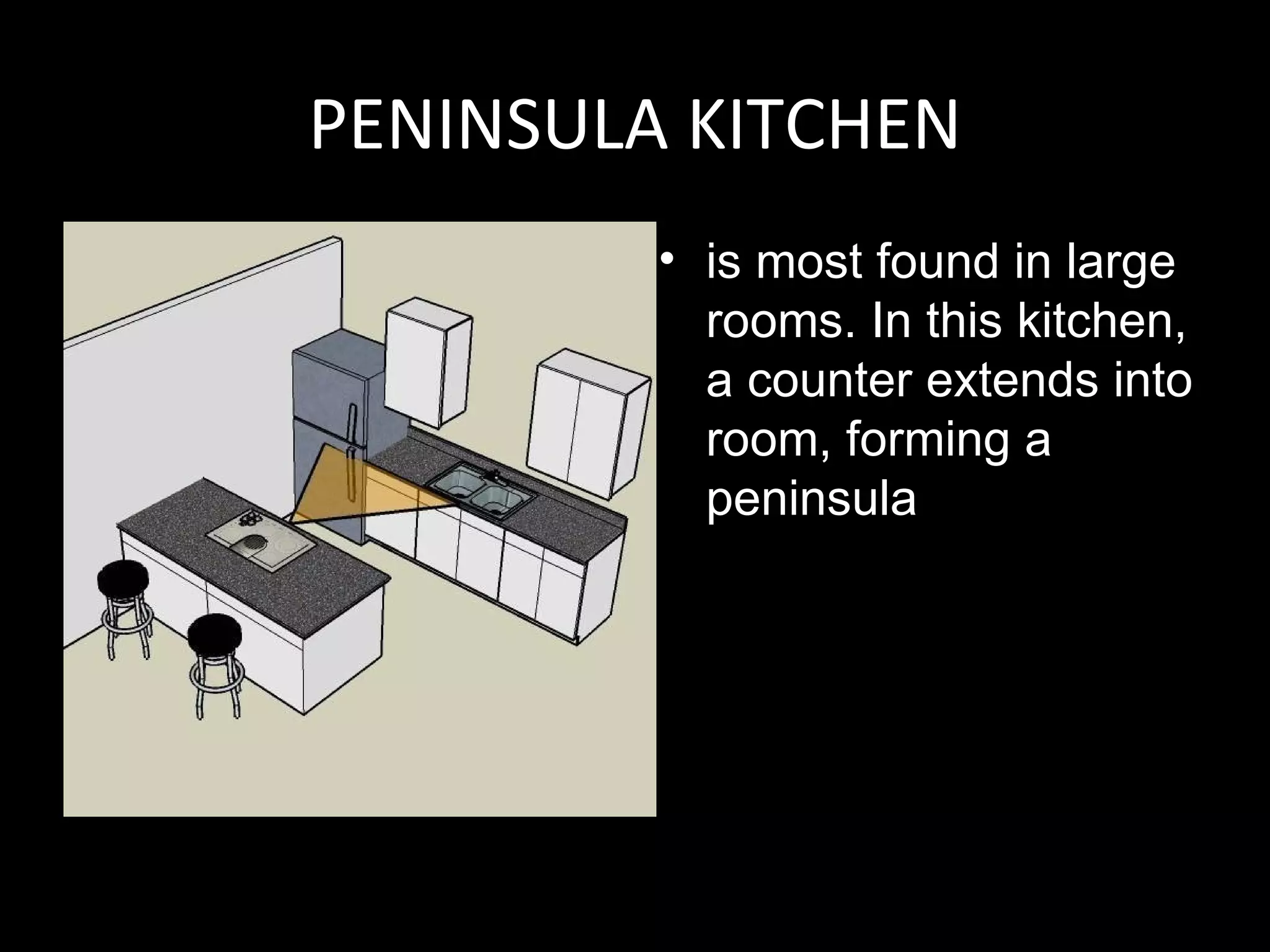
PENINSULA KITCHEN
         • is most found in large
           rooms. In this kitchen,
           a counter extends into
           room, forming a
           peninsula
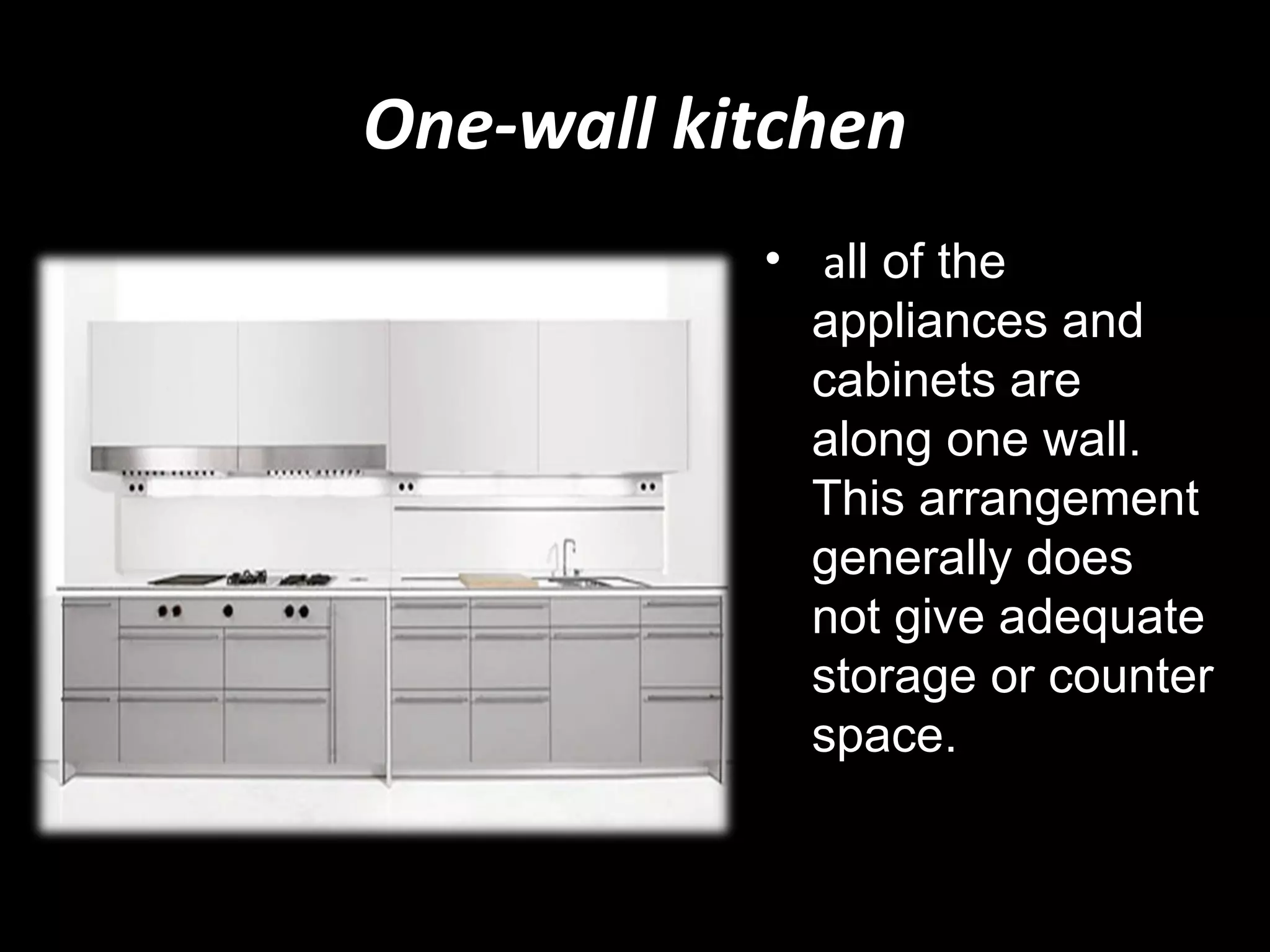
One-wall kitchen
           • all of the
             appliances and
             cabinets are
             along one wall.
             This arrangement
             generally does
             not give adequate
             storage or counter
             space.
Work triangle distance
• Sink to Refrigerator (4 ft-7ft)
• Range to Ref (4 ft- 9ft)
• Sink to Range (4 ft- 6ft)

HRM 212 CHAPTER 1

  • 1.
    chemical, physical &microbiological nature of food and any transformation that food undergoes from the time it is produced to the time HRM 212
  • 2.
    • FOOD -- is any article whether simple, mixed or compounded, which is used as food or drink, confectionery or condiment. - Any matter eaten by man to sustain life and nourish the body - Any substance which when taken into the body provides energy, builds and repairs tissues and regulated bodily processes.
  • 3.
    • FOOD SCIENCE-is the study of chemical, physical & microbiological nature of food and any transformation that food undergoes from the time it is produced to the time it is consumed.
  • 4.
  • 5.
    The Migration ofFood • As civilization grew and developed, people began searching for food in distant places. • • Spanish, Portuguese, English, and Dutch sailors traveled across the oceans in search of tea, spices, and other foods.
  • 6.
    • The explorersintroduced food they carried with them in new lands. • • In the U.S. – the Spanish explorers introduced cane sugar, wheat, oranges, and sheep. English explorers brought apple, pears, and walnuts. • • The explorers also carried foods from the land they explored, back to their homelands. • • Therefore, foods that were once native to once place are now found in many places. This type of exchange led to increased variety of foods throughout the world.
  • 7.
    Time line ofFood • 20,000 BC People in Europe eat mammoth, reindeer, red deer, bison and wild horses • 1,200 BC People in Egypt eat bread and beer. The also eat sheep, pigs, cows and goats as well as ducks, geese and fish. They grow marrows, beans, lentils, leeks, radishes and lettuces • 400 BC Ordinary people in Greece eat a great deal of bread. They also eat cheese and fish and (if they can afford it) meat. They also eat beans, onions, garlic and olives. Greeks drink wine and water.
  • 8.
    Time line ofFood 70 AD The Romans introduce new foods into Britain, celery, cabbages, radishes, carrots, cucumbers, broad beans and walnuts. • 800 AD The Saxons eat bread and fish, cheese and eggs. They drink beer and mead • . 1300 The wealthy eat meat including ducks, swans, herons and blackbirds. Poor people live on bread and cheese and pottage (grain boiled in water with vegetables and (if you could afford it) meat or fish. • c 1525 Turkeys are introduced into England.
  • 9.
    1585 Potatoes areintroduced into England. However the English diet remains very much the same as in the Middle Ages. 1633 The first record of bananas being sold in England 1680 The well to do eat pineapples and ice cream. Coffee and tea are popular drinks. Otherwise little changes. Poor people still live on bread and pottage.
  • 10.
    • 1760 Eatingpotatoes and drinking tea has become common among ordinary people. Bread is still a very important part of peoples diet. • 1861 Garibaldi biscuits are introduced in Britain. • 1885 The cream cracker is invented • 1892 Digestive biscuits are introduced
  • 11.
    • 1900 Thediet of ordinary people has greatly improved since 1900. Meat and sugar have become cheaper. People eat less bread and a more varied diet. 1927 Jaffa Cakes go on sale • 1940 Food rationing begins in Britain • 1950 The diet of ordinary people has improved since 1900. Food has become much cheaper.
  • 12.
    CRITERIAS OF FOODQUALITY • Nutritional Quality • Digestibility • Palatability • Economical Quality • Sanitary Quality
  • 13.
    Psychological and physiological factors which differ among individuals • Age • Allergy • State of health • Food habits • Emotional conditions • Threshold vale
  • 14.
    Nutritional Quality • Nutrientsare responsible for the physiological roles of food to give energy, build and repair tissues and regulate bodily processes. • • The Main Groups of Nutrients are: • Water • Protein • Fats • Carbohydrates • Minerals • Vitamins
  • 15.
    Digestibility • Refers notonly to the completeness of the digestion and absorption but also the general feeling and after-effect of eating.
  • 16.
    Palatability • Eating qualitiesof a food as judged by the human senses. • • Visual Perception- the mere sight of food may stimulate or dampen the appetite. Many consumers decide to buy a product because of its eye appeal. • Odor Detection- the olfactory nerves of the nose are sensitive to volatile substances emitted by the aromatic compounds in foods. • Taste Stimuli- taste buds located on the pharynx and the palate of the oral cavity which decrease as we get older.
  • 17.
    • Tactile Sensation-mouthfeel and feeling by touch • Ex. Softness of fruit as held on the palm; • Different types of sugars or flours as felt between the fingers. • • Flavor- this sensory is a composite of odor, taste and mouth feel and sound.
  • 18.
    Psychological and physiological factors which differ among individuals • Age • Allergy • State of health • Food habits • Emotional conditions • Threshold vale
  • 19.
    There are fourbasic tastes: • Salty (sides and tip) • Bitter (mostly at the back) • Sweet (concentrated at the tip) • Sour (mostly on the sides)
  • 20.
  • 21.
    • Economical Quality •Amount of money spent for the ingredients, the amount of time, equipment and labor utilized for cooking, serving and storing the food. • Sanitary Quality • Prepared under sanitary condition
  • 22.
  • 23.
    Three Main Activity/Workcenters: • Food preparation and storage area center • Cooking and serving center • Clean up or washing center
  • 24.
    Main Kitchen Equipment •1. RANGE - provides necessary heat for cooking (electric, gas, kerosene, coal or wood) • • 2. REFRIGERATOR – Storage for perishable goods • - Types of Individual Freezer Units a. Upright b. Chest type • 3. Sink-central to all food preparation which require water
  • 25.
    Kitchen Arrangement • U-shaped kitchen – All of the appliances and cabinets are arranged in a continuous line along the three adjoining walls.
  • 26.
    L- shaped Kitchen– • Appliances and cabinets forms a continuous line along two adjoining walls.
  • 27.
    Horizontal/Corridor Kitchen • Appliances and cabinets are arranged • in two non-adjoining walls. •
  • 28.
    Island Kitchen • in this kitchen, a counter stands alone in the center of the room.
  • 29.
    PENINSULA KITCHEN • is most found in large rooms. In this kitchen, a counter extends into room, forming a peninsula
  • 30.
    One-wall kitchen • all of the appliances and cabinets are along one wall. This arrangement generally does not give adequate storage or counter space.
  • 31.
    Work triangle distance •Sink to Refrigerator (4 ft-7ft) • Range to Ref (4 ft- 9ft) • Sink to Range (4 ft- 6ft)

Editor's Notes

  • #5 Early people ate food raw. At some point, they accidentally discovered that cooked food taste better and was easier to digest. By trial and error, they learned to control fire and use it to prepare food.   Eventually, these early people found they could protect themselves and secure food more easily by living in groups. They formed tribes and begun to hunt for food together.   The hunters became herders when they discovered that they could capture and domesticate animals. They also discovered that they could plant seeds to produce large amount of food. These two advances made the food supply much more dependable.   As food became easily to obtain, not all people had spend their time hunting and farming. Some were able to a craft. Other became merchants. Trading in its simplest form began, and with came the development of civilization.
  • #6 As civilization grew and developed, people began searching for food in distant places.   Spanish, Portuguese, English, and Dutch sailors traveled across the oceans in search of tea, spices, and other foods
  • #13 The Main Groups of Nutrients are: Water Protein Fats Carbohydrates Minerals Vitamins Digestibility Refers not only to the completeness of the digestion and absorption but also the general feeling and after-effect of eating. Palatability Eating qualities of a food as judged by the human senses.   Visual Perception- the mere sight of food may stimulate or dampen the appetite. Many consumers decide to buy a product because of its eye appeal. Odor Detection- the olfactory nerves of the nose are sensitive to volatile substances emitted by the aromatic compounds in foods. Taste Stimuli- taste buds located on the pharynx and the palate of the oral cavity which decrease as we get older.   There are four basic tastes: Salty (sides and tip) Bitter (mostly at the back) Sweet (concentrated at the tip) Sour (mostly on the sides)   Tactile Sensation- mouth feel and feeling by touch Ex. Softness of fruit as held on the palm; Different types of sugars or flours as felt between the fingers.   Flavor- this sensory is a composite of odor, taste and mouth feel and sound.