MANIA – BIPOLAR DISORDER
AND RELATED DRUGS
-Preetam Palkar
F.Y. M. Pharm
AISSMS college of pharmacy
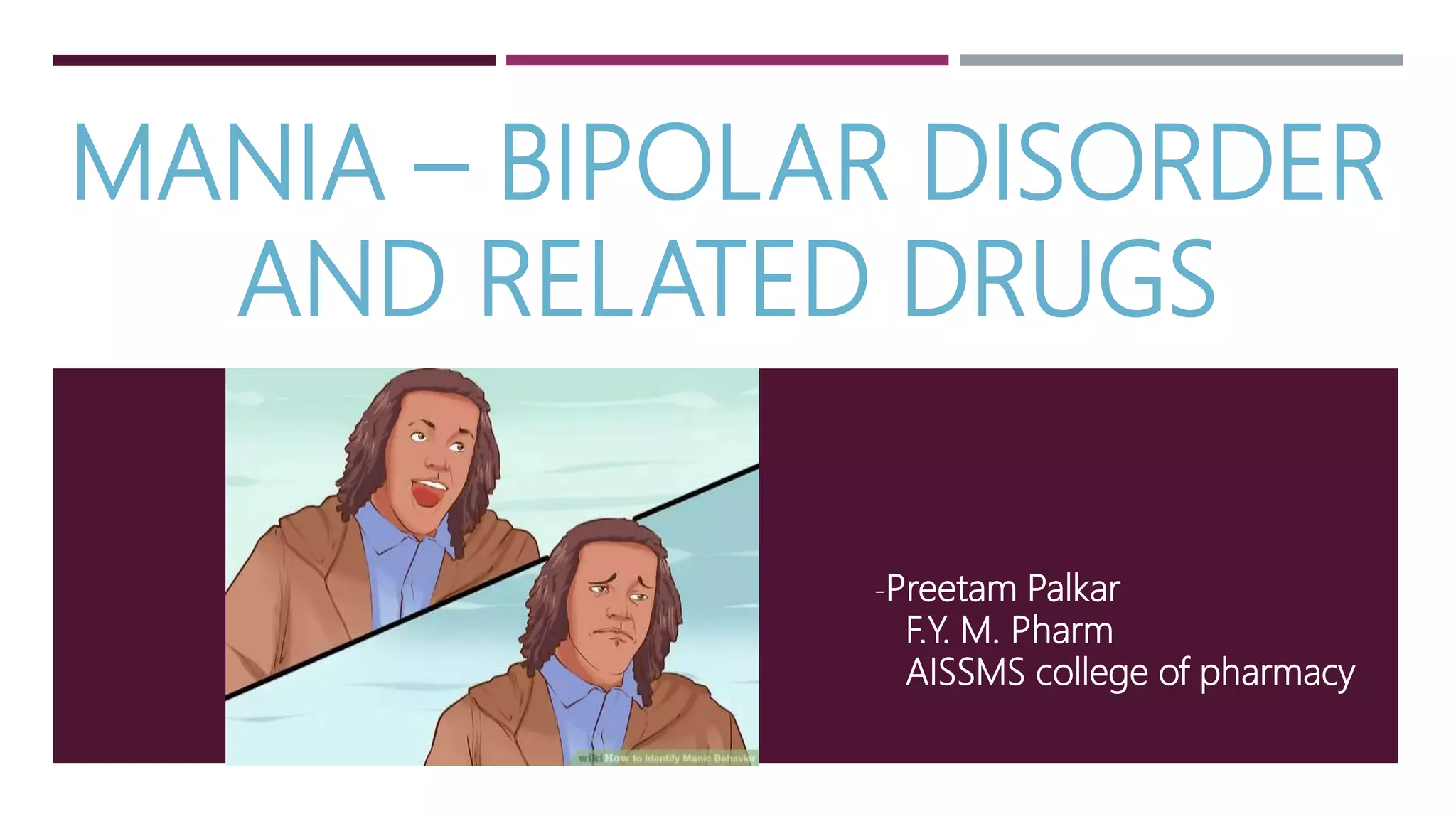
MANIA
 Mania is a mental disorder marked by periods of great
excitement or euphoria, delusions, and overactivity.
 It is usually associated with bipolar disorder.
 Bipolar disorder- a disorder associated with episodes of mood
swings ranging from depressive lows to manic highs.
SYMPTOMS
 Mood changes
 Sudden increase in energy and activity
 Rapid speech that is difficult or impossible to interrupt
 Impaired judgment
 Flighty thoughts or thoughts that jump from topic to topic
STAGES OF MANIA
 Stage I – Hypomania
 Stage II – Acute mania
 Stage III – Delirious mania
HYPOMANIA
 Hypomania is a mild form of mania that may not be recognised as
a significant symptom by those around the person experiencing it.
While hypomania affects sleep and activity and may lead to
increased impulsivity, it usually doesn’t require hospitalisation or
cause psychosis.
ACUTE MANIA
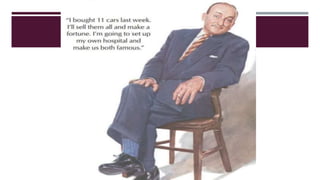
 During acute mania, an individual may experience increased
impulsivity that causes them to act in a way that is brash,
inappropriate or promiscuous. People with acute mania will also
likely have increased energy, get little to no sleep and talk very
quickly, often jumping from topic to topic. They may experience
some symptoms of psychosis, where they are not fully aware of or
connected to reality
DELIRIOUS MANIA
 Delirious mania is the most severe of the three stages of
mania. Its symptoms are similar to acute mania, with the
addition of delirium. Delirium is temporary confusion and a
decreased ability or inability to connect with reality. This
stage can also involve a combination of mania and
psychosis. Because delirious mania can be profoundly
disorienting, many people experiencing it need to be
hospitalised to prevent injury to themselves or others.
AETIOLOGY- CAUSES
Biological theories
Genetic hypothesis
Biochemical theory
Neuroendocrine disturbance
Psychological theories
Psychoanalytic theory
Behavioural theory
Cognitive theory
Sociological theory
BIOLOGICAL THEORIES
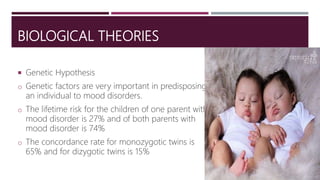
 Genetic Hypothesis
o Genetic factors are very important in predisposing
an individual to mood disorders.
o The lifetime risk for the children of one parent with
mood disorder is 27% and of both parents with
mood disorder is 74%
o The concordance rate for monozygotic twins is
65% and for dizygotic twins is 15%
 Biochemical theories
Increased amounts of norepinephrine, serotonin and dopamine
activity cause an elevation in mood and two phases of bipolar
disorder whereas decreased amounts lead to depressed mood
 Neuroendocrine disturbance
Mood is also affected by the thyroid gland. Approximately 5-10% of
clients with abnormally low level of thyroid hormones suffer from a
chronic mood disorder. Client with a mild , symptom- free form of
hypothyroidism are more vulnerable to depressed mood than the
average person.
 Abnormalities of neuroendocrine such as decreased nocturnal
secretion of melatonin, decreased levels of prolactin, FSH,
testosterone and somatostatin and sleep- stimulation of growth
hormones causes mood disorder in clients.
PSYCHOLOGICAL THEORIES
 Psychoanalytical theories
According to Freud depression results due to loss of a loved object
and fixation in the oral sadistic phase of development.
In this model, mania is viewed as a denial of depression.
 Behavioural theory
This theory of depression connects depressive phenomena to the
experience of uncontrollable events. According to this model,
depression is conditioned by repeated losses in the past.
 Cognitive theory
According to this theory depression is due to negative cognitions
which includes:
 Negative expectations of the environment
Negative expectations of the self
Negative expectations of the future
These cognitive distortion’s arise out of a defect in cognitive
development and cause of the individual to feel inadequate,
worthless and rejected by others.
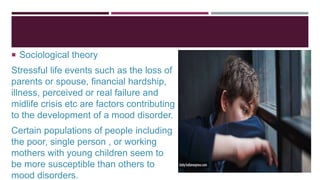
 Sociological theory
Stressful life events such as the loss of
parents or spouse, financial hardship,
illness, perceived or real failure and
midlife crisis etc are factors contributing
to the development of a mood disorder.
Certain populations of people including
the poor, single person , or working
mothers with young children seem to
be more susceptible than others to
mood disorders.
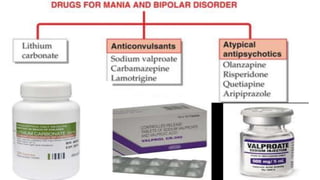
LITHIUM CARBONATE
 MOA
 CNS
 Lithium replaces body sodium and is nearly equally distributed inside and
outside the cells, this may effect ionic fluxes across the brain cells or modify
the property of cellular membranes.
 Decrease presynaptic release of NA and DA without affecting 5HT release.
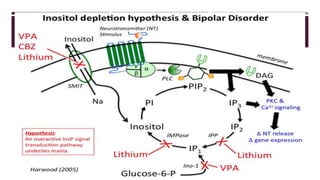
 Inhibit hydrolysis of inositol-1- phosphate to free inositol by inhibition of
inositol mono phosphatase enzyme.
 Other actions
 Inhibit action of ADH on DCT causing diabetes insipidus like state
 Insulin like action of glucose metabolism
 Leukocytes count is decreased
 Inhibit release of thyroid hormones resulting in feedback stimulation of thyroid
through pituitary.
 Kinetics
o Well absorbed orally , neither protein bound nor metabolised
o First distribute in extra cellular water , then enters cells and penetrate into
brain
 Adverse effects
o Nausea , vomiting and mild diarrhoea, thirst and polyuria, fine treamors at
therapeutic concentration
o CNS toxicity when plasma concentration rises producing tremors, giddiness,
ataxia etc Treated with osmotic diuretic and sodium bicarbonate infusion
promoting lithium excretion.
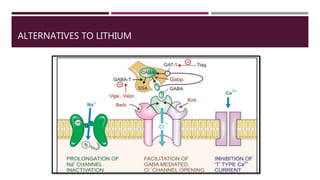
ALTERNATIVES TO LITHIUM
SODIUM VALPROATE
 MOA
 Prolongation of sodium channel inactivation
 Weak attenuation of calcium mediated T - current
 Enhance release of inhibitory transmitter GABA due to inhibition of GABA
transaminase
 Blockage of excitatory NMDA glutamate receptor
 First line treatment for mania
 Better safety profile than lithium. Divalproex , complex of valproic acid has
better gastric tolerance
 Combination of valproate with atypical antipsychotic is highly efficacious in
acute mania
 Combination of lithium and valproate may succeed in cases resistant to mono
therapy of either drugs.
CARBAMAZEPINE
 MOA- Prolongation of sodium channel inactivation
 Less effective than lithium or valproate in acute mania.
 Due to strong enzyme inducing property, CBZ has many drug interactions
causing problems in the use of other drugs
 Nevertheless, it is a valuable alternative to lithium
LAMOTRIGINE
 MOA- Prolongation of sodium channel inactivation
 It is not effective for treatment as well as prevention of mania
 Extensively used in maintenance therapy of type II bipolar disorder ( major
depressive episode)
 Combination with lithium increases it’s efficacy.
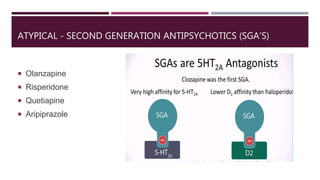
ATYPICAL - SECOND GENERATION ANTIPSYCHOTICS (SGA’S)
 Olanzapine
 Risperidone
 Quetiapine
 Aripiprazole
 MOA- weak D2 blocking but potent 5-HT 2 antagonistic activity
 With or without BZD they are used as first line drugs to control acute mania
 In emergency cases parental i.m. Olanzapine or haloperidol are most
effective.
 Not used for long term therapy due to high risk of weight gain,
hyperglycaemia,etc.
Mania and bipolar disorder

Mania and bipolar disorder

  • 1.
    MANIA – BIPOLARDISORDER AND RELATED DRUGS -Preetam Palkar F.Y. M. Pharm AISSMS college of pharmacy
  • 2.
    MANIA  Mania isa mental disorder marked by periods of great excitement or euphoria, delusions, and overactivity.  It is usually associated with bipolar disorder.  Bipolar disorder- a disorder associated with episodes of mood swings ranging from depressive lows to manic highs.
  • 3.
    SYMPTOMS  Mood changes Sudden increase in energy and activity  Rapid speech that is difficult or impossible to interrupt  Impaired judgment  Flighty thoughts or thoughts that jump from topic to topic
  • 5.
    STAGES OF MANIA Stage I – Hypomania  Stage II – Acute mania  Stage III – Delirious mania
  • 6.
    HYPOMANIA  Hypomania isa mild form of mania that may not be recognised as a significant symptom by those around the person experiencing it. While hypomania affects sleep and activity and may lead to increased impulsivity, it usually doesn’t require hospitalisation or cause psychosis.
  • 7.
    ACUTE MANIA  Duringacute mania, an individual may experience increased impulsivity that causes them to act in a way that is brash, inappropriate or promiscuous. People with acute mania will also likely have increased energy, get little to no sleep and talk very quickly, often jumping from topic to topic. They may experience some symptoms of psychosis, where they are not fully aware of or connected to reality
  • 8.
    DELIRIOUS MANIA  Deliriousmania is the most severe of the three stages of mania. Its symptoms are similar to acute mania, with the addition of delirium. Delirium is temporary confusion and a decreased ability or inability to connect with reality. This stage can also involve a combination of mania and psychosis. Because delirious mania can be profoundly disorienting, many people experiencing it need to be hospitalised to prevent injury to themselves or others.
  • 9.
    AETIOLOGY- CAUSES Biological theories Genetichypothesis Biochemical theory Neuroendocrine disturbance Psychological theories Psychoanalytic theory Behavioural theory Cognitive theory Sociological theory
  • 10.
    BIOLOGICAL THEORIES  GeneticHypothesis o Genetic factors are very important in predisposing an individual to mood disorders. o The lifetime risk for the children of one parent with mood disorder is 27% and of both parents with mood disorder is 74% o The concordance rate for monozygotic twins is 65% and for dizygotic twins is 15%
  • 11.
     Biochemical theories Increasedamounts of norepinephrine, serotonin and dopamine activity cause an elevation in mood and two phases of bipolar disorder whereas decreased amounts lead to depressed mood  Neuroendocrine disturbance Mood is also affected by the thyroid gland. Approximately 5-10% of clients with abnormally low level of thyroid hormones suffer from a chronic mood disorder. Client with a mild , symptom- free form of hypothyroidism are more vulnerable to depressed mood than the average person.
  • 12.
     Abnormalities ofneuroendocrine such as decreased nocturnal secretion of melatonin, decreased levels of prolactin, FSH, testosterone and somatostatin and sleep- stimulation of growth hormones causes mood disorder in clients.
  • 13.
    PSYCHOLOGICAL THEORIES  Psychoanalyticaltheories According to Freud depression results due to loss of a loved object and fixation in the oral sadistic phase of development. In this model, mania is viewed as a denial of depression.  Behavioural theory This theory of depression connects depressive phenomena to the experience of uncontrollable events. According to this model, depression is conditioned by repeated losses in the past.
  • 14.
     Cognitive theory Accordingto this theory depression is due to negative cognitions which includes:  Negative expectations of the environment Negative expectations of the self Negative expectations of the future These cognitive distortion’s arise out of a defect in cognitive development and cause of the individual to feel inadequate, worthless and rejected by others.
  • 15.
     Sociological theory Stressfullife events such as the loss of parents or spouse, financial hardship, illness, perceived or real failure and midlife crisis etc are factors contributing to the development of a mood disorder. Certain populations of people including the poor, single person , or working mothers with young children seem to be more susceptible than others to mood disorders.
  • 18.
    LITHIUM CARBONATE  MOA CNS  Lithium replaces body sodium and is nearly equally distributed inside and outside the cells, this may effect ionic fluxes across the brain cells or modify the property of cellular membranes.  Decrease presynaptic release of NA and DA without affecting 5HT release.  Inhibit hydrolysis of inositol-1- phosphate to free inositol by inhibition of inositol mono phosphatase enzyme.
  • 19.
     Other actions Inhibit action of ADH on DCT causing diabetes insipidus like state  Insulin like action of glucose metabolism  Leukocytes count is decreased  Inhibit release of thyroid hormones resulting in feedback stimulation of thyroid through pituitary.
  • 20.
     Kinetics o Wellabsorbed orally , neither protein bound nor metabolised o First distribute in extra cellular water , then enters cells and penetrate into brain  Adverse effects o Nausea , vomiting and mild diarrhoea, thirst and polyuria, fine treamors at therapeutic concentration o CNS toxicity when plasma concentration rises producing tremors, giddiness, ataxia etc Treated with osmotic diuretic and sodium bicarbonate infusion promoting lithium excretion.
  • 21.
  • 22.
    SODIUM VALPROATE  MOA Prolongation of sodium channel inactivation  Weak attenuation of calcium mediated T - current  Enhance release of inhibitory transmitter GABA due to inhibition of GABA transaminase  Blockage of excitatory NMDA glutamate receptor
  • 23.
     First linetreatment for mania  Better safety profile than lithium. Divalproex , complex of valproic acid has better gastric tolerance  Combination of valproate with atypical antipsychotic is highly efficacious in acute mania  Combination of lithium and valproate may succeed in cases resistant to mono therapy of either drugs.
  • 24.
    CARBAMAZEPINE  MOA- Prolongationof sodium channel inactivation  Less effective than lithium or valproate in acute mania.  Due to strong enzyme inducing property, CBZ has many drug interactions causing problems in the use of other drugs  Nevertheless, it is a valuable alternative to lithium
  • 25.
    LAMOTRIGINE  MOA- Prolongationof sodium channel inactivation  It is not effective for treatment as well as prevention of mania  Extensively used in maintenance therapy of type II bipolar disorder ( major depressive episode)  Combination with lithium increases it’s efficacy.
  • 26.
    ATYPICAL - SECONDGENERATION ANTIPSYCHOTICS (SGA’S)  Olanzapine  Risperidone  Quetiapine  Aripiprazole
  • 27.
     MOA- weakD2 blocking but potent 5-HT 2 antagonistic activity  With or without BZD they are used as first line drugs to control acute mania  In emergency cases parental i.m. Olanzapine or haloperidol are most effective.  Not used for long term therapy due to high risk of weight gain, hyperglycaemia,etc.