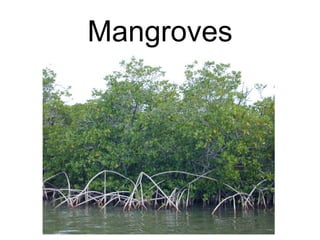
Mangroves
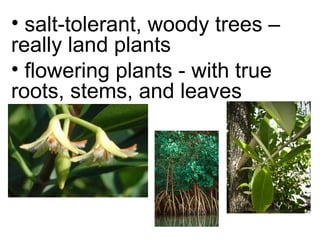
• salt-tolerant, woody trees –
really land plants
• flowering plants - with true
roots, stems, and leaves
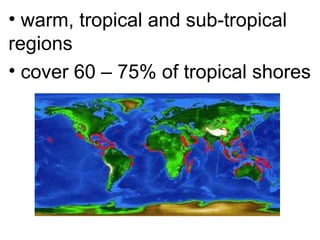
• warm, tropical and sub-tropical
regions
• cover 60 – 75% of tropical shores
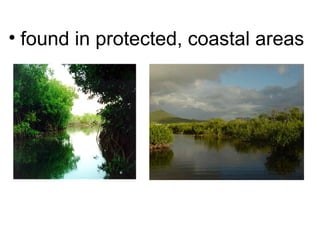
• found in protected, coastal areas
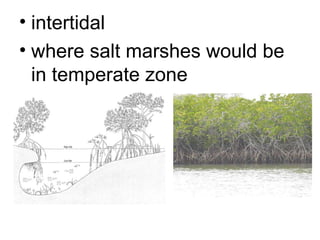
• intertidal
• where salt marshes would be
in temperate zone
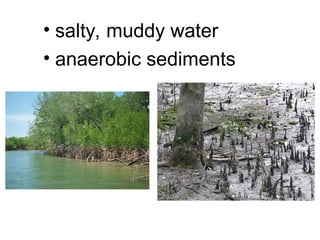
• salty, muddy water
• anaerobic sediments
Functions:
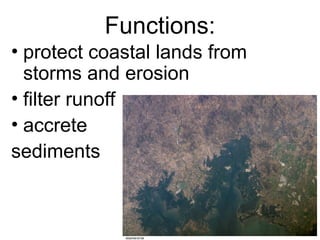
• protect coastal lands from
storms and erosion
• filter runoff
• accrete
sediments
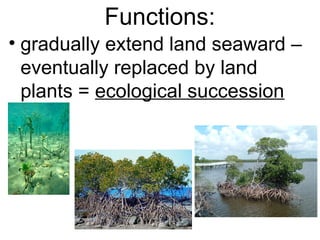
• gradually extend land seaward –
eventually replaced by land
plants = ecological succession
Functions:
Habitat Value:
• very important for
other organisms
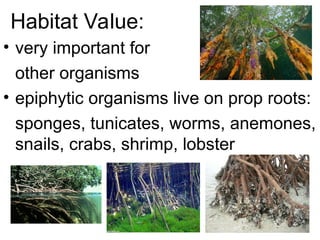
• epiphytic organisms live on prop roots:
sponges, tunicates, worms, anemones,
snails, crabs, shrimp, lobster
Habitat Value:
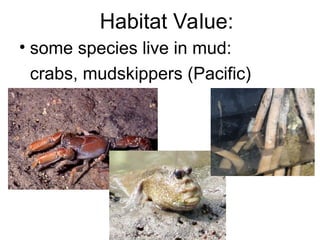
• some species live in mud:
crabs, mudskippers (Pacific)
Habitat Value:
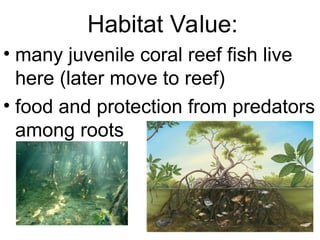
• many juvenile coral reef fish live
here (later move to reef)
• food and protection from predators
among roots
Habitat Value:
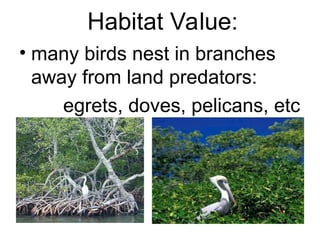
• many birds nest in branches
away from land predators:
egrets, doves, pelicans, etc
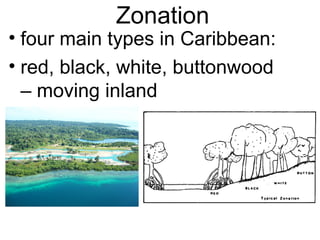
Zonation
• four main types in Caribbean:
• red, black, white, buttonwood
– moving inland
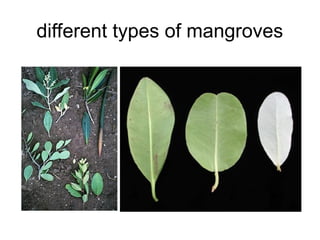
different types of mangroves
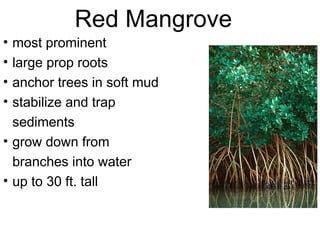
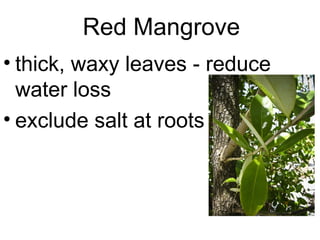
Red Mangrove
• most prominent
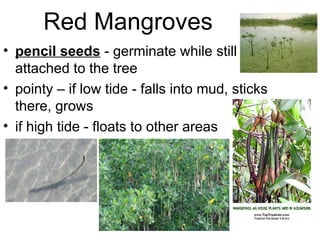
• large prop roots
• anchor trees in soft mud
• stabilize and trap
sediments
• grow down from
branches into water
• up to 30 ft. tall
Red Mangrove
• thick, waxy leaves - reduce
water loss
• exclude salt at roots
Red Mangroves
• pencil seeds - germinate while still
attached to the tree
• pointy – if low tide - falls into mud, sticks
there, grows
• if high tide - floats to other areas
Black Mangroves
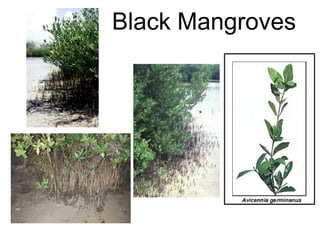
• next inland
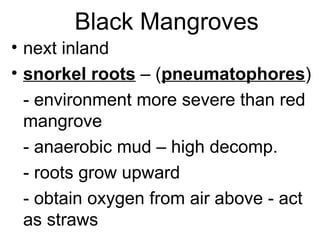
• snorkel roots – (pneumatophores)
- environment more severe than red
mangrove
- anaerobic mud – high decomp.
- roots grow upward
- obtain oxygen from air above - act
as straws
Black Mangroves
Black Mangroves
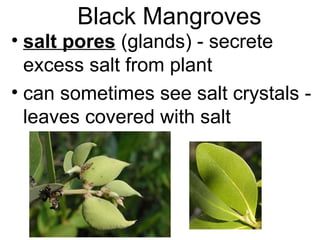
• salt pores (glands) - secrete
excess salt from plant
• can sometimes see salt crystals -
leaves covered with salt
White Mangroves
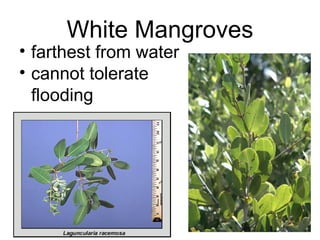
• farthest from water
• cannot tolerate
flooding
White Mangroves
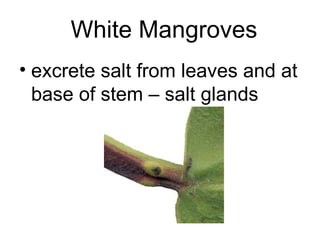
• excrete salt from leaves and at
base of stem – salt glands
Buttonwood
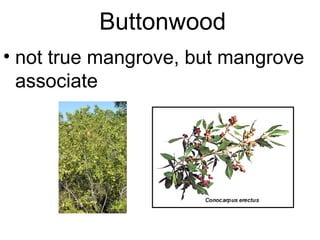
• not true mangrove, but mangrove
associate
Human Uses
• protect coastal lands from storms and
erosion, filter runoff
ex: tsunami
- where mangroves removed – land
destroyed
- where mangroves remained – land
protected
Human Uses
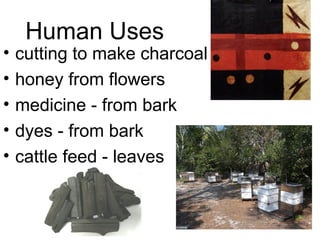
• cutting to make charcoal
• honey from flowers
• medicine - from bark
• dyes - from bark
• cattle feed - leaves
Human Impacts
• half of world’s mangroves destroyed –
more in Southeast asia
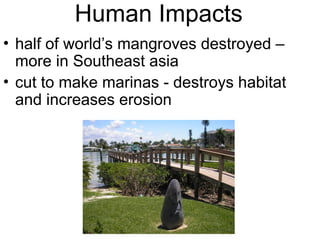
• cut to make marinas - destroys habitat
and increases erosion
Human Impacts
• filled in land - for development
ex: St. Thomas racetrack
built on filled in mangroves
• broken when boats tie to them
• cut for charcoal
Human Impacts
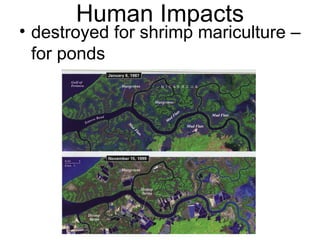
• destroyed for shrimp mariculture –
for ponds
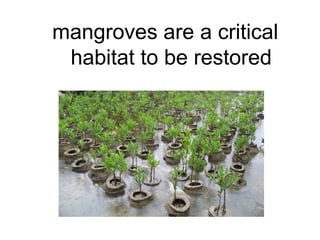
mangroves are a critical
habitat to be restored

mangrovespowerpoint-100414132801-phpapp01 (1).ppt