
Mandalas
From around the world
The mandala originated in the region
of the Himalayan Mountains, India
but people all over the world create
these beautiful symmetrical designs.
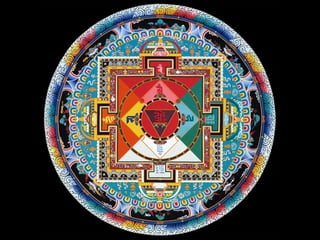
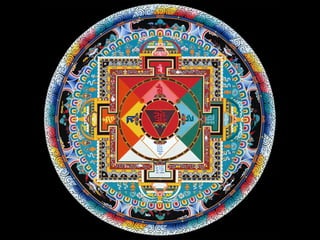
Tibetan Mandala
Hayagriva Sand Mandala
What Lines, Shapes and
Colours do you see?
• In Tibetan Buddhism, a mandala
represents the home of a deity
(god).
• This deity can be found in the centre
of its mandala surrounded by figures
radiating out from the centre.  
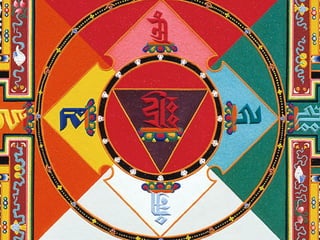
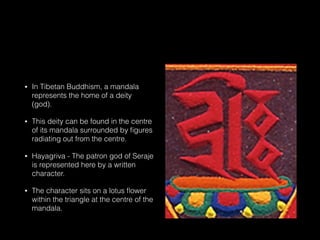
• Hayagriva - The patron god of Seraje
is represented here by a written
character.
• The character sits on a lotus flower
within the triangle at the centre of the
mandala.
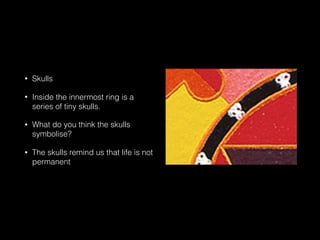
• Skulls
• Inside the innermost ring is a
series of tiny skulls.
• What do you think the skulls
symbolise?
• The skulls remind us that life is not
permanent
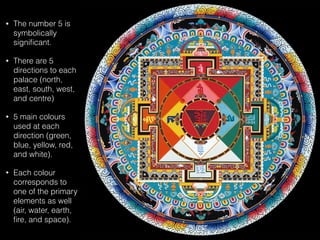
• The number 5 is
symbolically
significant.
• There are 5
directions to each
palace (north,
east, south, west,
and centre)
• 5 main colours
used at each
direction (green,
blue, yellow, red,
and white).
• Each colour
corresponds to
one of the primary
elements as well
(air, water, earth,
fire, and space).
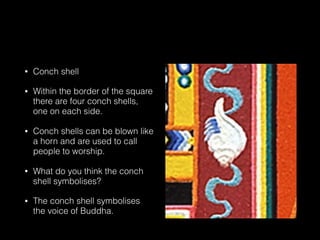
• Conch shell
• Within the border of the square
there are four conch shells,
one on each side.
• Conch shells can be blown like
a horn and are used to call
people to worship.
• What do you think the conch
shell symbolises?
• The conch shell symbolises
the voice of Buddha.
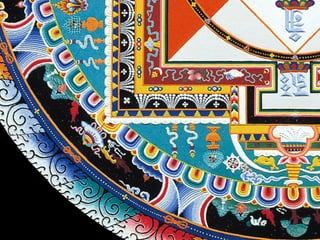
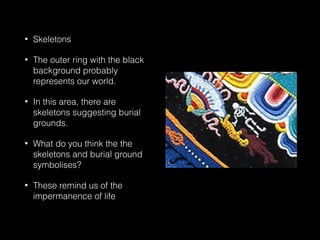
• Skeletons
• The outer ring with the black
background probably
represents our world.
• In this area, there are
skeletons suggesting burial
grounds.
• What do you think the the
skeletons and burial ground
symbolises?
• These remind us of the
impermanence of life
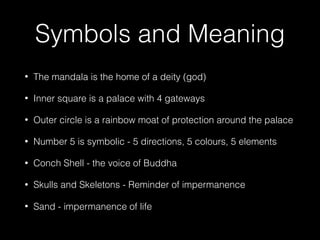
Symbols and Meaning
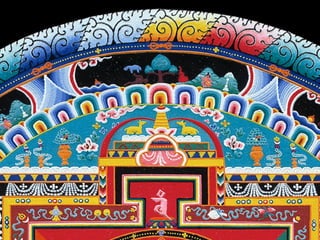
• The mandala is the home of a deity (god)
• Inner square is a palace with 4 gateways
• Outer circle is a rainbow moat of protection around the palace
• Number 5 is symbolic - 5 directions, 5 colours, 5 elements
• Conch Shell - the voice of Buddha
• Skulls and Skeletons - Reminder of impermanence
• Sand - impermanence of life
Meaning and Purpose
• The mandala design is the home of a deity (god)
• It represents power and wellbeing
• It is also a reminder of the impermanence of life
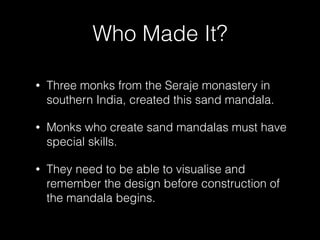
Who Made It?
• Three monks from the Seraje monastery in
southern India, created this sand mandala.
• Monks who create sand mandalas must have
special skills.
• They need to be able to visualise and
remember the design before construction of
the mandala begins.
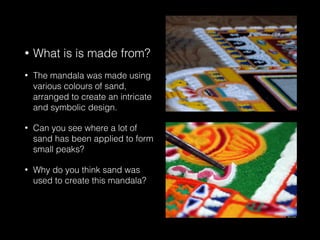
• What is is made from?
• The mandala was made using
various colours of sand,
arranged to create an intricate
and symbolic design.
• Can you see where a lot of
sand has been applied to form
small peaks?
• Why do you think sand was
used to create this mandala?
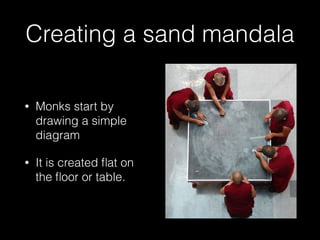
Creating a sand mandala
• Monks start by
drawing a simple
diagram
• It is created flat on
the floor or table.
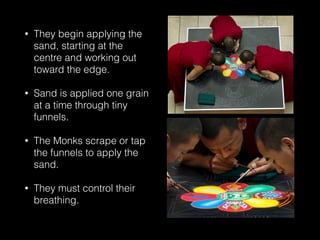
• They begin applying the
sand, starting at the
centre and working out
toward the edge.
• Sand is applied one grain
at a time through tiny
funnels.
• The Monks scrape or tap
the funnels to apply the
sand.
• They must control their
breathing.
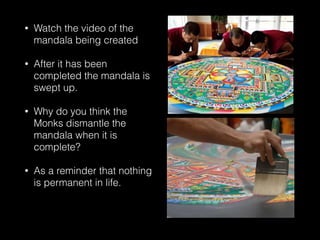
• Watch the video of the
mandala being created
• After it has been
completed the mandala is
swept up.
• Why do you think the
Monks dismantle the
mandala when it is
complete?
• As a reminder that nothing
is permanent in life.
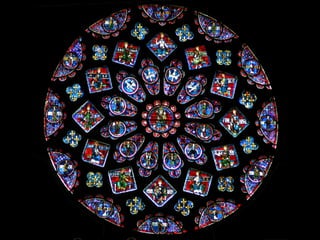
European Mandala
What colours, shapes
or lines do you see?
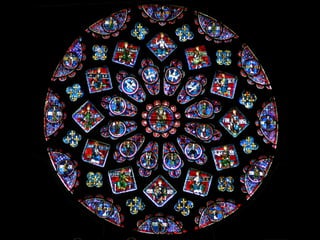
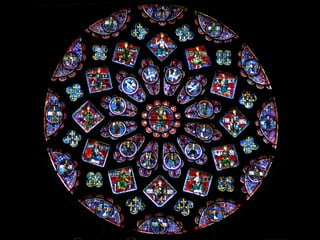
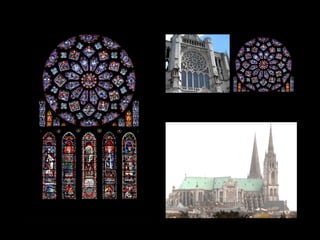
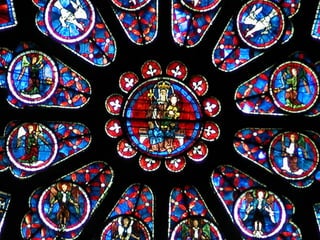
Rose Window of Chartres
Cathedral, France
Let’s look closer
What else do you see?
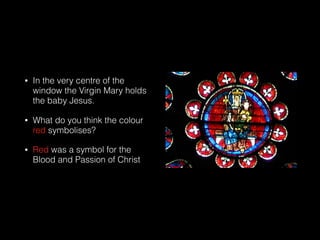
• In the very centre of the
window the Virgin Mary holds
the baby Jesus.
• What do you think the colour
red symbolises?
• Red was a symbol for the
Blood and Passion of Christ
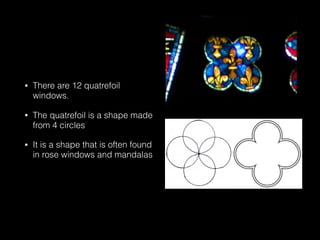
• There are 12 quatrefoil
windows.
• The quatrefoil is a shape made
from 4 circles
• It is a shape that is often found
in rose windows and mandalas
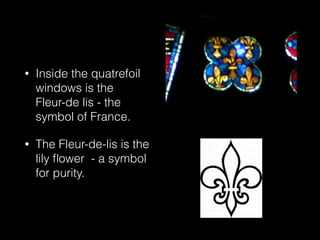
• Inside the quatrefoil
windows is the
Fleur-de lis - the
symbol of France.
• The Fleur-de-lis is the
lily flower - a symbol
for purity.
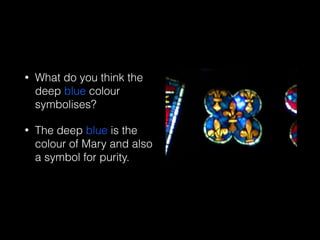
• What do you think the
deep blue colour
symbolises?
• The deep blue is the
colour of Mary and also
a symbol for purity.
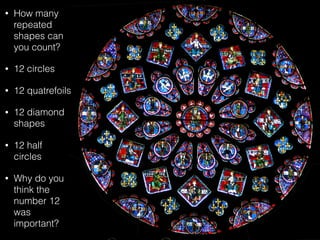
• How many
repeated
shapes can
you count?
• 12 circles
• 12 quatrefoils
• 12 diamond
shapes
• 12 half
circles
• Why do you
think the
number 12
was
important?
Symbols and Meaning
• The number 12 can be made by 3 x 4
• Number 4 represents Humankind
• Humans have four limbs (2 arms and 2 legs)
• We have four stages of life - what are they?
• And there are four seasons on earth - can you name them?
• The number 3
• Representing Father, Son and Holy Spirit
• Therefore12 symbolised Heaven on Earth
Symbols and Meaning
• Glass and Light - the presence of the Divine
• Red - the blood of Christ
• Blue - Symbolising Mary and purity
• Mary is at the Centre surrounded by 4 Doves 4 Thrones and 4
Angels
• She is surrounded by the 12 Kings of Judea who were her
ancestors and 12 Prophets.
• Meaning - God’s plan to save mankind from the beginning of
Creation.
Meaning
• Heaven on Earth - the presence of the divine
• God’s plan to save Mankind from the beginning
of Creation
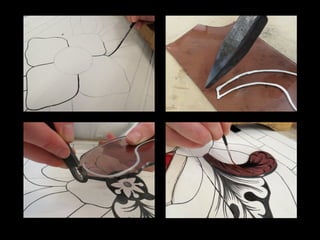
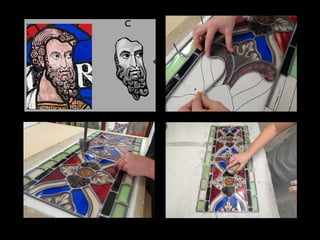
How Stained Glass is
Made
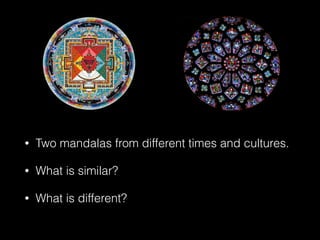
• Two mandalas from different times and cultures.
• What is similar?
• What is different?
Similarities
• All are designs in circles
• All use symbols
• All tell stories or teach a message
• Can you think of more?
Differences
• Different types of materials - sand / glass
• The symbols vary and have different meanings
• The meanings and purpose of the mandalas vary
• Tibetan - impermanence of life
• Rose window - Heaven on earth - God’s plan to
save Mankind from the beginning of creation
• Can you think of more differences?

Mandalas from around the world

  • 1.
  • 2.
    The mandala originatedin the region of the Himalayan Mountains, India but people all over the world create these beautiful symmetrical designs.
  • 3.
  • 5.
  • 6.
    What Lines, Shapesand Colours do you see?
  • 9.
    • In TibetanBuddhism, a mandala represents the home of a deity (god). • This deity can be found in the centre of its mandala surrounded by figures radiating out from the centre.   • Hayagriva - The patron god of Seraje is represented here by a written character. • The character sits on a lotus flower within the triangle at the centre of the mandala.
  • 10.
    • Skulls • Insidethe innermost ring is a series of tiny skulls. • What do you think the skulls symbolise? • The skulls remind us that life is not permanent
  • 12.
    • The number5 is symbolically significant. • There are 5 directions to each palace (north, east, south, west, and centre) • 5 main colours used at each direction (green, blue, yellow, red, and white). • Each colour corresponds to one of the primary elements as well (air, water, earth, fire, and space).
  • 13.
    • Conch shell •Within the border of the square there are four conch shells, one on each side. • Conch shells can be blown like a horn and are used to call people to worship. • What do you think the conch shell symbolises? • The conch shell symbolises the voice of Buddha.
  • 15.
    • Skeletons • Theouter ring with the black background probably represents our world. • In this area, there are skeletons suggesting burial grounds. • What do you think the the skeletons and burial ground symbolises? • These remind us of the impermanence of life
  • 16.
    Symbols and Meaning •The mandala is the home of a deity (god) • Inner square is a palace with 4 gateways • Outer circle is a rainbow moat of protection around the palace • Number 5 is symbolic - 5 directions, 5 colours, 5 elements • Conch Shell - the voice of Buddha • Skulls and Skeletons - Reminder of impermanence • Sand - impermanence of life
  • 17.
    Meaning and Purpose •The mandala design is the home of a deity (god) • It represents power and wellbeing • It is also a reminder of the impermanence of life
  • 18.
    Who Made It? •Three monks from the Seraje monastery in southern India, created this sand mandala. • Monks who create sand mandalas must have special skills. • They need to be able to visualise and remember the design before construction of the mandala begins.
  • 19.
    • What isis made from? • The mandala was made using various colours of sand, arranged to create an intricate and symbolic design. • Can you see where a lot of sand has been applied to form small peaks? • Why do you think sand was used to create this mandala?
  • 20.
    Creating a sandmandala • Monks start by drawing a simple diagram • It is created flat on the floor or table.
  • 21.
    • They beginapplying the sand, starting at the centre and working out toward the edge. • Sand is applied one grain at a time through tiny funnels. • The Monks scrape or tap the funnels to apply the sand. • They must control their breathing.
  • 22.
    • Watch thevideo of the mandala being created • After it has been completed the mandala is swept up. • Why do you think the Monks dismantle the mandala when it is complete? • As a reminder that nothing is permanent in life.
  • 23.
  • 25.
    What colours, shapes orlines do you see?
  • 27.
    Rose Window ofChartres Cathedral, France
  • 29.
    Let’s look closer Whatelse do you see?
  • 33.
    • In thevery centre of the window the Virgin Mary holds the baby Jesus. • What do you think the colour red symbolises? • Red was a symbol for the Blood and Passion of Christ
  • 34.
    • There are12 quatrefoil windows. • The quatrefoil is a shape made from 4 circles • It is a shape that is often found in rose windows and mandalas
  • 35.
    • Inside thequatrefoil windows is the Fleur-de lis - the symbol of France. • The Fleur-de-lis is the lily flower - a symbol for purity.
  • 36.
    • What doyou think the deep blue colour symbolises? • The deep blue is the colour of Mary and also a symbol for purity.
  • 37.
    • How many repeated shapescan you count? • 12 circles • 12 quatrefoils • 12 diamond shapes • 12 half circles • Why do you think the number 12 was important?
  • 38.
    Symbols and Meaning •The number 12 can be made by 3 x 4 • Number 4 represents Humankind • Humans have four limbs (2 arms and 2 legs) • We have four stages of life - what are they? • And there are four seasons on earth - can you name them? • The number 3 • Representing Father, Son and Holy Spirit • Therefore12 symbolised Heaven on Earth
  • 39.
    Symbols and Meaning •Glass and Light - the presence of the Divine • Red - the blood of Christ • Blue - Symbolising Mary and purity • Mary is at the Centre surrounded by 4 Doves 4 Thrones and 4 Angels • She is surrounded by the 12 Kings of Judea who were her ancestors and 12 Prophets. • Meaning - God’s plan to save mankind from the beginning of Creation.
  • 40.
    Meaning • Heaven onEarth - the presence of the divine • God’s plan to save Mankind from the beginning of Creation
  • 41.
  • 44.
    • Two mandalasfrom different times and cultures. • What is similar? • What is different?
  • 45.
    Similarities • All aredesigns in circles • All use symbols • All tell stories or teach a message • Can you think of more?
  • 46.
    Differences • Different typesof materials - sand / glass • The symbols vary and have different meanings • The meanings and purpose of the mandalas vary • Tibetan - impermanence of life • Rose window - Heaven on earth - God’s plan to save Mankind from the beginning of creation • Can you think of more differences?