Chiaroscuro by Leonardo da
   Vinci and Michelangelo
Get to know the masters through their drawings


    Presented by: bruceblackart.com
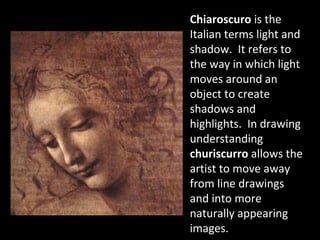
Chiaroscuro is the
Italian terms light and
shadow. It refers to
the way in which light
moves around an
object to create
shadows and
highlights. In drawing
understanding
churiscurro allows the
artist to move away
from line drawings
and into more
naturally appearing
images.
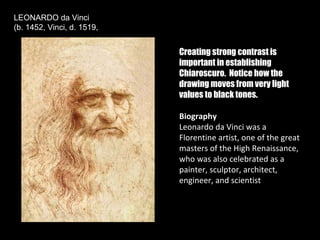
LEONARDO da Vinci
(b. 1452, Vinci, d. 1519,


                            Creating strong contrast is
                            important in establishing
                            Chiaroscuro. Notice how the
                            drawing moves from very light
                            values to black tones.

                            Biography
                            Leonardo da Vinci was a
                            Florentine artist, one of the great
                            masters of the High Renaissance,
                            who was also celebrated as a
                            painter, sculptor, architect,
                            engineer, and scientist
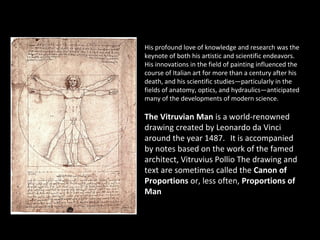
His profound love of knowledge and research was the
keynote of both his artistic and scientific endeavors.
His innovations in the field of painting influenced the
course of Italian art for more than a century after his
death, and his scientific studies—particularly in the
fields of anatomy, optics, and hydraulics—anticipated
many of the developments of modern science.

The Vitruvian Man is a world-renowned
drawing created by Leonardo da Vinci
around the year 1487. It is accompanied
by notes based on the work of the famed
architect, Vitruvius Pollio The drawing and
text are sometimes called the Canon of
Proportions or, less often, Proportions of
Man
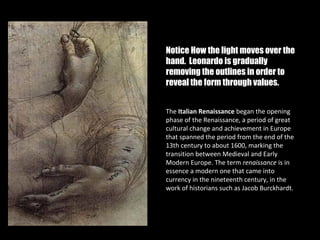
Notice How the light moves over the
hand. Leonardo is gradually
removing the outlines in order to
reveal the form through values.


The Italian Renaissance began the opening
phase of the Renaissance, a period of great
cultural change and achievement in Europe
that spanned the period from the end of the
13th century to about 1600, marking the
transition between Medieval and Early
Modern Europe. The term renaissance is in
essence a modern one that came into
currency in the nineteenth century, in the
work of historians such as Jacob Burckhardt.
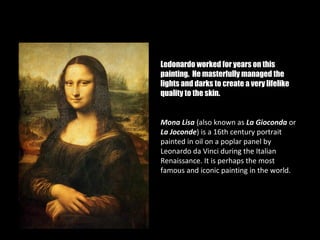
Ledonardo worked for years on this
painting. He masterfully managed the
lights and darks to create a very lifelike
quality to the skin.


Mona Lisa (also known as La Gioconda or
La Joconde) is a 16th century portrait
painted in oil on a poplar panel by
Leonardo da Vinci during the Italian
Renaissance. It is perhaps the most
famous and iconic painting in the world.
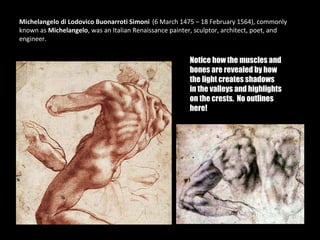
Michelangelo di Lodovico Buonarroti Simoni (6 March 1475 – 18 February 1564), commonly
known as Michelangelo, was an Italian Renaissance painter, sculptor, architect, poet, and
engineer.


                                                        Notice how the muscles and
                                                        bones are revealed by how
                                                        the light creates shadows
                                                        in the valleys and highlights
                                                        on the crests. No outlines
                                                        here!
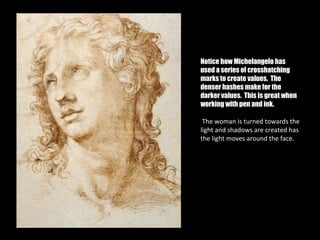
Notice how Michelangelo has
used a series of crosshatching
marks to create values. The
denser hashes make for the
darker values. This is great when
working with pen and ink.

 The woman is turned towards the
light and shadows are created has
the light moves around the face.
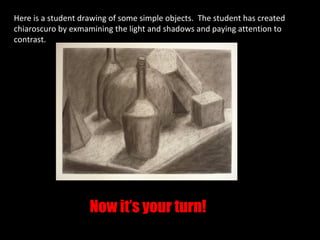
Here is a student drawing of some simple objects. The student has created
chiaroscuro by exmamining the light and shadows and paying attention to
contrast.


                    Now it’s your turn!
End of show
• Presented by: bruceblackart.com

  Please click and visit me!

Chiaroscuro

  • 1.
    Chiaroscuro by Leonardoda Vinci and Michelangelo Get to know the masters through their drawings Presented by: bruceblackart.com
  • 2.
    Chiaroscuro is the Italianterms light and shadow. It refers to the way in which light moves around an object to create shadows and highlights. In drawing understanding churiscurro allows the artist to move away from line drawings and into more naturally appearing images.
  • 3.
    LEONARDO da Vinci (b.1452, Vinci, d. 1519, Creating strong contrast is important in establishing Chiaroscuro. Notice how the drawing moves from very light values to black tones. Biography Leonardo da Vinci was a Florentine artist, one of the great masters of the High Renaissance, who was also celebrated as a painter, sculptor, architect, engineer, and scientist
  • 4.
    His profound loveof knowledge and research was the keynote of both his artistic and scientific endeavors. His innovations in the field of painting influenced the course of Italian art for more than a century after his death, and his scientific studies—particularly in the fields of anatomy, optics, and hydraulics—anticipated many of the developments of modern science. The Vitruvian Man is a world-renowned drawing created by Leonardo da Vinci around the year 1487. It is accompanied by notes based on the work of the famed architect, Vitruvius Pollio The drawing and text are sometimes called the Canon of Proportions or, less often, Proportions of Man
  • 5.
    Notice How thelight moves over the hand. Leonardo is gradually removing the outlines in order to reveal the form through values. The Italian Renaissance began the opening phase of the Renaissance, a period of great cultural change and achievement in Europe that spanned the period from the end of the 13th century to about 1600, marking the transition between Medieval and Early Modern Europe. The term renaissance is in essence a modern one that came into currency in the nineteenth century, in the work of historians such as Jacob Burckhardt.
  • 6.
    Ledonardo worked foryears on this painting. He masterfully managed the lights and darks to create a very lifelike quality to the skin. Mona Lisa (also known as La Gioconda or La Joconde) is a 16th century portrait painted in oil on a poplar panel by Leonardo da Vinci during the Italian Renaissance. It is perhaps the most famous and iconic painting in the world.
  • 7.
    Michelangelo di LodovicoBuonarroti Simoni (6 March 1475 – 18 February 1564), commonly known as Michelangelo, was an Italian Renaissance painter, sculptor, architect, poet, and engineer. Notice how the muscles and bones are revealed by how the light creates shadows in the valleys and highlights on the crests. No outlines here!
  • 8.
    Notice how Michelangelohas used a series of crosshatching marks to create values. The denser hashes make for the darker values. This is great when working with pen and ink. The woman is turned towards the light and shadows are created has the light moves around the face.
  • 9.
    Here is astudent drawing of some simple objects. The student has created chiaroscuro by exmamining the light and shadows and paying attention to contrast. Now it’s your turn!
  • 10.
    End of show •Presented by: bruceblackart.com Please click and visit me!