MANAGING WATER RESOURCES VARIABILITY FOR
IMPROVED FOOD SECURITY AND LIVELIHOODS
VLADIMIR SMAKHTIN
Contributors: Giriraj Amarnath, Nishadi Eriyagama, Matthew
McCartney, Paul Pavelic, Upamali Surangika
International Water Management Institute (IWMI)

CCAFS-WLE- IWMI Science Seminar, University of Copenhagen, 4 October 2013

Water for a food-secure world
www.iwmi.org
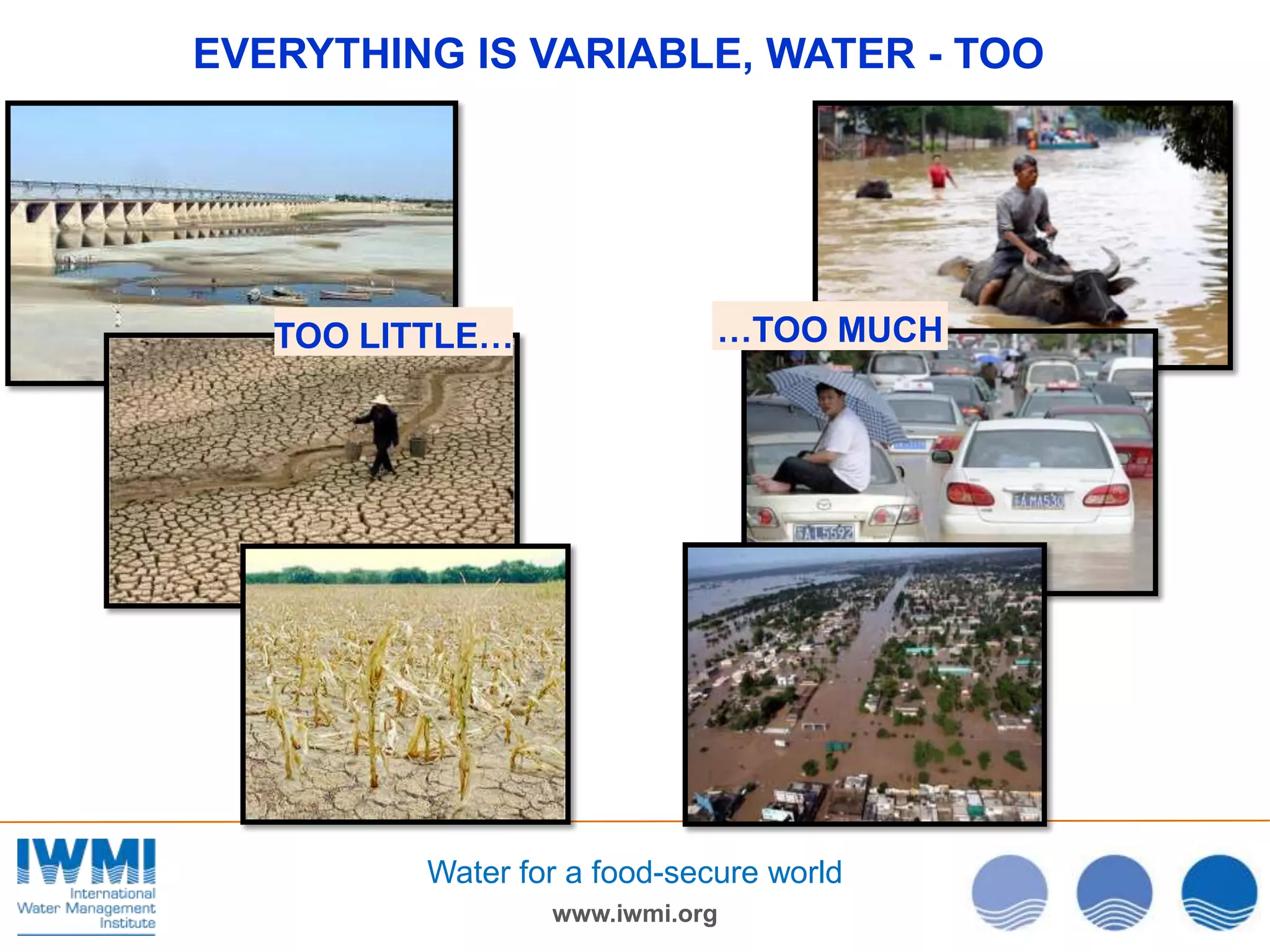
EVERYTHING IS VARIABLE, WATER - TOO

TOO LITTLE…

…TOO MUCH

Water for a food-secure world
www.iwmi.org
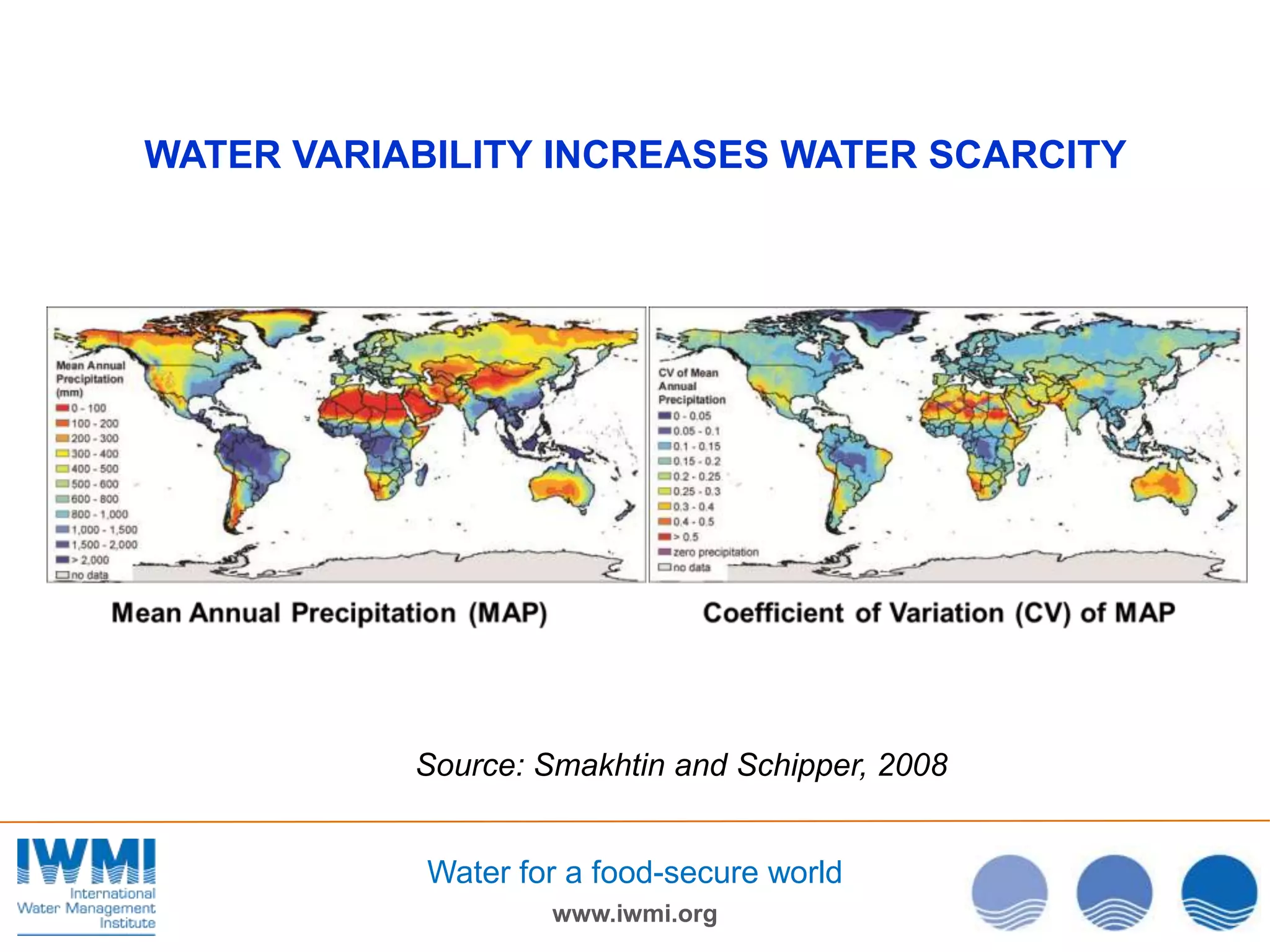
WATER VARIABILITY INCREASES WATER SCARCITY

Source: Smakhtin and Schipper, 2008
Water for a food-secure world
www.iwmi.org
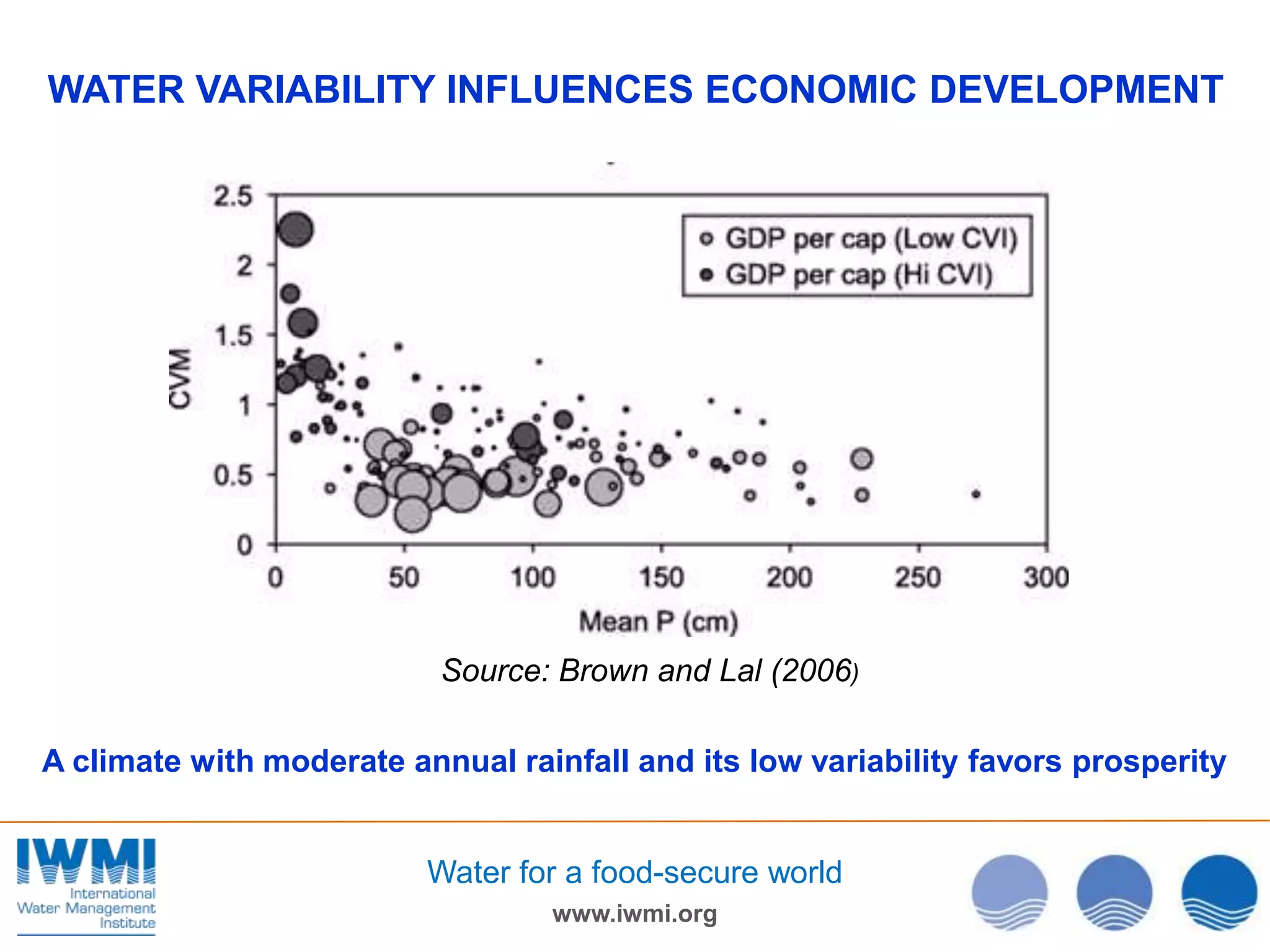
WATER VARIABILITY INFLUENCES ECONOMIC DEVELOPMENT

Source: Brown and Lal (2006)
A climate with moderate annual rainfall and its low variability favors prosperity

Water for a food-secure world
www.iwmi.org
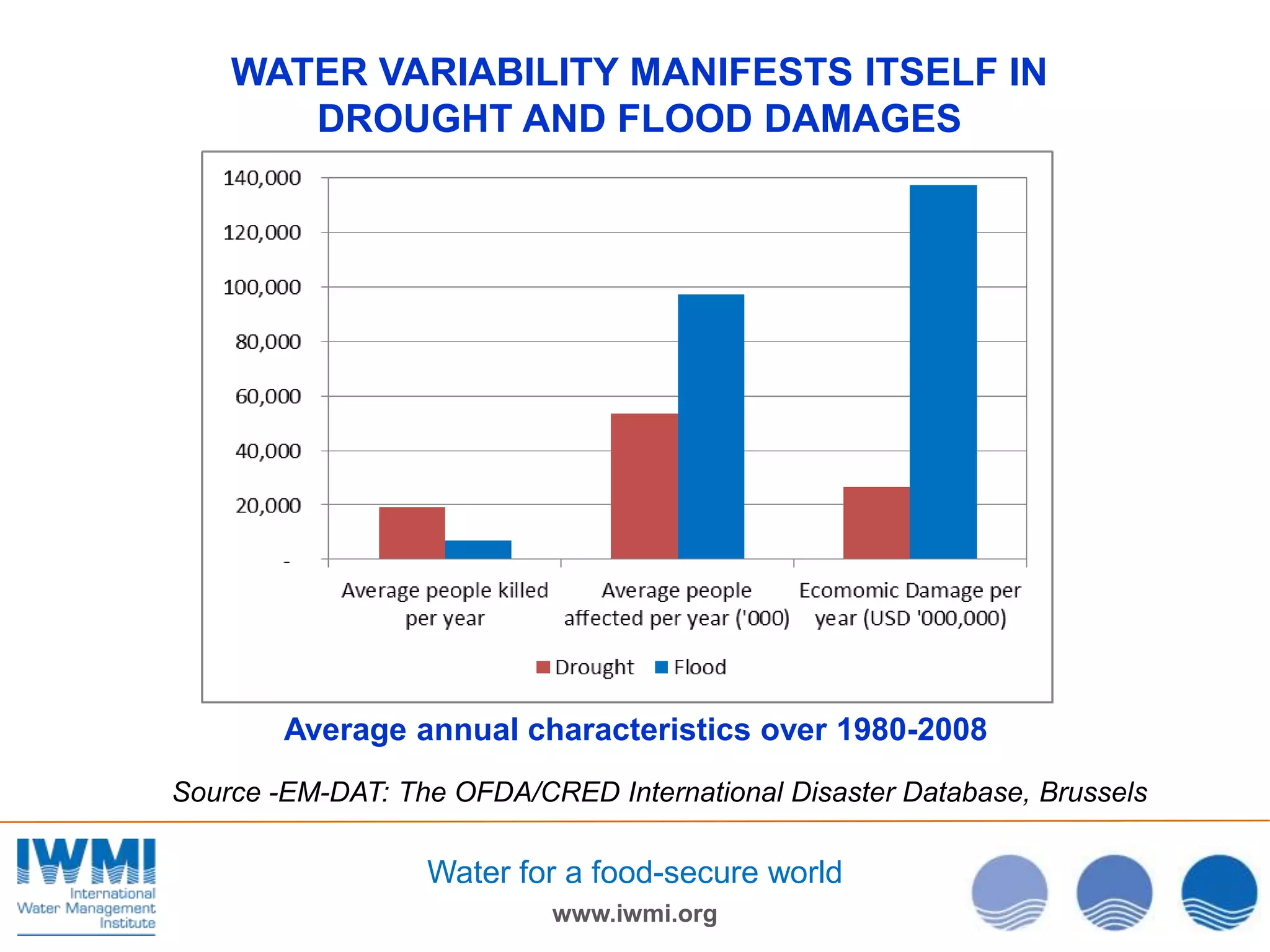
WATER VARIABILITY MANIFESTS ITSELF IN
DROUGHT AND FLOOD DAMAGES

Average annual characteristics over 1980-2008
Source -EM-DAT: The OFDA/CRED International Disaster Database, Brussels

Water for a food-secure world
www.iwmi.org
IN MANY REGIONS OF THE WORLD, WATER RESOURCES
VARIABILITY IS PROJECTED TO INCREASE WITH CLIMATE
CHANGE

Water for a food-secure world
www.iwmi.org
VARIABILITY MANAGEMENT MUST RECEIVE MUCH MORE
SCIENCE, POLICY AND INVESTMENT ATTENTION

• Better quantification of variability hot spots, risks and extent
• Re-thinking water storage
• Conjunctive management of floods and droughts in river
basins through subsurface solutions (vs just surface ones)

Water for a food-secure world
www.iwmi.org
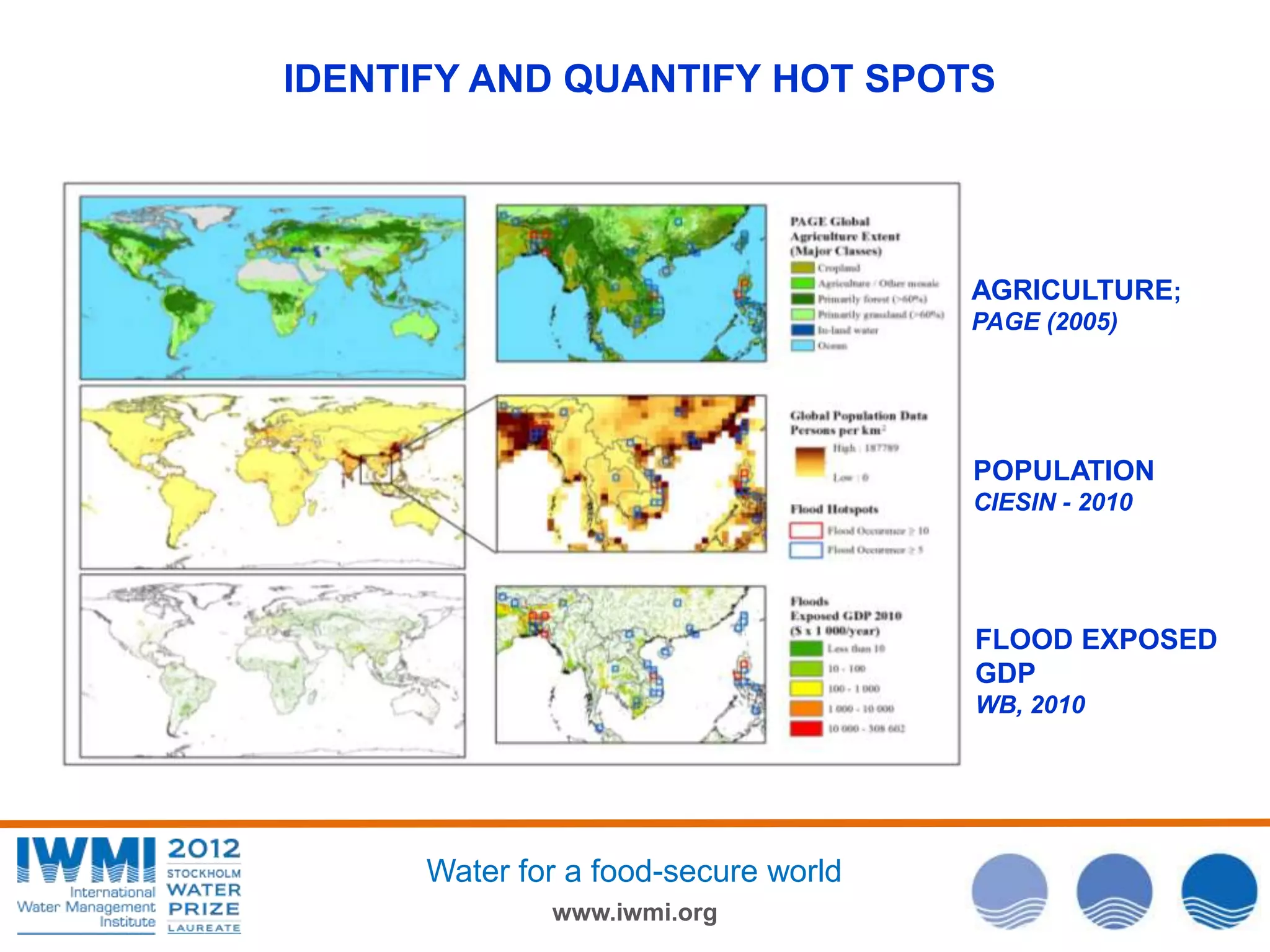
IDENTIFY AND QUANTIFY HOT SPOTS

AGRICULTURE;
PAGE (2005)

POPULATION
CIESIN - 2010

FLOOD EXPOSED
GDP
WB, 2010

Water for a food-secure world
www.iwmi.org
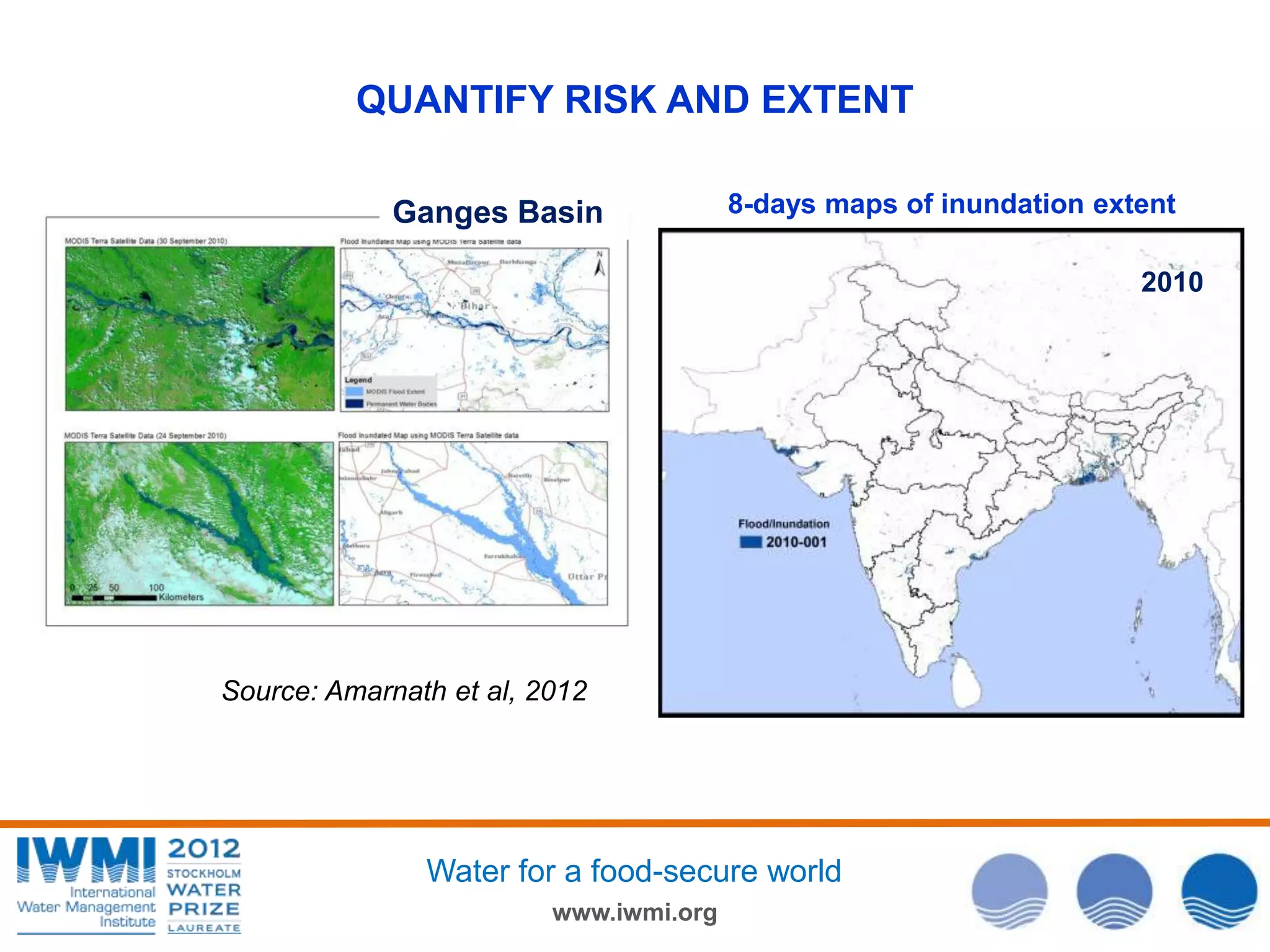
QUANTIFY RISK AND EXTENT
Ganges Basin

8-days maps of inundation extent
2010

Source: Amarnath et al, 2012

Water for a food-secure world
www.iwmi.org
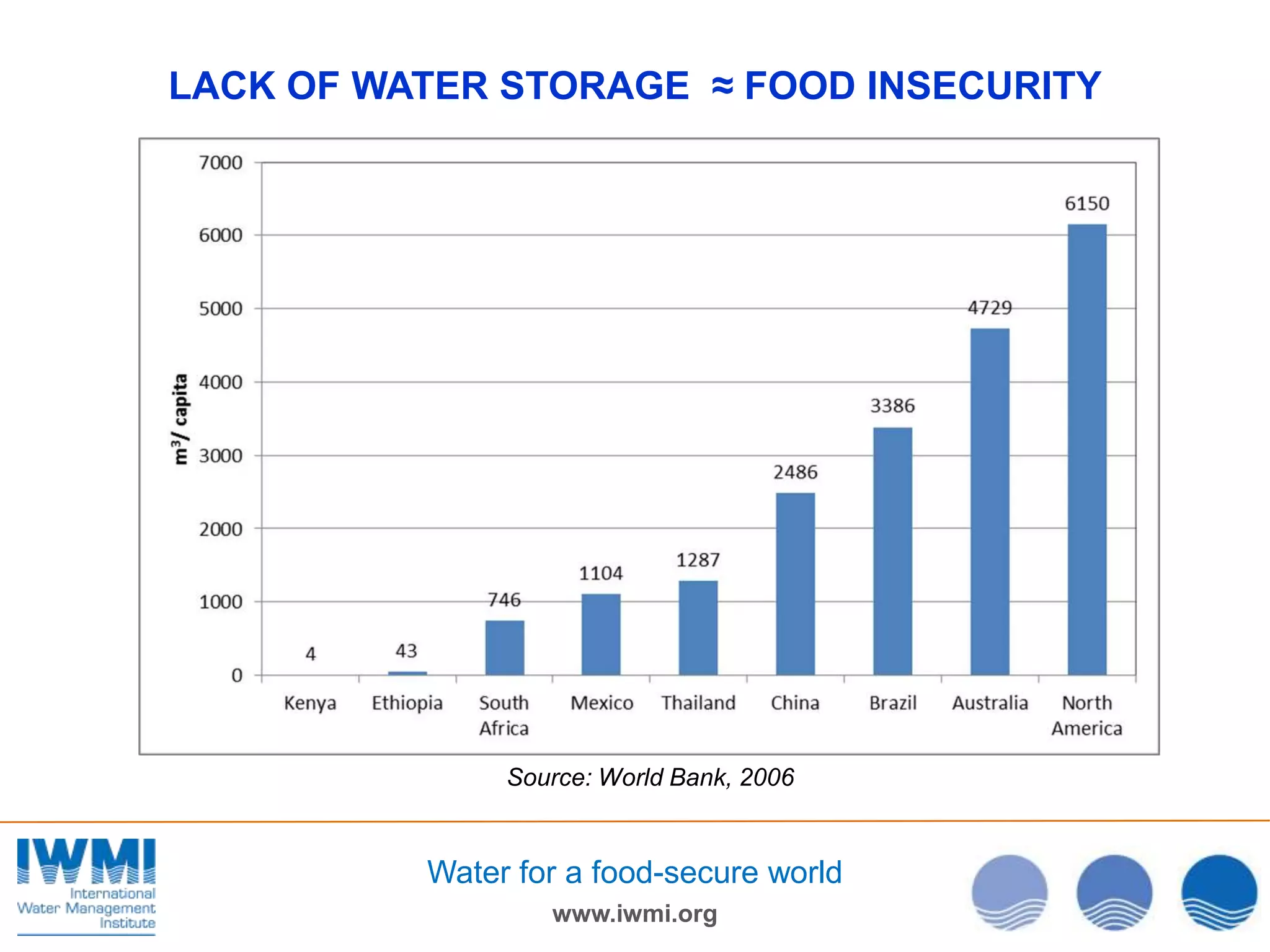
LACK OF WATER STORAGE ≈ FOOD INSECURITY

Ethiopia

Source: World Bank, 2006

Water for a food-secure world
www.iwmi.org
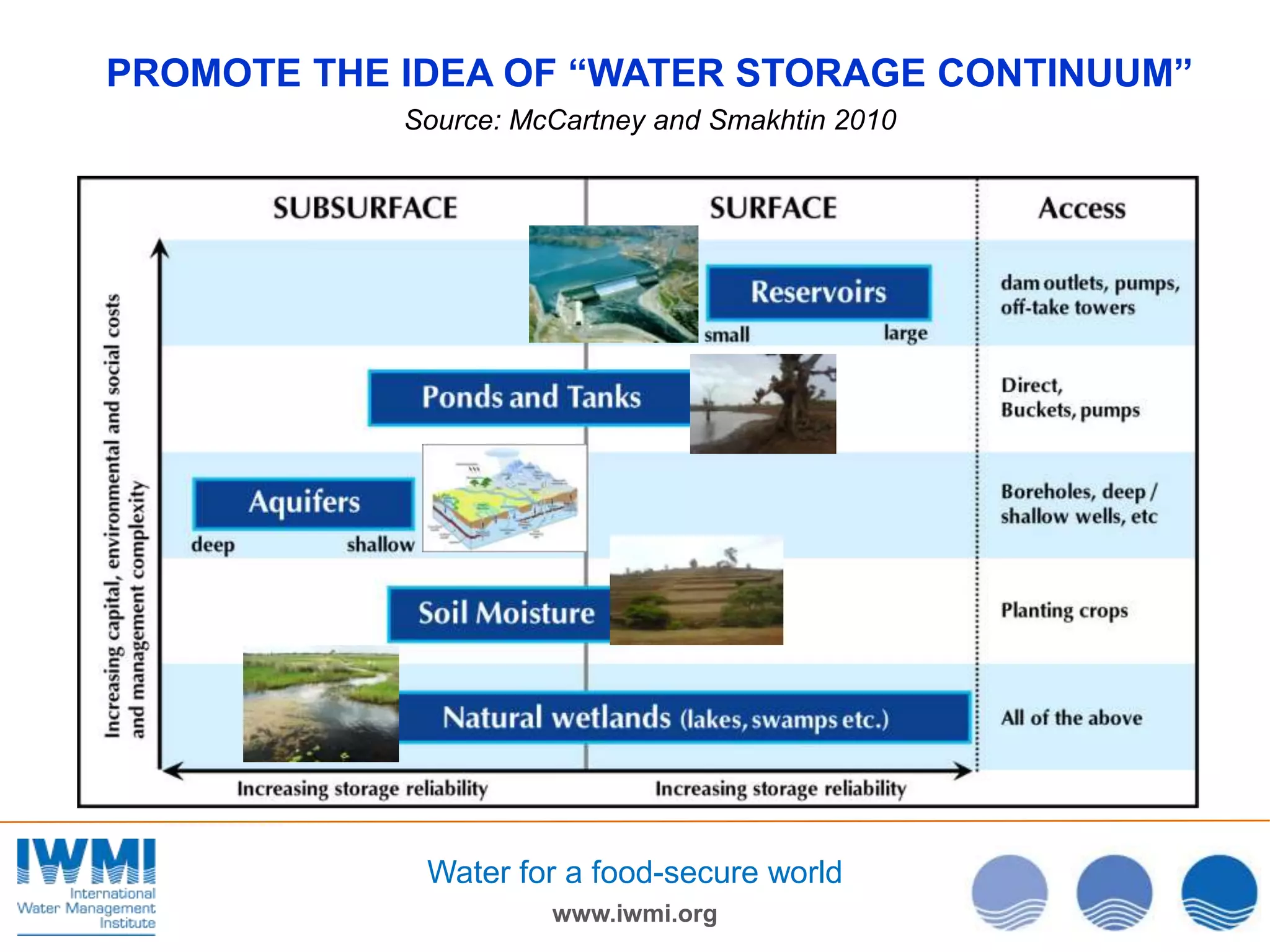
PROMOTE THE IDEA OF “WATER STORAGE CONTINUUM”
Source: McCartney and Smakhtin 2010

Water for a food-secure world
www.iwmi.org
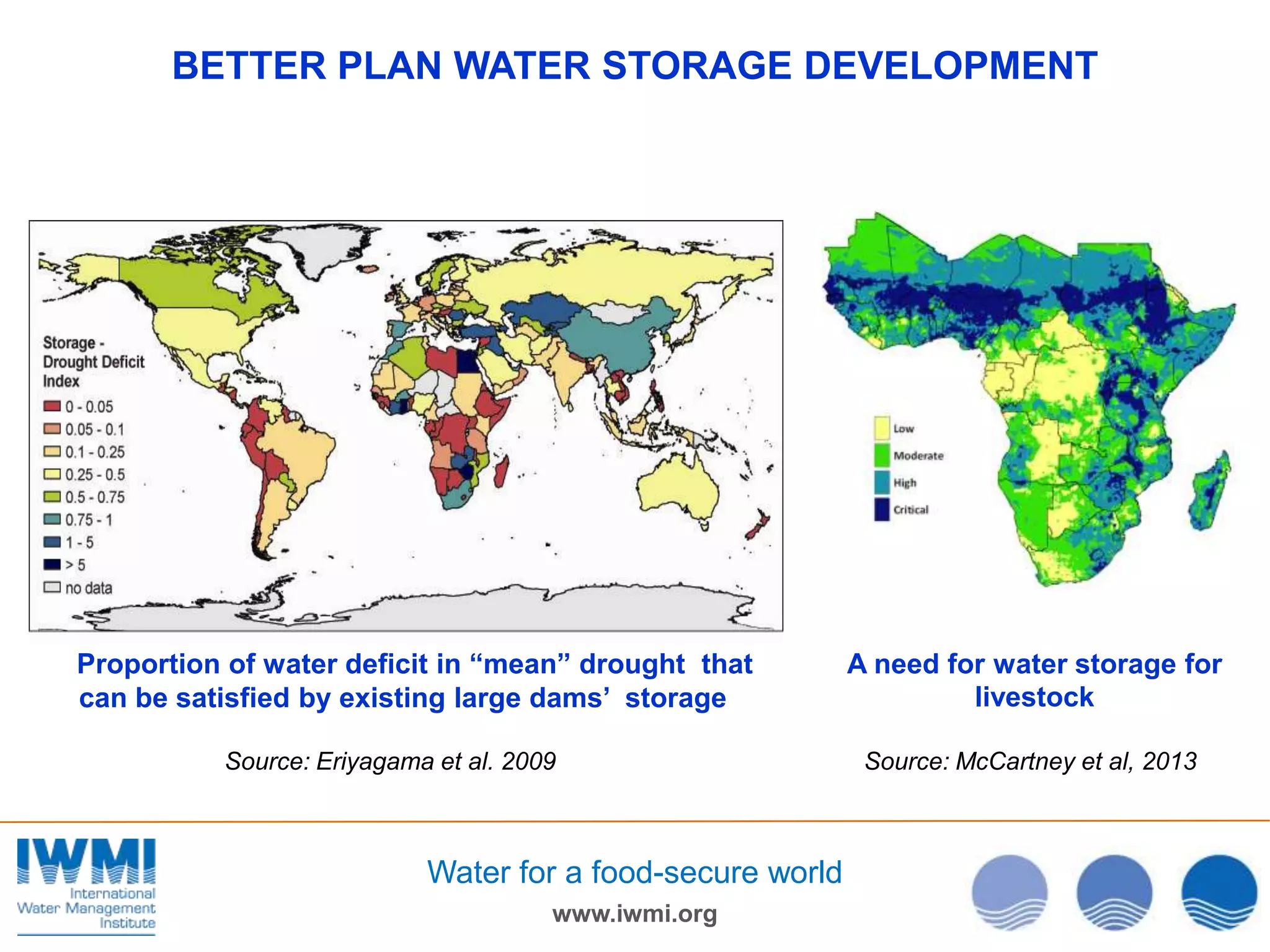
BETTER PLAN WATER STORAGE DEVELOPMENT

Proportion of water deficit in “mean” drought that
can be satisfied by existing large dams’ storage
Source: Eriyagama et al. 2009

Water for a food-secure world
www.iwmi.org

A need for water storage for
livestock
Source: McCartney et al, 2013
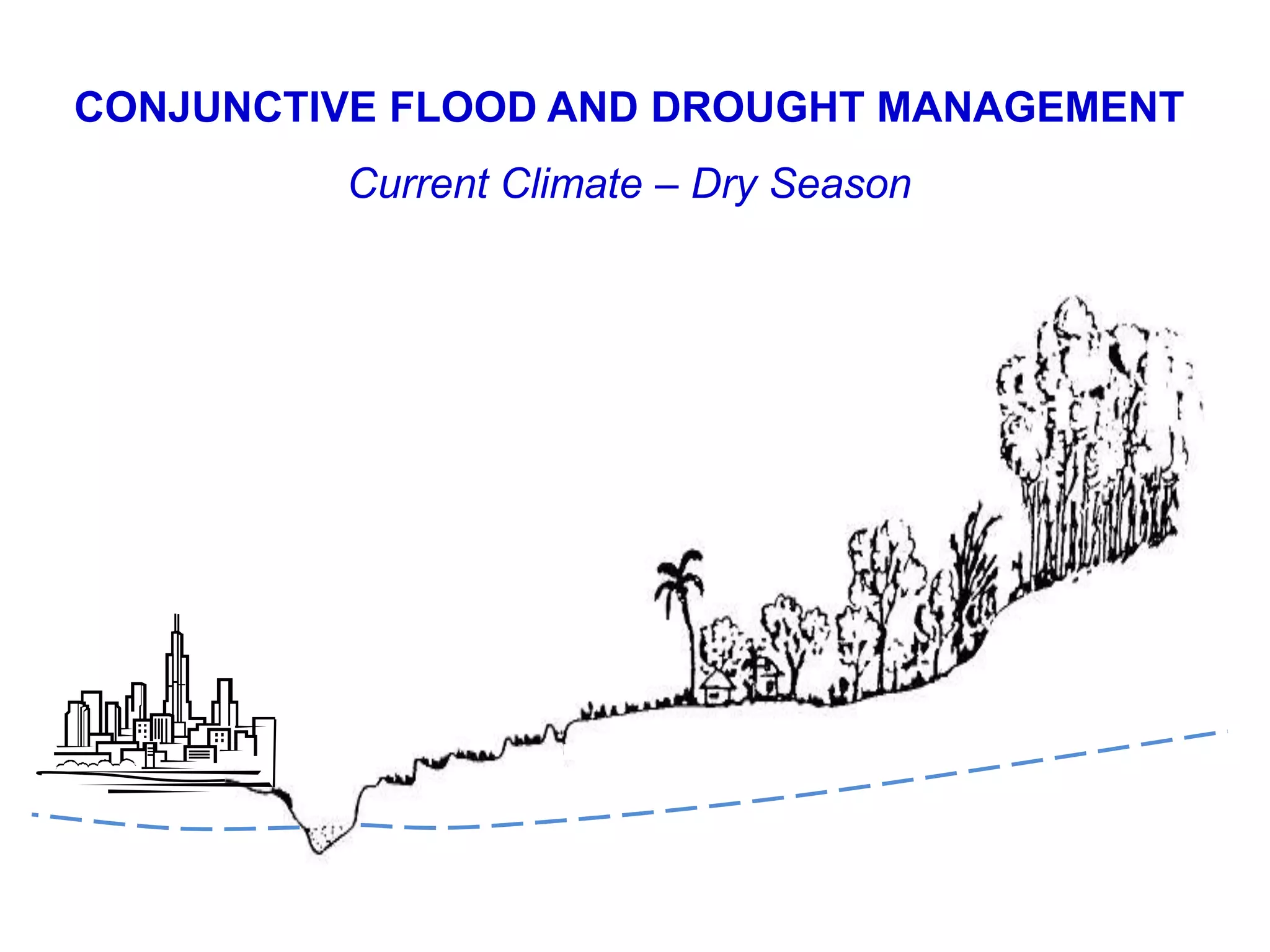
CONJUNCTIVE FLOOD AND DROUGHT MANAGEMENT
Current Climate – Dry Season

Water for a food-secure world
www.iwmi.org
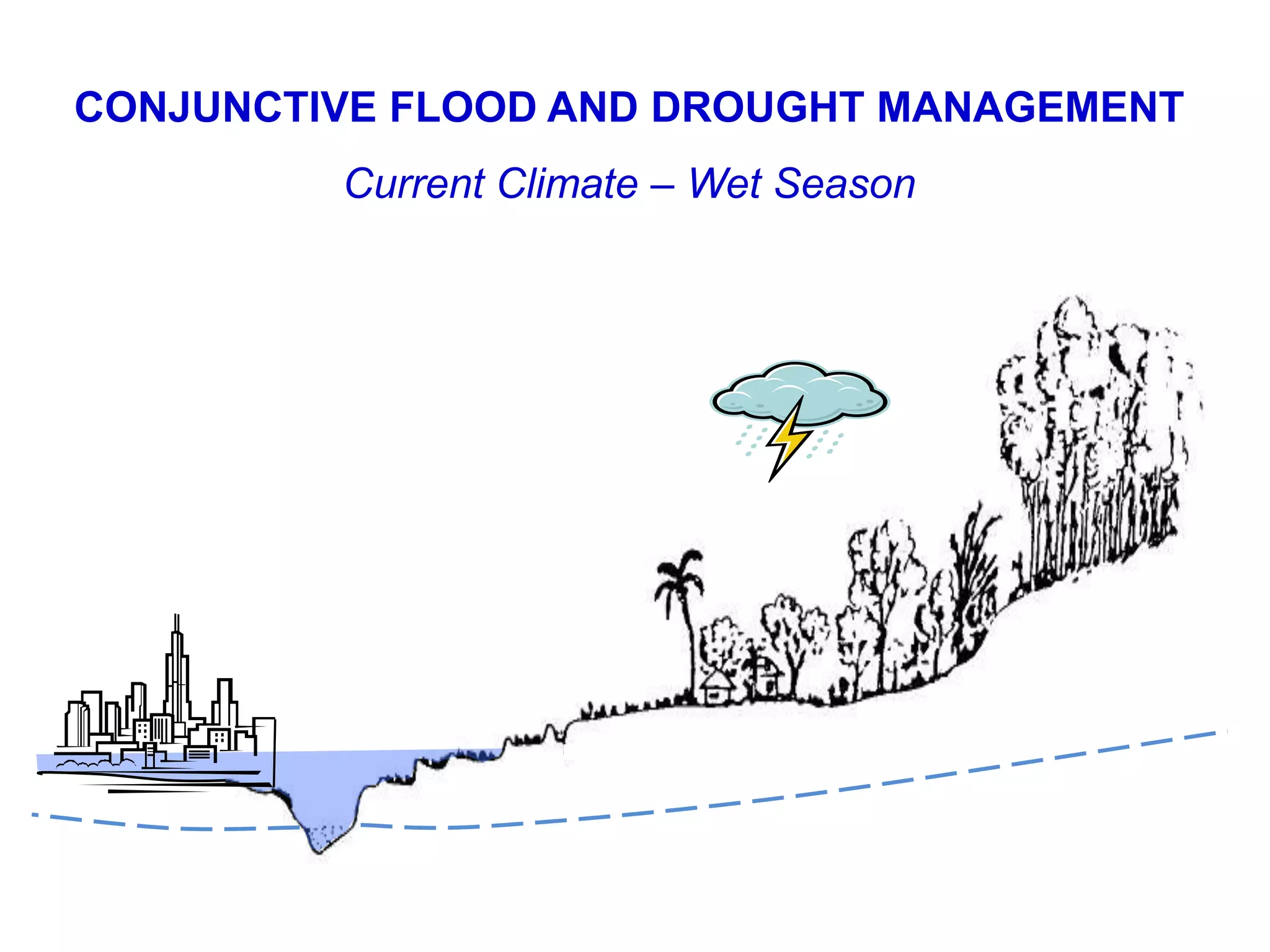
CONJUNCTIVE FLOOD AND DROUGHT MANAGEMENT
Current Climate – Wet Season

Water for a food-secure world
www.iwmi.org
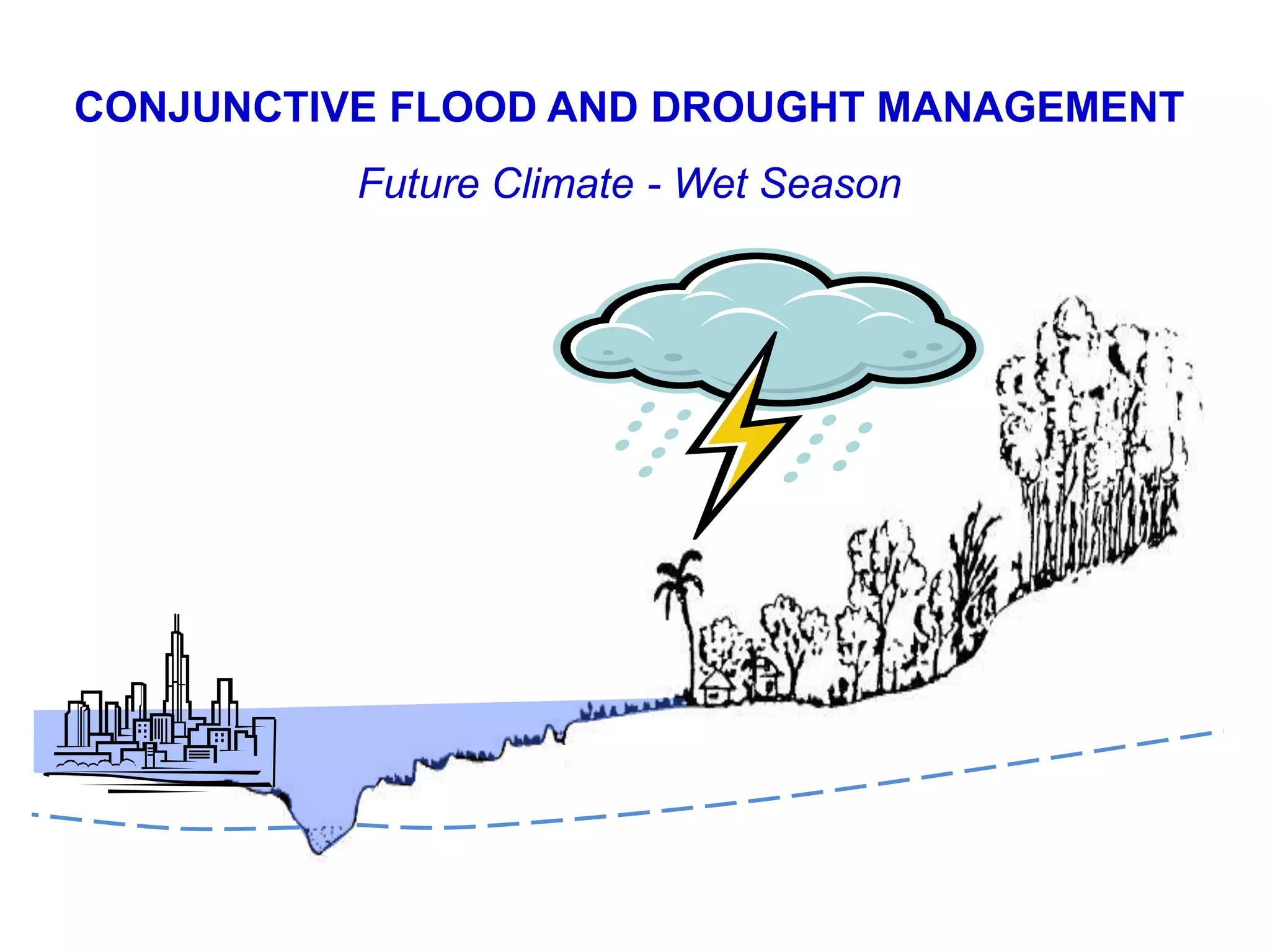
CONJUNCTIVE FLOOD AND DROUGHT MANAGEMENT
Future Climate - Wet Season

Water for a food-secure world
www.iwmi.org
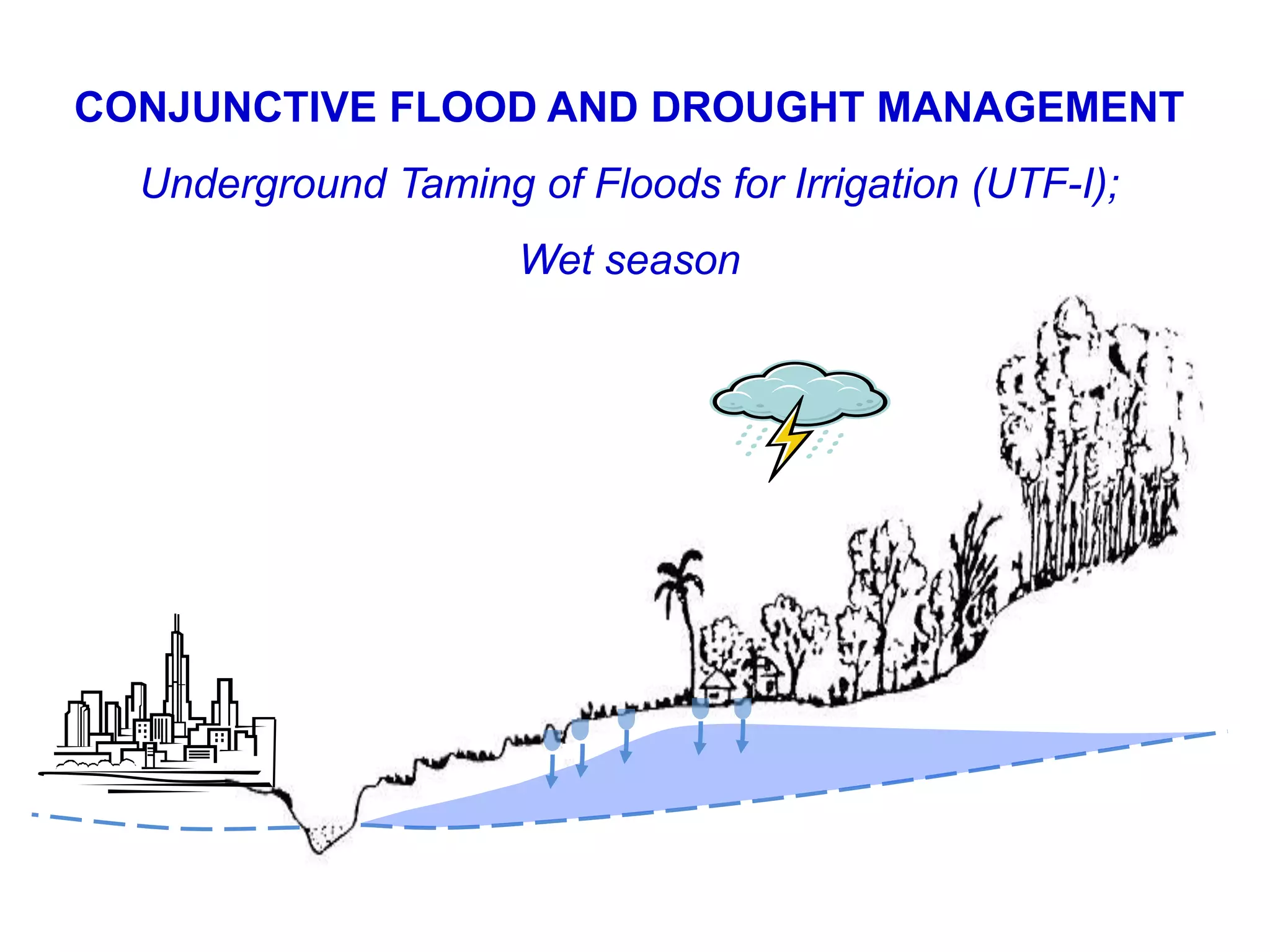
CONJUNCTIVE FLOOD AND DROUGHT MANAGEMENT
Underground Taming of Floods for Irrigation (UTF-I);
Wet season

Water for a food-secure world
www.iwmi.org
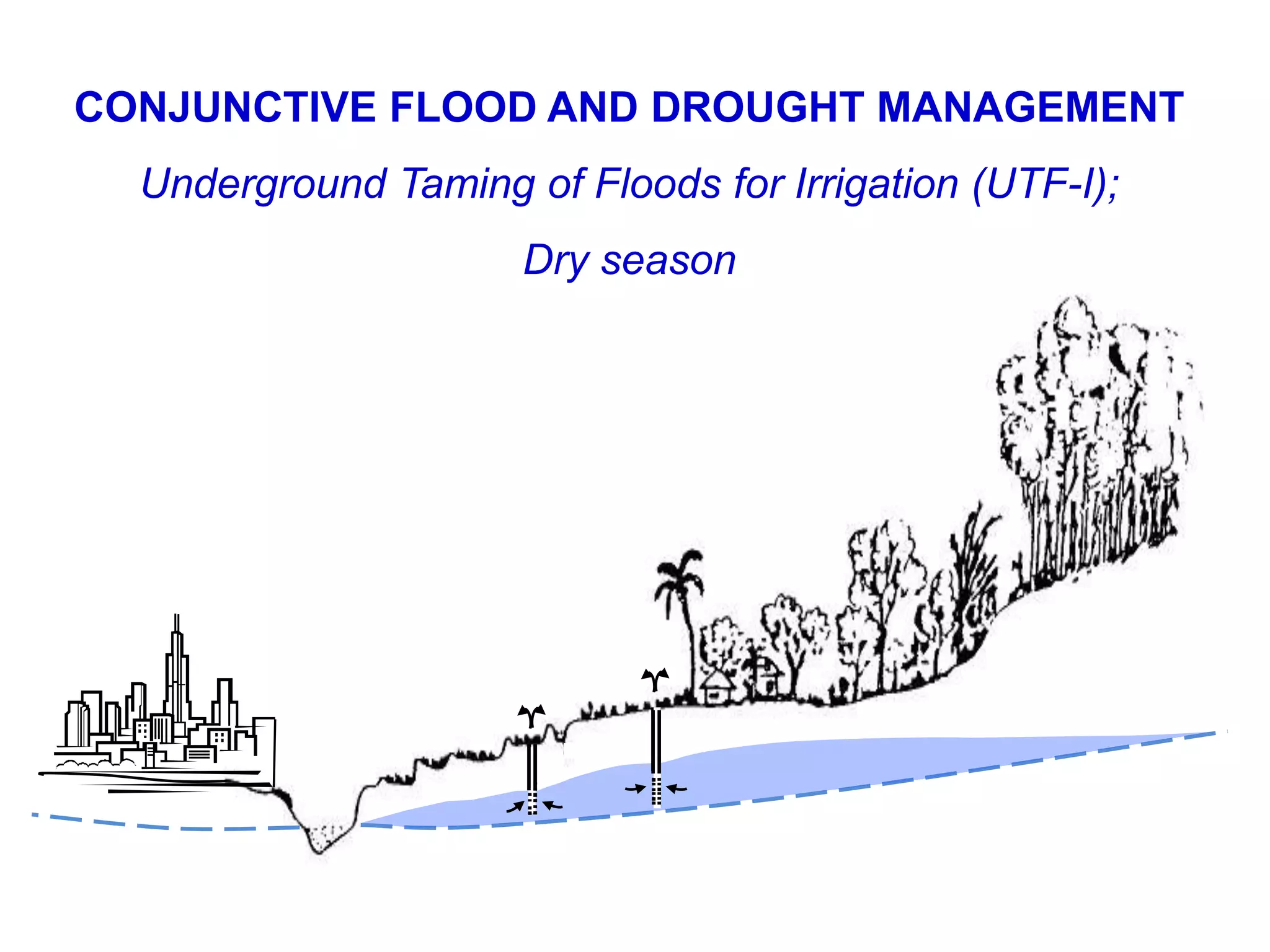
CONJUNCTIVE FLOOD AND DROUGHT MANAGEMENT
Underground Taming of Floods for Irrigation (UTF-I);
Dry season

Water for a food-secure world
www.iwmi.org
CONJUNCTIVE FLOOD AND DROUGHT MANAGEMENT
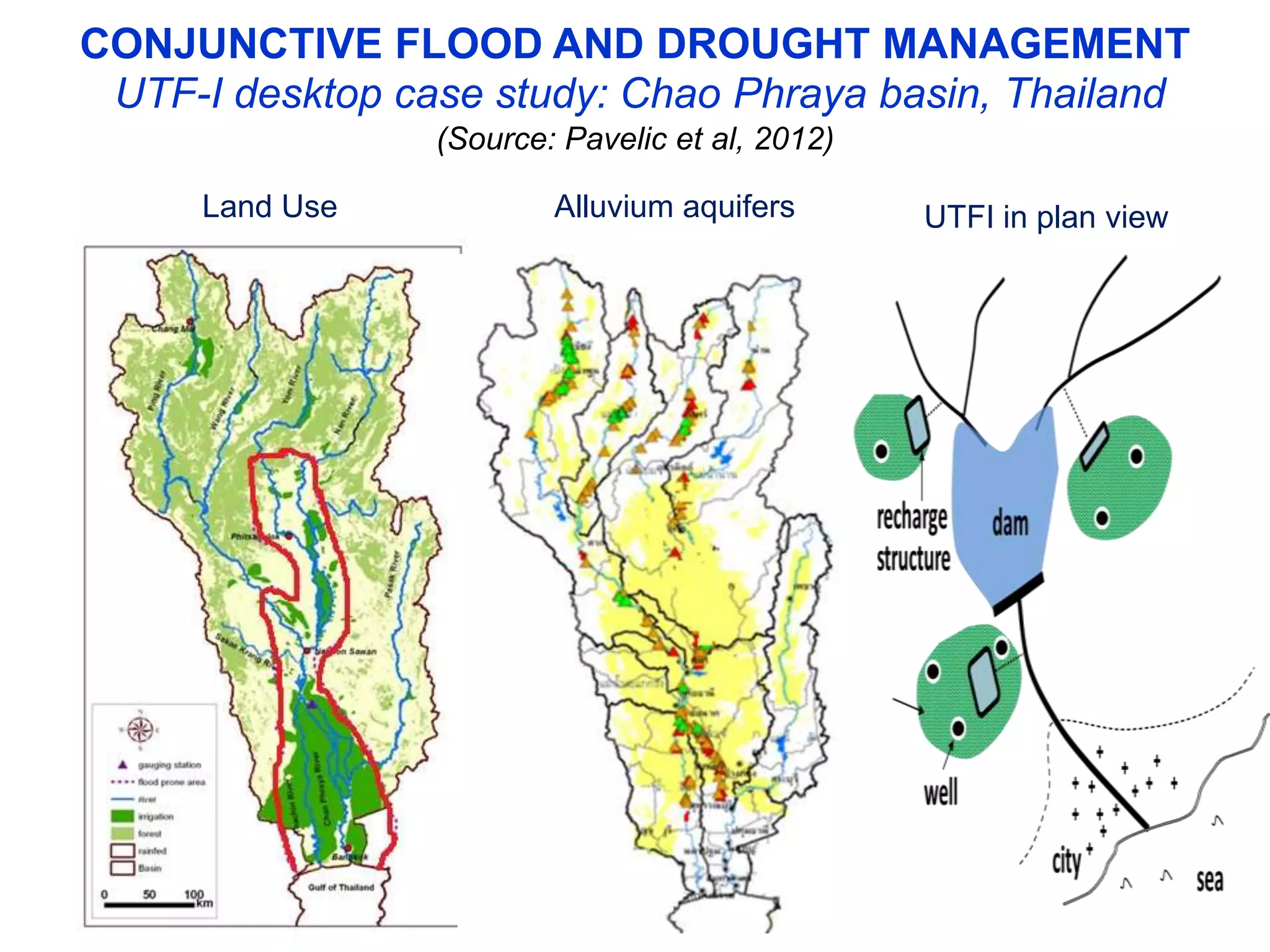
UTF-I desktop case study: Chao Phraya basin, Thailand
(Source: Pavelic et al, 2012)
Land Use

Alluvium aquifers

UTFI in plan view
CONJUNCTIVE FLOOD AND DROUGHT MANAGEMENT
UTF-I desktop case study: Chao Phraya basin, Thailand
(Source: Pavelic et al, 2012)

• Harvest water only in very wet years - approximately 1 year in 4

• Around 200 km2 land dedicated to flood harvesting may be needed (< 1% of
the total basin area)
• Additional 65,000- 270,000 ha of irrigation possible
• $150 mill / year - mean income to smallholder farmers
• Cost of implementation < $ 1 Bill. Payback time can be 7 -14 years, depending
on the efficiency of the scheme
• Farmers’ participation is critical
• No analogs so far exist
Water for a food-secure world
www.iwmi.org
KEEPING VARIABILITY ?

• Variability has positive effects too, e.g. the range of high
and low flows, their proper timing and frequency is needed
to ensure a healthy river
• The challenge is to alleviate negative aspects of variability,
while maintaining its positive side

Water for a food-secure world
www.iwmi.org
THANK YOU !

Water for a food-secure world
www.iwmi.org

21
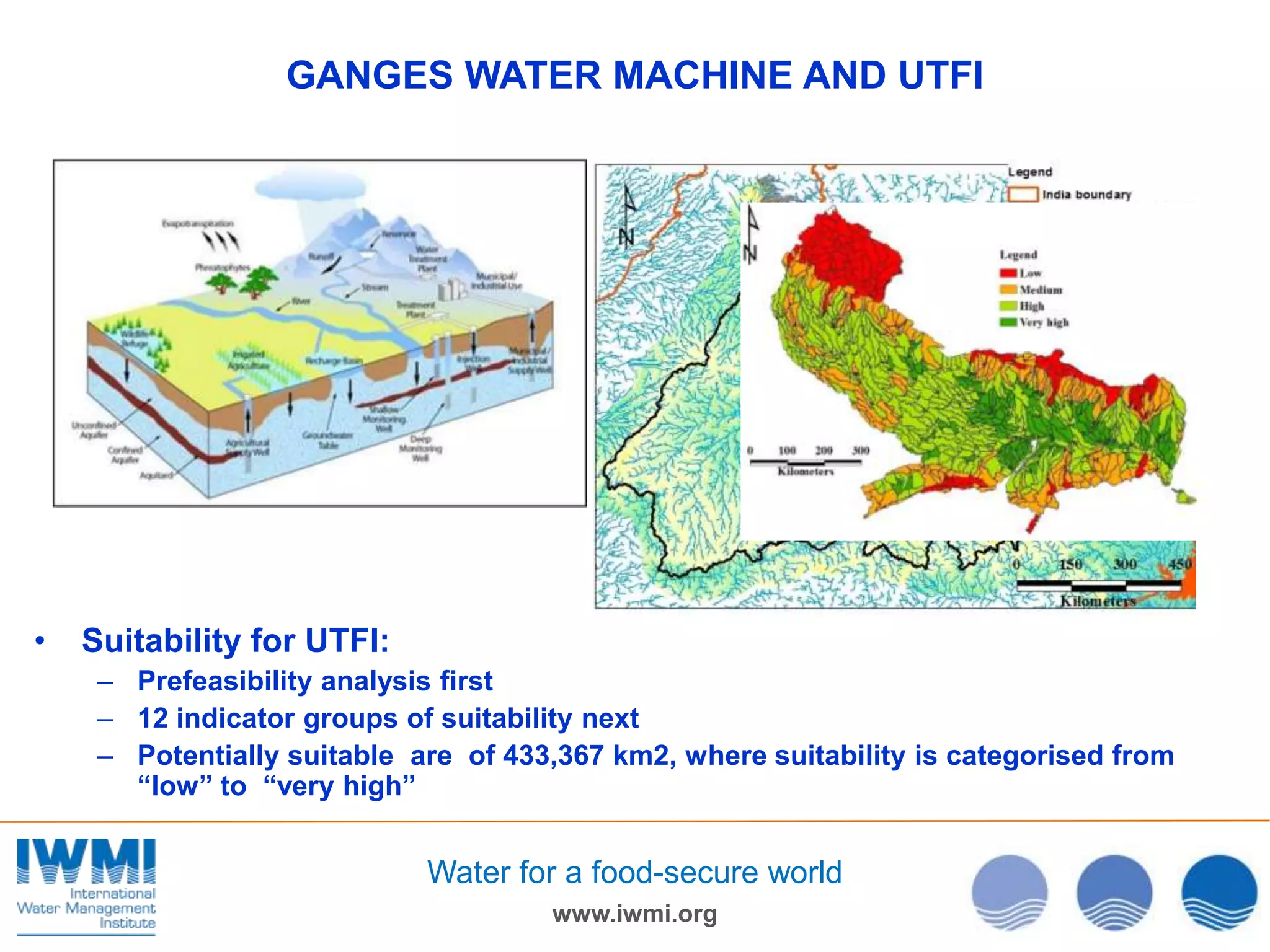
GANGES WATER MACHINE AND UTFI

•

Suitability for UTFI:
– Prefeasibility analysis first
– 12 indicator groups of suitability next
– Potentially suitable are of 433,367 km2, where suitability is categorised from
“low” to “very high”

Water for a food-secure world
www.iwmi.org

Managing water resources variability for improved food security and livelihoods

  • 1.
    MANAGING WATER RESOURCESVARIABILITY FOR IMPROVED FOOD SECURITY AND LIVELIHOODS VLADIMIR SMAKHTIN Contributors: Giriraj Amarnath, Nishadi Eriyagama, Matthew McCartney, Paul Pavelic, Upamali Surangika International Water Management Institute (IWMI) CCAFS-WLE- IWMI Science Seminar, University of Copenhagen, 4 October 2013 Water for a food-secure world www.iwmi.org
  • 2.
    EVERYTHING IS VARIABLE,WATER - TOO TOO LITTLE… …TOO MUCH Water for a food-secure world www.iwmi.org
  • 3.
    WATER VARIABILITY INCREASESWATER SCARCITY Source: Smakhtin and Schipper, 2008 Water for a food-secure world www.iwmi.org
  • 4.
    WATER VARIABILITY INFLUENCESECONOMIC DEVELOPMENT Source: Brown and Lal (2006) A climate with moderate annual rainfall and its low variability favors prosperity Water for a food-secure world www.iwmi.org
  • 5.
    WATER VARIABILITY MANIFESTSITSELF IN DROUGHT AND FLOOD DAMAGES Average annual characteristics over 1980-2008 Source -EM-DAT: The OFDA/CRED International Disaster Database, Brussels Water for a food-secure world www.iwmi.org
  • 6.
    IN MANY REGIONSOF THE WORLD, WATER RESOURCES VARIABILITY IS PROJECTED TO INCREASE WITH CLIMATE CHANGE Water for a food-secure world www.iwmi.org
  • 7.
    VARIABILITY MANAGEMENT MUSTRECEIVE MUCH MORE SCIENCE, POLICY AND INVESTMENT ATTENTION • Better quantification of variability hot spots, risks and extent • Re-thinking water storage • Conjunctive management of floods and droughts in river basins through subsurface solutions (vs just surface ones) Water for a food-secure world www.iwmi.org
  • 8.
    IDENTIFY AND QUANTIFYHOT SPOTS AGRICULTURE; PAGE (2005) POPULATION CIESIN - 2010 FLOOD EXPOSED GDP WB, 2010 Water for a food-secure world www.iwmi.org
  • 9.
    QUANTIFY RISK ANDEXTENT Ganges Basin 8-days maps of inundation extent 2010 Source: Amarnath et al, 2012 Water for a food-secure world www.iwmi.org
  • 10.
    LACK OF WATERSTORAGE ≈ FOOD INSECURITY Ethiopia Source: World Bank, 2006 Water for a food-secure world www.iwmi.org
  • 11.
    PROMOTE THE IDEAOF “WATER STORAGE CONTINUUM” Source: McCartney and Smakhtin 2010 Water for a food-secure world www.iwmi.org
  • 12.
    BETTER PLAN WATERSTORAGE DEVELOPMENT Proportion of water deficit in “mean” drought that can be satisfied by existing large dams’ storage Source: Eriyagama et al. 2009 Water for a food-secure world www.iwmi.org A need for water storage for livestock Source: McCartney et al, 2013
  • 13.
    CONJUNCTIVE FLOOD ANDDROUGHT MANAGEMENT Current Climate – Dry Season Water for a food-secure world www.iwmi.org
  • 14.
    CONJUNCTIVE FLOOD ANDDROUGHT MANAGEMENT Current Climate – Wet Season Water for a food-secure world www.iwmi.org
  • 15.
    CONJUNCTIVE FLOOD ANDDROUGHT MANAGEMENT Future Climate - Wet Season Water for a food-secure world www.iwmi.org
  • 16.
    CONJUNCTIVE FLOOD ANDDROUGHT MANAGEMENT Underground Taming of Floods for Irrigation (UTF-I); Wet season Water for a food-secure world www.iwmi.org
  • 17.
    CONJUNCTIVE FLOOD ANDDROUGHT MANAGEMENT Underground Taming of Floods for Irrigation (UTF-I); Dry season Water for a food-secure world www.iwmi.org
  • 18.
    CONJUNCTIVE FLOOD ANDDROUGHT MANAGEMENT UTF-I desktop case study: Chao Phraya basin, Thailand (Source: Pavelic et al, 2012) Land Use Alluvium aquifers UTFI in plan view
  • 19.
    CONJUNCTIVE FLOOD ANDDROUGHT MANAGEMENT UTF-I desktop case study: Chao Phraya basin, Thailand (Source: Pavelic et al, 2012) • Harvest water only in very wet years - approximately 1 year in 4 • Around 200 km2 land dedicated to flood harvesting may be needed (< 1% of the total basin area) • Additional 65,000- 270,000 ha of irrigation possible • $150 mill / year - mean income to smallholder farmers • Cost of implementation < $ 1 Bill. Payback time can be 7 -14 years, depending on the efficiency of the scheme • Farmers’ participation is critical • No analogs so far exist Water for a food-secure world www.iwmi.org
  • 20.
    KEEPING VARIABILITY ? •Variability has positive effects too, e.g. the range of high and low flows, their proper timing and frequency is needed to ensure a healthy river • The challenge is to alleviate negative aspects of variability, while maintaining its positive side Water for a food-secure world www.iwmi.org
  • 21.
    THANK YOU ! Waterfor a food-secure world www.iwmi.org 21
  • 22.
    GANGES WATER MACHINEAND UTFI • Suitability for UTFI: – Prefeasibility analysis first – 12 indicator groups of suitability next – Potentially suitable are of 433,367 km2, where suitability is categorised from “low” to “very high” Water for a food-secure world www.iwmi.org

Editor's Notes

  • #3 Could be either too much or too little. Can be in the same place/ basin. Temporal and spatial variability. In water management – spatial variability was dealt with by interbasin transfers, and temporal – by surface storage reservoirs
  • #4 More arid areas also often have more variable rainfall. Various types of water scarcity. Physical and economic water scarcity – access driven
  • #6 Compare with other aspects – to put into context.In 2012 terrorism killed over 11,000 people; road accidents – estimated 6 mill deaths in 2010. Affected people - Number of people living with HIV is around 33 millGlobal economic damage from natural disasters is close to 165 bill / a. This is more than current aid flow from developed to developing countries. And war in Iraq + Afghanistan cost around $100Bill annually over pst 10 years or so. The damage from floods and droughts may rise to over $450 bill by 2030, floods take lion share of this. 95% of all affected people by F and D are in Asia (Jonkman, 2005); F and D account for about 90% of people affected by all natural dissasters
  • #7 As a rule it increases. Rainfall – then river flow and recharge – so more challenges to water resources management. The impacts of global warming translates into variability, and in more extremes – more extreme and powerful floods, and more spatially extensive, longer and more frequent droughts. Anticipated reduction of variability may be a good news for a country, but such projections are quite rare
  • #9 We collated all information on catastrophic floods from several databases, and looked at 100 km grid cells over the world . Identified globally - 90 grid cells with catastrophic floods &gt; 5, during 1900-2010Flood hotspots are areas that are highly flood prone having frequent flood events; causing several damages both in livelihood and infrastructure / crop lossPAGE? - Pilot Analysis of Global Ecosystems (PAGE)Giriraj, Amarnath; Ameer, Mohamed; Aggarwal, Pramod; Smakhtin, Vladimir. 2012. Detecting spatio-temporal changes in the extent of seasonal and annual flooding in South Asia using multi-resolution satellite data. In Civco, D. L.; Ehlers, M.; Habib, S.; Maltese, A.; Messinger, D.; Michel, U.; Nikolakopoulos, K. G.; Schulz, K. (Eds.). Earth resources and environmental remote sensing/GIS applications III: proceedings of the International Society for Optics and Photonics (SPIE), Vol.8538, Amsterdam, Netherland, 1-6 July 2012. Bellingham, WA, USA: International Society for Optics and Photonics (SPIE). 11p.
  • #11 Store water for the “non-rainy day”;Water storage is widely advocated as a key mechanism for climate change adaptation.Focus has been on large dams to date. Some countries slow down now on large dams development – USA. Others, like China, Ethiopia, Laos – continue or just starting to explore this option.
  • #12 Use of storage systems (“portfolios”) that combine different types is a more flexible approach than using just one optionNot just big dams, but what is the best combination of water storage types? Which ones we can afford, which ones are technologically feasible, which ones carry the least environmental damage,etc
  • #17 UTF-I (utify, unify, beautify)
  • #20 Scaling up this solution to SA and SEA; needs:Detailed design (should be as clear as the current design of surface reservoirs)Identification of areas in a larger region that are suitable for piloting (flood hot spots, hydrogeology, etc)Several pilot experiments Need to mention Ganges Machine and other Machines somewhere
  • #21 Finish on a positive note. Although we looked at variability as a culprit, it actually has very important positive connotations. – EF