IMPLEMENTING STRATEGIC CHANGE 
Strategic change is the movement of a 
company away from its present state toward 
some desired future state to increase its 
competitive advantage by strengthening 
company`s core competencies & building 
new to compete effectively
Types of strategic change 
1. Reengineering 
– involves redesigning work, jobs, and 
processes for the purpose of improving 
quality, service, and speed 
– Examination & change in :-strategy. 
processes, technology, structure & culture. 
– Fundamental rethinking & radical redesign of 
business processes to enhance performance
2. Restructuring - reducing the size of the firm in 
terms of number of employees, number of 
divisions or units, and number of hierarchical 
levels in the firm’s organizational structure 
- also called downsizing, rightsizing or delayering 
3. Innovation - is the process by which 
organization use their skills and resources to 
create new technologies or goods and 
services so that they can change and better 
respond to the needs of their customers & 
it also opens the gate of success. 
ng
Determining the need for strategic change 
• to assess the extent of incremental or 
transformational change required, and 
• To identify the specific barriers to change 
-- Incremental change : view organization as a 
‘social system’ which can and do change by 
mutually reinforcing and amplifying stimuli 
within their systems. 
--Transformation change: takes place by more 
substantial shifts resulting from an unfreezing of 
the paradigm through challenge, information 
building and experimentation.
BARRIERS TO CHANGE 
• BEHAVIORAL RESISTANCE : inertial resistance 
arises from existing perception, beleifs,work habits 
and conscious resistance are deliberate actions or 
inactions that is intended to delay or deny change 
• RESOURCE CONSTRAINTS : include financial 
resources, human resources ,etc 
• ENVIRONMENTAL FACTORS : include regulations, 
govt policies, lmport -export policy, environmental 
laws. 
• ORGANIZATIONAL OBSTACLES: includes corporate, 
divisional,functional and individual obstacles
• CORPORATE OBSTACLES : Existing structure 
& strategy of a company sometimes become 
obstacle to change. 
• DIVISIONAL OBSTACLES : in highly interrelated 
divisions change in strategy is difficult as a shift 
in one division operations affect other divisions 
• FUNCTIONAL OBSTACLES : Differences in 
functional orientations ,goals and different 
reaction to the changes management proposes. 
• INDIVIDUAL OBSTACLES : change involves 
uncertainity that breed insecurity & fear.
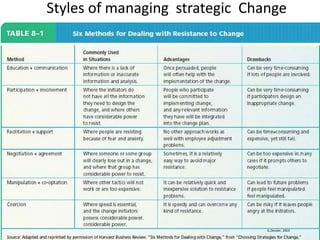
Styles of managing strategic Change 
• Education involves the explanation of the 
reasons and mass briefing of strategy 
• Participation in the change process is the 
involvement of those who will be affected by 
strategic change in the change agenda 
• Intervention is the coordination of and 
authority over processes of change by a 
change agent who delegates elements of the 
change process 
• Coercion is the imposition of change or 
forcefully imposing change.
Styles of managing strategic Change 
April 27, 2006 LIS580- Spring 2006 G.Dessler, 2003 8
TACTICS OF CHANGE MANAGEMENT 
1. CHANGES IN ORGANIZATIONAL ROUTINES : 
Routines are prescribed way of doing things & 
guide people to do their jobs 
2. SYMBOLIC ACTIVITY : change process maybe 
implied and by way of symbolic acts 
3. BEHAVIOUR OF CHANGE AGENT`S : individual 
traits, approach & achievements of executives can 
signal powerfully the need of change 
4. LANGUAGE USED BY CHANGE AGENTS : Change 
agents may consciously or unconsciously use 
metaphor to galvanize change.

managing strategic change

  • 1.
    IMPLEMENTING STRATEGIC CHANGE Strategic change is the movement of a company away from its present state toward some desired future state to increase its competitive advantage by strengthening company`s core competencies & building new to compete effectively
  • 2.
    Types of strategicchange 1. Reengineering – involves redesigning work, jobs, and processes for the purpose of improving quality, service, and speed – Examination & change in :-strategy. processes, technology, structure & culture. – Fundamental rethinking & radical redesign of business processes to enhance performance
  • 3.
    2. Restructuring -reducing the size of the firm in terms of number of employees, number of divisions or units, and number of hierarchical levels in the firm’s organizational structure - also called downsizing, rightsizing or delayering 3. Innovation - is the process by which organization use their skills and resources to create new technologies or goods and services so that they can change and better respond to the needs of their customers & it also opens the gate of success. ng
  • 4.
    Determining the needfor strategic change • to assess the extent of incremental or transformational change required, and • To identify the specific barriers to change -- Incremental change : view organization as a ‘social system’ which can and do change by mutually reinforcing and amplifying stimuli within their systems. --Transformation change: takes place by more substantial shifts resulting from an unfreezing of the paradigm through challenge, information building and experimentation.
  • 5.
    BARRIERS TO CHANGE • BEHAVIORAL RESISTANCE : inertial resistance arises from existing perception, beleifs,work habits and conscious resistance are deliberate actions or inactions that is intended to delay or deny change • RESOURCE CONSTRAINTS : include financial resources, human resources ,etc • ENVIRONMENTAL FACTORS : include regulations, govt policies, lmport -export policy, environmental laws. • ORGANIZATIONAL OBSTACLES: includes corporate, divisional,functional and individual obstacles
  • 6.
    • CORPORATE OBSTACLES: Existing structure & strategy of a company sometimes become obstacle to change. • DIVISIONAL OBSTACLES : in highly interrelated divisions change in strategy is difficult as a shift in one division operations affect other divisions • FUNCTIONAL OBSTACLES : Differences in functional orientations ,goals and different reaction to the changes management proposes. • INDIVIDUAL OBSTACLES : change involves uncertainity that breed insecurity & fear.
  • 7.
    Styles of managingstrategic Change • Education involves the explanation of the reasons and mass briefing of strategy • Participation in the change process is the involvement of those who will be affected by strategic change in the change agenda • Intervention is the coordination of and authority over processes of change by a change agent who delegates elements of the change process • Coercion is the imposition of change or forcefully imposing change.
  • 8.
    Styles of managingstrategic Change April 27, 2006 LIS580- Spring 2006 G.Dessler, 2003 8
  • 9.
    TACTICS OF CHANGEMANAGEMENT 1. CHANGES IN ORGANIZATIONAL ROUTINES : Routines are prescribed way of doing things & guide people to do their jobs 2. SYMBOLIC ACTIVITY : change process maybe implied and by way of symbolic acts 3. BEHAVIOUR OF CHANGE AGENT`S : individual traits, approach & achievements of executives can signal powerfully the need of change 4. LANGUAGE USED BY CHANGE AGENTS : Change agents may consciously or unconsciously use metaphor to galvanize change.