



Presentation
Submitted by: Waqar Ali (5509) (Group Leader)
Group Members:
Mushtaq Ahmad, Salman Ahmad, Ashfaq Khan
Department: Software Engineering
Section: C
Submitted to Sir Umar Farooq
Group No: 4th
Date: 13-Nov-2014
CHAPTER
THE ETHICAL AND
SOCIAL ENVIRONMENT
Group 4th
INDIVIDUAL
ETHICS IN
ORGANIZATION
PREPARED BY MUSHTAQ AHMAD(5662 )
Topic
Individual ethics in
organization
 Ethics : an individual’s personal
beliefs about whether a behavior,
action, or decision is right or wrong.
 Ethical behavior : conforms to
generally accepted social norms.
 Unethical brhavior : does not
conform to generally accepted social
norms.
Managerial ethics
Managers need to approach
the following from the ethical
to the perspective
 Relationship of the firm to the
employees
 From employees to the firm
 The firm to the other economic agents
Managerial ethics include
 Hiring
 Firing
 Employees respect
 Working condition
 wages
Ethics in an organizational
context
 Peer managers and top managers, as
well as the organization’s culture, all
contribute to the ethical context of
organization
End of the Topic
 Hope you understand this topic
 If you have Any Question
 You can Ask
 Please
THANK YOU SO MUCH
SOCIAL
RESPONSIBILITY
AND
ORGANIZATION
PREPARED BY WAQAR ALI ( 5509 )
Topic
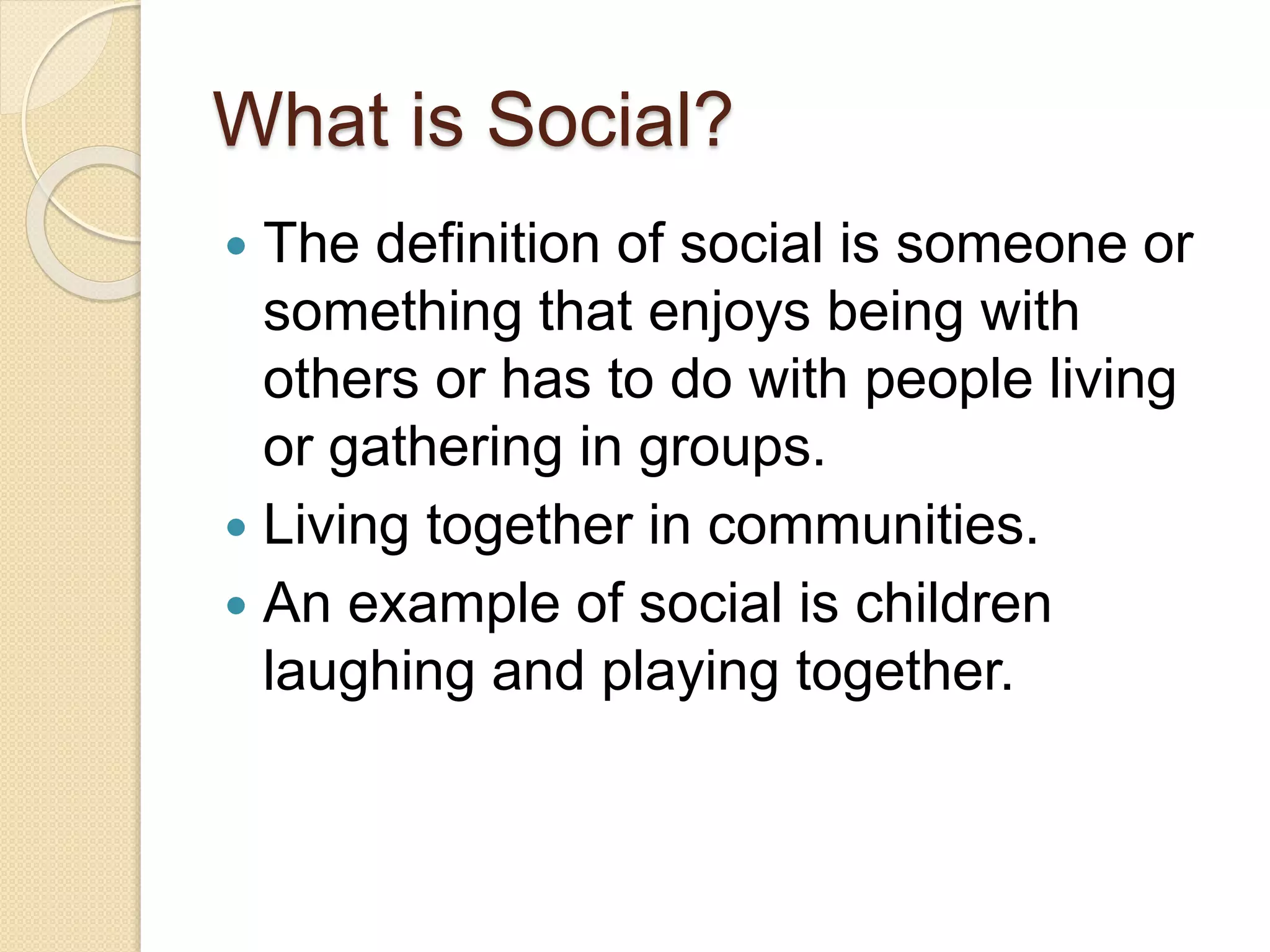
What is Social?
 The definition of social is someone or
something that enjoys being with
others or has to do with people living
or gathering in groups.
 Living together in communities.
 An example of social is children
laughing and playing together.
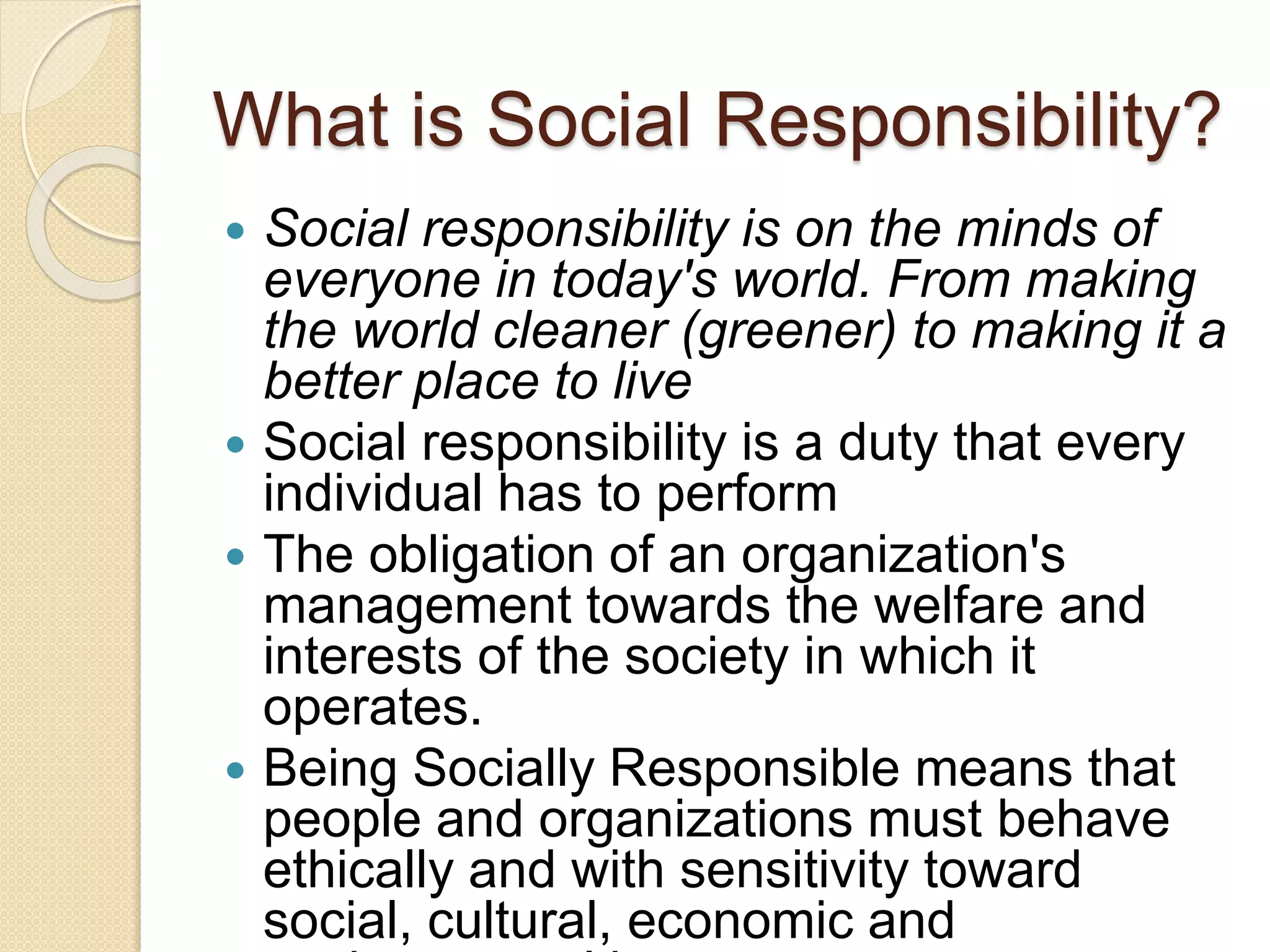
What is Social Responsibility?
 Social responsibility is on the minds of
everyone in today's world. From making
the world cleaner (greener) to making it a
better place to live
 Social responsibility is a duty that every
individual has to perform
 The obligation of an organization's
management towards the welfare and
interests of the society in which it
operates.
 Being Socially Responsible means that
people and organizations must behave
ethically and with sensitivity toward
social, cultural, economic and
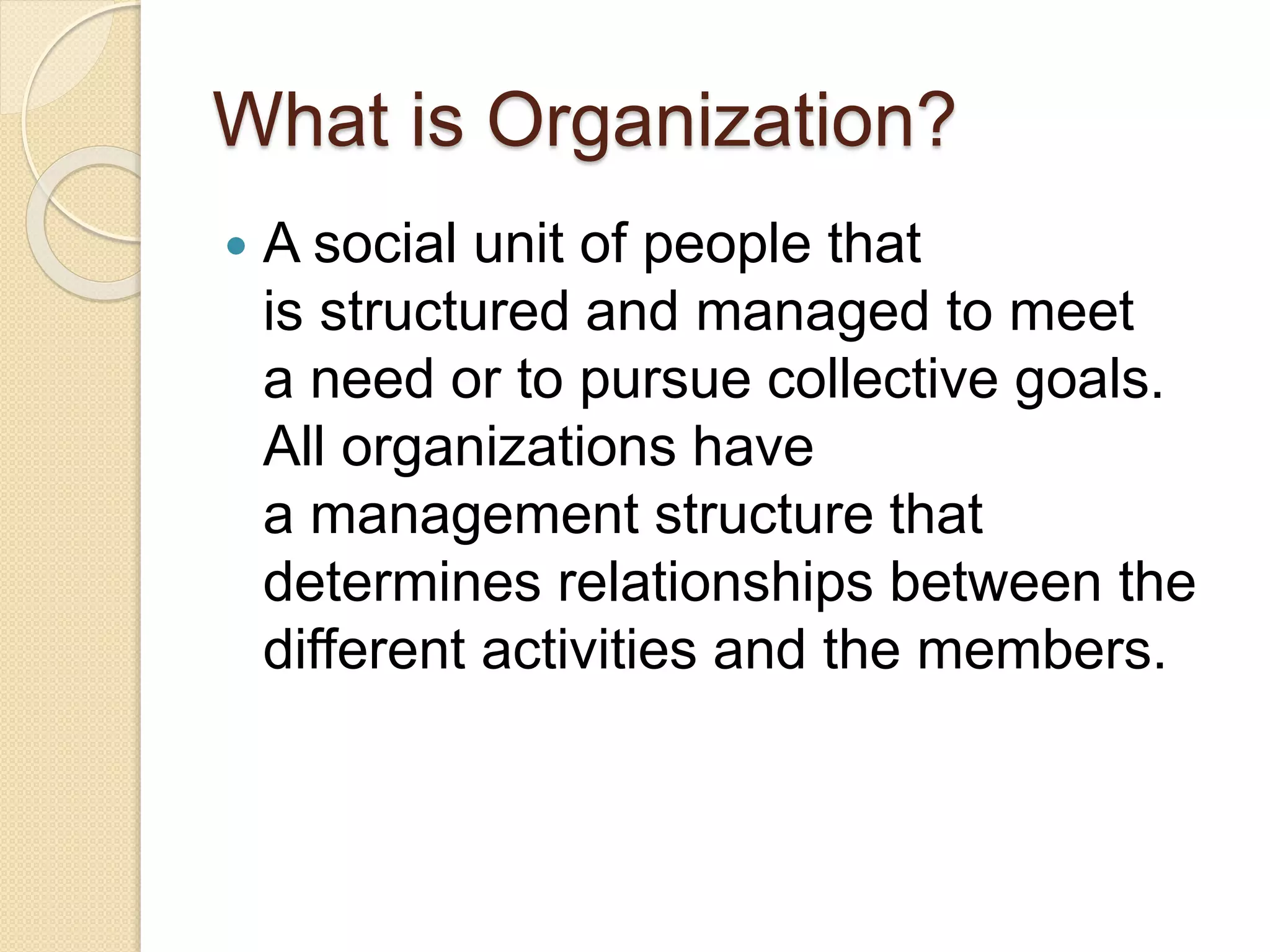
What is Organization?
 A social unit of people that
is structured and managed to meet
a need or to pursue collective goals.
All organizations have
a management structure that
determines relationships between the
different activities and the members.
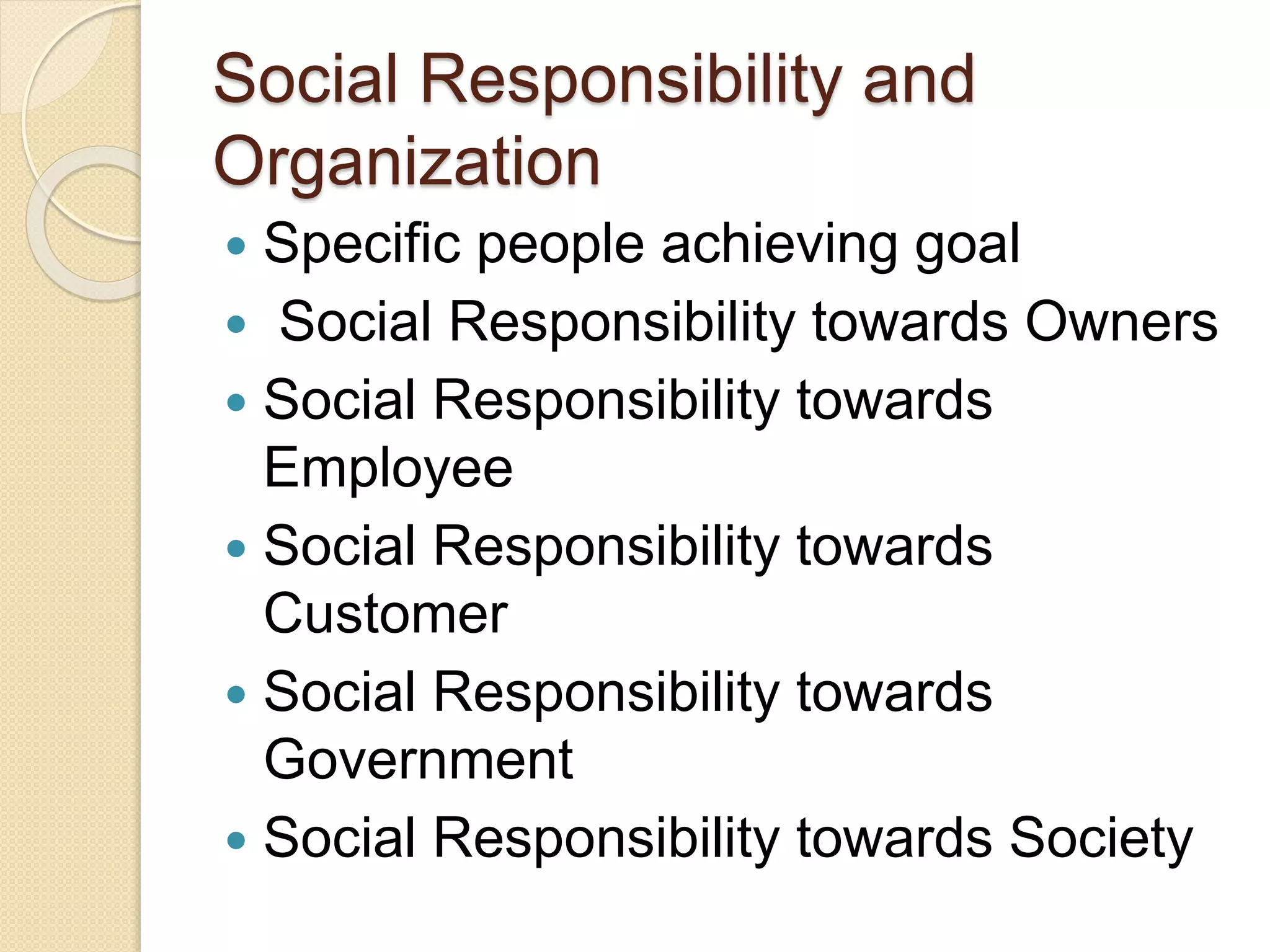
Social Responsibility and
Organization
 Specific people achieving goal
 Social Responsibility towards Owners
 Social Responsibility towards
Employee
 Social Responsibility towards
Customer
 Social Responsibility towards
Government
 Social Responsibility towards Society
Example
 A social responsibility of an
organization is a social
entrepreneur who has to make
relations with other companies in
different countries to help the
organization increase and become
global.
 Microsoft
 IBM and Dell
 NGO’s
End of the Topic
 Hope you understand this topic
 If you have Any Question
 You can Ask
 Please
THANK YOU SO MUCH
SOCIAL
RESPONSIBILITY
OF MANAGEMENT
PREPARED BY SALMAN AHMAD ( )
Topic
Responsibility towards
owners
 The primary responsibilities of
management is to assure a fair and
reasonable rate of return on capital
and fair return on investment can be
determined on the basis of difference
in the risks of business in different
fields of activity
Responsibility towards
employees
 Management responsibility towards
employees relate to the
fair wages and salaries, satisfactory
work environment,labour management
relations and
employee welfare Managers salaries
and allowances are expected to be
linked with their
responsibility, initiative and skill.
Responsibility towards the
Governments
 As a part of their social responsibility,
management must conduct business
affair in lawful manner, honestly pay
all the taxes and dues, and should not
corrupt public officials for selfish ends
Responsibility towards the community and
society
 The socially responsible role of
management in relation to the
community are expected to be revealed
by its policies with respect to the
employment of handicapped persons,
and weaker sections of the community,
environmental protection, pollution
control, setting up industries in backward
areas, and
providing relief to the victims of natural
calamities etc
End of the Topic
 Hope you understand this topic
 If you have Any Question
 You can Ask
 Please
THANK YOU SO MUCH
GOVERNMENT
AND SOCIAL
RESPONSIBILITY
PREPARED BY ASHFAQ (5415)
Topic
GOVERNMENT AND SOCIAL
RESPONSIBILITY
 In market economic there is still
considerable government control of
business.
 The government attempts
responsibility through two ways. Direct
and indirect channels
DIRECT REGULATION
 The government most often directly
influences through the establishment of laws
and rules that dictate what organization can
do and can’t do.
 To implement rules the government generally
the government creates special agencies to
monitor and control certain aspects of the
business activity.
 For example:
 For the right and protection of labor the
government establishes the labor department
to prevent the labor rights.
 Environmental department handle the
environmental issues like pollution etc.
INDIRECT REGULATION
 The indirect regulation the government
can indirectly influence the social
responsibility through its tax codes.
 How Organizations Influence
Government:
 An organization influence government
through different ways .Through this
four ways the
 More pressure for the attaining the
government towards social
responsibility.
Personal contacts
 Political leaders and executives travel
in the same circles and may be able to
contact a politician directly.
 For example the business executive
may contact the politician directly case
regarding a piece of legislation may
consider.
Lobbying
 Persons or groups to represent an
organization formally.
 For example embassy of different
counters in different other countries
to influence government.
Political action committees:
 Special organization Created to solicit
and distribute money to political
candidates.
 Trough this way this employee of the
organization encourage to make
donation to the particular PAC.
 Because it will support the employee
of the firm.
Favors
 Organizations sometimes rely on
favors and other influence tactics to
gain support. They may be legal and
subject to criticism.
End of the Topic
 Hope you understand this topic
 If you have Any Question
 You can Ask
 Please
THANK YOU SO MUCH

The Ethical and Social Enviroment

  • 1.
    Presentation Submitted by: WaqarAli (5509) (Group Leader) Group Members: Mushtaq Ahmad, Salman Ahmad, Ashfaq Khan Department: Software Engineering Section: C Submitted to Sir Umar Farooq Group No: 4th Date: 13-Nov-2014
  • 2.
    CHAPTER THE ETHICAL AND SOCIALENVIRONMENT Group 4th
  • 3.
  • 4.
    Individual ethics in organization Ethics : an individual’s personal beliefs about whether a behavior, action, or decision is right or wrong.  Ethical behavior : conforms to generally accepted social norms.  Unethical brhavior : does not conform to generally accepted social norms.
  • 5.
    Managerial ethics Managers needto approach the following from the ethical to the perspective  Relationship of the firm to the employees  From employees to the firm  The firm to the other economic agents
  • 6.
    Managerial ethics include Hiring  Firing  Employees respect  Working condition  wages
  • 7.
    Ethics in anorganizational context  Peer managers and top managers, as well as the organization’s culture, all contribute to the ethical context of organization
  • 8.
    End of theTopic  Hope you understand this topic  If you have Any Question  You can Ask  Please
  • 9.
  • 10.
  • 11.
    What is Social? The definition of social is someone or something that enjoys being with others or has to do with people living or gathering in groups.  Living together in communities.  An example of social is children laughing and playing together.
  • 12.
    What is SocialResponsibility?  Social responsibility is on the minds of everyone in today's world. From making the world cleaner (greener) to making it a better place to live  Social responsibility is a duty that every individual has to perform  The obligation of an organization's management towards the welfare and interests of the society in which it operates.  Being Socially Responsible means that people and organizations must behave ethically and with sensitivity toward social, cultural, economic and
  • 13.
    What is Organization? A social unit of people that is structured and managed to meet a need or to pursue collective goals. All organizations have a management structure that determines relationships between the different activities and the members.
  • 14.
    Social Responsibility and Organization Specific people achieving goal  Social Responsibility towards Owners  Social Responsibility towards Employee  Social Responsibility towards Customer  Social Responsibility towards Government  Social Responsibility towards Society
  • 15.
    Example  A socialresponsibility of an organization is a social entrepreneur who has to make relations with other companies in different countries to help the organization increase and become global.  Microsoft  IBM and Dell  NGO’s
  • 16.
    End of theTopic  Hope you understand this topic  If you have Any Question  You can Ask  Please
  • 17.
  • 18.
  • 19.
    Responsibility towards owners  Theprimary responsibilities of management is to assure a fair and reasonable rate of return on capital and fair return on investment can be determined on the basis of difference in the risks of business in different fields of activity
  • 20.
    Responsibility towards employees  Managementresponsibility towards employees relate to the fair wages and salaries, satisfactory work environment,labour management relations and employee welfare Managers salaries and allowances are expected to be linked with their responsibility, initiative and skill.
  • 21.
    Responsibility towards the Governments As a part of their social responsibility, management must conduct business affair in lawful manner, honestly pay all the taxes and dues, and should not corrupt public officials for selfish ends
  • 22.
    Responsibility towards thecommunity and society  The socially responsible role of management in relation to the community are expected to be revealed by its policies with respect to the employment of handicapped persons, and weaker sections of the community, environmental protection, pollution control, setting up industries in backward areas, and providing relief to the victims of natural calamities etc
  • 23.
    End of theTopic  Hope you understand this topic  If you have Any Question  You can Ask  Please
  • 24.
  • 25.
  • 26.
    GOVERNMENT AND SOCIAL RESPONSIBILITY In market economic there is still considerable government control of business.  The government attempts responsibility through two ways. Direct and indirect channels
  • 27.
    DIRECT REGULATION  Thegovernment most often directly influences through the establishment of laws and rules that dictate what organization can do and can’t do.  To implement rules the government generally the government creates special agencies to monitor and control certain aspects of the business activity.  For example:  For the right and protection of labor the government establishes the labor department to prevent the labor rights.  Environmental department handle the environmental issues like pollution etc.
  • 28.
    INDIRECT REGULATION  Theindirect regulation the government can indirectly influence the social responsibility through its tax codes.  How Organizations Influence Government:  An organization influence government through different ways .Through this four ways the  More pressure for the attaining the government towards social responsibility.
  • 29.
    Personal contacts  Politicalleaders and executives travel in the same circles and may be able to contact a politician directly.  For example the business executive may contact the politician directly case regarding a piece of legislation may consider.
  • 30.
    Lobbying  Persons orgroups to represent an organization formally.  For example embassy of different counters in different other countries to influence government.
  • 31.
    Political action committees: Special organization Created to solicit and distribute money to political candidates.  Trough this way this employee of the organization encourage to make donation to the particular PAC.  Because it will support the employee of the firm.
  • 32.
    Favors  Organizations sometimesrely on favors and other influence tactics to gain support. They may be legal and subject to criticism.
  • 33.
    End of theTopic  Hope you understand this topic  If you have Any Question  You can Ask  Please
  • 34.