www.pcacorp.com
Malnutrition in
Peritoneal Dialysis
Vishal Bagchi MBA, RD, LD
Director of Medical and Scientific Affairs
www.pcacorp.com
Objective
Malnutrition in the Peritoneal Dialysis population is highly
prevalent. This presentation will address the common problem
and explore the many benefits of Intraperitoneal Nutrition (IPN)
using research-based evidence
• Discuss causes of malnutrition in Peritoneal Dialysis patients
• Identify patients based on reimbursement criteria
• Identify methods to overcome barriers to achieving optimum
outcomes from IPN therapy
www.pcacorp.com
Disclosure
• Employed by Patient Care America
• Slides includes case scenarios during my practice as a
Renal Dietitian
• Slides are pre-approved by AND-CDR
www.pcacorp.com 2017 Annual Data Report
Volume 2, Chapter 1
4
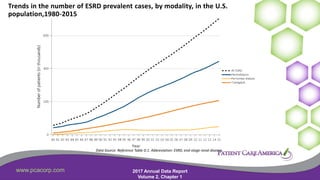
Trends in the number of ESRD prevalent cases, by modality, in the U.S.
population,1980-2015
Data Source: Reference Table D.1. Abbreviation: ESRD, end-stage renal disease.
www.pcacorp.com 2017 Annual Data Report
Volume 2, Chapter 1
5
Geographic variations in the incidence rate of treated ESRD (per
million population/year), by country, 2015
Data source: Special analyses, USRDS ESRD Database. Data presented only for countries from which relevant information was available. All rates are unadjusted. UnitedKingdom: England,
Wales, Northern Ireland (Scotland data reported separately). Data for Italy include five regions. Data for Indonesia represent the West Java region. Data for France exclude Martinique. Data for
Canada excludes Quebec. Japan includes dialysis patients only. Abbreviation: ESRD, end-stage renal disease. NOTE: Data collection methods vary across countries, suggesting caution in making
direct comparisons.
www.pcacorp.com 2017 Annual Data Report
Volume 2, Chapter 1
6
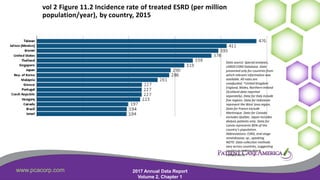
vol 2 Figure 11.2 Incidence rate of treated ESRD (per million
population/year), by country, 2015
Data source: Special analyses,
USRDS ESRD Database. Data
presented only for countries from
which relevant information was
available. All rates are
unadjusted. ^United Kingdom:
England, Wales, Northern Ireland
(Scotland data reported
separately). Data for Italy include
five regions. Data for Indonesia
represent the West Java region.
Data for France exclude
Martinique. Data for Canada
excludes Quebec. Japan includes
dialysis patients only. Data for
Latvia represents 80% of the
country’s population.
Abbreviations: ESRD, end-stage
renaldisease; sp., speaking.
NOTE: Data collection methods
vary across countries, suggesting
caution in making direct
comparisons.
www.pcacorp.com 2017 Annual Data Report
Volume 2, Chapter 1
7
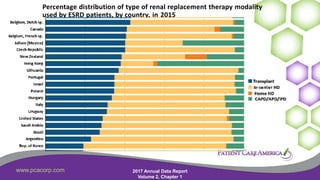
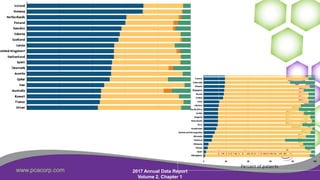
Percentage distribution of type of renal replacement therapy modality
used by ESRD patients, by country, in 2015
www.pcacorp.com 2017 Annual Data Report
Volume 2, Chapter 1
www.pcacorp.com
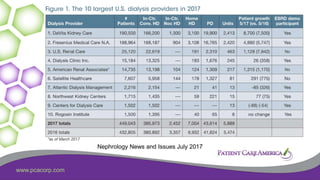
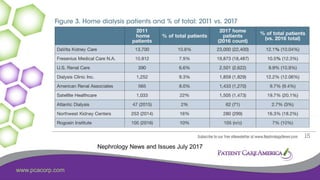
Nephrology News and Issues July 2017
www.pcacorp.com
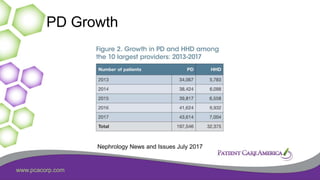
PD Growth
Nephrology News and Issues July 2017
www.pcacorp.com
Nephrology News and Issues July 2017
www.pcacorp.com
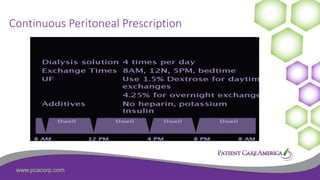
Continuous Peritoneal Prescription
www.pcacorp.com
www.pcacorp.com
What Happens In A Dwell?
www.pcacorp.com
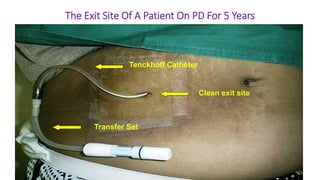
Tenckhoff Catheter
Clean exit site
Transfer Set
The Exit Site Of A Patient On PD For 5 Years
www.pcacorp.com
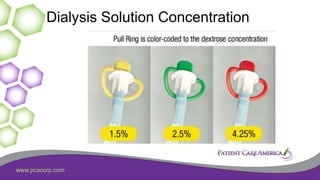
Dialysis Solution Concentration
www.pcacorp.com
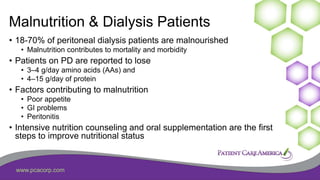
Malnutrition & Dialysis Patients
• 18-70% of peritoneal dialysis patients are malnourished
• Malnutrition contributes to mortality and morbidity
• Patients on PD are reported to lose
• 3–4 g/day amino acids (AAs) and
• 4–15 g/day of protein
• Factors contributing to malnutrition
• Poor appetite
• GI problems
• Peritonitis
• Intensive nutrition counseling and oral supplementation are the first
steps to improve nutritional status
www.pcacorp.com
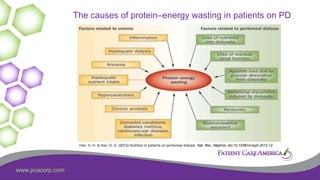
The causes of protein–energy wasting in patients on PD
Han, S.-H. & Han, D.-S. (2012) Nutrition in patients on peritoneal dialysis Nat. Rev. Nephrol. doi:10.1038/nrneph.2012.12
www.pcacorp.com
K/DOQI Guidelines
Am J Kidney Dis 2000
• IPN may be indicated in malnourished patients & patients
unable to consume adequate energy & protein who cannot
tolerate oral diet or tube feeding to meet nutrient needs and
who have difficulty with glycemic and lipid control related to
dialysate carbohydrate content
www.pcacorp.com
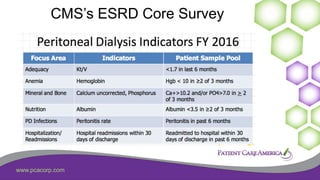
CMS’s ESRD Core Survey
www.pcacorp.com
Peritoneal Membrane Damage
• Daily use of glucose-containing PD solutions results in
increased permeability to the peritoneal membrane and over
time results in less effective dialysis
• Strategies to protect the membrane
• Maintain glycemic control
• Substitute some of the glucose with amino acids
• Reduce incidence of peritonitis
www.pcacorp.com
Clinical Management of Malnutrition
• Diet
• Identify and treat sources of inflammation/Infection
• Oral Supplements
• IPN
www.pcacorp.com
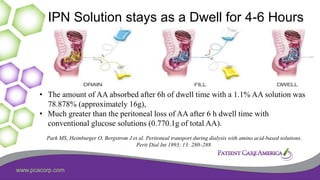
IPN Solution stays as a Dwell for 4-6 Hours
• The amount of AA absorbed after 6h of dwell time with a 1.1% AA solution was
78.878% (approximately 16g),
• Much greater than the peritoneal loss of AA after 6 h dwell time with
conventional glucose solutions (0.770.1g of total AA).
Park MS, Heimburger O, Bergstrom J et al. Peritoneal transport during dialysis with amino acid-based solutions.
Perit Dial Int 1993; 13: 280–288.
www.pcacorp.com
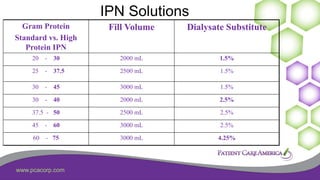
IPN Solutions
Gram Protein
Standard vs. High
Protein IPN
Fill Volume Dialysate Substitute
20 - 30 2000 mL 1.5%
25 - 37.5 2500 mL 1.5%
30 - 45 3000 mL 1.5%
30 - 40 2000 mL 2.5%
37.5 - 50 2500 mL 2.5%
45 - 60 3000 mL 2.5%
60 - 75 3000 mL 4.25%
www.pcacorp.com
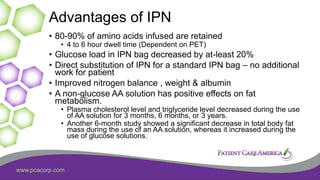
Advantages of IPN
• 80-90% of amino acids infused are retained
• 4 to 6 hour dwell time (Dependent on PET)
• Glucose load in IPN bag decreased by at-least 20%
• Direct substitution of IPN for a standard IPN bag – no additional
work for patient
• Improved nitrogen balance , weight & albumin
• A non-glucose AA solution has positive effects on fat
metabolism.
• Plasma cholesterol level and triglyceride level decreased during the use
of AA solution for 3 months, 6 months, or 3 years.
• Another 6-month study showed a significant decrease in total body fat
mass during the use of an AA solution, whereas it increased during the
use of glucose solutions.
www.pcacorp.com
Anticipated IPN Outcomes
• Replace protein lost during dialysis treatment
• Reduce hyperglycemia & hypertriglyceridemia
• Maintain ultrafiltration & solute removal of standard dialysate
• Increase serum albumin and nitrogen balance
• Decrease infection & hospitalization rate
• Improve survival & overall well-being
www.pcacorp.com
Anticipated IPN Outcomes
• Nutrition rehab takes 3 to 9 months
• Lab values increase in 3 months
• Anthropometrics may take 6 to 12 months
• “Why don’t these change?”
• Total intake (oral diet + IPN) inadequate
• Co-morbidities impact outcomes
• Inflammation reducing albumin production
• It takes time to replete a depleted patient
www.pcacorp.com
Top 5 IPN Articles
1. Tjiong HL et al. Peritoneal dialysis with solutions containing amino
acids plus glucose promotes protein synthesis during oral feeding.
Clin J Am Soc Nephrol. 2007;2:74-80
2. Park MS, Choi SR, et.al; New insight of amino acid-based dialysis
solutions; Kidney International (2006) 70, S110–S114.
doi:10.1038/sj.ki.5001925
3. Garibotto G et al. Acute effects of peritoneal dialysis with dialysates
containing dextrose or dextrose and amino acids on muscle protein
turnover in patients with chronic renal failure. J Am Soc Nephrol.
2001;12:557-567.
4. M Asola et al.: Amino-acid transport with amino-acid dialysis solution.
Kidney International (2008), Finland.
5. M Jones et al. Treatment of malnutrition with 1.1% amino acid
peritoneal dialysis solution: results of a multicenter outpatient study.
Am J Kidney Dis. 1998 Nov;32(5):761-9.
www.pcacorp.com
1) Tjiong, IPN Promotes Protein
Synthesis – 2007
• 12 Continuous ambulatory peritoneal dialysis (CAPD)
• AA (Nutrineal 1.1%) plus G (Physioneal l.36 to 3.86%)
versus G only as control dialysate.
• Using AA plus G dialysate, as compared with the control,
• rates of protein synthesis increased significantly (2.02 0.08
versus 1.94 0.07 mol leucine/kg per min [mean SEM]; P 0.039).
www.pcacorp.com
2) Korean PD Study – 2006
Park MS, Choi SR, et.al; New insight of amino acid-based
dialysis solutions; Kidney International (2006) 70.
• One exchange of 1.1% AA solution
• 31/43 malnourished patients (72%) showed nutritional benefit
based on the
• Change of Lean Body Mass (LBM)
• Hand grip strength and
• back lift strength were significantly higher in responders at baseline
www.pcacorp.com
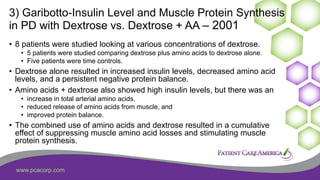
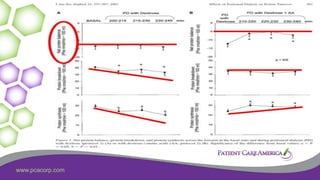
3) Garibotto-Insulin Level and Muscle Protein Synthesis
in PD with Dextrose vs. Dextrose + AA – 2001
• 8 patients were studied looking at various concentrations of dextrose.
• 5 patients were studied comparing dextrose plus amino acids to dextrose alone.
• Five patients were time controls.
• Dextrose alone resulted in increased insulin levels, decreased amino acid
levels, and a persistent negative protein balance.
• Amino acids + dextrose also showed high insulin levels, but there was an
• increase in total arterial amino acids,
• reduced release of amino acids from muscle, and
• improved protein balance.
• The combined use of amino acids and dextrose resulted in a cumulative
effect of suppressing muscle amino acid losses and stimulating muscle
protein synthesis.
www.pcacorp.com
www.pcacorp.com
4) M Asola-AA transport with 1-day IPN solution –
2008 (Finland)
• 13 non-diabetic PD patients were studied twice in a
randomized crossover
• Glucose-based PD solutions only or one daily bag of AA
solution (1.1% AA-Nutrineal; Baxter Healthcare Inc.)
• AA-containing PD solution increased plasma AA
concentrations
• Skeletal muscle AA uptake was significantly higher during
treatment containing AA solution
www.pcacorp.com
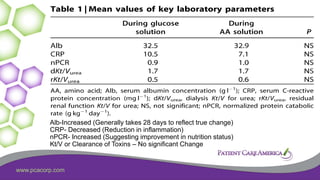
Alb-Increased (Generally takes 28 days to reflect true change)
CRP- Decreased (Reduction in inflammation)
nPCR- Increased (Suggesting improvement in nutrition status)
Kt/V or Clearance of Toxins – No significant Change
www.pcacorp.com
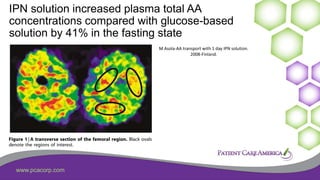
IPN solution increased plasma total AA
concentrations compared with glucose-based
solution by 41% in the fasting state
M Asola-AA transport with 1 day IPN solution.
2008-Finland.
www.pcacorp.com
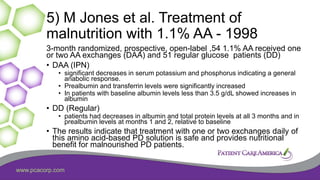
5) M Jones et al. Treatment of
malnutrition with 1.1% AA - 1998
3-month randomized, prospective, open-label ,54 1.1% AA received one
or two AA exchanges (DAA) and 51 regular glucose patients (DD)
• DAA (IPN)
• significant decreases in serum potassium and phosphorus indicating a general
anabolic response.
• Prealbumin and transferrin levels were significantly increased
• In patients with baseline albumin levels less than 3.5 g/dL showed increases in
albumin
• DD (Regular)
• patients had decreases in albumin and total protein levels at all 3 months and in
prealbumin levels at months 1 and 2, relative to baseline
• The results indicate that treatment with one or two exchanges daily of
this amino acid-based PD solution is safe and provides nutritional
benefit for malnourished PD patients.
www.pcacorp.com
Thank You
Vishal Bagchi MBA, RD, LD
Director of Medical and
Scientific Affairs
M: 214-736-7969
vbagchi@pcacorp.com
http://www.linkedin.com/in/
vishalb3
www.pcacorp.com
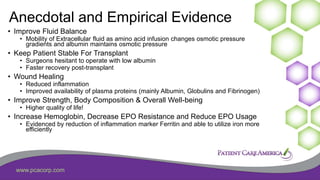
Anecdotal and Empirical Evidence
• Improve Fluid Balance
• Mobility of Extracellular fluid as amino acid infusion changes osmotic pressure
gradients and albumin maintains osmotic pressure
• Keep Patient Stable For Transplant
• Surgeons hesitant to operate with low albumin
• Faster recovery post-transplant
• Wound Healing
• Reduced inflammation
• Improved availability of plasma proteins (mainly Albumin, Globulins and Fibrinogen)
• Improve Strength, Body Composition & Overall Well-being
• Higher quality of life!
• Increase Hemoglobin, Decrease EPO Resistance and Reduce EPO Usage
• Evidenced by reduction of inflammation marker Ferritin and able to utilize iron more
efficiently
www.pcacorp.com
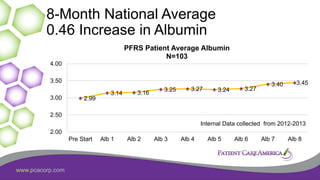
8-Month National Average
0.46 Increase in Albumin
2.99
3.14 3.16
3.25 3.27 3.24 3.27
3.40 3.45
2.00
2.50
3.00
3.50
4.00
Pre Start Alb 1 Alb 2 Alb 3 Alb 4 Alb 5 Alb 6 Alb 7 Alb 8
PFRS Patient Average Albumin
N=103
Internal Data collected from 2012-2013
www.pcacorp.com
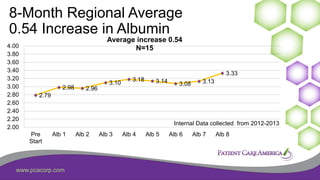
8-Month Regional Average
0.54 Increase in Albumin
2.79
2.98 2.96
3.10
3.18 3.14 3.08 3.13
3.33
2.00
2.20
2.40
2.60
2.80
3.00
3.20
3.40
3.60
3.80
4.00
Pre
Start
Alb 1 Alb 2 Alb 3 Alb 4 Alb 5 Alb 6 Alb 7 Alb 8
Average increase 0.54
N=15
Internal Data collected from 2012-2013
www.pcacorp.com
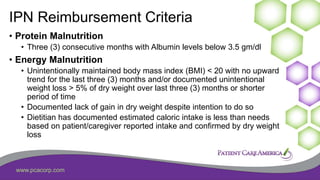
IPN Reimbursement Criteria
• Protein Malnutrition
• Three (3) consecutive months with Albumin levels below 3.5 gm/dl
• Energy Malnutrition
• Unintentionally maintained body mass index (BMI) < 20 with no upward
trend for the last three (3) months and/or documented unintentional
weight loss > 5% of dry weight over last three (3) months or shorter
period of time
• Documented lack of gain in dry weight despite intention to do so
• Dietitian has documented estimated caloric intake is less than needs
based on patient/caregiver reported intake and confirmed by dry weight
loss
41
www.pcacorp.com
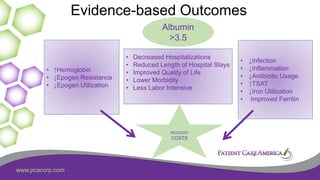
Evidence-based Outcomes
Albumin
>3.5
• ↑Hemoglobin
• ↓Epogen Resistance
• ↓Epogen Utilization
• Decreased Hospitalizations
• Reduced Length of Hospital Stays
• Improved Quality of Life
• Lower Morbidity
• Less Labor Intensive
• ↓Infection
• ↓Inflammation
• ↓Antibiotic Usage
• ↑TSAT
• ↓Iron Utilization
• Improved Ferritin
REDUCED
COSTS
www.pcacorp.com
Presenter: Vishal Bagchi
• UT Southwestern Medical Center, School of Allied Health –
Clinical Nutrition
• University of Dallas MBA – Healthcare and Marketing
• UT Southwestern – Critical Care and Acute Dialysis
• Renal Dialysis 2007-2013 – Home Therapies, Peritoneal
Dialysis, Nocturnal, Conventional HD
• NKF – CRN Dallas Chair 2009-2012

Malnutrition in Peritoneal Dialysis

  • 1.
    www.pcacorp.com Malnutrition in Peritoneal Dialysis VishalBagchi MBA, RD, LD Director of Medical and Scientific Affairs
  • 2.
    www.pcacorp.com Objective Malnutrition in thePeritoneal Dialysis population is highly prevalent. This presentation will address the common problem and explore the many benefits of Intraperitoneal Nutrition (IPN) using research-based evidence • Discuss causes of malnutrition in Peritoneal Dialysis patients • Identify patients based on reimbursement criteria • Identify methods to overcome barriers to achieving optimum outcomes from IPN therapy
  • 3.
    www.pcacorp.com Disclosure • Employed byPatient Care America • Slides includes case scenarios during my practice as a Renal Dietitian • Slides are pre-approved by AND-CDR
  • 4.
    www.pcacorp.com 2017 AnnualData Report Volume 2, Chapter 1 4 Trends in the number of ESRD prevalent cases, by modality, in the U.S. population,1980-2015 Data Source: Reference Table D.1. Abbreviation: ESRD, end-stage renal disease.
  • 5.
    www.pcacorp.com 2017 AnnualData Report Volume 2, Chapter 1 5 Geographic variations in the incidence rate of treated ESRD (per million population/year), by country, 2015 Data source: Special analyses, USRDS ESRD Database. Data presented only for countries from which relevant information was available. All rates are unadjusted. UnitedKingdom: England, Wales, Northern Ireland (Scotland data reported separately). Data for Italy include five regions. Data for Indonesia represent the West Java region. Data for France exclude Martinique. Data for Canada excludes Quebec. Japan includes dialysis patients only. Abbreviation: ESRD, end-stage renal disease. NOTE: Data collection methods vary across countries, suggesting caution in making direct comparisons.
  • 6.
    www.pcacorp.com 2017 AnnualData Report Volume 2, Chapter 1 6 vol 2 Figure 11.2 Incidence rate of treated ESRD (per million population/year), by country, 2015 Data source: Special analyses, USRDS ESRD Database. Data presented only for countries from which relevant information was available. All rates are unadjusted. ^United Kingdom: England, Wales, Northern Ireland (Scotland data reported separately). Data for Italy include five regions. Data for Indonesia represent the West Java region. Data for France exclude Martinique. Data for Canada excludes Quebec. Japan includes dialysis patients only. Data for Latvia represents 80% of the country’s population. Abbreviations: ESRD, end-stage renaldisease; sp., speaking. NOTE: Data collection methods vary across countries, suggesting caution in making direct comparisons.
  • 7.
    www.pcacorp.com 2017 AnnualData Report Volume 2, Chapter 1 7 Percentage distribution of type of renal replacement therapy modality used by ESRD patients, by country, in 2015
  • 8.
    www.pcacorp.com 2017 AnnualData Report Volume 2, Chapter 1
  • 9.
  • 10.
  • 11.
  • 12.
  • 13.
  • 14.
  • 15.
    www.pcacorp.com Tenckhoff Catheter Clean exitsite Transfer Set The Exit Site Of A Patient On PD For 5 Years
  • 16.
  • 17.
    www.pcacorp.com Malnutrition & DialysisPatients • 18-70% of peritoneal dialysis patients are malnourished • Malnutrition contributes to mortality and morbidity • Patients on PD are reported to lose • 3–4 g/day amino acids (AAs) and • 4–15 g/day of protein • Factors contributing to malnutrition • Poor appetite • GI problems • Peritonitis • Intensive nutrition counseling and oral supplementation are the first steps to improve nutritional status
  • 18.
    www.pcacorp.com The causes ofprotein–energy wasting in patients on PD Han, S.-H. & Han, D.-S. (2012) Nutrition in patients on peritoneal dialysis Nat. Rev. Nephrol. doi:10.1038/nrneph.2012.12
  • 19.
    www.pcacorp.com K/DOQI Guidelines Am JKidney Dis 2000 • IPN may be indicated in malnourished patients & patients unable to consume adequate energy & protein who cannot tolerate oral diet or tube feeding to meet nutrient needs and who have difficulty with glycemic and lipid control related to dialysate carbohydrate content
  • 20.
  • 21.
    www.pcacorp.com Peritoneal Membrane Damage •Daily use of glucose-containing PD solutions results in increased permeability to the peritoneal membrane and over time results in less effective dialysis • Strategies to protect the membrane • Maintain glycemic control • Substitute some of the glucose with amino acids • Reduce incidence of peritonitis
  • 22.
    www.pcacorp.com Clinical Management ofMalnutrition • Diet • Identify and treat sources of inflammation/Infection • Oral Supplements • IPN
  • 23.
    www.pcacorp.com IPN Solution staysas a Dwell for 4-6 Hours • The amount of AA absorbed after 6h of dwell time with a 1.1% AA solution was 78.878% (approximately 16g), • Much greater than the peritoneal loss of AA after 6 h dwell time with conventional glucose solutions (0.770.1g of total AA). Park MS, Heimburger O, Bergstrom J et al. Peritoneal transport during dialysis with amino acid-based solutions. Perit Dial Int 1993; 13: 280–288.
  • 24.
    www.pcacorp.com IPN Solutions Gram Protein Standardvs. High Protein IPN Fill Volume Dialysate Substitute 20 - 30 2000 mL 1.5% 25 - 37.5 2500 mL 1.5% 30 - 45 3000 mL 1.5% 30 - 40 2000 mL 2.5% 37.5 - 50 2500 mL 2.5% 45 - 60 3000 mL 2.5% 60 - 75 3000 mL 4.25%
  • 25.
    www.pcacorp.com Advantages of IPN •80-90% of amino acids infused are retained • 4 to 6 hour dwell time (Dependent on PET) • Glucose load in IPN bag decreased by at-least 20% • Direct substitution of IPN for a standard IPN bag – no additional work for patient • Improved nitrogen balance , weight & albumin • A non-glucose AA solution has positive effects on fat metabolism. • Plasma cholesterol level and triglyceride level decreased during the use of AA solution for 3 months, 6 months, or 3 years. • Another 6-month study showed a significant decrease in total body fat mass during the use of an AA solution, whereas it increased during the use of glucose solutions.
  • 26.
    www.pcacorp.com Anticipated IPN Outcomes •Replace protein lost during dialysis treatment • Reduce hyperglycemia & hypertriglyceridemia • Maintain ultrafiltration & solute removal of standard dialysate • Increase serum albumin and nitrogen balance • Decrease infection & hospitalization rate • Improve survival & overall well-being
  • 27.
    www.pcacorp.com Anticipated IPN Outcomes •Nutrition rehab takes 3 to 9 months • Lab values increase in 3 months • Anthropometrics may take 6 to 12 months • “Why don’t these change?” • Total intake (oral diet + IPN) inadequate • Co-morbidities impact outcomes • Inflammation reducing albumin production • It takes time to replete a depleted patient
  • 28.
    www.pcacorp.com Top 5 IPNArticles 1. Tjiong HL et al. Peritoneal dialysis with solutions containing amino acids plus glucose promotes protein synthesis during oral feeding. Clin J Am Soc Nephrol. 2007;2:74-80 2. Park MS, Choi SR, et.al; New insight of amino acid-based dialysis solutions; Kidney International (2006) 70, S110–S114. doi:10.1038/sj.ki.5001925 3. Garibotto G et al. Acute effects of peritoneal dialysis with dialysates containing dextrose or dextrose and amino acids on muscle protein turnover in patients with chronic renal failure. J Am Soc Nephrol. 2001;12:557-567. 4. M Asola et al.: Amino-acid transport with amino-acid dialysis solution. Kidney International (2008), Finland. 5. M Jones et al. Treatment of malnutrition with 1.1% amino acid peritoneal dialysis solution: results of a multicenter outpatient study. Am J Kidney Dis. 1998 Nov;32(5):761-9.
  • 29.
    www.pcacorp.com 1) Tjiong, IPNPromotes Protein Synthesis – 2007 • 12 Continuous ambulatory peritoneal dialysis (CAPD) • AA (Nutrineal 1.1%) plus G (Physioneal l.36 to 3.86%) versus G only as control dialysate. • Using AA plus G dialysate, as compared with the control, • rates of protein synthesis increased significantly (2.02 0.08 versus 1.94 0.07 mol leucine/kg per min [mean SEM]; P 0.039).
  • 30.
    www.pcacorp.com 2) Korean PDStudy – 2006 Park MS, Choi SR, et.al; New insight of amino acid-based dialysis solutions; Kidney International (2006) 70. • One exchange of 1.1% AA solution • 31/43 malnourished patients (72%) showed nutritional benefit based on the • Change of Lean Body Mass (LBM) • Hand grip strength and • back lift strength were significantly higher in responders at baseline
  • 31.
    www.pcacorp.com 3) Garibotto-Insulin Leveland Muscle Protein Synthesis in PD with Dextrose vs. Dextrose + AA – 2001 • 8 patients were studied looking at various concentrations of dextrose. • 5 patients were studied comparing dextrose plus amino acids to dextrose alone. • Five patients were time controls. • Dextrose alone resulted in increased insulin levels, decreased amino acid levels, and a persistent negative protein balance. • Amino acids + dextrose also showed high insulin levels, but there was an • increase in total arterial amino acids, • reduced release of amino acids from muscle, and • improved protein balance. • The combined use of amino acids and dextrose resulted in a cumulative effect of suppressing muscle amino acid losses and stimulating muscle protein synthesis.
  • 32.
  • 33.
    www.pcacorp.com 4) M Asola-AAtransport with 1-day IPN solution – 2008 (Finland) • 13 non-diabetic PD patients were studied twice in a randomized crossover • Glucose-based PD solutions only or one daily bag of AA solution (1.1% AA-Nutrineal; Baxter Healthcare Inc.) • AA-containing PD solution increased plasma AA concentrations • Skeletal muscle AA uptake was significantly higher during treatment containing AA solution
  • 34.
    www.pcacorp.com Alb-Increased (Generally takes28 days to reflect true change) CRP- Decreased (Reduction in inflammation) nPCR- Increased (Suggesting improvement in nutrition status) Kt/V or Clearance of Toxins – No significant Change
  • 35.
    www.pcacorp.com IPN solution increasedplasma total AA concentrations compared with glucose-based solution by 41% in the fasting state M Asola-AA transport with 1 day IPN solution. 2008-Finland.
  • 36.
    www.pcacorp.com 5) M Joneset al. Treatment of malnutrition with 1.1% AA - 1998 3-month randomized, prospective, open-label ,54 1.1% AA received one or two AA exchanges (DAA) and 51 regular glucose patients (DD) • DAA (IPN) • significant decreases in serum potassium and phosphorus indicating a general anabolic response. • Prealbumin and transferrin levels were significantly increased • In patients with baseline albumin levels less than 3.5 g/dL showed increases in albumin • DD (Regular) • patients had decreases in albumin and total protein levels at all 3 months and in prealbumin levels at months 1 and 2, relative to baseline • The results indicate that treatment with one or two exchanges daily of this amino acid-based PD solution is safe and provides nutritional benefit for malnourished PD patients.
  • 37.
    www.pcacorp.com Thank You Vishal BagchiMBA, RD, LD Director of Medical and Scientific Affairs M: 214-736-7969 vbagchi@pcacorp.com http://www.linkedin.com/in/ vishalb3
  • 38.
    www.pcacorp.com Anecdotal and EmpiricalEvidence • Improve Fluid Balance • Mobility of Extracellular fluid as amino acid infusion changes osmotic pressure gradients and albumin maintains osmotic pressure • Keep Patient Stable For Transplant • Surgeons hesitant to operate with low albumin • Faster recovery post-transplant • Wound Healing • Reduced inflammation • Improved availability of plasma proteins (mainly Albumin, Globulins and Fibrinogen) • Improve Strength, Body Composition & Overall Well-being • Higher quality of life! • Increase Hemoglobin, Decrease EPO Resistance and Reduce EPO Usage • Evidenced by reduction of inflammation marker Ferritin and able to utilize iron more efficiently
  • 39.
    www.pcacorp.com 8-Month National Average 0.46Increase in Albumin 2.99 3.14 3.16 3.25 3.27 3.24 3.27 3.40 3.45 2.00 2.50 3.00 3.50 4.00 Pre Start Alb 1 Alb 2 Alb 3 Alb 4 Alb 5 Alb 6 Alb 7 Alb 8 PFRS Patient Average Albumin N=103 Internal Data collected from 2012-2013
  • 40.
    www.pcacorp.com 8-Month Regional Average 0.54Increase in Albumin 2.79 2.98 2.96 3.10 3.18 3.14 3.08 3.13 3.33 2.00 2.20 2.40 2.60 2.80 3.00 3.20 3.40 3.60 3.80 4.00 Pre Start Alb 1 Alb 2 Alb 3 Alb 4 Alb 5 Alb 6 Alb 7 Alb 8 Average increase 0.54 N=15 Internal Data collected from 2012-2013
  • 41.
    www.pcacorp.com IPN Reimbursement Criteria •Protein Malnutrition • Three (3) consecutive months with Albumin levels below 3.5 gm/dl • Energy Malnutrition • Unintentionally maintained body mass index (BMI) < 20 with no upward trend for the last three (3) months and/or documented unintentional weight loss > 5% of dry weight over last three (3) months or shorter period of time • Documented lack of gain in dry weight despite intention to do so • Dietitian has documented estimated caloric intake is less than needs based on patient/caregiver reported intake and confirmed by dry weight loss 41
  • 42.
    www.pcacorp.com Evidence-based Outcomes Albumin >3.5 • ↑Hemoglobin •↓Epogen Resistance • ↓Epogen Utilization • Decreased Hospitalizations • Reduced Length of Hospital Stays • Improved Quality of Life • Lower Morbidity • Less Labor Intensive • ↓Infection • ↓Inflammation • ↓Antibiotic Usage • ↑TSAT • ↓Iron Utilization • Improved Ferritin REDUCED COSTS
  • 43.
    www.pcacorp.com Presenter: Vishal Bagchi •UT Southwestern Medical Center, School of Allied Health – Clinical Nutrition • University of Dallas MBA – Healthcare and Marketing • UT Southwestern – Critical Care and Acute Dialysis • Renal Dialysis 2007-2013 – Home Therapies, Peritoneal Dialysis, Nocturnal, Conventional HD • NKF – CRN Dallas Chair 2009-2012

Editor's Notes

  • #4 Selling organs
  • #8 Data source: Special analyses, USRDS ESRD Database. Denominator is calculated as the sum of patients receiving HD, PD, Home HD, or treated with a functioning transplant; does not include patients with other/unknown modality. Data for France exclude Martinique. Data for Italy include five regions. Data for Canada excludes Quebec. Data for Latvia represents 80% of country’s population; transplant data for Latvia is nationally representative. Abbreviations: CAPD, continuous ambulatory peritoneal dialysis; APD, automated peritoneal dialysis; IPD, intermittent peritoneal dialysis; ESRD, end-stage renal disease; HD, hemodialysis; PD, peritoneal dialysis; sp., speaking. NOTE: Data collection methods vary across countries, suggesting caution in making direct comparisons.
  • #15 Solute cleaence and ultrafiltration
  • #18 Malnutrition increases the risk for complications, hospitalizations, and death in the dialysis population. Patients not only experience losses from the dialysis treatment itself, but also suffer from poor appetite because of uremia, inflammation, and metabolic abnormalities associated with dialysis, such as diabetes and acidosis. Inflammation results in higher levels of cytokines in the body which in turn cause anorexia (decreased appetite). Uremia contributes to nausea and vomiting. GI problems can include diarrhea and gastric dysmotility (gastroparesis) due to diabetes. Patients may also have a sense of fullness from the dialysate dwelling in the peritoneal cavity. There are multiple reasons why it is difficult to get dialysis patients to consume enough nutrients and protein in their diet: Anorexia from disease and inflammation Depression Diets restricted in fluid and foods Taste fatigue with different nutrition supplements Malnutrition in PD patients tends to be more likely from inadequate protein intake since a percentage of the glucose in the dialysate is absorbed. The absorption of glucose contributes to hyperglycemia and hypertriglyceridemia.
  • #22 Glucose in PD formulations contributes to formation of AGE products in PD Solutions. The AGE irreversibly bind to the peritoneal membrane and damage the membrane resulting in increased permeability, loss of ultrafiltration and ultimately poor dialysis
  • #25 The grams of protein substituted in the dianeal solution determine the mOsm/L and thus what would be an equivalent dialysate solution. Although it would be great to give every patient an additional 40 grams of protein per day, it may not be good to pull the additional fluid off the patient unless the clinician is prepared to replace fluid.
  • #26 Replacement of the glucose with amino acids not only provides a source of protein for patients, but it also does not impair the dialysate action of the standard dianeal solution. In fact, the more amino acids added the greater the osmotic gradient of the dialysate as shown in the previous slide. Desired ultrafiltration can be matched to patient’s standard dialysate requirements. The optimal absorption of amino acids occurs during a 4 to 6 hour dwell time. A longer dwell time could result in some of the amino acids crossing back through the peritoneal membrane and being discarded with the drained dianeal solution. Replacing some of the glucose in the dianeal with amino acids reduces the glucose load which in turn can improve glycemic control and reduce serum triglycerides. There is a risk of metabolic acidosis when the number of exchanges with IPN exceed 2. Most researchers recommend starting with one exchange of IPN and only use two if necessary and mild acidosis can be corrected with the addition of a buffer. (Jones et al 1998). IPD is easily incorporated into the patient’s dialysis regimen with one bag containing amino acids swapped for a standard dianeal bag. Volume issues of drinking oral supplements are avoided as is the challenge of getting patients to consume more foods high in protein. Although most studies with IPN have been short duration with limited number of subjects, study outcomes have consistently shown improved nitrogen balance and amino acid availability. (Kopple 1995; Jones 1998; Garibotto 2001; Taylor 2002; Tjoing 2007)
  • #27 Although rarely studied quality of life is an important outcome for patients. Malnourished patients are debilitated in strength and often extremely fatigued. Providing adequate nutrition over time can increase a patient’s sense of well being and quality of life. IPN will do all that a standard dialysate does in addition to the nutritional benefits of better protein intake and reduced glucose load. Patient First Renal Solutionss IPN mimics dialysate solutions currently being used by the patient – same pH and osmolarity. This assures better compliance by the patient because of decreased incidence of burning and scarring
  • #28 Nutrition rehab / nutrition restoration takes months to occur – it will not happened over a period of days or weeks. It takes time to become malnourished and longer to replete a malnourished patient. IDPN is a supplement – the patient must consume enough kcal and protein to complement the IDPN kcal and protein so that total nutrient needs are met by IDPN and oral diet together. Severe liver disease impairs the body’s ability to produce albumin and thus levels may increase very slowly or not at all Inflammation reprioritization of hepatic protein production results in a preferential production of positive acute phase proteins such as C-reactive protein and interleukins. This decreases the production of albumin thus levels may not increase. Surgery causes a 25% reduction in serum albumin levels. Fluid overload decreases albumin by diluting the blood and it creates a false weight increase based on water retention rather than increases in body mass. Clinicians sometimes say, “The IPN is not working so we stopped it”. Why stop nutrition? Nutrition to correct a nutrition problem will work as long as the patient can metabolize the nutrients and the patient is getting enough total kcal and energy to meet needs. Stopping the IPN because an albumin or weight has not changed with deprive the patient of the supplemental kcal/protein that IPN provided. Now the patient is further in “nutrition debt”
  • #43 Stress about QIP. Insurance, Nursing time,