Household budgets have
substantially changed over recent
years - what now determines
affordability?
Claire King, Insight Manager, Money Advice Trust
Jane Tully, Head of Insight and Engagement, Money Advice
Trust
Martin Roseweir, Managing Director, Allied International Credit
Presenters:
Yvonne MacDermid OBE, Chief Executive, Money Advice
Scotland
Facilitator:
Vanora McCullagh, Creditor Liaison Manager, Debt Advisory
Line and representing MALG’s Midlands Discussion Forum
Scribe:
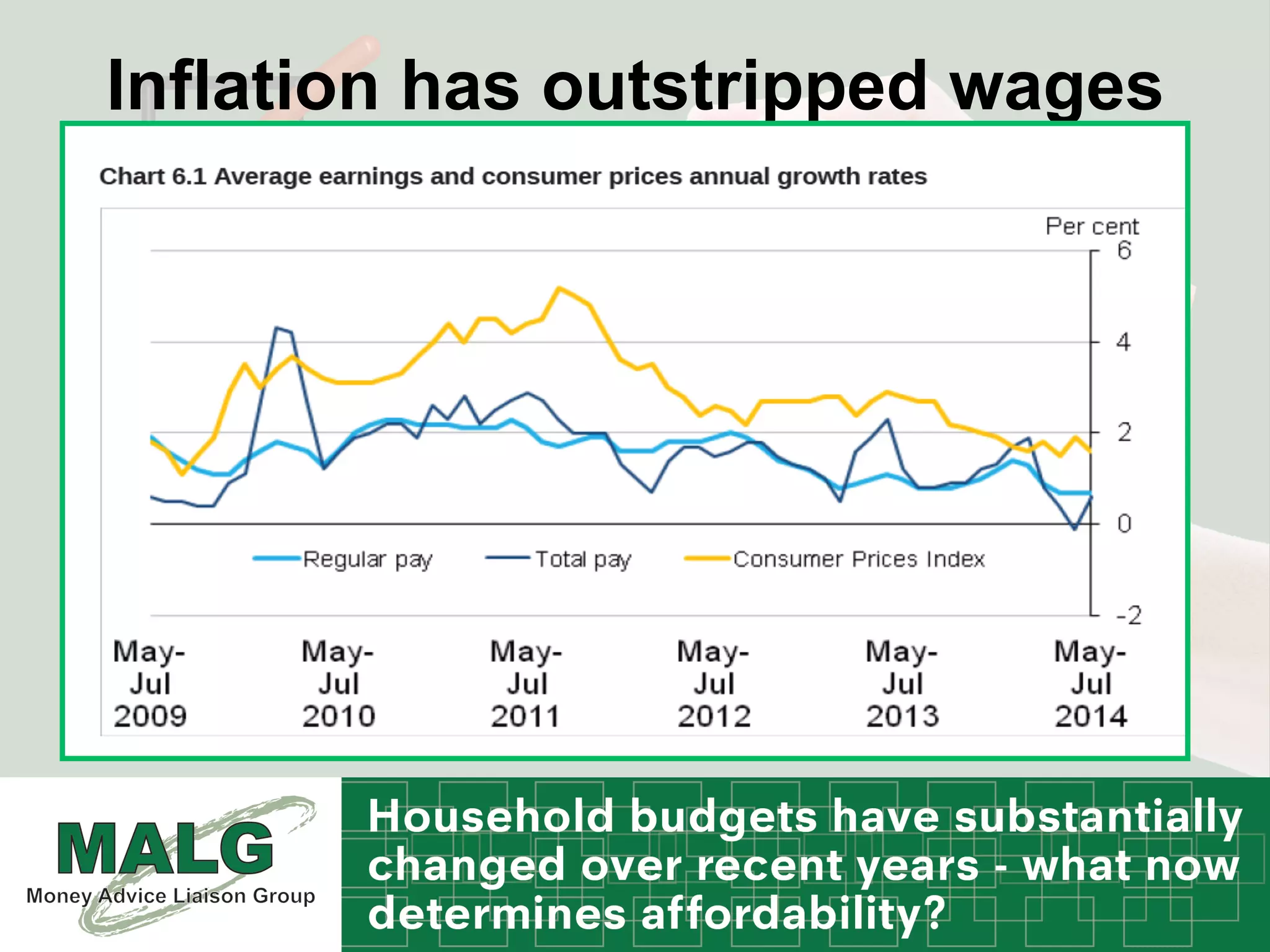
Inflation has outstripped wages
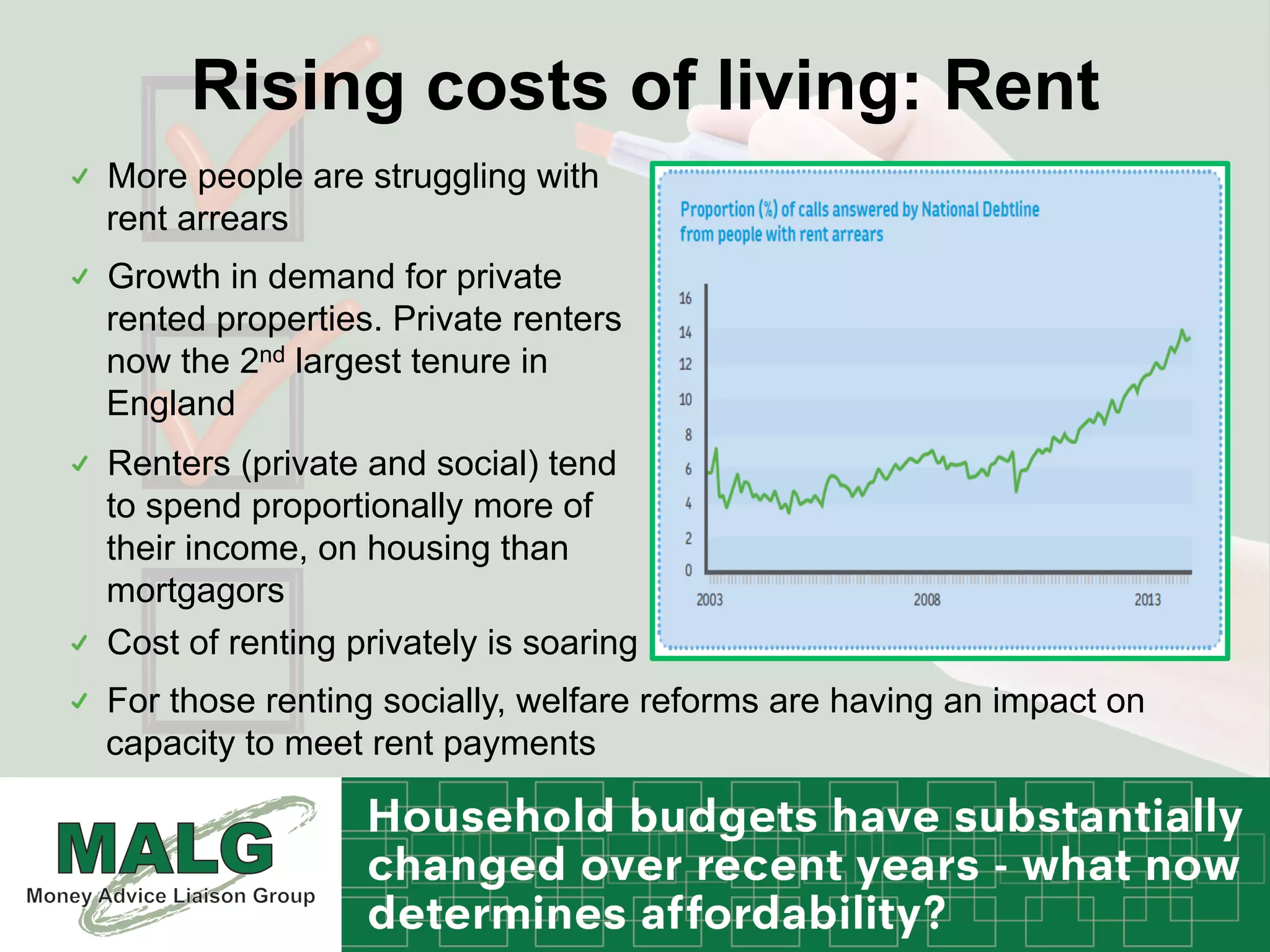
Rising costs of living: Rent
!   More people are struggling with
rent arrears
!   Growth in demand for private
rented properties. Private renters
now the 2nd largest tenure in
England
!   Renters (private and social) tend
to spend proportionally more of
their income, on housing than
mortgagors
!   Cost of renting privately is soaring
!   For those renting socially, welfare reforms are having an impact on
capacity to meet rent payments
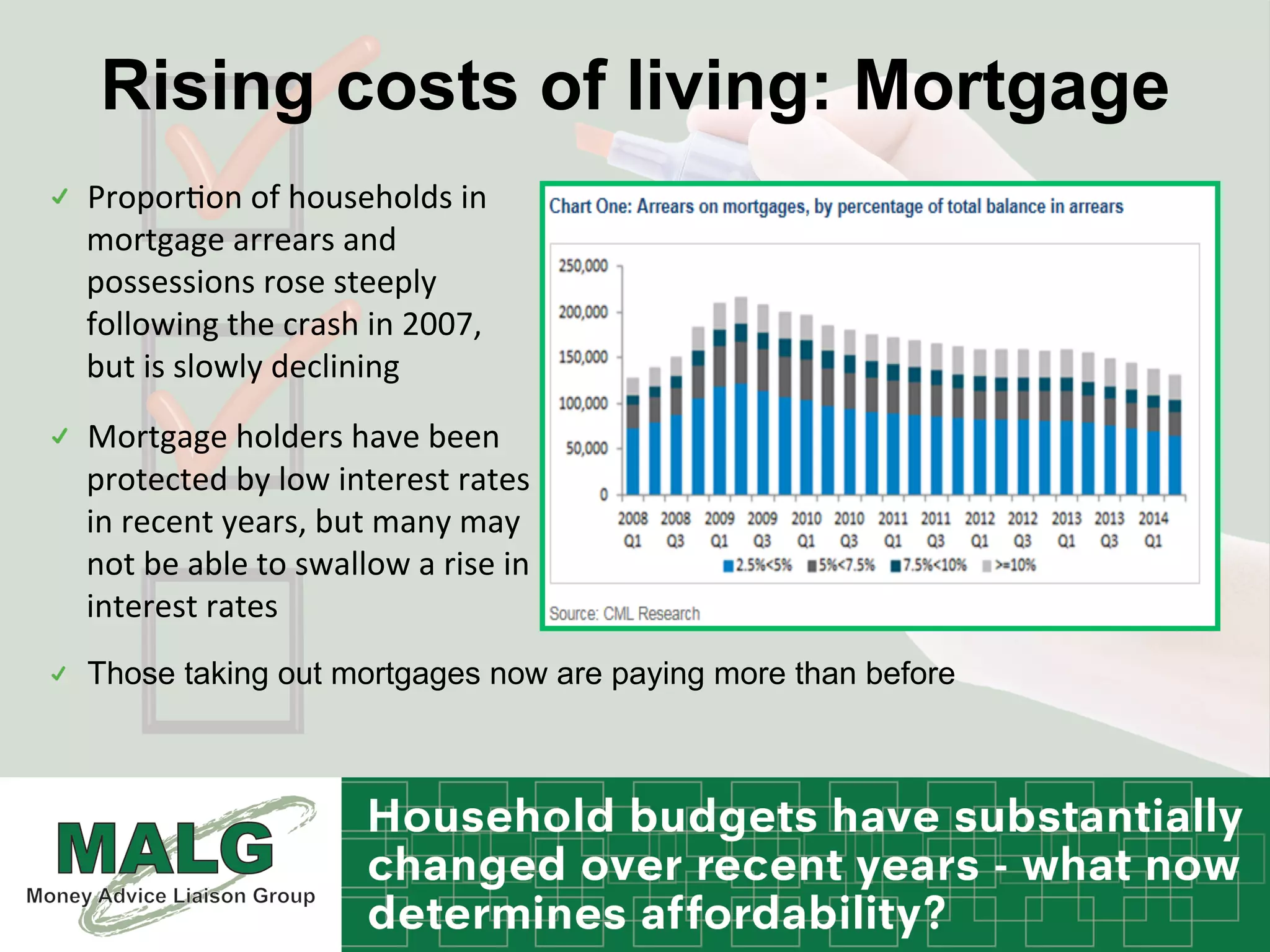
Rising costs of living: Mortgage
!   Propor%on	
  of	
  households	
  in	
  
mortgage	
  arrears	
  and	
  
possessions	
  rose	
  steeply	
  
following	
  the	
  crash	
  in	
  2007,	
  
but	
  is	
  slowly	
  declining	


!   Mortgage	
  holders	
  have	
  been	
  
protected	
  by	
  low	
  interest	
  rates	
  
in	
  recent	
  years,	
  but	
  many	
  may	
  
not	
  be	
  able	
  to	
  swallow	
  a	
  rise	
  in	
  
interest	
  rates	
  	
  
!   Those taking out mortgages now are paying more than before
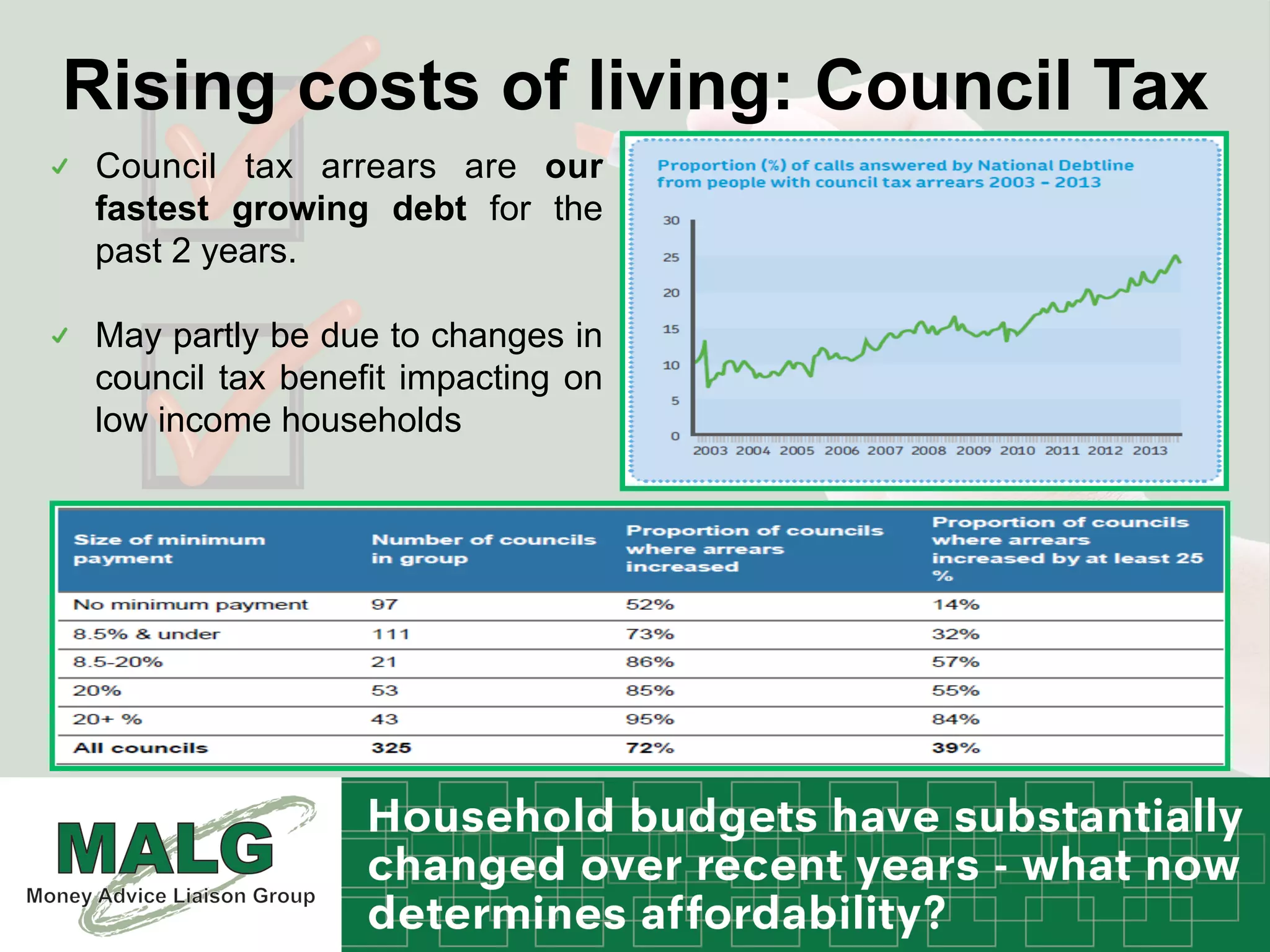
Rising costs of living: Council Tax
!   Council tax arrears are our
fastest growing debt for the
past 2 years.
!   May partly be due to changes in
council tax benefit impacting on
low income households
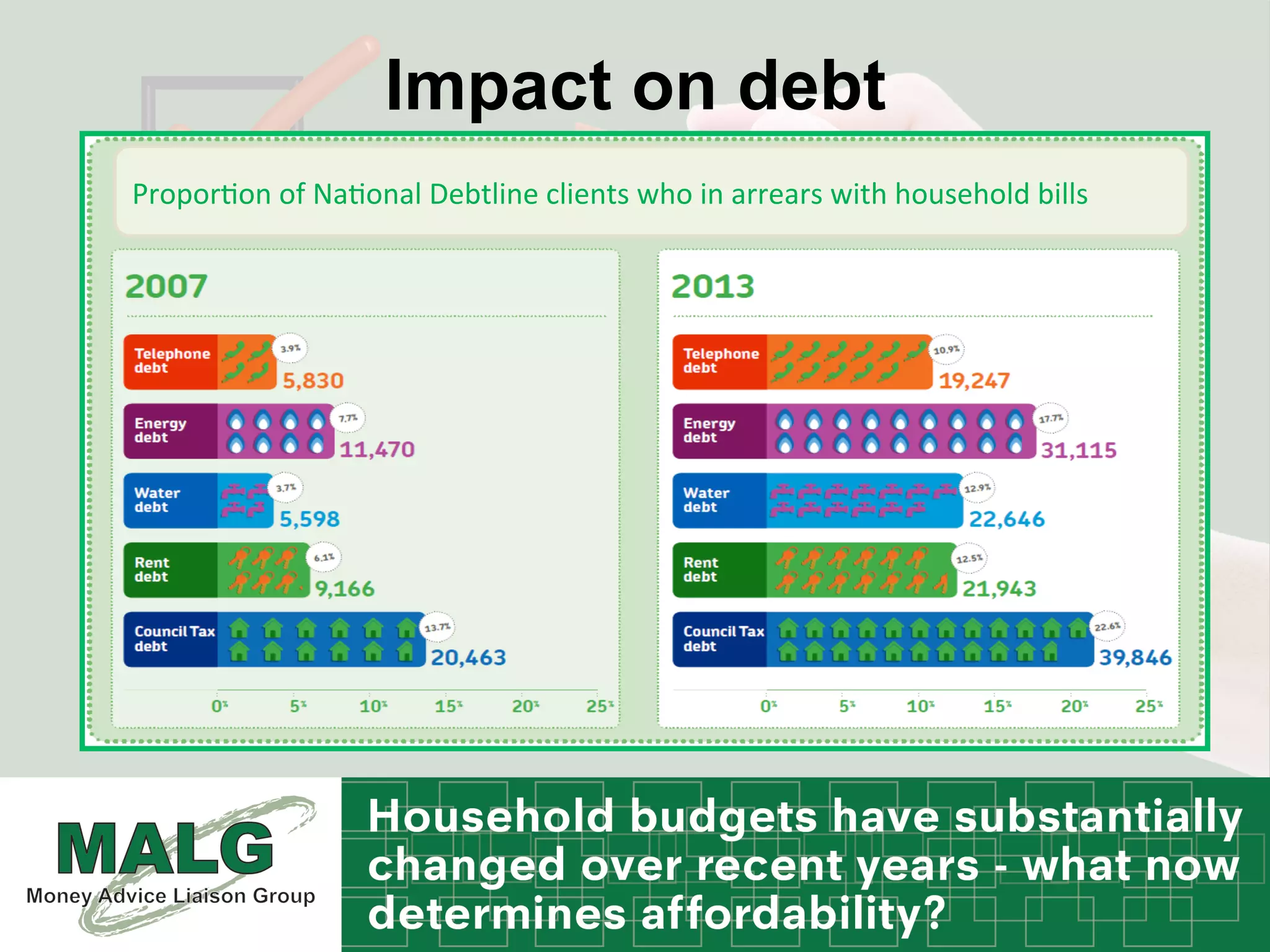
Impact on debt
Propor%on	
  of	
  Na%onal	
  Debtline	
  clients	
  who	
  in	
  arrears	
  with	
  household	
  bills	
  
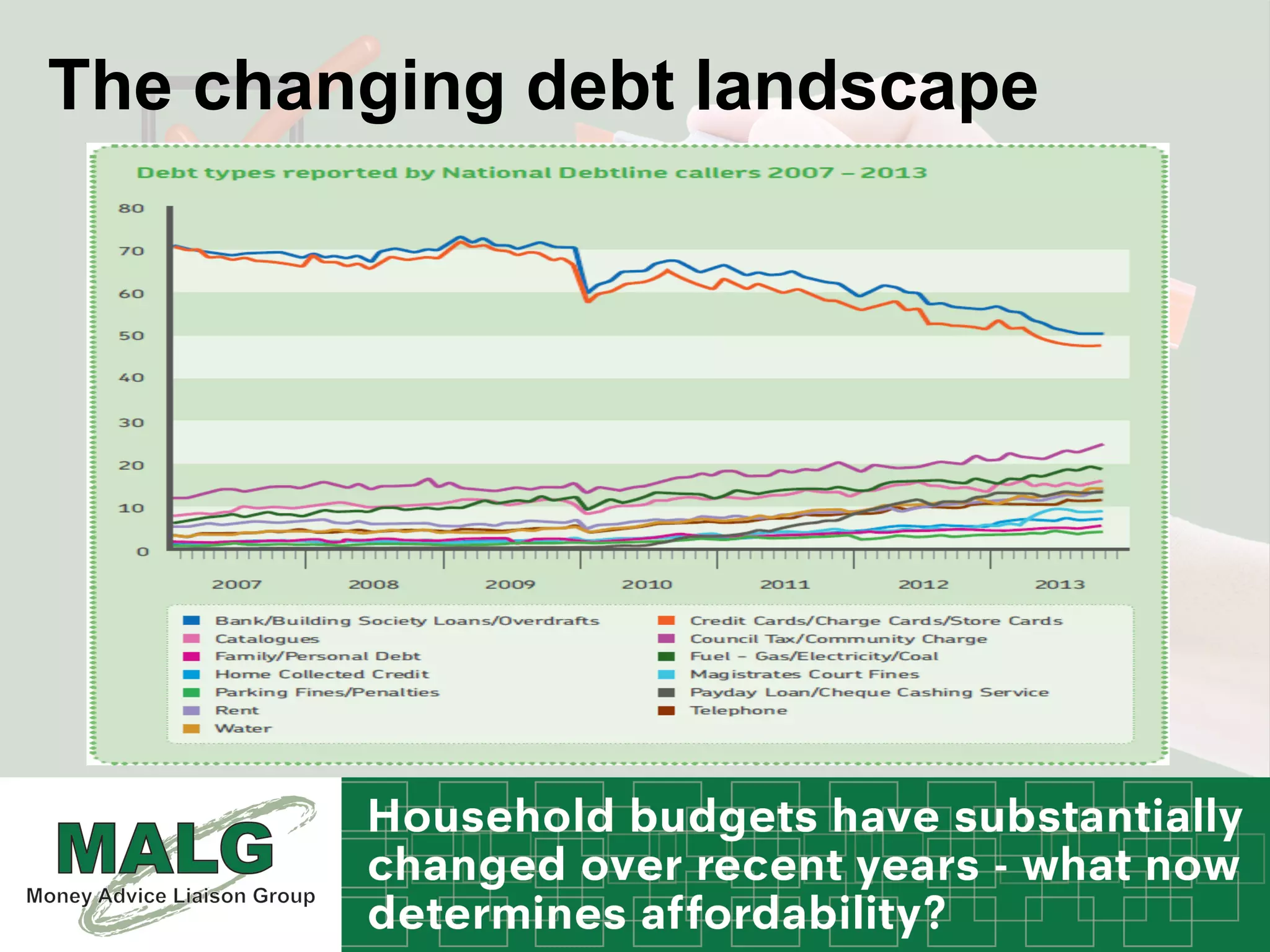
The changing debt landscape


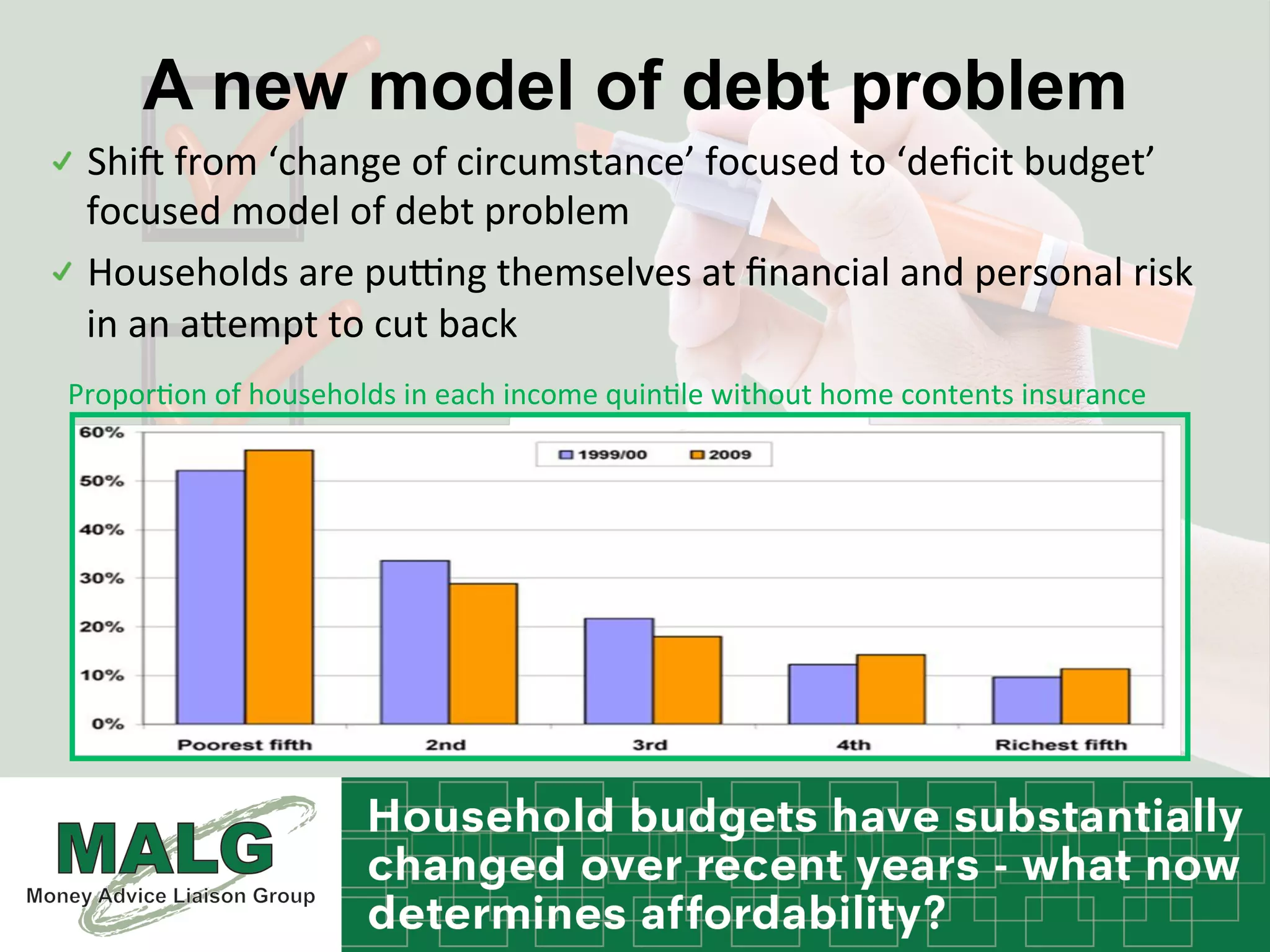
A new model of debt problem
!  ShiA	
  from	
  ‘change	
  of	
  circumstance’	
  focused	
  to	
  ‘deficit	
  budget’	
  
focused	
  model	
  of	
  debt	
  problem	
  
!  Households	
  are	
  puFng	
  themselves	
  at	
  financial	
  and	
  personal	
  risk	
  
in	
  an	
  aHempt	
  to	
  cut	
  back	


Propor%on	
  of	
  households	
  in	
  each	
  income	
  quin%le	
  without	
  home	
  contents	
  insurance	
  
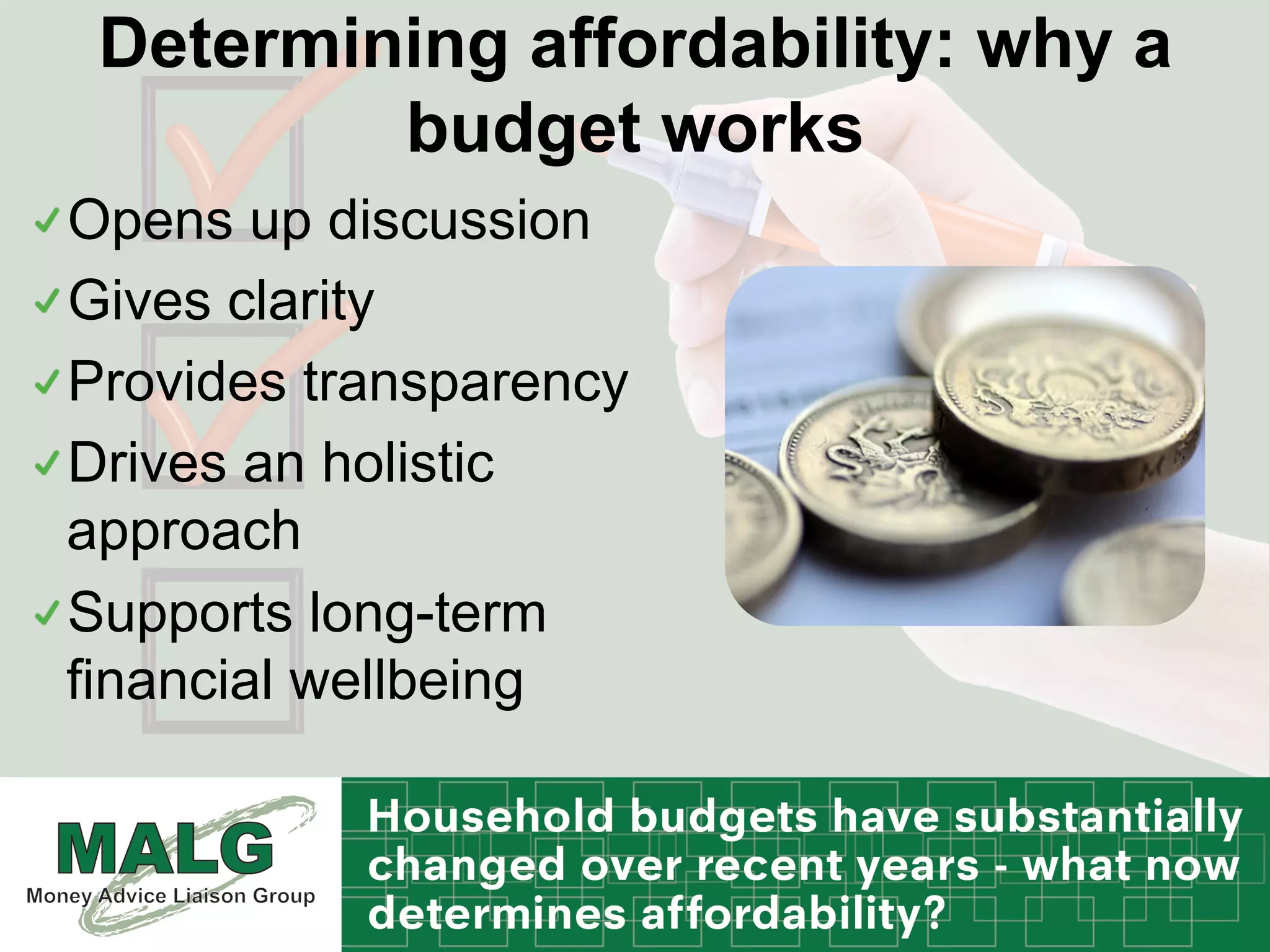
Determining affordability: why a
budget works
!  Opens up discussion
!  Gives clarity
!  Provides transparency
!  Drives an holistic
approach
!  Supports long-term
financial wellbeing
Determining affordability: a
common approach
!  The role of the Common
Financial Statement
!  A new Single Financial
Statement


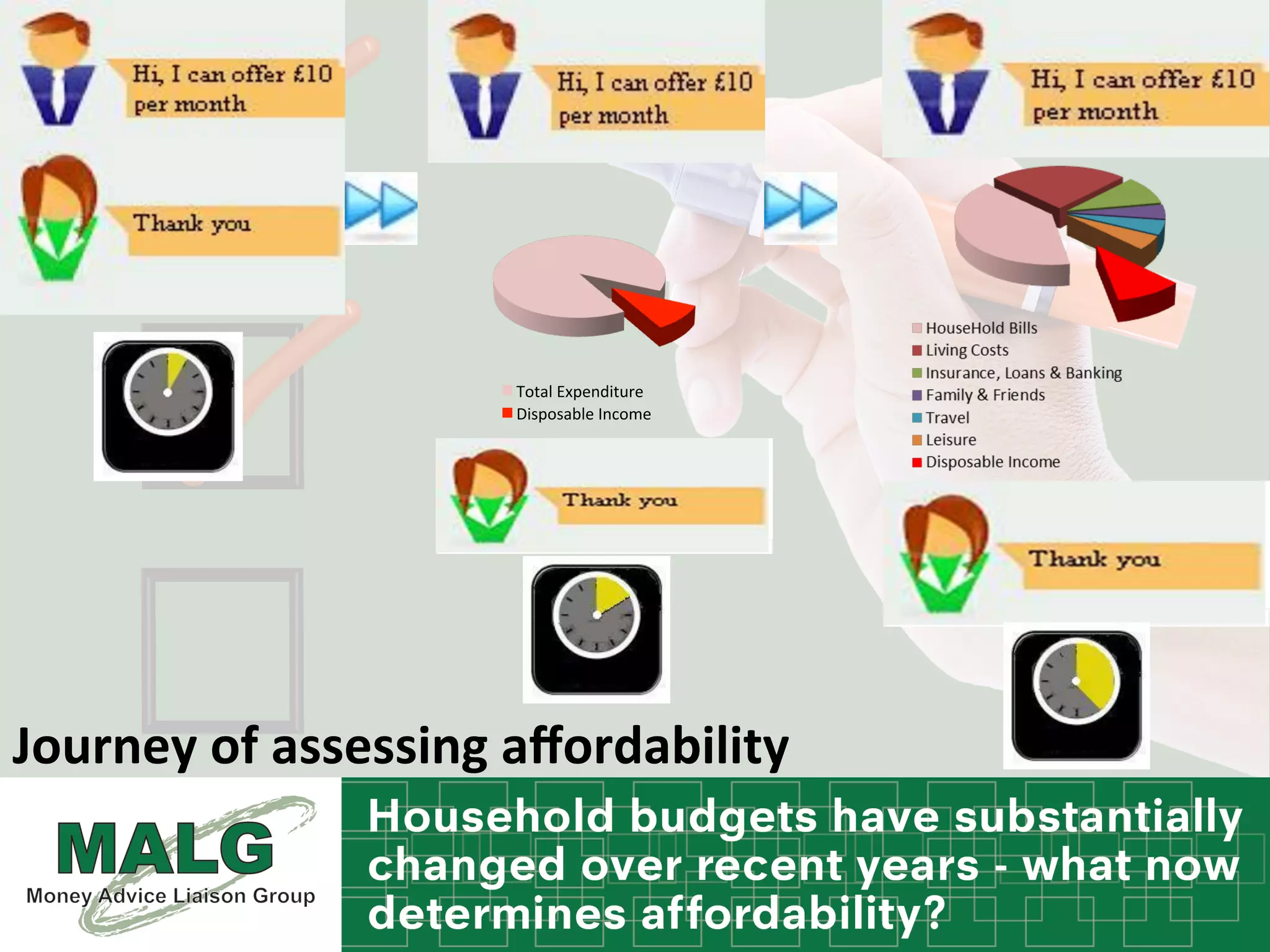
Journey	
  of	
  assessing	
  affordability	
  
Total	
  Expenditure	
  
Disposable	
  Income	
  	
  
How	
  do	
  we	
  validate?	


•  Trust	
  
•  Conversa%on	
  
•  Sustainability	
  	
  
•  Compliance	
  	
  
•  Training	
  (Ques%oning	
  and	
  
understanding	
  household	
  budgets)	
  
•  Debt	
  Advice	
  Audits	
  	
  
•  Common	
  Financial	
  Statement	
  
Why	
  is	
  understanding	
  affordability	
  important?	
  
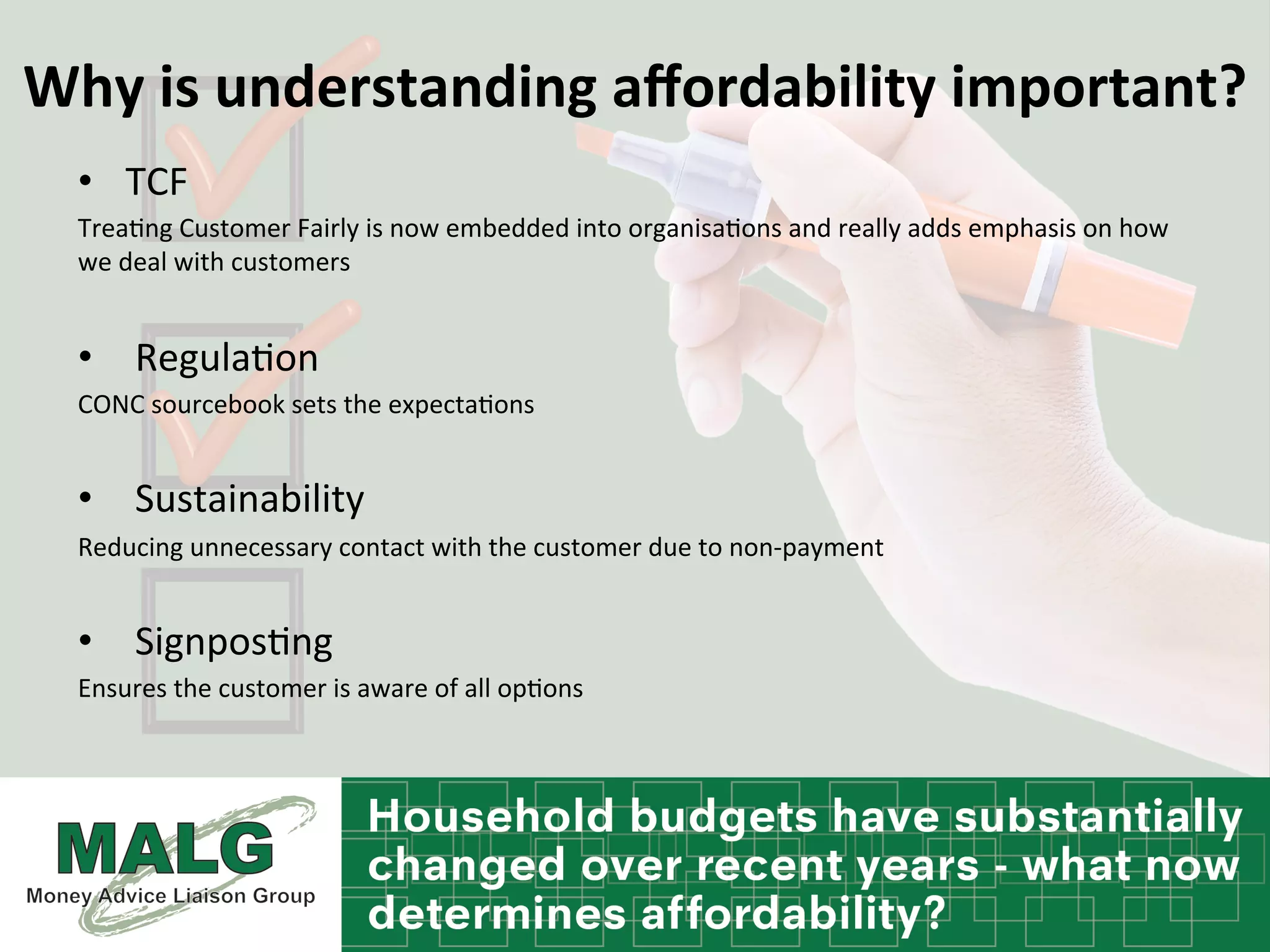
•  TCF	
  
Trea%ng	
  Customer	
  Fairly	
  is	
  now	
  embedded	
  into	
  organisa%ons	
  and	
  really	
  adds	
  emphasis	
  on	
  how	
  
we	
  deal	
  with	
  customers	


•  	
  Regula%on	
  	
  
CONC	
  sourcebook	
  sets	
  the	
  expecta%ons	


•  	
  Sustainability	
  
Reducing	
  unnecessary	
  contact	
  with	
  the	
  customer	
  due	
  to	
  non-­‐payment	


•  	
  Signpos%ng	


Ensures	
  the	
  customer	
  is	
  aware	
  of	
  all	
  op%ons	
  	
  
How	
  do	
  we	
  make	
  it	
  work?	
  	
  
Agency	
  	
   Customer	
  	
  
•  Repayment	
  book	
  	
  
•  Absorbing	
  upfront	
  costs	
  
•  Increasing	
  and	
  developing	
  training	
  
•  Recruitment	
  process	


•  Peace	
  of	
  mind	
  	
  
•  Affordable	
  /	
  Sustainable	
  	
  
•  Trust	
  
•  Improving	
  percep%on	
  
Impact	
  of	
  Reducing	
  Disposable	
  Income?	


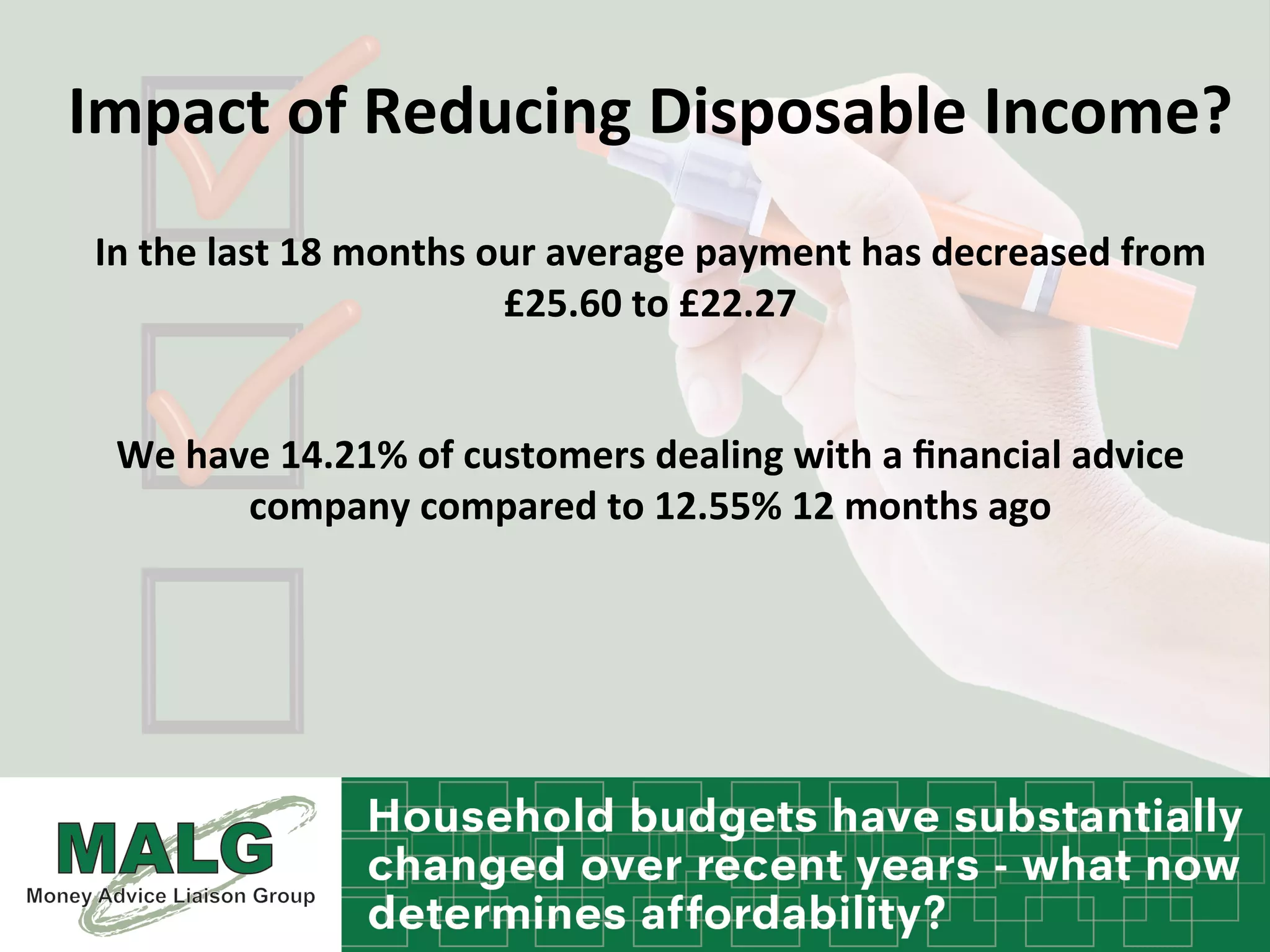
In	
  the	
  last	
  18	
  months	
  our	
  average	
  payment	
  has	
  decreased	
  from	
  
£25.60	
  to	
  £22.27	


We	
  have	
  14.21%	
  of	
  customers	
  dealing	
  with	
  a	
  financial	
  advice	
  
company	
  compared	
  to	
  12.55%	
  12	
  months	
  ago	


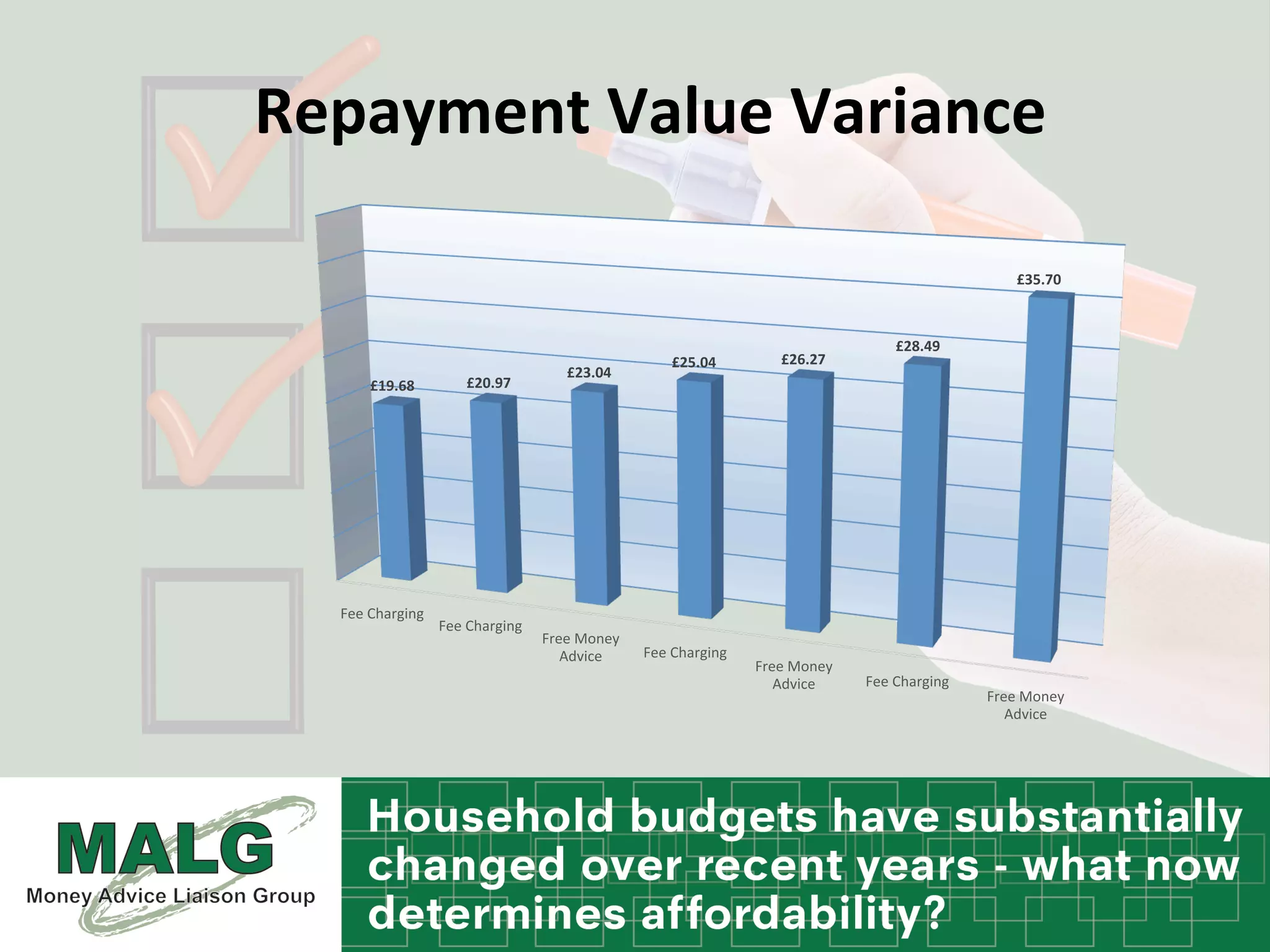
Repayment	
  Value	
  Variance	


Fee	
  Charging	
  	
  
Fee	
  Charging	
  
Free	
  Money	
  
Advice	
   Fee	
  Charging	
  
Free	
  Money	
  
Advice	
   Fee	
  Charging	
  
Free	
  Money	
  
Advice	
  
£19.68	
   £20.97	
  
£23.04	
  
£25.04	
   £26.27	
  
£28.49	
  
£35.70	
  
What	
  %	
  of	
  a	
  customers	
  
disposable	
  income	
  
should	
  be	
  accepted	
  as	
  a	
  
repayment?	
  	
  
What	
  is	
  acceptable	
  as	
  
expenditure	
  on	
  a	
  
Financial	
  Statement?	
  

#MALG14 Workshop C - Household Budgets - Slideset

  • 1.
    Household budgets have substantiallychanged over recent years - what now determines affordability? Claire King, Insight Manager, Money Advice Trust Jane Tully, Head of Insight and Engagement, Money Advice Trust Martin Roseweir, Managing Director, Allied International Credit Presenters: Yvonne MacDermid OBE, Chief Executive, Money Advice Scotland Facilitator: Vanora McCullagh, Creditor Liaison Manager, Debt Advisory Line and representing MALG’s Midlands Discussion Forum Scribe:
  • 2.
  • 3.
    Rising costs ofliving: Rent !   More people are struggling with rent arrears !   Growth in demand for private rented properties. Private renters now the 2nd largest tenure in England !   Renters (private and social) tend to spend proportionally more of their income, on housing than mortgagors !   Cost of renting privately is soaring !   For those renting socially, welfare reforms are having an impact on capacity to meet rent payments
  • 4.
    Rising costs ofliving: Mortgage !   Propor%on  of  households  in   mortgage  arrears  and   possessions  rose  steeply   following  the  crash  in  2007,   but  is  slowly  declining       !   Mortgage  holders  have  been   protected  by  low  interest  rates   in  recent  years,  but  many  may   not  be  able  to  swallow  a  rise  in   interest  rates     !   Those taking out mortgages now are paying more than before
  • 5.
    Rising costs ofliving: Council Tax !   Council tax arrears are our fastest growing debt for the past 2 years. !   May partly be due to changes in council tax benefit impacting on low income households
  • 6.
    Impact on debt Propor%on  of  Na%onal  Debtline  clients  who  in  arrears  with  household  bills  
  • 7.
    The changing debtlandscape        
  • 8.
    A new modelof debt problem !  ShiA  from  ‘change  of  circumstance’  focused  to  ‘deficit  budget’   focused  model  of  debt  problem   !  Households  are  puFng  themselves  at  financial  and  personal  risk   in  an  aHempt  to  cut  back           Propor%on  of  households  in  each  income  quin%le  without  home  contents  insurance  
  • 9.
    Determining affordability: whya budget works !  Opens up discussion !  Gives clarity !  Provides transparency !  Drives an holistic approach !  Supports long-term financial wellbeing
  • 10.
    Determining affordability: a commonapproach !  The role of the Common Financial Statement !  A new Single Financial Statement
  • 11.
  • 12.
    Journey  of  assessing  affordability   Total  Expenditure   Disposable  Income    
  • 13.
    How  do  we  validate?       •  Trust   •  Conversa%on   •  Sustainability     •  Compliance     •  Training  (Ques%oning  and   understanding  household  budgets)   •  Debt  Advice  Audits     •  Common  Financial  Statement  
  • 14.
    Why  is  understanding  affordability  important?   •  TCF   Trea%ng  Customer  Fairly  is  now  embedded  into  organisa%ons  and  really  adds  emphasis  on  how   we  deal  with  customers     •   Regula%on     CONC  sourcebook  sets  the  expecta%ons     •   Sustainability   Reducing  unnecessary  contact  with  the  customer  due  to  non-­‐payment       •   Signpos%ng       Ensures  the  customer  is  aware  of  all  op%ons    
  • 15.
    How  do  we  make  it  work?     Agency     Customer     •  Repayment  book     •  Absorbing  upfront  costs   •  Increasing  and  developing  training   •  Recruitment  process       •  Peace  of  mind     •  Affordable  /  Sustainable     •  Trust   •  Improving  percep%on  
  • 16.
    Impact  of  Reducing  Disposable  Income?       In  the  last  18  months  our  average  payment  has  decreased  from   £25.60  to  £22.27         We  have  14.21%  of  customers  dealing  with  a  financial  advice   company  compared  to  12.55%  12  months  ago        
  • 17.
    Repayment  Value  Variance             Fee  Charging     Fee  Charging   Free  Money   Advice   Fee  Charging   Free  Money   Advice   Fee  Charging   Free  Money   Advice   £19.68   £20.97   £23.04   £25.04   £26.27   £28.49   £35.70  
  • 18.
    What  %  of  a  customers   disposable  income   should  be  accepted  as  a   repayment?     What  is  acceptable  as   expenditure  on  a   Financial  Statement?