Speaking
Making notes on cue cards
Understanding the cue card
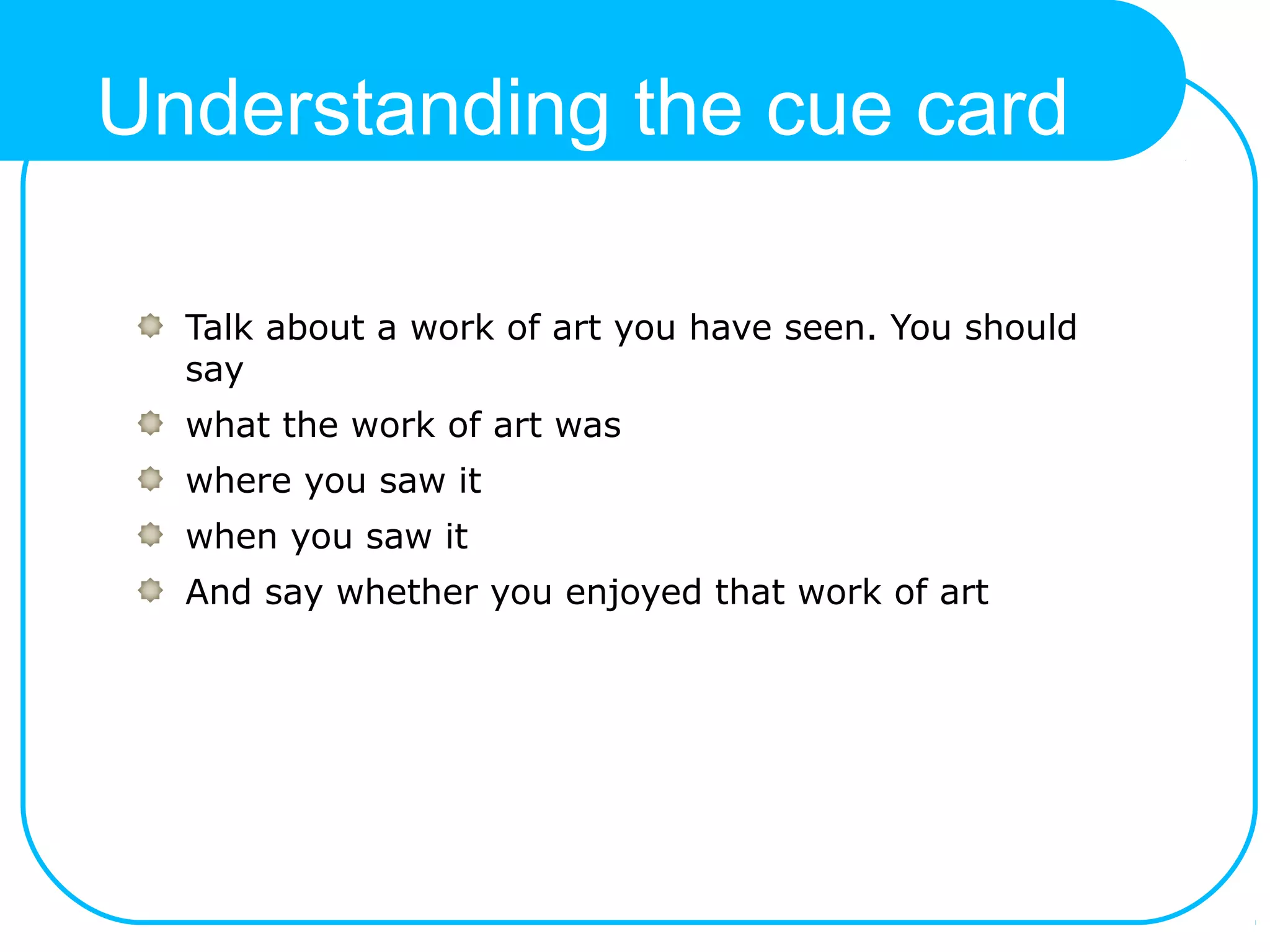
Talk about a work of art you have seen. You should
say
what the work of art was
where you saw it
when you saw it
And say whether you enjoyed that work of art
Part 1- the topic
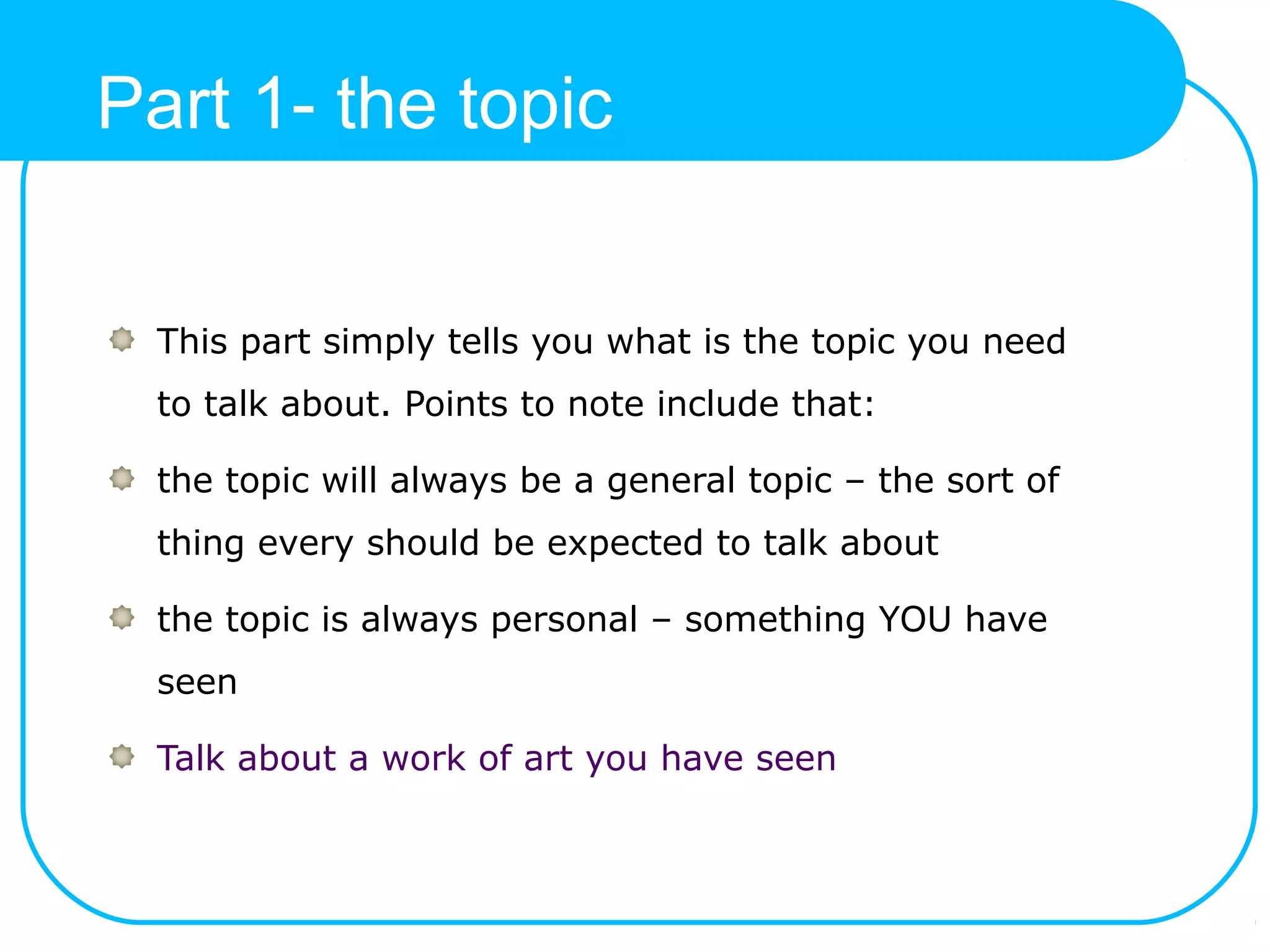
This part simply tells you what is the topic you need
to talk about. Points to note include that:
the topic will always be a general topic – the sort of
thing every should be expected to talk about
the topic is always personal – something YOU have
seen
Talk about a work of art you have seen
Part 2-the detail
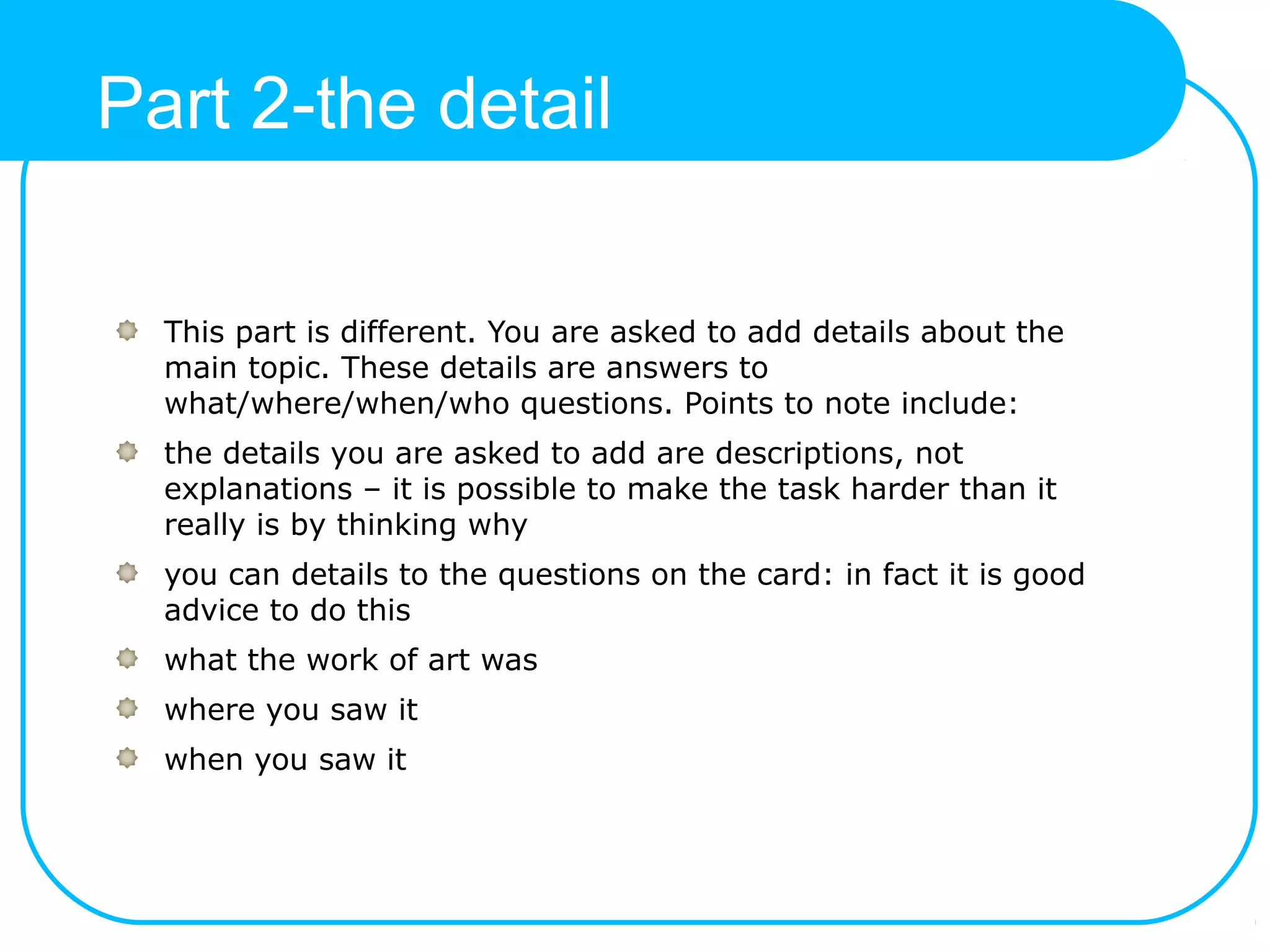
This part is different. You are asked to add details about the
main topic. These details are answers to
what/where/when/who questions. Points to note include:
the details you are asked to add are descriptions, not
explanations – it is possible to make the task harder than it
really is by thinking why
you can details to the questions on the card: in fact it is good
advice to do this
what the work of art was
where you saw it
when you saw it
Part 3- the explanation
This part is different again. Here you are asked to add an
explanation and the question is almost always a how, if or why
question. Points to note include
it is sometimes easier to say more about this part – explanations
tend to be longer than simple descriptions
there may be more to say, but explanations are harder to give
normally than descriptions – your brain has to do more work
Making notes- focus
When you make notes, I believe it helps to focus on what
notes you make. If you just try to make notes generally,
you make no notes at all or get notes you can’t use. You
should also remember that you only have one minute.
This means that the notes you make are limited.
vocabulary notes- useful?
painting
masterpiece
artist
gallery
exhibition
Detailed notes
You are not thinking of words, you are thinking of ideas.
Ask questions
When?“It was last year”. (almost no language)
“I can’t quite remember when, but I think it was sometime in the
middle of last year. I went there with a friend on a weekend because
we had nothing else to do and felt like going out”. (lots more
language and some good spoken structures. This part of the test is
not all about topic language).
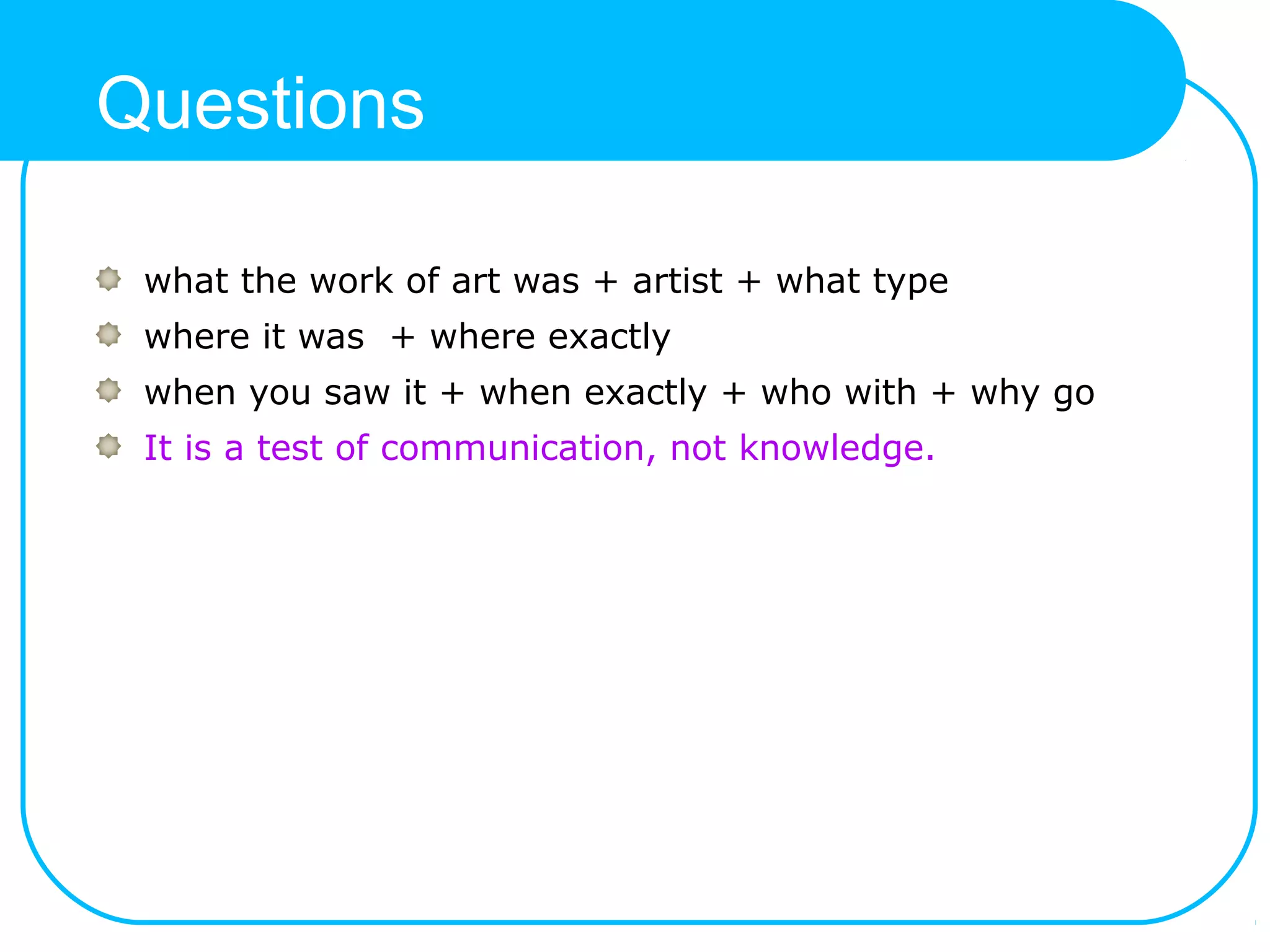
Questions
what the work of art was + artist + what type
where it was + where exactly
when you saw it + when exactly + who with + why go
It is a test of communication, not knowledge.
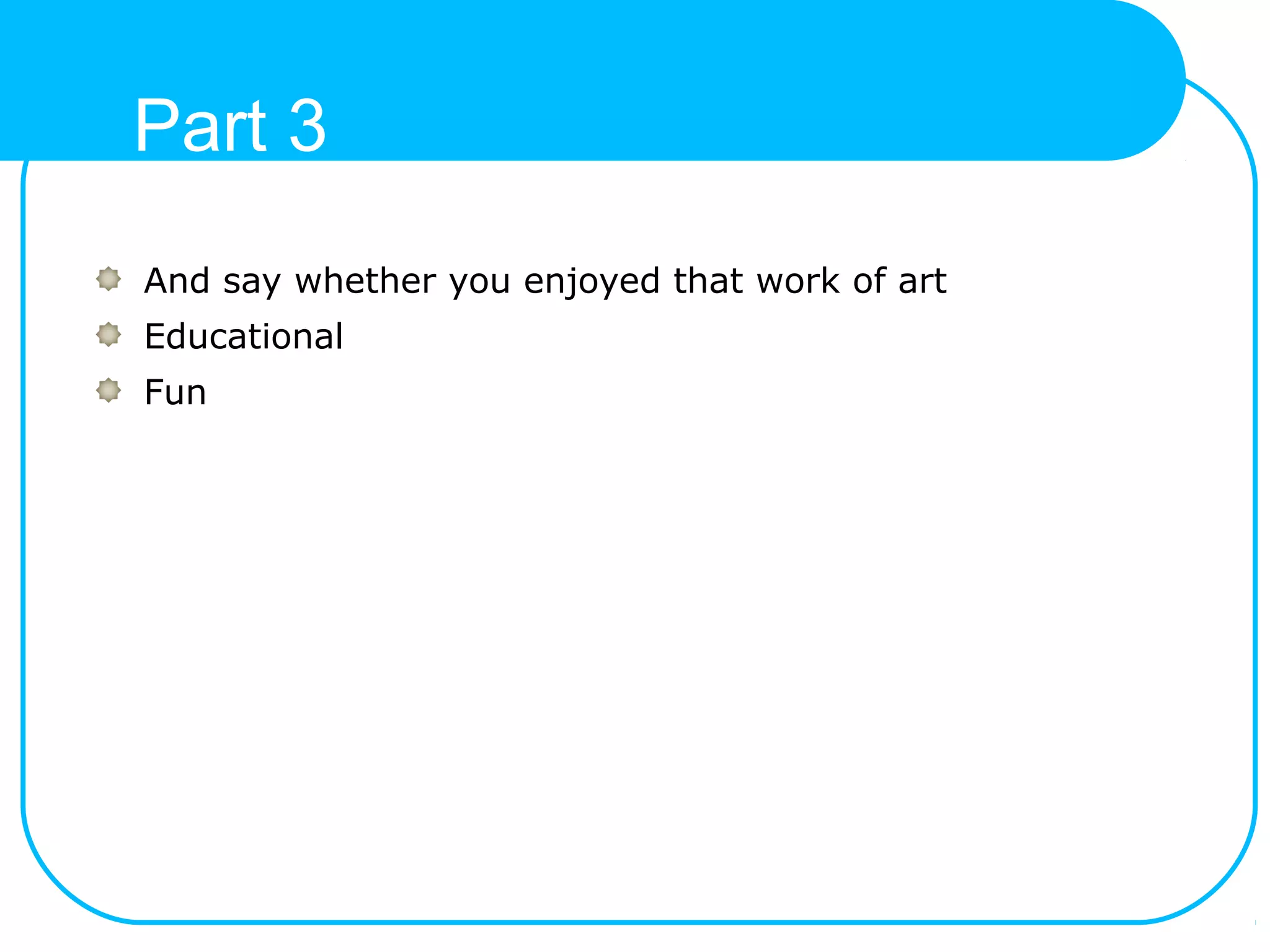
Part 3
And say whether you enjoyed that work of art
Educational
Fun
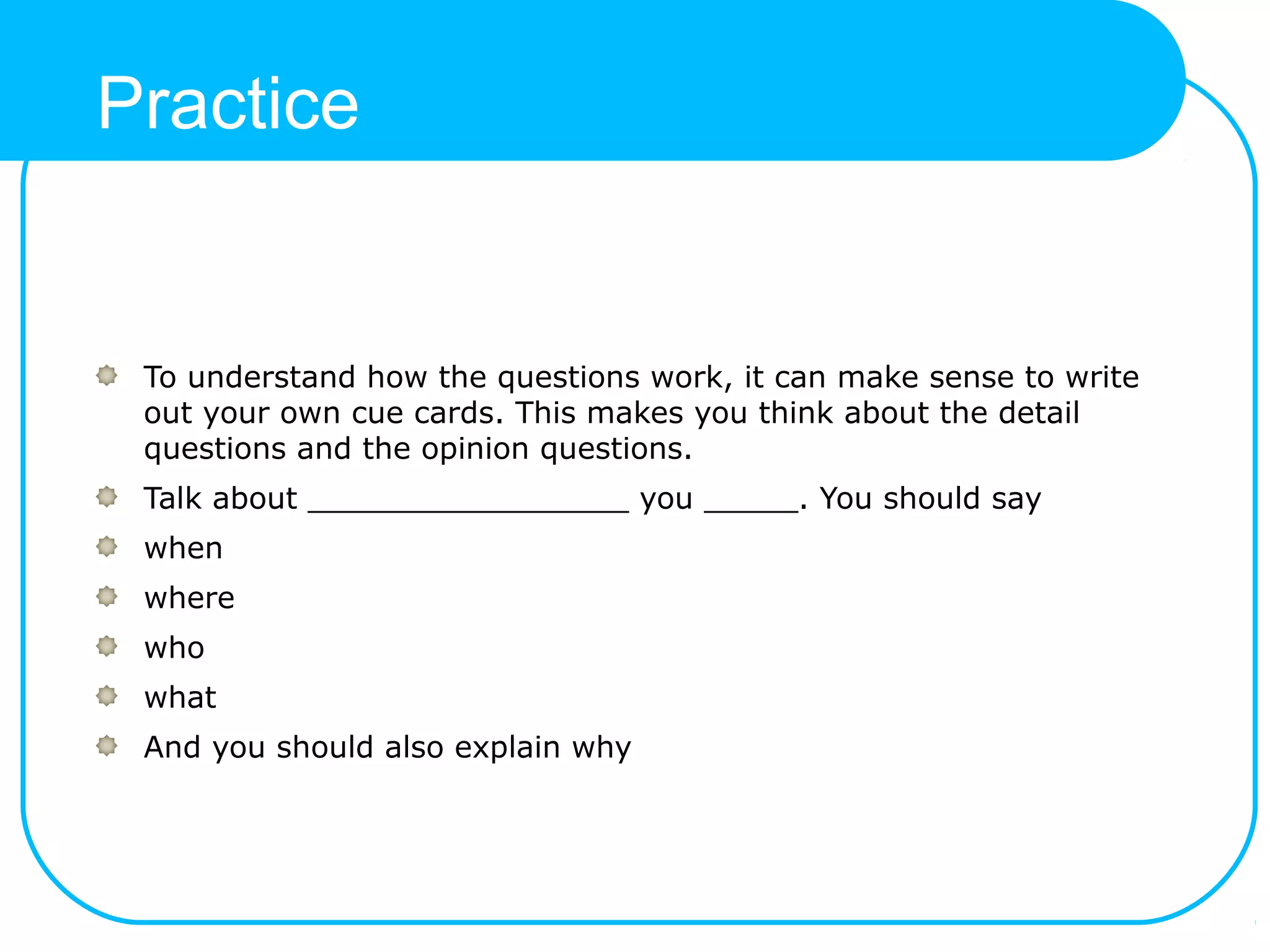
Practice
To understand how the questions work, it can make sense to write
out your own cue cards. This makes you think about the detail
questions and the opinion questions.
Talk about _________________ you _____. You should say
when
where
who
what
And you should also explain why
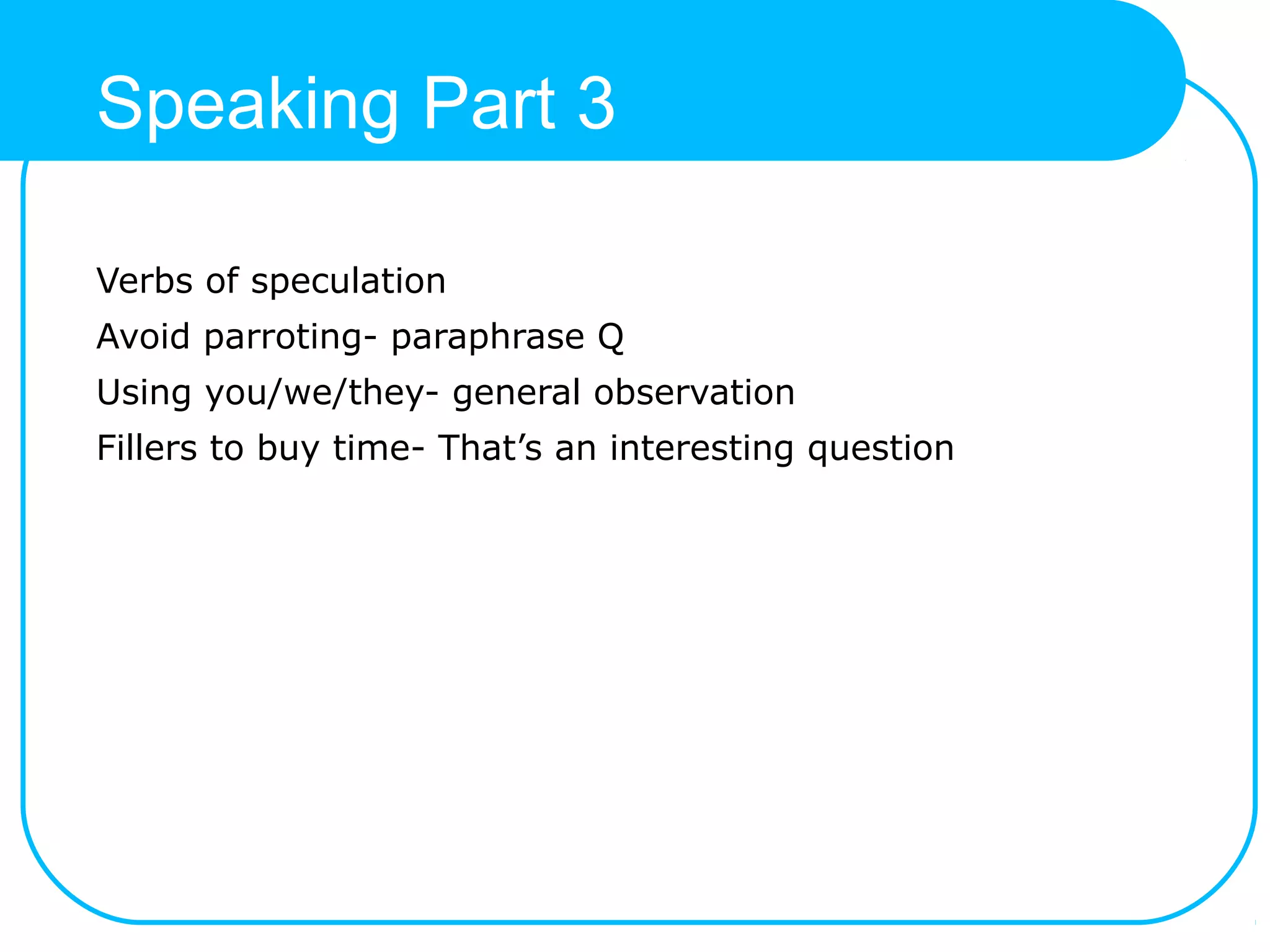
Speaking Part 3
Verbs of speculation
Avoid parroting- paraphrase Q
Using you/we/they- general observation
Fillers to buy time- That’s an interesting question
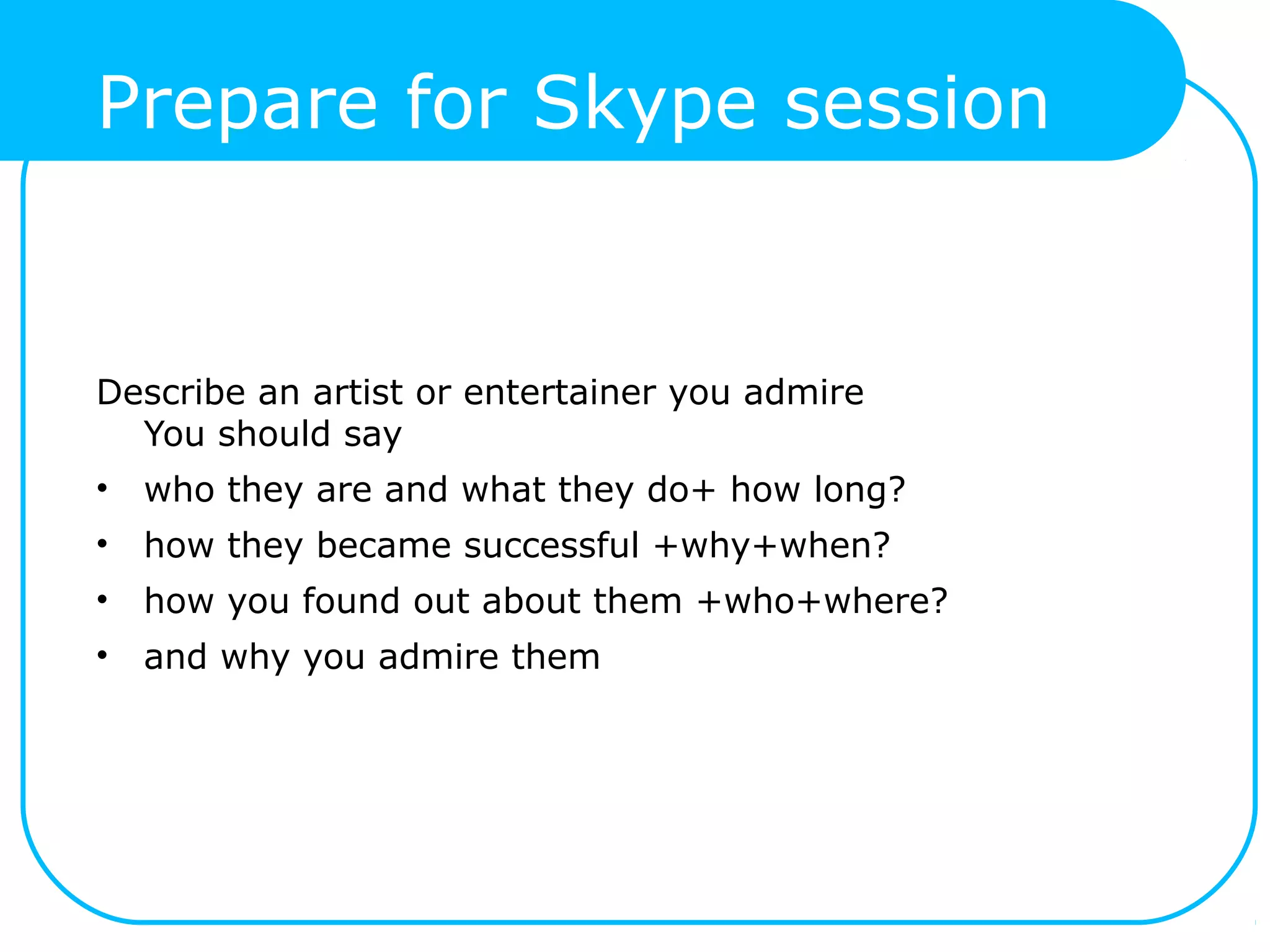
Prepare for Skype session
Describe an artist or entertainer you admire
You should say
• who they are and what they do+ how long?
• how they became successful +why+when?
• how you found out about them +who+where?
• and why you admire them

Making notes on cue cards

  • 1.
  • 2.
    Understanding the cuecard Talk about a work of art you have seen. You should say what the work of art was where you saw it when you saw it And say whether you enjoyed that work of art
  • 3.
    Part 1- thetopic This part simply tells you what is the topic you need to talk about. Points to note include that: the topic will always be a general topic – the sort of thing every should be expected to talk about the topic is always personal – something YOU have seen Talk about a work of art you have seen
  • 4.
    Part 2-the detail Thispart is different. You are asked to add details about the main topic. These details are answers to what/where/when/who questions. Points to note include: the details you are asked to add are descriptions, not explanations – it is possible to make the task harder than it really is by thinking why you can details to the questions on the card: in fact it is good advice to do this what the work of art was where you saw it when you saw it
  • 5.
    Part 3- theexplanation This part is different again. Here you are asked to add an explanation and the question is almost always a how, if or why question. Points to note include it is sometimes easier to say more about this part – explanations tend to be longer than simple descriptions there may be more to say, but explanations are harder to give normally than descriptions – your brain has to do more work
  • 6.
    Making notes- focus Whenyou make notes, I believe it helps to focus on what notes you make. If you just try to make notes generally, you make no notes at all or get notes you can’t use. You should also remember that you only have one minute. This means that the notes you make are limited.
  • 7.
  • 8.
    Detailed notes You arenot thinking of words, you are thinking of ideas. Ask questions When?“It was last year”. (almost no language) “I can’t quite remember when, but I think it was sometime in the middle of last year. I went there with a friend on a weekend because we had nothing else to do and felt like going out”. (lots more language and some good spoken structures. This part of the test is not all about topic language).
  • 9.
    Questions what the workof art was + artist + what type where it was + where exactly when you saw it + when exactly + who with + why go It is a test of communication, not knowledge.
  • 10.
    Part 3 And saywhether you enjoyed that work of art Educational Fun
  • 11.
    Practice To understand howthe questions work, it can make sense to write out your own cue cards. This makes you think about the detail questions and the opinion questions. Talk about _________________ you _____. You should say when where who what And you should also explain why
  • 12.
    Speaking Part 3 Verbsof speculation Avoid parroting- paraphrase Q Using you/we/they- general observation Fillers to buy time- That’s an interesting question
  • 13.
    Prepare for Skypesession Describe an artist or entertainer you admire You should say • who they are and what they do+ how long? • how they became successful +why+when? • how you found out about them +who+where? • and why you admire them