Preparing for your
first Skype call
How to introduce myself?
Greet with smile
Maintain eye contact
Tell them your name
Ask for the other person’s name
Repeat the other person’s name
How to have a great
conversation?
 Relax and forget about yourself
 Listen
 Ask questions
 Use a friendly tone
 Choose your words and questions carefully
 Neither interrupt a person in the middle of his thought,
nor speak on top of it
 Compliment the other person
 Thank them for a great conversation
How to handle a difficult
question?
 Personal, intimate question
I’m sorry, but I’d prefer not to answer this question.
 Question you don’t know the answer
I have no idea.
 Question you didn’t catch
Can you repeat the question?
 Question you don’t understand because of unfamiliar
words or question structure
I’m sorry, but I don’t understand your question. Would you
mind telling it in different words?/What do you mean
by…?/What does…mean?
How to improve speaking?
 Listening and reading aloud
 Writing
 Networking and making friends
 Greeting people on the street
 Having small talks in public
 Watching foreign movies with English subtitles
 Joining one-on-one conversations, conversation and
common interest groups
Resources
Daily Conversations:
http://www.worldenglishclub.com/daily-english-c
EBooks:
http://www.gutenberg.org
Phrases and Expressions for Speaking:
http://www.eslgold.com/speaking/phrases.html
How to improve listening?
Speaking to English speakers
Watching TV and movies
Listening to radio
Reading audio books
Singing English songs
Practicing pronunciation
Joining conversation groups/one-on-one
conversations
Resources
Listening Lab:
http://www.esl-lab.com
Listening Activities:
http://www.manythings.org/e/listening.html
Audio Books:
http://librivox.org
http://www.audiobooks.org
http://www.audiobooks.net
How to improve
comprehension? Reading picture books or comics
 Reading newspapers and magazines
 Asking questions during conversations
 Watching TV and movies
 Browsing English websites
 Consulting dictionaries
 Constantly learning new words
 Clarifying meaning of slang and idioms
 Knowing grammar
Resources
 Idioms:
http://www.idiomconnection.com
 Slang Words:
http://www.eslcafe.com/slang/list.html
 Reading Comprehension Exercises:
http://www.englishcorner.vacau.com/reading/reading.html
 Listening Comprehension Exercises:
http://www.learnenglishfeelgood.com/eslvideo/
 Vocabulary Games:
http://www.vocabulary.co.il
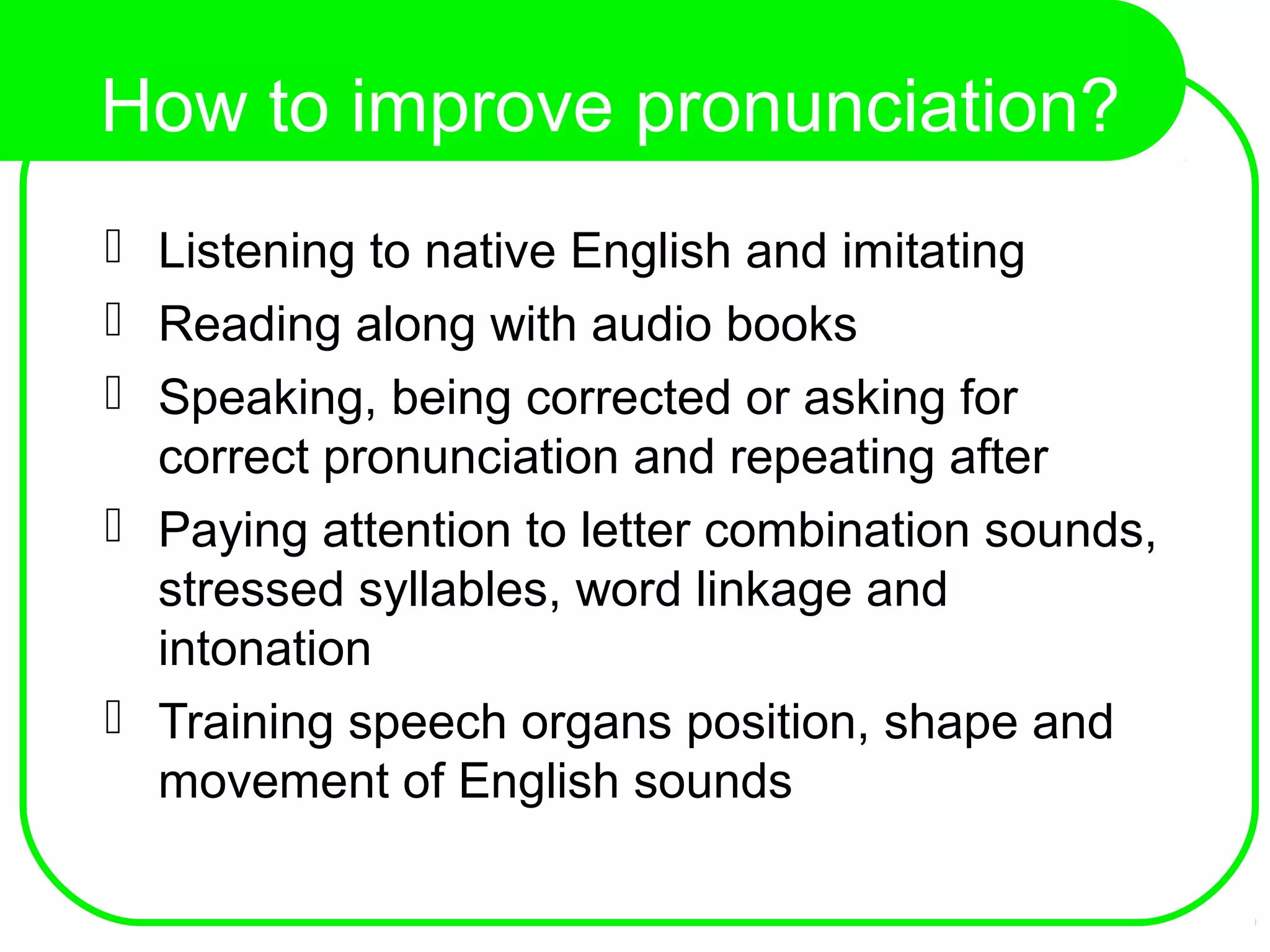
How to improve pronunciation?
 Listening to native English and imitating
 Reading along with audio books
 Speaking, being corrected or asking for
correct pronunciation and repeating after
 Paying attention to letter combination sounds,
stressed syllables, word linkage and
intonation
 Training speech organs position, shape and
movement of English sounds
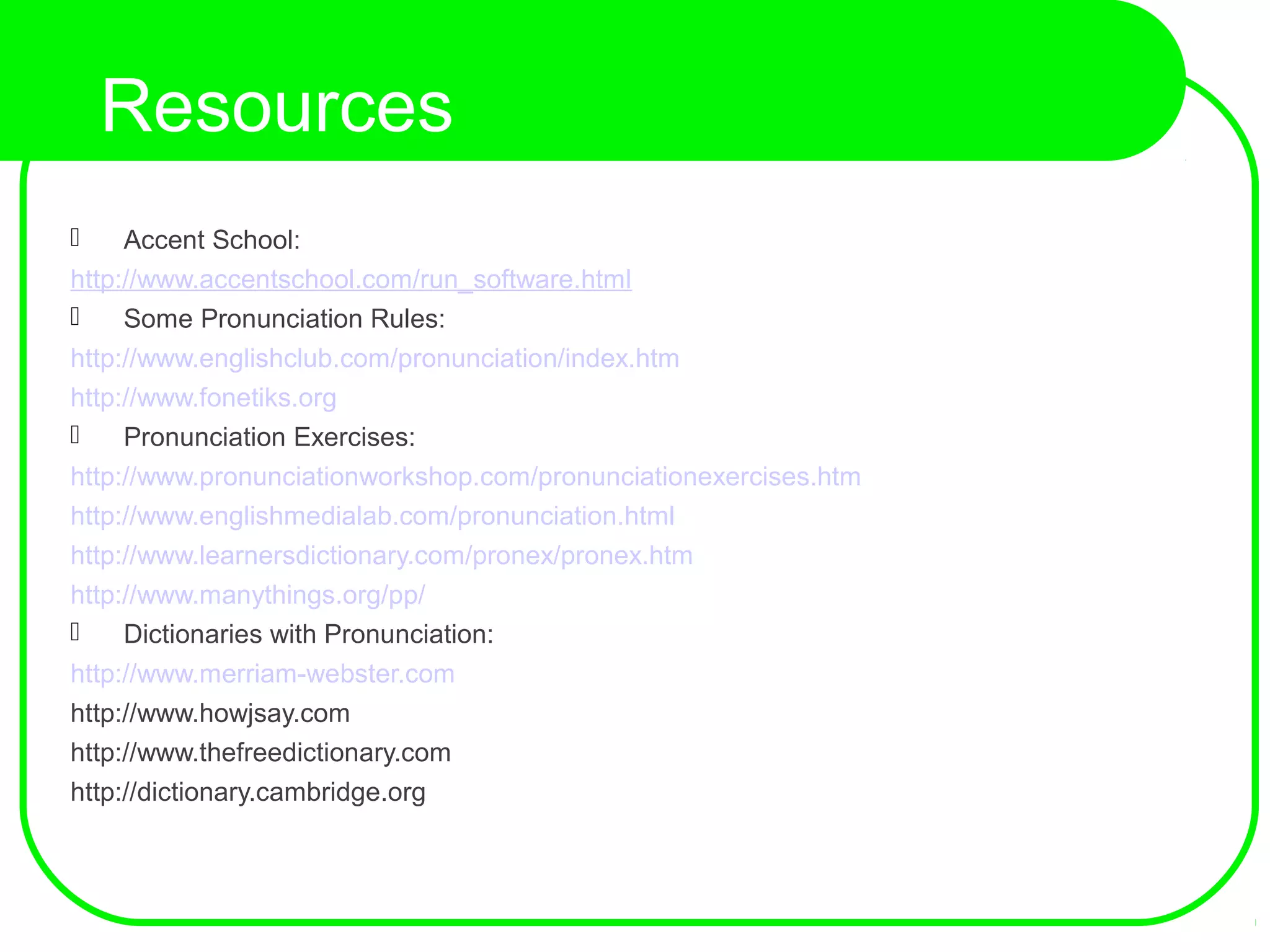
Resources
 Accent School:
http://www.accentschool.com/run_software.html
 Some Pronunciation Rules:
http://www.englishclub.com/pronunciation/index.htm
http://www.fonetiks.org
 Pronunciation Exercises:
http://www.pronunciationworkshop.com/pronunciationexercises.htm
http://www.englishmedialab.com/pronunciation.html
http://www.learnersdictionary.com/pronex/pronex.htm
http://www.manythings.org/pp/
 Dictionaries with Pronunciation:
http://www.merriam-webster.com
http://www.howjsay.com
http://www.thefreedictionary.com
http://dictionary.cambridge.org
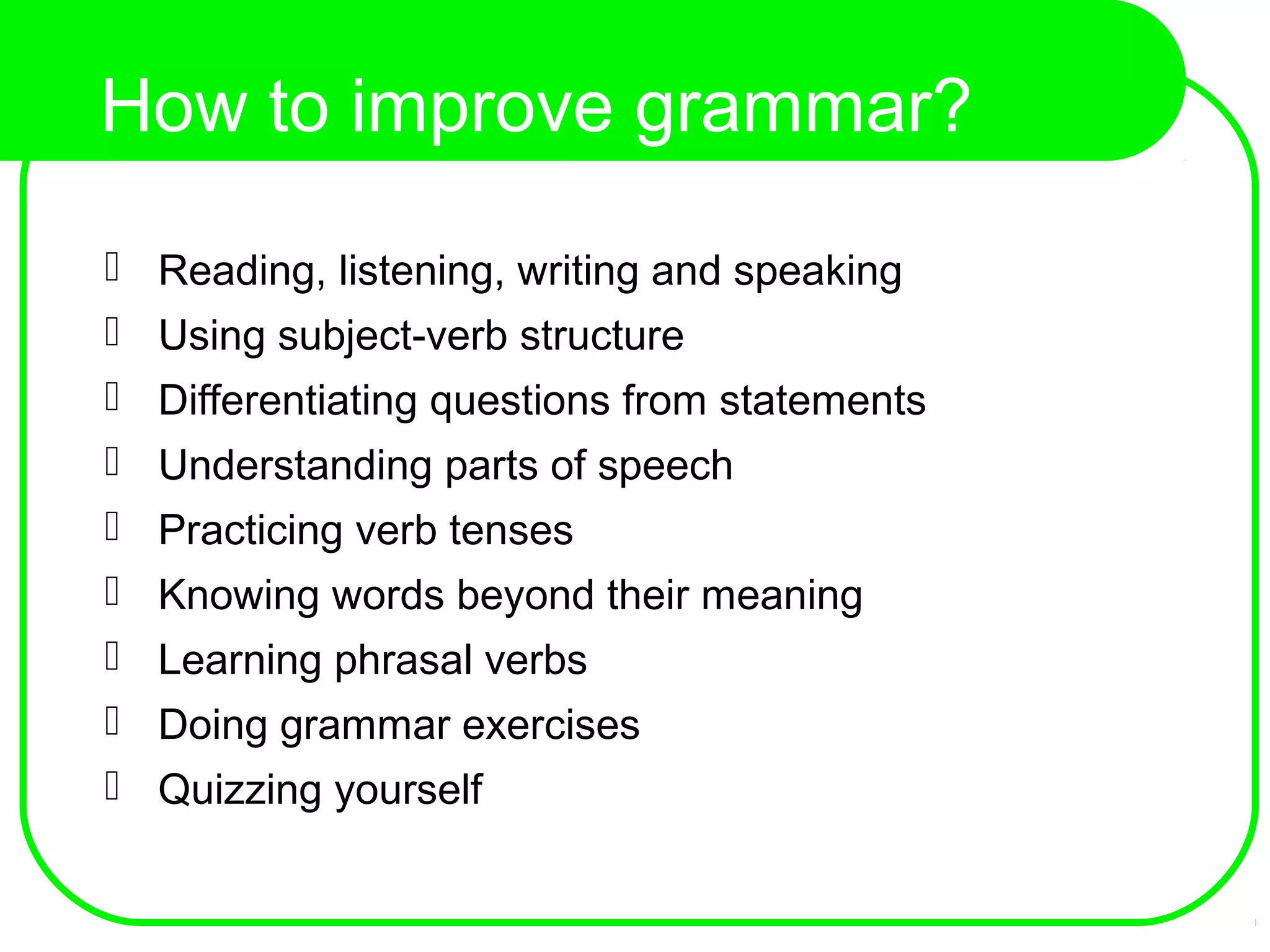
How to improve grammar?
 Reading, listening, writing and speaking
 Using subject-verb structure
 Differentiating questions from statements
 Understanding parts of speech
 Practicing verb tenses
 Knowing words beyond their meaning
 Learning phrasal verbs
 Doing grammar exercises
 Quizzing yourself
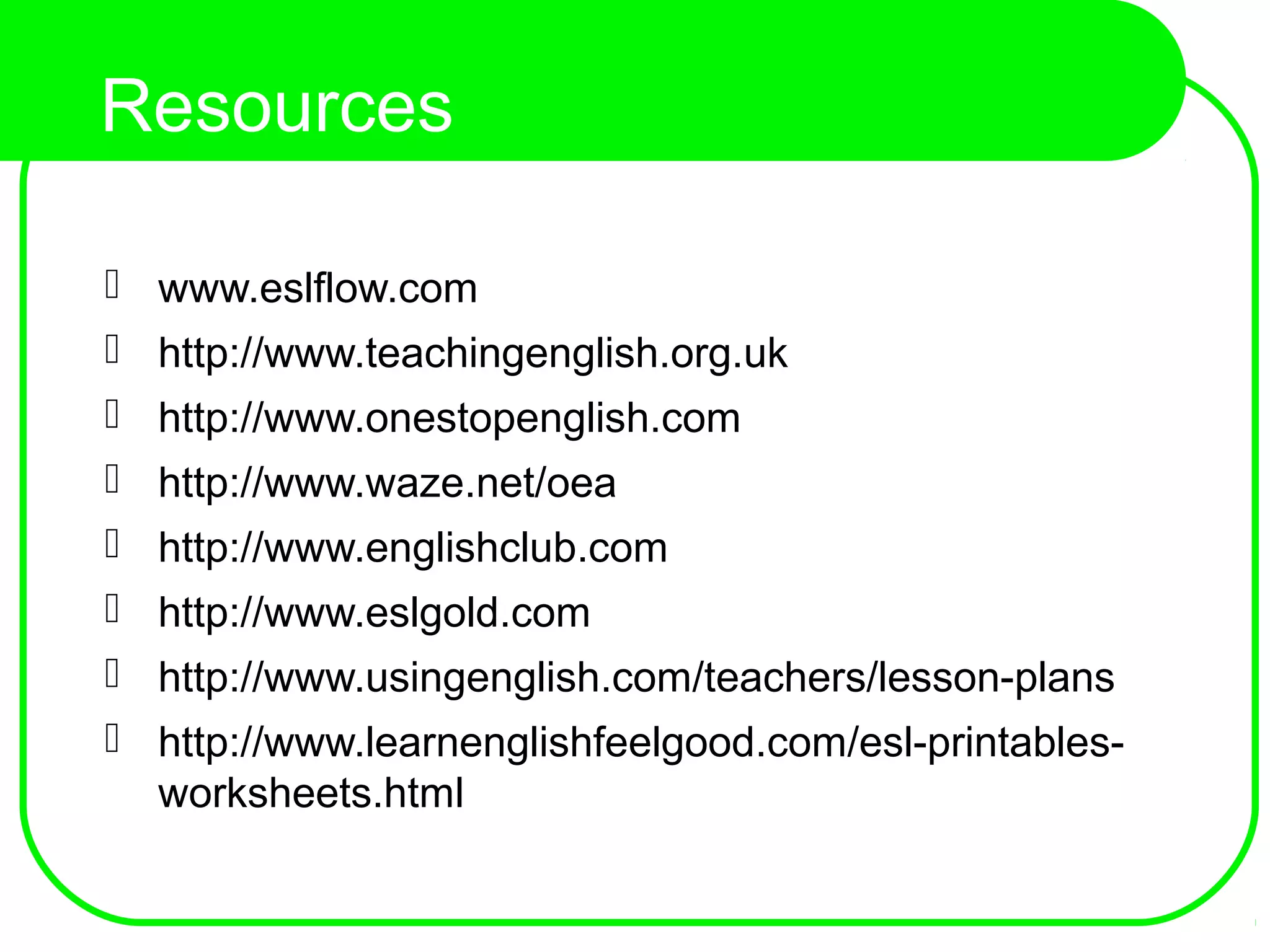
Resources
 www.eslflow.com
 http://www.teachingenglish.org.uk
 http://www.onestopenglish.com
 http://www.waze.net/oea
 http://www.englishclub.com
 http://www.eslgold.com
 http://www.usingenglish.com/teachers/lesson-plans
 http://www.learnenglishfeelgood.com/esl-printables-
worksheets.html

Conversation tips

  • 1.
  • 2.
    How to introducemyself? Greet with smile Maintain eye contact Tell them your name Ask for the other person’s name Repeat the other person’s name
  • 3.
    How to havea great conversation?  Relax and forget about yourself  Listen  Ask questions  Use a friendly tone  Choose your words and questions carefully  Neither interrupt a person in the middle of his thought, nor speak on top of it  Compliment the other person  Thank them for a great conversation
  • 4.
    How to handlea difficult question?  Personal, intimate question I’m sorry, but I’d prefer not to answer this question.  Question you don’t know the answer I have no idea.  Question you didn’t catch Can you repeat the question?  Question you don’t understand because of unfamiliar words or question structure I’m sorry, but I don’t understand your question. Would you mind telling it in different words?/What do you mean by…?/What does…mean?
  • 5.
    How to improvespeaking?  Listening and reading aloud  Writing  Networking and making friends  Greeting people on the street  Having small talks in public  Watching foreign movies with English subtitles  Joining one-on-one conversations, conversation and common interest groups
  • 6.
  • 7.
    How to improvelistening? Speaking to English speakers Watching TV and movies Listening to radio Reading audio books Singing English songs Practicing pronunciation Joining conversation groups/one-on-one conversations
  • 8.
    Resources Listening Lab: http://www.esl-lab.com Listening Activities: http://www.manythings.org/e/listening.html AudioBooks: http://librivox.org http://www.audiobooks.org http://www.audiobooks.net
  • 9.
    How to improve comprehension?Reading picture books or comics  Reading newspapers and magazines  Asking questions during conversations  Watching TV and movies  Browsing English websites  Consulting dictionaries  Constantly learning new words  Clarifying meaning of slang and idioms  Knowing grammar
  • 10.
    Resources  Idioms: http://www.idiomconnection.com  SlangWords: http://www.eslcafe.com/slang/list.html  Reading Comprehension Exercises: http://www.englishcorner.vacau.com/reading/reading.html  Listening Comprehension Exercises: http://www.learnenglishfeelgood.com/eslvideo/  Vocabulary Games: http://www.vocabulary.co.il
  • 11.
    How to improvepronunciation?  Listening to native English and imitating  Reading along with audio books  Speaking, being corrected or asking for correct pronunciation and repeating after  Paying attention to letter combination sounds, stressed syllables, word linkage and intonation  Training speech organs position, shape and movement of English sounds
  • 12.
    Resources  Accent School: http://www.accentschool.com/run_software.html Some Pronunciation Rules: http://www.englishclub.com/pronunciation/index.htm http://www.fonetiks.org  Pronunciation Exercises: http://www.pronunciationworkshop.com/pronunciationexercises.htm http://www.englishmedialab.com/pronunciation.html http://www.learnersdictionary.com/pronex/pronex.htm http://www.manythings.org/pp/  Dictionaries with Pronunciation: http://www.merriam-webster.com http://www.howjsay.com http://www.thefreedictionary.com http://dictionary.cambridge.org
  • 13.
    How to improvegrammar?  Reading, listening, writing and speaking  Using subject-verb structure  Differentiating questions from statements  Understanding parts of speech  Practicing verb tenses  Knowing words beyond their meaning  Learning phrasal verbs  Doing grammar exercises  Quizzing yourself
  • 14.
    Resources  www.eslflow.com  http://www.teachingenglish.org.uk http://www.onestopenglish.com  http://www.waze.net/oea  http://www.englishclub.com  http://www.eslgold.com  http://www.usingenglish.com/teachers/lesson-plans  http://www.learnenglishfeelgood.com/esl-printables- worksheets.html