1K I A N A P A Y N E
K A I T L I N C O W E L L
MAKING MEANING
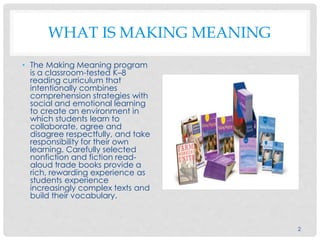
WHAT IS MAKING MEANING
• The Making Meaning program
is a classroom-tested K–8
reading curriculum that
intentionally combines
comprehension strategies with
social and emotional learning
to create an environment in
which students learn to
collaborate, agree and
disagree respectfully, and take
responsibility for their own
learning. Carefully selected
nonfiction and fiction read-
aloud trade books provide a
rich, rewarding experience as
students experience
increasingly complex texts and
build their vocabulary.
2
WHAT’S INCLUDED
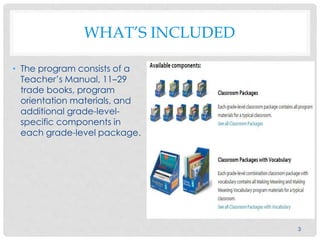
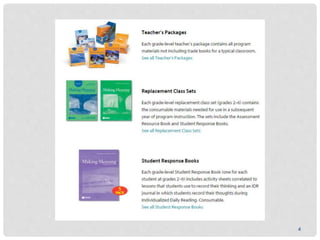
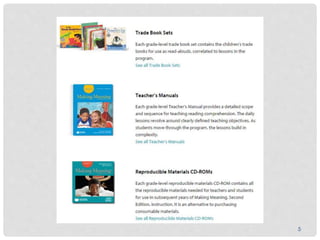
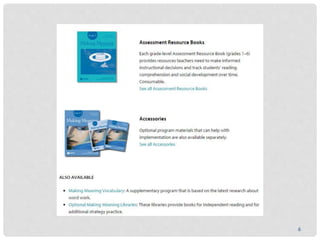
• The program consists of a
Teacher’s Manual, 11–29
trade books, program
orientation materials, and
additional grade-level-
specific components in
each grade-level package.
3
4
5
6
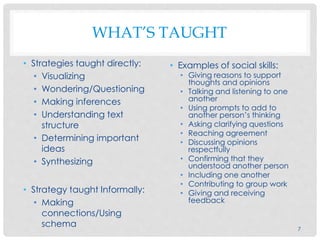
WHAT’S TAUGHT
• Strategies taught directly:
• Visualizing
• Wondering/Questioning
• Making inferences
• Understanding text
structure
• Determining important
ideas
• Synthesizing
• Strategy taught Informally:
• Making
connections/Using
schema
• Examples of social skills:
• Giving reasons to support
thoughts and opinions
• Talking and listening to one
another
• Using prompts to add to
another person’s thinking
• Asking clarifying questions
• Reaching agreement
• Discussing opinions
respectfully
• Confirming that they
understood another person
• Including one another
• Contributing to group work
• Giving and receiving
feedback
7
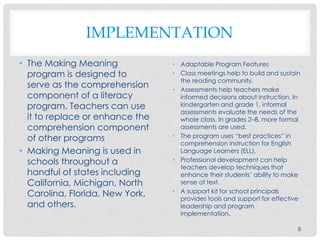
IMPLEMENTATION
• The Making Meaning
program is designed to
serve as the comprehension
component of a literacy
program. Teachers can use
it to replace or enhance the
comprehension component
of other programs
• Making Meaning is used in
schools throughout a
handful of states including
California, Michigan, North
Carolina, Florida, New York,
and others.
• Adaptable Program Features
• Class meetings help to build and sustain
the reading community.
• Assessments help teachers make
informed decisions about instruction. In
kindergarten and grade 1, informal
assessments evaluate the needs of the
whole class. In grades 2–8, more formal
assessments are used.
• The program uses “best practices” in
comprehension instruction for English
Language Learners (ELL).
• Professional development can help
teachers develop techniques that
enhance their students’ ability to make
sense of text.
• A support kit for school principals
provides tools and support for effective
leadership and program
implementation.
8
9
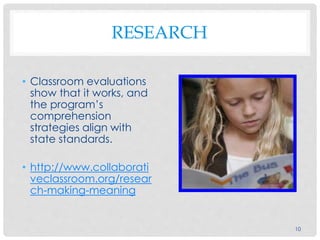
RESEARCH
• Classroom evaluations
show that it works, and
the program’s
comprehension
strategies align with
state standards.
• http://www.collaborati
veclassroom.org/resear
ch-making-meaning
10
11
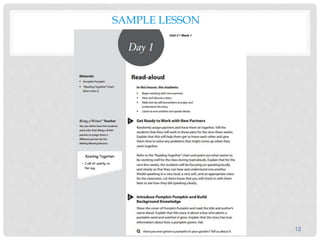
SAMPLE LESSON
12
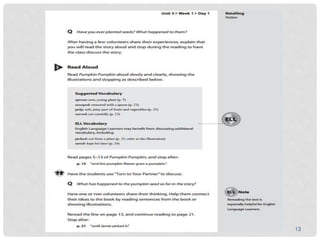
13
FOLLOW THIS LINK FOR SUCCESS STORIES
• http://www.collaborativeclassroom.org/success-
stories/making-meaning
14
REFERENCES
• http://www.collaborativeclassroom.org/making-
meaning
15

Making meaning

  • 1.
    1K I AN A P A Y N E K A I T L I N C O W E L L MAKING MEANING
  • 2.
    WHAT IS MAKINGMEANING • The Making Meaning program is a classroom-tested K–8 reading curriculum that intentionally combines comprehension strategies with social and emotional learning to create an environment in which students learn to collaborate, agree and disagree respectfully, and take responsibility for their own learning. Carefully selected nonfiction and fiction read- aloud trade books provide a rich, rewarding experience as students experience increasingly complex texts and build their vocabulary. 2
  • 3.
    WHAT’S INCLUDED • Theprogram consists of a Teacher’s Manual, 11–29 trade books, program orientation materials, and additional grade-level- specific components in each grade-level package. 3
  • 4.
  • 5.
  • 6.
  • 7.
    WHAT’S TAUGHT • Strategiestaught directly: • Visualizing • Wondering/Questioning • Making inferences • Understanding text structure • Determining important ideas • Synthesizing • Strategy taught Informally: • Making connections/Using schema • Examples of social skills: • Giving reasons to support thoughts and opinions • Talking and listening to one another • Using prompts to add to another person’s thinking • Asking clarifying questions • Reaching agreement • Discussing opinions respectfully • Confirming that they understood another person • Including one another • Contributing to group work • Giving and receiving feedback 7
  • 8.
    IMPLEMENTATION • The MakingMeaning program is designed to serve as the comprehension component of a literacy program. Teachers can use it to replace or enhance the comprehension component of other programs • Making Meaning is used in schools throughout a handful of states including California, Michigan, North Carolina, Florida, New York, and others. • Adaptable Program Features • Class meetings help to build and sustain the reading community. • Assessments help teachers make informed decisions about instruction. In kindergarten and grade 1, informal assessments evaluate the needs of the whole class. In grades 2–8, more formal assessments are used. • The program uses “best practices” in comprehension instruction for English Language Learners (ELL). • Professional development can help teachers develop techniques that enhance their students’ ability to make sense of text. • A support kit for school principals provides tools and support for effective leadership and program implementation. 8
  • 9.
  • 10.
    RESEARCH • Classroom evaluations showthat it works, and the program’s comprehension strategies align with state standards. • http://www.collaborati veclassroom.org/resear ch-making-meaning 10
  • 11.
  • 12.
  • 13.
  • 14.
    FOLLOW THIS LINKFOR SUCCESS STORIES • http://www.collaborativeclassroom.org/success- stories/making-meaning 14
  • 15.