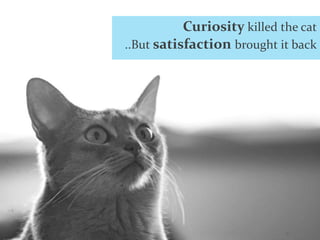
..But satisfaction brought it back
Curiosity killed the cat
When asked to name the one attribute CEOs will need most to
succeed Michael Dell, CEO - Dell Inc., replied,
“I would place my bet on curiosity.”
Can Curiosity be learnt?
Given the right conditions, all of us have the
potential – look back to when we were children
MAKING CURIOSITY REAL
AT ORGANIZATIONS
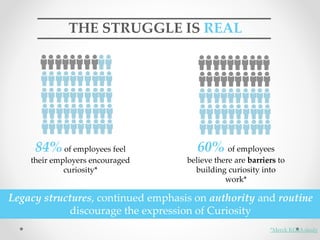
THE STRUGGLE IS REAL
84% of employees feel
their employers encouraged
curiosity*
60% of employees
believe there are barriers to
building curiosity into
work*
Legacy structures, continued emphasis on authority and routine
discourage the expression of Curiosity
*Merck KGaA study
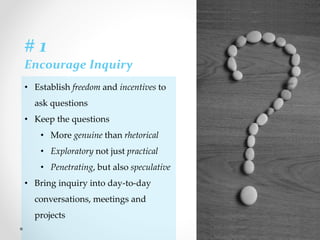
• Establish freedom and incentives to
ask questions
• Keep the questions
• More genuine than rhetorical
• Exploratory not just practical
• Penetrating, but also speculative
• Bring inquiry into day-to-day
conversations, meetings and
projects
# 1
Encourage Inquiry
• Proactively encourage different perspectives
• Capture the minority and dissenting voices
• Focus on the perspective not the individual
# 2
Examine multiple Points of View
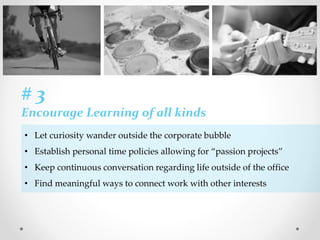
# 3
Encourage Learning of all kinds
• Let curiosity wander outside the corporate bubble
• Establish personal time policies allowing for “passion projects”
• Keep continuous conversation regarding life outside of the office
• Find meaningful ways to connect work with other interests
# 4
Don’t play the Blame Game
• Avoid the ‘villain, victim, and hero’
dynamic
• Create a secure environment to fail
• Empower employees with ownership –
embolden them to fight for their ideas
• Stay forward facing even in the face of
failure
Building such an organization is a daunting task
– but one well worth the investment and risk
Pictures credit :Pexels.com
THE FUTURE BELONGS TO THE
CURIOUS

Making curiosity real at organizations

  • 1.
    ..But satisfaction broughtit back Curiosity killed the cat
  • 2.
    When asked toname the one attribute CEOs will need most to succeed Michael Dell, CEO - Dell Inc., replied, “I would place my bet on curiosity.”
  • 3.
    Can Curiosity belearnt? Given the right conditions, all of us have the potential – look back to when we were children
  • 4.
  • 5.
    THE STRUGGLE ISREAL 84% of employees feel their employers encouraged curiosity* 60% of employees believe there are barriers to building curiosity into work* Legacy structures, continued emphasis on authority and routine discourage the expression of Curiosity *Merck KGaA study
  • 6.
    • Establish freedomand incentives to ask questions • Keep the questions • More genuine than rhetorical • Exploratory not just practical • Penetrating, but also speculative • Bring inquiry into day-to-day conversations, meetings and projects # 1 Encourage Inquiry
  • 7.
    • Proactively encouragedifferent perspectives • Capture the minority and dissenting voices • Focus on the perspective not the individual # 2 Examine multiple Points of View
  • 8.
    # 3 Encourage Learningof all kinds • Let curiosity wander outside the corporate bubble • Establish personal time policies allowing for “passion projects” • Keep continuous conversation regarding life outside of the office • Find meaningful ways to connect work with other interests
  • 9.
    # 4 Don’t playthe Blame Game • Avoid the ‘villain, victim, and hero’ dynamic • Create a secure environment to fail • Empower employees with ownership – embolden them to fight for their ideas • Stay forward facing even in the face of failure
  • 10.
    Building such anorganization is a daunting task – but one well worth the investment and risk Pictures credit :Pexels.com THE FUTURE BELONGS TO THE CURIOUS