Download to read offline

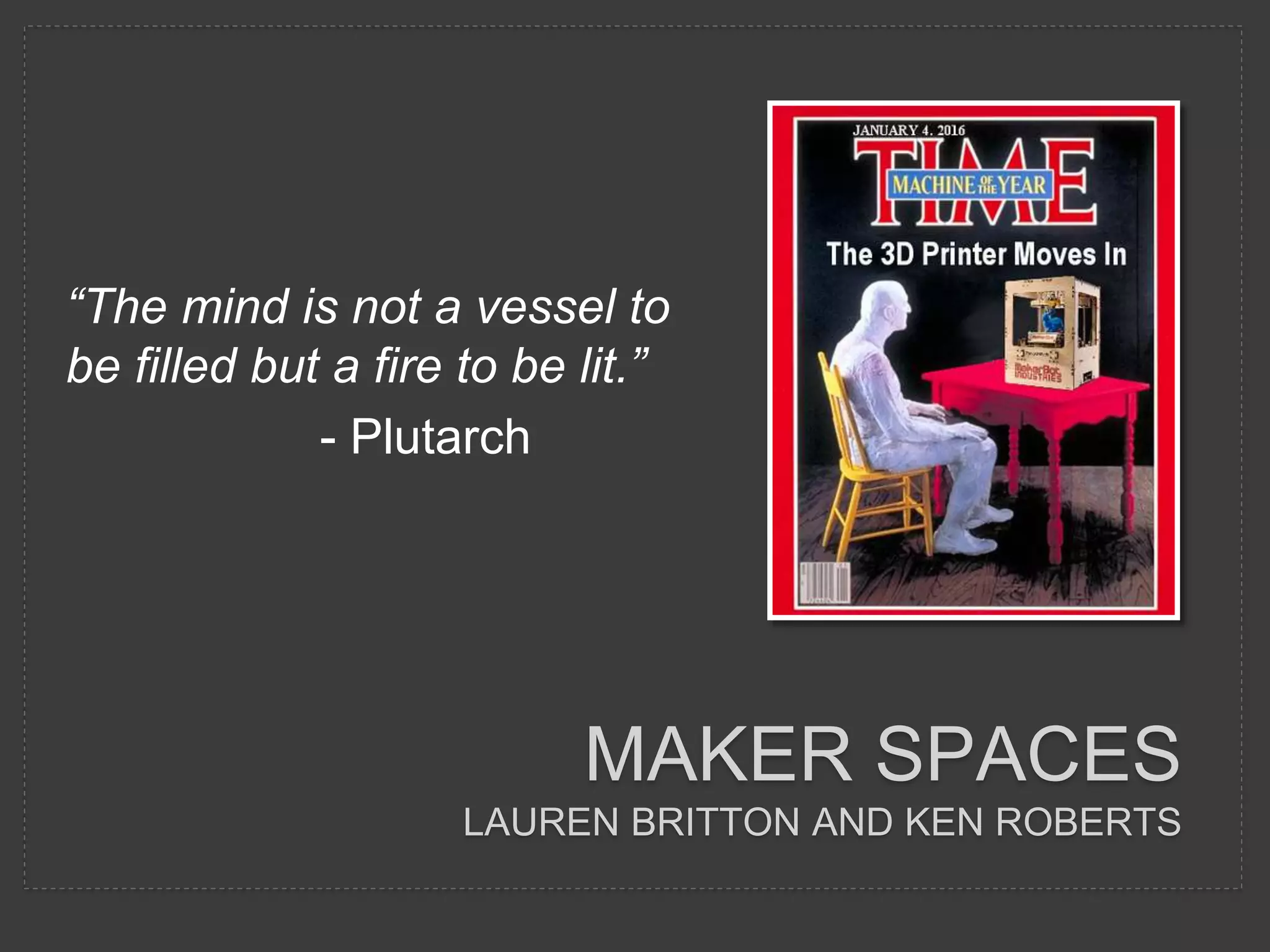
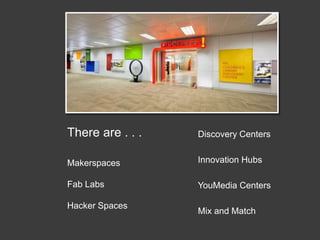
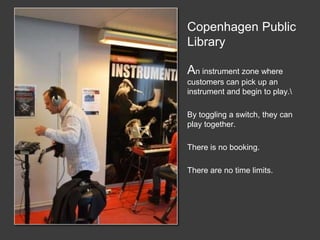
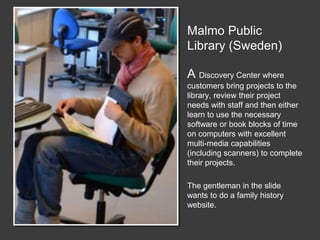
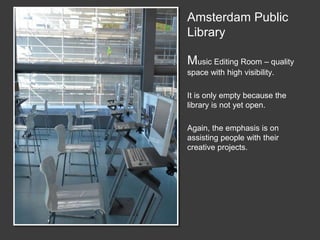
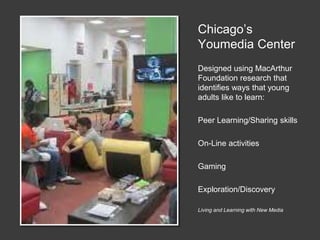
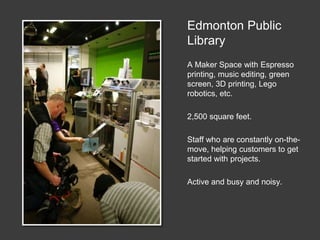
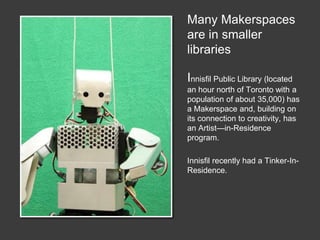
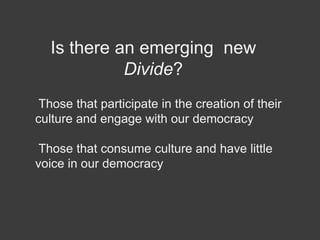
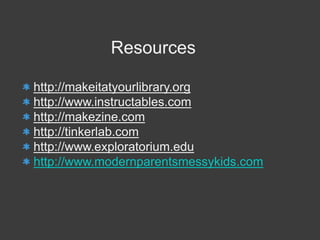

This document discusses maker spaces in public libraries and relevant trends. It defines maker spaces as areas that allow patrons to engage in hands-on creation using tools like 3D printers, music editing software, and craft materials. The document examines several case studies of libraries that have implemented successful maker spaces, noting they shift focus from passive consumption to active creation. Common elements include open access to tools and resources, staff assistance with projects, and accommodating different types of making like music, coding, crafts and more. Maker spaces are shown to enhance lifelong learning and participation in culture.


