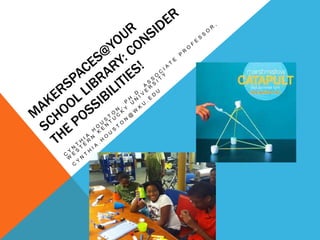
MAKERSPACE AND STEAM
Makerspaces are community resource centers with shared
tools and materials for designing and making things
 Libraries
 Schools
 Community Centers
STEAM – Science Technology Engineering Arts and Math
 Foster DIY culture/Hands-on approach to design/innovation
 Use of open technology and desktop manufacturing
 Collaborative culture
 Social Networking tools
World wide Movement
 “Jua kali” – “Hot sun” in Swahili – open air industry
 Solving Local problems with appropriate technology
 Maker Faire Africa - Urine powered generator
“Makerspaces support deeper, more meaningful
learning in STEAM disciplines, as opposed to
receiving information through a textbook or formal
lecture, because hands-on activities are less abstract
and easier to understand “
MAKERSPACES, SCHOOL LIBRARIES AND
LIFELONG LEARNING
School Libraries are Programming Spaces
 Blend Literacy and Technology programs
 Create participatory spaces supporting hands-on activities
 Application of personal, interpersonal, cognitive lifelong learning skills
MAKERSPACE PROGRAMMING: CREATING A
CULTURE OF DIY LEARNING
 Hosting After school Maker clubs – Host an afterschool Makers club like the
Michigan Makers after school program (http://michiganmakers.weebly.com/)
 Hi tech Rasberry Pi, Arduino microprocessors, Hi touch bow-making
 STEAM curriculum collaboration – Integrate literature with hands-on STEAM
activities in collaboration with classroom teachers!
http://showmelibrarian.blogspot.com/p/all-things-steam.html
 Hosting Makerfaires - Collaborate with classroom teachers to integrate a
makerfair into science fairs or family literacy activities
 Maker collection building – 500, 600, 700s virtual and physical collections in
science, math, technology (applied science), and the arts
MAKERSPACE FACILITIES CONSIDERATIONS
LESLIE PREDDY – SCHOOL LIBRARY MAKERSPACES
SPACE - Adequate space for autonomous activity, storage, and instruction
LIGHT - Adequate lighting and electrical outlets –a well-lighted space with room for
students to spread out and work on projects, and plenty of electrical outlets be
provided for tools and computer technology.
FURNITURE - Flexible, mobile, convertible furnishings for a flexible Makerspace in
the library or one that can “pop-up” throughout the school building,
TECHNOLOGY - Hi Tech 3D printers, microcontrollers to Hi Touch paper, scissors,
and glue
RESOURCES - Self-instruction via library resources, how-to books, DVDs,
pathfinders, etc. Build the 500, 600, 700, and periodicals collection
MAKERSPACE RESOURCES
HTTP://WWW.SLIDESHARE.NET/MEDIA3693
Koester, Amy (2013) The Show Me Librarian/All Things STEAM Blog from
http://showmelibrarian.blogspot.com/p/all-things-steam.html
Makerspaces: A new wave of library services. ALA TechSource Webinairs – A four part
series of webinairs on Makerspaces from alapublishing.webex.com
Makerspace.org – Comprehensive resources for developing Makerspaces and
Makerspace programming including the free Makerspace Playbook ebook guide.
Makerbridge - Comprehensive resource for those involved in community Makerspaces
from http://makerbridge.si.umich.edu/
Mobile Makerspace – Projects for Makerspaces from http://mobilemakerspace.com/
Preddy L. (2013). School library makerspaces: Grades 6-12. Santa Barbara, CA:
Linworth. Available in October, this guide provides programming ideas and advice
for implementing a Makerspace in a middle or high school library.
“As teacher librarians we can embrace new and innovative ideas or
allow them to grow up around us, excluding us, ignoring us, or we can
embrace, join, encourage, and move to the center of both serious
academics and the exciting movements in education. It’s our time folks
“–David Loertscher

IASL 2013 Makerspace presentation

  • 2.
    MAKERSPACE AND STEAM Makerspacesare community resource centers with shared tools and materials for designing and making things  Libraries  Schools  Community Centers STEAM – Science Technology Engineering Arts and Math  Foster DIY culture/Hands-on approach to design/innovation  Use of open technology and desktop manufacturing  Collaborative culture  Social Networking tools World wide Movement  “Jua kali” – “Hot sun” in Swahili – open air industry  Solving Local problems with appropriate technology  Maker Faire Africa - Urine powered generator “Makerspaces support deeper, more meaningful learning in STEAM disciplines, as opposed to receiving information through a textbook or formal lecture, because hands-on activities are less abstract and easier to understand “
  • 3.
    MAKERSPACES, SCHOOL LIBRARIESAND LIFELONG LEARNING School Libraries are Programming Spaces  Blend Literacy and Technology programs  Create participatory spaces supporting hands-on activities  Application of personal, interpersonal, cognitive lifelong learning skills
  • 4.
    MAKERSPACE PROGRAMMING: CREATINGA CULTURE OF DIY LEARNING  Hosting After school Maker clubs – Host an afterschool Makers club like the Michigan Makers after school program (http://michiganmakers.weebly.com/)  Hi tech Rasberry Pi, Arduino microprocessors, Hi touch bow-making  STEAM curriculum collaboration – Integrate literature with hands-on STEAM activities in collaboration with classroom teachers! http://showmelibrarian.blogspot.com/p/all-things-steam.html  Hosting Makerfaires - Collaborate with classroom teachers to integrate a makerfair into science fairs or family literacy activities  Maker collection building – 500, 600, 700s virtual and physical collections in science, math, technology (applied science), and the arts
  • 5.
    MAKERSPACE FACILITIES CONSIDERATIONS LESLIEPREDDY – SCHOOL LIBRARY MAKERSPACES SPACE - Adequate space for autonomous activity, storage, and instruction LIGHT - Adequate lighting and electrical outlets –a well-lighted space with room for students to spread out and work on projects, and plenty of electrical outlets be provided for tools and computer technology. FURNITURE - Flexible, mobile, convertible furnishings for a flexible Makerspace in the library or one that can “pop-up” throughout the school building, TECHNOLOGY - Hi Tech 3D printers, microcontrollers to Hi Touch paper, scissors, and glue RESOURCES - Self-instruction via library resources, how-to books, DVDs, pathfinders, etc. Build the 500, 600, 700, and periodicals collection
  • 6.
    MAKERSPACE RESOURCES HTTP://WWW.SLIDESHARE.NET/MEDIA3693 Koester, Amy(2013) The Show Me Librarian/All Things STEAM Blog from http://showmelibrarian.blogspot.com/p/all-things-steam.html Makerspaces: A new wave of library services. ALA TechSource Webinairs – A four part series of webinairs on Makerspaces from alapublishing.webex.com Makerspace.org – Comprehensive resources for developing Makerspaces and Makerspace programming including the free Makerspace Playbook ebook guide. Makerbridge - Comprehensive resource for those involved in community Makerspaces from http://makerbridge.si.umich.edu/ Mobile Makerspace – Projects for Makerspaces from http://mobilemakerspace.com/ Preddy L. (2013). School library makerspaces: Grades 6-12. Santa Barbara, CA: Linworth. Available in October, this guide provides programming ideas and advice for implementing a Makerspace in a middle or high school library. “As teacher librarians we can embrace new and innovative ideas or allow them to grow up around us, excluding us, ignoring us, or we can embrace, join, encourage, and move to the center of both serious academics and the exciting movements in education. It’s our time folks “–David Loertscher