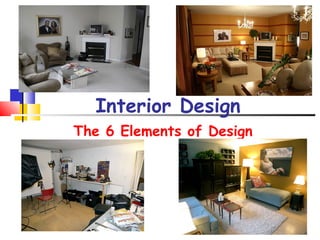
Interior Design
The 6 Elements of Design
Space
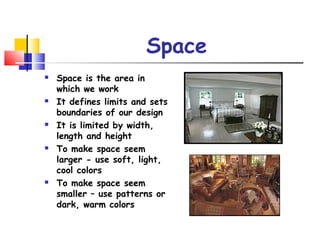
 Space is the area in
which we work
 It defines limits and sets
boundaries of our design
 It is limited by width,
length and height
 To make space seem
larger - use soft, light,
cool colors
 To make space seem
smaller – use patterns or
dark, warm colors
Line
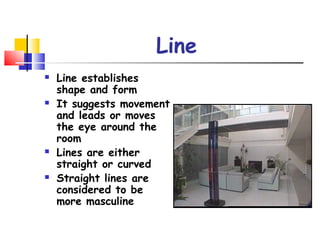
 Line establishes
shape and form
 It suggests movement
and leads or moves
the eye around the
room
 Lines are either
straight or curved
 Straight lines are
considered to be
more masculine
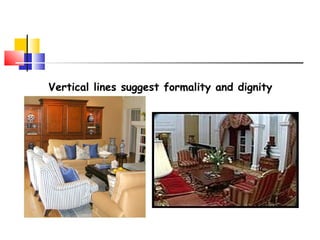
Vertical lines suggest formality and dignity
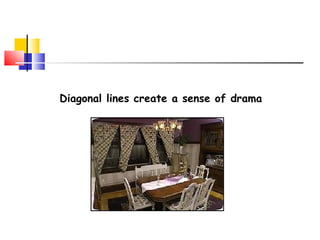
Diagonal lines create a sense of drama
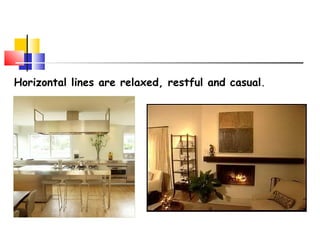
Horizontal lines are relaxed, restful and casual.
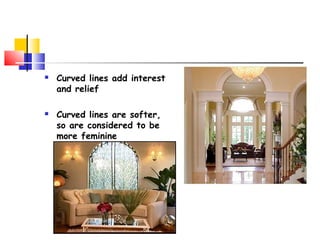
 Curved lines add interest
and relief
 Curved lines are softer,
so are considered to be
more feminine
Form
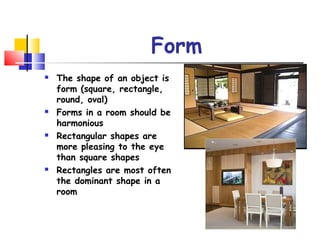
 The shape of an object is
form (square, rectangle,
round, oval)
 Forms in a room should be
harmonious
 Rectangular shapes are
more pleasing to the eye
than square shapes
 Rectangles are most often
the dominant shape in a
room
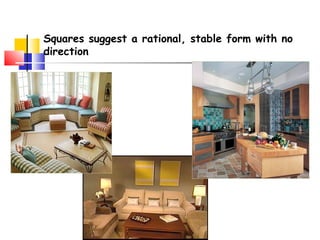
Squares suggest a rational, stable form with no
direction
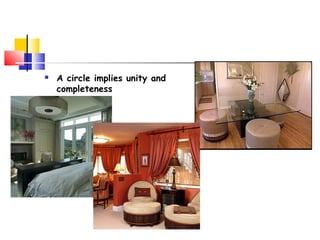
 A circle implies unity and
completeness
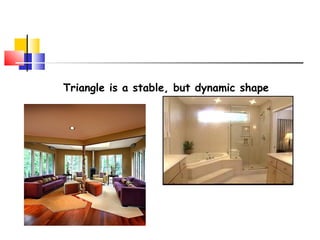
Triangle is a stable, but dynamic shape
Texture
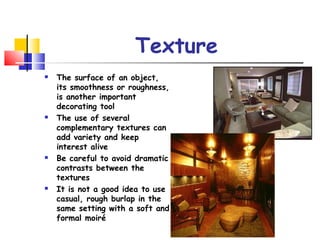
 The surface of an object,
its smoothness or roughness,
is another important
decorating tool
 The use of several
complementary textures can
add variety and keep
interest alive
 Be careful to avoid dramatic
contrasts between the
textures
 It is not a good idea to use
casual, rough burlap in the
same setting with a soft and
formal moiré
Texture cont.
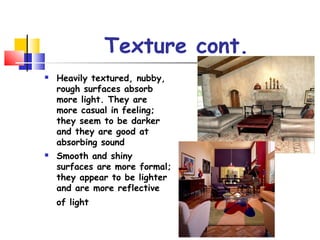
 Heavily textured, nubby,
rough surfaces absorb
more light. They are
more casual in feeling;
they seem to be darker
and they are good at
absorbing sound
 Smooth and shiny
surfaces are more formal;
they appear to be lighter
and are more reflective
of light
Pattern
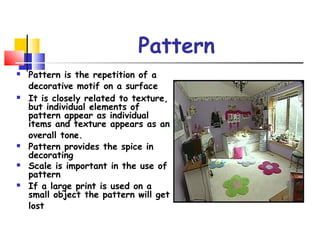
 Pattern is the repetition of a
decorative motif on a surface
 It is closely related to texture,
but individual elements of
pattern appear as individual
items and texture appears as an
overall tone.
 Pattern provides the spice in
decorating
 Scale is important in the use of
pattern
 If a large print is used on a
small object the pattern will get
lost
Pattern cont.
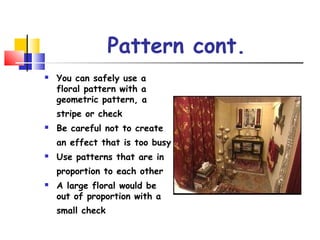
 You can safely use a
floral pattern with a
geometric pattern, a
stripe or check
 Be careful not to create
an effect that is too busy
 Use patterns that are in
proportion to each other
 A large floral would be
out of proportion with a
small check
Color
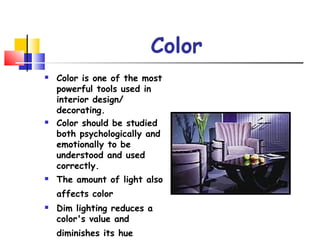
 Color is one of the most
powerful tools used in
interior design/
decorating.
 Color should be studied
both psychologically and
emotionally to be
understood and used
correctly.
 The amount of light also
affects color
 Dim lighting reduces a
color's value and
diminishes its hue
Color cont.
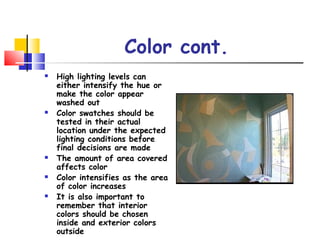
 High lighting levels can
either intensify the hue or
make the color appear
washed out
 Color swatches should be
tested in their actual
location under the expected
lighting conditions before
final decisions are made
 The amount of area covered
affects color
 Color intensifies as the area
of color increases
 It is also important to
remember that interior
colors should be chosen
inside and exterior colors
outside
Now that you know the six
Elements of Design , you
can better understand
them and you can make
them work for you
Please visit our website to know more :
http://www.maintenancemagic.net/
Phone: 510.316.3346

Maintenance Mmagic

  • 1.
    Interior Design The 6Elements of Design
  • 2.
    Space  Space isthe area in which we work  It defines limits and sets boundaries of our design  It is limited by width, length and height  To make space seem larger - use soft, light, cool colors  To make space seem smaller – use patterns or dark, warm colors
  • 3.
    Line  Line establishes shapeand form  It suggests movement and leads or moves the eye around the room  Lines are either straight or curved  Straight lines are considered to be more masculine
  • 4.
    Vertical lines suggestformality and dignity
  • 5.
    Diagonal lines createa sense of drama
  • 6.
    Horizontal lines arerelaxed, restful and casual.
  • 7.
     Curved linesadd interest and relief  Curved lines are softer, so are considered to be more feminine
  • 8.
    Form  The shapeof an object is form (square, rectangle, round, oval)  Forms in a room should be harmonious  Rectangular shapes are more pleasing to the eye than square shapes  Rectangles are most often the dominant shape in a room
  • 9.
    Squares suggest arational, stable form with no direction
  • 10.
     A circleimplies unity and completeness
  • 11.
    Triangle is astable, but dynamic shape
  • 12.
    Texture  The surfaceof an object, its smoothness or roughness, is another important decorating tool  The use of several complementary textures can add variety and keep interest alive  Be careful to avoid dramatic contrasts between the textures  It is not a good idea to use casual, rough burlap in the same setting with a soft and formal moiré
  • 13.
    Texture cont.  Heavilytextured, nubby, rough surfaces absorb more light. They are more casual in feeling; they seem to be darker and they are good at absorbing sound  Smooth and shiny surfaces are more formal; they appear to be lighter and are more reflective of light
  • 14.
    Pattern  Pattern isthe repetition of a decorative motif on a surface  It is closely related to texture, but individual elements of pattern appear as individual items and texture appears as an overall tone.  Pattern provides the spice in decorating  Scale is important in the use of pattern  If a large print is used on a small object the pattern will get lost
  • 15.
    Pattern cont.  Youcan safely use a floral pattern with a geometric pattern, a stripe or check  Be careful not to create an effect that is too busy  Use patterns that are in proportion to each other  A large floral would be out of proportion with a small check
  • 16.
    Color  Color isone of the most powerful tools used in interior design/ decorating.  Color should be studied both psychologically and emotionally to be understood and used correctly.  The amount of light also affects color  Dim lighting reduces a color's value and diminishes its hue
  • 17.
    Color cont.  Highlighting levels can either intensify the hue or make the color appear washed out  Color swatches should be tested in their actual location under the expected lighting conditions before final decisions are made  The amount of area covered affects color  Color intensifies as the area of color increases  It is also important to remember that interior colors should be chosen inside and exterior colors outside
  • 18.
    Now that youknow the six Elements of Design , you can better understand them and you can make them work for you
  • 19.
    Please visit ourwebsite to know more : http://www.maintenancemagic.net/ Phone: 510.316.3346