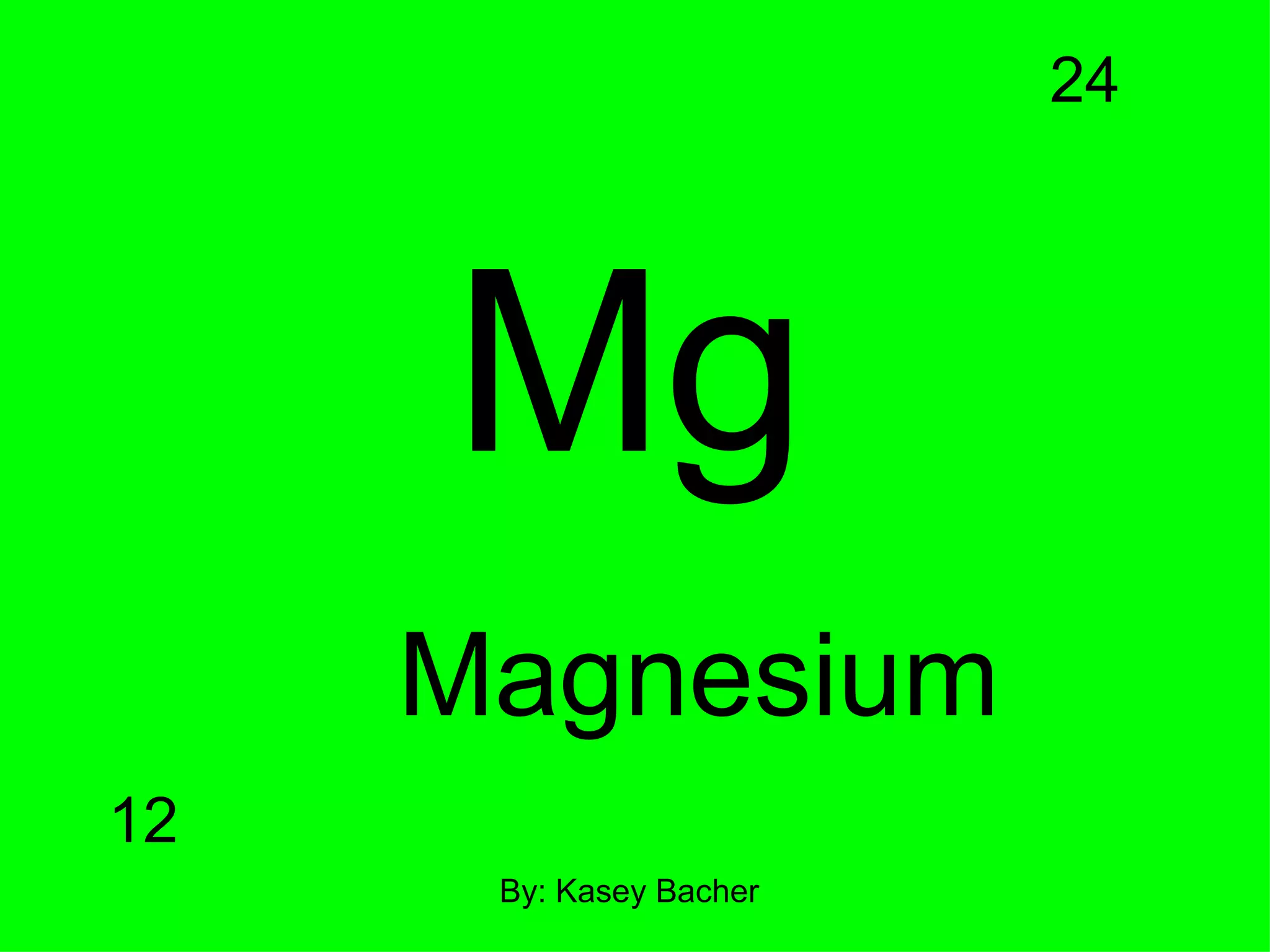
Magnesium Mg 24 12 By: Kasey Bacher
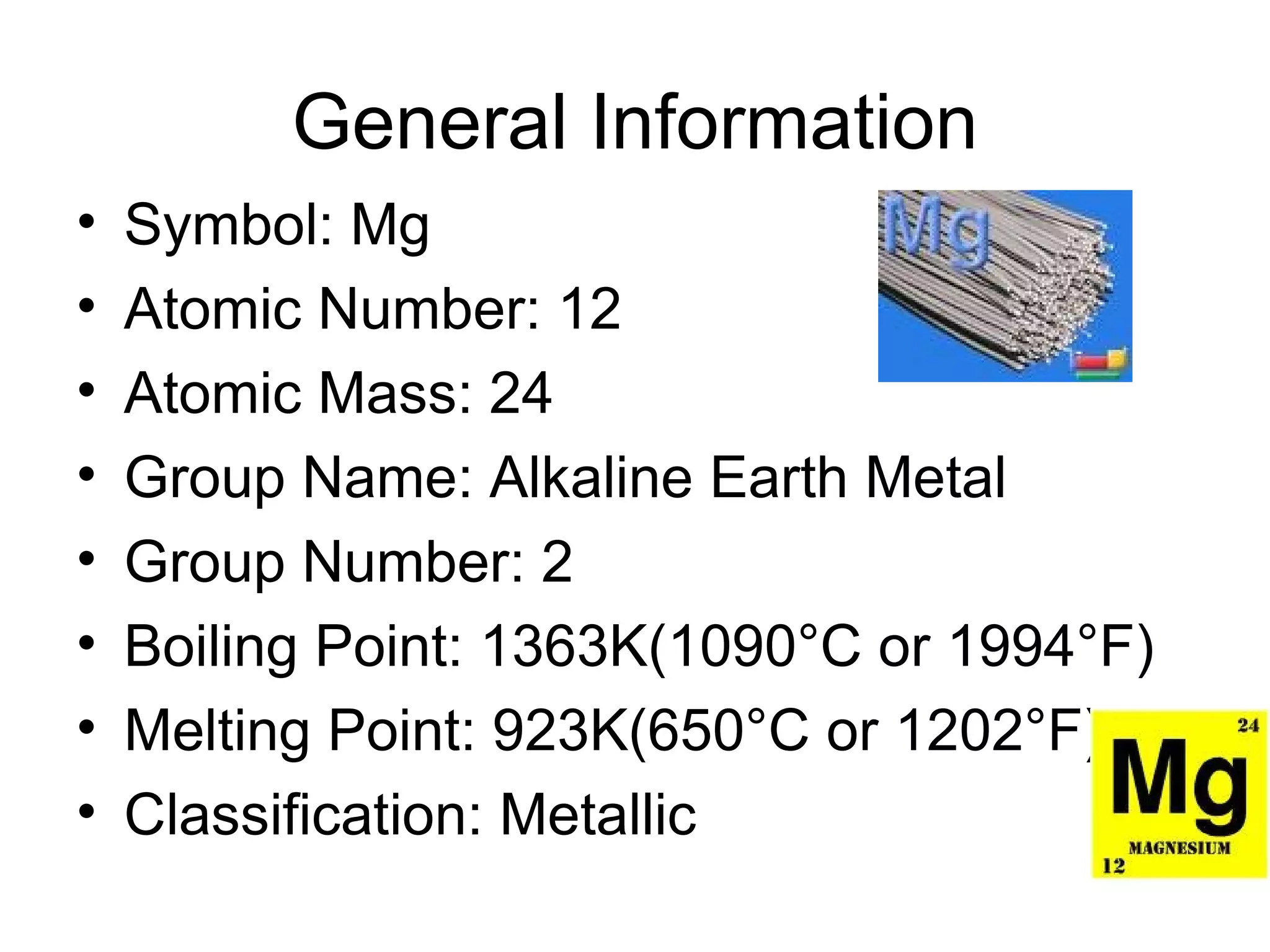
General Information Symbol: Mg Atomic Number: 12 Atomic Mass: 24 Group Name: Alkaline Earth Metal Group Number: 2 Boiling Point: 1363K(1090°C or 1994°F) Melting Point: 923K(650°C or 1202°F) Classification: Metallic
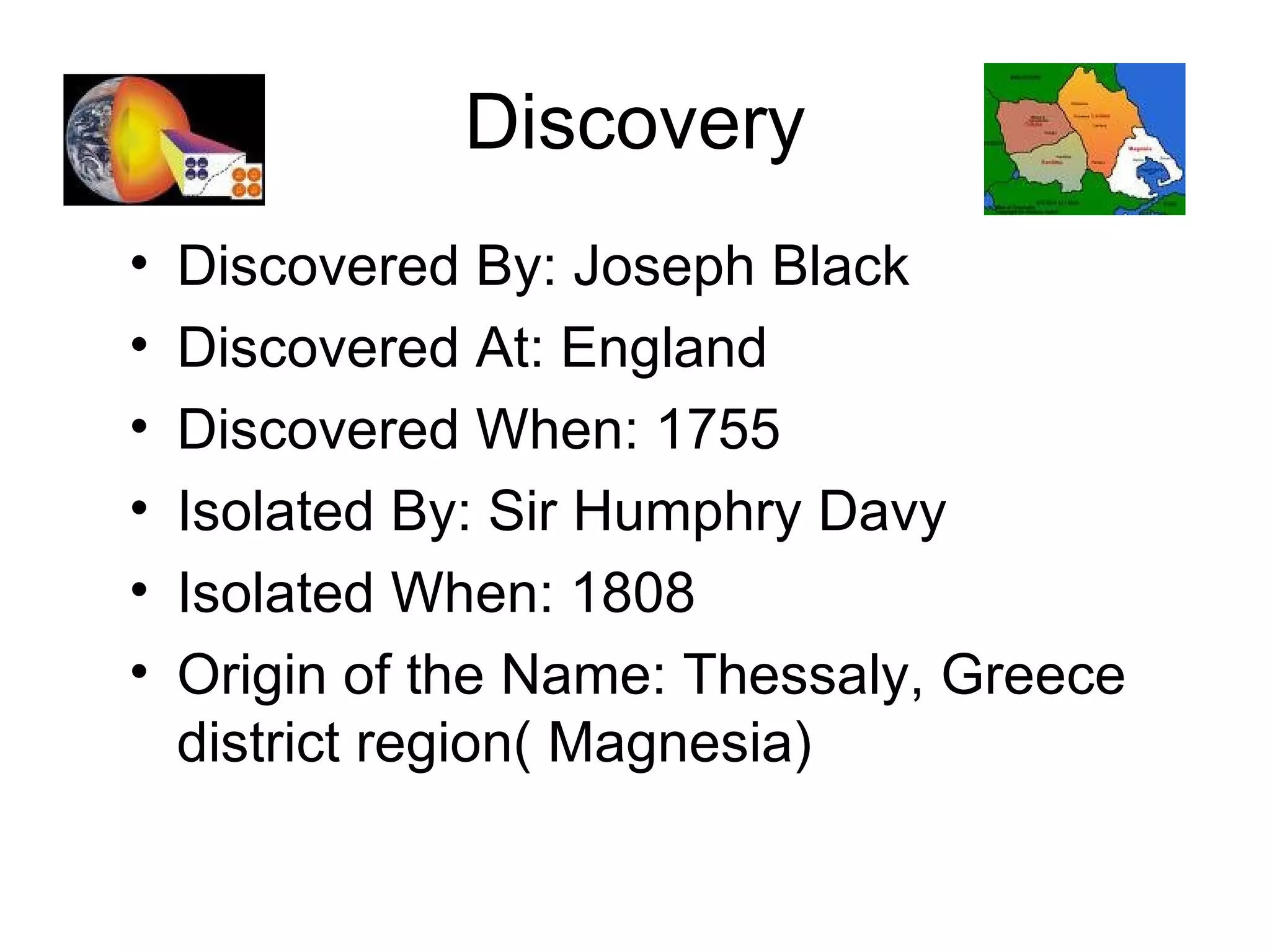
Discovery Discovered By: Joseph Black Discovered At: England Discovered When: 1755  Isolated By: Sir Humphry Davy Isolated When: 1808 Origin of the Name: Thessaly, Greece district region( Magnesia)
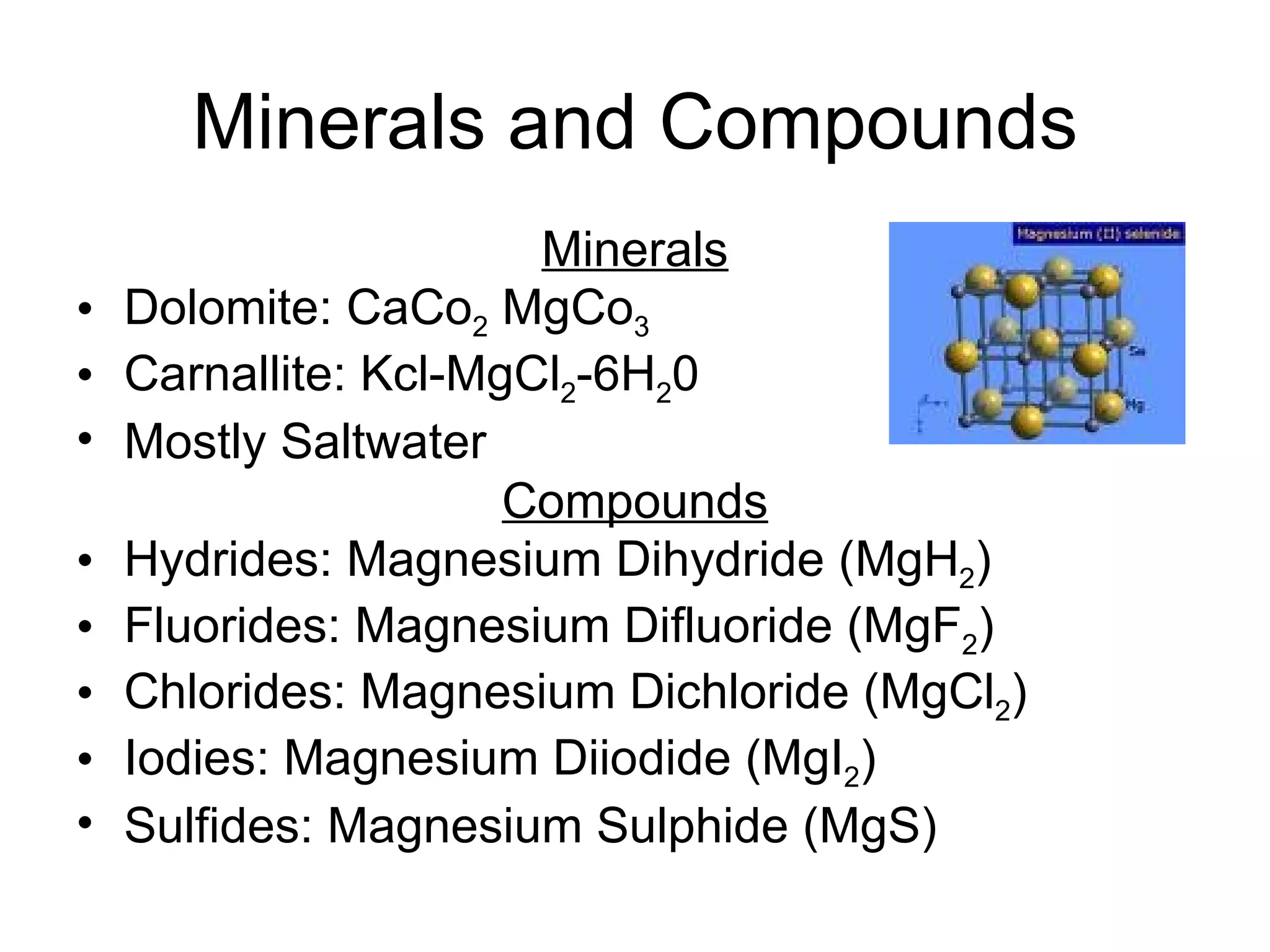
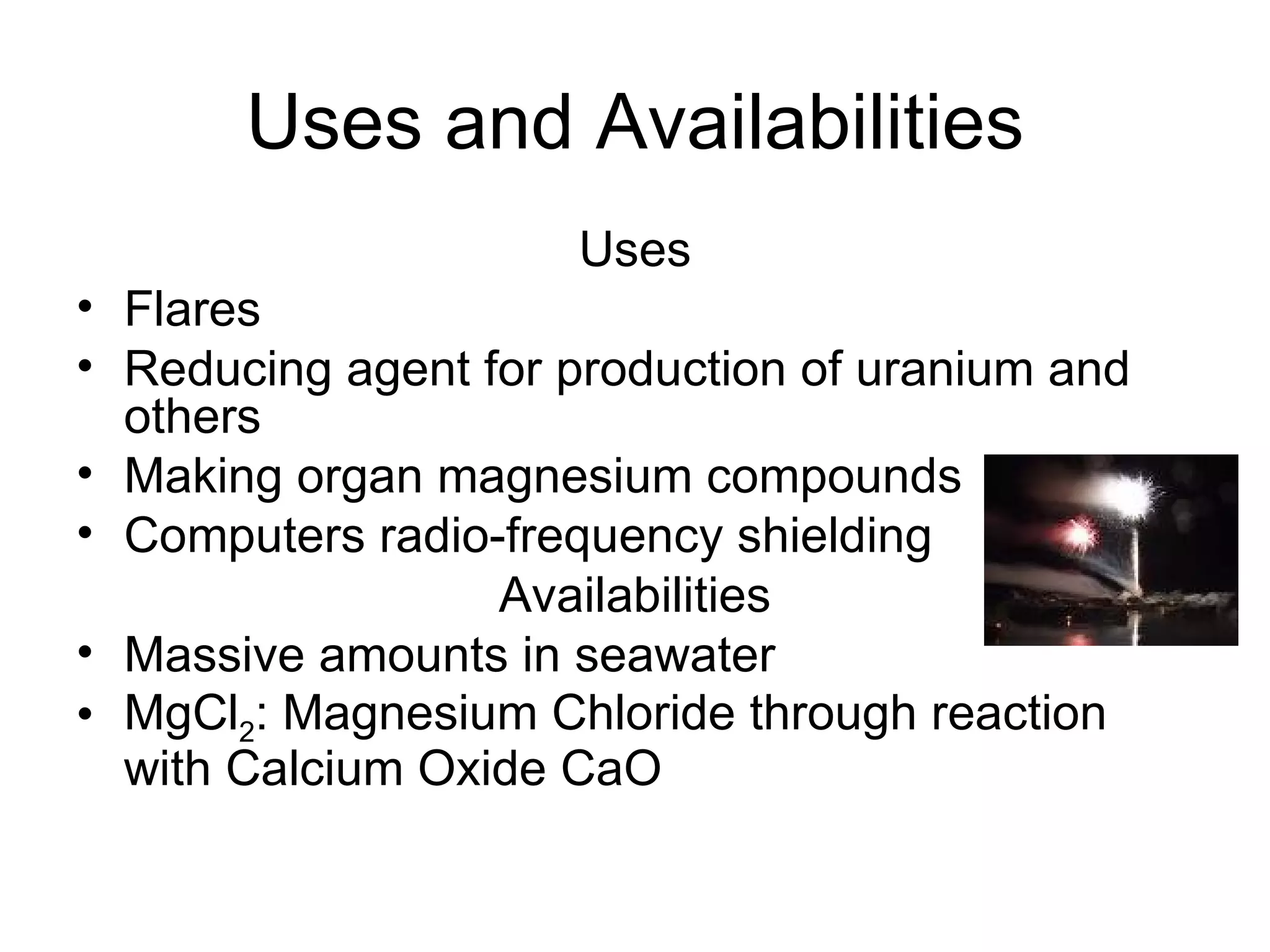
Minerals and Compounds Minerals Dolomite: CaCo 2  MgCo 3 Carnallite: Kcl-MgCl 2 -6H 2 0 Mostly Saltwater  Compounds Hydrides: Magnesium Dihydride (MgH 2 ) Fluorides: Magnesium Difluoride (MgF 2 ) Chlorides: Magnesium Dichloride (MgCl 2 ) Iodies: Magnesium Diiodide (MgI 2 ) Sulfides: Magnesium Sulphide (MgS)
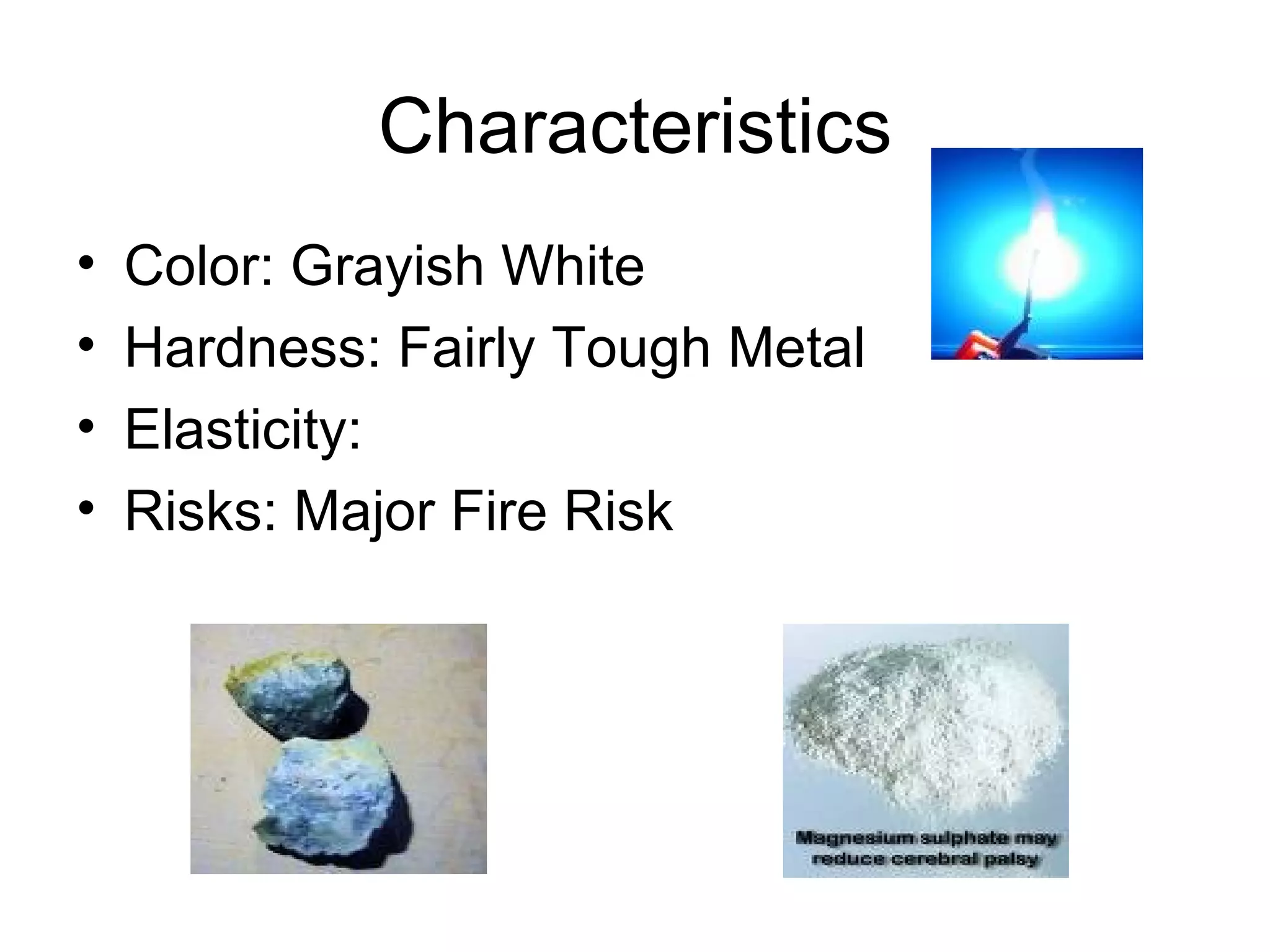
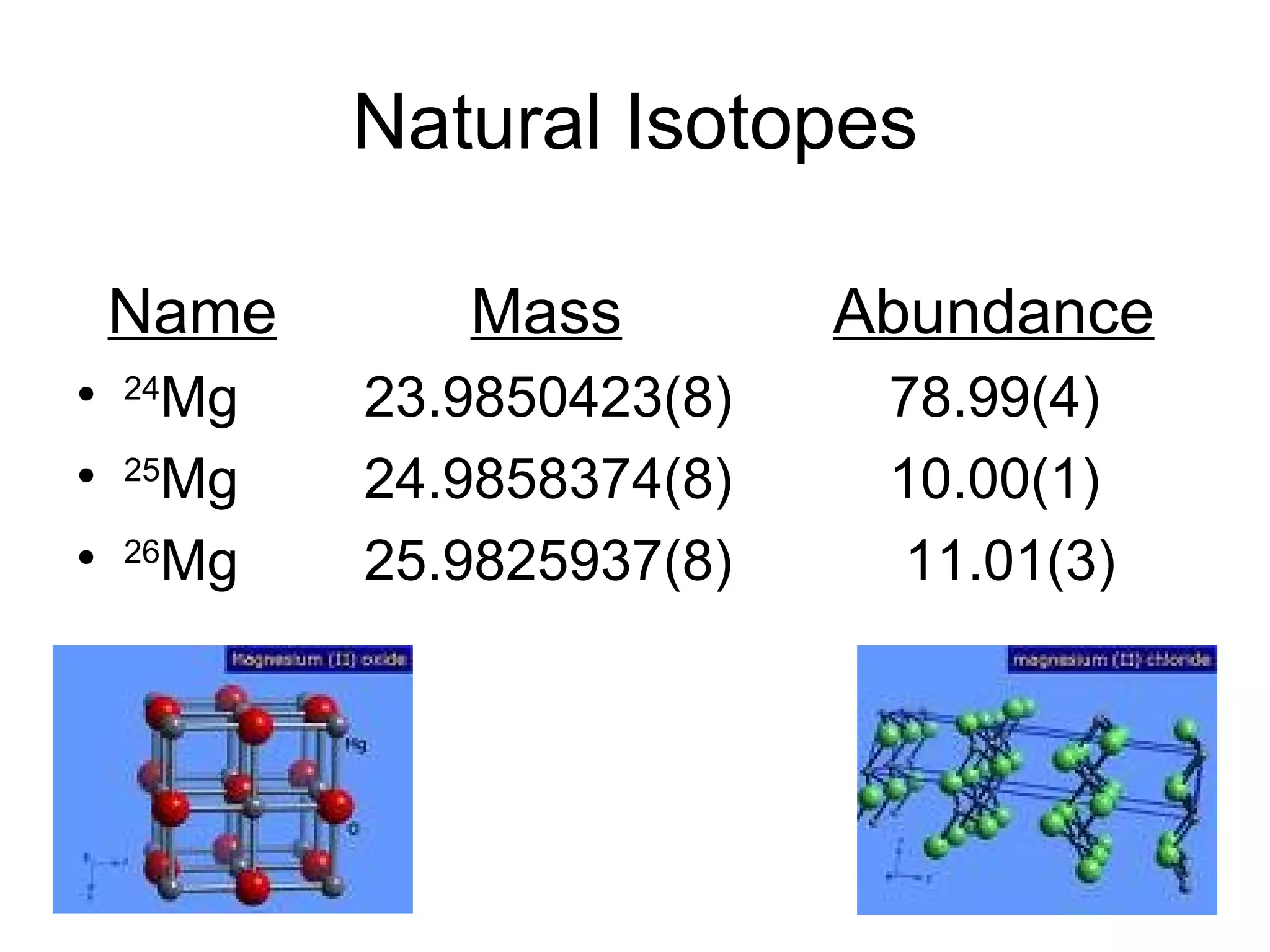
Characteristics Color: Grayish White Hardness: Fairly Tough Metal Elasticity:  Risks: Major Fire Risk
Natural Isotopes Name   Mass   Abundance 24 Mg  23.9850423(8)  78.99(4) 25 Mg  24.9858374(8)  10.00(1) 26 Mg  25.9825937(8)  11.01(3)
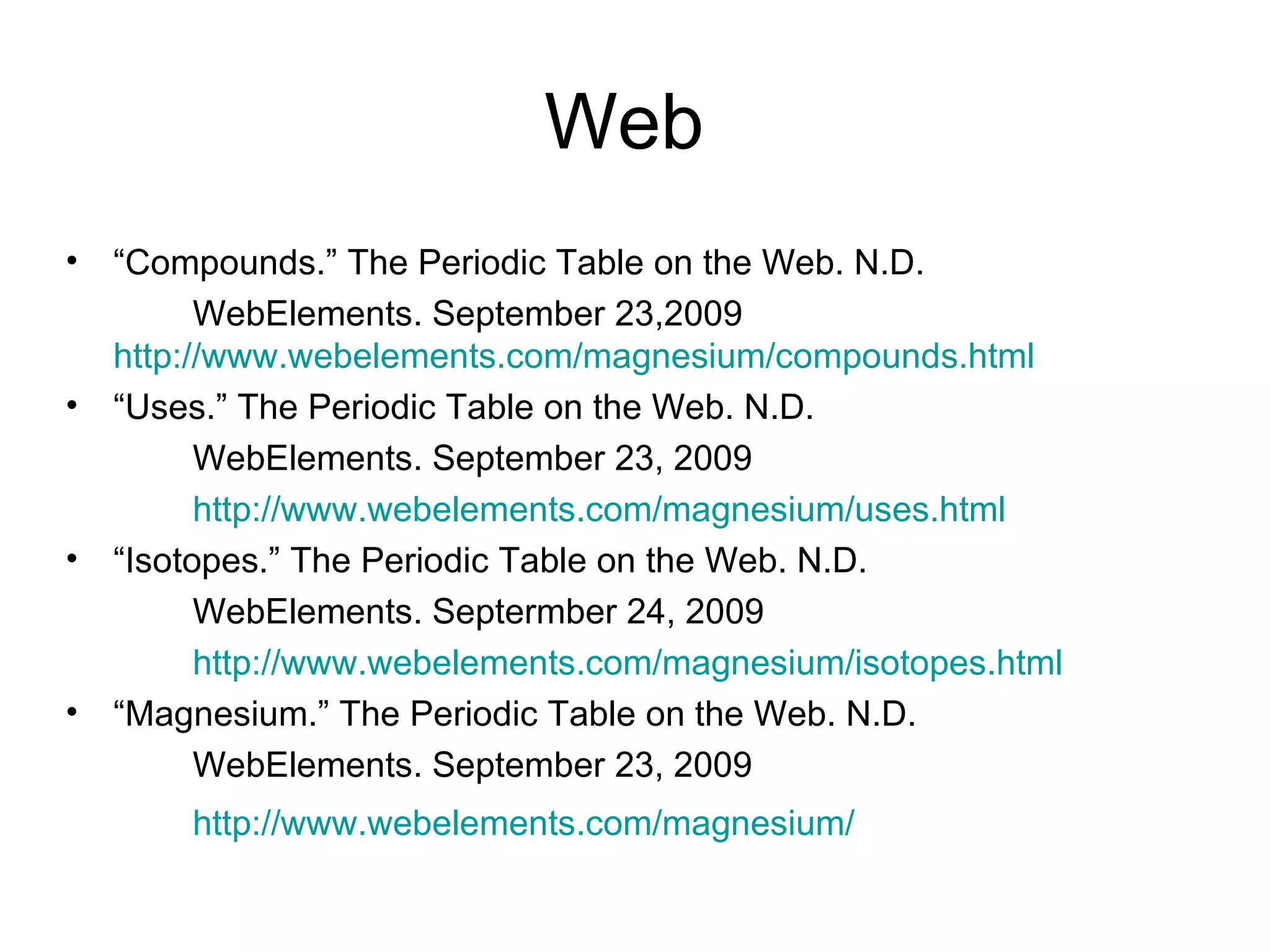
Uses and Availabilities Uses Flares Reducing agent for production of uranium and others Making organ magnesium compounds Computers radio-frequency shielding Availabilities Massive amounts in seawater MgCl 2 : Magnesium Chloride through reaction with Calcium Oxide CaO
Web  “ Compounds.” The Periodic Table on the Web. N.D. WebElements. September 23,2009  http://www.webelements.com/magnesium/compounds.html   “ Uses.” The Periodic Table on the Web. N.D. WebElements. September 23, 2009 http://www.webelements.com/magnesium/uses.html “ Isotopes.” The Periodic Table on the Web. N.D. WebElements. Septermber 24, 2009 http://www.webelements.com/magnesium/isotopes.html “ Magnesium.” The Periodic Table on the Web. N.D. WebElements. September 23, 2009 http://www.webelements.com/magnesium/

Magnesium

  • 1.
    Magnesium Mg 2412 By: Kasey Bacher
  • 2.
    General Information Symbol:Mg Atomic Number: 12 Atomic Mass: 24 Group Name: Alkaline Earth Metal Group Number: 2 Boiling Point: 1363K(1090°C or 1994°F) Melting Point: 923K(650°C or 1202°F) Classification: Metallic
  • 3.
    Discovery Discovered By:Joseph Black Discovered At: England Discovered When: 1755 Isolated By: Sir Humphry Davy Isolated When: 1808 Origin of the Name: Thessaly, Greece district region( Magnesia)
  • 4.
    Minerals and CompoundsMinerals Dolomite: CaCo 2 MgCo 3 Carnallite: Kcl-MgCl 2 -6H 2 0 Mostly Saltwater Compounds Hydrides: Magnesium Dihydride (MgH 2 ) Fluorides: Magnesium Difluoride (MgF 2 ) Chlorides: Magnesium Dichloride (MgCl 2 ) Iodies: Magnesium Diiodide (MgI 2 ) Sulfides: Magnesium Sulphide (MgS)
  • 5.
    Characteristics Color: GrayishWhite Hardness: Fairly Tough Metal Elasticity: Risks: Major Fire Risk
  • 6.
    Natural Isotopes Name Mass Abundance 24 Mg 23.9850423(8) 78.99(4) 25 Mg 24.9858374(8) 10.00(1) 26 Mg 25.9825937(8) 11.01(3)
  • 7.
    Uses and AvailabilitiesUses Flares Reducing agent for production of uranium and others Making organ magnesium compounds Computers radio-frequency shielding Availabilities Massive amounts in seawater MgCl 2 : Magnesium Chloride through reaction with Calcium Oxide CaO
  • 8.
    Web “Compounds.” The Periodic Table on the Web. N.D. WebElements. September 23,2009 http://www.webelements.com/magnesium/compounds.html “ Uses.” The Periodic Table on the Web. N.D. WebElements. September 23, 2009 http://www.webelements.com/magnesium/uses.html “ Isotopes.” The Periodic Table on the Web. N.D. WebElements. Septermber 24, 2009 http://www.webelements.com/magnesium/isotopes.html “ Magnesium.” The Periodic Table on the Web. N.D. WebElements. September 23, 2009 http://www.webelements.com/magnesium/