Magazines					Chapter 5
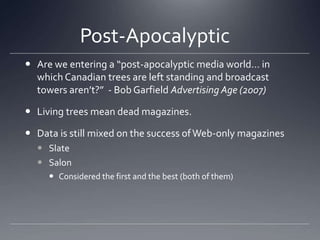
Post-Apocalyptic	Are we entering a “post-apocalyptic media world… in which Canadian trees are left standing and broadcast towers aren’t?”  - Bob Garfield Advertising Age (2007)Living trees mean dead magazines. Data is still mixed on the success of Web-only magazinesSlateSalonConsidered the first and the best (both of them)
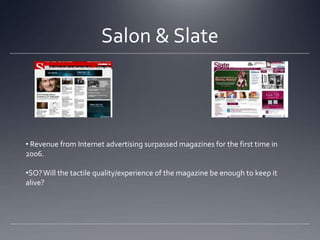
Salon & Slate Revenue from Internet advertising surpassed magazines for the first time in 2006.
SO? Will the tactile quality/experience of the magazine be enough to keep it alive? A Short HistoryFavorite medium of the British elite by mid-1700’sAmerican colonialists hoped to duplicate the successLack of organized postal system at that time made distribution difficult. Between 1741 and 1794 – 45 new magazines appeared (no more than three were published at the same time. Even after the Revolutionary War, U.S. magazines remained clones of the British publications.
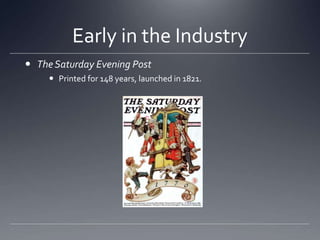
Early in the IndustryThe Saturday Evening PostPrinted for 148 years, launched in 1821.
Early in the Industry	Specialized, niche writingSuccess also fueled by the spread of social movements like abolitionism and labor reform. Provided compelling content and a boom period began in magazine publishing. 1825 – 100 magazines and just 25 years later, in 1850 there were 600. Began to look less like British copycats and more like a unique product.
Advertising and Circulation	Post-Civil War era saw popular magazines begin to prosper. By 1885 there were 3,300 magazines
Women and MagazinesCrucial to the expansion were women’s magazinesSuffrage was the social movement that occupied magazine pagesContent also contained a lot of “how to” for homemakersAdvertisers were eager to appear in new women’s magazines “hawking their wares” Ladies Home Journal and Good Housekeeping
Why such phenomenal growth?Five main reasonsWidespread literacyPostal Act of 1879 (cheap second-class postage) boosted circulationSpread of the railroad (carried people and publications West)Cost reduction (circulation wars caused prices to drop/more advertising on pages)Industrialization (less time working because of machines = more leisure time and more personal income)
Magazines			Truly America’s first national mass mediumForce in social changeMuckrackers used the page space to work for change, like Robin Hood they worked to agitate the powerful with money and help the poor.Magazines helped unify the nation. Mass marketMass circulationAffordable and national
Magazines, continuedDominant advertising medium at this timePrimary source for nationally distributed newsPreeminent provider of visual or photo journalismBy 1945 – 32 million families subscribed to one or more magazines.Dubbed “the television of their time”  and were eventually knocked out of the number one spot after World War II by the widespread acceptance of television.
Magazines vs. TV	Television was timely – Magazines were weekly.TV was a novelty to early adoptersMagazines worked to capture their fragmented audience by specializingNoted as the “harbingers of change” – they worked to capture a fragmented audience in the 50s like media of today is working to capture a newly fragmented audience
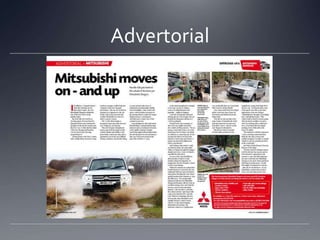
Advertising	More people have a positive view of magazine advertisingIt is unobtrusive and does not interfere with the reader’s enjoyment of the magazineAdvertorialsNumber one item advertised in magazines: Drugs and remedies
Advertorial
Types of MagazinesTrade/professional and business magazines (American Medical News, Progressive Farmer)Consumer magazines (New Yorker, Road & Track, Entertaiment Weekly)Public Relations magazines (Colors)
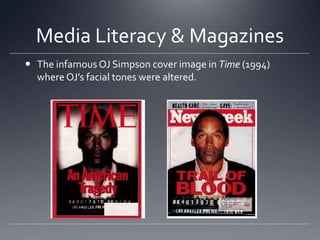
Media Literacy & MagazinesThe infamous OJ Simpson cover image in Time (1994) where OJ’s facial tones were altered.

Magazines MPC

  • 1.
  • 2.
    Post-Apocalyptic Are we enteringa “post-apocalyptic media world… in which Canadian trees are left standing and broadcast towers aren’t?” - Bob Garfield Advertising Age (2007)Living trees mean dead magazines. Data is still mixed on the success of Web-only magazinesSlateSalonConsidered the first and the best (both of them)
  • 3.
    Salon & SlateRevenue from Internet advertising surpassed magazines for the first time in 2006.
  • 4.
    SO? Will thetactile quality/experience of the magazine be enough to keep it alive? A Short HistoryFavorite medium of the British elite by mid-1700’sAmerican colonialists hoped to duplicate the successLack of organized postal system at that time made distribution difficult. Between 1741 and 1794 – 45 new magazines appeared (no more than three were published at the same time. Even after the Revolutionary War, U.S. magazines remained clones of the British publications.
  • 5.
    Early in theIndustryThe Saturday Evening PostPrinted for 148 years, launched in 1821.
  • 6.
    Early in theIndustry Specialized, niche writingSuccess also fueled by the spread of social movements like abolitionism and labor reform. Provided compelling content and a boom period began in magazine publishing. 1825 – 100 magazines and just 25 years later, in 1850 there were 600. Began to look less like British copycats and more like a unique product.
  • 7.
    Advertising and Circulation Post-CivilWar era saw popular magazines begin to prosper. By 1885 there were 3,300 magazines
  • 8.
    Women and MagazinesCrucialto the expansion were women’s magazinesSuffrage was the social movement that occupied magazine pagesContent also contained a lot of “how to” for homemakersAdvertisers were eager to appear in new women’s magazines “hawking their wares” Ladies Home Journal and Good Housekeeping
  • 9.
    Why such phenomenalgrowth?Five main reasonsWidespread literacyPostal Act of 1879 (cheap second-class postage) boosted circulationSpread of the railroad (carried people and publications West)Cost reduction (circulation wars caused prices to drop/more advertising on pages)Industrialization (less time working because of machines = more leisure time and more personal income)
  • 10.
    Magazines Truly America’s firstnational mass mediumForce in social changeMuckrackers used the page space to work for change, like Robin Hood they worked to agitate the powerful with money and help the poor.Magazines helped unify the nation. Mass marketMass circulationAffordable and national
  • 11.
    Magazines, continuedDominant advertisingmedium at this timePrimary source for nationally distributed newsPreeminent provider of visual or photo journalismBy 1945 – 32 million families subscribed to one or more magazines.Dubbed “the television of their time” and were eventually knocked out of the number one spot after World War II by the widespread acceptance of television.
  • 12.
    Magazines vs. TV Televisionwas timely – Magazines were weekly.TV was a novelty to early adoptersMagazines worked to capture their fragmented audience by specializingNoted as the “harbingers of change” – they worked to capture a fragmented audience in the 50s like media of today is working to capture a newly fragmented audience
  • 13.
    Advertising More people havea positive view of magazine advertisingIt is unobtrusive and does not interfere with the reader’s enjoyment of the magazineAdvertorialsNumber one item advertised in magazines: Drugs and remedies
  • 14.
  • 15.
    Types of MagazinesTrade/professionaland business magazines (American Medical News, Progressive Farmer)Consumer magazines (New Yorker, Road & Track, Entertaiment Weekly)Public Relations magazines (Colors)
  • 16.
    Media Literacy &MagazinesThe infamous OJ Simpson cover image in Time (1994) where OJ’s facial tones were altered.