Magazine Case Study By Anita Masih
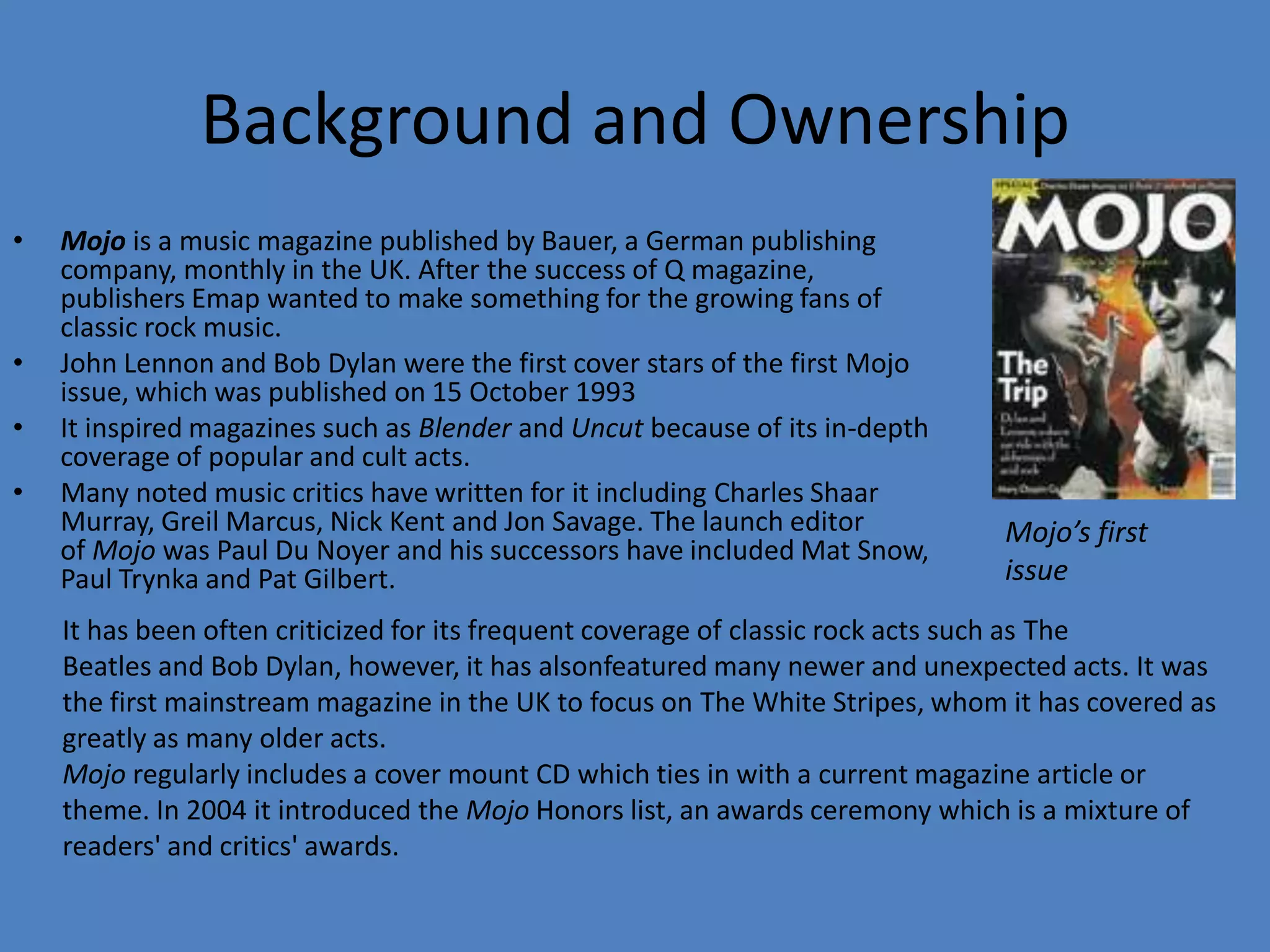
Background and OwnershipMojo is a music magazine published by Bauer, a German publishing company, monthly in the UK. After the success of Q magazine, publishers Emap wanted to make something for the growing fans of classic rock music. John Lennon and Bob Dylan were the first cover stars of the first Mojo issue, which was published on 15 October 1993It inspired magazines such as Blender and Uncut because of its in-depth coverage of popular and cult acts.Many noted music critics have written for it including Charles ShaarMurray, Greil Marcus, Nick Kent and Jon Savage. The launch editor of Mojo was Paul Du Noyer and his successors have included Mat Snow, Paul Trynka and Pat Gilbert.Mojo’s first issueIt has been often criticized for its frequent coverage of classic rock acts such as The Beatles and Bob Dylan, however, it has alsonfeatured many newer and unexpected acts. It was the first mainstream magazine in the UK to focus on The White Stripes, whom it has covered as greatly as many older acts.Mojo regularly includes a cover mount CD which ties in with a current magazine article or theme. In 2004 it introduced the Mojo Honors list, an awards ceremony which is a mixture of readers' and critics' awards.
Content and approach to musicMojo magazine offers more to it’s loyal consumers than just articles of their favourite classic rock heroes. The magazine offers many things such as a free CD in each issue along with the main article, competitions to win tickets to see the rock legends, merchandise such as t-shirts and The Mojo honours list. Mojo readers can treasure these things for life. The magazine keeps classic rock alive to the fans, updating the news of legendary bands such as The Beatles, Foo Fighters, etc., and also introduces new bands that the readers would like.
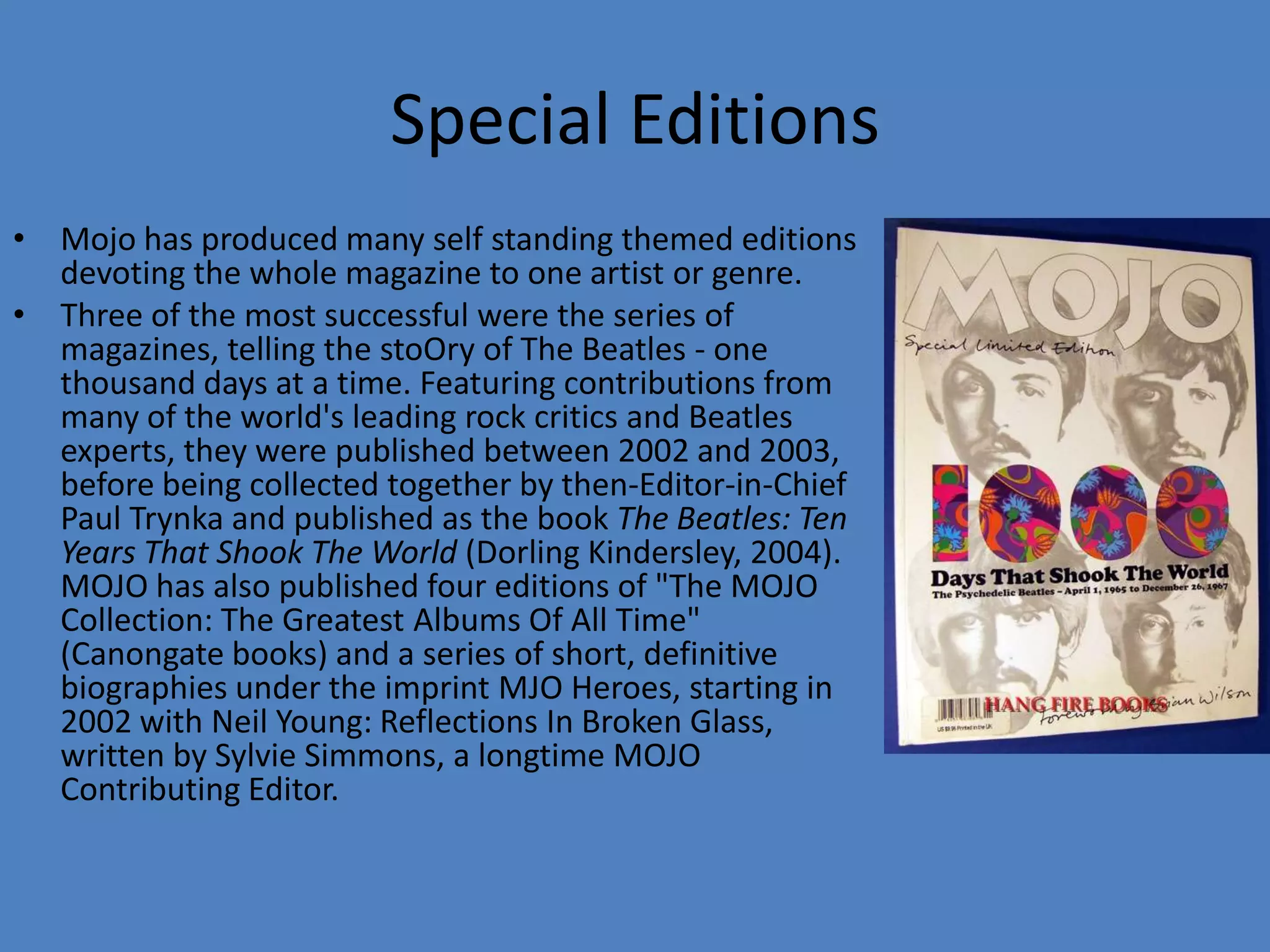
Mojo has produced many self standing themed editions devoting the whole magazine to one artist or genre.Three of the most successful were the series of magazines, telling the stoOryof The Beatles - one thousand days at a time. Featuring contributions from many of the world's leading rock critics and Beatles experts, they were published between 2002 and 2003, before being collected together by then-Editor-in-Chief Paul Trynka and published as the book The Beatles: Ten Years That Shook The World (Dorling Kindersley, 2004). MOJO has also published four editions of "The MOJO Collection: The Greatest Albums Of All Time" (Canongate books) and a series of short, definitive biographies under the imprint MJO Heroes, starting in 2002 with Neil Young: Reflections In Broken Glass, written by Sylvie Simmons, a longtime MOJO Contributing Editor.Special Editions
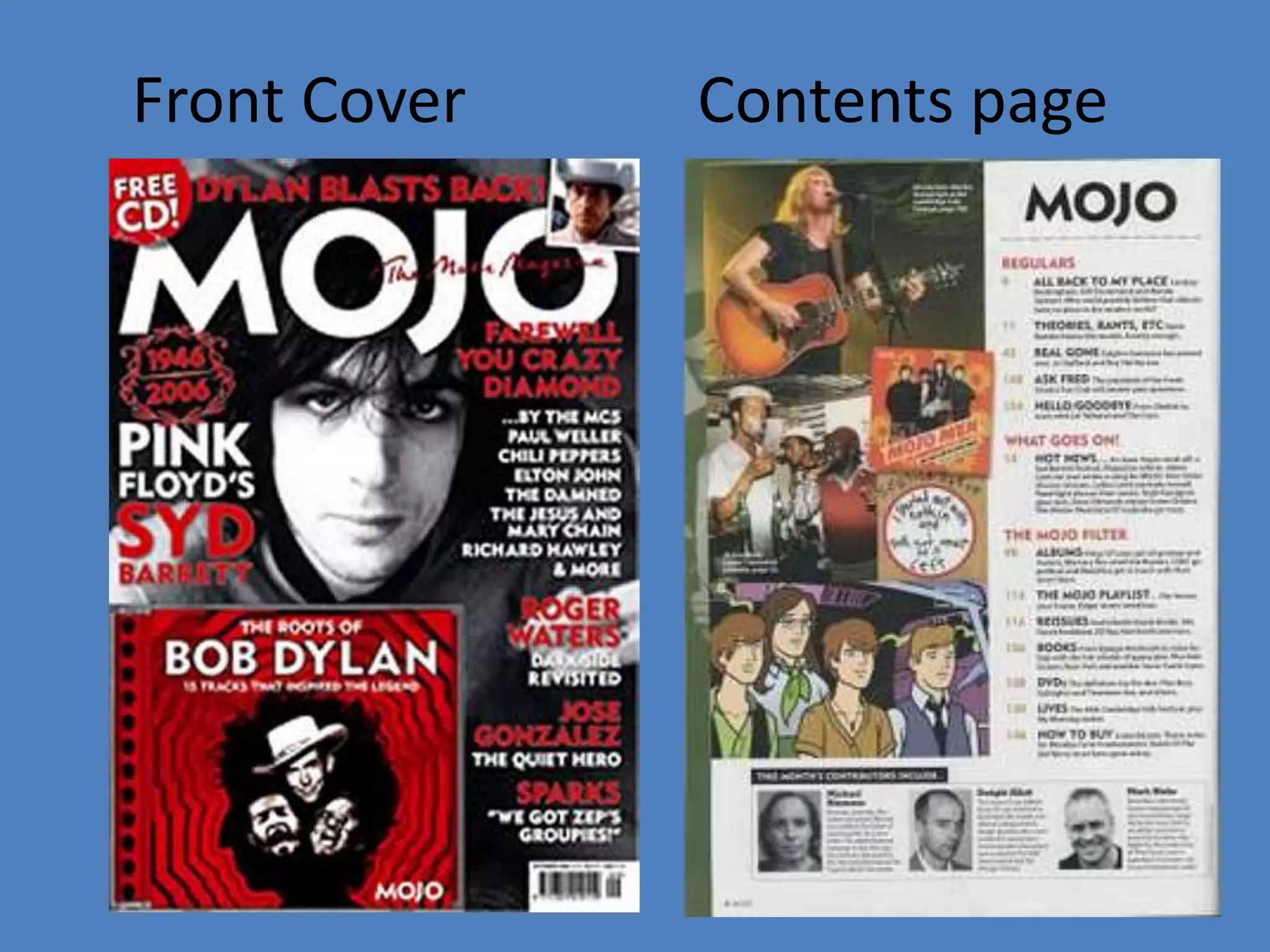
Front CoverContents page
Promoting the industry and other productsThe company behind the magazine, Bauer, also produced a digital radio station. This station was called Mojo Radio, and was transmitted on the digital television networks in the UK (Freeview channel 721 and Sky Digital channel 0182, though not Virgin Media) and online. The output of the station was based on that of the magazine. It was announced on the 5th November 2008 that Mojo Radio would cease broadcasting on 30 November 2008 in order to save parent company, Bauer, money.
The future of magazines and print publishingMagazines have been a big part of the media for a long time. Many magazines have failed in the last decade, such as Smash, Top of the pops, Vibe, due to high levels of competition from more successful magazines. Magazines contain a lot of information and are easy to carry around to read on the go. However, the internet can provide much more information as well as TV and radio. Some magazines can be viewed online. This has changed within the beginning of then magazine industry due to new improving technology. In my opinion, popular magzines will survive, but the might not be in paper form as new technology may allow us to view it digitally and still on the go, such as via mobile phones.

Magazine Case Study

  • 1.
    Magazine Case StudyBy Anita Masih
  • 2.
    Background and OwnershipMojo isa music magazine published by Bauer, a German publishing company, monthly in the UK. After the success of Q magazine, publishers Emap wanted to make something for the growing fans of classic rock music. John Lennon and Bob Dylan were the first cover stars of the first Mojo issue, which was published on 15 October 1993It inspired magazines such as Blender and Uncut because of its in-depth coverage of popular and cult acts.Many noted music critics have written for it including Charles ShaarMurray, Greil Marcus, Nick Kent and Jon Savage. The launch editor of Mojo was Paul Du Noyer and his successors have included Mat Snow, Paul Trynka and Pat Gilbert.Mojo’s first issueIt has been often criticized for its frequent coverage of classic rock acts such as The Beatles and Bob Dylan, however, it has alsonfeatured many newer and unexpected acts. It was the first mainstream magazine in the UK to focus on The White Stripes, whom it has covered as greatly as many older acts.Mojo regularly includes a cover mount CD which ties in with a current magazine article or theme. In 2004 it introduced the Mojo Honors list, an awards ceremony which is a mixture of readers' and critics' awards.
  • 3.
    Content and approachto musicMojo magazine offers more to it’s loyal consumers than just articles of their favourite classic rock heroes. The magazine offers many things such as a free CD in each issue along with the main article, competitions to win tickets to see the rock legends, merchandise such as t-shirts and The Mojo honours list. Mojo readers can treasure these things for life. The magazine keeps classic rock alive to the fans, updating the news of legendary bands such as The Beatles, Foo Fighters, etc., and also introduces new bands that the readers would like.
  • 4.
    Mojo has producedmany self standing themed editions devoting the whole magazine to one artist or genre.Three of the most successful were the series of magazines, telling the stoOryof The Beatles - one thousand days at a time. Featuring contributions from many of the world's leading rock critics and Beatles experts, they were published between 2002 and 2003, before being collected together by then-Editor-in-Chief Paul Trynka and published as the book The Beatles: Ten Years That Shook The World (Dorling Kindersley, 2004). MOJO has also published four editions of "The MOJO Collection: The Greatest Albums Of All Time" (Canongate books) and a series of short, definitive biographies under the imprint MJO Heroes, starting in 2002 with Neil Young: Reflections In Broken Glass, written by Sylvie Simmons, a longtime MOJO Contributing Editor.Special Editions
  • 5.
  • 6.
    Promoting the industryand other productsThe company behind the magazine, Bauer, also produced a digital radio station. This station was called Mojo Radio, and was transmitted on the digital television networks in the UK (Freeview channel 721 and Sky Digital channel 0182, though not Virgin Media) and online. The output of the station was based on that of the magazine. It was announced on the 5th November 2008 that Mojo Radio would cease broadcasting on 30 November 2008 in order to save parent company, Bauer, money.
  • 7.
    The future ofmagazines and print publishingMagazines have been a big part of the media for a long time. Many magazines have failed in the last decade, such as Smash, Top of the pops, Vibe, due to high levels of competition from more successful magazines. Magazines contain a lot of information and are easy to carry around to read on the go. However, the internet can provide much more information as well as TV and radio. Some magazines can be viewed online. This has changed within the beginning of then magazine industry due to new improving technology. In my opinion, popular magzines will survive, but the might not be in paper form as new technology may allow us to view it digitally and still on the go, such as via mobile phones.