Nutritional Requirement
Planning a Balanced Diet
Dr. Nermeen Bastawy
Nutritionist at Nutri-Care
Clinics
Physiology Department
Cairo University
Content
• Introduction
• Dietary Goals
• Terminology
• Macronutrient Provide Energy
• Water and caloric requirement
• Dietary Fibers
• Proteins/Fat/Vitamins
• Balanced Diet
• Nutritional Counseling
• Daily Food Chick list
• References
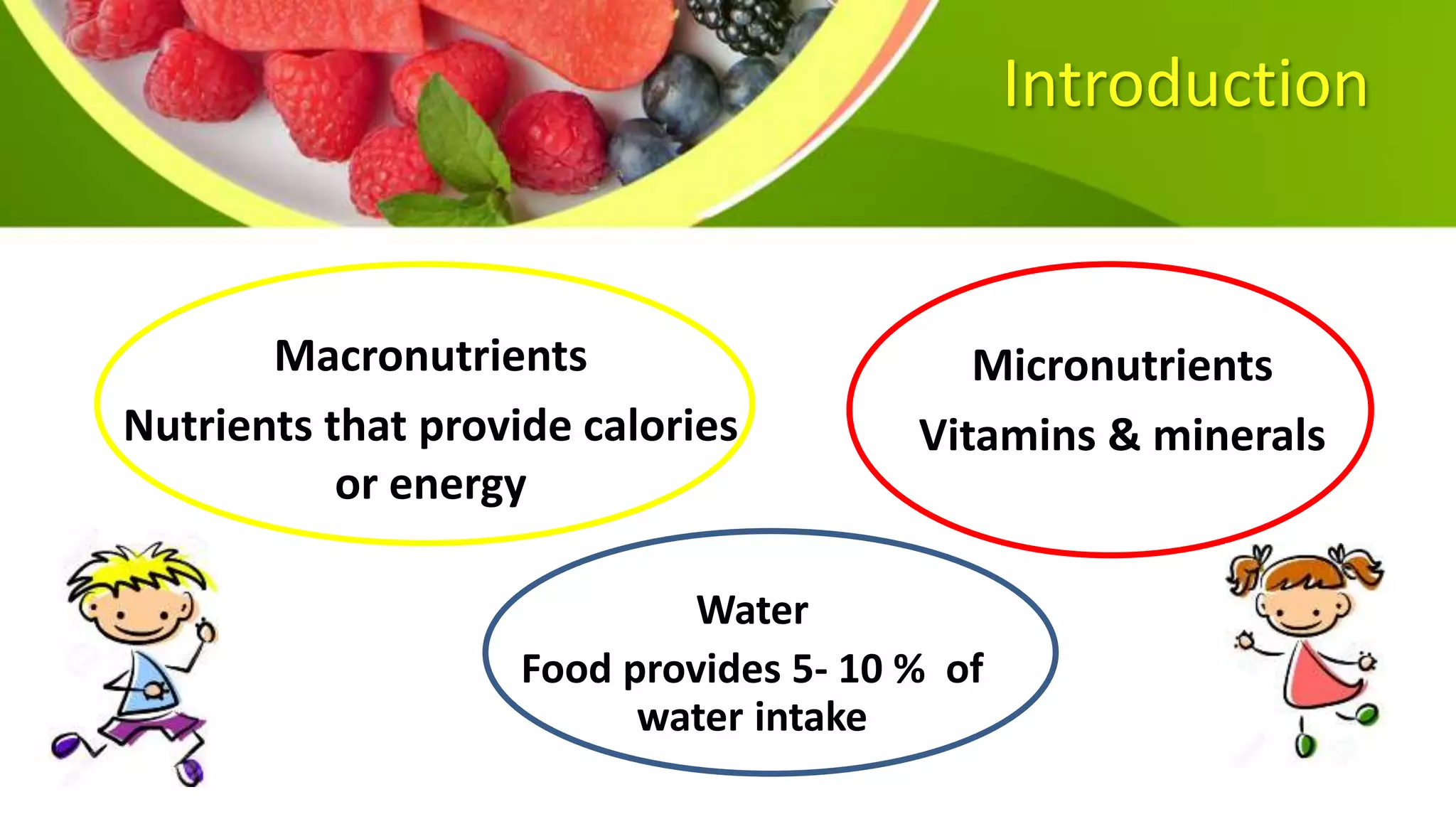
Introduction
Macronutrients
Nutrients that provide calories
or energy
Micronutrients
Vitamins & minerals
Water
Food provides 5- 10 % of
water intake
Dietary Goals
Ensure adequate nutrition to
Promote growth
Maintain Ideal Body Weight
Prevent diet related disorders
Terminology
• RDA (recommended dietary allowance)
• Daily nutrient intake sufficient to meet needs of
nearly all healthy persons.
• Nutrient deficiency: if intake < 75 % of RDA
• Nutrient density: Significant high amount of nutrient
compared to calories (Oppose to empty calories)
Terminology
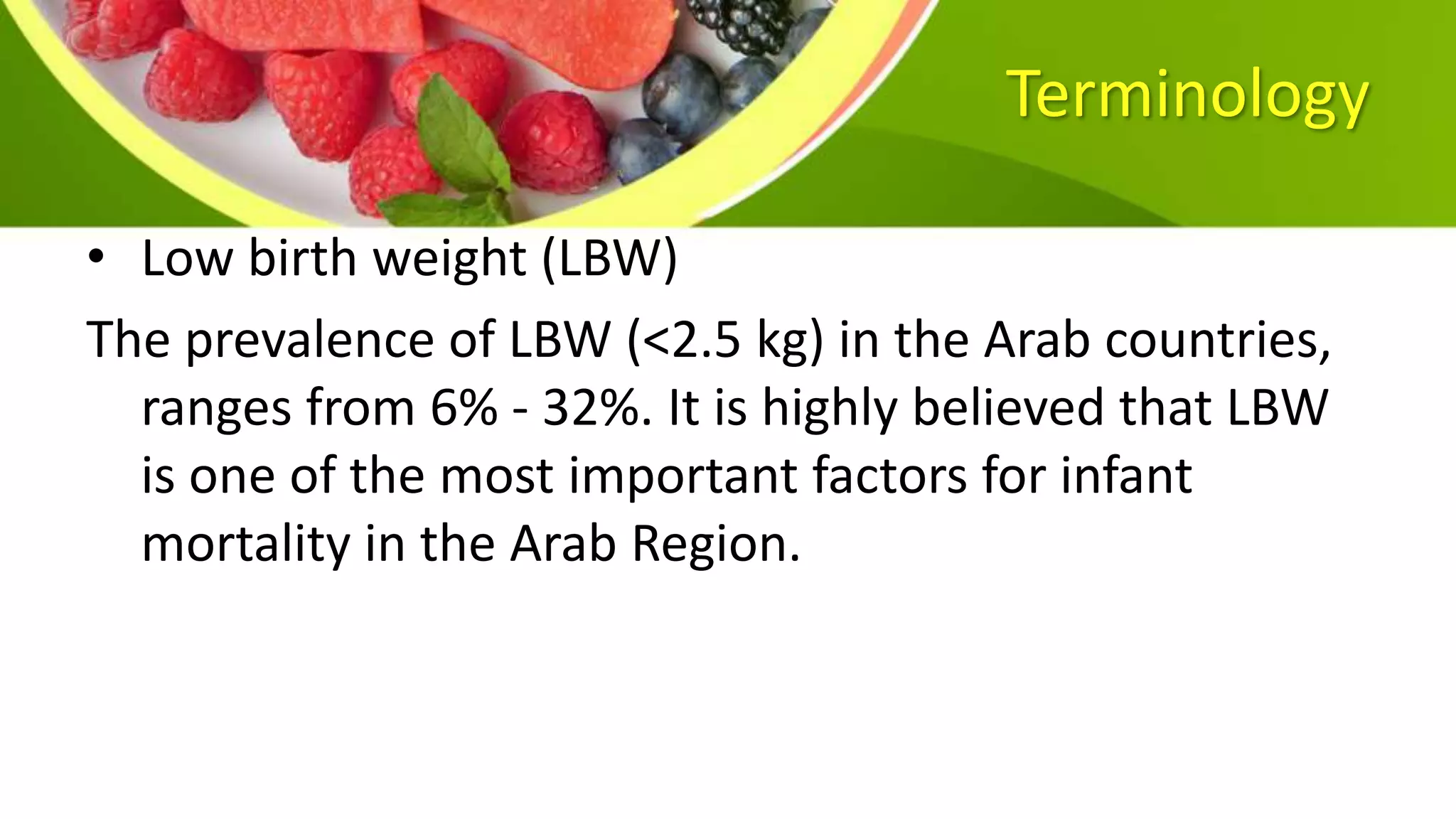
• Low birth weight (LBW)
The prevalence of LBW (<2.5 kg) in the Arab countries,
ranges from 6% - 32%. It is highly believed that LBW
is one of the most important factors for infant
mortality in the Arab Region.
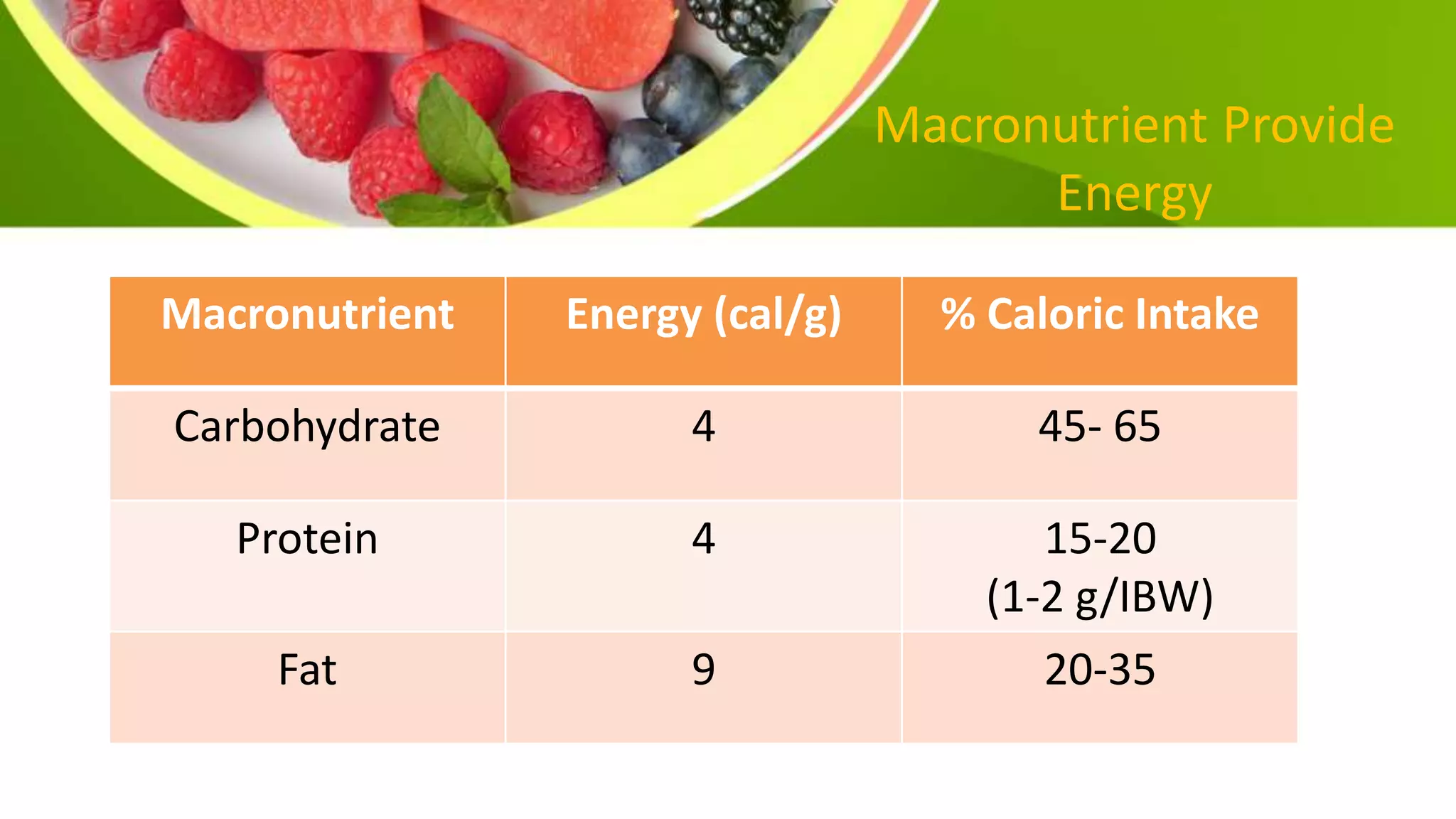
Macronutrient Provide
Energy
Macronutrient Energy (cal/g) % Caloric Intake
Carbohydrate 4 45- 65
Protein 4 15-20
(1-2 g/IBW)
Fat 9 20-35
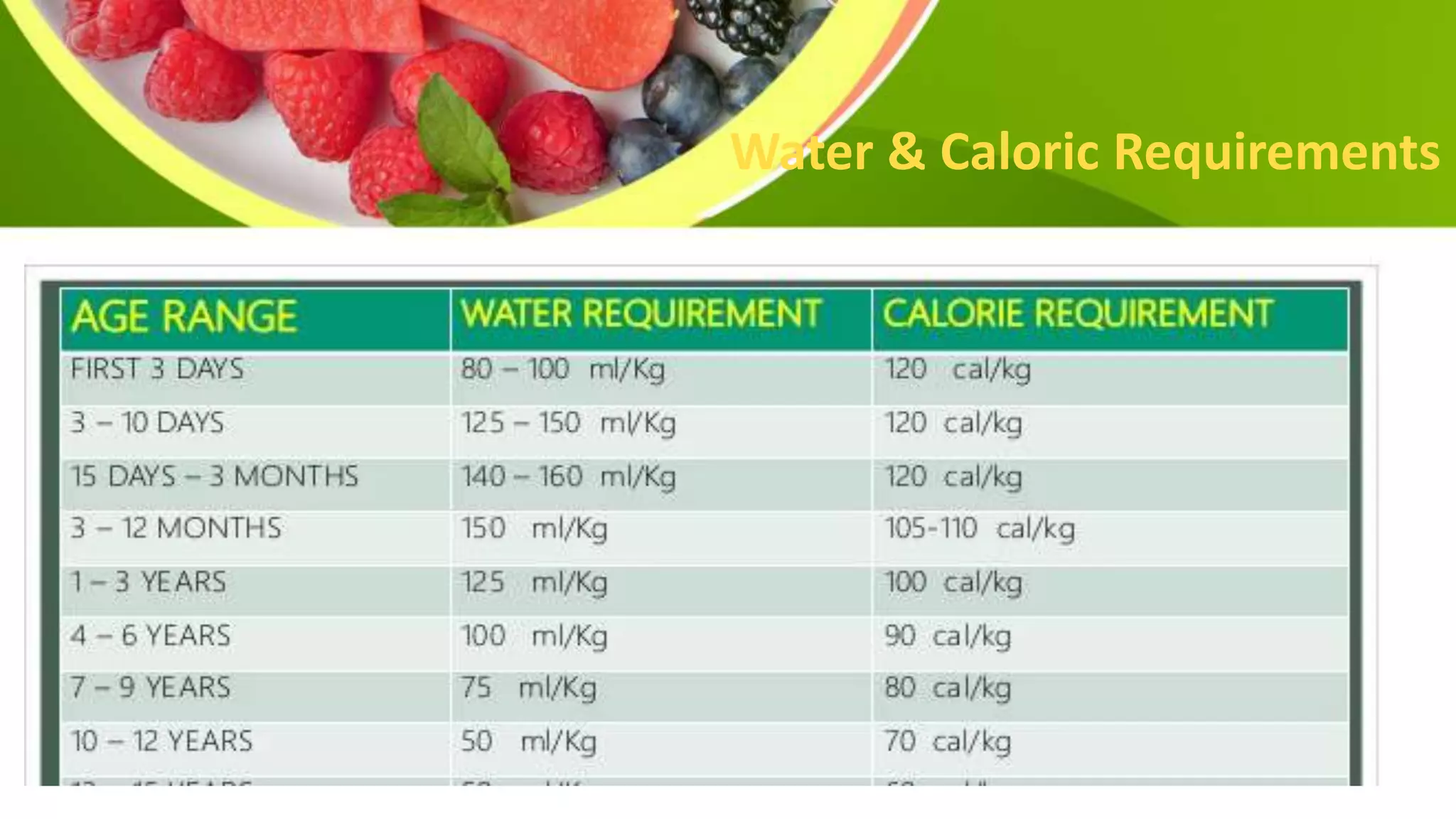
Water & Caloric Requirements
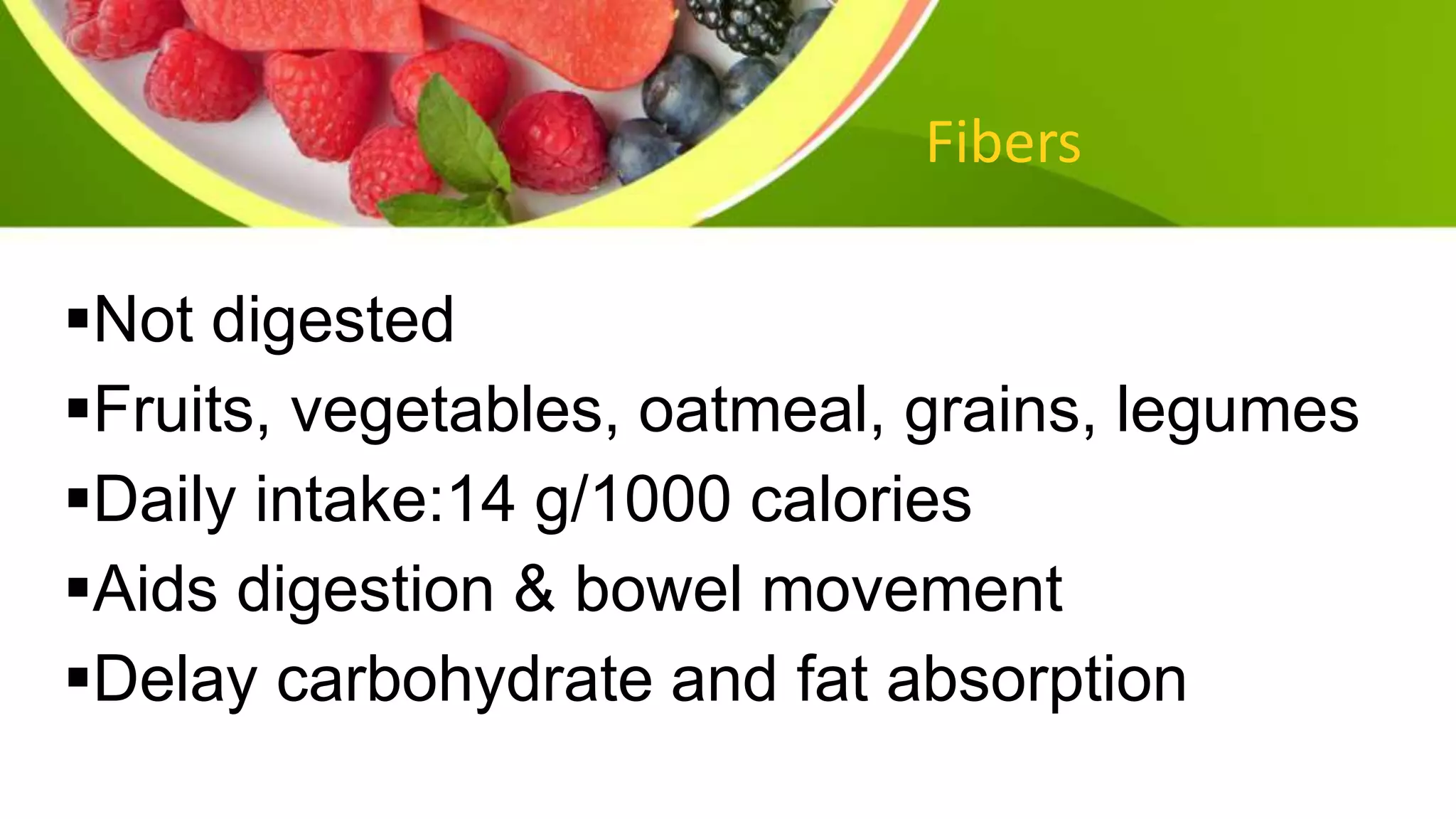
Fibers
Not digested
Fruits, vegetables, oatmeal, grains, legumes
Daily intake:14 g/1000 calories
Aids digestion & bowel movement
Delay carbohydrate and fat absorption
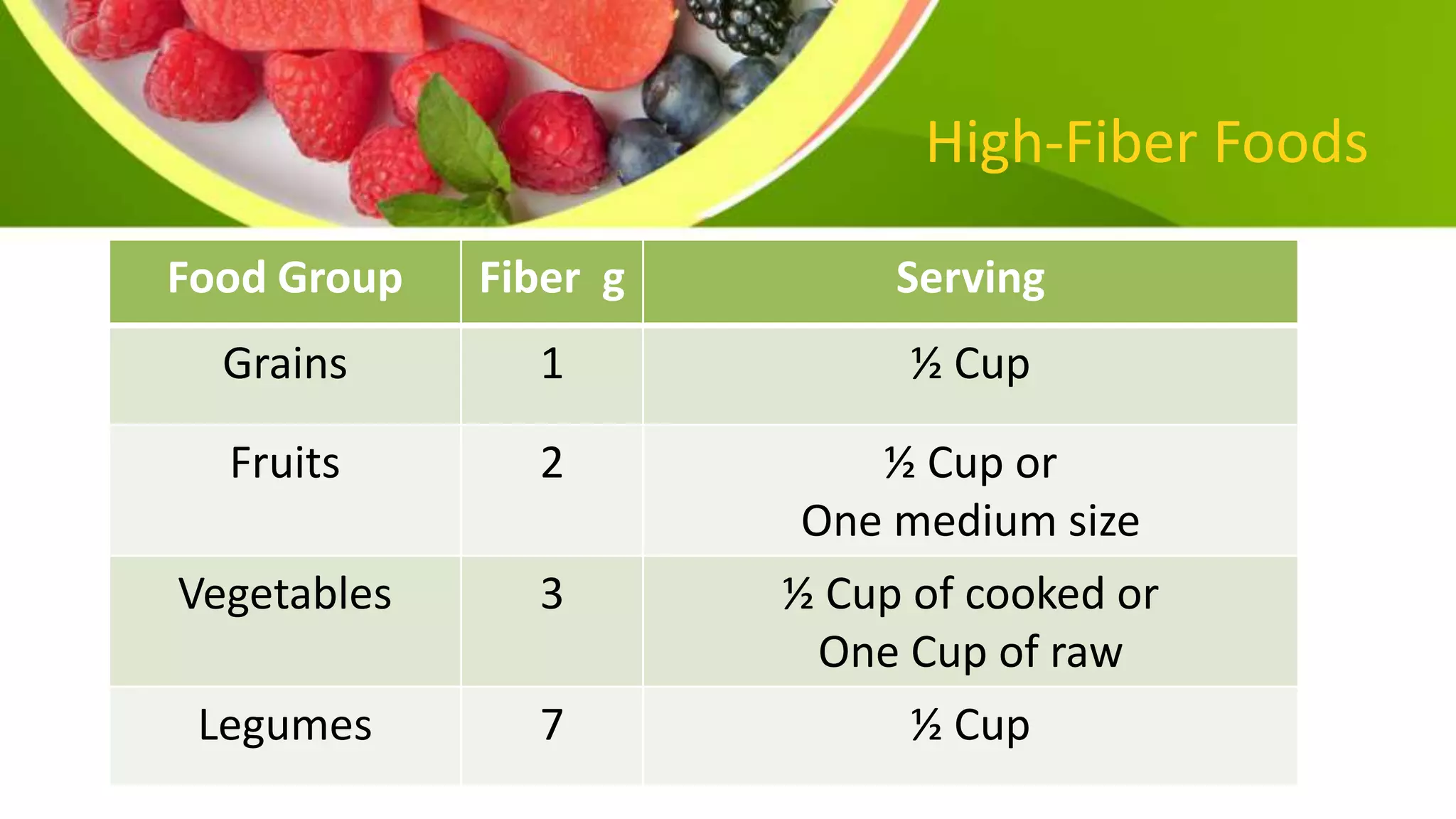
High-Fiber Foods
Food Group Fiber g Serving
Grains 1 ½ Cup
Fruits 2 ½ Cup or
One medium size
Vegetables 3 ½ Cup of cooked or
One Cup of raw
Legumes 7 ½ Cup
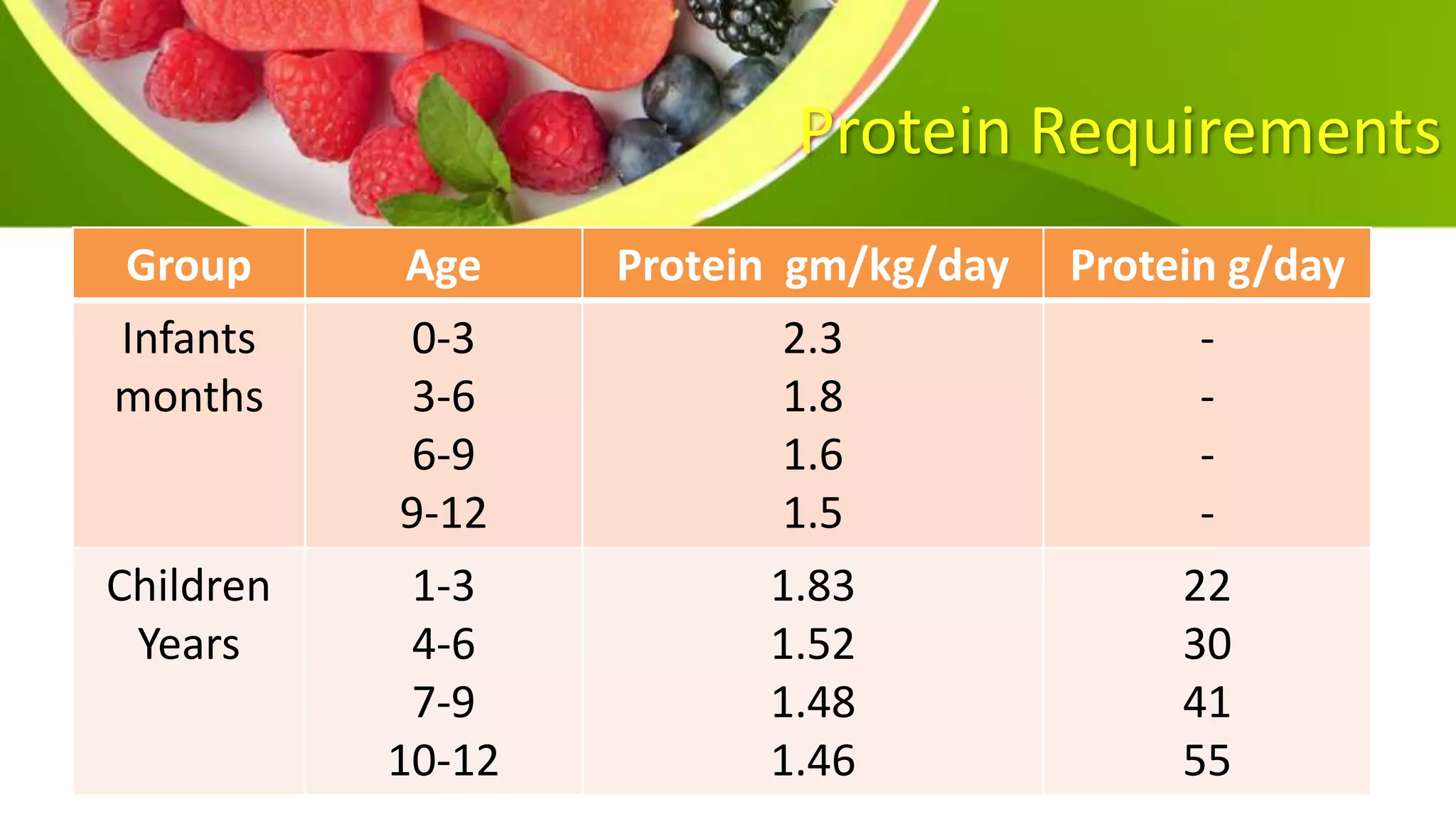
Protein Requirements
Group Age Protein gm/kg/day Protein g/day
Infants
months
0-3
3-6
6-9
9-12
2.3
1.8
1.6
1.5
-
-
-
-
Children
Years
1-3
4-6
7-9
10-12
1.83
1.52
1.48
1.46
22
30
41
55
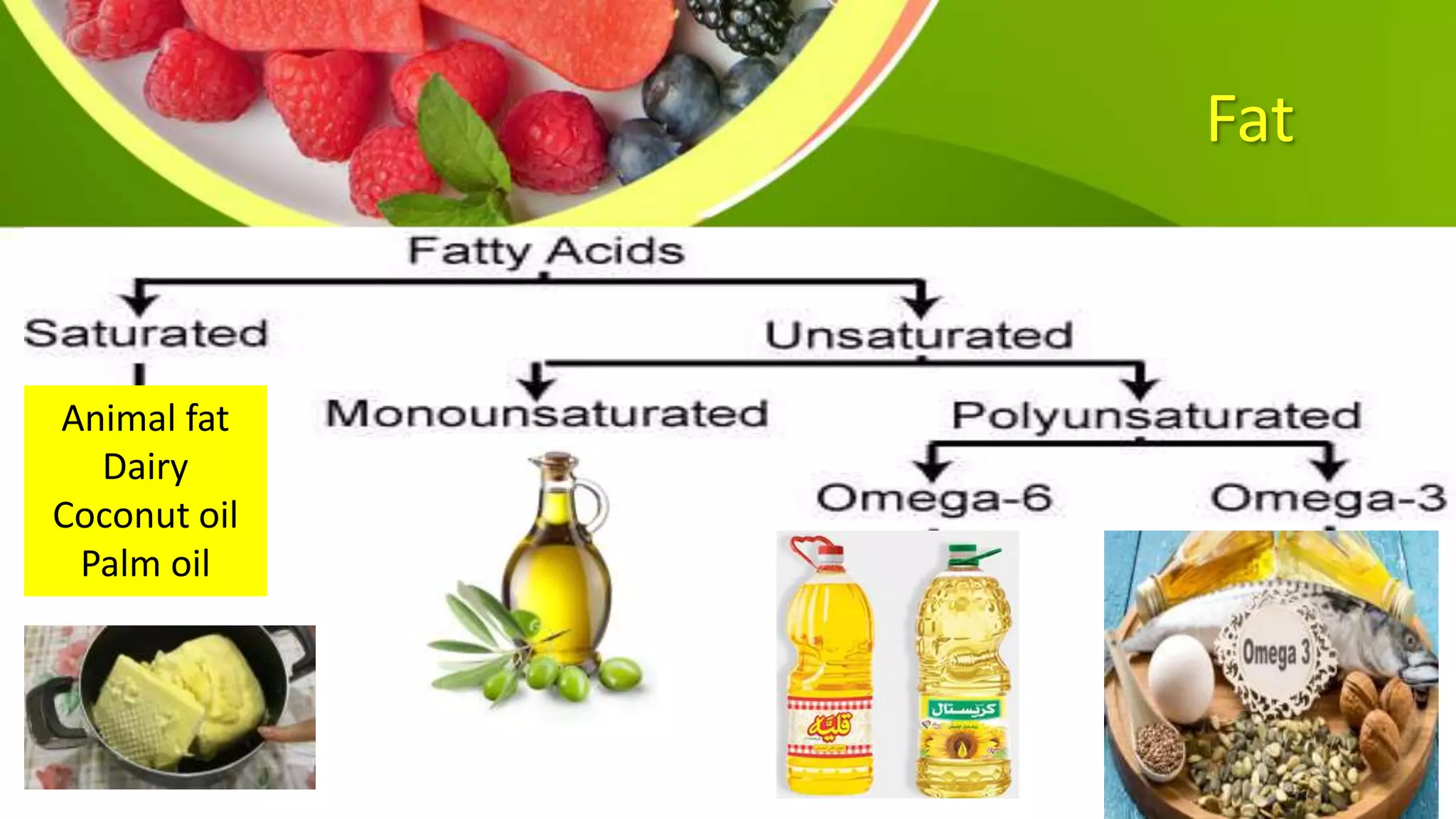
Fat
Animal fat
Dairy
Coconut oil
Palm oil
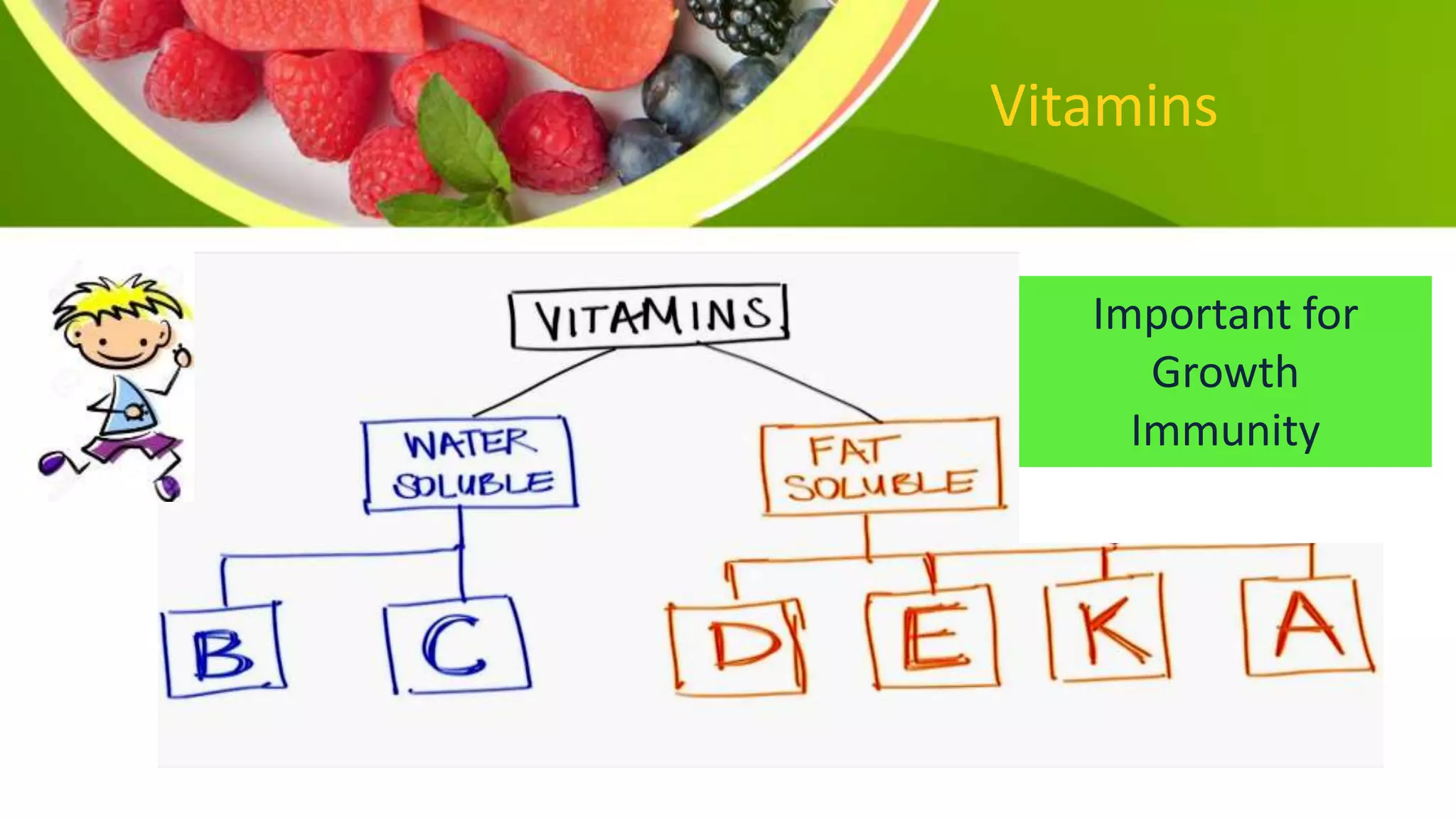
Vitamins
Important for
Growth
Immunity
Water Soluble Vitamins
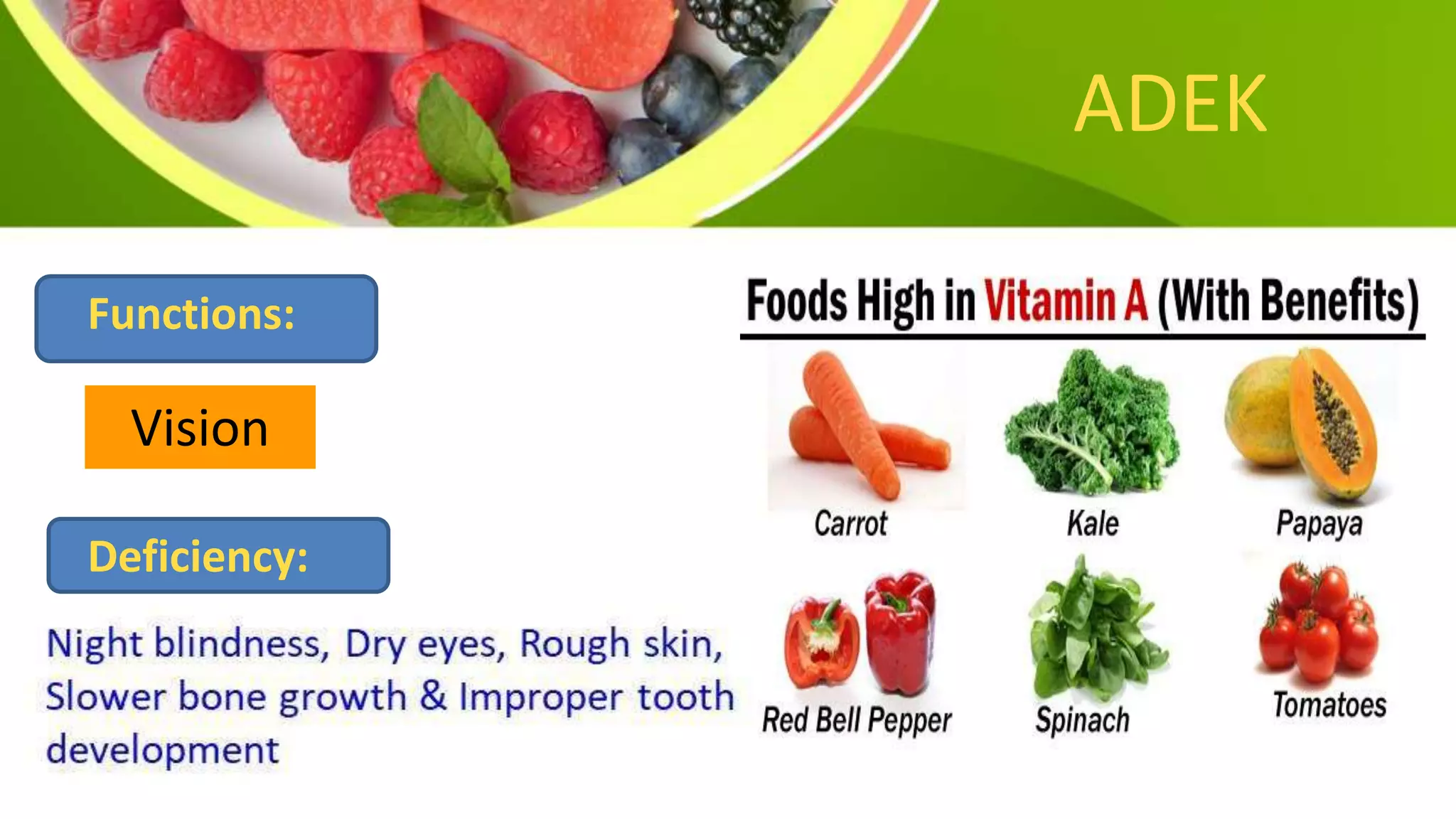
ADEK
Functions:
Vision
Deficiency:
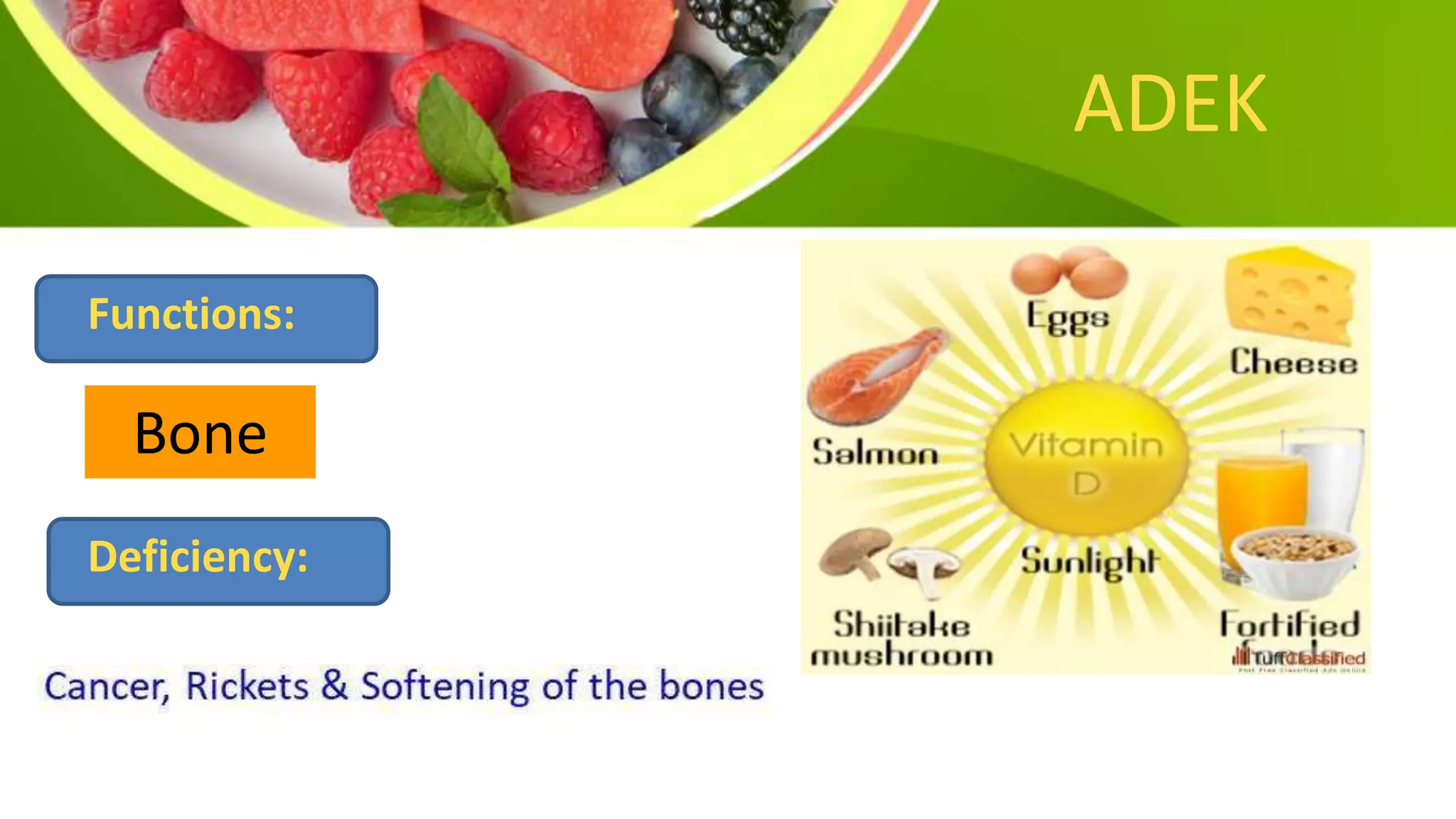
ADEK
Functions:
Bone
Deficiency:
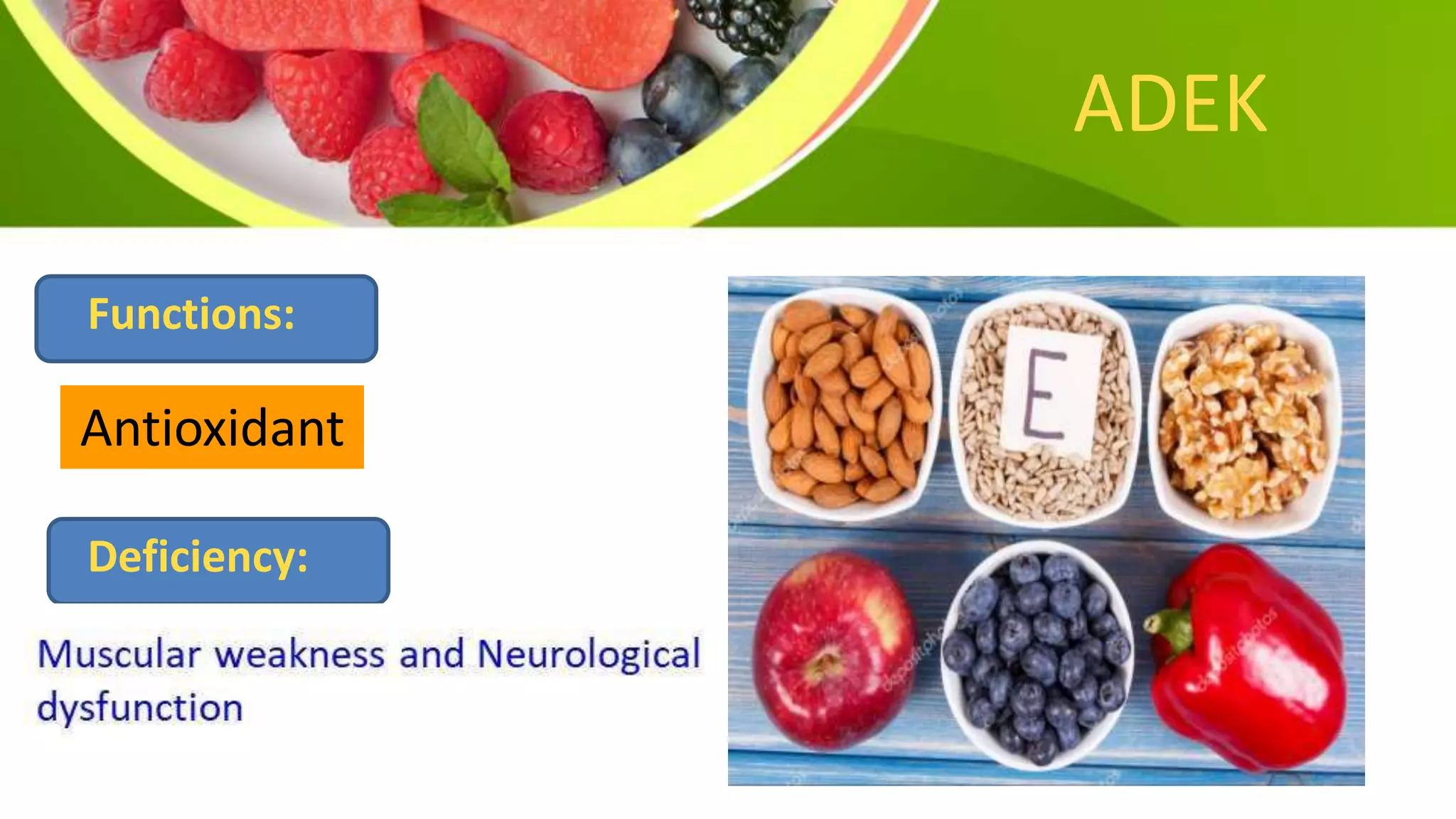
ADEK
Functions:
Antioxidant
Deficiency:
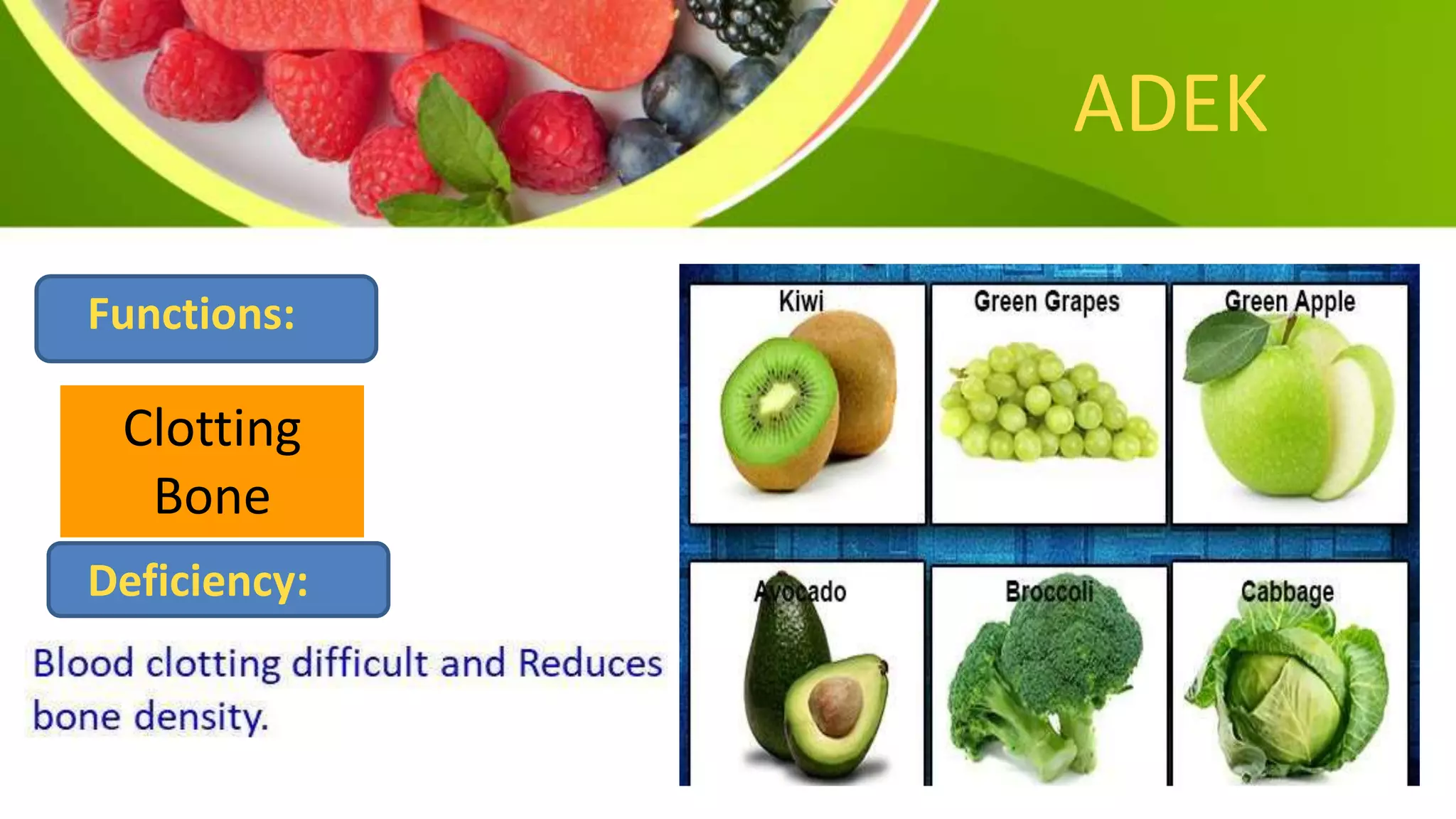
ADEK
Functions:
Clotting
Bone
Deficiency:
Balanced Diet
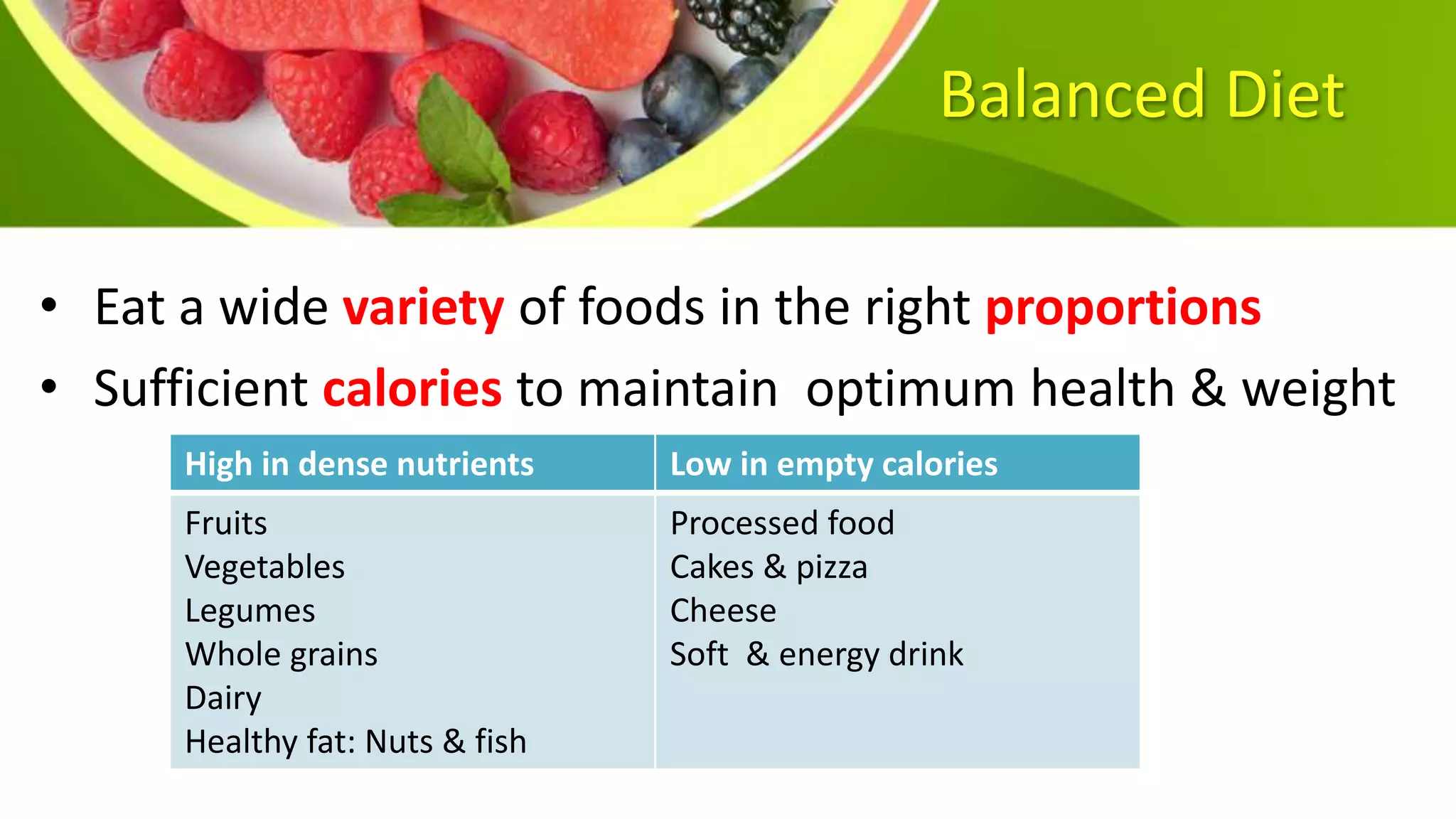
• Eat a wide variety of foods in the right proportions
• Sufficient calories to maintain optimum health & weight
High in dense nutrients Low in empty calories
Fruits
Vegetables
Legumes
Whole grains
Dairy
Healthy fat: Nuts & fish
Processed food
Cakes & pizza
Cheese
Soft & energy drink
Planning a Balanced Diet
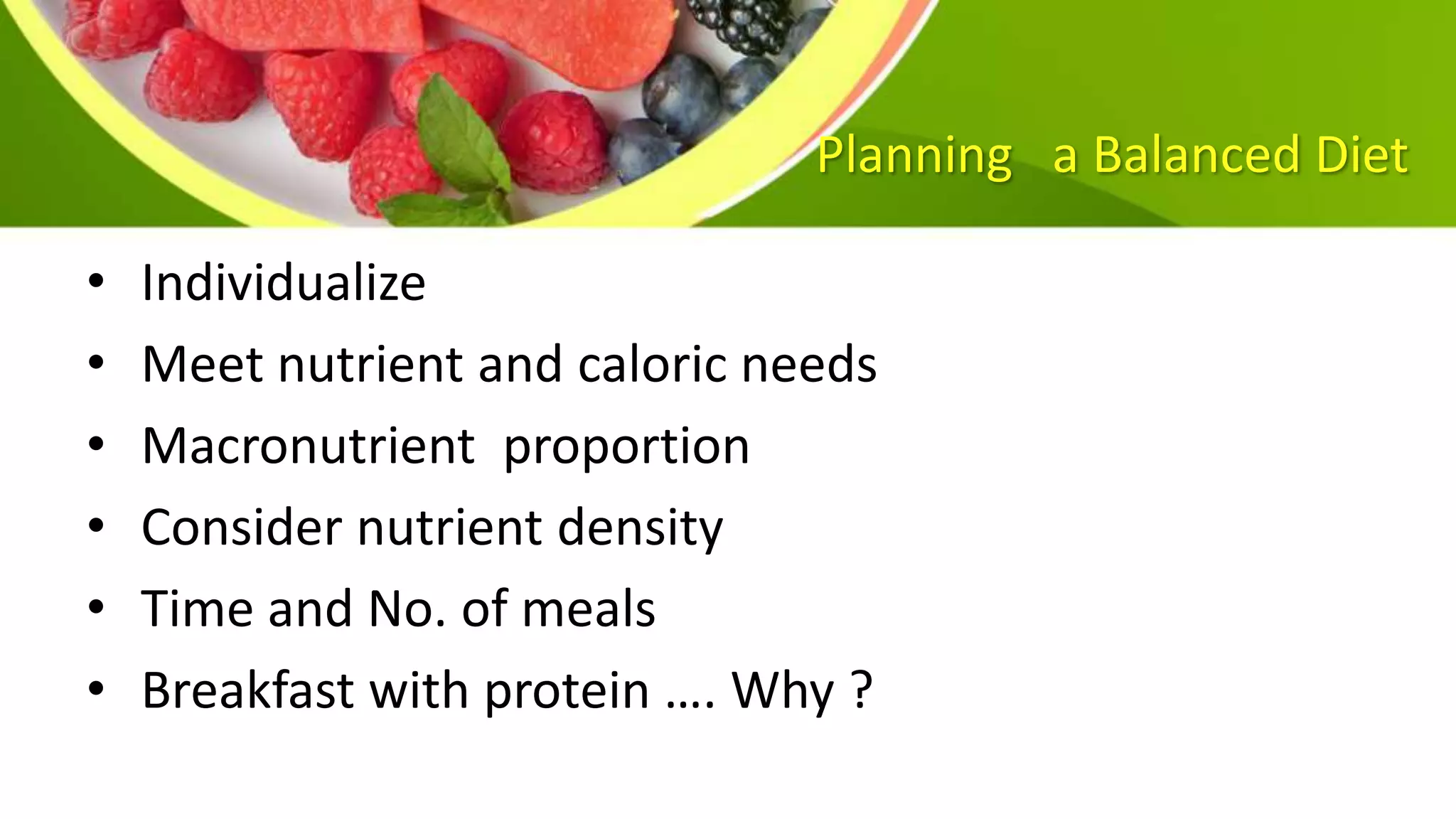
• Individualize
• Meet nutrient and caloric needs
• Macronutrient proportion
• Consider nutrient density
• Time and No. of meals
• Breakfast with protein …. Why ?
Planning a Balanced Diet
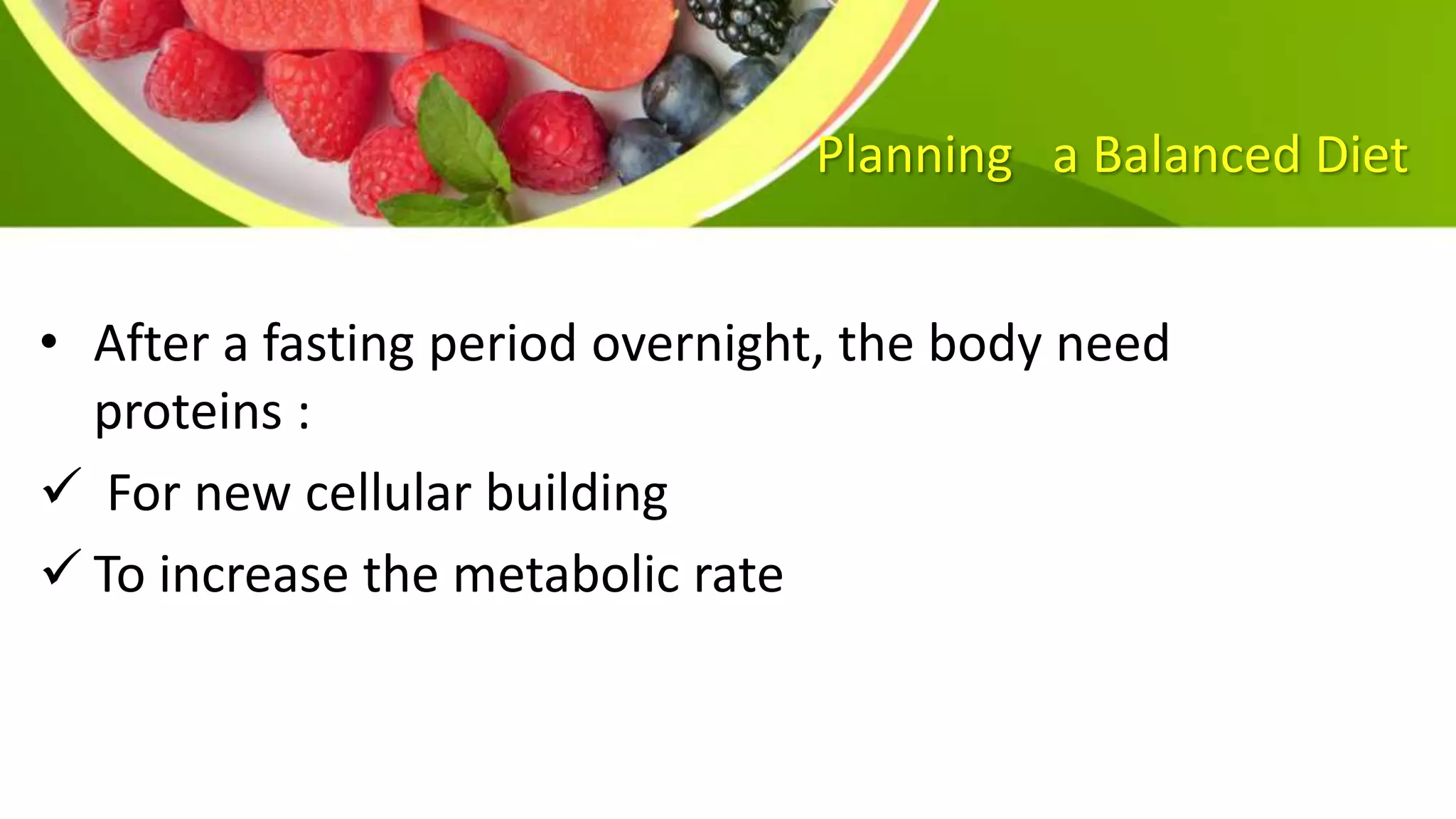
• After a fasting period overnight, the body need
proteins :
 For new cellular building
 To increase the metabolic rate
Serving Per Day
based on age
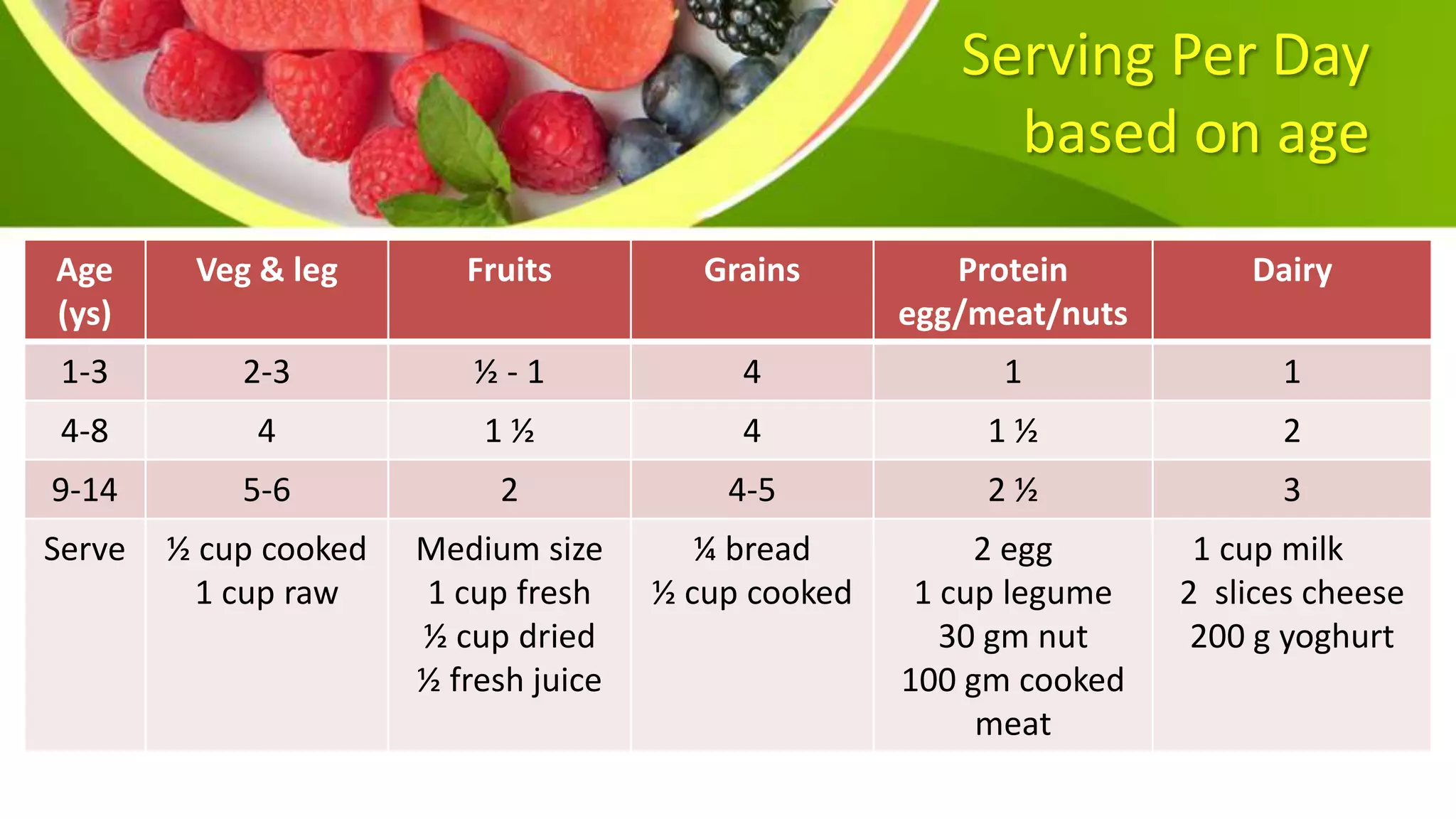
Age
(ys)
Veg & leg Fruits Grains Protein
egg/meat/nuts
Dairy
1-3 2-3 ½ - 1 4 1 1
4-8 4 1 ½ 4 1 ½ 2
9-14 5-6 2 4-5 2 ½ 3
Serve ½ cup cooked
1 cup raw
Medium size
1 cup fresh
½ cup dried
½ fresh juice
¼ bread
½ cup cooked
2 egg
1 cup legume
30 gm nut
100 gm cooked
meat
1 cup milk
2 slices cheese
200 g yoghurt
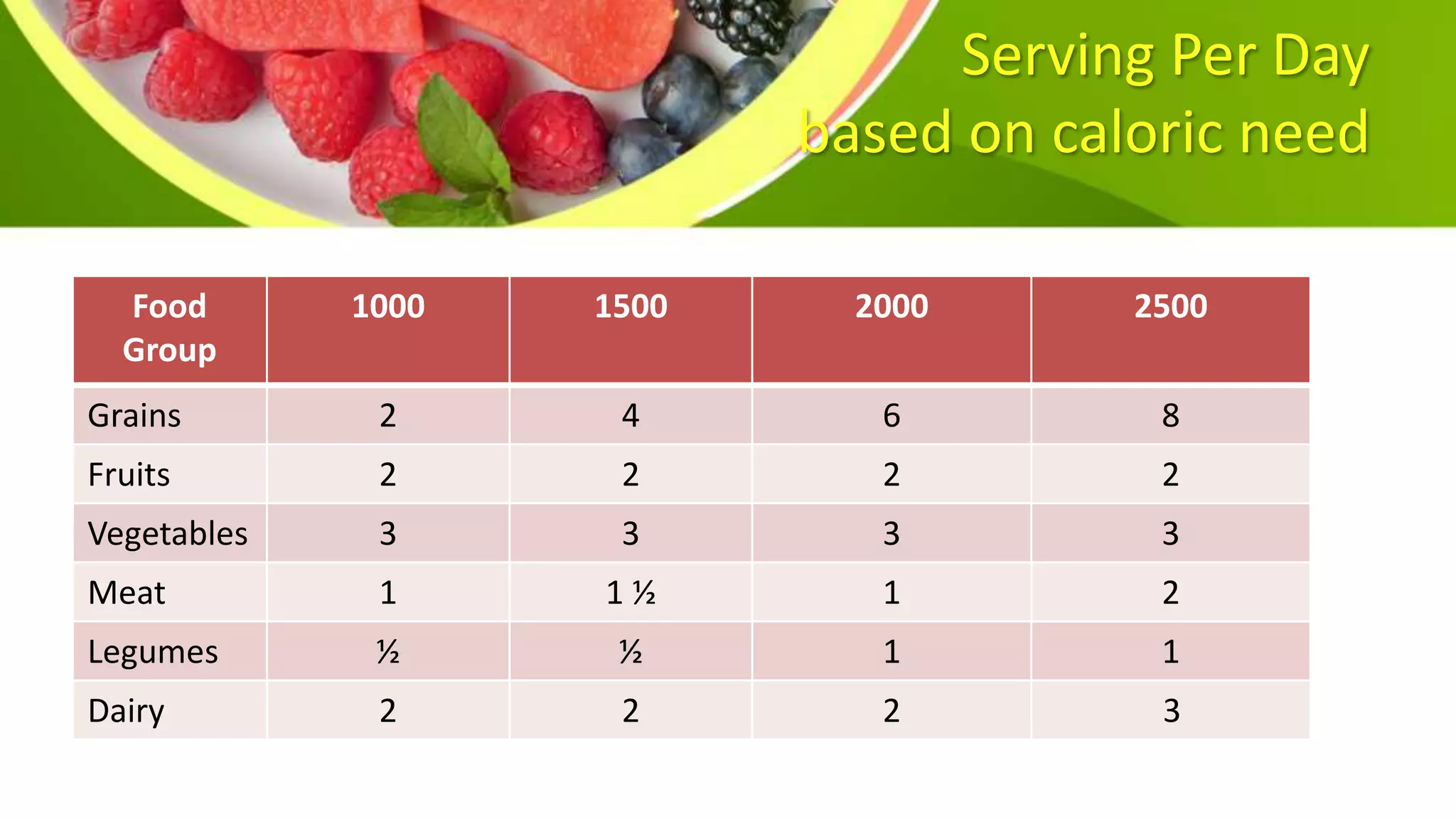
Serving Per Day
based on caloric need
Food
Group
1000 1500 2000 2500
Grains 2 4 6 8
Fruits 2 2 2 2
Vegetables 3 3 3 3
Meat 1 1 ½ 1 2
Legumes ½ ½ 1 1
Dairy 2 2 2 3
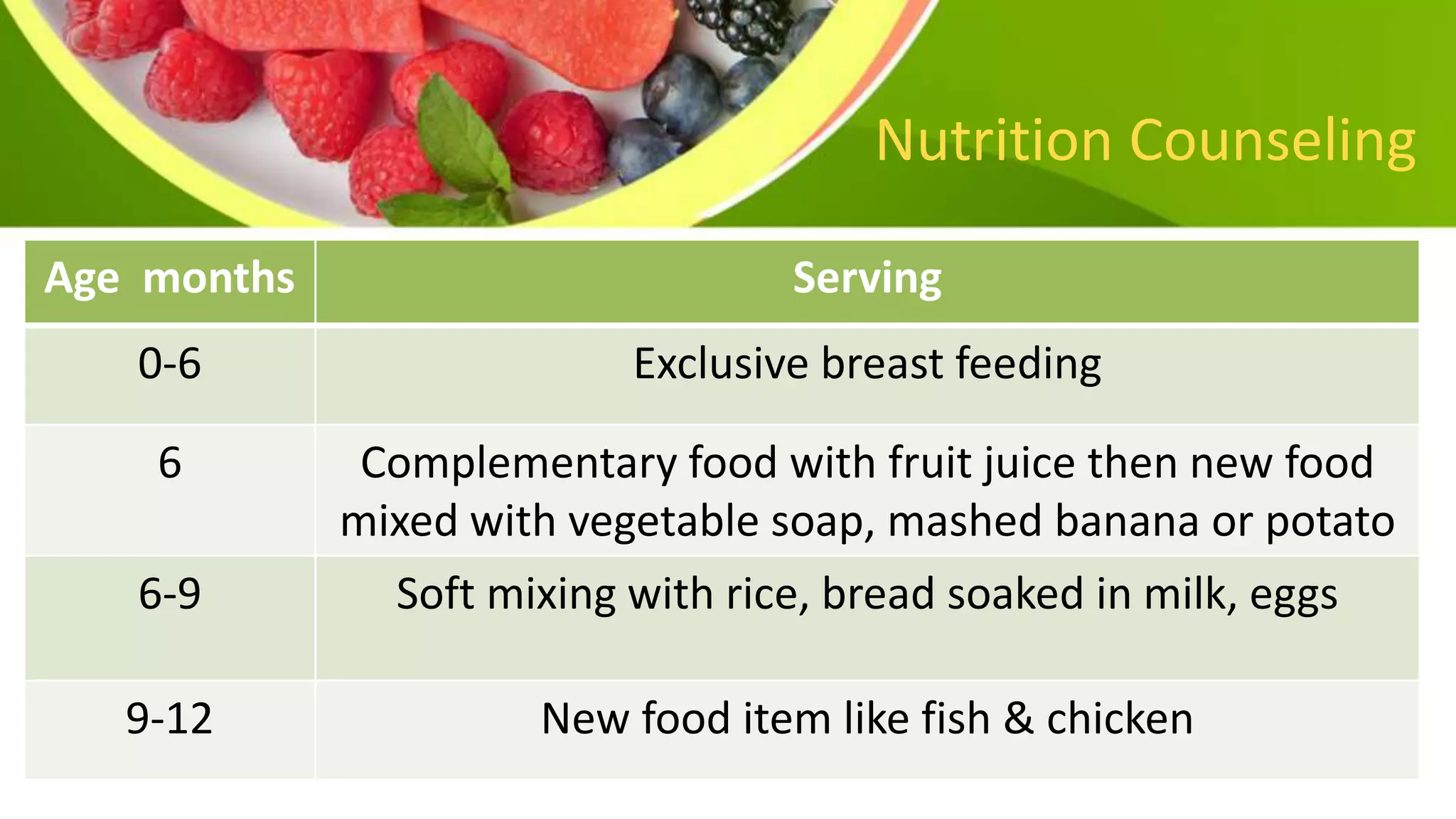
Nutrition Counseling
Age months Serving
0-6 Exclusive breast feeding
6 Complementary food with fruit juice then new food
mixed with vegetable soap, mashed banana or potato
6-9 Soft mixing with rice, bread soaked in milk, eggs
9-12 New food item like fish & chicken
References
•Nutrients and proximate principles of food. Gaurav Kamboje.
Slideshare, 2016
•Nutrition as a part of healthy life style. Michael Karing.
Slideshare, 2014
• national health and medical research council. (Eat for Health
Australian Dietary Guidelines), 2018
•Musaiger AO (2011) The Paradox of Nutrition-Related Diseases
in the Arab Countries: The Need for Action. Int. J. Environ. Res.
Public Health 8: 3637-3671.
•Habiba IA et al (2013) High proportion of 6 to 18-year-old
children and adolescents in the United Arab Emirates are not
meeting dietary recommendations. Nutr Res 33: 447-456.
Thank you

Macro and micro nutrients: Planning balanced diet

  • 1.
    Nutritional Requirement Planning aBalanced Diet Dr. Nermeen Bastawy Nutritionist at Nutri-Care Clinics Physiology Department Cairo University
  • 2.
    Content • Introduction • DietaryGoals • Terminology • Macronutrient Provide Energy • Water and caloric requirement • Dietary Fibers • Proteins/Fat/Vitamins • Balanced Diet • Nutritional Counseling • Daily Food Chick list • References
  • 3.
    Introduction Macronutrients Nutrients that providecalories or energy Micronutrients Vitamins & minerals Water Food provides 5- 10 % of water intake
  • 4.
    Dietary Goals Ensure adequatenutrition to Promote growth Maintain Ideal Body Weight Prevent diet related disorders
  • 5.
    Terminology • RDA (recommendeddietary allowance) • Daily nutrient intake sufficient to meet needs of nearly all healthy persons. • Nutrient deficiency: if intake < 75 % of RDA • Nutrient density: Significant high amount of nutrient compared to calories (Oppose to empty calories)
  • 6.
    Terminology • Low birthweight (LBW) The prevalence of LBW (<2.5 kg) in the Arab countries, ranges from 6% - 32%. It is highly believed that LBW is one of the most important factors for infant mortality in the Arab Region.
  • 7.
    Macronutrient Provide Energy Macronutrient Energy(cal/g) % Caloric Intake Carbohydrate 4 45- 65 Protein 4 15-20 (1-2 g/IBW) Fat 9 20-35
  • 8.
    Water & CaloricRequirements
  • 9.
    Fibers Not digested Fruits, vegetables,oatmeal, grains, legumes Daily intake:14 g/1000 calories Aids digestion & bowel movement Delay carbohydrate and fat absorption
  • 10.
    High-Fiber Foods Food GroupFiber g Serving Grains 1 ½ Cup Fruits 2 ½ Cup or One medium size Vegetables 3 ½ Cup of cooked or One Cup of raw Legumes 7 ½ Cup
  • 11.
    Protein Requirements Group AgeProtein gm/kg/day Protein g/day Infants months 0-3 3-6 6-9 9-12 2.3 1.8 1.6 1.5 - - - - Children Years 1-3 4-6 7-9 10-12 1.83 1.52 1.48 1.46 22 30 41 55
  • 12.
  • 13.
  • 14.
  • 15.
  • 16.
  • 17.
  • 18.
  • 19.
    Balanced Diet • Eata wide variety of foods in the right proportions • Sufficient calories to maintain optimum health & weight High in dense nutrients Low in empty calories Fruits Vegetables Legumes Whole grains Dairy Healthy fat: Nuts & fish Processed food Cakes & pizza Cheese Soft & energy drink
  • 20.
    Planning a BalancedDiet • Individualize • Meet nutrient and caloric needs • Macronutrient proportion • Consider nutrient density • Time and No. of meals • Breakfast with protein …. Why ?
  • 21.
    Planning a BalancedDiet • After a fasting period overnight, the body need proteins :  For new cellular building  To increase the metabolic rate
  • 22.
    Serving Per Day basedon age Age (ys) Veg & leg Fruits Grains Protein egg/meat/nuts Dairy 1-3 2-3 ½ - 1 4 1 1 4-8 4 1 ½ 4 1 ½ 2 9-14 5-6 2 4-5 2 ½ 3 Serve ½ cup cooked 1 cup raw Medium size 1 cup fresh ½ cup dried ½ fresh juice ¼ bread ½ cup cooked 2 egg 1 cup legume 30 gm nut 100 gm cooked meat 1 cup milk 2 slices cheese 200 g yoghurt
  • 23.
    Serving Per Day basedon caloric need Food Group 1000 1500 2000 2500 Grains 2 4 6 8 Fruits 2 2 2 2 Vegetables 3 3 3 3 Meat 1 1 ½ 1 2 Legumes ½ ½ 1 1 Dairy 2 2 2 3
  • 24.
    Nutrition Counseling Age monthsServing 0-6 Exclusive breast feeding 6 Complementary food with fruit juice then new food mixed with vegetable soap, mashed banana or potato 6-9 Soft mixing with rice, bread soaked in milk, eggs 9-12 New food item like fish & chicken
  • 25.
    References •Nutrients and proximateprinciples of food. Gaurav Kamboje. Slideshare, 2016 •Nutrition as a part of healthy life style. Michael Karing. Slideshare, 2014 • national health and medical research council. (Eat for Health Australian Dietary Guidelines), 2018 •Musaiger AO (2011) The Paradox of Nutrition-Related Diseases in the Arab Countries: The Need for Action. Int. J. Environ. Res. Public Health 8: 3637-3671. •Habiba IA et al (2013) High proportion of 6 to 18-year-old children and adolescents in the United Arab Emirates are not meeting dietary recommendations. Nutr Res 33: 447-456.
  • 26.

Editor's Notes

  • #10 Satisfaction, prevent constipation