Integrating person-centred care for people
living with cancer in the community
Fiona Flowers
Specialist Advisor for Community Settings
17/10/2019
May 20192
The changing story of cancer
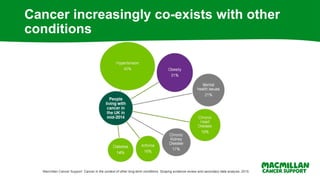
Macmillan Cancer Support. Cancer in the context of other long-term conditions. Scoping evidence review and secondary data analysis. 2015.
Cancer increasingly co-exists with other
conditions
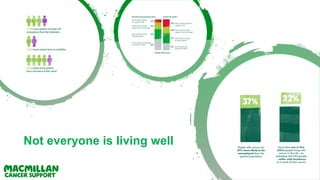
Not everyone is living well
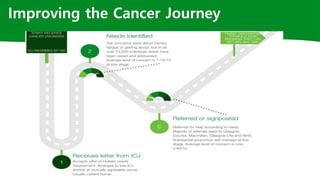
Improving the Cancer Journey
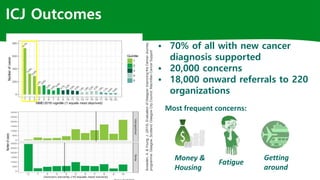
Most frequent concerns:
Getting
around
Money &
Housing
Fatigue
ICJ Outcomes
Snowden,A.&Young,J.(2015).EvaluationofGlasgow:ImprovingtheCancerJourney
programme.Glasgow,Scotland:GlasgowCityCouncil;MacmillanCancerSupport
• 70% of all with new cancer
diagnosis supported
• 20,000 concerns
• 18,000 onward referrals to 220
organizations
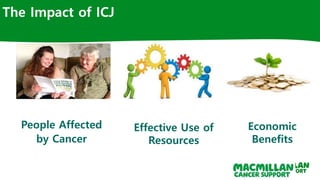
The Impact of ICJ
People Affected
by Cancer
Effective Use of
Resources
Economic
Benefits
Clinical Impact of ICJ on NHS Staff
 Regain focus on clinical issues.
 Saving clinical time.
 Reducing burdens on clinicians.
 Improving job satisfaction and staff morale.
 Why ICJ works.
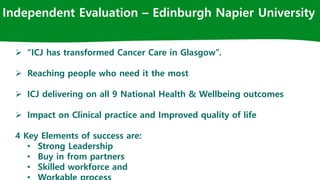
Independent Evaluation – Edinburgh Napier University
 “ICJ has transformed Cancer Care in Glasgow”.
 Reaching people who need it the most
 ICJ delivering on all 9 National Health & Wellbeing outcomes
 Impact on Clinical practice and Improved quality of life
4 Key Elements of success are:
• Strong Leadership
• Buy in from partners
• Skilled workforce and
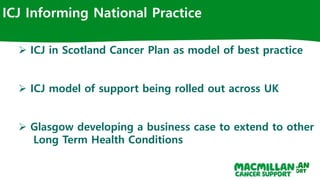
ICJ Informing National Practice
 ICJ in Scotland Cancer Plan as model of best practice
 ICJ model of support being rolled out across UK
 Glasgow developing a business case to extend to other
Long Term Health Conditions
Macmillan Local Authority partnership
Programme
Integrated working in community settings
MLAP
Aims to ensure that everyone diagnosed with cancer can easily access the cross-sector integrated support they
need, to enable them to live their lives as independently as possible in their communities. It recognises the vital role
of LA’s, communities and the wider workforce at enabling coordinated care from secondary into primary and
community care.
MLAPP involves:
• co-production by involving people living with cancer: this is a fundamental element in shaping the design and
delivery of the programme.
• working with multiple stakeholders across a place to enable change
• creating clear pathways designed around individuals and streamlined for convenience, efficiency and accessibility
• mapping and building the assets available and building on existing links in local communities
• ensuring cancer support is embedded in strategic planning
• focusing on holistic care needs when commissioning services
It has been evaluated by SQW and SCIE since 2016
How the programmes
have developed
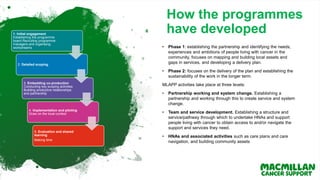
• Phase 1: establishing the partnership and identifying the needs,
experiences and ambitions of people living with cancer in the
community, focuses on mapping and building local assets and
gaps in services, and developing a delivery plan.
• Phase 2: focuses on the delivery of the plan and establishing the
sustainability of the work in the longer term.
MLAPP activities take place at three levels:
• Partnership working and system change. Establishing a
partnership and working through this to create service and system
change.
• Team and service development. Establishing a structure and
service/pathway through which to undertake HNAs and support
people living with cancer to obtain access to and/or navigate the
support and services they need.
• HNAs and associated activities such as care plans and care
navigation, and building community assets
1. Initial engagement
Establishing the programme
board Recruiting programme
managers and organising
workstreams
2. Detailed scoping
3. Embedding co-production
Conducting key scoping activities
Building productive relationships
and partnership
4. Implementation and piloting
Draw on the local context
5. Evaluation and shared
learning
Making time
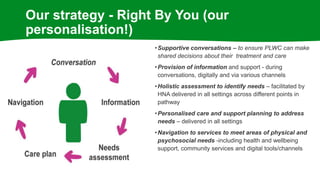
•Supportive conversations – to ensure PLWC can make
shared decisions about their treatment and care
•Provision of information and support - during
conversations, digitally and via various channels
•Holistic assessment to identify needs – facilitated by
HNA delivered in all settings across different points in
pathway
•Personalised care and support planning to address
needs – delivered in all settings
•Navigation to services to meet areas of physical and
psychosocial needs -including health and wellbeing
support, community services and digital tools/channels
Our strategy - Right By You (our
personalisation!)
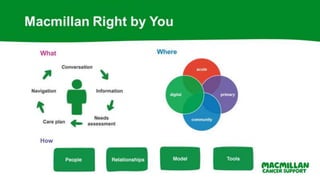
Macmillan Right by You
What Where
How
acute
primary
community
digital
We’re here to help you find your best way
through and live life as fully as you can.
For information, support or just someone to talk
to, call 0808 808 00 00 or visit macmillan.org.uk

Macmillan Cancer Care Presentation

  • 1.
    Integrating person-centred carefor people living with cancer in the community Fiona Flowers Specialist Advisor for Community Settings 17/10/2019
  • 2.
  • 3.
  • 4.
    Macmillan Cancer Support.Cancer in the context of other long-term conditions. Scoping evidence review and secondary data analysis. 2015. Cancer increasingly co-exists with other conditions
  • 5.
    Not everyone isliving well
  • 6.
  • 7.
    Most frequent concerns: Getting around Money& Housing Fatigue ICJ Outcomes Snowden,A.&Young,J.(2015).EvaluationofGlasgow:ImprovingtheCancerJourney programme.Glasgow,Scotland:GlasgowCityCouncil;MacmillanCancerSupport • 70% of all with new cancer diagnosis supported • 20,000 concerns • 18,000 onward referrals to 220 organizations
  • 8.
    The Impact ofICJ People Affected by Cancer Effective Use of Resources Economic Benefits
  • 9.
    Clinical Impact ofICJ on NHS Staff  Regain focus on clinical issues.  Saving clinical time.  Reducing burdens on clinicians.  Improving job satisfaction and staff morale.  Why ICJ works.
  • 10.
    Independent Evaluation –Edinburgh Napier University  “ICJ has transformed Cancer Care in Glasgow”.  Reaching people who need it the most  ICJ delivering on all 9 National Health & Wellbeing outcomes  Impact on Clinical practice and Improved quality of life 4 Key Elements of success are: • Strong Leadership • Buy in from partners • Skilled workforce and
  • 11.
    ICJ Informing NationalPractice  ICJ in Scotland Cancer Plan as model of best practice  ICJ model of support being rolled out across UK  Glasgow developing a business case to extend to other Long Term Health Conditions
  • 12.
    Macmillan Local Authoritypartnership Programme Integrated working in community settings
  • 13.
    MLAP Aims to ensurethat everyone diagnosed with cancer can easily access the cross-sector integrated support they need, to enable them to live their lives as independently as possible in their communities. It recognises the vital role of LA’s, communities and the wider workforce at enabling coordinated care from secondary into primary and community care. MLAPP involves: • co-production by involving people living with cancer: this is a fundamental element in shaping the design and delivery of the programme. • working with multiple stakeholders across a place to enable change • creating clear pathways designed around individuals and streamlined for convenience, efficiency and accessibility • mapping and building the assets available and building on existing links in local communities • ensuring cancer support is embedded in strategic planning • focusing on holistic care needs when commissioning services It has been evaluated by SQW and SCIE since 2016
  • 14.
    How the programmes havedeveloped • Phase 1: establishing the partnership and identifying the needs, experiences and ambitions of people living with cancer in the community, focuses on mapping and building local assets and gaps in services, and developing a delivery plan. • Phase 2: focuses on the delivery of the plan and establishing the sustainability of the work in the longer term. MLAPP activities take place at three levels: • Partnership working and system change. Establishing a partnership and working through this to create service and system change. • Team and service development. Establishing a structure and service/pathway through which to undertake HNAs and support people living with cancer to obtain access to and/or navigate the support and services they need. • HNAs and associated activities such as care plans and care navigation, and building community assets 1. Initial engagement Establishing the programme board Recruiting programme managers and organising workstreams 2. Detailed scoping 3. Embedding co-production Conducting key scoping activities Building productive relationships and partnership 4. Implementation and piloting Draw on the local context 5. Evaluation and shared learning Making time
  • 15.
    •Supportive conversations –to ensure PLWC can make shared decisions about their treatment and care •Provision of information and support - during conversations, digitally and via various channels •Holistic assessment to identify needs – facilitated by HNA delivered in all settings across different points in pathway •Personalised care and support planning to address needs – delivered in all settings •Navigation to services to meet areas of physical and psychosocial needs -including health and wellbeing support, community services and digital tools/channels Our strategy - Right By You (our personalisation!)
  • 16.
    Macmillan Right byYou What Where How acute primary community digital
  • 17.
    We’re here tohelp you find your best way through and live life as fully as you can. For information, support or just someone to talk to, call 0808 808 00 00 or visit macmillan.org.uk