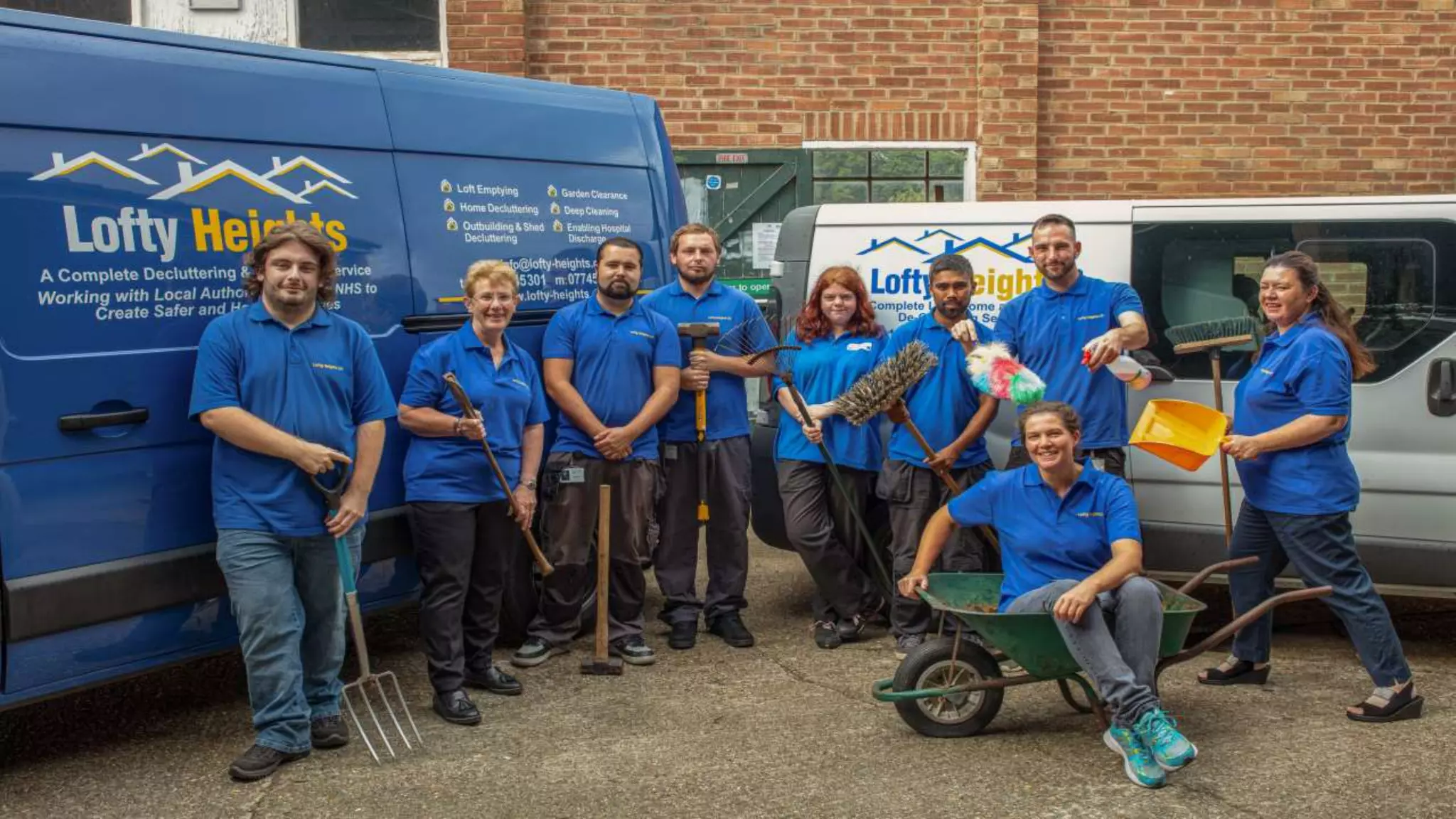
Social Enterprise Trading for Good
Our aims
• To create warmer, safer, healthier homes
in Suffolk
• To improve the future life chances of
young adults
Creating warmer, safer, healthier homes in Suffolk
Our services
• Home and Garden Decluttering
• Breathing Space Small Jobs for family carers and
others
• Homeward Bound Hospital Discharge Service
• Downsize to move
• Supported house clearance
• End of tenancy clean
• Information and Signposting
• Raising Awareness and providing training to other
professionals
What is Hoarding Disorder?
• Hoarding Disorder was officially recognised as mental health condition in
2018
• A hoarding disorder is where someone acquires an excessive number of
items and stores them in a chaotic manner, usually resulting in
unmanageable amounts of clutter. The items can be of little or no
monetary value.
Hoarding is considered a significant problem if:
• the amount of clutter interferes with everyday living – for example, the
person is unable to use their kitchen or bathroom and cannot access rooms
• the clutter is causing significant distress or negatively affecting the quality
of life of the person or their family – for example, they become upset if
someone tries to clear the clutter and their relationship suffers
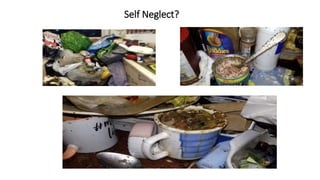
What is self-neglect?
• Lack of self-care to an extent that it threatens personal health and
safety
• Neglecting to care for one’s personal hygiene, health or surroundings
• Inability to avoid harm as a result of self-neglect
• Failure to seek help or access services to meet health and social care
needs
• Inability or unwillingness to manage one’s personal affairs
Self Neglect?
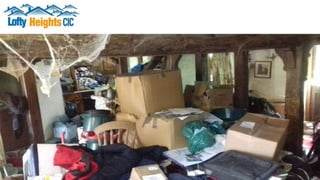
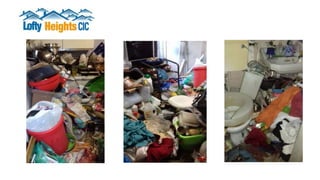
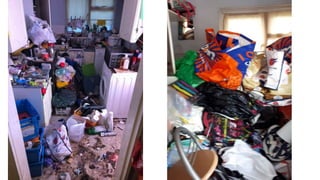
A Job We Recently Completed
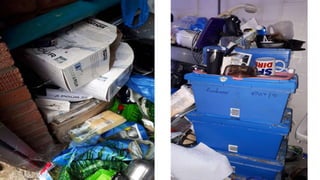
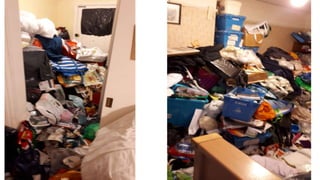
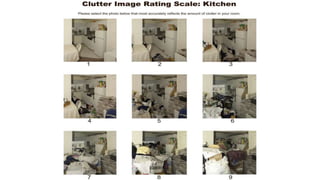
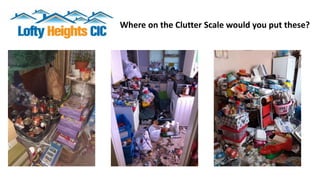
Cluttered or Hoarded?
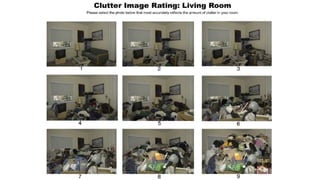
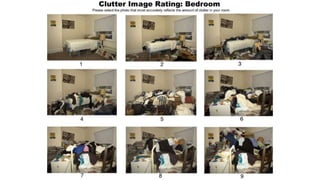
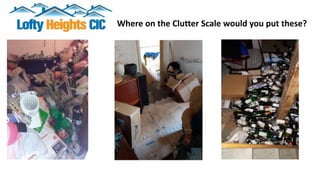
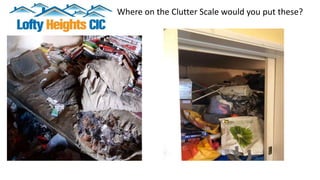
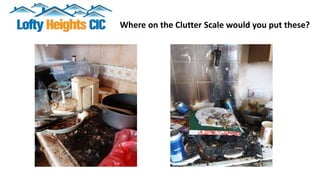
Where on the Clutter Scale would you put these?
What helps?
• Building rapport and trusting by
• Listening carefully
• Being honest
• Not being judgemental
• Being careful about the language we use when talking about
a persons possessions
• Don’t refer to possessions as junk or rubbish
• Find an interest you can talk about
• Being person centered
Challenges
What are the challenges?
• Individual
• Organisations/Authorities
• Our Team
How do you identify a hoarder?
Solutions
• Individuals recognise that they want help
• Partnership Working,
• Good communication
• Information sharing
• Discovering problems earlier
• More engagement with mental health services
• Reducing loneliness and isolation
These are essential if we are to make any significant change
to the lives of people affected by hoarding disorder.
Sources of help and information
Suffolk Safeguarding Partnership: Safeguarding Adults
https://www.suffolkas.org/safeguarding-topics/self-neglect-
and-hoarding/
Hoarding UK
Check out agencies near you
Olive Quinton
Founding CEO
07745215114
01473 345301
Email: info@lofty-heights.org
www.lofty-heights.org
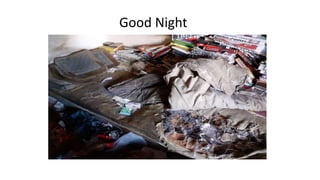
Good Night
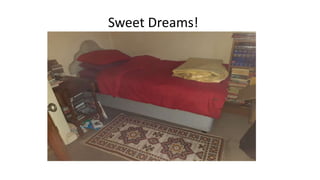
Sweet Dreams!

Lofty Heights

  • 2.
    Social Enterprise Tradingfor Good Our aims • To create warmer, safer, healthier homes in Suffolk • To improve the future life chances of young adults
  • 3.
    Creating warmer, safer,healthier homes in Suffolk Our services • Home and Garden Decluttering • Breathing Space Small Jobs for family carers and others • Homeward Bound Hospital Discharge Service • Downsize to move • Supported house clearance • End of tenancy clean • Information and Signposting • Raising Awareness and providing training to other professionals
  • 4.
    What is HoardingDisorder? • Hoarding Disorder was officially recognised as mental health condition in 2018 • A hoarding disorder is where someone acquires an excessive number of items and stores them in a chaotic manner, usually resulting in unmanageable amounts of clutter. The items can be of little or no monetary value. Hoarding is considered a significant problem if: • the amount of clutter interferes with everyday living – for example, the person is unable to use their kitchen or bathroom and cannot access rooms • the clutter is causing significant distress or negatively affecting the quality of life of the person or their family – for example, they become upset if someone tries to clear the clutter and their relationship suffers
  • 6.
    What is self-neglect? •Lack of self-care to an extent that it threatens personal health and safety • Neglecting to care for one’s personal hygiene, health or surroundings • Inability to avoid harm as a result of self-neglect • Failure to seek help or access services to meet health and social care needs • Inability or unwillingness to manage one’s personal affairs
  • 7.
  • 9.
    A Job WeRecently Completed
  • 13.
  • 17.
    Where on theClutter Scale would you put these?
  • 18.
    Where on theClutter Scale would you put these?
  • 19.
    Where on theClutter Scale would you put these?
  • 20.
    Where on theClutter Scale would you put these?
  • 22.
    What helps? • Buildingrapport and trusting by • Listening carefully • Being honest • Not being judgemental • Being careful about the language we use when talking about a persons possessions • Don’t refer to possessions as junk or rubbish • Find an interest you can talk about • Being person centered
  • 23.
    Challenges What are thechallenges? • Individual • Organisations/Authorities • Our Team How do you identify a hoarder?
  • 24.
    Solutions • Individuals recognisethat they want help • Partnership Working, • Good communication • Information sharing • Discovering problems earlier • More engagement with mental health services • Reducing loneliness and isolation These are essential if we are to make any significant change to the lives of people affected by hoarding disorder.
  • 25.
    Sources of helpand information Suffolk Safeguarding Partnership: Safeguarding Adults https://www.suffolkas.org/safeguarding-topics/self-neglect- and-hoarding/ Hoarding UK Check out agencies near you
  • 26.
    Olive Quinton Founding CEO 07745215114 01473345301 Email: info@lofty-heights.org www.lofty-heights.org
  • 27.
  • 28.