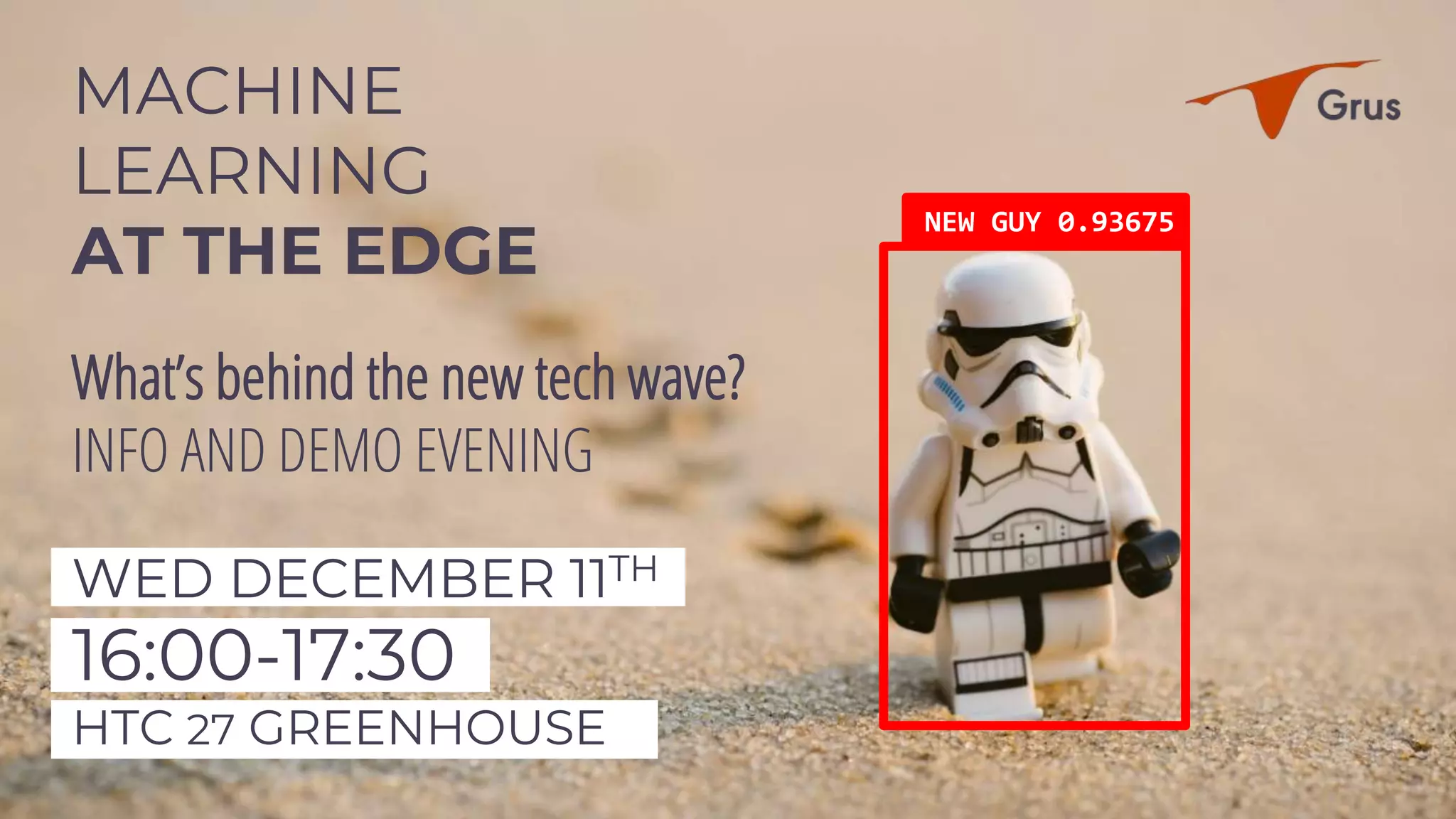
NEW GUY 0.93675
MACHINE
LEARNING
AT THE EDGE
What’s behind the new tech wave?
INFO AND DEMO EVENING
WED DECEMBER 11TH
16:00-17:30
HTC 27 GREENHOUSE
ML at the edge is punching
above its weight
A tiny quiz…
ML at the edge:
“bringing computation to where the
data is.”
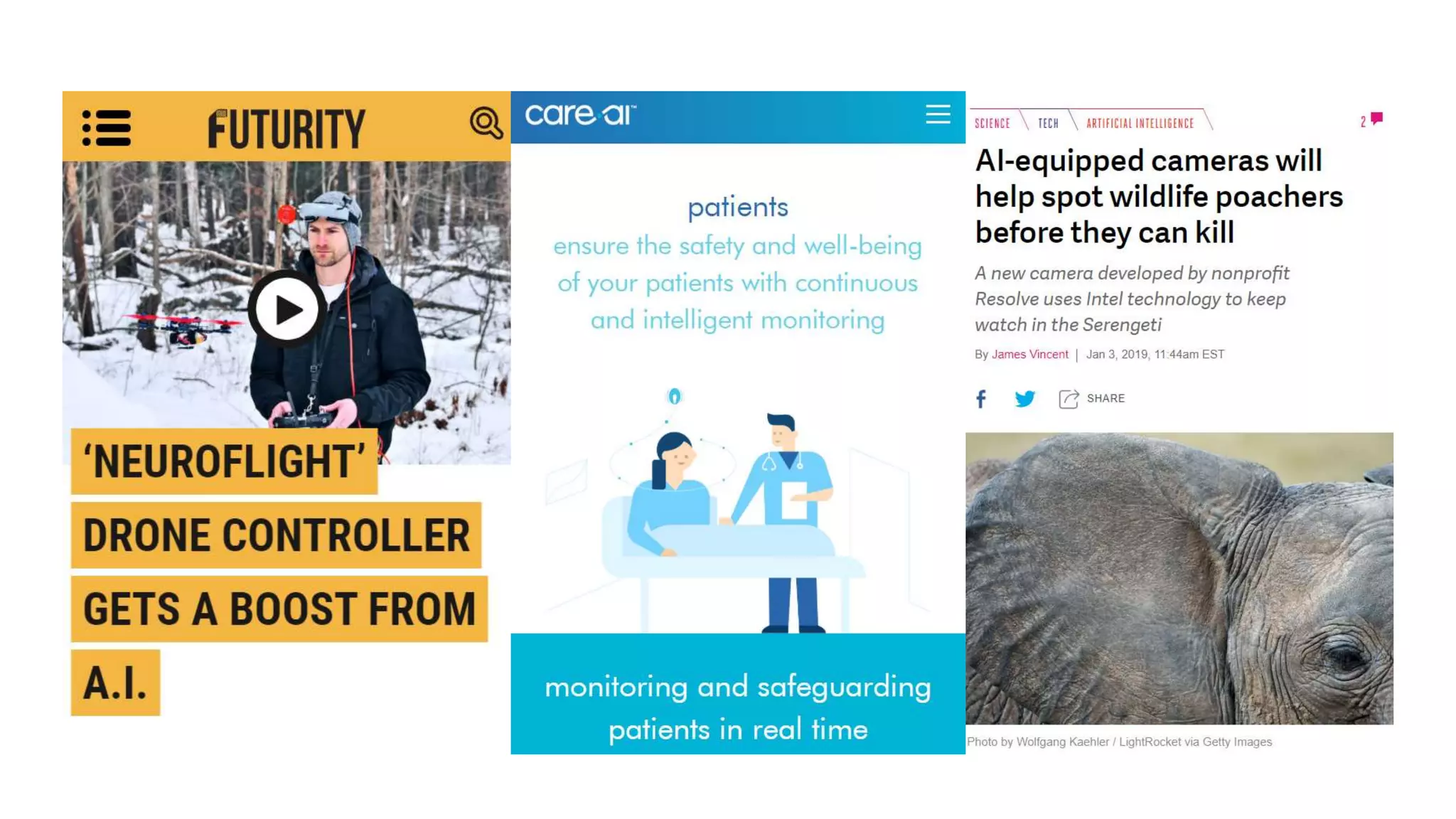
What are the possible applications
that would enjoy ML at the edge?
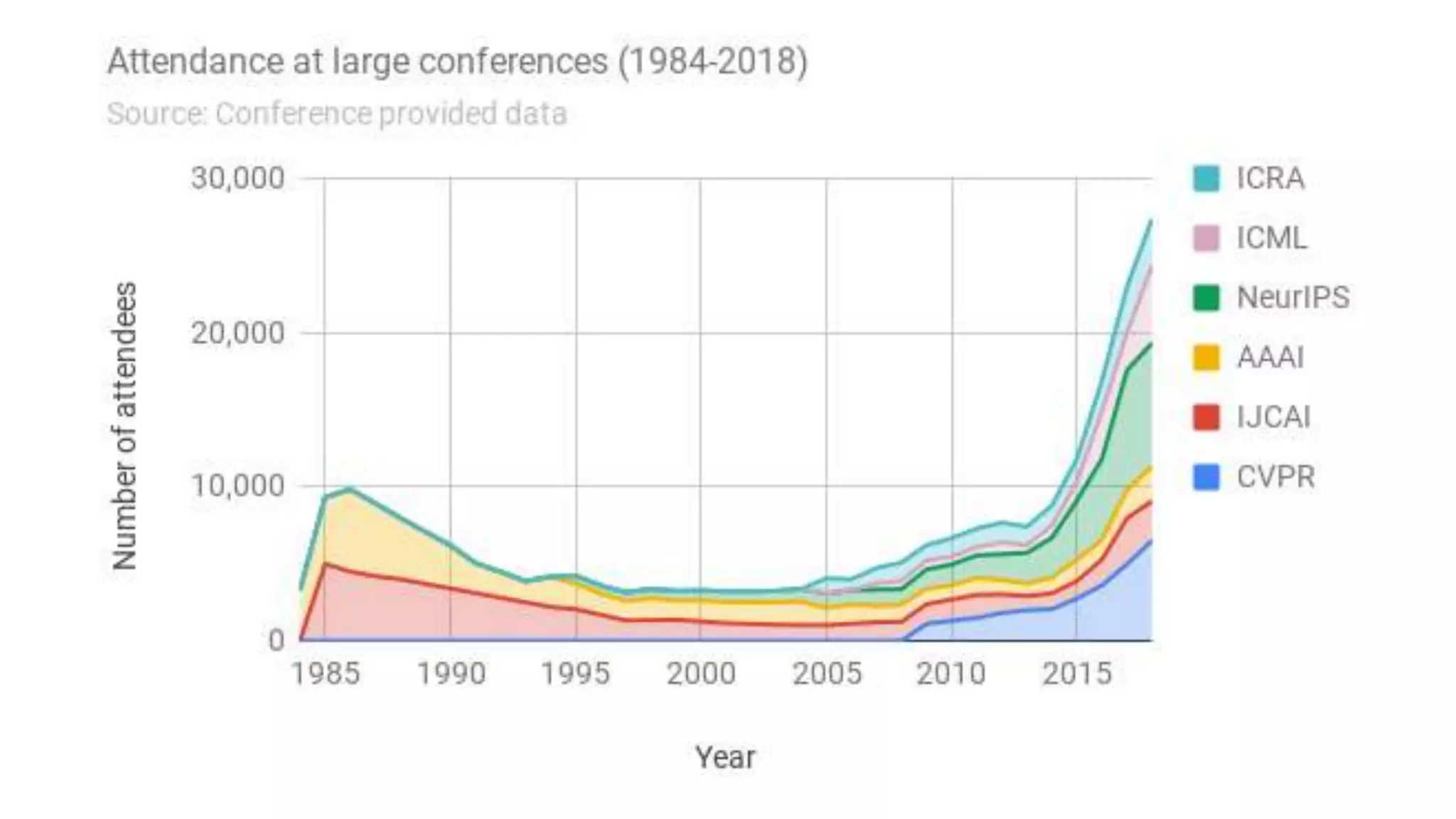
Machine learning had to
prove itself in the field.
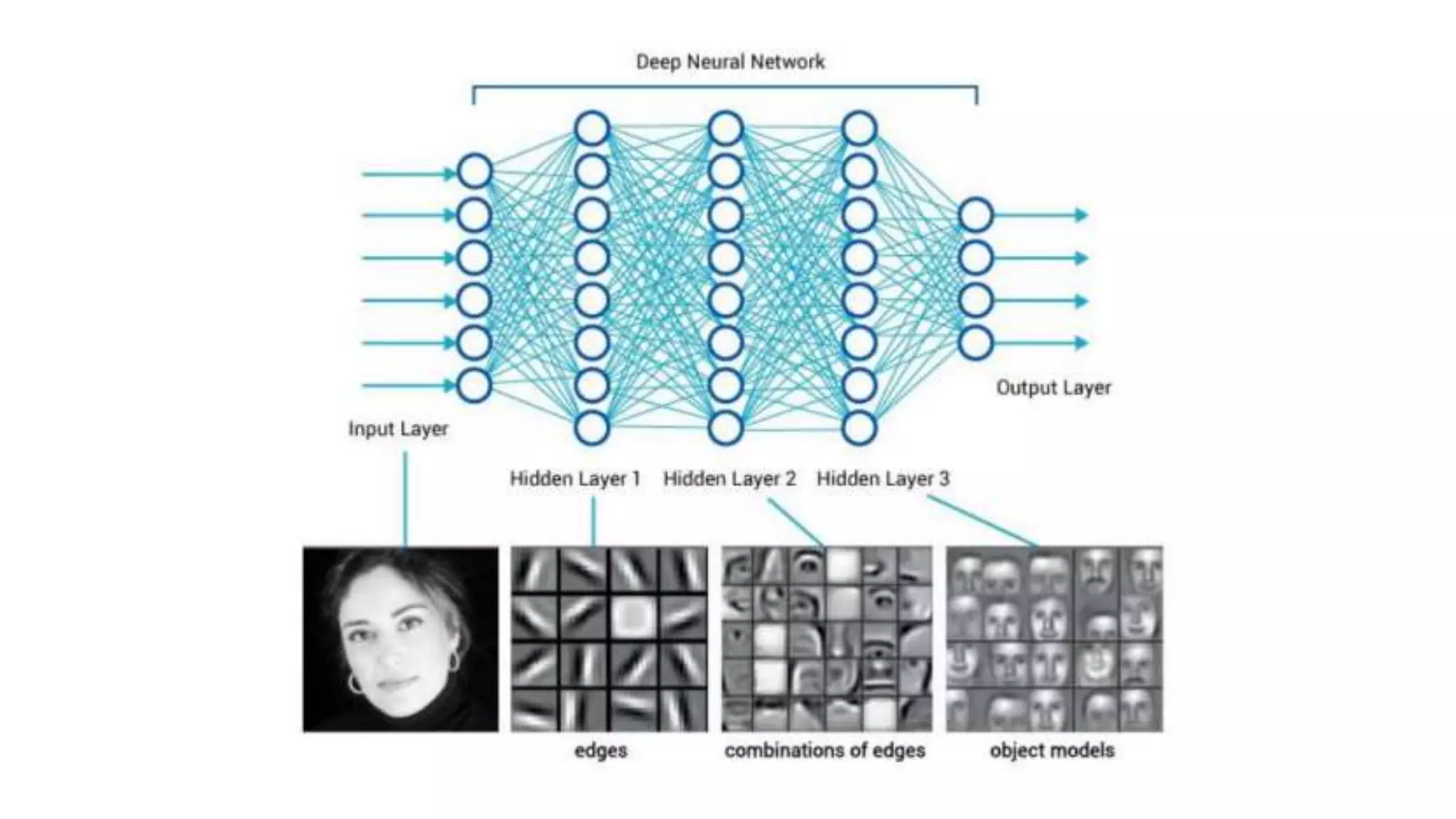
Deep Learning – quick recap
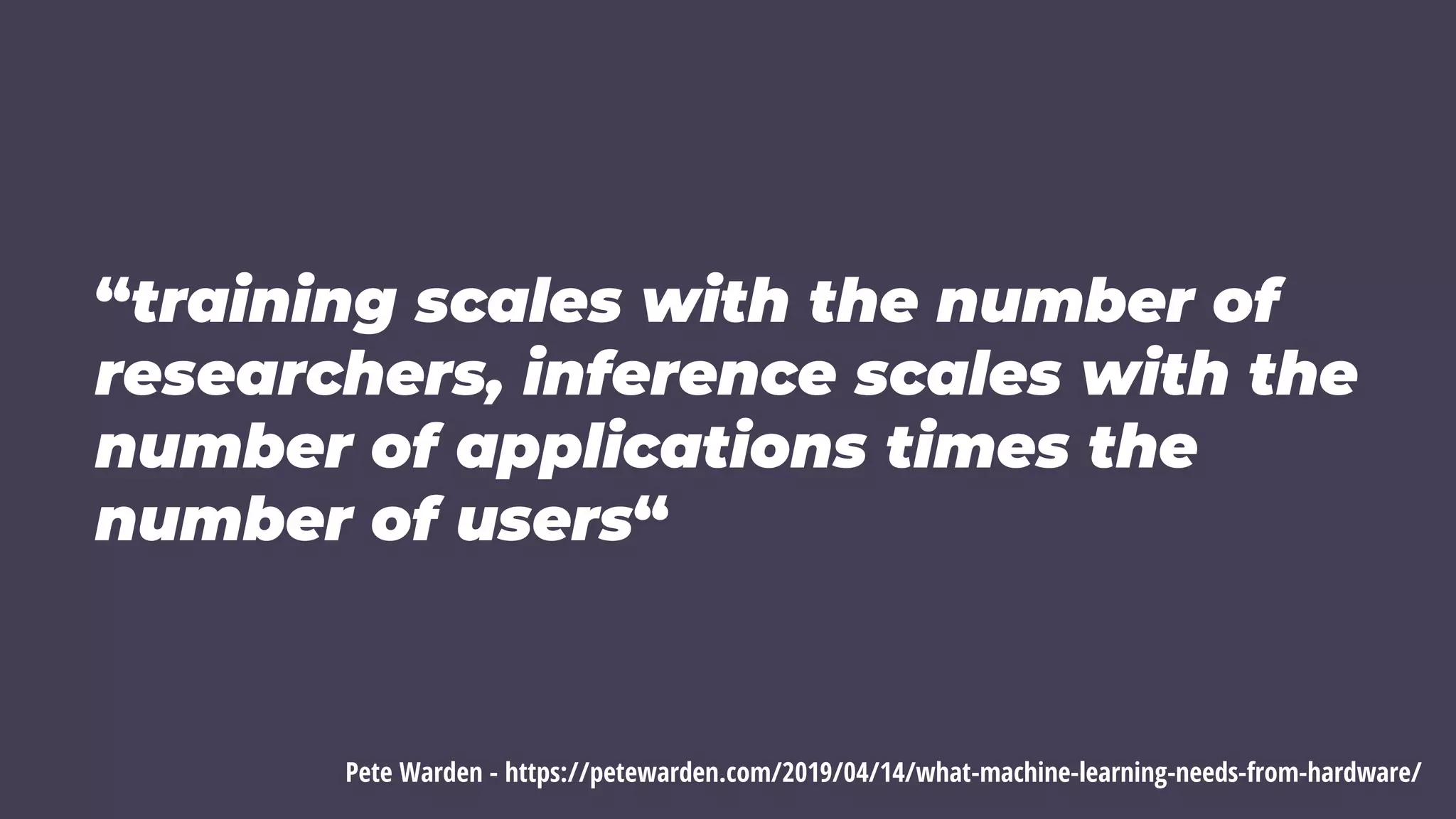
“training scales with the number of
researchers, inference scales with the
number of applications times the
number of users“
Pete Warden - https://petewarden.com/2019/04/14/what-machine-learning-needs-from-hardware/
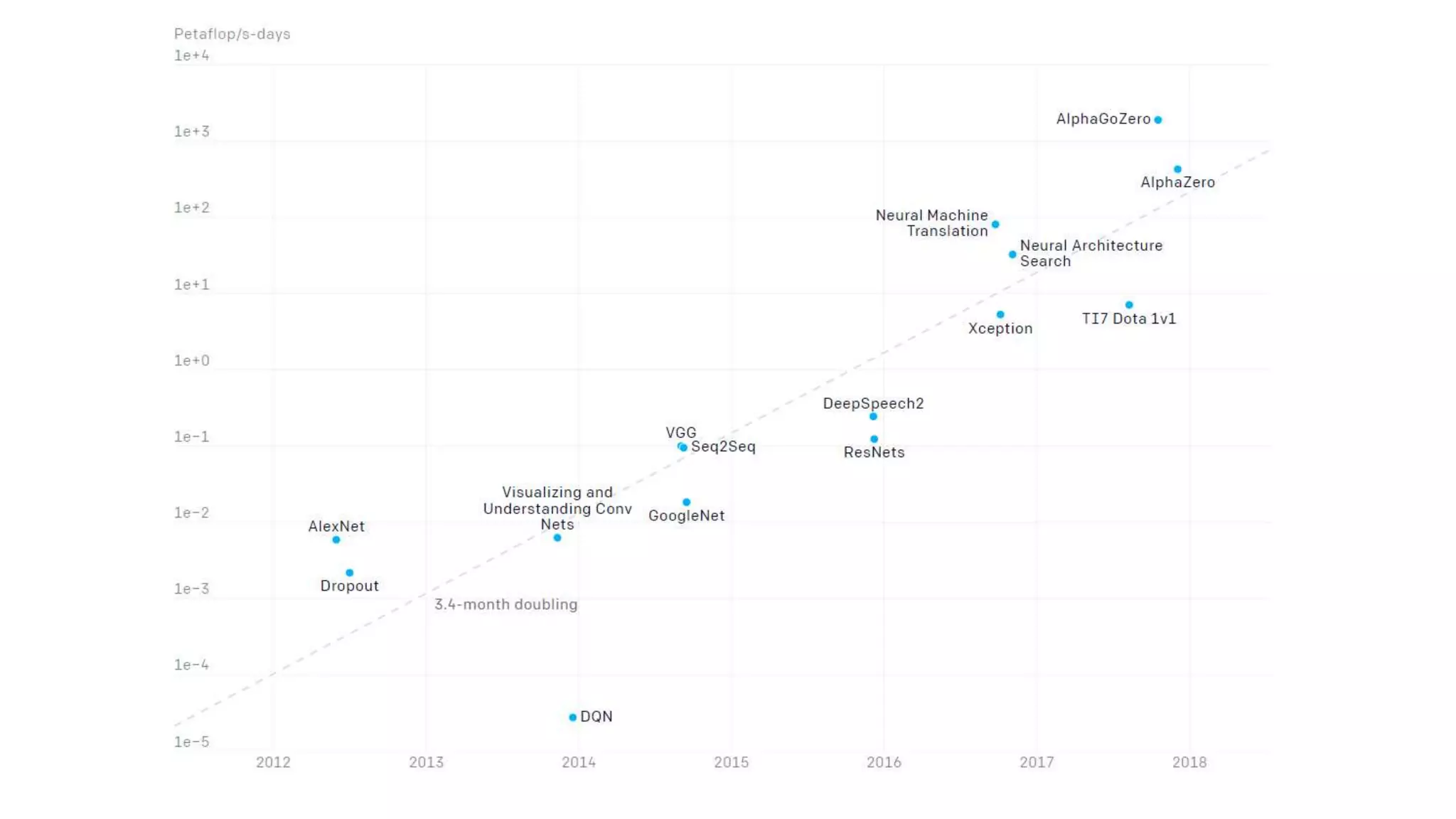
Success of ML depends on
computational power.
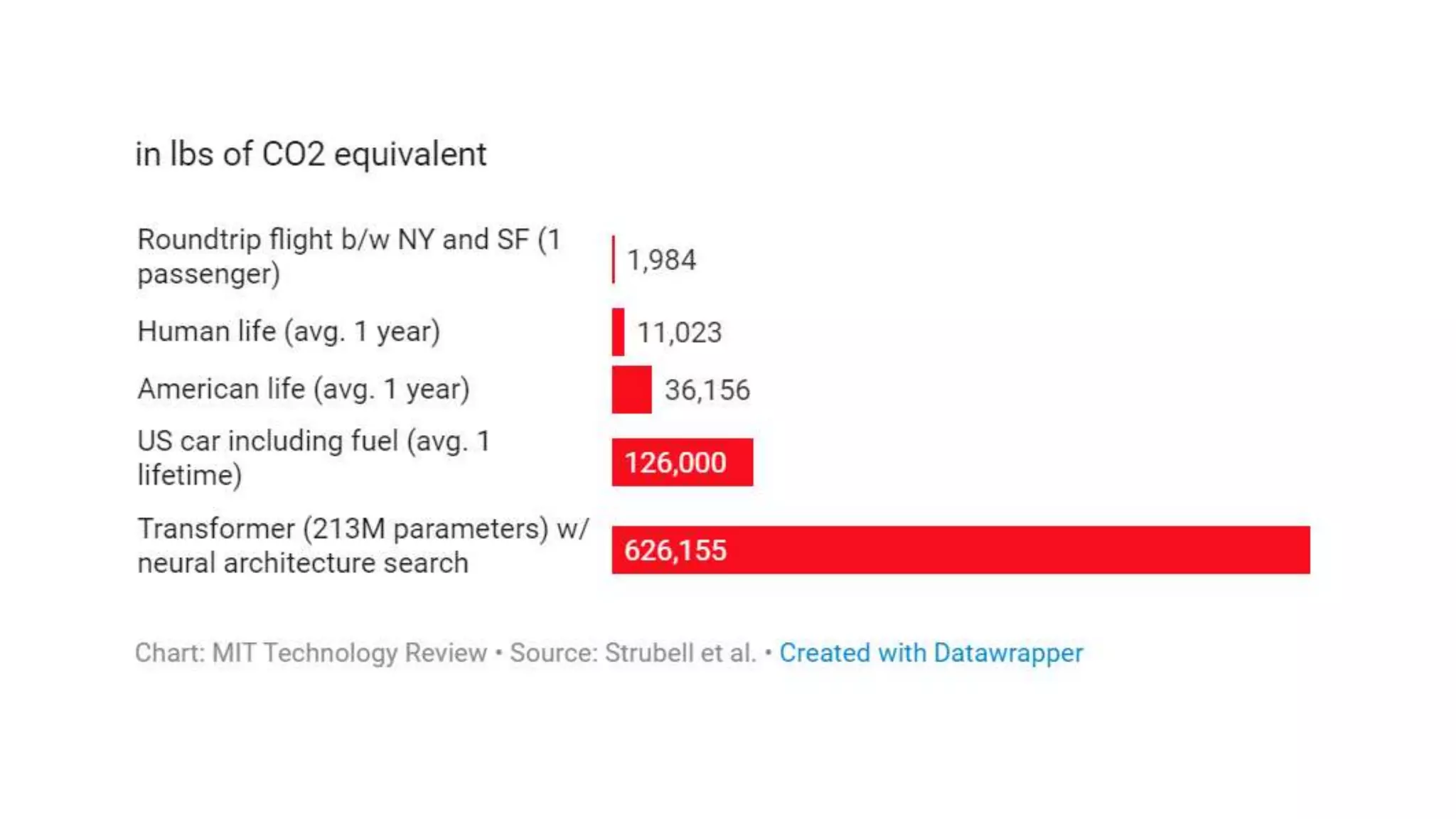
…much more than what we
can environmentally
sustain.
…much more than what we
can intellectually sustain.
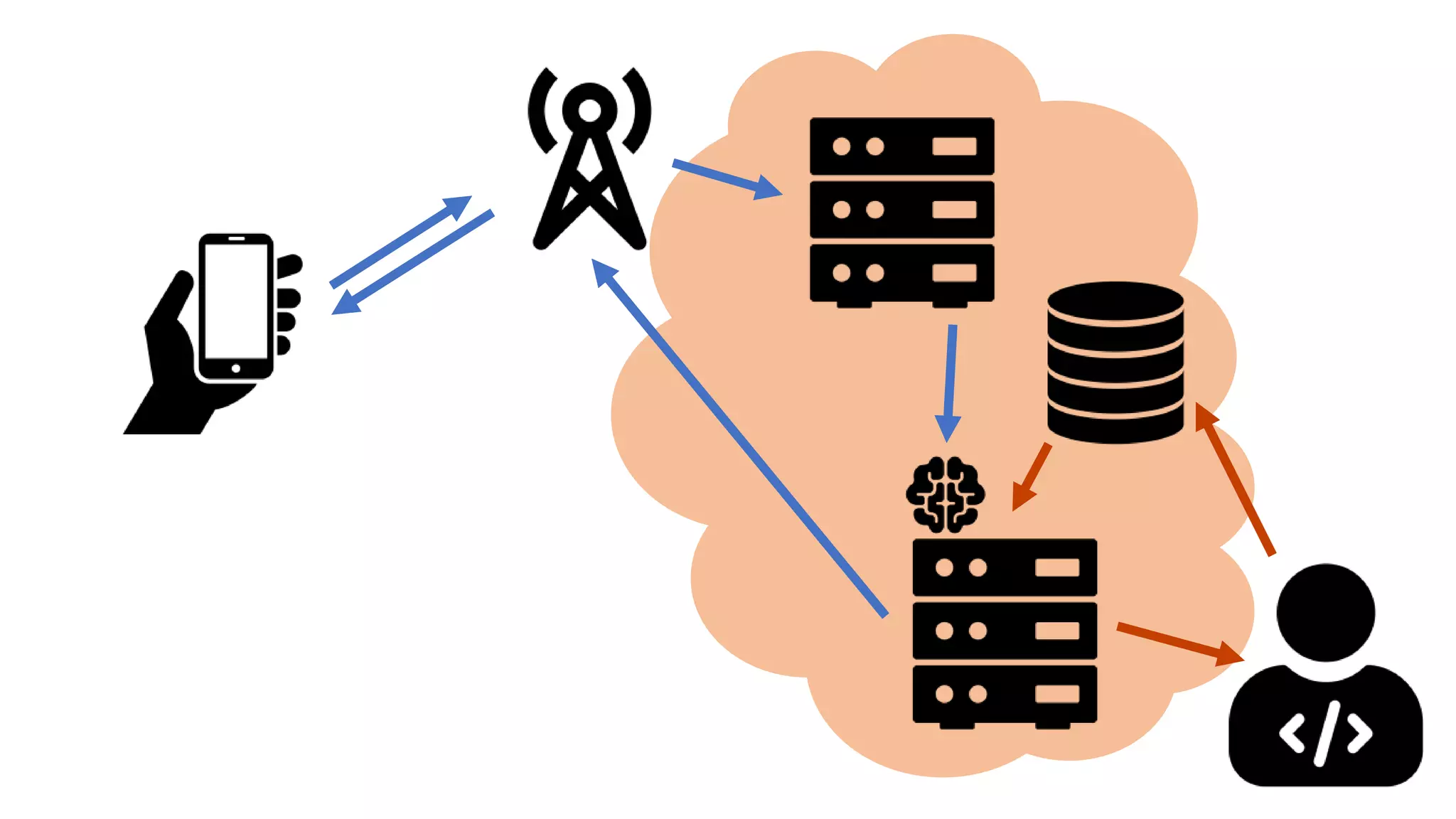
Today, ML products are
cloud based.
Network bandwidth fails to keep up
with the amount of data generated.
Latency will continue to be significant.
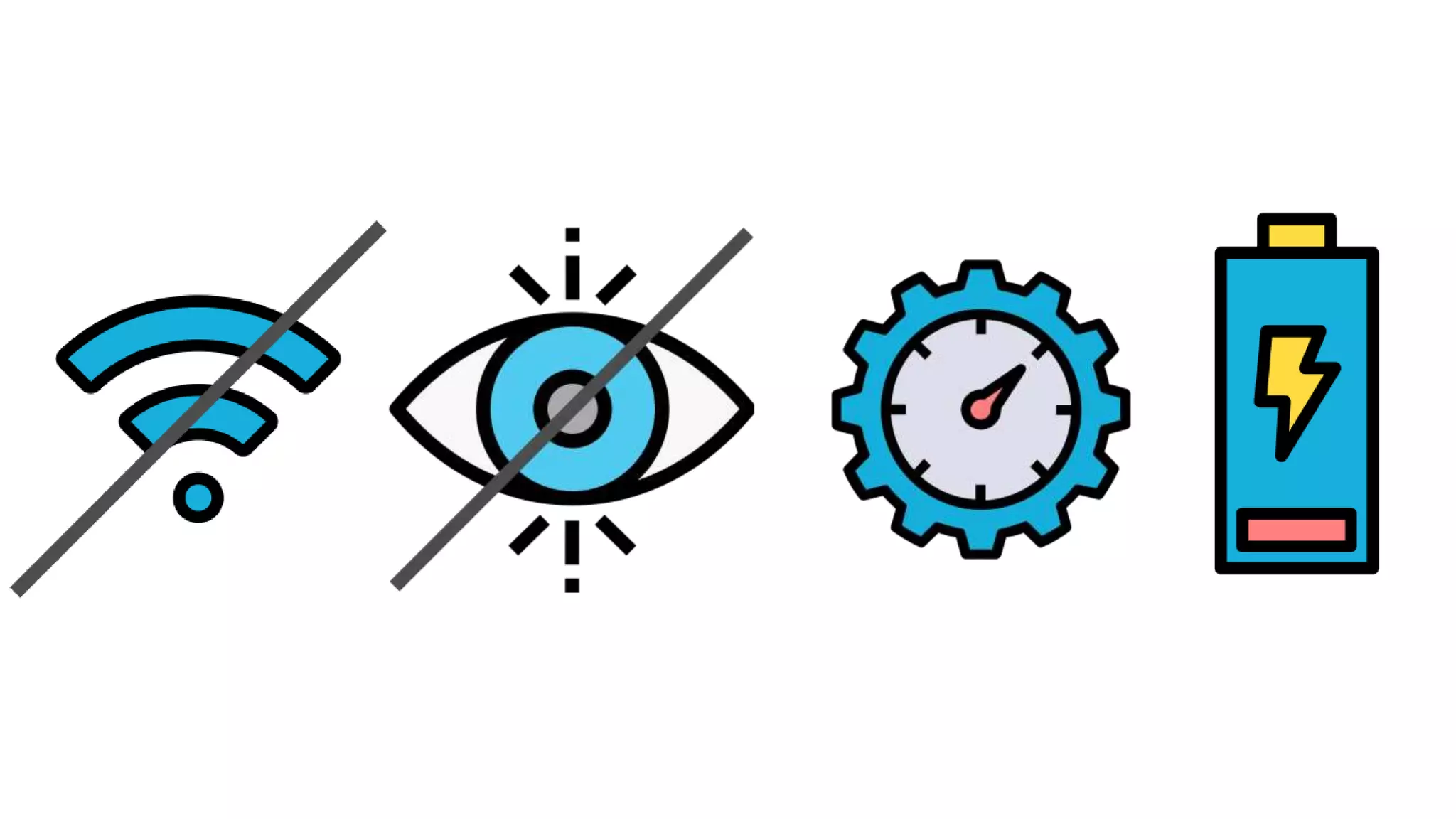
Problem #1
Applications are not autonomous
Problem #2
Data privacy is lacking
Problem #3
Latency is substantial
Problem #4
Network connection requires
energy
ML applications proved themselves in
principle.
Chips follow.
Because the growth is predictable.
Result: Huge downwind from ASIC
industry
“HW design was getting a little bit
boring. […]
The rise of machine learning (deep
learning) has changed all that.”
Pete Warden - https://petewarden.com/2019/04/14/what-machine-learning-needs-from-hardware/
“improvements in latency and energy
usage”
“new or enhanced user experiences.”
Pete Warden - https://petewarden.com/2019/04/14/what-machine-learning-needs-from-hardware/
The challenge is…
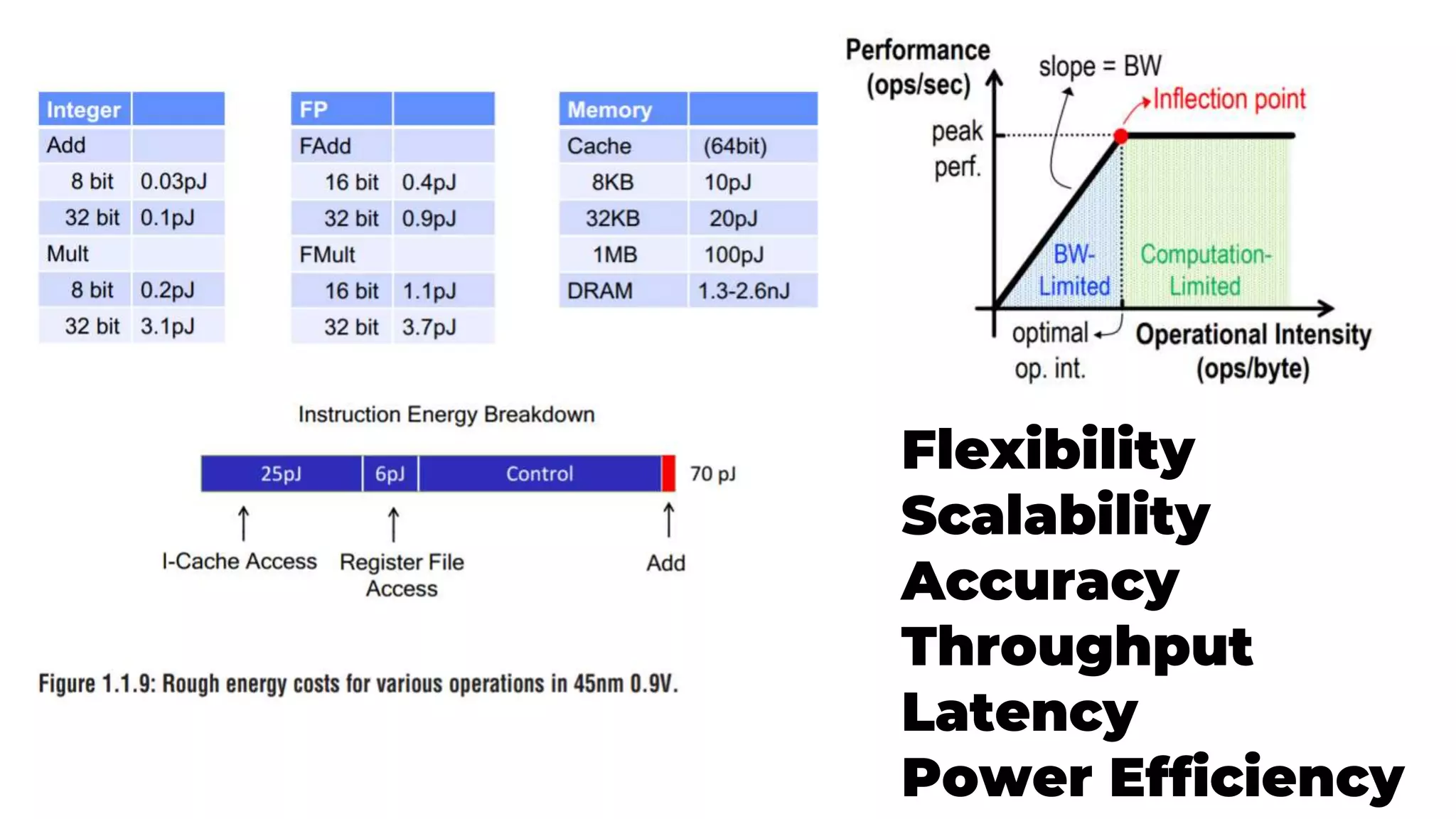
How should ML at the edge HW be
designed?
Flexibility
Scalability
Accuracy
Throughput
Latency
Power Efficiency
Old internal presentation from 2017
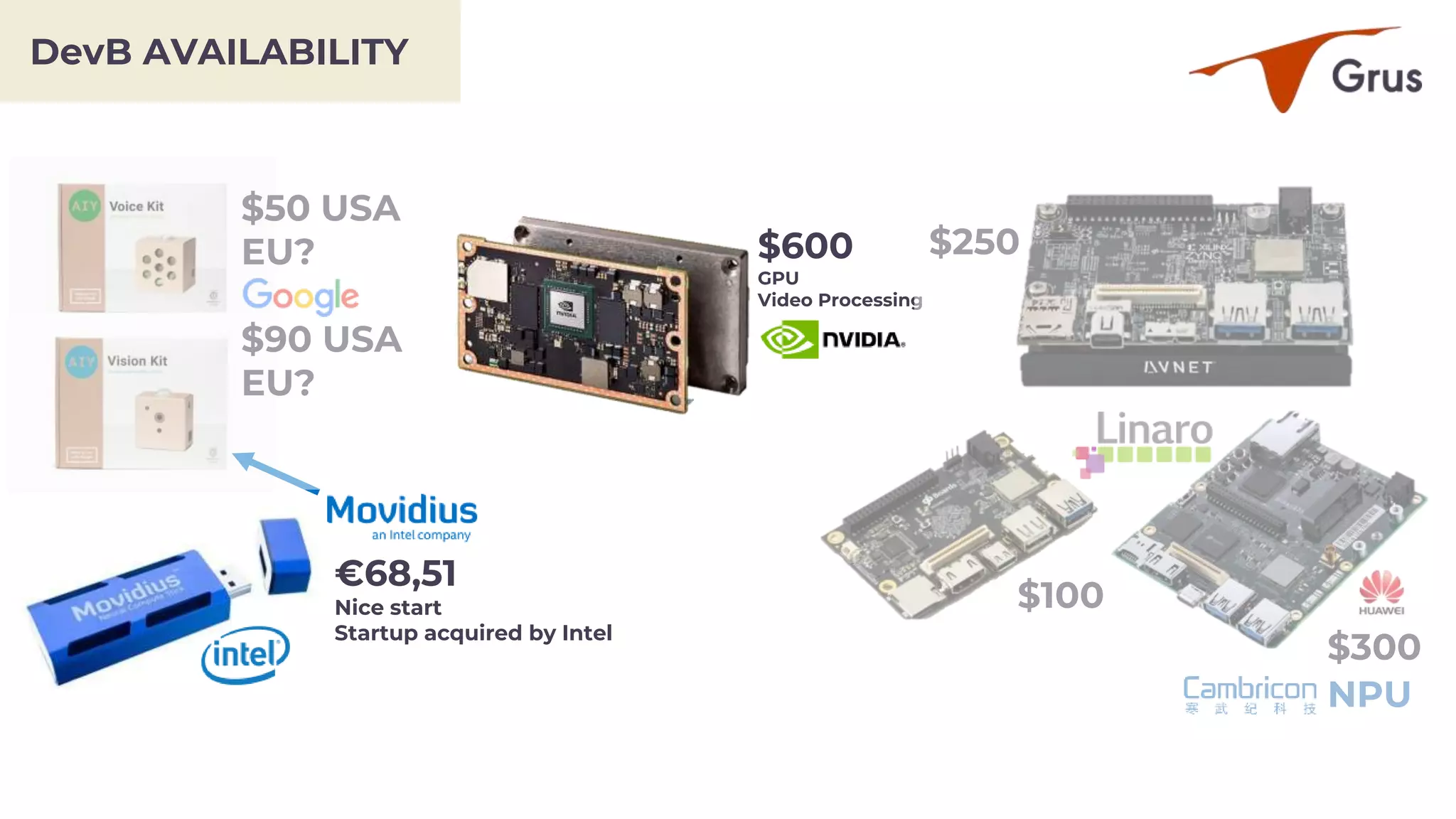
DevB AVAILABILITY
$250$600
GPU
Video Processing
$300
€68,51
Nice start
Startup acquired by Intel
$100
$50 USA
EU?
$90 USA
EU?
NPU
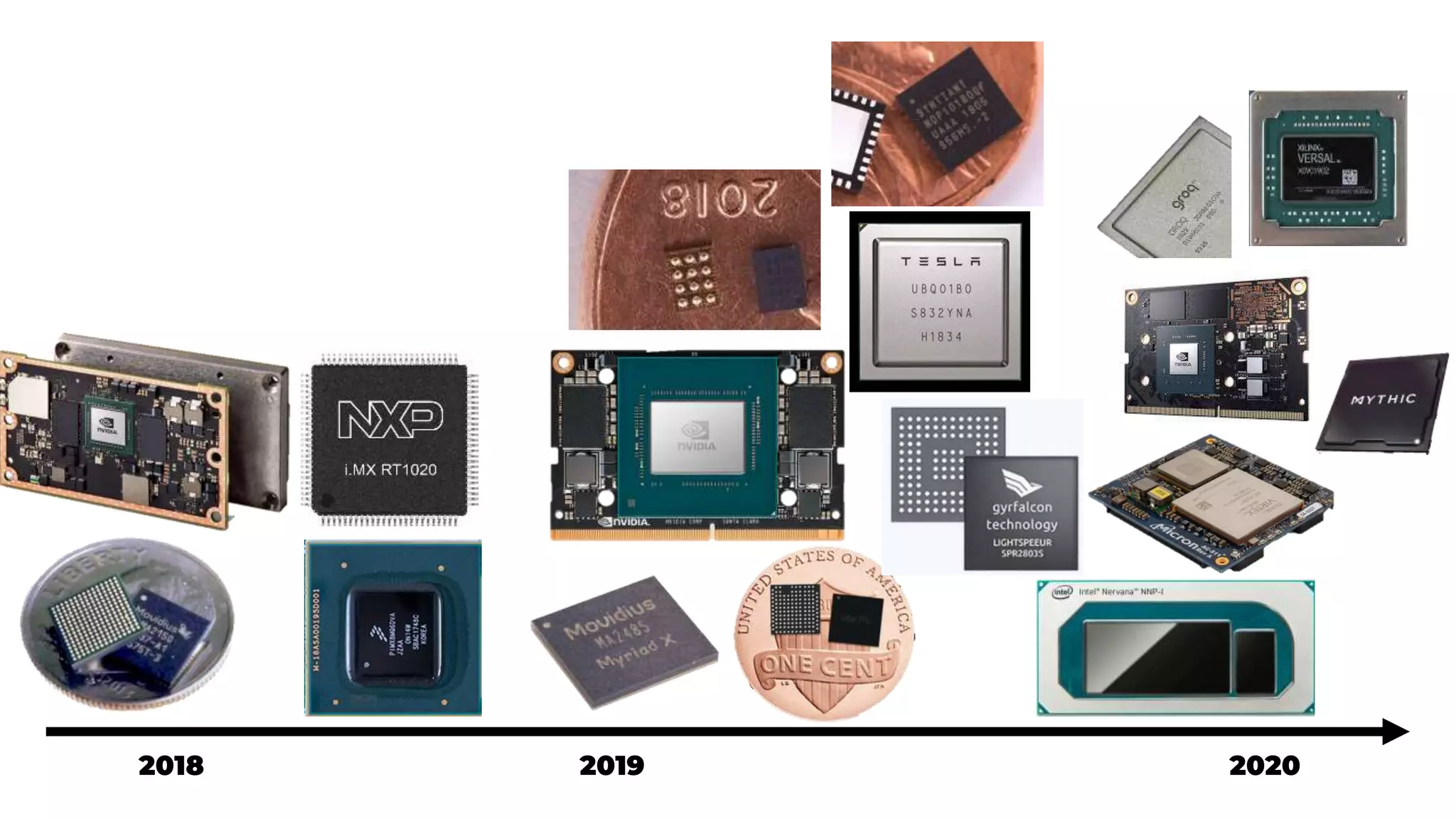
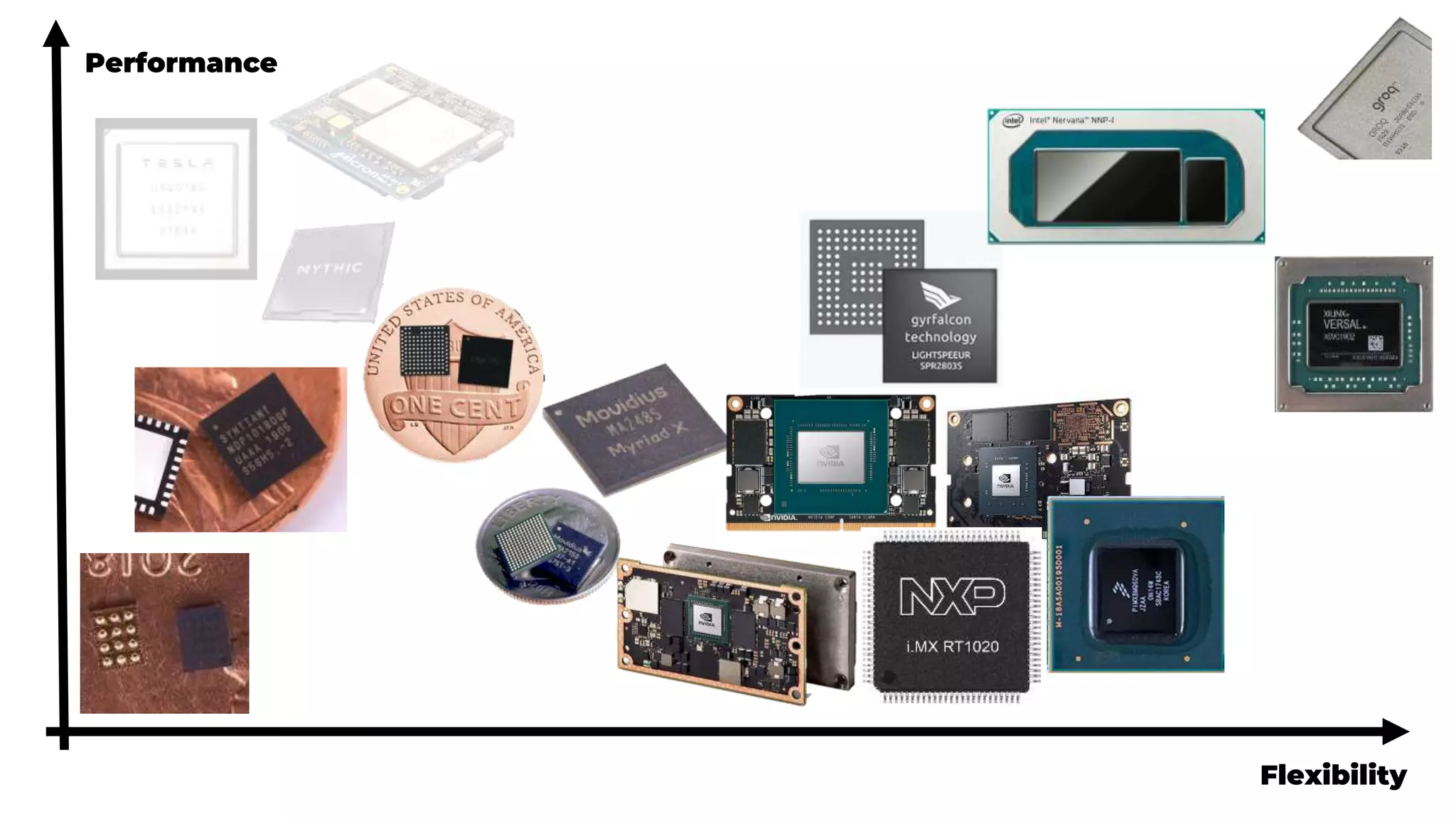
2018-2019 has seen tremendous growth
in AI ASIC
20192018 2020
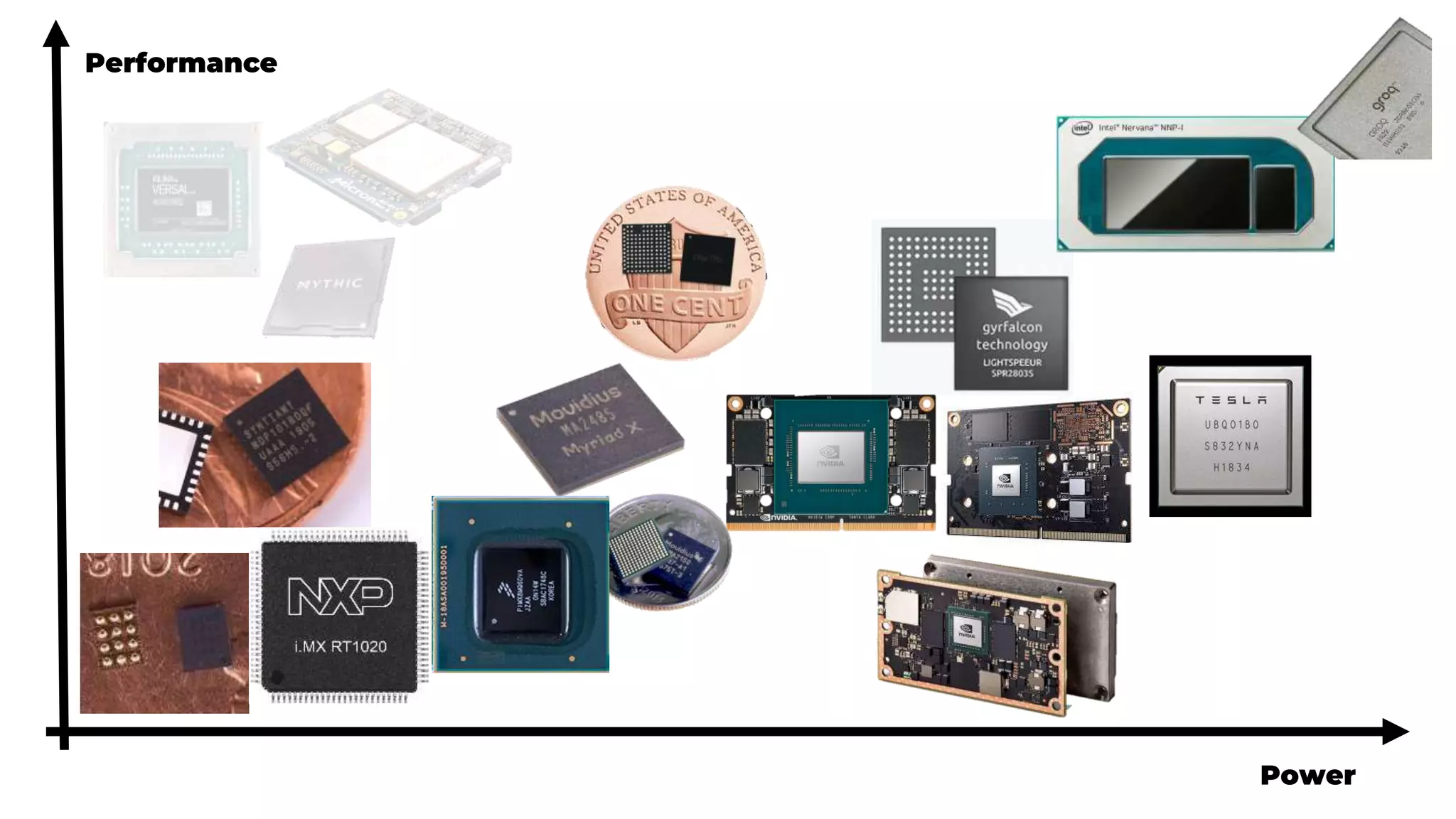
Power
Performance
Flexibility
Performance
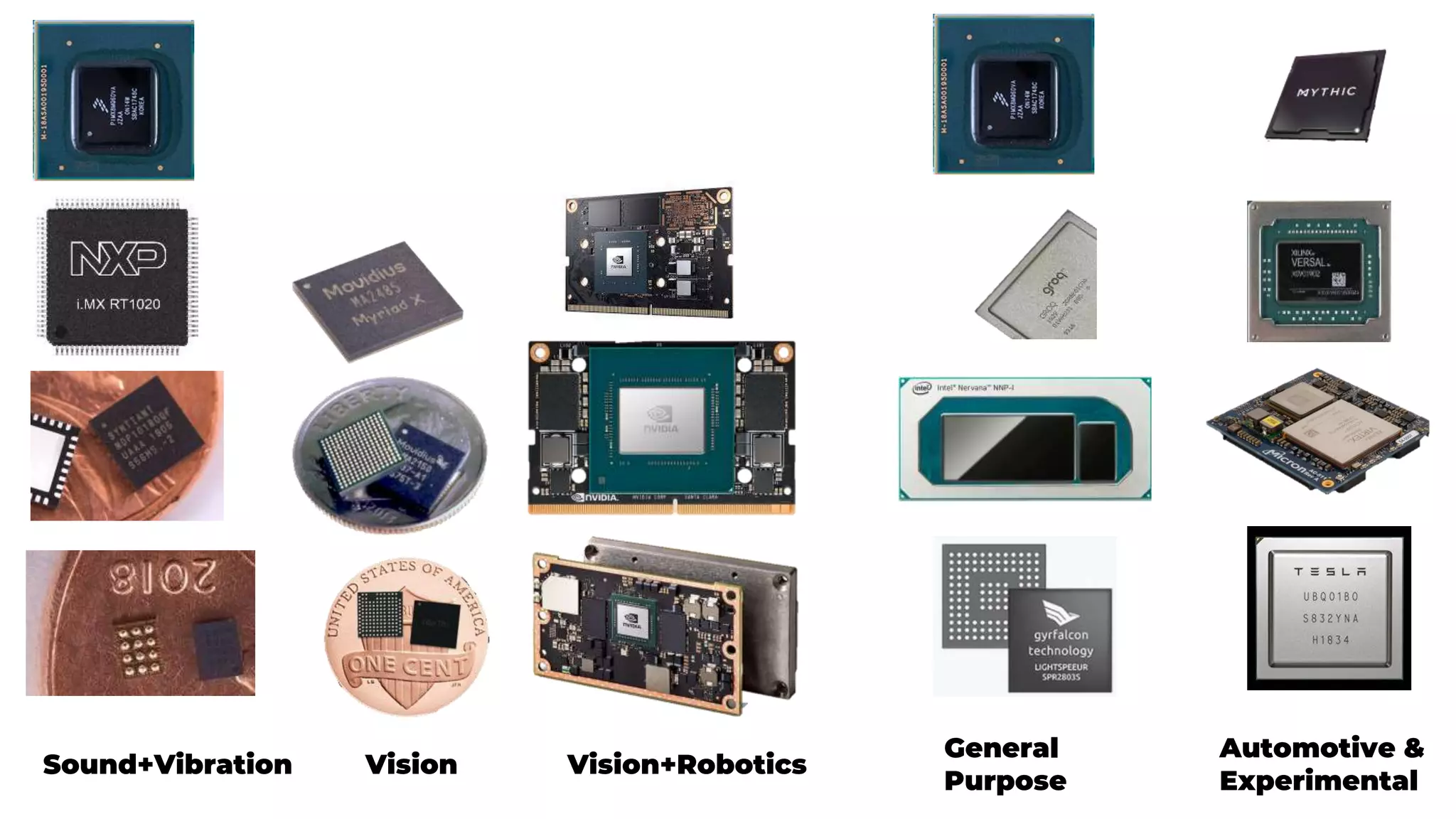
Automotive &
Experimental
General
Purpose
Vision+RoboticsVisionSound+Vibration
There are ways to adapt ML models
to the edge
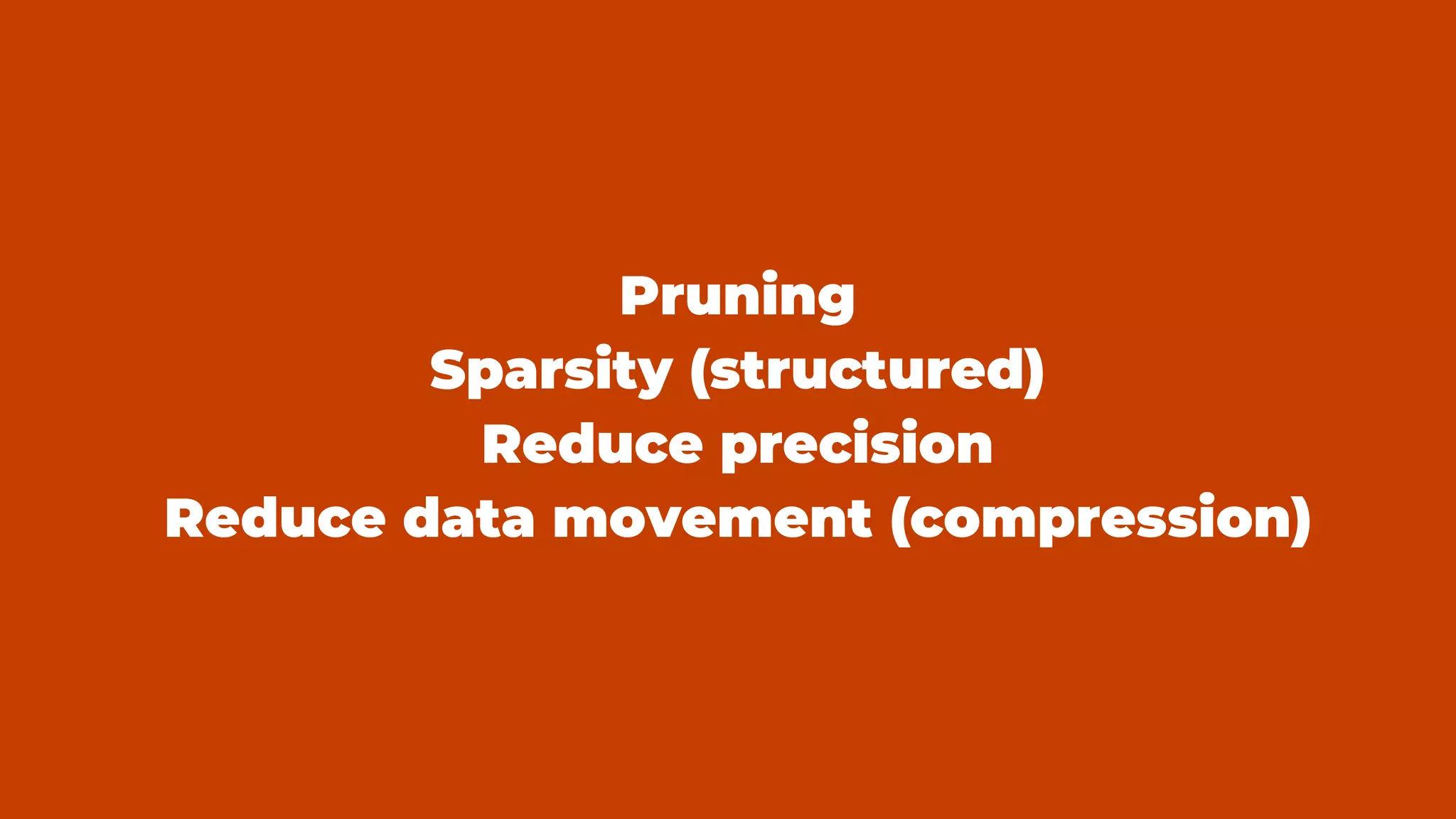
Pruning
Sparsity (structured)
Reduce precision
Reduce data movement (compression)
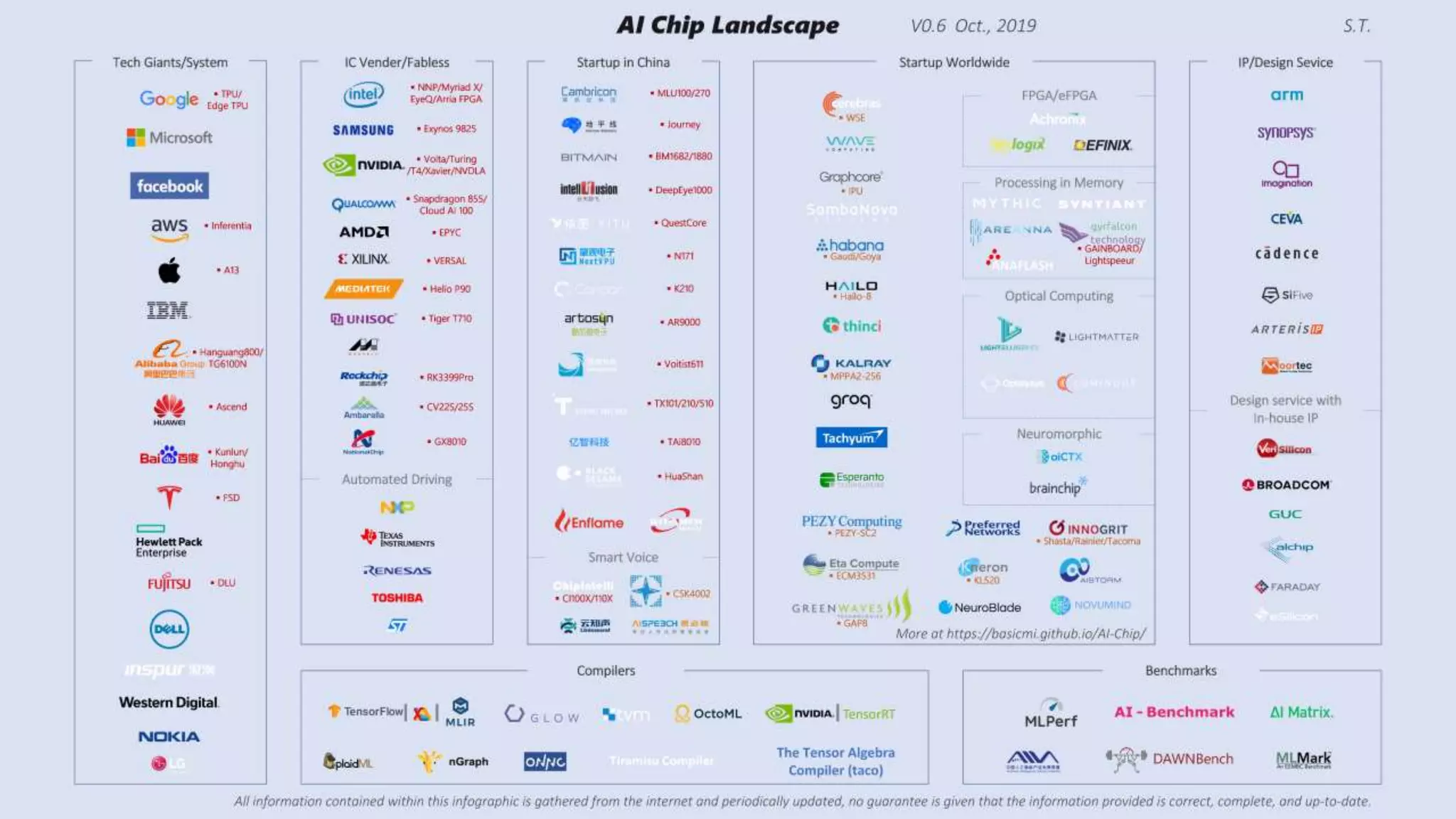
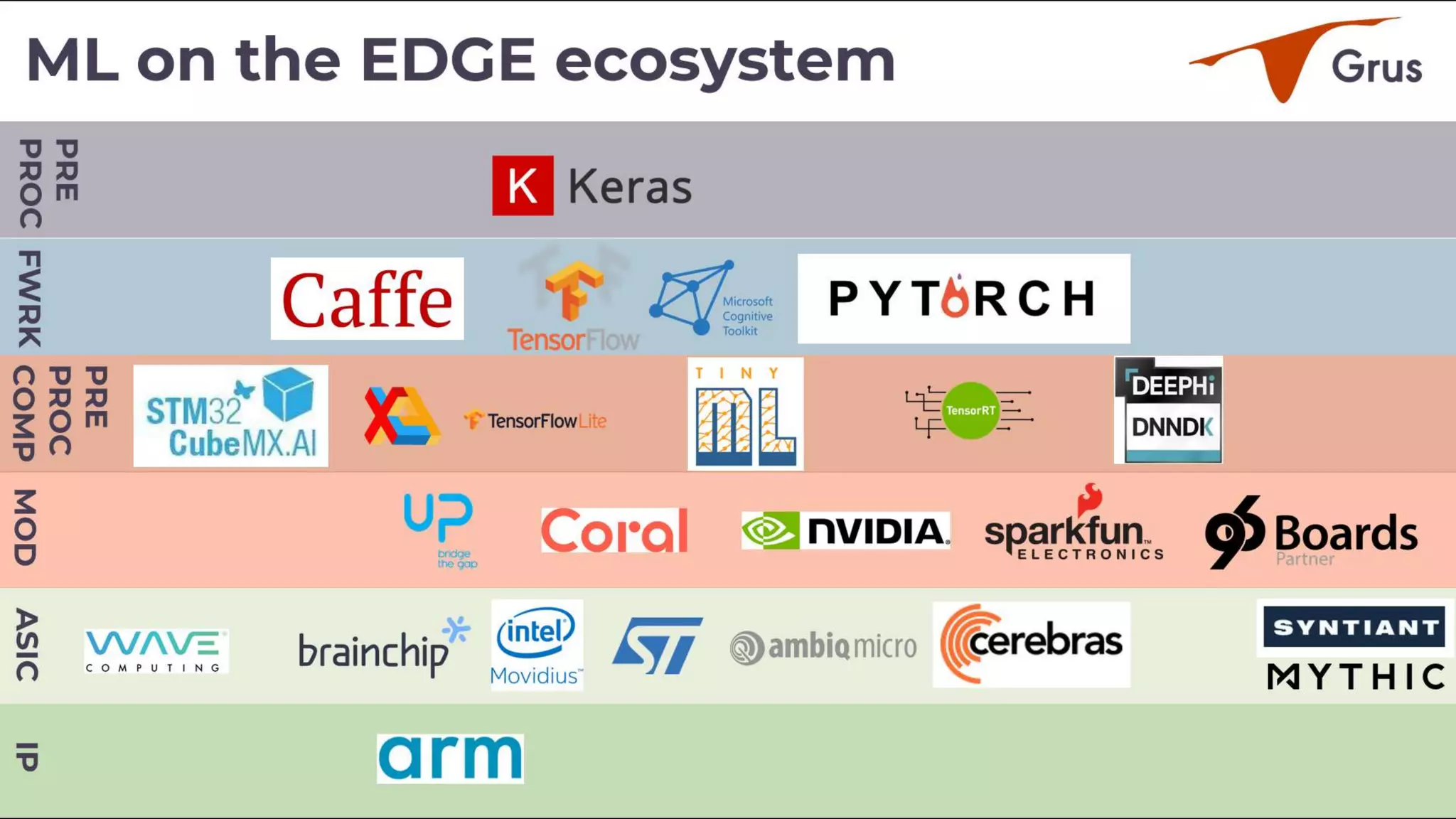
Software (+dev env) landscape is also
complicated.
(Old internal presentation from 2017)
There will be evolution and
elimination.
There are benchmarks for ML, and
it is really hard.
Communities are forming, and
makers are ecstatic.
“Future of ML is tiny.”
Pete Warden - https://petewarden.com/2018/06/11/why-the-future-of-machine-learning-is-tiny/
Curious?
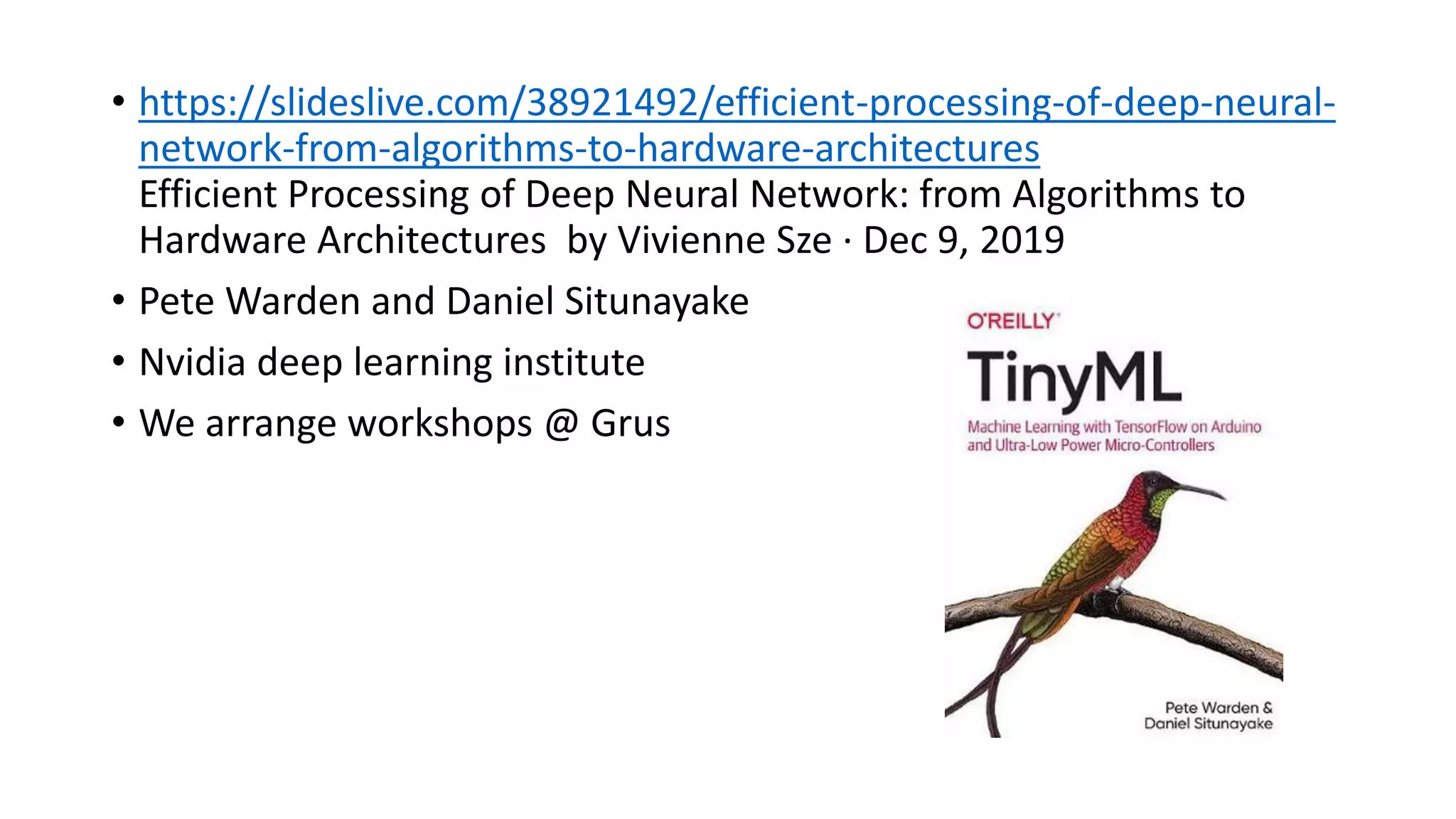
• https://slideslive.com/38921492/efficient-processing-of-deep-neural-
network-from-algorithms-to-hardware-architectures
Efficient Processing of Deep Neural Network: from Algorithms to
Hardware Architectures by Vivienne Sze · Dec 9, 2019
• Pete Warden and Daniel Situnayake
• Nvidia deep learning institute
• We arrange workshops @ Grus
Questions?

Machine learning at the edge

Editor's Notes

  • #8 Emphasis on being maker-level applications here. They were not possible a few years ago on the platforms that they run on.
  • #9 But why? My view on devices being company rather than a tool. It is the ultimate collaboration, as we do with humans.
  • #12 But why? My view on devices being company rather than a tool. It is the ultimate collaboration, as we do with humans.
  • #15 Machines that emulate human intuition and attention That is how I look at ML market, is intuition useful here? Does it require attention?
  • #17 What do we have to compute? A lot of multiplications and additions A lot of memory usage Relatively low control operations (less human intervention, programmability) There is training and inference.
  • #18 Pete Warden’s friend Does not imply importance. Abundance, proliferation of
  • #20 Logarithmic y axis.
  • #22 ML training has a great carbon footprint
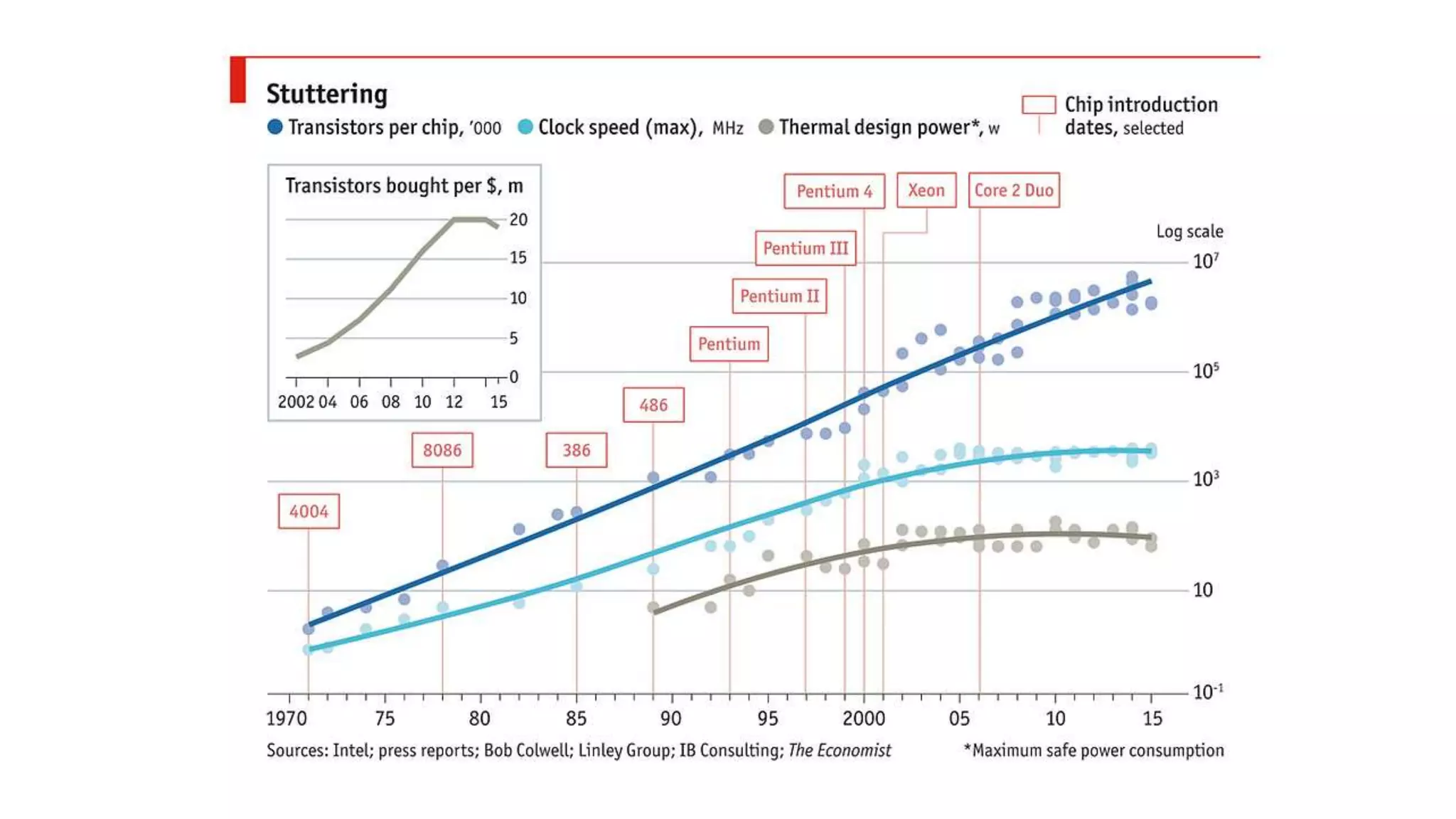
  • #24 Dennard Scaling Moore’s law is a self-fulfilling prophecy. We find a way. We are on the verge of a new inflection. ML HW is the new way. Therefore -> Specialization, thus huuuuge market movement in ASIC industry, and startup community
  • #26 200ms ideal, 2 seconds OK
  • #27 But why? My view on devices being company rather than a tool. It is the ultimate collaboration, as we do with humans.
  • #33 In order to address these limitations, ASIC industry reinvented the computational node.
  • #34 … since the requirements seemed well understood and it was mostly just an exercise in iterating on existing ideas. AI required a computational paradigm shift. But we didn’t know to how it would be. We had to track the developments for a innovative leap. We have an idea now. Deep learning, Convolutional, But still experimenting. But experimentation is within budget now and will pay off. Q:Simon Craske from Arm
  • #36 …that even though most of the compute for almost all models does go into a handful of common operations, there are hundreds of others that often appear. 
  • #37 In order to address these limitations, ASIC industry reinvented the computational node.
  • #39 But why? My view on devices being company rather than a tool. It is the ultimate collaboration, as we do with humans.
  • #41 But why? My view on devices being company rather than a tool. It is the ultimate collaboration, as we do with humans.
  • #43 They can be separated wrt to power/performance.
  • #47 Algorithm side.
  • #49 The research is so fast that tools come and go from the spotlight.
  • #50 Fragmented and constantly changing
  • #51 But why? My view on devices being company rather than a tool. It is the ultimate collaboration, as we do with humans.
  • #52 But how to eliminate? Only by trial and error for now But people are working. MLPerf
  • #53 But why? My view on devices being company rather than a tool. It is the ultimate collaboration, as we do with humans.
  • #54 Hotchips became ML dominated (requires novel VLSI tech, that is why. Pushes IPC bandwidth, RAM bandwidth, efficient high dimensional tensor ops, thermal and lithographic novelties.) TinyML Hackster, Hackaday, Arduino, Sparkfun
  • #55 Tiny Computers are Already Cheap and Everywhere Energy is the Limiting Factor CPUs and Sensors Use Almost No Power, Radios and Displays Use Lots We Capture Much More Sensor Data Than We Use What This All Means For Machine Learning Deep Learning is Compute-Bound and Runs Well on Existing MCUs Deep Learning Can Be Very Energy-Efficient Deep Learning Makes Sense of Sensor Data
  • #56 But why? My view on devices being company rather than a tool. It is the ultimate collaboration, as we do with humans.
  • #58 But why? My view on devices being company rather than a tool. It is the ultimate collaboration, as we do with humans.