ATHARVA INSTITUTE OF MGT STUDIES


   MERGERS AND ACQUISTIONS


TOPIC: ARCELOR MITTAL MERGER

         PRESENTATION BY:
        SANCHITA S.LAD
       MMS-3/ROLL NO:A-26
THE TWO COMPANIES…………….
MITTAL STEEL
 Was one of the world's largest steel producers by
  volume, and turnover.
 Formed when Ispat International N.V. acquired LNM
  Holdings N.V. (both were already controlled by Lakshmi
  Mittal) and merged with International Steel Group Inc. (the
  remnants of Bethlehem Steel, Republic Steel and LTV
  Steel) in 2004
ARCELOR
 Was the world's largest steel producer in terms of turnover
 Second largest in terms of steel output.
 Created by a merger of the former companies Aceralia
  (Spain), Usinor (France) and Arbed (Luxembourg) in 2002.
THE YEAR 2006…
 June 2006 - Mittal Steel and Arcelor reach an
  agreement to combine the two companies in a
  merger of equals.
 September 2006 - Arcelor Mittal announces new
  dividend policy, under which it will pay out 30% of
  net income annually.
 December 2006 - sells Thüringen long carbon steel
  plant, sells the Italian long carbon steel production
  Travi e Profilati di Pallanzeno and San Zeno Acciai
  to Duferco, acquires Sicartsa, the leading Mexican
  long steel producer, signs a MoU for the Greenfield
  project in Orissa,
RESULT
 The merger resulted in the creation of the world’s
  largest steel company.
 2007 revenue - $105 billion

  Steel production - 10 percent of global output
  320,000 employees
  Presence in 60 countries
   A global leader in all of its target markets.
REACTIONS TO THE TAKEOVER
 Directors strongly opposed the takeover, with
  Arcelor's chief executive at that time, Guy
  Dollé, even dismissing Mittal as a "company of
  Indians".
 The     French,    Luxembourg      and      Spanish
  governments strongly opposed the takeover.
 The French opposition was initially very fierce and
  has been criticized in the British, American and
  Indian media as double standards and economic
  nationalism in Europe.
TOP MANAGEMENT
ArcelorMittal top management set three
driving objectives before undertaking the
post-merger integration effort.
- Achieve rapid integration
- Manage effectively daily operations
- Accelerate revenue and profit growth.
CULTURAL INTEGRATION

 Most integration initiatives fall short of reaching
their goals during implementation stage and follow-
up.


     The company should :
1.   Recruit and promote service oriented candidates,
2.   Train the workforce in techniques of service
3.   Set goals that are based on service
4.   Reward an recognize people for higher level of service
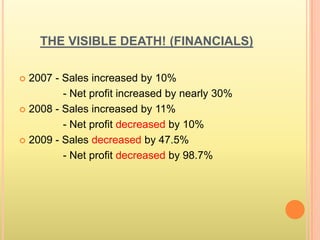
THE VISIBLE DEATH! (FINANCIALS)

 2007 - Sales increased by 10%
         - Net profit increased by nearly 30%
 2008 - Sales increased by 11%

         - Net profit decreased by 10%
 2009 - Sales decreased by 47.5%

         - Net profit decreased by 98.7%
M&a ppt

M&a ppt

  • 1.
    ATHARVA INSTITUTE OFMGT STUDIES MERGERS AND ACQUISTIONS TOPIC: ARCELOR MITTAL MERGER PRESENTATION BY: SANCHITA S.LAD MMS-3/ROLL NO:A-26
  • 2.
    THE TWO COMPANIES……………. MITTALSTEEL  Was one of the world's largest steel producers by volume, and turnover.  Formed when Ispat International N.V. acquired LNM Holdings N.V. (both were already controlled by Lakshmi Mittal) and merged with International Steel Group Inc. (the remnants of Bethlehem Steel, Republic Steel and LTV Steel) in 2004 ARCELOR  Was the world's largest steel producer in terms of turnover  Second largest in terms of steel output.  Created by a merger of the former companies Aceralia (Spain), Usinor (France) and Arbed (Luxembourg) in 2002.
  • 3.
    THE YEAR 2006… June 2006 - Mittal Steel and Arcelor reach an agreement to combine the two companies in a merger of equals.  September 2006 - Arcelor Mittal announces new dividend policy, under which it will pay out 30% of net income annually.  December 2006 - sells Thüringen long carbon steel plant, sells the Italian long carbon steel production Travi e Profilati di Pallanzeno and San Zeno Acciai to Duferco, acquires Sicartsa, the leading Mexican long steel producer, signs a MoU for the Greenfield project in Orissa,
  • 4.
    RESULT  The mergerresulted in the creation of the world’s largest steel company.  2007 revenue - $105 billion Steel production - 10 percent of global output 320,000 employees Presence in 60 countries A global leader in all of its target markets.
  • 5.
    REACTIONS TO THETAKEOVER  Directors strongly opposed the takeover, with Arcelor's chief executive at that time, Guy Dollé, even dismissing Mittal as a "company of Indians".  The French, Luxembourg and Spanish governments strongly opposed the takeover.  The French opposition was initially very fierce and has been criticized in the British, American and Indian media as double standards and economic nationalism in Europe.
  • 6.
    TOP MANAGEMENT ArcelorMittal topmanagement set three driving objectives before undertaking the post-merger integration effort. - Achieve rapid integration - Manage effectively daily operations - Accelerate revenue and profit growth.
  • 7.
    CULTURAL INTEGRATION Mostintegration initiatives fall short of reaching their goals during implementation stage and follow- up. The company should : 1. Recruit and promote service oriented candidates, 2. Train the workforce in techniques of service 3. Set goals that are based on service 4. Reward an recognize people for higher level of service
  • 8.
    THE VISIBLE DEATH!(FINANCIALS)  2007 - Sales increased by 10% - Net profit increased by nearly 30%  2008 - Sales increased by 11% - Net profit decreased by 10%  2009 - Sales decreased by 47.5% - Net profit decreased by 98.7%