Stage 2. The Gathering Find the pain the customer wants to get away from and the pleasure they want to move towards. Peter Thomson Copyright 2010 | Ripple Effect Systems Ltd  1 M302
Be interested, not interesting During the gathering stage  you must clearly indicate your interest in the customer’s problem. Gather before you present a solution. To gather: create a customer form to outline the key information you need.
Open and closed questions Open questions get lots of information. Closed questions bring the conversation to a close, or get short bursts of information. The ability to ask good, well thought-out, structured questions is the sign of a great salesperson.
The statement question When you make a statement followed by a question, if someone  answers the question  they won’t  question the statement . This   is the most powerful way of communicating with someone.  
The magic formula Consider both the  towards motivation  (pleasure) and the  away motivation  (pain) of your client in equal amounts to achieve a great sale.
Focusing questions “ What are you trying to achieve by buying this product?” “ What are the two main benefits of our product to your company?” Focus the customer’s mind.
Mistakes with questions Your tone. Keep it neutral and interested. Ask a question and then  make sure you listen to the answer. Stay away from monologues. If you meant to ask a question, don’t let it turn into a statement.
The YARD method YARD: Yes, Action, Result, and Delighted If you ask a question that could only be answered when these four stages have taken place, then in the customers mind  those stages have already taken place. Ask a question about the second order, or phase two, for example.
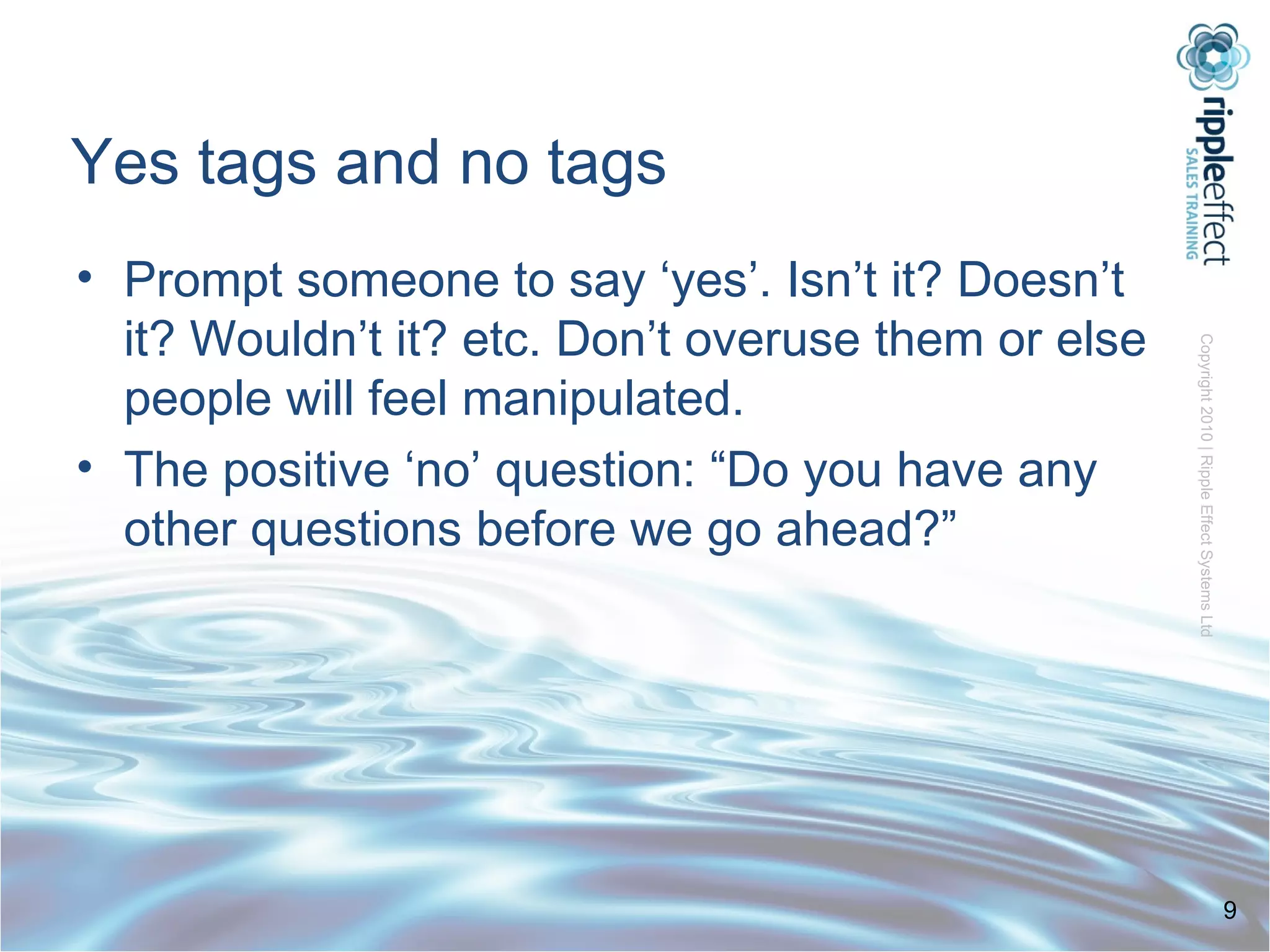
Yes tags and no tags Prompt someone to say ‘yes’. Isn’t it? Doesn’t it? Wouldn’t it? etc. Don’t overuse them or else people will feel manipulated. The positive ‘no’ question: “Do you have any other questions before we go ahead?”
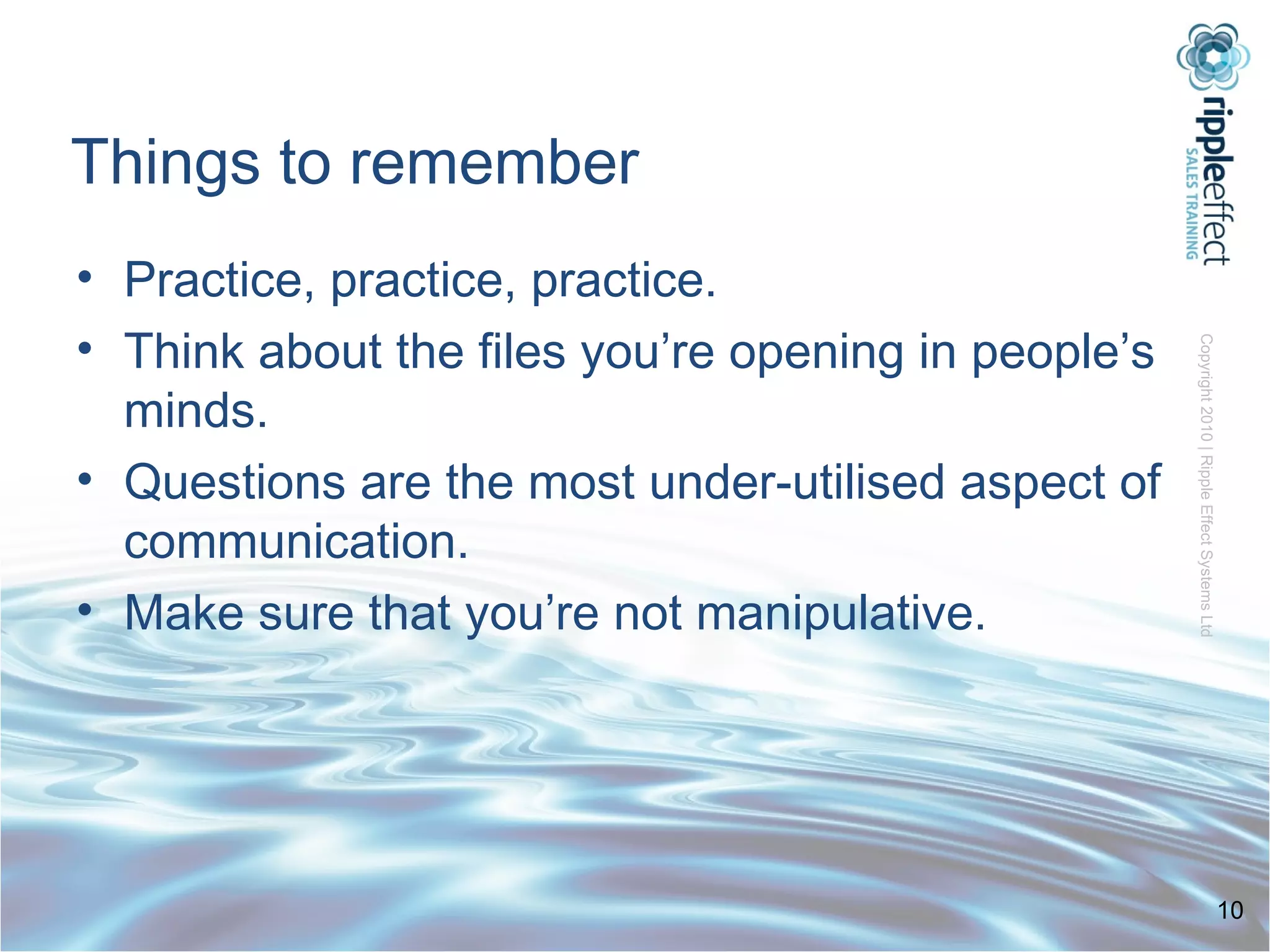
Things to remember Practice, practice, practice. Think about the files you’re opening in people’s minds. Questions are the most under-utilised aspect of communication. Make sure that you’re not manipulative.
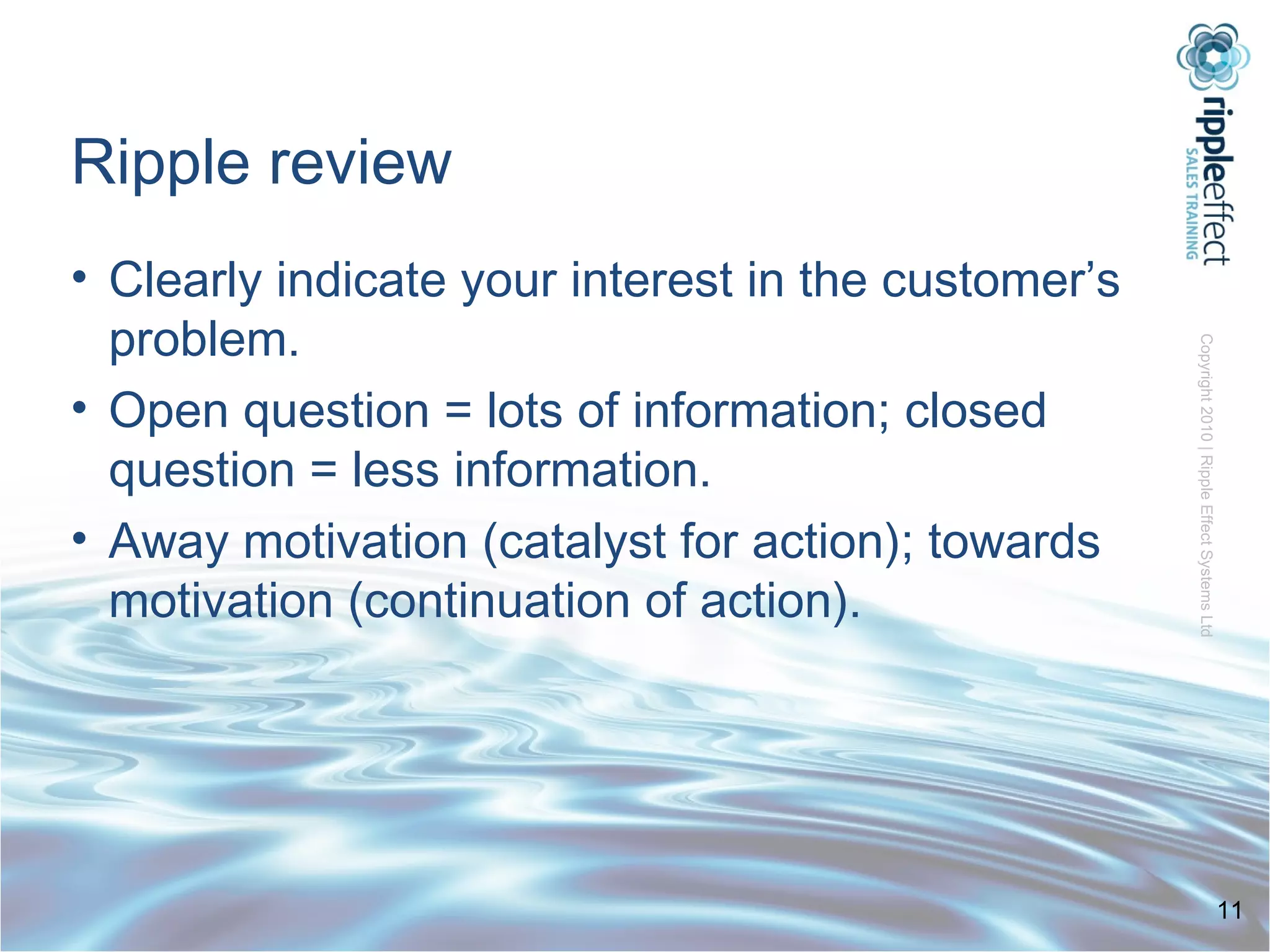
Ripple review Clearly indicate your interest in the customer’s problem. Open question = lots of information; closed question = less information. Away motivation (catalyst for action); towards motivation (continuation of action).

M302 pt the_gathering_ppt

  • 1.
    Stage 2. TheGathering Find the pain the customer wants to get away from and the pleasure they want to move towards. Peter Thomson Copyright 2010 | Ripple Effect Systems Ltd 1 M302
  • 2.
    Be interested, notinteresting During the gathering stage you must clearly indicate your interest in the customer’s problem. Gather before you present a solution. To gather: create a customer form to outline the key information you need.
  • 3.
    Open and closedquestions Open questions get lots of information. Closed questions bring the conversation to a close, or get short bursts of information. The ability to ask good, well thought-out, structured questions is the sign of a great salesperson.
  • 4.
    The statement questionWhen you make a statement followed by a question, if someone answers the question they won’t question the statement . This is the most powerful way of communicating with someone.  
  • 5.
    The magic formulaConsider both the towards motivation (pleasure) and the away motivation (pain) of your client in equal amounts to achieve a great sale.
  • 6.
    Focusing questions “What are you trying to achieve by buying this product?” “ What are the two main benefits of our product to your company?” Focus the customer’s mind.
  • 7.
    Mistakes with questionsYour tone. Keep it neutral and interested. Ask a question and then make sure you listen to the answer. Stay away from monologues. If you meant to ask a question, don’t let it turn into a statement.
  • 8.
    The YARD methodYARD: Yes, Action, Result, and Delighted If you ask a question that could only be answered when these four stages have taken place, then in the customers mind those stages have already taken place. Ask a question about the second order, or phase two, for example.
  • 9.
    Yes tags andno tags Prompt someone to say ‘yes’. Isn’t it? Doesn’t it? Wouldn’t it? etc. Don’t overuse them or else people will feel manipulated. The positive ‘no’ question: “Do you have any other questions before we go ahead?”
  • 10.
    Things to rememberPractice, practice, practice. Think about the files you’re opening in people’s minds. Questions are the most under-utilised aspect of communication. Make sure that you’re not manipulative.
  • 11.
    Ripple review Clearlyindicate your interest in the customer’s problem. Open question = lots of information; closed question = less information. Away motivation (catalyst for action); towards motivation (continuation of action).