Elements of
Rhetorical
Analysis
ENGL 111
Module 6
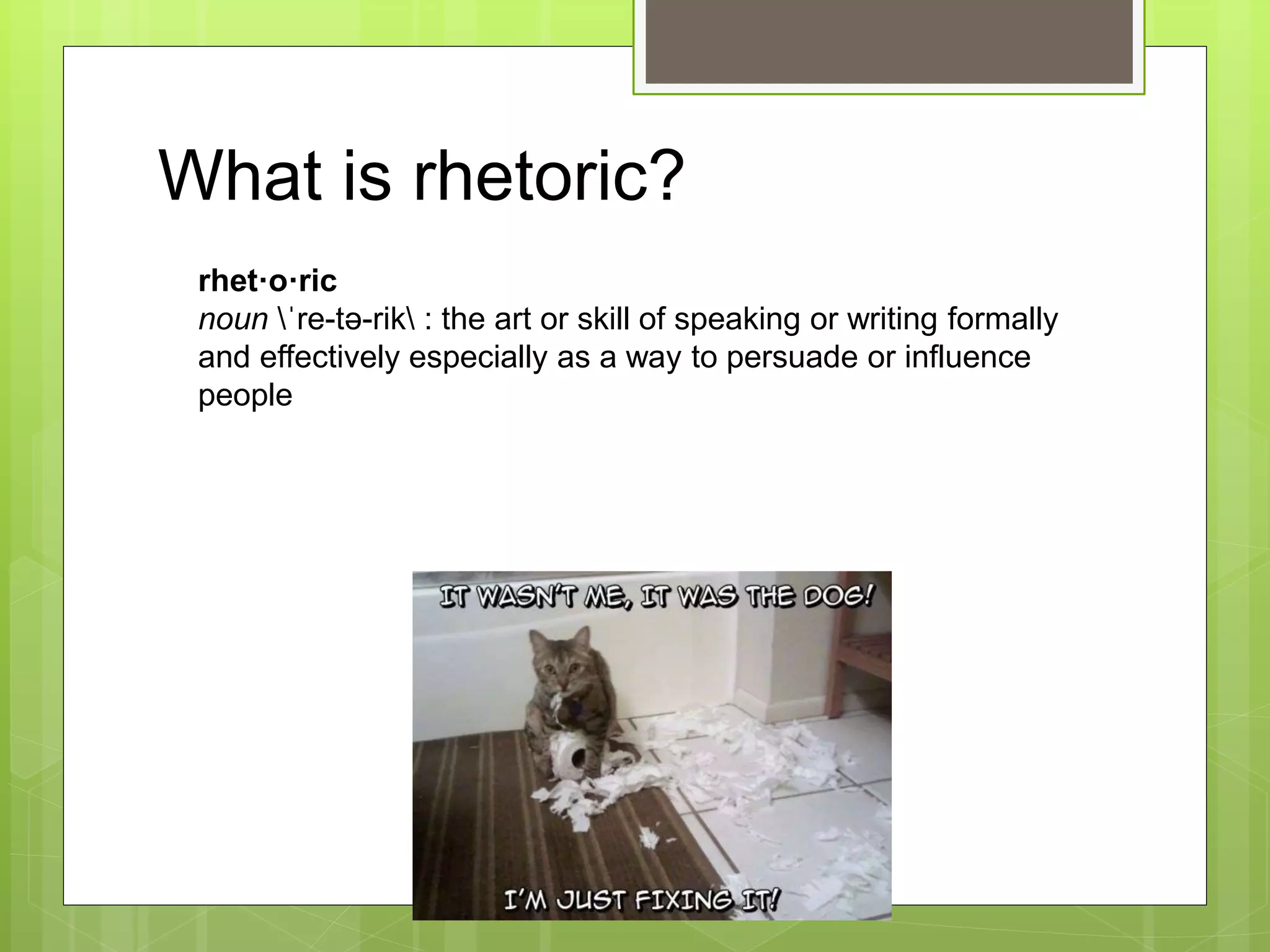
What is rhetoric?
rhet·o·ric
noun ˈre-tə-rik : the art or skill of speaking or writing formally
and effectively especially as a way to persuade or influence
people
What is the purpose of rhetoric?
Here are just some purposes of rhetoric.
 The purpose of rhetoric is to use language effectively to
get readers…
 to agree
 to believe something (change their minds)
 to do something (take action)
 to learn something new
 to be entertained
 to trust the writer
 to admire the writer
 to see the writer as a “credible guide”
 to focus on what the writer things is important and overlook
what the writer thinks is unimportant
 to be convinced by logic and evidence
 to be swayed by emotion
 to say to friends and family members: “You’ve got to read
this!”
In other words…rhetoric is the art
of using language to achieve
results!
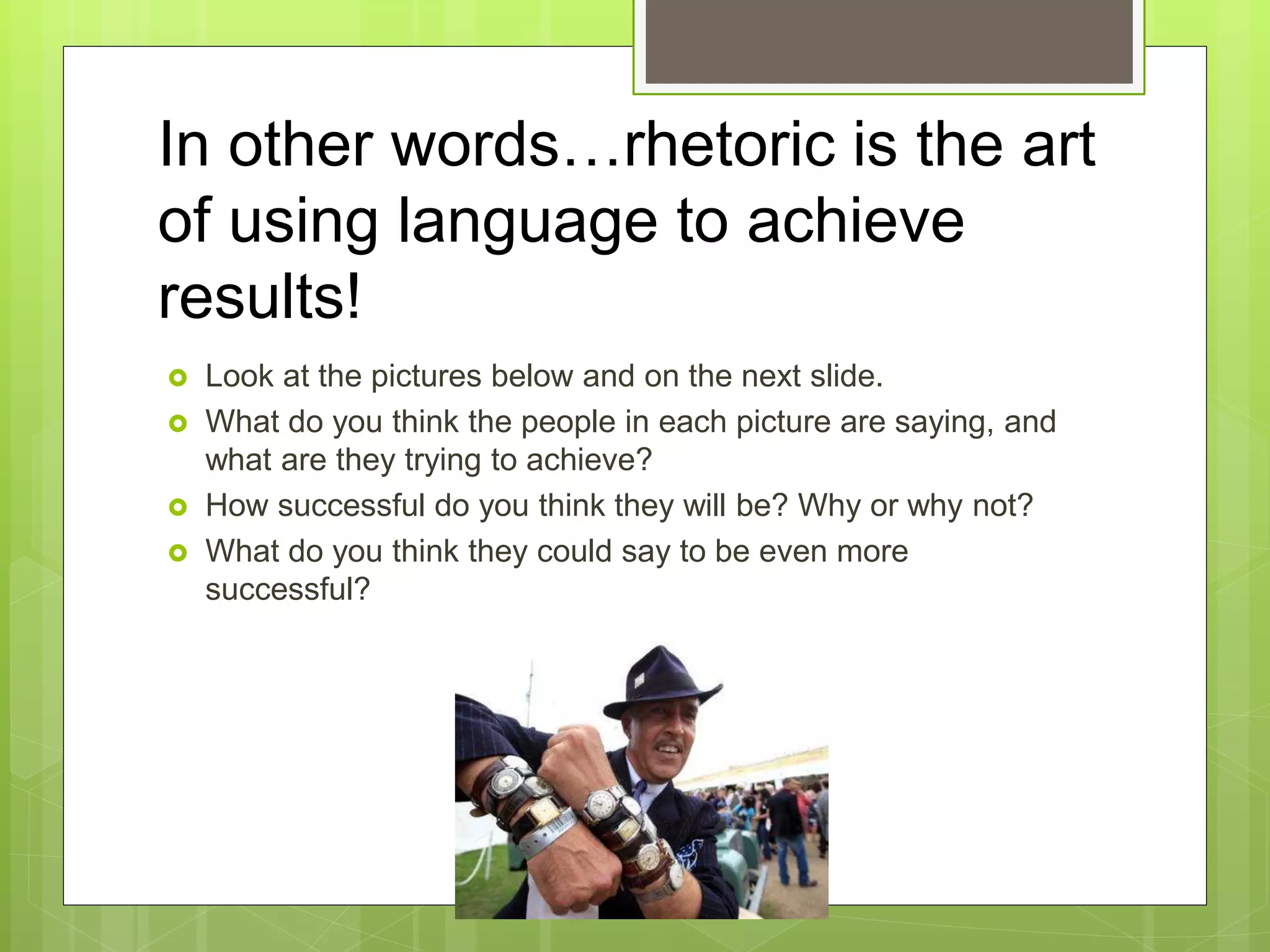
 Look at the pictures below and on the next slide.
 What do you think the people in each picture are saying, and
what are they trying to achieve?
 How successful do you think they will be? Why or why not?
 What do you think they could say to be even more
successful?
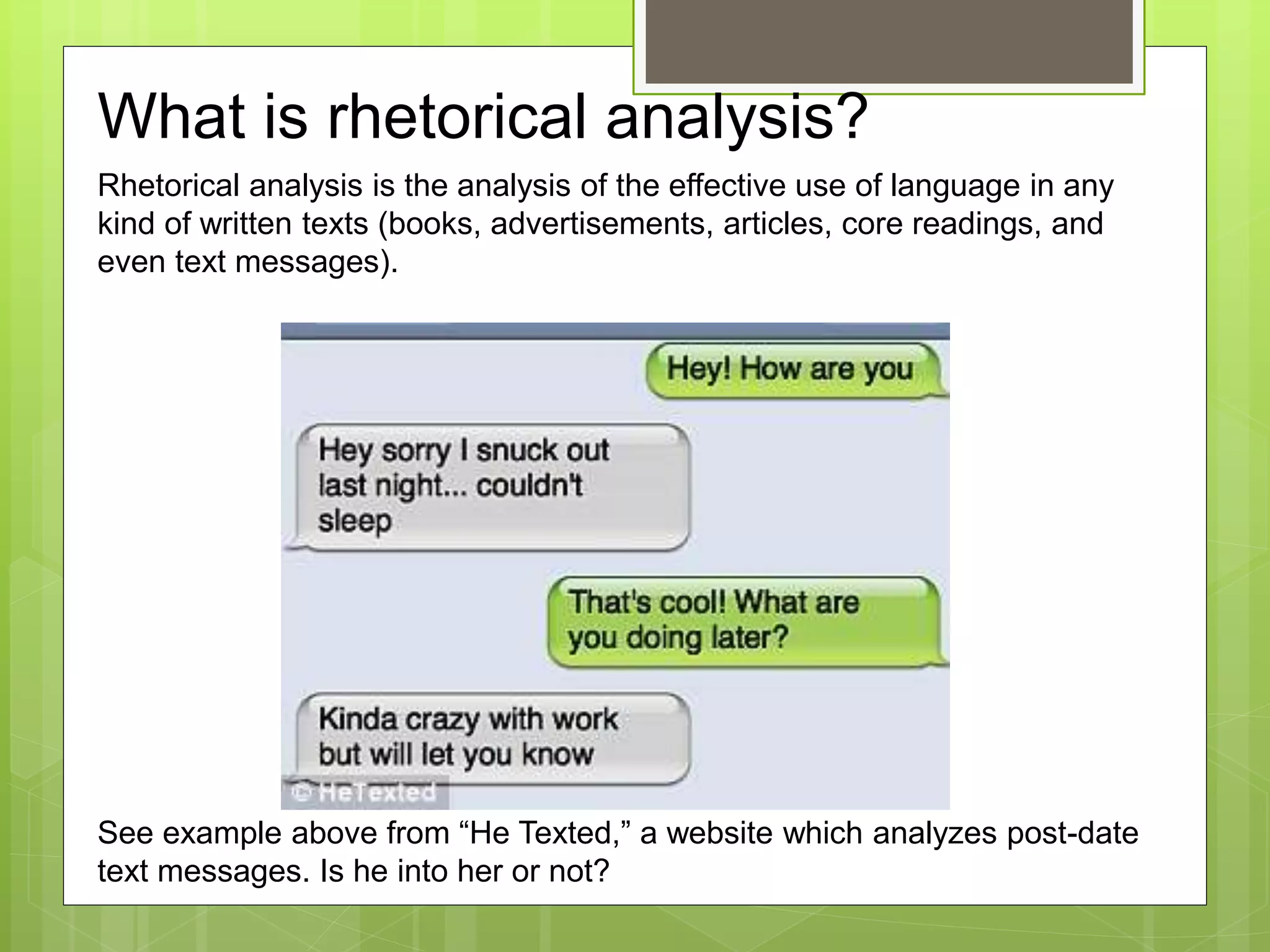
What is rhetorical analysis?
Rhetorical analysis is the analysis of the effective use of language in any
kind of written texts (books, advertisements, articles, core readings, and
even text messages).
See example above from “He Texted,” a website which analyzes post-date
text messages. Is he into her or not?
Rhetorical analysis builds on
Summary/Response and Critical
Rereading
We need to understand and digest a reading first
before we can analyze it effectively.
• Summarize
• Respond
• Reread
• Analyze
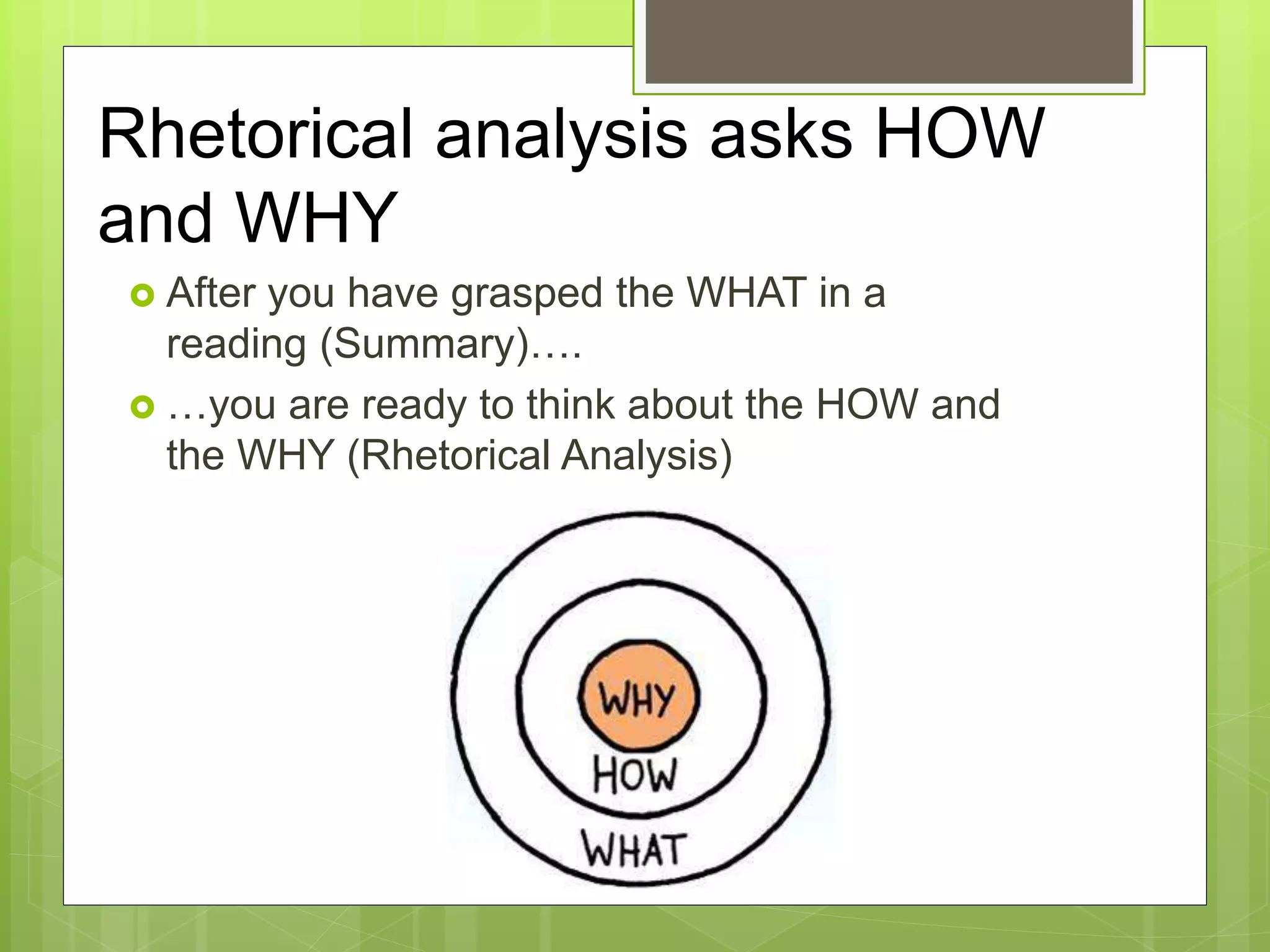
Rhetorical analysis asks HOW
and WHY
 After you have grasped the WHAT in a
reading (Summary)….
 …you are ready to think about the HOW and
the WHY (Rhetorical Analysis)
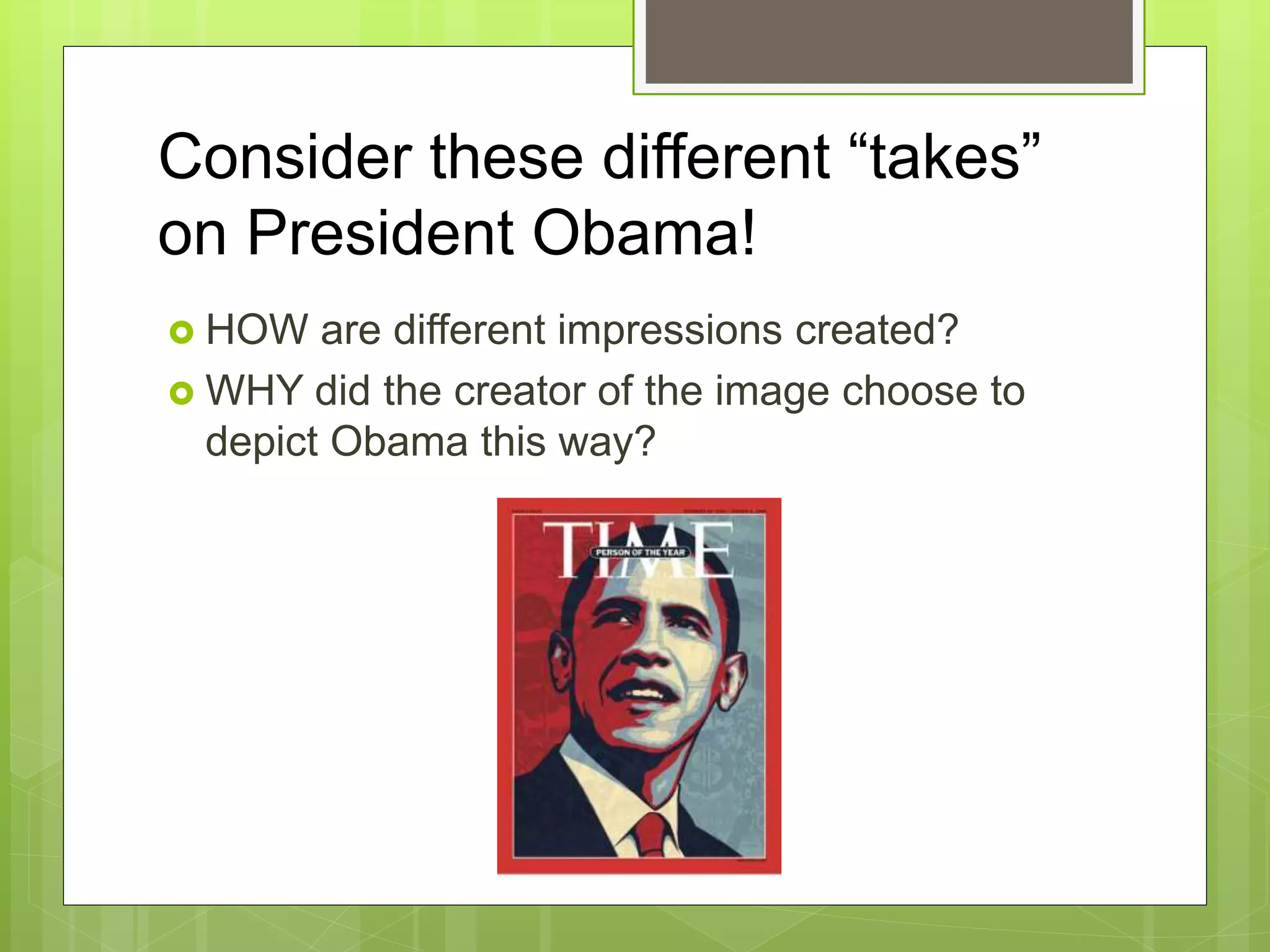
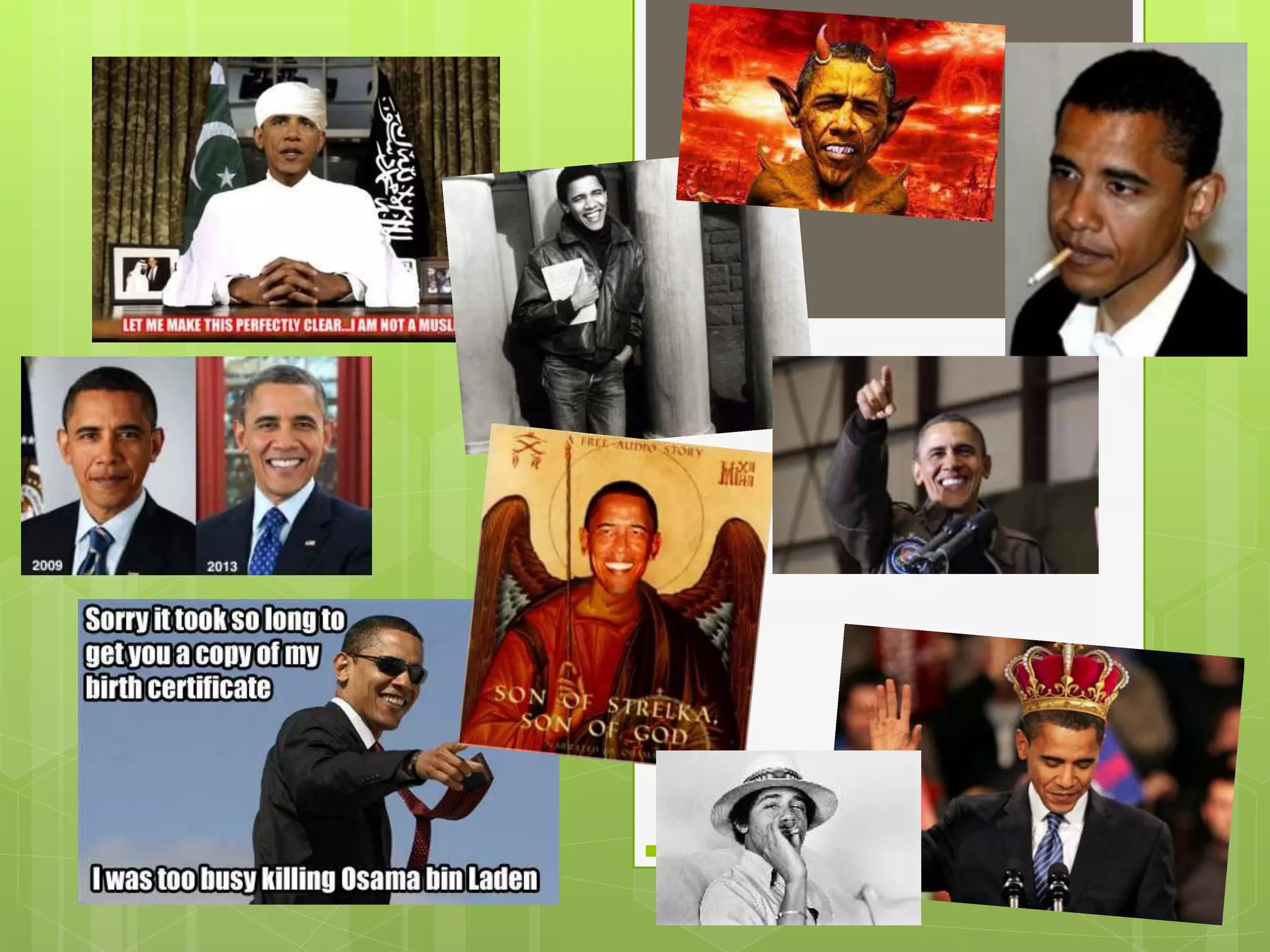
Consider these different “takes”
on President Obama!
 HOW are different impressions created?
 WHY did the creator of the image choose to
depict Obama this way?
Preparing for the first draft of
Writing Project 2, Rhetorical
Analysis
 Review your critical rereading notes from
Modules 3 and 4 Discussion
 Key points
 Interesting or confusing details
 Questions and reactions
 Questions about the author, the type of writing,
the rhetorical context, the content, and the
language
Preparing for the first draft of
Writing Project 2, Rhetorical
Analysis
 What new reactions do you have to the core
reading?
 What new questions do you have about the
core reading?
 What patterns do you see in how the writer
presents his/her information?
 Do you trust this writer? Why or why not?
 Does the writer convince you to see things
his/her way? Why or why not?
Some elements to consider:
 The Rhetorical Situation
 Audience, time, place, purpose
 Content
 Arguments, evidence, reasoning
 Persuasive appeals: Ethical, emotional, logical
 Structure
 How the reading is divided
 Order
 What is included, what is left out
 Language and style
 Figurative language
 Voice, tone, diction
 “Inartistic proofs”
 Extras like photos, links, embedded videos or podcasts, etc.
And don’t forget to analyze the
title of your core reading!
Think about the different impacts
of these titles:
 “How I Bluffed My Way through College”
 “Why We Love War”
 “The Coming Era of Energy Disasters”
 “Weight Loss Diets: Are They All the Same?”
 “How It Feels to Be Colored Me”
 “Does the Internet Make You Dumber?”
 Which title seems most intriguing? Most
provocative? Most informative? Most neutral? Most
inviting? Most controversial? Most non-threatening?
Most personal? Most catchy? Etc.!
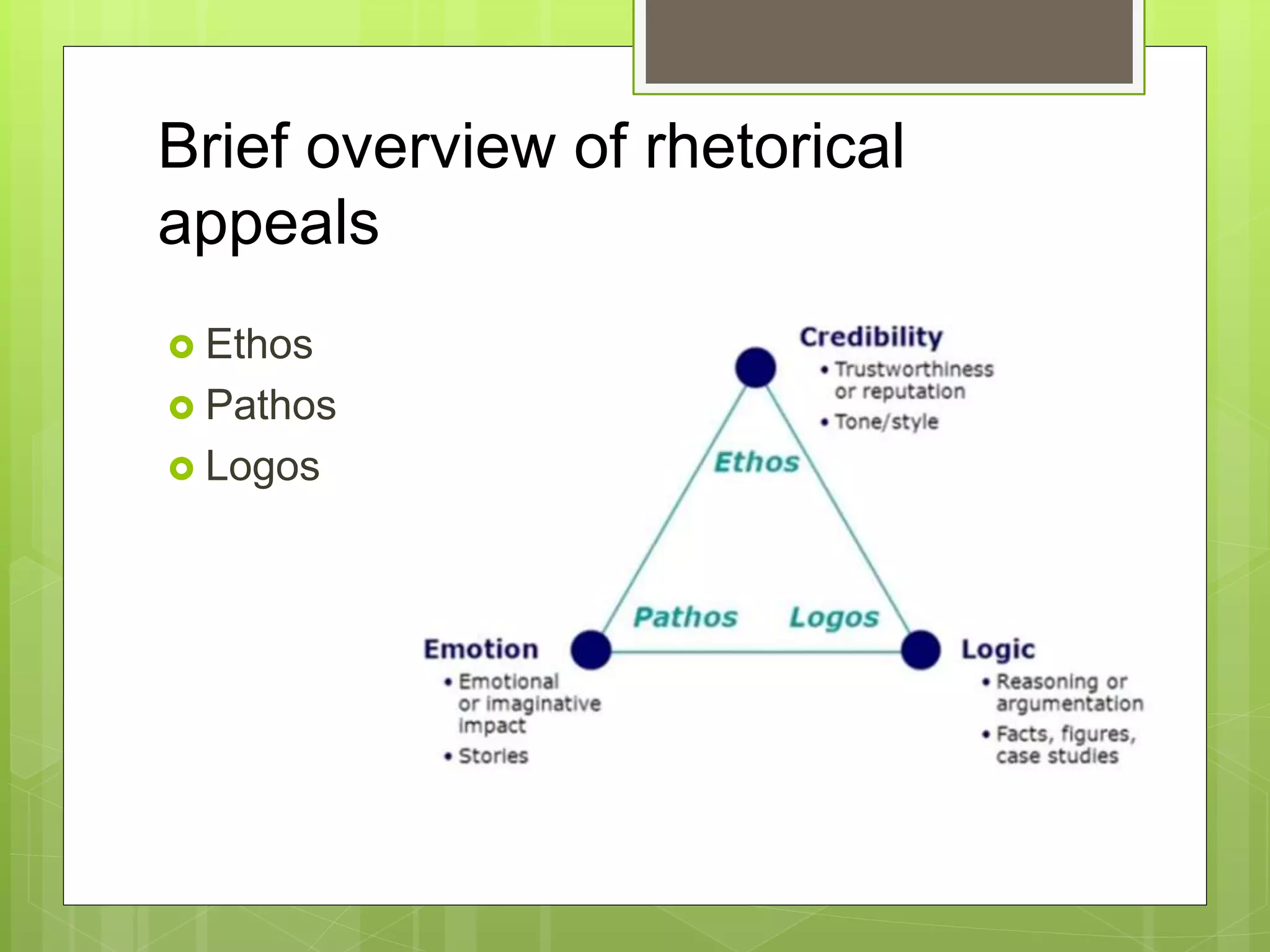
Brief overview of rhetorical
appeals
 Ethos
 Pathos
 Logos
Rhetorical appeals continued
• Logos—Logic. Focus on reasoning, facts, evidence,
examples, statistics, case studies, logical
arguments, readers’ intellect
• Pathos—”Pathetic.” Focus on emotions, vivid
pictures and imagery, personal stories, readers’
heart
• Ethos—Ethics. Focus on fairness, balance,
credibility, readers’ sense of trustworthiness
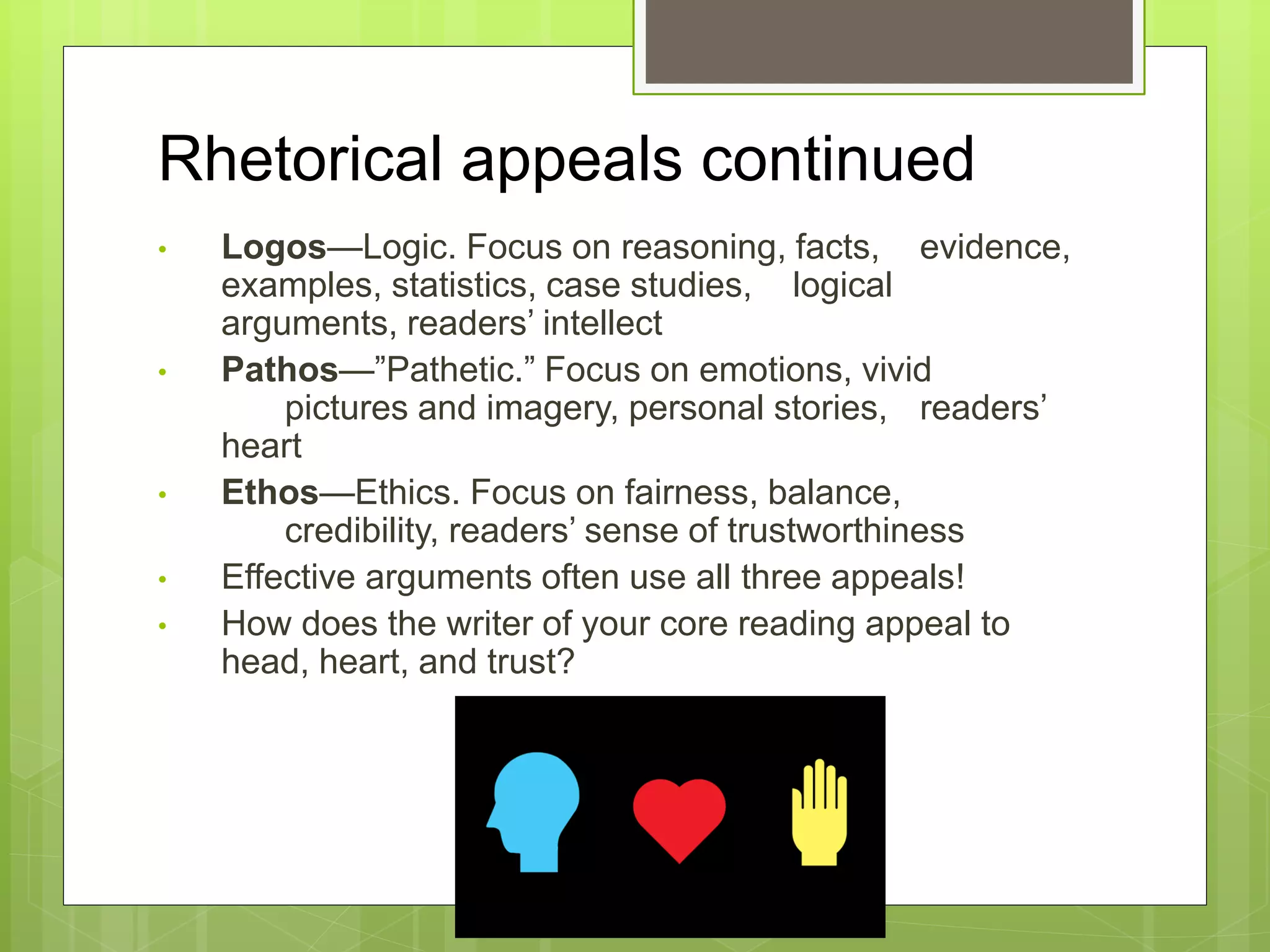
• Effective arguments often use all three appeals!
• How does the writer of your core reading appeal to
head, heart, and trust?
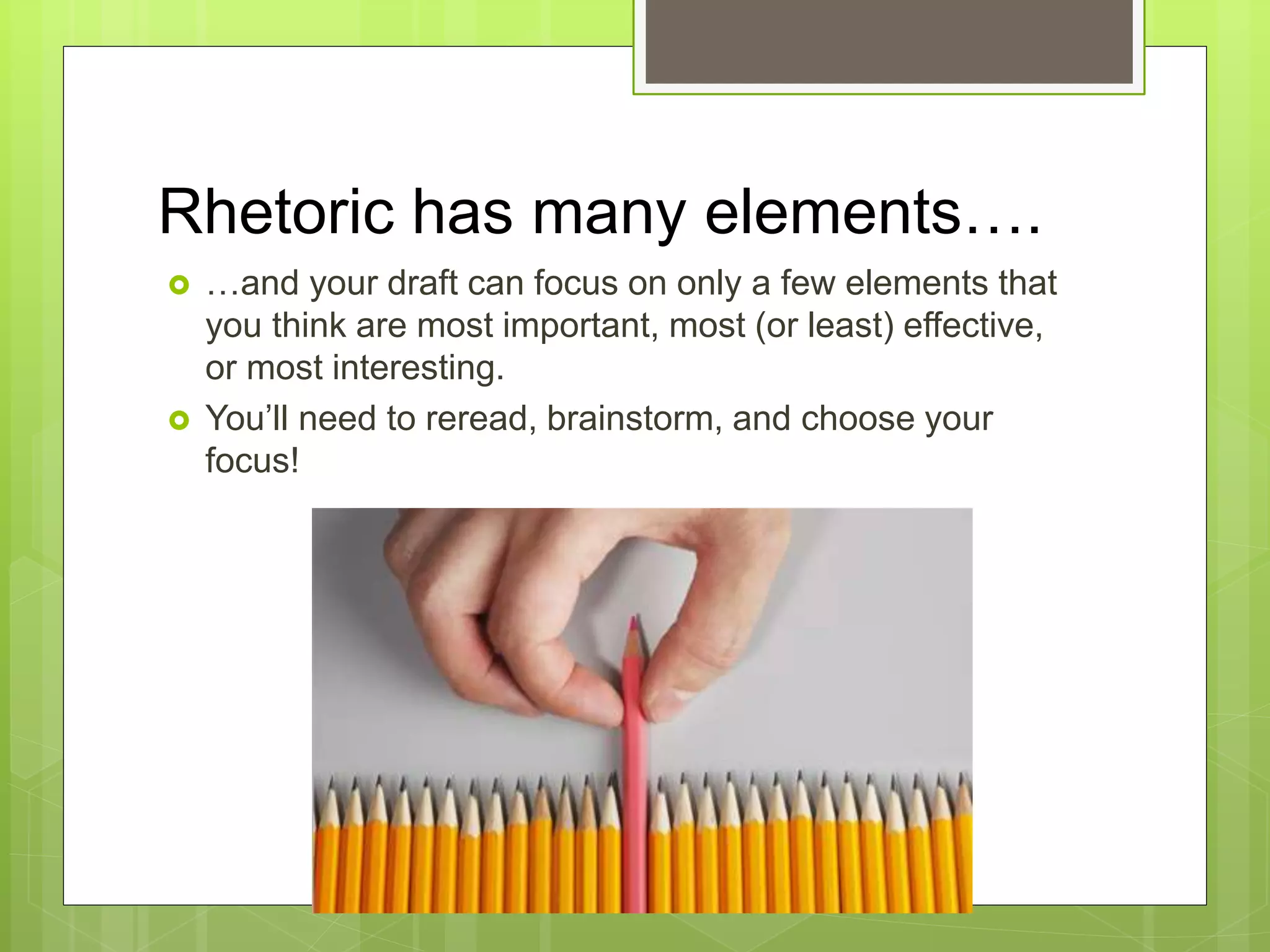
Rhetoric has many elements….
 …and your draft can focus on only a few elements that
you think are most important, most (or least) effective,
or most interesting.
 You’ll need to reread, brainstorm, and choose your
focus!
Thesis statements for Rhetorical
Analysis
 Make a claim about the effectiveness (in influencing or
persuading readers) of one or more significant features
of your chosen core reading
Sample thesis statements for
Rhetorical Analysis
 While the article is written primarily with the intent
of changing the skeptical minds of conservative
Christians, it may also further the commitment of
those who already are well aware of the negative
effects of global warming and are already striving
to make changes to improve this situation.
 With “Does the Internet Make You Dumber,” Carr
follows in well-tread footsteps by using fear tactics
and a healthy dose of condescension to disparage
the new ways while simultaneously elevating the
old.
Sample thesis statements for
Rhetorical Analysis, continued
 Overall, Parsons uses ethos, logos, and pathos
effectively to show good sources for the
information he has given, to instruct his readers
on the outcomes of inaction on climate change,
and to terrify them to make a change.
 Acaroglu encourages all to think outside the box
on even the simplest everyday items. With her
descriptive examples and clear arguments, she
may or may just make you rethink that old piece of
lettuce you are about to throw away.
Steps to remember:
 Review your Critical Rereading posts from Modules 3
and 4 Discussion (and read the whole board for ideas!)
 Review Chapter 8 in your textbook (“Conducting
Rhetorical Analysis”)
 Reread your core reading, looking for the HOW and
WHY
 Decide on your focus
 Come up with a working thesis statement
 Write your draft, supporting your thesis with specific
examples from the core reading
 Don’t forget to find and use a secondary source from the
Ivy Tech Virtual Library to back up your claims about the
core reading.
Every rhetorical analysis is
different
 Have fun finding and explaining what YOU
see as the most significant aspects of your
chosen core reading!
 Your readers will learn a lot about the core
reading from your analysis—and you will learn
a lot from theirs.
Works Cited
“Rhetoric.” Merriam Webster, 2017, www.merriam-
webster.com/dictionary/rhetoric. Accessed 10 Mar.
2017.

M06 supplemental resource power point elements of rhetorical analysis

  • 1.
  • 2.
    What is rhetoric? rhet·o·ric nounˈre-tə-rik : the art or skill of speaking or writing formally and effectively especially as a way to persuade or influence people
  • 3.
    What is thepurpose of rhetoric? Here are just some purposes of rhetoric.  The purpose of rhetoric is to use language effectively to get readers…  to agree  to believe something (change their minds)  to do something (take action)  to learn something new  to be entertained  to trust the writer  to admire the writer  to see the writer as a “credible guide”  to focus on what the writer things is important and overlook what the writer thinks is unimportant  to be convinced by logic and evidence  to be swayed by emotion  to say to friends and family members: “You’ve got to read this!”
  • 4.
    In other words…rhetoricis the art of using language to achieve results!  Look at the pictures below and on the next slide.  What do you think the people in each picture are saying, and what are they trying to achieve?  How successful do you think they will be? Why or why not?  What do you think they could say to be even more successful?
  • 6.
    What is rhetoricalanalysis? Rhetorical analysis is the analysis of the effective use of language in any kind of written texts (books, advertisements, articles, core readings, and even text messages). See example above from “He Texted,” a website which analyzes post-date text messages. Is he into her or not?
  • 7.
    Rhetorical analysis buildson Summary/Response and Critical Rereading We need to understand and digest a reading first before we can analyze it effectively. • Summarize • Respond • Reread • Analyze
  • 8.
    Rhetorical analysis asksHOW and WHY  After you have grasped the WHAT in a reading (Summary)….  …you are ready to think about the HOW and the WHY (Rhetorical Analysis)
  • 9.
    Consider these different“takes” on President Obama!  HOW are different impressions created?  WHY did the creator of the image choose to depict Obama this way?
  • 11.
    Preparing for thefirst draft of Writing Project 2, Rhetorical Analysis  Review your critical rereading notes from Modules 3 and 4 Discussion  Key points  Interesting or confusing details  Questions and reactions  Questions about the author, the type of writing, the rhetorical context, the content, and the language
  • 12.
    Preparing for thefirst draft of Writing Project 2, Rhetorical Analysis  What new reactions do you have to the core reading?  What new questions do you have about the core reading?  What patterns do you see in how the writer presents his/her information?  Do you trust this writer? Why or why not?  Does the writer convince you to see things his/her way? Why or why not?
  • 13.
    Some elements toconsider:  The Rhetorical Situation  Audience, time, place, purpose  Content  Arguments, evidence, reasoning  Persuasive appeals: Ethical, emotional, logical  Structure  How the reading is divided  Order  What is included, what is left out  Language and style  Figurative language  Voice, tone, diction  “Inartistic proofs”  Extras like photos, links, embedded videos or podcasts, etc.
  • 14.
    And don’t forgetto analyze the title of your core reading!
  • 15.
    Think about thedifferent impacts of these titles:  “How I Bluffed My Way through College”  “Why We Love War”  “The Coming Era of Energy Disasters”  “Weight Loss Diets: Are They All the Same?”  “How It Feels to Be Colored Me”  “Does the Internet Make You Dumber?”  Which title seems most intriguing? Most provocative? Most informative? Most neutral? Most inviting? Most controversial? Most non-threatening? Most personal? Most catchy? Etc.!
  • 16.
    Brief overview ofrhetorical appeals  Ethos  Pathos  Logos
  • 17.
    Rhetorical appeals continued •Logos—Logic. Focus on reasoning, facts, evidence, examples, statistics, case studies, logical arguments, readers’ intellect • Pathos—”Pathetic.” Focus on emotions, vivid pictures and imagery, personal stories, readers’ heart • Ethos—Ethics. Focus on fairness, balance, credibility, readers’ sense of trustworthiness • Effective arguments often use all three appeals! • How does the writer of your core reading appeal to head, heart, and trust?
  • 18.
    Rhetoric has manyelements….  …and your draft can focus on only a few elements that you think are most important, most (or least) effective, or most interesting.  You’ll need to reread, brainstorm, and choose your focus!
  • 19.
    Thesis statements forRhetorical Analysis  Make a claim about the effectiveness (in influencing or persuading readers) of one or more significant features of your chosen core reading
  • 20.
    Sample thesis statementsfor Rhetorical Analysis  While the article is written primarily with the intent of changing the skeptical minds of conservative Christians, it may also further the commitment of those who already are well aware of the negative effects of global warming and are already striving to make changes to improve this situation.  With “Does the Internet Make You Dumber,” Carr follows in well-tread footsteps by using fear tactics and a healthy dose of condescension to disparage the new ways while simultaneously elevating the old.
  • 21.
    Sample thesis statementsfor Rhetorical Analysis, continued  Overall, Parsons uses ethos, logos, and pathos effectively to show good sources for the information he has given, to instruct his readers on the outcomes of inaction on climate change, and to terrify them to make a change.  Acaroglu encourages all to think outside the box on even the simplest everyday items. With her descriptive examples and clear arguments, she may or may just make you rethink that old piece of lettuce you are about to throw away.
  • 22.
    Steps to remember: Review your Critical Rereading posts from Modules 3 and 4 Discussion (and read the whole board for ideas!)  Review Chapter 8 in your textbook (“Conducting Rhetorical Analysis”)  Reread your core reading, looking for the HOW and WHY  Decide on your focus  Come up with a working thesis statement  Write your draft, supporting your thesis with specific examples from the core reading  Don’t forget to find and use a secondary source from the Ivy Tech Virtual Library to back up your claims about the core reading.
  • 23.
    Every rhetorical analysisis different  Have fun finding and explaining what YOU see as the most significant aspects of your chosen core reading!  Your readers will learn a lot about the core reading from your analysis—and you will learn a lot from theirs.
  • 24.
    Works Cited “Rhetoric.” MerriamWebster, 2017, www.merriam- webster.com/dictionary/rhetoric. Accessed 10 Mar. 2017.